
Saudi Arabia Intercepts Two Houthi Missiles Aimed at Riyadh and Three Drones Over Its Oil Heartland

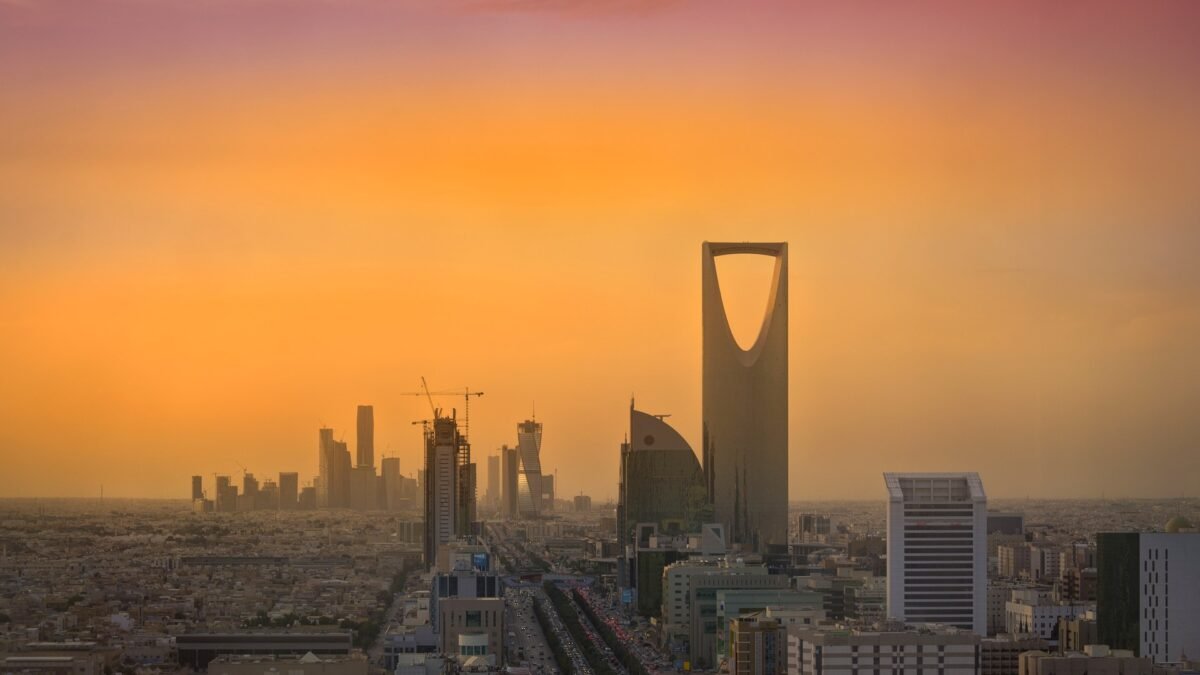
Saudi Arabia’s air defences intercepted two ballistic missiles aimed at the capital, Riyadh, and shot down three drones over the kingdom’s oil-rich Eastern Province early on Sunday, the Saudi-led coalition said, in the fourth round of fire aimed at the capital in six days.
Coalition spokesman Major General Turki al-Maliki announced the interceptions in a series of statements posted on X, saying air defences had “intercepted and destroyed two ballistic missiles launched by the Houthi terrorist militia towards Riyadh”, according to Reuters. In three separate statements on Sunday, he also reported the interception and destruction of a drone in the Eastern Province on each occasion. No damage or casualties were reported from Sunday’s interceptions, and the Houthis had not claimed the launches as of Sunday morning.
The Saudi Civil Defence issued an early-warning alert for Riyadh residents before dawn, and explosions were heard in the capital shortly afterwards, according to Arab News. The alert sounded at 4:08 a.m. local time, the newspaper reported, and authorities later indicated that the immediate danger had passed.
The salvo underlined how the war that has engulfed the Gulf since late February has settled into a near-daily rhythm of missile and drone fire against Saudi cities and energy infrastructure, even as the kingdom’s interceptors keep most of the incoming weapons from reaching their targets.
A week of fire over the capital
Sunday’s attack was the latest in a dense run of strikes on Riyadh. On Saturday, the coalition said it had intercepted and destroyed two drones launched by the Houthis in the Riyadh and southern regions. Three days earlier, on Wednesday 11 November, Saudi air defences destroyed three cruise missiles aimed at the capital, a day after intercepting a ballistic missile and a cruise missile over the city. The pattern means Riyadh has now come under fire on at least four separate days in the space of a week.
The most damaging strike of the current escalation came a week earlier, on Sunday 8 November, when a projectile damaged a Saudi Aramco administrative building in the King Abdullah Financial District, the capital’s financial core. Saudi Arabia’s Energy Ministry said the building “sustained minor damage after falling shrapnel struck it” during what it called “an attempted attack”, and reported no injuries or deaths. Witnesses interviewed by AFP and Reuters described a different scene, with windows blown out across several floors of the glass tower, and one AFP witness said they saw a projectile hit the building directly. Whether the tower was struck by an unintercepted missile or by falling debris from a successful interception has not been established by any of the reporting agencies. The coalition said it intercepted four missiles that day, two ballistic missiles targeting Riyadh and two cruise missiles targeting Riyadh and the southern region. The Houthis claimed responsibility for the attack, according to Reuters.
AFP reported that the 8 November strike was the first targeting of the capital’s financial core since the current escalation began in July. Two days later, on Monday 9 November, Riyadh’s deputy governor, Prince Mohammed bin Abdulrahman, visited the damaged Aramco building to assess the damage, the Saudi Press Agency reported.
The Eastern Province, where Sunday’s three drones were shot down, is the economic powerhouse of Saudi Arabia. It contains most of the kingdom’s oil and gas reserves and is home to Aramco’s headquarters, which suffered extensive damage in an attack in October, according to Reuters. The province has been subject to multiple Houthi attacks in the past few weeks, and the Houthis have stepped up strikes on Saudi airports, ports and oil facilities, while Saudi Arabia has intensified air strikes on Houthi targets in Yemen in response.
At least 26 people have been killed in suspected Houthi drone and missile attacks in Saudi Arabia since 23 September, according to the kingdom’s authorities, Al Jazeera reported. The toll is a reminder that the interceptions, however effective, do not make the threat abstract: some weapons get through, and when they do, civilians pay the price.
The Houthis’ claims, and what is not verified
The Houthis have also claimed a series of strikes that no independent source has been able to confirm. On Thursday, their military spokesman, Yahya Sarea, said in statements posted on social media that a drone had targeted Pumping Station No. 7 on the East-West pipeline, that a ballistic missile had targeted an oil facility in the Red Sea city of Yanbu, and that another drone had targeted an Aramco facility in Riyadh. He said the operations had achieved their objectives. He gave no details of any damage and offered no photographs or other proof, and Saudi Arabia did not respond to the claims. The only attacks Saudi Arabia confirmed on Thursday were two Houthi drones that its air defences said they had shot down, one in the Riyadh region and one in the Eastern Province.
The Houthis claimed a second round of attacks on Friday evening. None of those claims has been independently verified, and Reuters and Xinhua both reported that the claims, any casualties and any damage could not be confirmed. The same day, the United Nations Security Council voted unanimously to extend sanctions on Yemen for another year and demanded that the Houthis stop attacking Saudi Arabia.
The distinction matters. In a war fought as much through competing claims as through missiles, the verified record is what the coalition says it intercepted, what the Houthis say they launched, and what independent witnesses and journalists can see. Sunday’s interceptions are in the first category: announced by the coalition, corroborated by the pre-dawn civil defence alert and the explosions heard over Riyadh, and reported by Reuters and Al Jazeera. The claimed pipeline and Yanbu strikes are not, and this report does not treat them as established fact.
A war that has widened far beyond Yemen
The attacks on Saudi Arabia cannot be understood as a local Yemeni conflict any longer. They are one front of a regional war that began in late February, when the United States and Israel launched surprise attacks on Iran, and that has since spread across the Gulf, the Red Sea and the Strait of Hormuz.
The Houthis, who control most of the densely populated parts of Yemen, are aligned with Iran, and their campaign against Saudi Arabia has intensified in step with the wider confrontation. Iran’s Revolutionary Guard Corps launched drone attacks against a United States air defence radar at the Al-Riffa helicopter base in Bahrain on Friday 13 November and again early on Sunday 15 November, the second such attack in three days. Bahrain said its air defences intercepted the drones, and no casualties or damage were reported.
On the seas, the same escalation is playing out against commercial shipping. On Sunday, the United Kingdom Maritime Trade Operations centre said Indian shipping authorities had reported an attack on a tanker transiting eastbound through the Arabian Gulf before entering the Strait of Hormuz. The crew were accounted for and safe, UKMTO said, but damage and any environmental impact were unknown at the time of the report. Iran’s Revolutionary Guard separately claimed that two oil tankers had struck sea mines and caught fire and that one very large crude carrier had sunk, but there was no independent confirmation of that claim, and it was not clear whether the Guard’s account and the UKMTO report described the same incident, AFP reported.
The United States has responded by reinforcing the region’s air defences. Two Patriot batteries were deployed in recent weeks, one to protect a Saudi oil facility and one to defend a Qatari natural gas installation, according to US Central Command. Greece has also kept its Patriot battery in Saudi Arabia, protecting energy infrastructure at Yanbu on the Red Sea coast since 2021, after Prime Minister Kyriakos Mitsotakis agreed to a Saudi request during talks with Crown Prince Mohammed bin Salman in Riyadh on 25 October. Greek personnel operating the battery intercepted drones near Yanbu in recent days, according to Greek security sources cited by Reuters.
The diplomatic pressure has matched the military build-up. On 11 November, the foreign ministers of the Group of Seven industrialised democracies, meeting in Paris, condemned the Houthi strikes on Saudi Arabia “in the strongest terms” and expressed their full solidarity with the kingdom and with Yemen’s internationally recognised government. The ministers called on the Houthis to halt their military operations immediately, urged Iran to end its arming of and support for the group in violation of United Nations Security Council resolutions, and condemned Iran’s disruption of maritime traffic through the Strait of Hormuz. They reaffirmed the right of safe and free passage through the strait, opposed any tolls, fees or restrictions on transit, and backed US Central Command’s defensive work to clear mines and escort civilian ships, while welcoming a multinational initiative led by France and the United Kingdom to help restore maritime traffic.
On Saturday, the day before Sunday’s interceptions, the US Embassy in Riyadh issued a nationwide security alert urging Americans in the kingdom to exercise “heightened vigilance”, citing an increased threat of Houthi attacks. The embassy said Houthi attacks on airports and other critical infrastructure in Saudi Arabia had “caused civilian casualties and severe travel disruptions”, and warned that hostilities could spread “rapidly”.
Analysis: Why It Matters
The shield is working, and that is the problem
On the narrow military question, Saudi Arabia’s air defences are doing their job. Two ballistic missiles aimed at the capital were destroyed before they could hit anything. Three drones over the Eastern Province were shot down. No one was reported hurt on Sunday, and no facility was reported damaged. By the standards of missile defence, that is a success, and the coalition has every reason to present it as one.
But the success contains its own warning. A defence that must work perfectly, every night, against an enemy that only needs to succeed once, is a defence under strain. The Houthis have now attacked Riyadh on at least four days in a single week, and the tempo is rising, not falling. Each interception costs the defender expensive interceptors, some of the most costly weapons in any arsenal, while each launch costs the attacker far less. The 8 November strike showed what happens when the shield is even slightly imperfect: falling debris, or a missile that slips through, damaged a tower in the financial heart of the capital. The arithmetic of that exchange cannot be sustained indefinitely without either a political settlement or a much larger defensive effort, and neither is currently in sight.
The target is the economy, not the army
Look at what the Houthis are aiming at and the strategy becomes clear. Riyadh’s financial district. Aramco’s headquarters in Dhahran. The East-West pipeline. Yanbu on the Red Sea. King Khalid International Airport. These are not military bases. They are the arteries of the Saudi economy: the oil that pays for the state, the financial centre that is meant to carry the kingdom beyond oil, and the airports that connect it to the world. The Houthis do not need to conquer territory to hurt Saudi Arabia. They need only to make its most valuable assets feel unsafe, and to force the kingdom to spend heavily on defending them.
That is why the 8 November strike on the Aramco tower mattered out of proportion to the physical damage. A tower with blown-out windows in the King Abdullah Financial District is a photograph, and a photograph travels. It tells investors, insurers and airlines that the war has reached the business heart of the capital. Saudi Arabia’s insistence that the damage was minor and caused by falling shrapnel, rather than a direct hit, is best understood in that light: the kingdom is fighting a battle over perception as much as over missiles. But perception is shaped by repetition, and the repetition is now daily. A capital that sounds its civil defence sirens at four in the morning, four times in six days, cannot indefinitely insist that nothing has changed.
Iran’s shadow over every launch
The Houthis are a Yemeni movement with Yemeni grievances, but no honest account of this campaign can ignore the Iranian connection. The missiles and drones they fire are supplied, in whole or in part, by Tehran, a fact the G7 foreign ministers stated plainly in Paris when they called on Iran to end its arming of the group in violation of Security Council resolutions. The timing of the escalation is equally telling: the Houthi campaign intensified as the United States and Israel went to war with Iran, as Iran closed the Strait of Hormuz, and as Iranian drones struck an American base in Bahrain. The Houthis are not a sideshow to the Gulf war. They are one of its fronts, and the front that reaches deepest into the daily life of the Arab world’s largest economy.
That linkage cuts both ways. It means the Houthi campaign is unlikely to stop while the wider war continues, because it serves Tehran’s interest to keep Saudi Arabia and the United States stretched across multiple fronts. But it also means that any settlement of the wider war, whether through negotiation or exhaustion, would likely quiet the Yemeni front as well. The Houthis’ fate is tied to Iran’s, and Iran’s to the war it is fighting. Until that war ends, Riyadh should expect more nights like Sunday.
The forgotten war inside the war
While the world watches missiles over Riyadh, the war inside Yemen itself has returned with a ferocity that deserves more attention than it receives. More than 340,000 people have been displaced by fighting in Yemen since August, according to the International Organization for Migration. Saudi-backed Yemeni government forces report gains in Marib and al-Jawf, the Houthis report shooting down a Saudi coalition reconnaissance aircraft, and both sides report dozens of air strikes every day. The Houthis say two women and two children were wounded by shelling in a residential neighbourhood of Sanaa. These are the uncounted costs of a conflict that the outside world now discusses mainly in terms of oil prices and shipping lanes.
The Security Council’s unanimous vote to extend Yemen sanctions for another year, and its demand that the Houthis stop attacking Saudi Arabia, shows that the international community has not forgotten Yemen. But resolutions do not stop missiles, and the gap between what the Council demands and what happens on the ground has rarely been wider. The Houthis have shown no sign of heeding the demand. The coalition has shown no sign of stopping its air strikes. And the people of Yemen, who have endured a decade of war, are once again the ones paying the highest price for a conflict that is increasingly fought over their heads.
What it means for the Gulf
For the Gulf states, Sunday’s interceptions are a reminder of a vulnerability they have lived with for years but hoped had receded. The 2022 ceasefire in Yemen, which held, more or less, for four years, allowed the Gulf to believe that the missile threat was a closed chapter. Its collapse in July ended that illusion. Saudi Arabia is now back in a war it spent years trying to exit, and this time the war is bigger, involving the United States and Iran directly, and the stakes are higher, because the Strait of Hormuz, the artery through which a fifth of the world’s oil flows, is now contested.
The Gulf’s response so far has been to defend, to intercept, and to hope the wider war burns itself out. That may prove enough. The defences are formidable, the alliances are real, and the Houthis, for all their persistence, have not yet inflicted the kind of damage that would change the course of the war. But hope is not a strategy, and the tempo of the attacks suggests that the Houthis, and their backers in Tehran, believe time is on their side. Every interception that succeeds is a victory for the defence. Every interception that fails, even slightly, is a photograph of a burning tower in a financial district. That asymmetry is the real story of Sunday’s attack, and it will not be resolved by interceptors alone.
What to Watch Next
- The next salvo: whether the Houthis claim Sunday’s launches, and how quickly the next round of fire follows. The recent pattern has been a new attack every one or two days.
- The Eastern Province: whether drones continue to probe the oil heartland around Dhahran, and whether Aramco’s facilities suffer further damage.
- The Hormuz shipping crisis: whether the tanker attacked on Sunday is identified, whether the Revolutionary Guard’s claim of a sunken supertanker is confirmed or debunked, and whether shipping through the strait continues to fall.
- The US response: whether Washington, which has reinforced Gulf air defences with Patriot batteries, takes further military steps, and whether the reported diplomatic contacts with Tehran produce any movement.
- The United Nations: whether the Security Council’s unanimous sanctions extension and its demand for an end to the attacks produce any diplomatic follow-up, or whether the Council’s words are ignored as they have been before.
- Oil markets: whether Brent crude, already edging up on supply security concerns, reacts to the sustained campaign against Saudi energy infrastructure.
- The Yemeni front: whether the fighting in Marib and al-Jawf, and the displacement it is causing, forces a renewed push for a ceasefire, or whether the war inside Yemen simply grinds on unnoticed.
Sources
- Reuters, via The Business Standard: “Saudi-led coalition intercepts missiles towards Riyadh, drones in Eastern Province”
- Al Jazeera, via 234Radio: “Saudi-led coalition intercepts suspected Houthi missiles and drones”
- Reuters, via WNCY: “Saudi official inspects Aramco Riyadh office after Houthi attack”
- The Media Line: “G7 Demands End to Iranian Shipping Attacks, Calls for Hezbollah Disarmament”
- Demócrata, citing UKMTO: “Attack on an oil tanker raises tension in Ormuz”

About the Author — Abdul Mannan
Related Articles
Jordan Sentences Three Men to Death Over Church Funeral Attack That Killed Nine in Karak
Jordan's State Security Court has sentenced three men to death for the 23 October attack on a Greek…
Arab and Muslim States Condemn Israel Over Nasser Hospital Strike as Katz Vows Gaza Offensive Will Continue
Foreign ministers from 18 Arab and Muslim countries have condemned Israel's strike on Gaza's Nasser Hospital, warning the…

Netanyahu Renews Call for Unity Government as Eisenkot Dismisses It as a Trick
Israel's caretaker prime minister renewed his appeal for a national unity government on Saturday, and the man tasked…