
ULA Vulcan Rocket Fails Ten Minutes Into Flight, Destroying 40 Amazon Leo Satellites

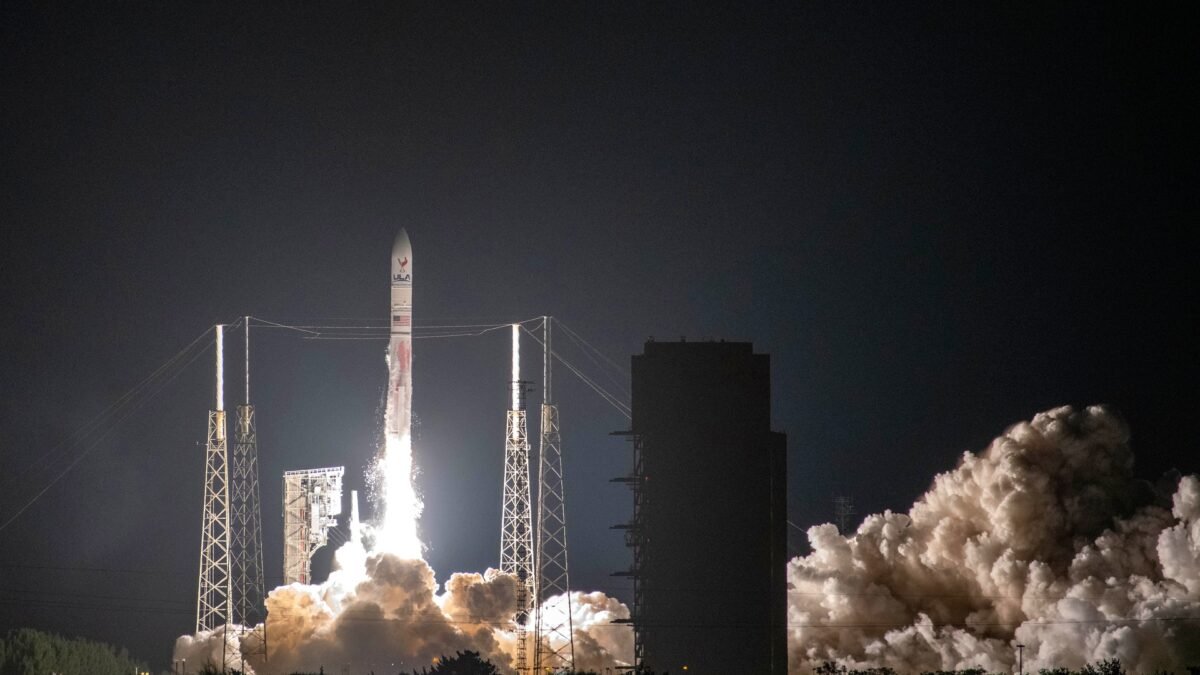
A United Launch Alliance Vulcan rocket failed ten minutes into its flight on Sunday, destroying 40 Amazon Leo internet satellites and handing both companies the worst possible start to the most important launch campaign either of them has ever attempted. It was the first outright failure of a United Launch Alliance rocket since the company was formed in 2006, and it came on the very mission that was supposed to prove the Vulcan was ready to carry Amazon’s satellite broadband network into orbit at industrial scale.
The 214-foot rocket lifted off from Space Launch Complex 41 at the Cape Canaveral Space Force Station in Florida at 12:40 p.m. Eastern time on Sunday, 15 November 2026, according to Spaceflight Now, carrying the first batch of Amazon Leo satellites ever entrusted to a Vulcan. The launch had already been delayed twice, first on Friday and then again on Saturday, and controllers held the countdown at the 20-second mark on Sunday before clearing the rocket to fly at the very end of its 29-minute launch window. For the first few minutes, everything looked normal. The six solid rocket boosters burned out and fell away about a minute and 40 seconds after liftoff, and the two methane-burning BE-4 engines on the first stage carried the climb onward. Then, according to ULA’s own account, something went wrong during the firing of the hydrogen-fuelled Centaur upper stage, and the mission was lost.
“Based on data received by our Launch Director, we confirm that the Vulcan vehicle launched from Space Launch Complex 41 (at the Cape Canaveral Space Force Station) suffered an anomaly 10 minutes into the flight and failed to deliver the Amazon mission to orbit,” ULA said in a statement issued about 50 minutes after liftoff, as reported by Spaceflight Now. “We will work closely with our customer and other appropriate organizations to find the cause, determine the appropriate corrective action and return to flight as quickly as possible.”
The company has not yet said what caused the failure. What is known is that the first stage appeared to burn for longer than the pre-launch timeline called for, that stage separation appeared to happen later than expected, and that telemetry-driven animation showed the Centaur making unusual orientation adjustments early in its burn, according to Spaceflight Now. The launch broadcast ended without confirmation that the Centaur’s first planned engine firing, scheduled to last 12 minutes and 15 seconds, had run its full duration. The payload fairing had been jettisoned about six minutes into the flight, and the last routine update from ULA came at about nine minutes and 30 seconds, according to Florida Today. The 40 satellites never reached orbit.
For Amazon, the loss is measured in more than hardware. Sunday’s flight was the first of 38 Vulcan launches the company has purchased from ULA, and it was supposed to be the moment its Leo constellation — the satellite broadband network it spent six years calling Project Kuiper before renaming it in November 2025 — began moving at the pace its business plan requires. Instead, the satellites are gone, the rocket that was meant to carry most of them is grounded pending investigation, and the clock on Amazon’s regulatory deadlines keeps running.
A launch that had already gone wrong twice
The failure did not come out of a clear sky. The mission, designated Amazon Leo 1, had already been scrubbed twice before Sunday’s attempt, and each delay had a different cause. A launch attempt on Friday was called off after problems knocked out a gaseous nitrogen plant that serves multiple launch providers at the Cape, according to Spaceflight Now. A second attempt on Saturday was ordered because of network problems between the Vulcan and ground systems. On Sunday, launch controllers called a hold at the T-minus 20-second mark because of what NASASpaceFlight described as a pressure-reducing valve anomaly, resolving the problem in time to launch at the end of the window.
It is not yet known whether the problem that interrupted the countdown played any role in the subsequent failure, and Spaceflight Now was careful to say so. But the sequence matters, because it is now part of the investigation. ULA has promised what it called full transparency with its customers, saying in its statement that they “will have visibility into the investigation process, which utilizes rigorous methodology and corrective action,” according to Spaceflight Now.
The flight was also a return to service. It was only the fifth flight of a Vulcan rocket, and the first in nine months, after ULA and booster supplier Northrop Grumman spent most of 2026 working to resolve problems with the nozzles on the strap-on solid-fuel boosters that had marred two earlier flights. The second Vulcan flight, in October 2024, saw a nozzle “liberation” event 37 seconds after liftoff on one of the boosters, according to NASASpaceFlight, although that mission still reached orbit. A similar issue occurred on the USSF-87 national security mission in February 2026, grounding the rocket. ULA chief executive Mark Peller told Aviation Week & Space Technology magazine in a pre-flight interview that the company had “identified three credible causes (of the nozzle issue), and we have taken positive steps to mitigate all of those,” according to Spaceflight Now.
The boosters appeared to work normally on Sunday, according to Spaceflight Now and the Seeking Alpha report carried by TradingView. The failure, on the evidence available so far, happened later in the flight, during the Centaur upper stage’s firing. That distinction matters because the Centaur is the part of the rocket that does the precise work of placing satellites in their intended orbit, and because a failure there raises different questions from the booster problems that grounded the vehicle earlier this year.
There was also a second shadow over the flight. The BE-4 engines that power the Vulcan’s first stage are built by Blue Origin, the space company owned by Amazon founder Jeff Bezos, and they had been retrofitted with a fix developed by Blue Origin engineers after a catastrophic on-pad explosion of Blue Origin’s own New Glenn rocket in May 2026. That explosion, according to Spaceflight Now, was caused by problems with an oxygen valve in one of the New Glenn’s seven BE-4 first stage engines. Peller said Blue Origin had developed a “design improvement” to resolve the valve issue and had carried out a “retrofit” on the engines installed on the Vulcan that flew on Sunday. “They were down at our facilities probably a couple months ago and implemented that retrofit kit on the engines on this upcoming mission,” Peller said, according to Spaceflight Now. Whether the engines played any part in Sunday’s failure is not yet known, and ULA has not linked the two events.
What was lost, and what it was supposed to do
The 40 satellites destroyed on Sunday were the largest single batch Amazon has ever attempted to launch for its Leo constellation, according to Satellite Today, and they would have taken the total number of Leo satellites launched to 436, according to Spaceflight Now. NASASpaceFlight reported that 368 Leo satellites were in their operational orbit as of early November, with six having re-entered the Earth’s atmosphere to date. The mission was to have placed the satellites in a 450-kilometre circular parking orbit, inclined 51.9 degrees to the equator, using 21 separate deployment events over about 25 minutes and 40 seconds of flight, according to NASASpaceFlight.
Amazon needs 578 satellites deployed in a circular orbit at an altitude of 630 kilometres to start its initial regional service, according to NASASpaceFlight. The full first-generation constellation is licensed by the United States Federal Communications Commission at 3,232 satellites in three orbital shells, at altitudes of 590 to 630 kilometres, according to the InsideDeepTech guide to the network. That is the scale of the task, and it is the reason Sunday’s failure matters beyond the loss of 40 satellites. At roughly 400 satellites launched, Amazon has put only about 12 per cent of its licensed constellation into orbit, according to Light Reading’s October 2026 count cited by InsideDeepTech, and it is already behind the schedule its licence originally required.
The Federal Communications Commission originally required Amazon to have half of its authorised constellation — about 1,616 satellites — in orbit by 30 July 2026. Amazon asked for more time in January 2026, when it had launched only 180 satellites, according to the NewMarketPitch summary of the regulatory history, and in June 2026 the FCC granted a limited waiver instead of forcing the company to forfeit its remaining authorisation. The final deadline for the full constellation stays at 30 July 2029, but satellites launched after 30 July 2026 temporarily lose their priority status for spectrum, until 30 March 2028 or until Amazon reaches the halfway mark, according to the LeoSatNetwork guide. The waiver bought Amazon time. It did not buy it satellites in orbit, and it did not buy it a working rocket.
That is the arithmetic that makes Sunday’s failure expensive. Amazon’s launch plan spreads its constellation across five rockets: 38 flights on ULA’s Vulcan, 24 on Blue Origin’s New Glenn, 24 on Europe’s Ariane 6, and 13 on SpaceX’s Falcon 9, with eight flights already completed on ULA’s retiring Atlas 5, according to Spaceflight Now. Of those five rockets, two are now out of service. New Glenn has been sidelined since its launchpad explosion in May, and Vulcan is now grounded pending the investigation into Sunday’s failure. Ariane 6 has been flying Leo missions since February 2026, and Falcon 9 remains available, but neither can carry the load that Vulcan and New Glenn were supposed to carry. As the Seeking Alpha report put it, a prolonged interruption “could postpone revenue opportunities for Amazon Leo and put pressure on ULA’s launch business, although the financial impact remains unclear.”
Amazon, for its part, has publicly stood by its launch partner. The company “expressed continued confidence in ULA,” according to the Seeking Alpha report, and ULA has pledged to work with its customer and other organisations on the investigation. That confidence will now be tested by the length of the grounding. The nozzle investigation that followed the February anomaly kept Vulcan out of service for nine months. Nobody at ULA has said how long this investigation will take, and the company said only that it would return to flight “as quickly as possible.”
The gap with Starlink keeps growing
The failure lands in the middle of a race Amazon is already losing on the measures that matter today. SpaceX’s Starlink ended 2025 with more than 9 million customers after adding over 4.6 million in the year, and Fierce Network reported that it reached 13.6 million subscribers in 174 markets by the third quarter of 2026, according to InsideDeepTech. Starlink has more than 11,000 satellites in orbit, according to KeepTrack’s October 2026 count, against about 400 for Amazon Leo. SpaceX launched 3,171 Starlink satellites in 2025 alone, according to KeepTrack, which is roughly eight times the number Amazon has launched in total.
The comparison is not entirely fair to Amazon, and it is worth saying why. Starlink is a working service with a decade of launches behind it; Leo has not yet begun general service, although Amazon ran a private enterprise preview from November 2025 and promised on its third-quarter 2026 earnings call that the network remains on track to begin initial service this year, according to InsideDeepTech. Amazon’s advantages, as the guides to the network note, lie elsewhere: in its cloud business, its logistics network, its relationships with telecoms operators such as AT&T, and its deals with airlines including JetBlue and Delta. None of those advantages matters, however, if the satellites cannot get into orbit.
That is the structural difference between the two companies, and Sunday made it visible. SpaceX owns the rockets that launch Starlink, and it can coordinate launches, upgrades and replacements internally. Amazon does not own a rocket. It buys launches from other companies, and two of the four launch providers it depends on for the bulk of its constellation are now grounded at the same time. It is the central vulnerability of Amazon’s entire satellite strategy, and it was visible before Sunday. The failure did not create it. It exposed it.
There is also a second, quieter competitor in the background. Eutelsat OneWeb has about 654 satellites in orbit, according to KeepTrack, and China’s Qianfan constellation had 248 and Guowang 222 by October 2026. None of them is close to Starlink either, but none of them lost 40 satellites on Sunday, and none of them is waiting on a grounded rocket to resume its deployment. The satellite broadband market is not a two-horse race, even if the headlines usually treat it as one.
What the failure means for ULA
For United Launch Alliance, the failure is a different kind of blow. ULA was formed in 2006 as a joint venture between Boeing and Lockheed Martin, combining the Atlas and Delta rocket families into a single launch provider that became the workhorse of American national security spaceflight. Its record, until Sunday, was its selling point: the company had never suffered an outright mission failure in two decades of flying. That record is now gone, and it is gone on the rocket that is supposed to secure the company’s future.
Vulcan is the rocket that replaces the Atlas 5, which is being retired, and it is the rocket ULA needs to win the national security launches that are its most important and most lucrative business. The United States Space Force put Vulcan launches of national security payloads on hold pending additional analysis after the booster nozzle problems, according to Spaceflight Now, even while ULA was free to press ahead with commercial flights. Sunday’s failure, on a commercial flight, will now be read by the Space Force as well as by Amazon. A failure investigation that finds a problem in the Centaur upper stage, the part of the rocket that does the final, precise work of orbit insertion, would raise questions that go beyond the booster nozzles that caused the last grounding.
The company is also caught in a commercial squeeze that predates Sunday. Vulcan’s fifth flight in almost three years is a slow cadence for a rocket that is supposed to fly dozens of times for Amazon alone, and the nine-month gap before this flight was caused by the same nozzle investigation that Peller said had been resolved. The rocket’s BE-4 engines come from Blue Origin, a company that is simultaneously ULA’s supplier and, through New Glenn, its competitor. And ULA’s two parent companies, Boeing and Lockheed Martin, have both had their own difficult years. None of that caused Sunday’s failure. All of it shapes what the failure will cost.
NASA Administrator Jared Isaacman offered his agency’s assistance within hours of the failure, writing on the social media platform X, “Appreciate you quickly keeping the public and your partners informed. The team at @NASA is available to assist in all matters related to the investigation and remediation effort. Artemis, Moon Base, and the nation need ULA. We are in your corner and here to help,” according to Spaceflight Now. The message was supportive, and it was also a reminder of how much the American space programme depends on ULA. Vulcan is meant to carry national security payloads, and its Centaur upper stage is a direct descendant of the upper stage that has flown on Atlas rockets for decades. The country does not have a spare heavy-lift rocket waiting in reserve.
Analysis: Why It Matters
A perfect record is a fragile asset
ULA’s two decades without an outright failure were not luck. They were the product of a conservative engineering culture, of flying proven hardware, and of a business model that prized reliability over speed. That record was also the company’s main argument to its customers: when the payload is a billion-dollar spy satellite, or the first 40 satellites of a constellation that has to be in orbit by a regulatory deadline, you pay for the rocket that has never failed. Sunday ended that argument in a single morning, and it cannot be rebuilt quickly. A record takes twenty years to build and ten minutes to lose, and the next customer who has to choose between Vulcan and a Falcon 9 will now be choosing between a rocket that failed on its last flight and a rocket that has flown hundreds of times. That is not a fair comparison, and it is not the comparison ULA wants. It is the comparison ULA now has to live with until Vulcan flies again, and flies well, several times in a row.
The launch business is the bottleneck for the whole space economy
The last five years have produced a flood of satellites, constellations, and space businesses, and almost all of the attention has gone to the satellites themselves. Sunday was a reminder that the bottleneck is not in orbit. It is on the ground, in the rockets that get things there. Amazon has built more than 1,000 Leo satellites, according to InsideDeepTech, and most of them are sitting in warehouses waiting for a ride. SpaceX can launch its own satellites whenever it wants, because it owns the rockets. Amazon cannot, because it does not, and the two rockets that were supposed to carry most of its constellation are now both grounded at the same time. The lesson is not that Amazon chose badly. When it signed its launch contracts, Vulcan and New Glenn were the future, and spreading the work across five rockets looked like prudence. The lesson is that launch capacity is the single point of failure for every satellite business plan, and that redundancy on paper is not the same as redundancy in practice when the rockets themselves are new and unproven.
Regulatory deadlines do not wait for investigations
The Federal Communications Commission gave Amazon a waiver in June, and that waiver was generous. It kept the July 2029 deadline for the full constellation while relaxing the halfway milestone that Amazon had already missed by more than a thousand satellites. But a waiver is not an extension of physics. The satellites still have to be built, launched, and placed in orbit, and the pace required is unforgiving. To meet the 2029 deadline from roughly 400 satellites today, Amazon needs to average more than 300 satellites a year for the next two and a half years, and it needs the rockets to do it. Sunday cost it 40 satellites and an unknown number of months of Vulcan flights. The waiver’s spectrum-priority penalty, which strips late satellites of their priority status, is already in effect. The longer the grounding lasts, the more of Amazon’s constellation will fly without the regulatory protection its licence was supposed to provide, and the more crowded the orbital shells it needs will become as Starlink and the Chinese constellations fill them.
Failure is normal in rocketry, and that is the problem
It is worth saying plainly that rockets fail, and that a single failure does not mean a rocket is a bad rocket. SpaceX lost rockets on its way to building the most reliable launch vehicle in history. Blue Origin’s New Glenn exploded on a pad in May, and it will fly again. The Vulcan’s own second flight suffered a nozzle failure and still reached orbit. Failure is part of how rockets get better, and ULA’s investigation will almost certainly find the cause and fix it. The problem is not the failure. The problem is the timing, and the timing is everything. Amazon’s constellation is already late, its biggest launch provider is now grounded for the second time in a year, its second-biggest is grounded too, and its main competitor is adding thousands of satellites a year. A failure that would have been a footnote in 2024 is a crisis in 2026 because the schedule has no slack left in it. That is what happens when a programme runs behind for years: every new setback lands on ground that is already thin.
What to watch is not the investigation, but the manifest
The investigation will produce a cause, and ULA will announce corrective actions, and the rocket will return to flight. That is the pattern of every launch failure, and there is no reason to doubt it will happen here. The more important question is what happens to the launch manifest while the investigation runs. Does Amazon shift more satellites to Falcon 9, buying launches from the very competitor it is trying to catch, as it has done before? Does Ariane 6 speed up? Does Blue Origin get New Glenn flying again before Vulcan returns? And does the Space Force, which has already paused national security Vulcan launches once, extend that pause? The answers to those questions will decide whether Sunday was a bad day for Amazon and ULA, or the day the whole shape of the satellite broadband race changed. Watch the manifest, not the press releases.
What to Watch Next
- ULA’s failure investigation: what caused the anomaly during the Centaur upper stage burn, and how long the grounding lasts. The last grounding lasted nine months.
- Amazon’s response: whether the company shifts more Leo launches to SpaceX’s Falcon 9 or Europe’s Ariane 6 while Vulcan is grounded.
- Blue Origin’s New Glenn: whether it returns to flight before Vulcan, and what that means for the 24 Leo launches booked on it.
- The United States Space Force: whether the pause on national security Vulcan launches is extended after a second failure in a year.
- The next Leo launch: which rocket flies it, and when, after a mission that was supposed to carry the largest batch of Leo satellites yet.
- Amazon’s service launch: whether the company still begins initial Leo service this year, as it promised on its third-quarter earnings call.
- The Federal Communications Commission: whether the spectrum-priority penalty for late satellites, already in effect since July, becomes a live issue as the deployment schedule slips further.
Sources
- Spaceflight Now — ULA suffers first outright failure with loss of Vulcan rocket carrying 40 Amazon Leo satellites
- NASASpaceFlight — ULA’s Vulcan suffers anomaly on return to flight with first Amazon Leo payload
- Florida Today — ULA Vulcan suffers anomaly after return-to-flight launch from Cape Canaveral
- Via Satellite — ULA Vulcan Rocket Suffers Anomaly During First Amazon Leo Launch
- Seeking Alpha via TradingView — Rocket failure destroys 40 Amazon satellites, threatening broadband rollout
- InsideDeepTech — Amazon Leo: Full Guide to Satellites, Launches and Service

About the Author — Abdul Mannan
Related Articles

Anthropic’s $1.4 Trillion IPO: The Day Wall Street Put a Price on Intelligence Itself
Anthropic's $1.4 trillion IPO asks Wall Street to price intelligence itself. The revenue is real, the loss is…
Gold Suffers Its Worst Week in Four Months as Fed Hike Bets and a Soaring Dollar Crush Bullion
Spot gold lost about 4.5 per cent in the week to 13 November 2026, its worst week since…
Musk’s Tesla–SpaceX Merger Talks Could Put SpaceX in the S&P 500 and Unlock $100 Billion of Index Buying
Talks between Tesla and SpaceX are progressing toward a tie-up that could be announced as soon as December,…