
Anthropic’s $1.4 Trillion IPO: The Day Wall Street Put a Price on Intelligence Itself

What Is Intelligence Worth?
What is intelligence worth? Not the intelligence of a single mind, but intelligence itself — bottled, rented by the hour, sold to the world as a service. This week, Wall Street gave its answer, and the number is so large that it stops sounding like a number at all. One point four trillion dollars. That is the price the market is being asked to put on Anthropic, the company behind the Claude family of artificial intelligence models, when its shares begin trading on the Nasdaq under the ticker ANT. I have covered markets and the men who move them for many years, and I tell you plainly: I have rarely seen a single listing carry so much hope, so much fear, and so much of the future in one filing.
Let me put the facts before you first, because a columnist who hides the facts behind his flourishes is no columnist at all. Anthropic launched the roadshow for its initial public offering on 10 November 2026, setting a price range of $70 to $78 per Class A share for 825 million shares. At the top of that range the offering would raise $64.35 billion — one of the largest public offerings in history — and value the company at up to $1.4 trillion on a fully diluted basis. The shares are expected to be priced on 18 November, with trading to begin on the Nasdaq on 19 November. Around a fifth of the shares are expected to go to individual investors, through brokers such as Charles Schwab, Fidelity and Robinhood. Goldman Sachs and Morgan Stanley lead the syndicate of banks.
And here is the figure that stopped me in my tracks. Anthropic’s run-rate revenue — an annualised estimate based on recent usage fees and subscriptions — reached about $81 billion as of 31 October, up $10 billion in a single month. The company reported $33.242 billion of revenue for the first nine months of 2026. These are not the numbers of a dream. These are the numbers of a business that sells something the world is buying at a furious pace. But read the next line of the same filing, and the picture darkens: a net loss of $104.039 billion over those same nine months, driven heavily by fair-value changes in convertible instruments. Revenue is real. The loss is real. The question is which one the market will choose to believe.
The Ghosts of Bubbles Past
Reader, forgive me, but I cannot look at a $1.4 trillion valuation without hearing the ghosts. History is not a museum to me; it is a mirror, and every age has held up the same mirror to a different face. In 1720, the South Sea Company promised the British public a monopoly on trade with the Spanish Americas — a trade that barely existed — and its shares rose from £128 to £1,000 in a matter of months before collapsing and ruining thousands. In 2000, I watched the dot-com boom turn companies with no profits into giants overnight, and then watched the giants fall: the Nasdaq lost nearly four-fifths of its value in two and a half years, and the wreckage littered a generation of savings.
And before them all, there was the original East India Company — the model my columns return to again and again, because it is the original sin of modern capitalism. A company that began as traders and ended as rulers. It sold shares in a monopoly of the future: the future of trade, of empire, of a whole subcontinent. The men who bought those shares were not fools. They were the cleverest men of their age. They simply believed, as every age believes, that this time the future had finally been priced correctly.
Is Anthropic the South Sea Company? No — and any columnist who tells you so is selling you a slogan, not an argument. The South Sea Company had almost no trade. Anthropic has $81 billion of run-rate revenue and customers who pay real money every month. But the question history asks is never whether the company is real. The question is whether the price is real. A good company at a mad price is still a mad price, and the graveyard of markets is full of good companies bought at mad prices.
When the Shovel-Sellers Buy the Mine
Now look closer at the filing, because the detail that matters most is not the headline number. It is the $26 billion private placement. Seven of Anthropic’s suppliers and partners — Google and Nvidia at about $10 billion each, AMD at $2.5 billion, and about $1 billion each from Broadcom, Micron and Microsoft, plus $0.5 billion from TSMC — will buy non-voting shares at the IPO price, alongside the public offering. Pause on that for a moment. The companies that sell Anthropic its chips, its cloud, its computing power are also buying its shares. The shovel-sellers are buying the mine.
I am not accusing anyone of wrongdoing. These are the largest and most respected technology companies on earth, and their investment is a vote of confidence that the market will read as a blessing. But I ask you, as a reader and as a citizen, to think about what this means. When the suppliers of a company are also its shareholders, who is left to ask the uncomfortable question? Who stands outside the circle and says: what if the demand slows? What if the chips get cheaper and the models get cheaper with them? In the dot-com years, the same circle existed — telecom equipment makers financing the very companies that bought their equipment — and when the music stopped, the whole circle fell together, because everyone was holding everyone else’s hand.
There is an old bazaar wisdom in this, and you know it as well as I do. When the seller of the goods, the buyer of the goods, and the man who certifies the price are all the same men sitting at the same table, the price on the tag is not a price. It is an agreement. I do not say Anthropic’s $1.4 trillion is an agreement rather than a price. I say that a wise reader should know the difference, and should watch the first weeks of trading with his eyes open.
The Week the Market Trembled
Consider, too, the week in which this price was set. Anthropic did not choose a calm sea for its voyage. Last week was the most difficult for investors in a long time. On one Thursday alone, the tech-heavy Nasdaq fell 5.5 per cent, and the S&P 500 ended the week nearly 6 per cent below its October high, as the artificial intelligence rally that had carried markets to the heavens began to carry them downwards instead. Bitcoin, that faithful barometer of speculative mood, fell to just above $62,000 — a three-month low — losing about a sixth of its value in a week. And Nvidia, the very company whose chips power this revolution, and which is buying $10 billion of Anthropic’s shares, was reeling from the sudden resignation of its chief executive Jensen Huang amid scandal.
Do you see the irony? The company that makes the machines is in turmoil, the market that worshipped artificial intelligence is trembling, and in that very week, the second great AI company in history asks the public for $64 billion at a valuation that would make it one of the most valuable companies ever listed. This is either supreme confidence or supreme timing — and I have lived long enough to know that confidence and timing are the two words the market uses to describe the same gamble, before the result is known.
And yet the other side deserves its hearing. The May funding round valued Anthropic at $965 billion, and counting only the shares that will actually exist after the offering, this range implies closer to $1 trillion — not $1.4 trillion. The company first hoped, earlier this year, for as much as $2 trillion. So this is not a company inflating its price beyond all reason; it has trimmed its ambitions to meet a nervous market. That restraint is worth respecting.
What This Means for You
You may ask me — and you would be right to ask — what does a $1.4 trillion listing in New York mean for a reader in Lahore, in Karachi, in Faisalabad, or for an ordinary saver anywhere in the world? It means this. The money that will buy these shares is, in large part, your money. It is the pension fund that holds your retirement, the index fund in your savings plan, the mutual fund your bank sold you. When the great AI companies are priced at a trillion dollars and more, your savings are priced with them. You do not need to own a single share of Anthropic to be exposed to Anthropic’s price. The market has already made that decision for you.
And there is a second meaning, closer to home. Anthropic’s rise is the rise of a world in which intelligence itself — the writing, the coding, the analysis, the translation — is becoming a commodity you rent by the hour. For a young graduate in Pakistan, for a writer, a teacher, a programmer, this is not a distant financial story. It is the story of your own livelihood being repriced. The only protection is the one no market can sell you: the ability to think, to judge, to create — the things no model, however large, has yet learned to do.
And to the small investor — the one being offered a fifth of this deal through his broker — I say this directly: you are being invited to the table, and that is flattering. But the seven suppliers are buying $26 billion before you buy a single share. You are not early. You are the guest, and the hosts have already eaten. Buy if you believe in the company — but believe with your eyes open, and with money you can afford to watch fall.
The Verdict History Will Deliver
So what is my verdict? I will not give you a price target, because a columnist who pretends to know the future is a fortune-teller with a byline. Here is what I will say, and I say it as plainly as I can. Anthropic is a real company, with real revenue, real customers, and a real technology that has changed how the world works. That is more than the South Sea Company ever had, and more than most of the dot-com darlings ever had. But $1.4 trillion is not a valuation. It is a verdict on the future — a claim that the future will be so large, and so profitable, that today’s price will one day look cheap.
History has delivered its verdict on such claims before, and it has been merciless as often as it has been generous. The East India Company ruled a subcontinent and still ended in disgrace. The railways were real, and the railway mania still ruined thousands. The internet was real, and the dot-com crash still destroyed trillions. The lesson is not that the future is a lie. The lesson is that the future is always larger than any single price, and always crueller than any single promise.
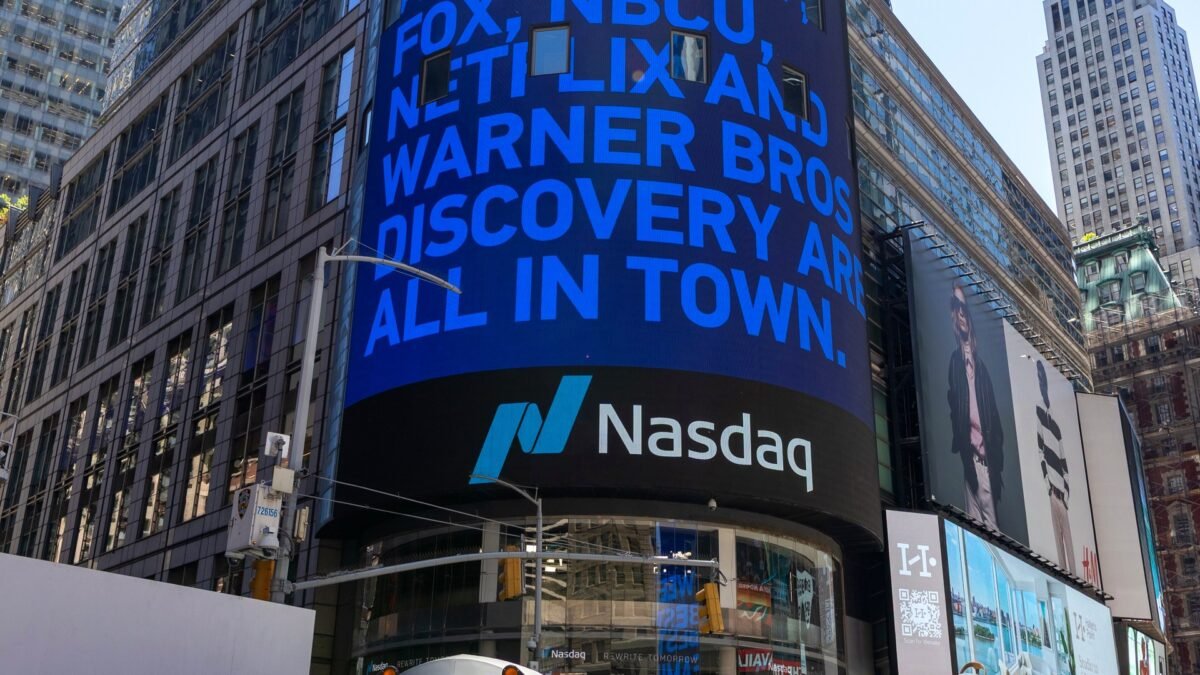
On 19 November, when the ticker ANT lights up on the Nasdaq tower in Times Square, the world will watch a number move. That number will tell us what the market thinks intelligence is worth today. It will not tell us what intelligence is worth. That answer belongs to the years ahead.
I leave you with this. A price is what you pay. Value is what you get. Wall Street has never confused the two for long — but it has confused them often enough, and expensively enough, that every generation must learn the difference again. This week, the lesson is being offered at $70 to $78 a share. Whether it is a bargain or a warning, only time will tell. And time, unlike the market, never lies.
Sources & References
- AT Pulse — “Anthropic sets IPO price range at $70 to $78 a share, implying a valuation of up to $1.404 trillion” (12 November 2026), citing TechCrunch, Fortune and The Guardian.
- SourceFirst News — “Anthropic IPO price range $70 to $78, valuation up to $1.4 trillion” (11 November 2026).
- Memeburn — “Anthropic IPO Price Range: 70–78, Three Valuations” (November 2026), analysis of the amended SEC filing of 10 November 2026.
- StackFutures — “Anthropic Sets IPO Range at $70-$78 for 825M Shares, Capping Its Valuation at $1.4T” (12 November 2026).
- AI-RTZ by Michael Parekh — “Anthropic Puts a Price on Its IPO, $1.4 Trillion” (11 November 2026), with details from Reuters and CNBC.
- Wikipedia — Nasdaq — background on the Nasdaq Stock Market and Nasdaq MarketSite, Times Square.
- Anthropic’s amended registration statement (Form S-1/A) filed with the U.S. Securities and Exchange Commission on 10 November 2026 — share count, price range, run-rate revenue of approximately $81 billion as of 31 October 2026, nine-month revenue of $33.242 billion and net loss of $104.039 billion.
- Fidelity International — “Week in the markets” (10 November 2026), on the AI stock sell-off, the Nasdaq’s 5.5% fall and the S&P 500’s retreat from its October high.
Photo: The Nasdaq Tower in Times Square, New York, where Anthropic will list under the ticker ANT. Photo: Nielsoncaetanosalmeron / Wikimedia Commons (CC BY-SA).

About the Author — Abdul Mannan
Related Articles
Gold Suffers Its Worst Week in Four Months as Fed Hike Bets and a Soaring Dollar Crush Bullion
Spot gold lost about 4.5 per cent in the week to 13 November 2026, its worst week since…
Musk’s Tesla–SpaceX Merger Talks Could Put SpaceX in the S&P 500 and Unlock $100 Billion of Index Buying
Talks between Tesla and SpaceX are progressing toward a tie-up that could be announced as soon as December,…

US Diesel Falls Below $6 a Gallon for the First Time in Two Months as Fuel Costs Ease
American diesel has fallen below $6 a gallon for the first time in two months, easing pressure on…