
Ronaldinho, 46, Makes Winning Return as Ravenna Beat Forli 2-0 After 11 Years Away

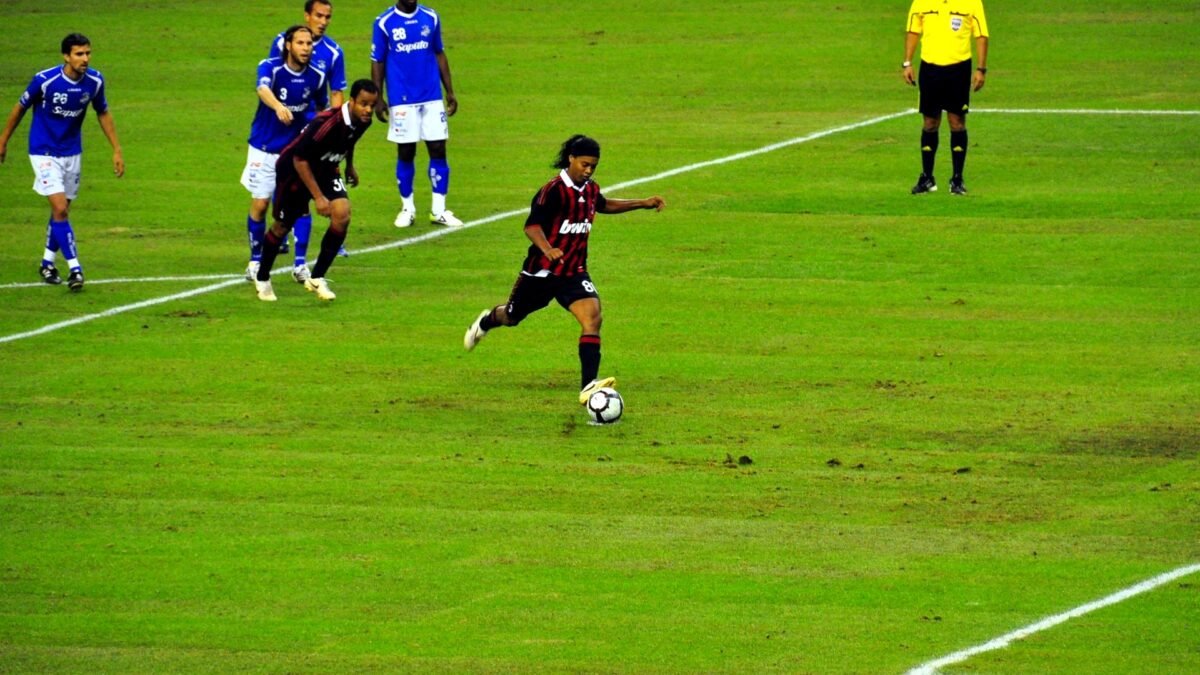
Ronaldinho is back. Eleven years after his last professional match, the 46-year-old Brazilian returned to competitive football on Sunday, playing the first half of Ravenna’s 2-0 win over local rivals Forlì in Italy’s Serie C, and he left the pitch at half-time to a standing ovation, a win secured and a question hanging in the air: will he do it again?
The former Barcelona and Brazil forward started the derby at the Stadio Bruno Benelli wearing Ravenna’s number 10 shirt, his first competitive appearance since he last played for Fluminense in September 2015. He was involved in the move that produced the opening goal, Giulio Donati’s long-range strike in the 36th minute, before being replaced by Matteo Maggio at the interval with the score at 1-0. Simone Rabbi added the second goal in the 58th minute to complete the victory, according to BBC Sport and the Associated Press.
It was, by every measure available, a remarkable afternoon. Ronaldinho had trained with his new team-mates only once, on Saturday. He arrived in Italy only days before the match. And yet, for 45 minutes, one of the most gifted footballers of his generation was a professional footballer again, in front of a sold-out crowd in a ground that had grown a whole new stand just to hold the people who wanted to watch him.
A first half eleven years in the making
The setting was deliberately, almost theatrically, grand. Ravenna’s home, the Stadio Bruno Benelli, holds around 5,000 supporters. For this match, the club built a temporary 1,800-seat stand, named the R10 after Ronaldinho and his familiar shirt number, so that the occasion could be sold out rather than simply full. Flares and smoke bombs went off in the stands as he walked out, and Andrea Bocelli’s “Con Te Partirò” played over the stadium loudspeakers, according to BBC Sport. The game was streamed in several countries around the world.
Ronaldinho had been expected to play around half an hour. In the end, according to Football Italia, he stayed on for the entire first half, and he was busier than most people had dared to expect. The same report counted 28 touches for him in the half, more involvement than a ceremonial cameo would usually produce.
He mostly played centrally, although a team graphic issued before kick-off had shown him on the left side, according to BBC Sport. The trademark acceleration has faded, as the Associated Press put it, and grey hairs have sprouted, but the touch was still there. He looked comfortable linking up play, the news agency reported, and he whipped in crosses with the assurance of a man who had done it thousands of times before.
His clearest contribution came in the 36th minute. Ronaldinho received possession near the edge of the penalty area, held off his opponent, and moved the ball on to Lorenzo Lonardi, who laid it off for Donati. The right-back, as the Associated Press described him, struck from distance to put Ravenna ahead. Ronaldinho celebrated enthusiastically with the scorer and his team-mates, the agency reported. Earlier, he had also set up a chance for Donati from a corner, with the defender’s header saved, according to BBC Sport. He did not create a sight of goal for himself.
At half-time, the media circus that had gathered around him spilled on to the pitch. Journalists surrounded him as he left the field, and Dida, his former Brazil and AC Milan team-mate, joined him there, according to BBC Sport. Ronaldinho acknowledged the fans at the end of the first half and was substituted at the break, replaced by Maggio, with Ravenna leading 1-0. Rabbi’s low shot across the goalkeeper in the 58th minute made it 2-0 and sealed the derby win.
The goal that was, and the goal that was not
For all the ceremony, there was one piece of unfinished business on the pitch. Ronaldinho has scored 299 goals in his professional career, and he had been hoping that the Ravenna match would give him a chance at number 300, according to BBC Sport. It did not come. He would have taken a penalty had one been awarded, but no spot-kick arrived, and his 300th goal will have to wait.
That detail matters, because it is the thread that keeps this story alive beyond a single afternoon. A comeback that ends with a neat, round number feels finished. A comeback that ends one goal short feels, deliberately or not, like an invitation. Asked after the match whether this had been his last game, Ronaldinho did not close the door.
“Is this my last one? I don’t know. If the president calls me, I’ll be back,” he told Sky Sport Italia, according to BBC Sport. “It is always a pleasure. I told the president, if he needs me, then I will be here.”
The words were echoed in a separate account of the same interview, in which he was reported to have said: “I don’t know yet.” The uncertainty is part of the appeal. Ravenna have a shareholder who clearly is not done yet, as BBC Sport put it, and the club now has every reason to keep the possibility open.
A day built for the cameras
It would be wrong to pretend that Sunday was an ordinary football match that happened to feature a famous name. Everything about the day was constructed around Ronaldinho, and the club made no secret of it. The temporary stand, the Bocelli soundtrack, the flares, the global streaming, the half-time parade of former team-mates — Dida on the pitch, Serginho reported to be there too — all of it was stagecraft, and it worked. A Serie C derby in a 5,000-capacity ground on Italy’s Adriatic coast was watched, discussed and streamed around the world.
That is, in part, the point. Ravenna are an ambitious club. They are owned since 2024 by Ignazio Cipriani, the Italian-American businessman behind the Cipriani restaurant brand, and the club is pushing for promotion to Serie B, a division it has not played in since 2008, according to the Associated Press. The signing of Ronaldinho was announced in June as part of Cipriani’s efforts to build up the club’s image, with an official presentation taking place at the end of August, according to the news agency and other reports.
Ronaldinho joined the club as an investor in August, and is a shareholder, according to BBC Sport. He signed a player-investor contract, according to SportBible, and he was handed a place in the starting line-up by coach Andrea Mandorlini on Sunday, featuring as one of the side’s three forwards. The arrangement is unusual but not mysterious: a famous name brings attention, attention brings money and profile, and a club in Italy’s third tier can use both.
The commercial logic was visible in every detail of the day. The R10 stand was not built because Ravenna needed 1,800 more seats for a derby against Forlì. It was built because Ronaldinho was playing, and 1,800 more people would pay to be there. The match was streamed in several countries, not because Serie C derbies are routinely beamed around the world, but because this one had a Ballon d’Or winner in the starting eleven.
How a Ballon d’Or winner ended up in Serie C
The route from the top of world football to a third-tier derby in Ravenna is a long one, and it is worth tracing, because it explains why Sunday felt less like a stunt and more like a homecoming of sorts. Ronaldinho’s is effectively a second spell in Italy, albeit at a much lower level, after three seasons with AC Milan from 2008 to 2011, where he won one Serie A title, according to the Associated Press.
His career, in its broad outline, is one of the most decorated of the modern era. He won the World Cup with Brazil in 2002, the Champions League with Barcelona in 2006, and league titles with Barcelona and AC Milan, plus the Ballon d’Or and the FIFA World Player of the Year award in 2005, according to BBC Sport. He scored 94 goals in 207 matches for Barcelona, where in his best years he played alongside the emerging Lionel Messi, and 33 times in 97 games for Brazil, according to the Associated Press.
Before Barcelona, there was Paris Saint-Germain, and before that Grêmio in his homeland. After Barcelona came Milan, then Flamengo, Atlético Mineiro and Fluminense in Brazil, and Querétaro in Mexico, according to the Associated Press and BBC Sport. His last professional appearance came for Fluminense in September 2015, against Goiás, according to SportsAdda. He formally announced his retirement in 2018, according to VivaSport.
That is the career that was being remembered on Sunday. It is also the career that explains why a 46-year-old who had not played a competitive match in eleven years could still fill a stadium. Ronaldinho was not merely a great player. He was, in his peak years, one of the most popular players in the world, famous for a joyful demeanour and an exuberant, inventive style of play that made him a favourite far beyond the supporters of the clubs he played for, as BBC Sport put it.
The signing, when it was announced in June, was a surprise. It was also, in hindsight, a straightforward piece of business. Cipriani, who has owned Ravenna since 2024, wanted to raise the club’s profile. Ronaldinho, a close friend of the president, according to SportBible, wanted to be involved in football again, and was willing to put his name and his money into a small Italian club. Five months passed between the announcement and the debut, and in that time the anticipation only grew.
The match itself still mattered
It is easy to lose sight of the football in a story like this, but the result mattered to Ravenna, and the three points were not a formality. Ravenna are second in their Serie C group, Group B, on 32 points from 14 games, six points behind leaders Spezia, who beat Vado 3-0 on the same day, according to SportsAdda. The club is chasing promotion, and a derby win in front of a sell-out crowd is worth more than the three points it brings.
Serie C is Italy’s third tier, split into three geographically based groups, according to the Associated Press, and promotion from it is a hard, season-long grind. Ravenna have not played in Serie B since 2008, and the gap between where they are and where Cipriani wants them to be is the whole project. Sunday’s win keeps them in touch with Spezia at the top, and it does so with a story that will be told for years.
There is also a narrower, more practical point. Ronaldinho played 45 minutes, was involved in the opening goal, and came off with his team winning. That is a better return than most comeback appearances manage. The plan going in, according to Football Italia, was roughly half an hour. He stayed on for the whole first half, and he did not look out of place. The pace of Serie C is not the pace of the Champions League, but it is still professional football, and a 46-year-old who had trained with the team once kept up with it for a half.
The second half, without him, produced the goal that settled the match. Rabbi’s strike in the 58th minute, a low shot across the goalkeeper, gave Ravenna the cushion they needed, and the game was won. Ronaldinho watched the rest from the sidelines, his work done, his 45 minutes in the books.
Analysis: Why It Matters
A stunt that was also a football match
The first question to ask about Sunday is the obvious one: was it a stunt? The honest answer is yes, and also no. It was plainly staged. The stand was built for him, the music was chosen for him, the cameras were there for him, and the whole afternoon was designed around the spectacle of a 46-year-old legend playing competitive football again. Nobody at Ravenna would deny that, because the staging was the point.
But a stunt that is also a football match is a different thing from a stunt that merely borrows a football match as its backdrop. Ronaldinho played. He did not jog around for ten minutes at the end, waving at the crowd. He started, he played a full half, he touched the ball 28 times, he helped create the goal that decided the game, and he came off with his team winning. The performance was modest — he was never going to dominate a match at 46 after eleven years away — but it was real, and the distinction matters. A stunt asks you to look. A football match asks you to believe. Sunday managed both, and that is why it worked.
The 300th goal is the hook that keeps the door open
The most important number in this story is not 46, and it is not 11. It is 299. Ronaldinho has scored 299 goals in his professional career, and he knows it. He went into Sunday’s match hoping for number 300, and he came out still on 299, with the milestone unclaimed and the door left open.
That is not an accident of arithmetic. It is the reason this story has a second act. If Ronaldinho had scored on Sunday, the comeback would have had a perfect ending: the legend returns, scores his 300th, waves goodbye, and the story closes. Instead, the story stays open, and the question of whether he will play again has a concrete reason attached to it. “If the president calls me, I’ll be back” is a line that works precisely because there is something left to do.
Whether that is by design or by chance hardly matters. The effect is the same. Ravenna now have a reason to ask him back, and Ronaldinho has a reason to say yes. The 300th goal is a small thing in the context of a career that includes a World Cup and a Ballon d’Or, but it is the one number he has not yet reached, and it gives the whole episode a shape it would not otherwise have.
What Ravenna actually bought
The second question is what Ravenna got for their money, and the answer is not a footballer. A 46-year-old who has trained with the team once is not a serious addition to a promotion-chasing squad, and nobody at the club is pretending otherwise. What Ravenna bought was attention, and the return on that investment was visible before kick-off: a sold-out ground, a new stand, global streaming, and a story that travelled around the world.
For a club in Italy’s third tier, that kind of attention is genuinely valuable. Serie C clubs live in the shadow of Serie A, and most of them are invisible outside their own towns. Ravenna, for one weekend, were not. The club’s name appeared in news reports on every continent, its owner was quoted everywhere, and its promotion push was mentioned in the same breath as a Ballon d’Or winner. That is the kind of profile that attracts sponsors, sells shirts, and fills grounds, and it lasts longer than 45 minutes.
There is a risk in this model, and it is worth naming. If a club becomes known only for its famous guest, the football can start to look like an afterthought, and the supporters who turn up every week can feel like extras in someone else’s show. But Ravenna’s position in the table suggests the football is in good health. They are second in their group, six points behind Spezia, and the win over Forlì was a real result in a real promotion race. The spectacle and the sport are, for now, pulling in the same direction.
Eleven years is a long time in football, and the game has moved on
The third point is about time. Eleven years is a long time to be away from professional football, and the game Ronaldinho returned to is not the game he left. When he last played for Fluminense in 2015, the sport was already changing: pressing systems were becoming more intense, the physical demands on players were rising, and the space in which a player of Ronaldinho’s type could operate was shrinking. In the decade since, those trends have only accelerated.
That is why his 45 minutes were, in their own way, an achievement. A player who relies on touch, vision and timing can survive the loss of pace better than a player who relies on speed, and Ronaldinho’s game was always built on the first three. But even so, the fact that he could play a half of professional football at 46, after a single training session, says something about how much of football is in the head and in the feet, and how little of it is in the legs.
It also says something about Serie C. The third tier of Italian football is a long way from the Champions League, and the gap in pace and intensity is real. That is not a criticism of Ravenna or of the league. It is the reason a comeback like this is possible at all. The same appearance in Serie A would be a different proposition, and a much harder one. Ronaldinho chose his stage well, and the stage was kind to him.
Joy is the point, and the product
The last point is the simplest, and perhaps the most important. Ronaldinho’s appeal was never really about trophies, although he won plenty of them. It was about joy. He played with a visible delight that made people who had no connection to his teams want to watch him, and that delight was on display again on Sunday, in the smile the Associated Press described, in the enthusiastic celebration with Donati, and in his own words afterwards.
“It was lovely to be here, playing, having the build-up in the dressing room,” he told Sky Sport Italia, according to BBC Sport. “It went by too fast, that has always been football for me. Football has always been the most wonderful thing in my life.”
Those are not the words of a man who has come back for a pay cheque or a publicity stunt. They are the words of a man who loves the game and wanted, one more time, to feel what it is like to be inside it. The fact that the feeling was shared by a sold-out stadium, by the players around him, and by the millions of people who watched the clips afterwards, is the reason the afternoon mattered.
Football has a habit of turning its legends into nostalgia, and nostalgia into merchandise. Sunday was, in part, exactly that. But it was also something rarer: a reminder that the joy Ronaldinho brought to the game was real, that it has not gone away, and that 46-year-old legs can still carry it for 45 minutes. That is a small thing, and it is not a small thing at all.
What to Watch Next
- Whether Ronaldinho plays again: He has said he will return “if the president calls me”, and Cipriani has every reason to call. Watch for any announcement from Ravenna in the coming days about a second appearance.
- The 300th goal: Ronaldinho is one goal short of 300 in his professional career. If he does play again, that milestone will be the story of the match, and he would be the designated penalty taker.
- Ravenna’s next fixture: The club are second in Serie C Group B, six points behind Spezia. Their next match will show whether the derby win, and the attention that came with it, has given the promotion push a lift.
- The gap to Spezia: Six points is a manageable deficit with most of the season still to play, but Spezia won 3-0 on the same day Ronaldinho played. The title race in Group B is the real story of Ravenna’s season.
- The commercial after-effect: Watch whether Ravenna report a rise in shirt sales, sponsorship interest or streaming numbers after the weekend. The club built a stand for one match; the question is whether the audience stays.
- Whether other clubs copy the model: If Ravenna’s gamble pays off, other lower-league clubs with wealthy owners may try the same trick. The model only works once or twice before it looks tired, so the first copy will be the interesting one.
- Ronaldinho’s own next move: He is a shareholder and investor in Ravenna, not just a player. His longer-term role at the club, and whether he takes a more formal position, will say more about his intentions than a single 45-minute appearance.
Sources
- BBC Sport — “Ronaldinho makes comeback for Ravenna”
- Associated Press via theScore — “Ronaldinho, 46, makes Ravenna debut 10 years after”
- Marking The Spot — “Ronaldinho makes comeback aged 46 for Serie C side Ravenna”
- SportsAdda — “Ronaldinho played 45 minutes in his first competitive game since 2015, and Ravenna beat Forlì 2-0 in the derby”
- VivaSport — “Ronaldinho returns to competitive football at 46 after 11-year absence as Ravenna beat Forli”
- SportBible — “Ronaldinho makes honest admission immediately after playing first professional match in 11 years”

About the Author — Abdul Mannan
Related Articles
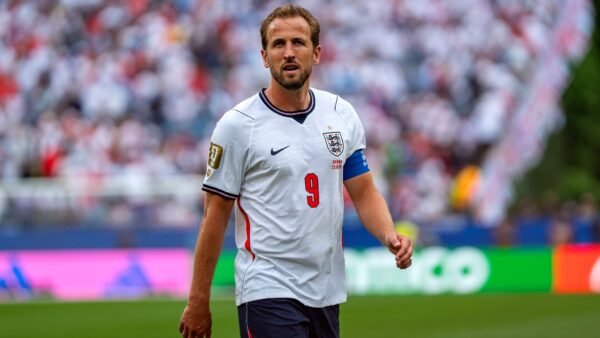
Ten-Man England End Spain’s Record 43-Game Unbeaten Run With 3-2 Win in Madrid
England beat world champions Spain 3-2 in Madrid to end their record 43-match unbeaten run, finishing top of…
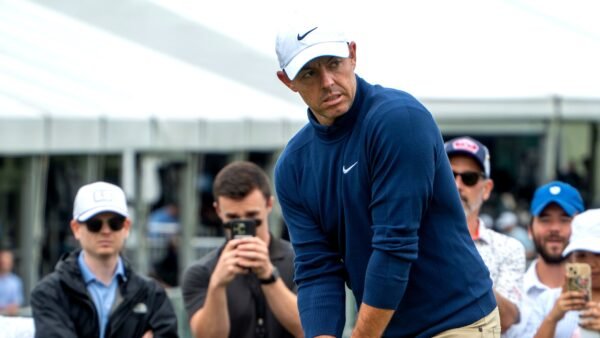
Tearful McIlroy Equals Montgomerie’s Record With Eighth Race to Dubai Title
Rory McIlroy carded a bogey-free 67 in Dubai to win a record-equalling eighth Race to Dubai title, edging…
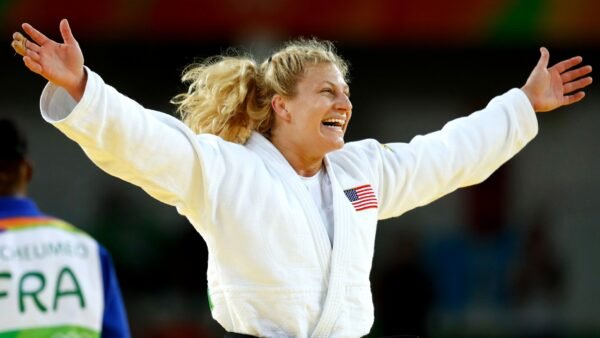
Kayla Harrison Submits Amanda Nunes in Round Four to Retain UFC Title at UFC 334
Kayla Harrison submitted Amanda Nunes with a rear-naked choke at 1:29 of round four at Madison Square Garden…