
Four Western Allies Tell Israel to Let 150,000 Tents Into Gaza Before Winter Closes In

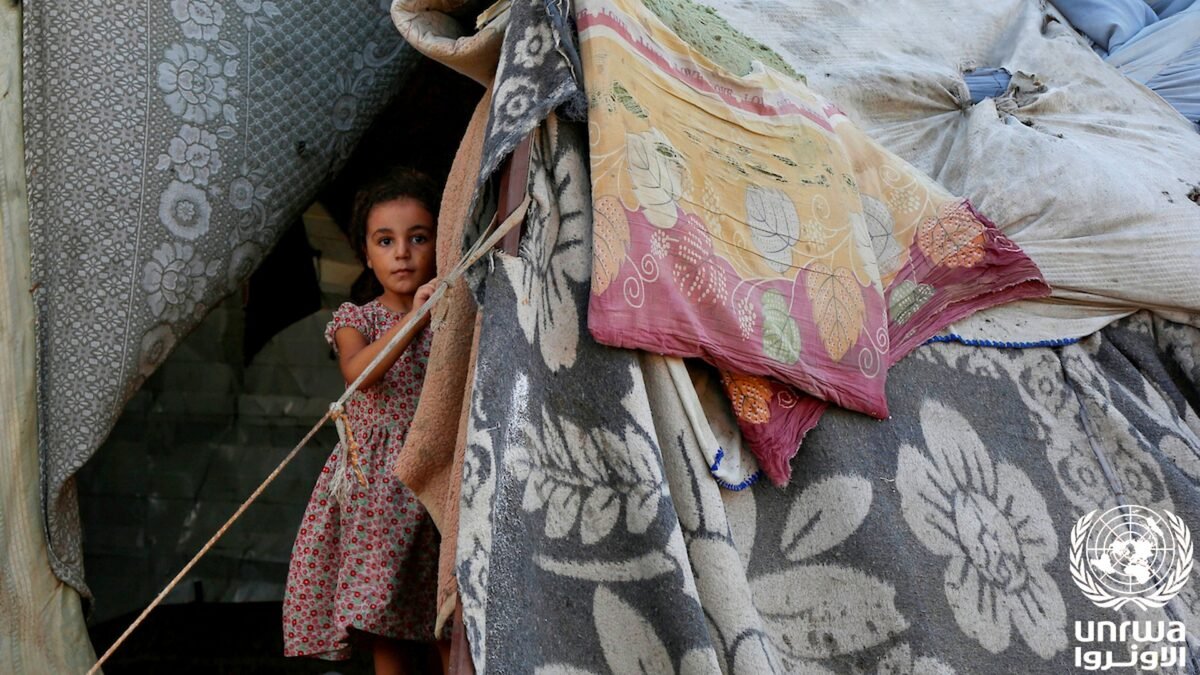
Four of Israel’s closest Western allies have issued a joint public demand for the immediate opening of Gaza’s crossings, saying 150,000 tents and other vital supplies are being held at the border while displaced families face the onset of winter in makeshift shelters. The foreign ministers of Australia, Canada, Italy and the United Kingdom said on Sunday that the humanitarian situation in Gaza is “dire” and that the recent flooding, which swamped tens of thousands of tents, was only the first storm of the season.
“People in Gaza desperately need shelter and humanitarian assistance,” the four ministers said in a joint statement published by the British government on Sunday evening. “Yet 150,000 tents and other vital supplies are being held at the border and prevented from entering Gaza.”
The statement, one of the most direct coordinated appeals to Israel from Western governments since the ceasefire in Gaza took effect in October 2025, called on Israel to “stop the delays now and allow immediate, rapid and unimpeded humanitarian access throughout Gaza”. It added: “The crossings must be opened, and the tents allowed in. Dual-use items necessary for humanitarian operations and early recovery must be granted entry before it is too late.”
The ministers also insisted that the situation could still be turned around. “This situation is entirely reversible – and there is still time to act before the winter fully sets in,” they said, adding that all parties must implement the Comprehensive Plan for Gaza, respect the ceasefire and meet their obligations under international humanitarian law.
Israel’s response, given by the military body that runs the Gaza crossings, was that it is coordinating a winter plan with the United States-led Board of Peace and the United Nations, and that 93,000 tents and 8,600 trucks carrying winter supplies have already entered the territory. The same authority said reconstruction “can only begin after Hamas fully disarms”, according to reports of its statement.
The gap between the two accounts – 150,000 tents waiting outside against roughly 91,000 to 93,000 that Israel says have gone in – is now the centre of the argument. The four ministers are not disputing that tents have entered Gaza. They are saying that what has entered is not enough, that what is still waiting is being held back by Israeli procedures, and that the first storm of winter has already shown what the shortfall costs.
What the four ministers said
The joint statement was short, and its brevity was part of its force. In five paragraphs, the foreign ministers of Australia, Canada, Italy and the United Kingdom set out a single demand and a single deadline: the crossings must be opened now, before winter fully sets in.
“We, the Foreign Ministers of Australia, Canada, Italy and the United Kingdom, are clear that as winter takes hold in Gaza, the humanitarian situation on the ground is dire,” the statement began. “The recent floods have brought further suffering – and this was only the first storm of the winter.”
The statement was published on Sunday 15 November 2026, two days after the United Nations humanitarian team in the occupied Palestinian territory said the flooding’s impact had been preventable, and one day after the European Union issued its own statement expressing “grave concern” over what it called the “persistent and devastating humanitarian crisis” in Gaza. The four ministers’ appeal followed an appeal made last week at the United Nations in New York by 53 member states and other organisations, led by Britain, Qatar and Jordan, according to The National.
Australian cabinet minister Madeleine King told ABC radio that the four nations had been working on the statement so that people affected by the war in the Middle East could receive the assistance they need, according to reports of her remarks. The coordination matters: these are four governments that have, for the most part, avoided direct public confrontation with Israel over the conduct of the war, and they chose to act together rather than alone.
The statement’s language on “dual-use items” – goods that can have both civilian and military uses – is the part with the widest consequences. Tents are not, in themselves, dual-use. But the heavy equipment needed to clear rubble, repair water systems, rebuild clinics and schools, and prepare ground for proper shelter is routinely classified that way, and Israel has refused to allow in the heavy equipment needed for large-scale clean-up and rubble removal, according to CNN. By naming dual-use items explicitly, the four ministers were pressing not only for tents but for the machinery without which recovery cannot begin.
The statement also reached beyond the immediate emergency. “All parties must implement the Comprehensive Plan for Gaza, respecting the ceasefire and their obligations under international humanitarian law, and allowing aid to reach the people who need it,” it said – a reminder that the ceasefire agreed in October 2025 was supposed to be the first step of a wider plan, not a frozen front line with aid still rationed at the gates.
The numbers behind the argument
The figure at the heart of the dispute – 150,000 tents – does not come from the four ministers. It comes from the United Nations. In a report on the heavy rains published on 8 November, the UN Office for the Coordination of Humanitarian Affairs said humanitarian partners and member states had bought more than 150,000 tents outside Gaza awaiting dispatch, including approximately 117,000 in the Egyptian city of Al-Arish, about 50 kilometres from Khan Younis. The ministers took the UN’s figure and turned it into a demand.
Israel’s figures tell a different story. According to CNN, Israel said last week that more than 91,000 tents had entered Gaza ahead of winter. The military body that runs the crossings put the figure at 93,000 tents and 8,600 aid trucks carrying winter supplies, according to reports. Neither figure is necessarily wrong: the 150,000 is the number waiting outside, and the 91,000 to 93,000 is the number Israel says has gone in over recent months. But the two numbers together describe a system in which supply is measured in the tens of thousands while need is measured in the hundreds of thousands – and in which the pipeline keeps narrowing just as the weather worsens.
The scale of the need was set out by the Global Shelter Cluster, the humanitarian body that coordinates shelter provision with the Red Cross and the United Nations. As of 1 November, it estimated that Gaza’s residents need at least 121,000 tents, 561,000 plastic sheets, 57,000 shelter kits and 1.7 million mattresses to face the winter. Against that requirement, only 2,800 tents were in stock inside Gaza on 1 November, according to the UN humanitarian office. The winter response as a whole needs 267.9 million dollars; 186.5 million dollars of it – about 70 per cent – had not been funded.
The arithmetic of access has also been deteriorating. Between 2 and 8 November, only 228 of 262 trucks were offloaded at the Kerem Shalom crossing, a fall of 42 per cent on the previous week, and the Egyptian corridor was suspended between 3 and 8 November, according to the UN humanitarian office. Each delay in the pipeline is a delay measured not in paperwork but in nights spent under tarpaulin in the rain.
The four ministers’ statement does not explain how the 150,000 tents said to be held back relate to the 91,000 or 93,000 Israel says were delivered. The gap is, in part, a question of timing: tents delivered over months against tents bought and waiting now. But it is also a question of who decides what counts as delivered, and at what speed. The ministers’ answer is that the decision should not rest with a system that has already let a storm do the damage.
A winter that has already begun
The statement’s warning that the floods were “only the first storm of the winter” is not rhetoric. The rain that began on 6 November produced 473 weather alerts between 6 and 9 November, according to the UN humanitarian office, and affected more than 46,000 families – around 226,000 people. More than 40,000 shelters were damaged and more than 9,000 destroyed. Some 960 toilets and nine health facilities were damaged, and more than 5,000 families were left without shelter of any kind.
At least six people were killed over that first stormy weekend, according to the UN children’s agency, UNICEF. Five of them – three children and two women – died when a sand embankment collapsed at the Al Berka reservoir in Deir al-Balah on 8 November, and an infant was reported to have drowned. The deaths happened in the same area where, in August 2024, a displaced girl was photographed standing at the entrance of her family’s makeshift tent – a tent held together with blankets and rope, the kind of shelter that no amount of goodwill can make waterproof.
The exposure is not marginal. About 1.4 million people – 65 per cent of Gaza’s population – are living in tents or makeshift shelters, according to the UN humanitarian office. Some 950,000 people are in flood-prone areas, and 400,000 of them are at very high risk, about half of them children. When the next storm arrives, it will fall on the same people, in the same tents, with the same drainage channels already full of mud.
The health consequences are already visible. Between 27 September and 31 October, 294 suspected cases of viral meningitis and 119 of bacterial meningitis were recorded, with 77 per cent of the documented cases in children under one year old. Some 42 per cent of essential medicines were out of stock. Education has been interrupted too: 109 of more than 600 learning spaces were damaged in the flooding, leaving 5,500 children unable to reach a classroom. Fifteen safe spaces for women and children were damaged, including one in the Palestine Camp Stadium that collapsed while serving more than 200 women.
The UN humanitarian team said on Friday 13 November that the devastation of the latest rainstorm was “preventable”, adding that it was caused “not by the storm alone, but by policy decisions”. The four ministers’ statement is, in effect, the diplomatic version of the same sentence: the storm was forecast, the tents were bought, and the only thing standing between the two was a decision at a crossing.
Israel’s answer
Israel’s position, as set out by the military body that runs the crossings, is that a winter plan is already in operation, coordinated with the US-led Board of Peace and the United Nations, and that tens of thousands of tents and thousands of trucks have already gone in. The figures it cites – 93,000 tents and 8,600 trucks – are not trivial. They describe a real flow of aid, and the ministers’ statement does not deny it.
What Israel has not done, so far, is answer the specific charge: that 150,000 tents are being held at the border. Nor has it explained the pace at which the remaining tents would be admitted, or what has changed since the first storm exposed the gap. The statement from the crossings authority added a condition that goes beyond logistics: reconstruction “can only begin after Hamas fully disarms”. That condition ties the admission of shelter and recovery equipment to a political outcome that has not been achieved, and that the ceasefire plan itself was supposed to sequence over time.
The Board of Peace, the body created by the Trump administration with United Nations backing to oversee the Gaza ceasefire plan, had already described Israel’s response as insufficient. On Sunday, CNN reported that the Board had urged both Israel and Hamas to uphold their commitments under the Comprehensive Plan and to protect civilians. The four ministers’ statement adds the weight of four governments to the Board’s judgement – and makes it harder for the dispute to be treated as a technical disagreement about trucking schedules.
Israel’s security argument is not new, and it is not weightless. Dual-use restrictions exist because the same excavator that clears rubble can also dig a tunnel, and the same pipes that carry water can carry other things. But the argument has been made for more than a year, through a ceasefire that was supposed to change the terms of access, and the result on the ground is a population still living under blankets and tarpaulin while winter arrives. The question the four ministers are asking is not whether security screening should exist, but whether it should be allowed to hold 150,000 tents at a border while the people they were bought for sleep in the rain.
A widening circle of pressure
The joint statement did not come out of nowhere. It is the latest in a sequence of warnings that have grown sharper over the past week. On Friday 13 November, the UN humanitarian team said the flooding’s impact was preventable and blamed policy decisions. On Saturday 14 November, the European Union issued a statement expressing “grave concern” over the “persistent and devastating humanitarian crisis” and urged Israel to comply with international law. On Sunday, the four ministers spoke. Each statement is more specific than the last, and each one names the same number: 150,000 tents.
The sequence matters because it shows a pattern that has been building since the ceasefire took effect on 11 October 2025. The ceasefire was supposed to open Gaza to aid and to begin a process of recovery. Instead, Israeli air strikes and other attacks have continued almost every day, according to reports, and more than 1,640 Palestinians have been killed since the ceasefire began, according to Gaza’s health ministry, whose figures are considered reliable by the United Nations. On Saturday 14 November, Israel killed Samir Abu Younis, the commander of Hamas’s Rafah Brigade, in a strike on a tent camp in al-Mawasi. Three days earlier, a strike on the Nasser Hospital in Khan Younis killed six people, including a surgeon and a 13-year-old boy, according to the hospital and aid agencies.
The total toll since the war began on 7 October 2023, when Hamas-led fighters killed about 1,200 people in southern Israel and took 251 hostage, now stands at more than 74,690 people killed in Gaza, according to the territory’s health ministry. Against that background, the argument about tents can look small. It is not. It is the argument about whether the ceasefire means anything for the people still living in its aftermath – whether the end of large-scale bombing is followed by the beginning of shelter, or merely by a quieter form of the same deprivation.
The four governments that signed the statement are not the usual critics of Israel. Britain, Australia, Canada and Italy are close allies of the United States, and all four have, at various points, defended Israel’s right to act against Hamas. Their decision to issue a joint public demand – rather than a private demarche – signals that private channels have not produced the result they wanted, and that they are now willing to be counted in public.
There is also a practical calculation. Winter in Gaza does not wait for negotiations. Each week that the tents stay at the border is a week in which another storm can do what the first one did, and each storm makes the next one worse, because the shelters it damages are the shelters people will still be living in when the following storm arrives. The ministers’ phrase – “there is still time to act before the winter fully sets in” – is both a reassurance and a warning. The time exists. It is also running out.
Analysis: Why It Matters
A number that is also an accusation
The figure of 150,000 tents does more work than any adjective in the statement. It is specific enough to be checked, large enough to be shocking, and – because it comes from the United Nations rather than from the four governments – difficult to dismiss as political. It turns a general complaint about “delays” into a countable fact: this many tents, bought and paid for, sitting this far from the people who need them. Israel’s counter-figure does not answer it, because the two numbers measure different things, and the ministers know it. The argument is not about whether any tents have entered Gaza. It is about whether the system that admits them is working fast enough, and the answer the ministers give is that it is not – because the evidence of the first storm says so.
Four allies, one message
The composition of the group matters as much as its words. Britain, Australia, Canada and Italy are not a bloc that habitually lectures Israel, and they are not countries with anything to gain from a public row. Their joint action suggests two things: that each of them had reached the same conclusion independently, and that each of them judged that acting alone would be easier to ignore. A single foreign ministry can be dismissed as grandstanding; four, speaking in one voice, with the same number and the same demand, is a statement that the dispute has moved from the margins of diplomacy to its centre. It also puts the United States in a distinctive position – the ally that is not a signatory, and whose Board of Peace is the body meant to be managing the process the four ministers say is failing.
“Entirely reversible” – the sentence that does the work
The most important sentence in the statement is the one that sounds the most hopeful: “This situation is entirely reversible – and there is still time to act before the winter fully sets in.” It is doing two jobs at once. It tells the public that the suffering is not inevitable, which is a way of saying that it is the result of decisions, and decisions can be changed. And it tells Israel that the ministers are not asking for the impossible – they are asking for a gate to be opened. But the sentence also carries a deadline that the ministers do not control. Winter in Gaza is not a metaphor; it is a season, and it has already started. “Still time” is true today in a way that it may not be true after the next storm, and the ministers’ careful optimism is also a way of putting Israel on notice that the next storm will be judged differently.
Dual-use is where the argument actually lives
The tents are the headline, but the dual-use items are the test. A tent keeps a family dry for a night; a bulldozer, a water pump and a generator are what turn a camp back into a place where people can live. Israel’s refusal to admit the heavy equipment needed for large-scale clean-up and rubble removal has been one of the quiet constants of the ceasefire period, and the ministers’ decision to name dual-use items explicitly suggests they understand that the real bottleneck is not canvas but machinery. The crossings authority’s answer – that reconstruction can only begin after Hamas fully disarms – makes the connection explicit: shelter is being treated as part of a political negotiation rather than as a humanitarian obligation. That is the position the four ministers are challenging, and it is the position on which the next phase of the argument will turn.
The ceasefire’s other ledger
The statement about tents cannot be read apart from the ceasefire it invokes. The Comprehensive Plan for Gaza was supposed to be a sequence: ceasefire, then aid, then recovery. A year into the ceasefire, the sequence has stalled at the second step, and the first step is itself fraying – strikes continue almost daily, and more than 1,640 people have been killed since the ceasefire began. The killing of a Hamas brigade commander in a tent camp and the strike on a hospital’s surgical wing are not footnotes to the tents story; they are part of the same picture, in which the people the tents are meant to shelter are still being killed in them. The four ministers’ insistence that all parties respect the ceasefire and international humanitarian law is, in that light, not a formality. It is a reminder that a ceasefire that does not protect civilians, and does not let aid reach them, is a ceasefire in name only – and that the credibility of the plan depends on both halves of the bargain being kept.
What to Watch Next
- Whether the crossings open this week: the test of the statement is not the response it receives but the trucks that move. Watch for any announcement from the crossings authority on the admission of the 150,000 tents, and for the daily truck counts at Kerem Shalom and the Egyptian corridor.
- Where the tents actually are: about 117,000 of the 150,000 tents are in Al-Arish, some 50 kilometres from Khan Younis. Any movement from Al-Arish towards the border will be the first concrete sign that the statement has had an effect.
- The next storm: the first storm of winter damaged more than 40,000 shelters. Forecasters’ warnings for the eastern Mediterranean will show how much time remains before the second storm tests the same tents again.
- Dual-use decisions: whether heavy machinery and construction material are admitted will show whether the statement’s most consequential demand – the one about items needed for early recovery – is being met, or whether only the tents move.
- Israel’s formal reply: the crossings authority has given figures; the Israeli government has not yet answered the four ministers directly. A formal response, and any change in the “disarm first” condition for reconstruction, will set the terms of the next round.
- The Board of Peace: the US-led body overseeing the ceasefire plan has already called Israel’s response insufficient. Whether it now takes a public position on the 150,000 tents – and whether Washington backs its own body – will show how far the pressure extends.
- The ceasefire itself: with strikes continuing almost daily and more than 1,640 people killed since October 2025, the question is whether the plan the four ministers invoke still holds, or whether the winter will be spent in a Gaza where the fighting has paused in name but not in fact.
Sources
- Joint Foreign Ministers Statement on Gaza – GOV.UK (primary source: the full text of the statement by the foreign ministers of Australia, Canada, Italy and the United Kingdom)
- UK and allies call on Israel to allow rapid humanitarian access to Gaza – Geneva Times
- Israel kills senior Hamas commander in Gaza two months after killing his predecessor as ceasefire stagnates – CNN
- UK, Canada, Australia and Italy urge entry for 150,000 Gaza tents after floods – Transatlantic Standard
- Australia, Canada, Italy and the UK urge Israel to allow aid into Gaza – Grenada Chronicle
- Britain, Australia, Canada and Italy press Israel over Gaza aid held at the border – Real News Hub (reporting The National)

About the Author — Abdul Mannan
Related Articles

Saudi Arabia Intercepts Two Houthi Missiles Aimed at Riyadh and Three Drones Over Its Oil Heartland
Saudi air defences intercepted two Houthi ballistic missiles aimed at Riyadh and three drones over the Eastern Province…
Jordan Sentences Three Men to Death Over Church Funeral Attack That Killed Nine in Karak
Jordan's State Security Court has sentenced three men to death for the 23 October attack on a Greek…
Arab and Muslim States Condemn Israel Over Nasser Hospital Strike as Katz Vows Gaza Offensive Will Continue
Foreign ministers from 18 Arab and Muslim countries have condemned Israel's strike on Gaza's Nasser Hospital, warning the…