
Estonia to Close All Border Crossings With Russia From 1 December After GRU-Linked Arson Attempt on Drone Maker

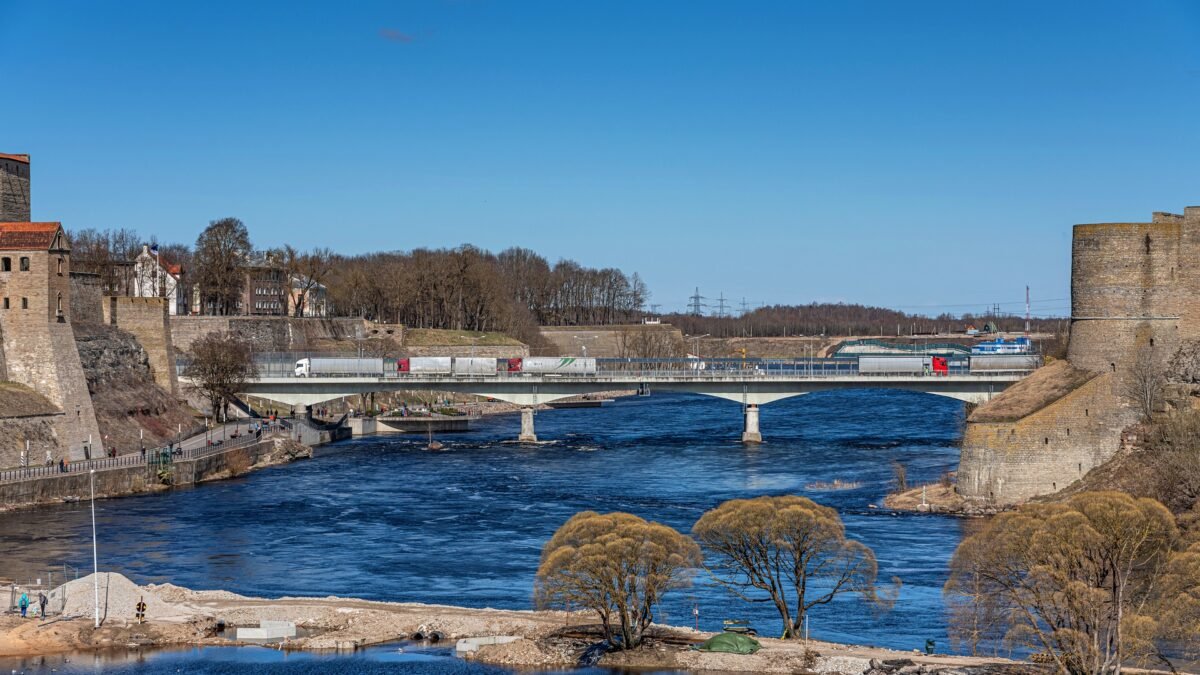
Estonia will close every border crossing it has with Russia from 1 December, its government announced on Sunday, after blaming Russia’s military intelligence service, the GRU, for a foiled arson attack on a company that builds the drones Ukraine flies against Russian forces. It is the sharpest response yet by a NATO member to what European governments describe as a widening campaign of sabotage on their own soil, and it turns a small Baltic state’s border policy into a test of how far the West is prepared to go in answering it.
Foreign Minister Margus Tsahkna announced the decision on Sunday 15 November in a post on X, saying there was clear evidence that the GRU ordered the attack and that Estonia would close all of its border crossing points with Russia from the start of December. “Russia must understand that hostile actions against Estonia come with consequences,” he wrote, according to Reuters. He did not say how long the closure would last, and no end date has been set.
The announcement came a day after Estonian security services detained eight people over an attempted attack on Threod Systems, a defence company based in Viimsi, just north of the capital, Tallinn. The company makes long-range reconnaissance and attack drones, and it supplies them to Ukraine and other countries. That is what put its factory on the target list Tallinn describes, and it is what makes the incident more than a domestic crime story. A drone maker for Ukraine, attacked in a NATO capital, is a front line of the war reaching into the European Union.
Prime Minister Kristen Michal called the plot part of Russia’s hybrid war against Europe and instructed officials to prepare the measures needed to shut the crossings. Interior Minister Igor Taro is to put a formal proposal to the government, which is expected to decide this week whether the closure is temporary or indefinite. Estonian citizens in Russia have been given two weeks to come home, according to Estonia’s public broadcaster ERR.
The Kremlin denied everything on Monday. Spokesman Dmitry Peskov said the accusation was “entirely baseless” and that Russia “completely reject[s] these accusations”, according to Reuters. He described the charge as part of what he called a pattern of false allegations against Moscow coming from European countries, and compared the planned border closure to Estonia building a wall. Russian Foreign Ministry spokeswoman Maria Zakharova called the move part of a wider pattern of what she termed Russophobia, according to CNN.
Estonia has three open border crossings with Russia, at Narva, Luhamaa and Koidula, which admit pedestrians and freight, according to ERR. All three are to close. The decision will sever the last routine road links between a European Union and NATO member and Russia on the Baltic coast, and it will do so in a country where the border runs through living communities: in Narva, the border city on the river of the same name, Russian speakers are the overwhelming majority, and families, trade and daily life have crossed that river for generations.
The attack that triggered the closure
The attempted attack took place in the early hours of Saturday 14 November. Shortly after 3 a.m., attackers tried to break into the Threod Systems premises in Viimsi, smash windows and pour flammable liquid inside, with the aim of causing an explosion and setting the building on fire, according to ERR. The company’s own security team foiled the attempt. No one was hurt, there was no significant damage, and production and deliveries were not affected, according to a digest of ERR’s reporting.
Estonia’s Internal Security Service, known as KAPO, detained eight people overnight. All eight live in Latvia, according to the Prosecutor General’s office, which said arrest warrants were sought for five of them. Prosecutors asked a court to keep five of the eight in custody. Searches were carried out at at least nine locations in Latvia on Sunday, where explosives and weapons were found, according to ERR’s Russian-language service.
One detail in the reporting deserves care. Some outlets have described the eight as Latvian citizens; others say only that they live in Latvia, and at least one report notes that their citizenship was not disclosed. This article says only what all the reporting agrees on: the eight are residents of Latvia. The distinction matters, because the pattern in these cases is precisely the use of people from third countries, recruited to carry out attacks in a country that is not their own.
KAPO’s director general, Margo Pallõson, said counterintelligence had confirmed that the GRU coordinated the operation. According to ERR, KAPO’s finding is that the GRU commissioned the attack and recruited the people who carried it out. Pallõson said the company would have “suffered considerable damage had the attack unfolded as planned”. He also said that about ten Estonian defence companies are on Russia’s list of potential targets, according to ERR.
That last figure is the one that explains the scale of Estonia’s response. If the target list runs to ten companies, then Threod Systems is not an isolated incident but one entry in a campaign, and a border closure is not a punishment for a single night’s work but a statement that the campaign itself has consequences. The evidence behind the attribution has not been published, and this article treats the GRU’s role as Estonia’s official position, stated as such, not as independently verified fact. What is independently established is the attempt itself, the arrests, and the closure that followed.
The second attack in three months
Threod Systems is the second Estonian defence company to be attacked in three months, and the second that Tallinn has formally blamed on Russian intelligence. On the night of 14 to 15 August, a fire broke out at a building used by Milrem Robotics in Tallinn’s Lasnamäe district, on Betooni Street. Milrem makes the THeMIS unmanned ground vehicle, which Ukrainian forces use on the battlefield.
Three Latvian citizens were detained in Latvia on 17 and 18 August in connection with that fire and handed over to Estonia in September. For six weeks the Estonian authorities said little. Then, on 29 September, KAPO concluded that the arson had been a deliberate and pre-planned act commissioned by Russian special services. Prime Minister Michal said the government could state “with full confidence” that the fire was sabotage ordered by the special services of the Russian Federation, on the basis of intelligence assessed by KAPO. The foreign ministry summoned Russia’s chargé d’affaires in Tallinn the same day. Moscow rejected the accusation, as it has rejected every one since.
KAPO’s director general admitted something unusual in September: the Milrem fire was the first Russian-sponsored attack in Estonia that year which the authorities had not prevented. The Threod attempt, by contrast, was stopped by the company’s own security staff before it could do real damage. The difference between the two cases is the difference between a security service that caught the pattern late and one that had learned to watch for it.
Interior Minister Igor Taro, in an interview with the Financial Times published on 9 November, argued that Russian sabotage operations across Europe should be called state-sponsored terrorism, not merely hybrid warfare, because the softer term understates their seriousness. His warning followed the Milrem attribution. Six days later, the Threod attempt gave him the second case he needed, and the border closure is the policy that follows from the language: if this is state-sponsored terrorism, then the answer is not a diplomatic note but a closed border.
A campaign, not a series of accidents
Estonia’s case does not stand alone. Across Europe, the same pattern has been appearing for more than a year: defence production and the logistics that supply Ukraine, targeted by people recruited from third countries, in operations that several governments now attribute to Russian intelligence.
In Poland, prosecutors filed an indictment on 12 November against a Ukrainian man, identified only as Volodymyr B. under Polish privacy law, accused of assisting Russian intelligence in sabotaging a railway line in November 2025. The attacks took place on 15 and 16 November 2025 along railway line No. 7, which connects Warsaw with Dorohusk near the Ukrainian border. Near the village of Mika, a device containing military-grade C4 explosive was detonated beneath a passing freight train at about 20:58 on 15 November, in an apparent attempt to derail it; it caused only minor damage to the floor of a wagon. Near Gołąb, attackers damaged railway infrastructure and installed specially constructed metal components on the tracks. Prosecutors say Volodymyr B. helped a man named Yevhenii Ivanov conduct reconnaissance, choose where to plant the explosives and install recording devices and metal elements on the rails. The two men accused of directly carrying out the attacks, Ivanov and Oleksandr Kononov, remain at large; Interpol issued red notices for them in December 2025. Prime Minister Donald Tusk said shortly after the attacks that the perpetrators were two Ukrainian citizens acting on behalf of Russia, who had entered Poland from Belarus and fled back across the border immediately afterwards. The most serious charge Volodymyr B. faces, sabotage on behalf of foreign intelligence, carries a minimum sentence of ten years and a maximum of life imprisonment.
A study published in February 2026 by the International Centre for Counter-Terrorism, produced with GLOBSEC, identified Poland as the country most frequently affected by Russian-linked sabotage incidents in its dataset. Poland’s prime minister has said that 55 people have been detained on suspicion of sabotage-related activities since last year.
In Romania, the intelligence service SRI and organised crime and terrorism prosecutors announced on 26 October that a fire on 14 September at the CARFIL industrial platform in Brașov, next to a subsidiary of the state arms group ROMARM, had been set by a sabotage network coordinated from Russia. Investigators are examining three foreign nationals living in EU countries, two Belarusians and a Ukrainian, for attempted sabotage.
In Britain, the United States Department of Justice unsealed an eight-count indictment on 10 November against three men it says supported the IRGC and the Iraqi militia Kata’ib Hizballah, alleging they were involved in nearly 20 attacks and attempted attacks across Europe and the United States, including a September plot against RAF Fairford in Gloucestershire, where American bombers were stationed. Two men were stopped in white vans approaching the base overnight on 27 September. That indictment, and the London jury conviction two days later of two Iranian men for spying on journalists and critics of the Iranian government, showed the same method at work on a different front: recruited intermediaries, deniable operations, and targets chosen for their connection to the war.
And in Britain itself, suspected unauthorised drone activity over RAF Lakenheath in Suffolk on the evening of 13 November forced the United States Air Force to order personnel to shelter in place, in the second such incident at a British base in two months. In September, drones closed Copenhagen airport for about four hours and disrupted Oslo on the same evening, in an incident whose origin was never confirmed. None of these incidents has been proved to be part of a single coordinated campaign. But taken together, they are the reason European governments no longer treat each one as an isolated event.
Europe answers on the same day
Estonia’s announcement landed on the same day the European Union moved against the money behind the war. On Monday 16 November, EU foreign ministers meeting in Brussels adopted 113 new sanctions listings, covering 12 individuals and 101 entities, for their role in economic sectors that provide a substantial source of revenue to Russia’s war and support its shadow fleet, according to the Council of the European Union. The listings include nearly 50 Russian banks and financial institutions, the sole shareholder of Wildberries, Russia’s largest online retailer, and a controlling shareholder in Ozon, along with companies operating refineries and the St Petersburg oil export terminal, and buyers of Russian oil in China, the United Arab Emirates, the Seychelles and Oman. A further 32 listings were adopted under the bloc’s foreign information manipulation and cyber regime, including the pro-Russian hacking group NoName057(16), bringing the day’s total to 145, according to a Reuters factbox.
On Friday 13 November, EU naval forces from Operation Irini boarded a tanker suspected of belonging to Russia’s shadow fleet in the Mediterranean and confirmed it was sailing under a false flag, the EU’s foreign policy chief Kaja Kallas said on Sunday. The vessel, the MV Midag, was inspected under Article 110 of the UN Convention on the Law of the Sea. Kallas said the EU would keep disrupting the shadow fleet at sea and through diplomatic means, and that foreign ministers would approve new sanctions on Monday targeting banks, buyers and companies supporting the network.
Ukraine commended Estonia’s move. Foreign Minister Andrii Sybiha said in a post on X that Estonia’s decision was an example of effective action against Russian hostility and encouraged Europe to take note, according to CNN. Kyiv has every reason to welcome it: the companies being targeted are the ones that arm its forces, and every foiled attack is a production line that keeps running.
The wider negotiation
The border closure also lands in the middle of the most consequential diplomatic fortnight of the war. On 10 and 11 November, American envoys Steve Witkoff and Jared Kushner met Russian and Ukrainian delegations in Abu Dhabi. The talks produced an agreement in principle for a prisoner exchange of 1,200 to 1,300 people on each side, which would be the largest of the war, but no breakthrough on a ceasefire, territory or Ukraine’s security guarantees.
What the talks did produce, according to the New York Times, was a Russian position paper reviving the demands Moscow first made in December 2021: NATO forces out of every country that joined after 1997, no further enlargement, no Western military activity in Ukraine, the South Caucasus or Central Asia, an end to nuclear-sharing arrangements, and a bar on France and the United Kingdom using their nuclear deterrents to protect European allies. President Volodymyr Zelenskyy warned on 13 November that negotiating a new security order for Europe before a ceasefire was dangerous, and that the American side had drawn Russia into doing so. European leaders at a summit in Dublin rejected Moscow’s demands, and called for a ceasefire before any wider discussion of security. Kushner had set out the American position in writing on 5 November: NATO would remain central to Europe’s defence, each country would keep authority over its own alliances, and no country would have a veto over another’s choices.
Against that background, Estonia’s decision reads as a message in two directions. To Moscow, it says that the price of sabotage is now measured in closed borders, not in statements. To its allies, it says that a country of 1.3 million people on NATO’s eastern flank is prepared to act alone while the larger negotiation drags on. The timing is unlikely to be a coincidence: a state that has just been told, in effect, that its own security may be negotiable has chosen to demonstrate that it is not.
It is also worth noting what happened on the battlefield while the diplomats talked. Overnight on 15 to 16 November, Ukraine launched its biggest drone attack of the war, with Russia’s defence ministry saying its air defences brought down 1,336 Ukrainian drones across 16 regions, and the road and rail bridge linking Russia to occupied Crimea was struck. The war is not waiting for the negotiation, and neither is the sabotage campaign that runs alongside it.
China has confirmed that President Xi Jinping, President Donald Trump and President Vladimir Putin will hold their first three-way summit on Thursday 19 November in Shenzhen, with talks expected to cover nuclear non-proliferation, the Middle East war, trade and possibly Ukraine. Estonia’s border will already be on a countdown to closure by the time they sit down.
Analysis: Why It Matters
A border is the one sanction a small state can impose by itself
Estonia cannot sanction Russia’s banks, seize its shadow fleet or supply Ukraine with air defences. What it can do, without asking anyone’s permission, is close its own border. That is what makes this decision significant beyond its practical effect. For years, the response to Russian sabotage in Europe has been attribution without consequence: a statement, a summoned diplomat, a denial, and then the next incident. Estonia has broken that pattern by choosing a measure that is entirely within its own power and entirely visible. A closed border crossing is not a press release. It is a physical fact, and it will be photographed, reported and felt by every person who used to cross it. Small states are often told to wait for the alliance to act. Estonia has shown what acting alone looks like, and the example will be studied in every Baltic and Nordic capital.
The closure answers the wrong route, and that is the point
There is an awkward fact at the heart of this story, and it is worth stating plainly. The eight people detained over the Threod attempt live in Latvia, not Russia. The searches that found explosives and weapons were carried out in Latvia. The Milrem suspects were Latvian citizens detained in Latvia. The attack route ran through a fellow EU member state, not through the Narva, Luhamaa or Koidula crossings that Estonia is closing. Closing the Russian border does not block the route the attackers actually used. What it does is raise the cost for Moscow, signal resolve to allies, and force a public argument about what the campaign is. That is a political answer to a security problem, and it should be judged as one. The honest question is not whether the closure stops the next arson attempt, because it probably does not. The honest question is whether it changes the calculation of the people ordering them, and whether it pressures other European governments to match the seriousness of their language with measures of their own. On those questions, the jury is still out.
Attribution is now the argument, not the evidence
Notice how the argument over the Threod attempt is actually being conducted. Estonia says it has “clear evidence” that the GRU ordered the attack. Russia says the accusation is “entirely baseless”. Neither side has published the evidence, and neither side is going to. That is the condition of the entire sabotage debate in Europe: attribution rests on intelligence that cannot be shown, denial rests on the absence of proof that cannot be supplied, and the public is asked to choose between the credibility of governments. Estonia’s case is stronger than most, because it has a second incident, Milrem, where it took six weeks to move from suspicion to certainty, and because the pattern of third-country recruits matches cases in Poland, Romania and Britain. But the pattern is not proof, and Moscow knows it. The danger for Estonia is that each new attribution that rests on unpublished intelligence erodes the next one. The danger for Moscow is that the pattern is now so consistent that the denials have stopped being believed even where they might be true. Both sides are trapped in the same argument, and the border closure is Estonia’s way of refusing to keep having it on Moscow’s terms.
The defence industry is now the front line, and it is mostly undefended
The most important number in this story is not eight detainees or three crossings. It is ten: the number of Estonian defence companies that KAPO says are on Russia’s target list. Estonia’s defence industry is small, specialised and strategically vital, because it makes the drones and unmanned vehicles that Ukraine uses every day. It is also, by its nature, exposed: factories on industrial estates, staff who go home at night, supply chains that run through ordinary commercial channels. The Threod attempt was stopped by the company’s own security team, not by the state. The Milrem fire was not stopped at all. If the campaign continues, the question is not whether another company will be attacked but whether the next attack will succeed, and what happens to Ukraine’s supply of drones if it does. Europe has spent three years building up its defence industry to supply Ukraine. It has spent far less time thinking about how to protect the factories it has built. Estonia’s border closure does not solve that problem, but it announces that Tallinn has understood it, and it puts the question to every other government with a defence plant on its territory.
A test of whether Europe means what it says about sabotage
On the same day Estonia announced its closure, the European Union adopted 145 new sanctions listings and its naval forces boarded a shadow fleet tanker in the Mediterranean. The two events belong together. Europe is, slowly and unevenly, building a response to the sabotage campaign that combines economic pressure, maritime enforcement and, now, border closures. But the response is still fragmented: each government acts on its own timetable, with its own evidence, and its own threshold for action. Estonia has set its threshold at two attacks in three months. Poland’s threshold was an indictment a year after the event. Britain’s was a Justice Department indictment in New York. The question the Threod case poses is whether Europe can turn a series of national responses into a common one, with shared intelligence, shared attribution and shared consequences. If it cannot, then the campaign will continue to exploit the gaps between national systems, recruiting in one country, striking in another, and denying everything in a third. Estonia has done its part. The rest of Europe now has to decide whether to follow.
What to Watch Next
- Whether Estonia’s government formally approves the closure this week, and whether it sets an end date or leaves the crossings shut indefinitely.
- How many Estonian citizens use the two-week window to return from Russia, and whether Moscow imposes any reciprocal restriction on its own side of the border.
- Whether any other Baltic or Nordic state follows Estonia’s example, or whether Latvia, where the suspects live, takes parallel action against the recruitment networks on its territory.
- What happens in court to the eight detainees, and whether prosecutors publish any evidence linking them to the GRU beyond the intelligence assessment already announced.
- Whether KAPO names any of the other defence companies it says are on Russia’s target list, and what protective measures are put in place for them.
- How the 19 November summit in Shenzhen handles the question of European security, and whether the American envoys return to the Abu Dhabi channel with a new proposal or a dead end.
- Whether the next sabotage attempt in Europe is aimed at a defence company, a railway, or something else entirely, and how quickly the government concerned attributes it.
Sources
- Reuters — Estonia to close Russian border crossings after attempted arson attack
- Reuters — Kremlin denies Estonian accusation Russia was behind attempted arson that prompted border closure
- CNN — Estonia to shut its border with Russia, blaming Moscow for foiled arson plot
- Brussels Signal — Estonia moves to close Russian border after foiled sabotage at drone maker
- Council of the European Union — EU lists 113 individuals and entities to further restrict Russia’s ability to finance its war of aggression
- Reuters via Euronext — Factbox: EU expands Russia sanctions list by 145 names and entities

About the Author — Abdul Mannan
Related Articles
Ukraine Launches Its Biggest Drone Attack of the War as 1,336 Drones Strike Russia and Hit the Crimea Bridge
Russia said its air defences downed 1,336 Ukrainian drones overnight, the largest such attack of the war, in…
Seventeen Killed in Two Mass Shootings on the Same Night in South Africa
Nine people were shot dead in a shack near Pretoria and eight more in a vehicle outside Pietermaritzburg…
Houthis Take Control of Bab el-Mandeb as Yemeni Forces Pull Back to Defend Aden
Yemen's Saudi-backed government forces have pulled out of the Bab el-Mandeb area, leaving the Iran-aligned Houthis in control…