
Seventeen Killed in Two Mass Shootings on the Same Night in South Africa

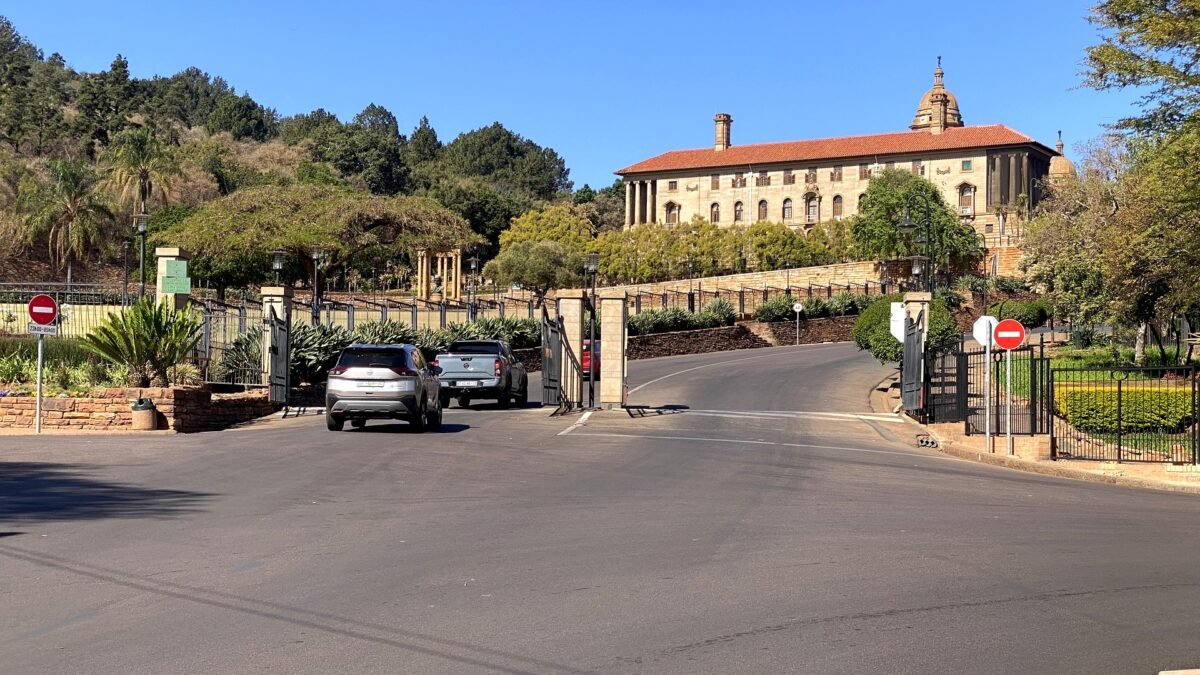
Seventeen people were killed in two mass shootings on the same night in South Africa, police said on Monday, in the latest deadly episode in a country where attacks of this kind have become a recurring feature of violent crime. Nine people were found shot dead inside a shack in an informal settlement near Pretoria, and eight more were found dead inside a bullet-riddled vehicle outside Pietermaritzburg, about 536 kilometres away. No arrests had been made by Monday morning, and police said the motive in both cases had not been established.
The two attacks happened on Sunday night, 15 November 2026, and were reported by police on Monday, according to the Associated Press. The victims in the Pretoria-area attack were six men and three women, and the victims in the KwaZulu-Natal attack were eight men. The two scenes are in different provinces, hundreds of kilometres apart, and the police have not said the two attacks are connected. What they have said is that the killings fit a pattern that South Africans now recognise at once: gunmen, multiple victims, no one in custody, and no explanation yet.
South Africa records about 60 murders a day, according to the South African Police Service, and its murder rate is among the highest in the world. Against that background, a single night in which 17 people are shot dead in two places is not an aberration in the statistics. It is, however, exactly the kind of event that forces the country to ask, again, why mass shootings keep happening, why so few are solved in public view, and what the falling national murder rate actually means for the people who live in the townships and informal settlements where most of these attacks take place.
What happened near Pretoria
Nine people were found dead with gunshot wounds inside a shack in the informal settlement of Jeffsville, in Atteridgeville, west of Pretoria, police said. The bodies were discovered on Monday morning. According to Gauteng police, the shooting is believed to have taken place between 10pm and 11pm on Sunday night, and the victims were found inside a four-roomed shack. The dead were six men and three women, and police did not immediately confirm whether any of the victims were children, according to the Associated Press.
The case is being investigated by the Gauteng serious and violent crimes, murder and robbery unit, the provincial police said. No arrests had been announced by Monday, and no suspects had been named. The police have not said how many gunmen were involved, what weapons were used, or whether anything was taken from the shack. Jeffsville is an informal settlement in Atteridgeville, a township on the western edge of Pretoria, South Africa’s administrative capital.
Gauteng Police Commissioner Tommy Mthombeni said the killings could be related to a shooting at a nearby informal settlement in Saulsville last year, in which 12 people were killed and 13 were injured. “We cannot rule out that they may be linked, and may possibly have been a retaliation attack,” Mthombeni said, according to the Associated Press. Saulsville is also in the Atteridgeville area, close to Jeffsville, and the commissioner’s comment is the only public suggestion so far of a possible motive in the Pretoria attack. It is, however, only a possibility. The police have not confirmed a link, and the investigation is at its earliest stage.
The suggestion matters because it points to the way these attacks are often understood in South Africa: not as random acts, but as episodes in longer-running local conflicts. In the townships and informal settlements around Johannesburg and Pretoria, mass shootings have repeatedly been linked by police to disputes over illegal mining, drug territory and taxi routes. The Jeffsville attack may turn out to have nothing to do with any of those. But the commissioner’s first public remark was to reach for the previous attack in the same area, and that in itself says something about how these investigations begin.
What happened outside Pietermaritzburg
The second attack took place in Sweetwaters, a semi-rural area outside Pietermaritzburg, the capital of KwaZulu-Natal province. Police responding to reports of a shooting late on Sunday found a white seven-seater vehicle riddled with bullet holes along a road in the Mabane section of Sweetwaters. Inside the vehicle, they found eight men with multiple gunshot wounds, all certified dead at the scene, according to a police statement reported by Agence France-Presse.
The men had not yet been identified by Monday, and KwaZulu-Natal police said it was too early to speculate on a motive. Colonel Robert Netshiunda, the provincial police spokesman, told the broadcaster Newzroom Afrika that similar shootings in the area had previously been linked to different criminal activities, “including stock theft-related, to drugs-related to taxi violence”. He added, according to the same report: “We have seen these kinds of shootings before and there have been different motives from stock theft-related, to drugs-related to taxi violence.”
Sweetwaters is on the outskirts of Pietermaritzburg, in the interior of KwaZulu-Natal, a province that has seen several deadly mass shootings this year. In September, gunmen opened fire at a house party in KwaMakhutha township, south of Durban, killing at least 11 people, including a pregnant woman, according to the Associated Press. The toll in that attack later rose to 12. The Sweetwaters killings are the latest in a series of attacks in the province in which groups of people have been shot dead together, in vehicles, in houses and in taverns, with the perpetrators rarely caught quickly.
The two attacks are about 536 kilometres apart, according to the Associated Press. There is no public evidence linking them. They happened on the same night, in the same country, in the same kind of place: poor communities, at night, with victims who were together in a small space. That coincidence is part of why the story has travelled so widely. Two mass shootings on one night is shocking anywhere. In South Africa, it is shocking and familiar at the same time.
A pattern that keeps repeating
The killings on Sunday night are the latest in a series of mass shootings that have struck South Africa in the past year. In South Africa, a mass shooting is generally defined as an attack in which three or more people are shot in a single incident, according to the security industry body ASIS International. By that measure, the country has seen a steady run of them.
In September 2026, a spate of mass shootings in three major cities killed nearly 40 people in a single week, according to NPR. On Saturday night, 26 September, at least 10 people were killed at a shisanyama, a local restaurant selling barbecued meat, near Cape Town, while 11 others were injured. The same night, near Johannesburg, at least 17 people were killed when a group of men with AK-47 rifles burst into a township tavern in Wedela, on the West Rand, where people were drinking. Earlier that week, gunmen opened fire at a house party in KwaMakhutha, south of Durban, killing at least 11 people, including a pregnant woman. Four more people were killed in Khayelitsha, in Cape Town, on 26 September. President Cyril Ramaphosa, speaking about the weekend shootings, said: “This cannot go on like this.”
In June 2026, multiple shooters killed 12 people in a poor neighbourhood in Johannesburg, in an attack that police linked to criminal gangs. The attack took place at the Jumpers informal settlement in Cleveland, a Johannesburg suburb, and police cited a possible link to illegal mining. About six months earlier, nine people died when gunmen opened fire at a tavern outside Johannesburg. In December 2025, two mass shootings two weeks apart killed 21 people, both carried out by multiple gunmen, according to the Associated Press.
The list goes further back. In September 2024, the Lusikisiki massacre in the Eastern Cape shocked the country when 18 people were shot and killed at two neighbouring homesteads in Ngobozana village. That attack, like the recent ones, took place in a poor, rural community, and the victims were killed together, at night, by gunmen who arrived in numbers. The pattern is consistent enough that South African reporting on mass shootings now routinely carries a paragraph listing the previous ones, as if each new attack needs to be placed in a sequence to be understood.
The recurrence is the point. A single mass shooting can be treated as a crime to be solved. A sequence of them, spread across provinces and across years, with similar methods and similar victims, looks like a condition of the society rather than a series of isolated crimes. The police have said the motives vary: drugs, illegal mining, taxi routes, stock theft, retaliation. What does not vary is the setting. The victims are almost always poor people, in townships, informal settlements and rural villages, gathered in a shack, a house, a tavern or a vehicle. The attackers almost always arrive in a group, with rifles, and leave before the police arrive.
The numbers behind the violence
South Africa’s official crime statistics tell two stories at once. The first is that the murder rate is falling. The second is that it remains extraordinarily high by any international comparison, and that mass shootings have not fallen with it.
The South African Police Service recorded 5,427 murders between April and June 2026, or about 60 a day, according to figures cited by the Associated Press. That was a decrease of 5.9 per cent on the same period the year before. Over the full financial year from April 2025 to March 2026, the police recorded 23,171 murders, down 9.4 per cent from 25,573 the year before, according to the police service’s annual report. The murder rate for that year was 36.6 murders per 100,000 people, down from 40.7 the year before. The average murder rate for Africa is about 12.7 per 100,000, and the international average is about 5.6, according to analysis of the police figures published in South Africa.
In the first three months of 2026, from January to March, the police recorded 5,181 murders, or 58 a day, according to the police minister, Firoz Cachalia, speaking at the release of the quarterly statistics in May. The murder rate for that quarter was 8.2 per 100,000 people. The Eastern Cape had the highest risk, at 14.3 murders per 100,000 people, followed by the Western Cape at 12.8 and KwaZulu-Natal at 8.8. Gauteng, where the Jeffsville attack took place, recorded the highest number of murders in absolute terms, although the risk of being murdered there was about half that of the Eastern Cape, at 7.1 per 100,000 people.
These figures are real, and they represent thousands of lives. The 9.4 per cent fall in murders in 2025/26 means about 2,400 fewer people were killed than the year before. The police service has presented the decline as evidence that its operations are working, and the police minister has said the levels of crime are “still unacceptably high” even as they fall. But the same quarterly release that showed murder falling also showed attempted murder rising by 8.7 per cent in the April to June quarter, and assault with intent to cause grievous bodily harm rising by 2.5 per cent. The overall picture is not a country becoming safe. It is a country becoming slightly less deadly, from a starting point so high that the improvement is hard to feel in the places where the violence happens.
The gun is central to the story. A study published in the South African Medical Journal in 2026 found that the proportion of murders involving firearms increased from 31 per cent in 2020 to 44 per cent in 2025. In other words, guns now account for nearly half of all murders in the country. The police service has said that the underlying drivers of violent crime include poverty, unemployment, inequality, substance abuse, rapid urbanisation and the proliferation of illegal firearms, according to Major General Leon Rabie, speaking when the police briefed parliament on the 2025/26 annual report. The police destroyed 13,859 firearms in a single operation reported in February 2026, taking the number of firearms destroyed over the past seven years to 305,934. The scale of the destruction programme is itself a measure of the scale of the problem: hundreds of thousands of guns have been taken out of circulation, and the shootings continue.
Why the motive matters, and why it is missing
On Monday, the police had not established a motive in either attack. That is normal in the first hours after a mass shooting. What is striking is how quickly the public conversation moves to fill the gap, and how the police themselves contribute to it. Commissioner Mthombeni raised the Saulsville link within hours of the Jeffsville bodies being found. Colonel Netshiunda listed stock theft, drugs and taxi violence as the usual motives in KwaZulu-Natal within hours of the Sweetwaters bodies being found. Both men were careful to say that nothing had been confirmed. Both were also, in effect, telling the public where to look.
The reason the motive matters is that it determines what the attack means. A retaliation killing after the Saulsville shooting would mean the Jeffsville attack is part of a local feud, and that more violence may follow. A taxi-route killing in Sweetwaters would mean the attack is part of a long-running and well-documented conflict over one of South Africa’s most violent industries. A drug-related killing would point to organised crime. A random killing would be, in some ways, the most frightening possibility of all, because it would mean that no one in those communities is safe for any reason at all.
South Africa’s recent mass shootings have, when they have been explained at all, been explained in these terms. The June 2026 attack in Cleveland was linked by police to illegal mining, an industry in which armed gangs known as zama zamas fight over disused mine shafts and the gold still in them. The Wedela tavern attack in September was investigated as a possible turf war over illegal mining, and as possible retaliation for an earlier shooting at the same tavern about a month before, according to Gauteng’s police commissioner. Taxi violence has a history in South Africa stretching back decades, and the competition over minibus taxi routes has repeatedly produced killings in KwaZulu-Natal in particular. Stock theft, which sounds like a minor rural crime, is in parts of the country a violent and organised business.
None of this has been established in either of Sunday night’s attacks. The police have been explicit about that. But the speed with which the known categories are offered is itself informative. It shows that the police, the media and the public all have a shared vocabulary for these killings, built up over years of similar attacks. The vocabulary is a kind of knowledge. It is also a kind of resignation: the categories exist because the attacks keep happening in the same ways, for the same reasons, in the same places.
The communities left behind
Jeffsville and Sweetwaters are not the South Africa that appears on postcards. Jeffsville is an informal settlement in Atteridgeville, a township west of Pretoria where people live in shacks without the services that the formal city takes for granted. Sweetwaters is a semi-rural area outside Pietermaritzburg. The victims in Jeffsville were found in a four-roomed shack. The victims in Sweetwaters were found in a seven-seater vehicle on a road. These are the settings in which South Africa’s mass shootings now happen: not in city centres, not in wealthy suburbs, but in the poorest places, where people gather in small, crowded spaces that offer no protection and no escape.
The September 2026 attacks followed the same pattern. The Durban house party took place in a small house in an impoverished neighbourhood. The Wedela tavern was in a township on the West Rand. The Cape Town shisanyama was in a community facing socioeconomic challenges, as the security industry publication that reported the attacks put it. The June attack in Cleveland took place in an informal settlement where people live in tin shacks without access to running water and electricity, according to NPR. The Lusikisiki massacre took place in a village of homesteads in the Eastern Cape.
This geography is not incidental. It is the geography of South Africa’s inequality, and it shapes both the violence and the response to it. When a mass shooting happens in a township or an informal settlement, it is reported, investigated and then, often, absorbed into the statistics. When the police minister releases the quarterly crime figures, the murders in places like Jeffsville and Sweetwaters are part of a national total that is falling, and the fall is presented as progress. For the families of the 17 people killed on Sunday night, the national total is irrelevant. What matters is that the people who killed them have not been caught, and that no one can yet say why they died.
The police response to mass shootings has, in recent cases, involved the activation of 72-hour tracking operations, in which provincial commissioners order an intensive manhunt. After the KwaMakhutha house-party shooting in September, the acting national police commissioner directed the KwaZulu-Natal provincial commissioner to activate a 72-hour operation to run down the three suspects. As of 28 September, the three gunmen remained at large and no arrests had been reported. The pattern of the response mirrors the pattern of the attacks: intense activity in the first days, and then a long silence, in which the public hears little more about the case.
Analysis: Why It Matters
Two attacks, one night, no answers
The most important fact about Sunday night is also the simplest: two mass shootings happened on the same night, 536 kilometres apart, and nobody yet knows why either of them happened. That is not a detail. It is the story. In a country where mass shootings are a recognised category of crime, the police still begin each investigation from the same position of ignorance: unknown gunmen, unknown motive, unknown victims in one case, no arrests in either. The coincidence of the two attacks does not prove they are connected. It proves that the conditions that produce mass shootings exist in more than one place at the same time, and that a single night can produce two of them without any coordination at all.
The Saulsville thread is a theory, not a conclusion
Commissioner Mthombeni’s suggestion that the Jeffsville killings may be linked to last year’s Saulsville shooting is worth taking seriously, because it comes from the officer in charge of the province’s policing, and because Saulsville is close to Jeffsville. But it is also worth treating with care. “We cannot rule out that they may be linked” is a long way from “they are linked”, and a retaliation theory has a particular danger: it can make a mass killing sound like a comprehensible act in a comprehensible conflict, when it may be nothing of the kind. The police have not named a feud, a gang or a dispute. Until they do, the Saulsville connection is a line of inquiry, not an explanation. What it does tell us is that the police’s first instinct is to look backwards, to the last attack in the same area, and that is itself a measure of how often these attacks happen in the same places.
The pattern is the story now
It is no longer possible to report a mass shooting in South Africa as an isolated event, and the reporting no longer tries to. Every account of Sunday night’s killings carries a paragraph about September’s 38 dead in a week, about June’s 12 dead in Cleveland, about December’s 21 dead, about Lusikisiki’s 18. That is not padding. It is the context that makes the story intelligible. A country that has had seven mass shootings make national headlines since December 2025, with dozens of victims killed in bars, homes, hotels and on the street, according to the security industry’s own count, is a country with a mass-shooting problem, not a country that has had a series of unfortunate incidents. The question is not whether the next one will happen. It is where, and how many it will kill.
The statistics improve and the fear does not
The police are right that the murder rate is falling. A 9.4 per cent fall in a year, from 25,573 murders to 23,171, is a real achievement, and it represents about 2,400 people who were not killed. But the improvement sits alongside a rate of 36.6 murders per 100,000 people, which is roughly six times the international average and nearly three times the African average. It sits alongside 58 to 60 murders a day. And it sits alongside a rising share of murders committed with firearms, up from 31 per cent in 2020 to 44 per cent in 2025. A falling murder rate and a rising mass-shooting count can both be true, because they measure different things: the first measures the total volume of killing, and the second measures the concentration of killing into single, public, terrifying events. The total can fall while the terror rises, and that is what seems to be happening.
The gun is the common denominator
Strip away the different motives, the different provinces and the different victims, and one thing remains constant in South Africa’s mass shootings: the gunmen arrive with rifles, often AK-47s, and they fire at groups of people who cannot fight back. The police have destroyed more than 300,000 firearms in seven years, and the shootings continue, because the supply of illegal firearms continues. The police service itself names the proliferation of illegal firearms as one of the underlying drivers of violent crime, alongside poverty, unemployment, inequality, substance abuse and rapid urbanisation. Those are not problems that a 72-hour manhunt can solve. They are the conditions in which a country produces mass shootings on a Sunday night in two places at once, and then wakes up on Monday to the news that nobody has been arrested and nobody knows why.
What to Watch Next
- Whether police identify the eight men killed in the Sweetwaters vehicle, and whether any of them were known to the police or to Crime Intelligence.
- Whether any arrests are made in either case, and whether the police activate a 72-hour tracking operation in Gauteng or KwaZulu-Natal, as they have after previous mass shootings.
- Whether Gauteng police confirm or rule out a link between the Jeffsville killings and last year’s Saulsville shooting, in which 12 people were killed and 13 injured.
- Whether the KwaZulu-Natal investigation produces a motive for the Sweetwaters attack, and whether it points to taxi violence, drugs, stock theft or illegal mining.
- Any statement from Police Minister Firoz Cachalia or President Cyril Ramaphosa, who said in September that the mass shootings “cannot go on like this”.
- The release of the next quarterly crime statistics, which will show whether the fall in murders continued through the second half of 2026, and whether attempted murder kept rising.
- Whether parliament’s police portfolio committee takes up the two attacks, and what it asks the police service about the investigation and about the supply of illegal firearms.
Sources
- Associated Press — “At least 17 people killed in 2 mass shootings on the same day in South Africa” (16 November 2026)
- Sky News — “At least 17 people killed in two separate shootings in South Africa” (16 November 2026)
- Agence France-Presse via GreenWatchBD — “17 killed in two mass shootings in South Africa: police” (16 November 2026)
- African Times — “Nine Killed in Atteridgeville Mass Shooting as Police Hunt Gunmen” (16 November 2026)
- NPR — “South Africa reels from spate of mass shootings that killed 38 people in a week” (27 September 2026)
- NewsUnplug — “SAPS pushes for discipline and professionalism as murder rate drops by 9.4%” (23 October 2026)

About the Author — Abdul Mannan
Related Articles
Houthis Take Control of Bab el-Mandeb as Yemeni Forces Pull Back to Defend Aden
Yemen's Saudi-backed government forces have pulled out of the Bab el-Mandeb area, leaving the Iran-aligned Houthis in control…
Israel Kills Hamas Rafah Brigade Commander Samir Abu Younis in Gaza Tent-Camp Strike
Both Israel and Hamas confirmed the killing of the Rafah Brigade's commander in a strike on a displaced…
Bahrain Says It Intercepted Iranian Drones Targeting a US Base as Tehran Claims a Radar Hit
Bahrain said its air defences shot down several Iranian drones over the capital early on Sunday, the second…