
Pakistan Cuts Petrol and Diesel by Rs2 in Tenth Straight Reduction as Daily Pricing Draws Fire From Pump Owners

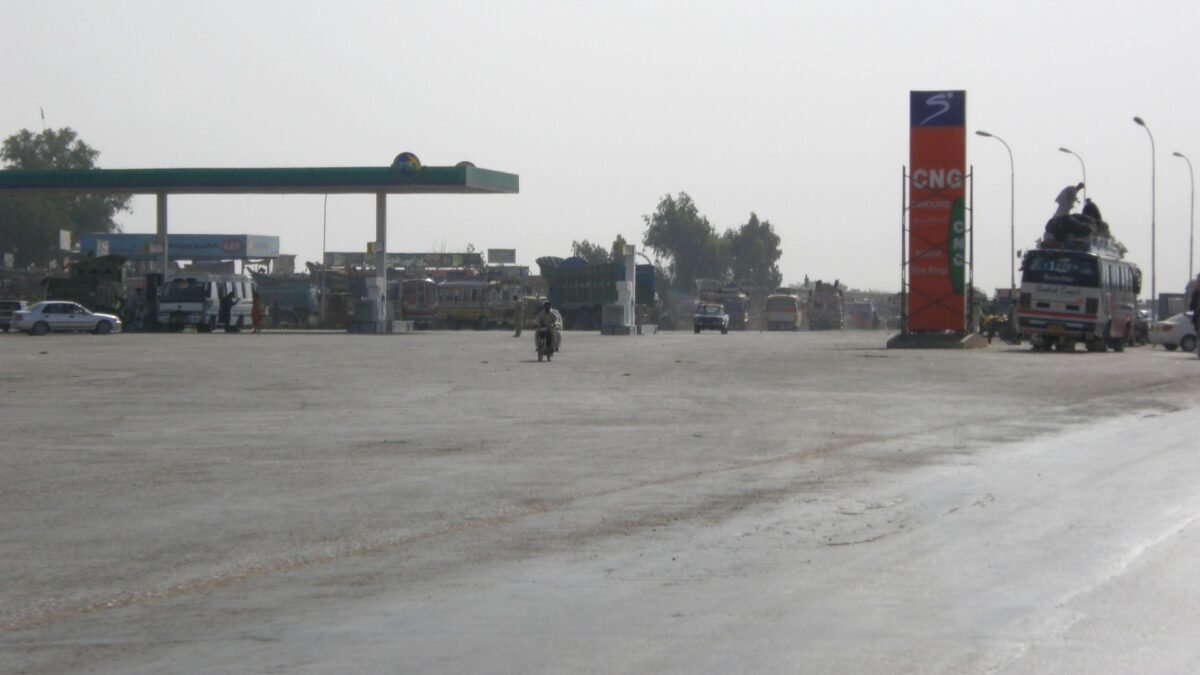
Pakistan cut the prices of petrol and high-speed diesel by Rs2 a litre on Monday, the tenth consecutive reduction in fuel rates, bringing petrol down to Rs328 a litre and diesel to Rs358 from Tuesday, 17 November, according to a notification from the Oil and Gas Regulatory Authority (OGRA).
The cut, announced late on Monday night, extends a run of reductions that began in early November and has now taken more than Rs46 off the price of a litre of petrol in just over two weeks. According to OGRA’s published price history, petrol stood at Rs374.51 a litre on 2 November; it now costs Rs328. Diesel has fallen by Rs37.20 over the same period, from Rs395.20 to Rs358.
It is the second Rs2 cut in three days. On Friday, 14 November, petrol was reduced by Rs2 to Rs330 while diesel was left unchanged at Rs360 — the ninth consecutive reduction in the petrol price. Monday’s move cut both fuels together, and it is the tenth straight decrease in the rates overall, according to Dawn.
For motorists, the relief is real but modest. Two rupees on a litre of petrol priced at Rs328 is a reduction of about 0.6 per cent. For a motorcyclist filling a ten-litre tank, Monday’s cut saves Rs20. For a truck driver taking on 200 litres of diesel, it saves Rs400. The larger significance lies not in a single day’s cut but in the direction of travel: after a year in which fuel prices were driven to record highs by war, the pump price has now fallen for ten revisions in a row.
The government, however, is still collecting far more in tax on every litre than it is giving back in cuts. According to Dawn, the state continues to levy Rs114 per litre in taxes and duties on petrol and Rs100 per litre on diesel. That means more than a third of the price a motorist pays for petrol — Rs114 of Rs328 — goes to the exchequer before a single drop is burned. On diesel, the tax take is Rs100 of Rs358, or more than a quarter of the pump price.
A daily price, set by the regulator
The reductions are being delivered through a pricing system that is itself only four months old. On 17 July, the government announced that petroleum product prices would be reviewed and notified daily, replacing the weekly mechanism that had been in place since early March. The change was made, according to the petroleum minister, because renewed hostilities between Iran and the United States were driving volatility in international oil markets and raising concerns over fuel supplies. The cabinet and the prime minister decided to give OGRA the responsibility of deciding fuel prices every day, based on international market trends.
On 30 October, the federal cabinet approved further changes to the petroleum pricing mechanism to address volatility in international markets following the US-Iran conflict, according to The Global Times. OGRA has also begun publishing daily petroleum prices on its official website, so that consumers can track the changes themselves.
The daily mechanism cuts both ways, and that is the point of it. When international prices rise, the pump price follows within a day; when they fall, the relief arrives just as quickly. The same system that passed the shock of the spring through to consumers is now passing the autumn’s easing through to them. Before July, prices were revised weekly; before March, the government had been announcing fortnightly revisions. The move to daily pricing was presented as a way of keeping the domestic price honest to the international market — and of removing the political temptation to hold prices down before an announcement and then impose a single large increase.
There is a second, quieter mechanism behind the current streak. On 2 November, the government announced that the country’s oil refineries would bear a burden of Rs15 billion over 30 days by contributing to the petroleum levy. According to the government, that arrangement allows petrol to be sold about Rs15 a litre cheaper than it would be at global market rates. Dawn reported that the arrangement produces a reduction of Rs14.71 a litre at the consumer end. The 30-day window runs out in early December, which means the refinery contribution — and part of the relief it funds — is time-limited unless the government extends it.
From record highs to a steady fall
The scale of the reversal becomes clear only against the spring. The war between the United States and Iran broke out on 28 February, and fuel prices in Pakistan began climbing almost immediately. Petrol, which cost Rs266 a litre in the first week of March, rose to a peak of Rs458.41 on 3 April, according to Dawn. Diesel climbed from Rs281 a litre to a peak of Rs520.35 on the same day. At those levels, a litre of diesel cost more than a day’s wage for many workers, and the government moved to contain the damage.
The measures taken in the spring and summer tell the story of a government trying to shield households from a shock it could not control. In April, the government announced targeted relief measures to provide subsidised fuel. On 13 September, Prime Minister Shehbaz Sharif announced a special relief scheme offering Rs100 a litre off petrol for motorcycles, three-wheeler rickshaws and cars with engines of up to 800cc, in an attempt to shield lower-income consumers from rising petroleum prices. The scheme was rolled out across the country on 17 September.
Under the scheme, an estimated 11.8 million people are covered, according to The Express Tribune. Around ten million two-wheeler users and 800,000 three-wheeler users are entitled to relief on 20 litres of fuel a month, translating into a maximum monthly benefit of Rs2,000 per beneficiary. Another one million users of cars up to 800cc receive relief on 30 litres a month, providing a maximum benefit of Rs3,000 each.
On the same day the relief scheme was rolled out, the government reintroduced a raft of austerity and fuel conservation measures. Under a notification from the Cabinet Division, shops, markets, shopping malls, bazaars, departmental stores, grocery stores, general stores and kiryana shops were ordered to close by 9pm throughout the week. Marriage halls, marquees and other commercial venues hosting festive events were told to close by 10pm, while restaurants, cafes, eateries, food outlets and standalone fruit and vegetable shops were allowed to operate until 11pm. Takeaway and home delivery services remained exempt. Fuel allocations for official vehicles were cut by 50 per cent for three months.
Those measures were the response to a price shock. Monday’s cut is the response to the shock’s retreat. The two are connected: the daily pricing mechanism that transmitted the international spike into Pakistani forecourts in March and April is now transmitting the easing. Petrol has fallen by more than a tenth since the start of November alone.
The dealers who lose when prices fall
Not everyone in the fuel chain welcomes the daily cuts. The All Pakistan Petrol Pump Owners Association has written to Prime Minister Shehbaz Sharif asking for the daily revision system to be replaced with monthly adjustments, arguing that frequent changes are causing its members serious losses.
The association’s vice chairman, Nouman Ali Butt, wrote that the issue was a “serious difficulty” affecting the association’s businesses across the country. His argument is straightforward, and it is the mirror image of the consumer’s gain. Dealers buy fuel stock at one price and sell it over the following days. When prices change every day — and particularly when they have been falling, as they have for ten revisions in a row — stock bought at a higher rate has to be sold at a lower one. The dealer absorbs the difference.
“Petroleum product prices are currently revised on a daily basis. Dealers purchase fuel stock at one price and sell it over the following days. When prices change so frequently, and particularly when they have been falling recently, stock bought at a higher rate has to be sold at a lower one. This leaves petrol pump owners bearing losses on their inventory, which they cannot recover,” Butt wrote, according to The Express Tribune. “Daily changes also make it very hard to plan purchases, manage working capital and keep operations running smoothly, and they cause confusion among customers at the pump.”
Butt said the association’s members were small and medium-sized business owners who provided an essential service to the nation and employed a large number of people. “If this situation continues, many of them will find it difficult to sustain their businesses,” he added.
The association has asked for the daily-change criterion to be replaced with a monthly price revision, saying it would bring “much-needed stability and predictability to the sector, protect dealers from avoidable losses and still allow prices to reflect market movements”. It is a reasonable request from the dealers’ point of view, and a difficult one for the government to grant. Monthly pricing would reintroduce exactly the lag the daily system was designed to remove — and it would mean that when international prices fall, Pakistani consumers would wait up to a month for the relief, while dealers kept the difference. The government has not yet responded publicly to the letter.
Why fuel prices matter beyond the forecourt
Petrol and diesel are not ordinary commodities in Pakistan. They are, according to Dawn, the government’s major revenue earners among petroleum products, with monthly sales of about 700,000 to 800,000 tonnes — against just 10,000 tonnes of monthly demand for kerosene. Every rupee on the pump price is multiplied hundreds of thousands of times over, every month, in revenue and in household cost.
The two fuels reach different parts of the economy. Petrol is mainly used in private transport, small vehicles, rickshaws and two-wheelers, and changes in its price affect the middle and lower-middle classes most directly — the motorcyclist commuting to work, the rickshaw driver whose daily earnings depend on the price of a litre, the family running a small car. Diesel is the fuel of the heavy economy: it powers trucks, buses, tractors, power plants and large generators. When diesel rises, the cost of moving goods rises with it, and food prices follow. When diesel falls, the relief spreads through the transport chain, though rarely as quickly or as visibly as the increase did.
That asymmetry is one of the oldest complaints in Pakistani economic life: prices at the pump fall more slowly than they rise, and transport fares and food prices, once raised, rarely come back down. The tenth consecutive cut is a test of that complaint. Petrol has now fallen by more than Rs46 a litre since 2 November. If fares and food prices do not follow, the relief will have been captured somewhere between the forecourt and the kitchen — and the public will notice.
The cuts also arrive at a moment when the government is trying to present a broader economic recovery. On Monday, the prime minister approved the establishment of district-level facilitation centres for small and medium enterprises, with pilot projects in Lahore, Peshawar, Karachi and Quetta, and Rs300 billion allocated under the Export Finance Scheme for small and medium enterprises and new exporters. The same day, the 30th meeting of the Economic Cooperation Organisation’s Council of Ministers concluded in Islamabad, adopting a ten-year ECO Vision 2035 roadmap, with Pakistan holding the organisation’s chair. At the Pakistan Minerals Investment Forum on 13 November, the prime minister said he hoped Pakistan would become one of the world’s major economies before 2050, citing a Goldman Sachs forecast that it could be the world’s sixth-largest economy by 2075, according to The News.
None of that changes what a litre of petrol costs today. But it is the frame in which the government wants the fuel cuts to be read: not as an accident of the international market, but as part of a managed easing — daily pricing, a refinery contribution, a targeted relief scheme for small vehicles, and now ten consecutive reductions.
Analysis: Why It Matters
Ten cuts in a row is a policy, not a coincidence
A single Rs2 reduction is barely noticeable at the pump. Ten in a row is a statement. The streak that began in early November has now taken petrol from Rs374.51 to Rs328 — a fall of more than 12 per cent in a fortnight — and it has been delivered by a system that was built for precisely this purpose. Daily pricing means the government cannot sit on a fall in international prices for a week while it decides what to do. The relief reaches the forecourt the next morning. That is the mechanism working as its designers intended, and the government will claim the credit for it. The honest version is more mixed: the same mechanism delivered the spring’s record highs with equal speed, and the public’s memory of Rs458 petrol is a great deal fresher than its gratitude for Rs328. A pricing system that is praised for passing on falls will be blamed, fairly, for passing on rises. The government has bought itself a good fortnight. It has not bought itself forgiveness for the spring.
The tax take is the real price of fuel
Strip the argument back to the numbers and the most striking figure in Monday’s announcement is not the Rs2 cut but the Rs114. That is what the government collects in taxes and duties on every litre of petrol sold — more than a third of the pump price, and fifty-seven times the size of the reduction announced on Monday. On diesel the take is Rs100 a litre. The state is, in effect, the largest single beneficiary of every litre sold, and it is also the party that decides how much relief the consumer receives. The refinery arrangement that funds part of the current reduction is a contribution of Rs15 billion over 30 days, borne by the refineries rather than the exchequer. That raises an obvious question: if the state can afford to forgo Rs15 billion of levy income for a month, why is the structural tax burden on fuel still so high? The answer, which no government volunteers, is that fuel is the most reliable revenue stream the state possesses. Petrol and diesel sell 700,000 to 800,000 tonnes a month, and the tax on them is collected at the pump with almost no evasion. Cutting the levy permanently would mean finding that revenue somewhere else — from income tax, from sales tax, from borrowing. The Rs2 cut is affordable precisely because it is small. A serious reduction in the tax burden would be a serious fiscal decision, and no government has yet been willing to take it.
The dealers have a point the government cannot ignore
It is easy to dismiss the petrol pump owners as middlemen complaining about a system that benefits consumers. That would be a mistake. The association’s argument is economically sound: under daily pricing, a dealer who buys stock on Monday and sells it on Wednesday bears the loss when the price falls in between, and there is no mechanism to compensate him. Over ten consecutive falls, those losses compound. The dealers are, for the most part, small and medium-sized business owners, and they employ a large number of people. If enough of them close, or if they respond by holding smaller stocks and running dry more often, the consumer will feel it in a different way — in queues and shortages rather than in prices. The government’s dilemma is genuine. Monthly pricing would protect dealers but would delay relief to consumers and reintroduce the political manipulation the daily system was designed to prevent. A middle course exists — a compensation mechanism for inventory losses, or a margin adjustment that shares the cost of daily volatility between the state, the oil marketing companies and the dealers — but it requires the government to acknowledge that daily pricing has a cost, and to pay part of it. So far it has simply enjoyed the benefit.
The 30-day clock is the story to watch
The least noticed fact in Monday’s announcement may be the most important one. The refinery arrangement that is funding part of the relief — Rs15 billion over 30 days from 2 November — expires in early December. Unless the government extends it, or replaces it with something else, the arithmetic of the pump price changes at that point. Petrol would need to rise by roughly the amount the arrangement currently suppresses, or the state would need to absorb the cost itself. Neither is painless. Extending the arrangement means asking the refineries to go on bearing a cost they will eventually seek to recover, whether in margins, in investment, or in the price of other products. Letting it lapse means the streak of cuts ends with a rise, just as the public is getting used to falling prices. The government has three weeks to decide, and the decision will tell us more about its economic management than ten Rs2 cuts ever could. Watch what happens in the first week of December, not what happens at the pump this week.
Relief at the pump is only relief if it reaches the kitchen
The final test of these cuts has nothing to do with OGRA’s notification and everything to do with the price of onions. Diesel is the fuel of freight, and freight is the cost of food. When diesel rose to Rs520 in April, transporters raised their rates and shopkeepers raised their prices, and the increases stuck. Now diesel has fallen to Rs358 — a drop of more than 30 per cent from its peak, and of Rs37 in a fortnight. If transport fares and food prices do not come down in step, then the relief has been captured by intermediaries, and the household budget will not feel what the pump price suggests it should. The government has tools here — the district administrations that monitor prices, the competition authorities, the public pressure of a visible, repeated cut — but it has historically been better at announcing fuel reductions than at policing their transmission into the rest of the economy. The tenth consecutive cut is an opportunity to do that policing in public, with the numbers on its side. If fares fall and food prices ease, the government will have a genuine economic achievement to point to. If they do not, the public will conclude, not unreasonably, that the only people who benefited from the falling price of fuel were the people who sell it.
What to Watch Next
- Whether the refinery levy arrangement, due to expire in early December, is extended, replaced or allowed to lapse — and what that does to the pump price in the first week of December.
- Whether the government answers the petrol pump owners’ letter, and whether any compensation or margin adjustment for inventory losses under daily pricing is offered.
- The next OGRA notification: whether the streak of consecutive reductions reaches eleven, and whether diesel, which was held unchanged on 14 November, keeps falling with petrol.
- Transport fares and food prices in the coming weeks — the test of whether the Rs37 fall in diesel since 2 November is reaching household budgets.
- The Prime Minister’s Fuel Relief Scheme for motorcycles, rickshaws and cars up to 800cc: take-up figures, and whether the Rs100-a-litre subsidy survives as pump prices fall.
- The government’s broader economic messaging, including the district SME facilitation centres and the ECO Vision 2035 commitments, and whether falling fuel prices are matched by progress on exports and jobs.
- International oil markets and the US-Iran confrontation: any renewed escalation would feed straight into the daily pricing mechanism, and the same system delivering cuts today would deliver increases tomorrow.
Sources
- Dawn — “Govt reduces petrol, diesel prices by Rs2 per litre” (reproduced in full)
- The Express Tribune — “Govt cuts petrol, high-speed diesel price by Rs2” (reproduced in full)
- Oil and Gas Regulatory Authority (OGRA) — the authority that issued the price notification
- The Global Times — “Govt Cuts Petrol, Diesel Prices by Rs 2 Per Litre as Pump Owners Demand Monthly Revisions”
- Hamariweb eNews — “Petrol Price in Pakistan Falls to Rs 328 Per Liter from November 17”
- Daily 6AM — “OGRA petrol price in Pakistan today” (OGRA notification and price history)

About the Author — Abdul Mannan
Related Articles
Imran Khan Tells Top Judges He ‘May Not Return Alive’ in Plea for Medical Treatment
Jailed former prime minister Imran Khan has warned Pakistan's top judges that he 'may not return alive' without…
Pakistan Takes the ECO Chair as Dar Hosts Regional Foreign Ministers in Islamabad
Pakistan has assumed the chairmanship of the Economic Cooperation Organization for 2026–27 as Deputy Prime Minister and Foreign…
No Relief for Imran Khan and No Change in KP, Sources Say, as PTI Backchannel Talks Narrow to Bushra Bibi
Sources say backchannel contacts between the PTI and the authorities will stay within narrow limits: no relief for…