
No Relief for Imran Khan and No Change in KP, Sources Say, as PTI Backchannel Talks Narrow to Bushra Bibi

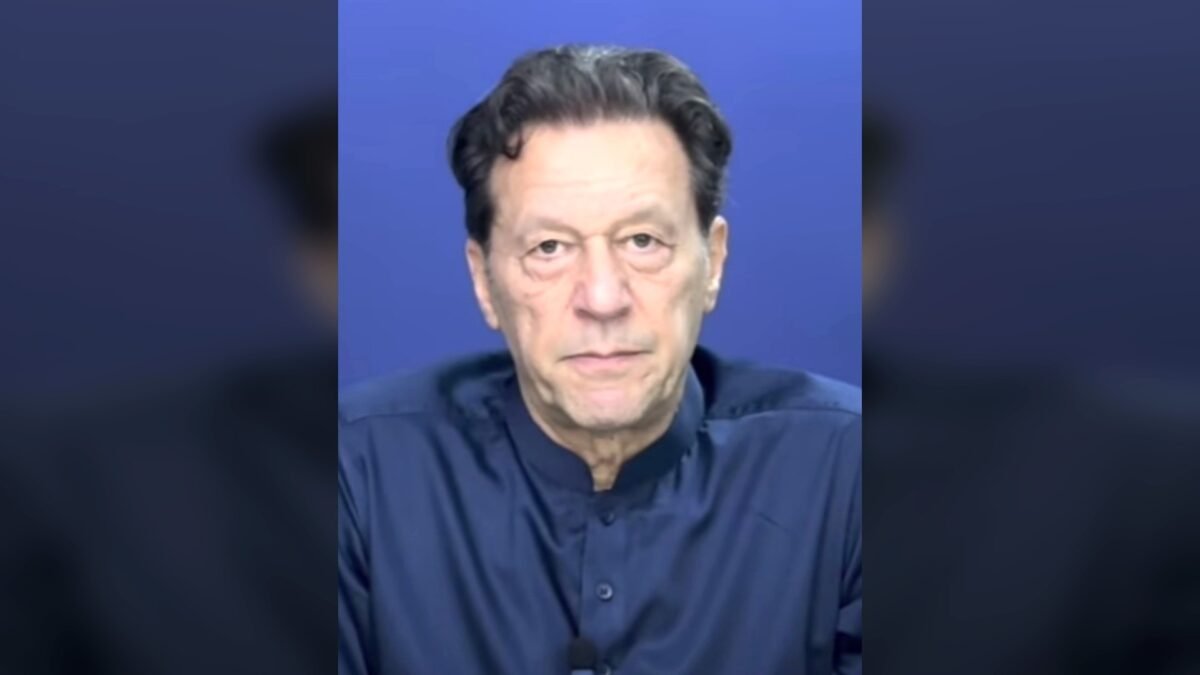
Backchannel contacts between the Pakistan Tehreek-e-Insaf (PTI) and the authorities, which recently helped secure the release of Imran Khan’s two sisters, will go forward only within narrow limits, according to sources familiar with the discussions. Two of the biggest political questions in the country — any relief for the former prime minister himself, and the future of the PTI government in Khyber Pakhtunkhwa — are effectively off the table, the sources said.
Neither any concession for Imran Khan nor a change in the existing political arrangement in Khyber Pakhtunkhwa is currently open to discussion, the sources told The News, whose report was carried by Geo News and corroborated by other outlets. That also means no proposal to restore Sohail Afridi as chief minister of the province is being entertained at this stage.
“There is no such option for Imran Khan, at least at this stage,” one source familiar with the discussions said, drawing a sharp line between the former prime minister’s case and that of his wife, Bushra Bibi. Her case, the sources said, is different — and it is the one matter the engagement may actually be able to move.
The account, if accurate, sets the boundaries of the most consequential quiet negotiation in Pakistani politics in months. It says the channel exists, that it has already produced one result, and that it will not — for now — produce the two results the PTI wants most. Everything else, the sources suggest, is detail inside those limits.
What the sources say
The picture the sources describe is of a channel that is real but tightly fenced. The backchannel contacts have been active for some time, and they are credited with helping to secure the release of Imran Khan’s two sisters earlier this week. That release, the sources said, opened a new channel of communication. It did not, however, change the authorities’ position on the two central questions.
According to The News, the sources were explicit on both points. No proposal concerning relief for Imran Khan is under consideration. No discussion is taking place about changing the existing political arrangement in Khyber Pakhtunkhwa. Any understanding that emerges from the contacts would therefore have to stay within the limits of what can be discussed without touching the former prime minister’s political and legal position or the provincial government’s status.
The same account was reported independently by Abb Takk, which quoted sources familiar with the engagement to the same effect: the authorities were not willing to reconsider their stance on the former prime minister’s situation or the existing political setup in the province, and any proposal for restoring Sohail Afridi as chief minister was not under consideration.
The one door the sources left open concerns Bushra Bibi. Her case and possible relief measures can be discussed as part of the ongoing engagement, the sources said, and one option that could be considered is shifting her to Bani Gala, the Khan family residence in Islamabad. When specifically asked whether Imran Khan could also be shifted to Bani Gala, the sources ruled it out categorically, at least for now.
The distinction matters because it is the only concrete outcome the channel is said to be capable of delivering. Everything else, on the sources’ account, is off limits. The engagement is, for the moment, an exercise in exploring limited areas of possible accommodation — above all concerning Bushra Bibi — rather than a negotiation about the political future of Imran Khan or his party’s government in the north-west.
The sisters and the channel
The involvement of Imran Khan’s family is, by the sources’ own account, what makes this round of contacts different. Members of the former prime minister’s family have taken a direct part in the backchannel engagement for the first time, according to reports, and the sisters’ involvement is being viewed as a significant development in an otherwise strained relationship between the PTI and the authorities.
PTI chairman Barrister Gohar Ali Khan is understood to be playing a major part in developing the contacts, according to the reports, and Imran Khan’s brother-in-law, Ahad Khan, has acknowledged the backchannel contacts in remarks to journalists. The initiative is reported to involve key figures on the PTI side as well as government and official quarters, none of whom have publicly acknowledged their role.
The sources said the sisters have given commitments that they would refrain from political activities that could aggravate tensions and would not target the military leadership or the establishment. The understanding, according to the sources, is that they would not fuel the confrontation or use their position to escalate the situation. That, the sources suggest, is the price of the channel: family-level accommodation in exchange for a lowering of the temperature.
Whether that bargain holds is an open question. The sisters have been among the most visible public faces of the campaign for Khan’s release, and their public statements have frequently been sharply critical of the authorities. A commitment to step back from that role, if it is being kept, would be a meaningful change in the PTI’s public posture — and a test of whether the family, rather than the party leadership, is now the more effective channel to the authorities.
Why Bushra Bibi’s case is different
Bushra Bibi is serving a seven-year prison sentence alongside her husband at Adiala Jail in Rawalpindi. An accountability court in Islamabad sentenced Imran Khan to 14 years’ imprisonment and fined him Rs1 million in the £190 million Al-Qadir Trust case on 17 January 2025, while Bushra Bibi was sentenced to seven years and fined Rs500,000. Both have appealed against their convictions before the Islamabad High Court.
The case concerns allegations that, in 2019, Rs50 billion — amounting to £190 million at the time — returned to Pakistan by Britain’s National Crime Agency was adjusted in a settlement approved by then-prime minister Imran Khan on 3 December 2019 without the details of the confidential agreement being disclosed. The National Accountability Bureau filed a reference in December 2023, and charges were framed against Imran Khan and Bushra Bibi on 27 February 2024. The couple deny wrongdoing, and their appeals are pending.
The Islamabad High Court heard the appeals on 10 November, when a division bench comprising Chief Justice Sardar Muhammad Sarfraz Dogar and Justice Muhammad Asif directed that the couple’s lawyers, Latif Khosa and Salman Safdar, be allowed to meet them in Adiala Jail. The court adjourned the appeals for ten days and urged the lawyers to begin arguments at the next hearing.
Bushra Bibi’s health has become a live issue in the proceedings. Her counsel, Barrister Salman Safdar, told the court that her eyesight had deteriorated seriously in prison, that doctors had diagnosed a mature cataract, and that she was scheduled to undergo another eye operation around 15 November. She had a first eye operation on 18 April, after which she was returned to Adiala Jail. On 7 November she approached the Islamabad High Court seeking an examination by an ophthalmologist of her own choice, at her own expense, and asking the court to direct the jail authorities to produce her complete medical record.
Safdar, who met the couple at Adiala Jail on 2 November, told the court that Bushra Bibi could not open her eyes without wearing sunglasses and that her condition was serious. He asked for a medical board to examine her and said her treatment could not be properly carried out in jail. The advocate general told the court she was receiving medical treatment and presented records of the facilities provided. The chief justice noted that health-related matters were pending before the Federal Constitutional Court, while Safdar maintained that no matter concerning Bushra Bibi was pending there.
It is against this background that the sources’ account becomes intelligible. A transfer to Bani Gala, if it were agreed, would be presented as a humanitarian and medical accommodation rather than a political concession — a move that the authorities could make without touching the legal position of either spouse, and that the PTI could present as a first, limited step. That is precisely the kind of outcome a backchannel is designed to produce: small enough to deny, large enough to matter.
The official denial
None of this has been confirmed by either side in public. Indeed, the public record points in the opposite direction. On 13 November, PTI leader Tariq Fazal Chaudhry said there was no deal or relief for Imran Khan and rejected reports of backchannel talks altogether. His statement was reported as an update to the earlier accounts of family involvement in the contacts.
The denial is worth taking seriously, and not only because it comes from a senior political figure. Backchannel contacts, by their nature, are denied by everyone involved until they succeed — and sometimes even after that. A denial tells the public nothing about whether a channel exists; it tells the public that neither side is yet willing to own it.
What the denial does establish is the political cost of acknowledgement. For the government, admitting to talks with the PTI would invite the question of what is being offered and why. For the PTI, admitting to talks that exclude relief for its founder would invite the question of what the party is getting in return. Both sides, for different reasons, have an interest in the channel remaining deniable — which is why the sources’ account, detailed as it is, remains unattributed.
That is also why the account should be read with care. Everything in it rests on anonymous sources, and anonymous sources can be wrong, self-interested, or planted. What gives the account weight is that it has been reported consistently, in the same terms, by more than one outlet, and that its central claims — the sisters’ release, the family’s involvement, the distinction between Khan’s case and his wife’s — fit the observable facts. The release happened. The family is involved. And no relief for Khan has materialised.
Khyber Pakhtunkhwa: the other red line
The second red line the sources describe concerns the province the PTI still claims to govern. Khyber Pakhtunkhwa has been under emergency rule since 11 October, when President Asif Ali Zardari proclaimed a state of emergency on the advice of Prime Minister Shehbaz Sharif under Articles 232 and 234 of the Constitution. The federal government cited a deteriorating law and order situation and what it described as a lack of cooperation from the provincial administration in the fight against terrorism. The provincial governor took charge with an advisory council, initially for six months.
Chief Minister Sohail Afridi was taken into custody during the PTI’s long march towards Islamabad, which had begun on 4 October as part of the party’s campaign against the federal government. He has not appeared publicly since, and his whereabouts have not been publicly confirmed. The PTI has described the emergency as a coup disguised as an emergency and warned it would cause further bloodshed and instability. The party took the fight to the Federal Constitutional Court, challenging the suspension of its provincial government.
The legal pressure on Afridi has continued while he has been out of sight. On Wednesday 11 November, an anti-terrorism court in Peshawar reissued non-bailable arrest warrants for Afridi and PTI activist Aamir Khan Chamkani in the case concerning the 9 May 2023 attack on the Radio Pakistan building in Peshawar, which took place amid violent demonstrations following Imran Khan’s arrest. The court extended the interim bail of three former provincial ministers — Taimur Saleem Jhagra, Kamran Bangash and Irfan Saleem — until 17 November, when proceedings resume. On Saturday 14 November, the court initiated proceedings under Section 87 of the Criminal Procedure Code, the proclamation procedure used when an accused person is absconding.
The sources’ account makes the political logic of the situation plain. Restoring Afridi would mean reversing the emergency, returning power to a government the centre has accused of disengaging from counterterrorism, and handing the PTI back the one province it governs. That is not a concession the authorities are prepared to discuss, the sources said — and the continuing court proceedings against Afridi suggest the pressure is moving in the opposite direction.
The PTI’s own position has also hardened around the province. Its parliamentary party has reportedly said it would support a 28th Constitutional Amendment only if Imran Khan is released, according to ARY News, citing sources — a linkage that makes the party’s cooperation on the government’s constitutional agenda conditional on the one outcome the sources say is off the table. That is a recipe for stalemate, and both sides appear to know it.
The wider political weather
The backchannel account arrives in a week when Pakistan’s politics has been dominated by a different constitutional argument. President Zardari met Prime Minister Shehbaz Sharif at the prime minister’s Model Town residence in Lahore on Saturday 14 November, amid a debate over a reported plan to redraw Pakistan from four provinces into twelve, possibly put to a nationwide referendum before a possible 28th Constitutional Amendment. Interior Minister Mohsin Naqvi proposed the referendum on 12 November, and the two leaders agreed that any new provinces, or any referendum on them, would require parliamentary approval.
The provinces debate and the KP question are, in practice, the same argument conducted on two fronts. Both concern the map of power in the federation: who governs where, and on whose authority. The emergency in Khyber Pakhtunkhwa is the sharpest version of that argument — a province governed by a federally appointed governor rather than its elected chief minister — and the sources’ account suggests the centre has no intention of softening it.
Meanwhile, the opposition is talking to itself. PPP chairman Bilawal Bhutto Zardari spoke by telephone with JUI-F chief Maulana Fazlur Rehman, telling him, according to reports, that the government should tolerate criticism from the opposition and avoid actions that could weaken democracy and Parliament. The call is a small event in itself, but it is a sign of the wider realignment under way: with the PTI shut out of formal politics, the remaining opposition parties are testing how far they can coordinate.
None of this changes the central fact the sources describe. The backchannel exists, it has produced one result, and its limits are now defined. The question is whether a channel that can deliver only family-level accommodations can survive the political weight being placed on it — and whether either side actually wants it to deliver more.
Analysis: Why It Matters
The channel is the news, and the limits are the story
The most important fact in this story is not that talks are happening. It is that the people describing them are also describing their limits, in unusual detail, and on the record — albeit anonymously. That is not how a negotiation that is going well is usually described. It is how a negotiation is described when one side wants the public to know that it is not giving anything away.
The sources’ account reads, in that light, less like a leak than like a message. It tells the PTI’s supporters that the channel is real, so that the sisters’ release can be presented as a product of engagement rather than of surrender. And it tells everyone else that the engagement will not touch the two questions that matter most. Both messages serve the authorities. Neither, on its face, serves the PTI — which is itself a significant fact about who is talking, and why.
Two red lines, one message
Imran Khan’s freedom and the PTI’s government in Khyber Pakhtunkhwa are, in the sources’ account, a single red line drawn twice. They are the two things whose reversal would change the balance of power in Pakistan. Freeing Khan would return the country’s most popular politician to public life. Restoring Afridi would return the PTI to government in a province of more than 40 million people. Either would be a political event of the first order. Both together would amount to a settlement.
The authorities, on this account, are not offering a settlement. They are offering a channel. The distinction is the whole story. A channel is a way of managing a conflict. A settlement is a way of ending one. What the sources describe is management: enough contact to prevent escalation, enough accommodation to keep the family engaged, and no movement on the questions that would actually resolve anything.
Bushra Bibi is the only door, and it is a small one
That Bushra Bibi’s case is the negotiable item is revealing in two ways. First, it confirms that the authorities are willing to make humanitarian gestures that do not alter the political balance — a transfer to Bani Gala would change where she is held, not why she is held, and not the legal position of either spouse. Second, it confirms that the PTI is willing, or at least its family interlocutors are willing, to accept such gestures as the currency of engagement.
There is a risk in that for both sides. For the authorities, a concession on Bushra Bibi could be read by the PTI’s supporters as the beginning of a wider thaw, creating expectations the centre has no intention of meeting. For the PTI, accepting a family-level concession while the founder remains in jail and the provincial government remains suspended could be read as settling for too little — and could divide the party between those who see engagement as a path forward and those who see it as a trap.
Her health gives the question an urgency that politics alone would not. A mature cataract, an operation scheduled for around 15 November, and a court application for treatment by doctors of her own choice are not political arguments. They are medical facts, and they are the kind of facts that make a limited accommodation easier to justify — and harder to refuse.
The denial is part of the negotiation
Tariq Fazal Chaudhry’s statement that there is no deal and no backchannel talks should not be read as a refutation of the sources’ account. It should be read as part of the same process the sources describe. In a negotiation conducted through deniable channels, public denial is not the opposite of negotiation. It is one of its instruments.
The denial serves a purpose for the government: it reassures the coalition and the establishment that nothing is being given away, and it denies the PTI the political credit of being a negotiating partner. It also serves a purpose for the PTI’s opponents inside the party system, who would rather the channel did not exist at all. The test of the denial is not whether it is true in the literal sense. It is whether the channel continues to operate behind it — and the sisters’ release suggests that it does.
Khyber Pakhtunkhwa cannot be negotiated back while it is suspended
The hardest fact in the sources’ account concerns the province. A government under emergency rule, a chief minister in custody and facing reissued arrest warrants, a court initiating proclamation proceedings against him, and a constitutional challenge pending before the Federal Constitutional Court: this is not a situation that can be resolved by a backchannel conversation. It can only be resolved by a court, or by a political decision of a different order altogether.
That is why the sources’ red line on Khyber Pakhtunkhwa is the most credible part of their account. The emergency was imposed for six months. The governor is in charge. The legal machinery against Afridi is moving forward, not backward. Nothing in the observable record suggests a reversal is being prepared. The channel, whatever else it can do, cannot restore a suspended government — and the sources, to their credit, do not pretend otherwise.
What to Watch Next
- 17 November, Peshawar: the anti-terrorism court resumes the Radio Pakistan attack case, with Afridi’s reissued warrants and the interim bail of three former provincial ministers both coming up. Any development there will show whether the legal pressure on the suspended chief minister is easing or tightening.
- The Islamabad High Court: the appeals of Imran Khan and Bushra Bibi in the £190 million case return after the ten-day adjournment ordered on 10 November. Whether the lawyers begin arguments as directed will show how quickly the case is moving.
- Bushra Bibi’s health: her eye operation was scheduled for around 15 November, and her application for treatment by doctors of her own choice is before the court. Any decision on her medical care — or on a move to Bani Gala — will be the first test of whether the backchannel can deliver anything at all.
- The Federal Constitutional Court: the PTI’s challenge to the Khyber Pakhtunkhwa emergency remains pending. The court’s handling of the case will determine whether the suspension of the provincial government has a legal end in sight.
- The sisters: whether Imran Khan’s sisters speak publicly in the coming days, and in what terms, will show whether the commitments the sources describe are being kept — and whether the family channel is holding.
- The 28th Amendment and the provinces debate: the PTI has reportedly linked any support for constitutional change to Imran Khan’s release. How the government proceeds with the provinces proposal will show whether it needs the PTI’s votes — and what it is prepared to pay for them.
- Any official word: so far, neither the government nor the PTI has confirmed the backchannel in public. The first official acknowledgement, from either side, would change the character of the engagement entirely — and would tell the public more than any anonymous briefing has.
Sources
- The News — “Imran, Afridi govt issues off the table: sources”
- Abb Takk News — “Imran Khan’s release, change in KP govt not part of PTI talks with authorities: sources”
- Shafaqna Pakistan — “No Imran Khan Relief or Afridi-led KP Govt Change in PTI-Govt Talks: Sources”
- Islamabad Post — “£190m case: IHC orders PTI lawyers’ meeting with Imran Khan, Bushra Bibi at Adiala jail”
- The News — “Radio Pakistan attack: ATC re-issues arrest warrants for KP CM”
- Centreline — “Bushra Bibi moves IHC to seek eye treatment by doctors of her choice”

About the Author — Abdul Mannan
Related Articles
Pakistan Takes the ECO Chair as Dar Hosts Regional Foreign Ministers in Islamabad
Pakistan has assumed the chairmanship of the Economic Cooperation Organization for 2026–27 as Deputy Prime Minister and Foreign…
Major Among Four Soldiers Killed as 24 Militants Die in North Waziristan and Balochistan Operations
Four soldiers, including a major, were killed and 24 militants died in separate operations in North Waziristan and…
Zardari Meets Shehbaz in Lahore as Pakistan’s 12-Province Plan and Referendum Idea Divide the Coalition
President Asif Ali Zardari met Prime Minister Shehbaz Sharif in Lahore on Saturday as a proposal to redraw…