
Thirteen US Babies Born With Measles as CDC Counts 112 Infections in Pregnancy in First National Picture in Decades

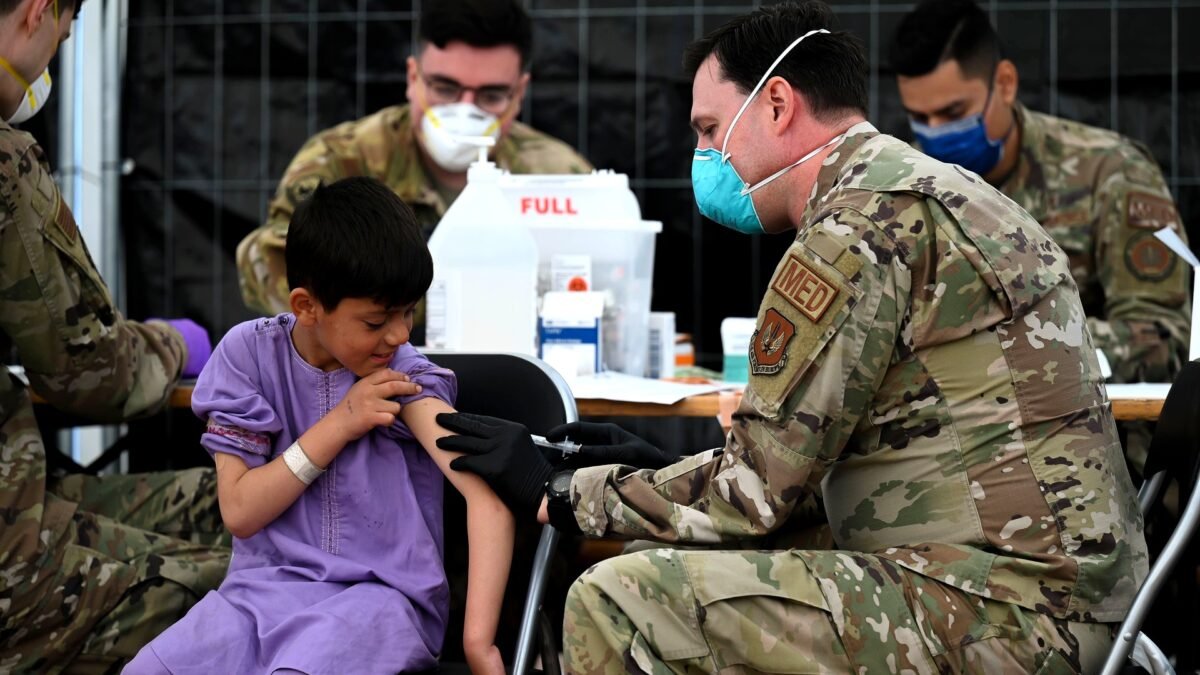
Thirteen babies in the United States were born already infected with measles, and 112 pregnant women caught the virus during the country’s 2025–26 outbreaks, according to a preliminary analysis by scientists at the Centers for Disease Control and Prevention (CDC) published on Monday. It is the first national picture of what measles does in pregnancy in decades — and it arrives as the disease, once declared eliminated in America, spreads at levels not seen in more than 30 years.
The figures were published on 16 November in NEJM Evidence, in partnership with the University of Minnesota’s Center for Infectious Disease Research and Policy (CIDRAP), as a public health alert. They cover cases reported by 16 American jurisdictions between 1 January 2025 and 28 September 2026. Almost all of the pregnant women infected — 110 of the 112, or 98 per cent — had not received the measles, mumps and rubella (MMR) vaccine before pregnancy, or their vaccination status was unknown. Only one woman had two documented doses of the vaccine, and one had a single dose.
The alert counts the damage in plain numbers. Twenty-six of the 112 women, nearly a quarter, were admitted to hospital for reasons other than labour. Eleven developed pneumonia. Two suffered respiratory failure. One was admitted to intensive care. Among the 19 live births that occurred within 14 days of the mother’s rash appearing, eight babies were born prematurely and eight were admitted to a neonatal intensive care unit. Two pregnancies were lost — one miscarriage and one stillbirth — although the report does not say whether measles caused those losses.
Of 16 newborns tested for the virus, 13 were positive within 10 days of birth, meeting the study’s definition of congenital measles: a baby infected in the womb, before it ever takes its first breath. Six of those 13 babies developed symptoms, including one with signs consistent with meningoencephalitis, a dangerous inflammation of the brain and its membranes. The authors are careful about what the numbers can and cannot prove. The analysis is preliminary, data collection is continuing, and the pregnancy outcomes of 56 of the 112 women were still unknown when the report was written. There is no comparison group, so the figures cannot be read as the risk faced by every pregnant woman who catches measles. But as a first national accounting, the picture is stark: the virus has reached the one group of patients who cannot be vaccinated at all.
What congenital measles is — and why it frightens doctors
Congenital measles happens when a pregnant woman passes the virus to her fetus in the womb. According to the Associated Press, it is a condition most American doctors had never treated, because for a quarter of a century it effectively did not exist in the United States. Measles was declared eliminated in the country in 2000, and high vaccination rates kept it that way. Now it is back, and with it a complication that belongs to an earlier era.
The risk is greatest when a woman catches measles close to delivery. The American Academy of Pediatrics (AAP) says an estimated 25 to 30 per cent of babies born to someone who contracts measles shortly before giving birth may become infected, according to the Associated Press. A baby is considered to have congenital measles if it was exposed in the uterus and doctors find evidence of the virus very soon after birth — in this analysis, a positive laboratory test within 10 days of birth, or a feverish rash within 10 days. Common symptoms include fever, jaundice and the characteristic measles rash. Severe complications include pneumonia, encephalitis and a rare brain disorder known as subacute sclerosing panencephalitis, or SSPE, which generally develops many years after a measles infection and is almost always fatal.
Dr Adam Ratner, a member of the AAP’s infectious diseases committee who has written a book about measles, told the Associated Press that there are indications children with congenital measles face a higher risk of SSPE — and may develop it sooner after infection than other children. “That’s something that sadly we’re learning more about,” he said. The alert itself notes that congenital measles can result in severe neurological complications, including SSPE, and that data on the long-term outcomes of babies exposed to measles in the womb are limited, particularly when the infection occurs early in pregnancy. In other words, the 13 babies counted in this report will need to be followed for years before doctors know the full cost of what happened to them.
The alert also makes clear that the measles virus is not a known teratogen — it is not established as a cause of birth defects in the way that, say, rubella is. The danger is different: severe illness in the mother, a baby born too early, a baby born already fighting an infection, and a brain disorder that may not appear for years. That distinction matters, because it shapes what doctors can do. There is no treatment that can undo an infection in the womb. There is only prevention before pregnancy, and damage limitation after exposure.
The mothers in the data
The 112 women in the analysis were a median age of 27, ranging from 19 to 44, according to the alert. Ninety-six per cent of them — 108 of the 112 — were identified as part of large outbreaks of 50 or more measles cases. The timing of infection was spread across pregnancy: 10 women developed their rash in the first trimester, 24 in the second and 34 in the third, with the timing missing or unreported for 44. The median time from the mother’s rash appearing to the pregnancy ending was five days.
Of the 112 pregnancies, 37 had outcomes reported by 28 September 2026. Nineteen women were presumed still pregnant, and 56 had unknown outcomes — a gap the authors flag themselves as a limitation of the report. Twenty-one pregnancy outcomes fell within 14 days of the mother’s rash: 19 live births and two losses. Of the 19 live births, five were born at term, two were late preterm, six were early preterm — born before 34 weeks — and the gestational age was missing for six. Eight of the newborns went to intensive care. Nine further live births occurred more than 14 days after the mother’s rash, and seven more outcomes were reported without enough information to determine their timing.
One detail in the report stands out as a quiet indictment. Not a single one of the 112 pregnant women had any documentation of receiving immunoglobulin — a preparation of antibodies — as post-exposure prophylaxis. The CDC recommends that pregnant women without documented MMR vaccination or other evidence of immunity who are exposed to measles should receive intravenous immunoglobulin, and the alert urges clinicians to give it to unvaccinated exposed pregnant patients within six days of exposure. None did. Among the babies, 14 of the 19 born within 14 days of their mother’s rash did receive immunoglobulin, and four received vitamin A. The gap between what the guidance says and what happened is one of the questions the report leaves hanging.
The authors’ conclusion is blunt. “Large measles outbreaks in undervaccinated communities during 2025–2026 have resulted in infections among pregnant women and in congenital measles, showing the impact of measles on maternal and neonatal health,” they wrote. “MMR is a live vaccine and is not recommended during pregnancy; therefore, protection in this population relies on both vaccination of women before pregnancy and maintaining high community MMR coverage.”
Why this is happening now
The emergence of congenital measles is not a mystery. It is the predictable consequence of a vaccination gap that has been widening for years, and of a cohort of young women who grew up in the very decades when measles was beaten back.
“This is a brand-new phenomenon,” Michael Osterholm, who directs the University of Minnesota’s Center for Infectious Disease Research and Policy, told the Associated Press. “What’s happening is we have so many women of childbearing age who were not vaccinated in the last 25 years, nor have they ever had exposure to measles because for the last 25 years we have beaten it back. Now, this group is highly susceptible to measles.”
The logic is simple and cruel. Before the vaccine existed, almost everyone caught measles in childhood and carried lifelong immunity into adulthood. After elimination in 2000, high vaccination rates protected everyone, including those who had never been infected. But as vaccination rates slipped — through hesitancy, through missed appointments, through communities where the shots never arrived — a generation of women reached childbearing age with neither natural immunity nor vaccine protection. Measles cannot be given to them now, because the MMR vaccine is a live vaccine and is not administered during pregnancy. The only protection for a pregnant woman is the immunity she carries into pregnancy, and the immunity of the community around her. Both are thinning.
The numbers behind that thinning are stark. Outbreaks are considered unlikely if a community has a 95 per cent MMR vaccination rate, according to the Associated Press. Nationally, the CDC said 92.4 per cent of American kindergartners in the 2025–26 school year received their required MMR shots — below the threshold, and far below it in the pockets where outbreaks have taken hold. The first MMR dose is routinely given at 12 to 15 months of age, and the earliest babies can receive it is six months in outbreak areas. That leaves every infant under six months, and every unvaccinated pregnant woman, dependent entirely on the people around them being immune.
The scale of the resurgence is now hard to overstate. The CDC had confirmed 5,412 measles cases in the United States in 2026 as of 12 November, according to the Associated Press — more than double the 2,289 confirmed in 2025, and the highest yearly count since 1991. In the past two years, according to the CDC, there have been more than 7,500 measles cases. Ten people have died of measles in the United States this year, according to Becker’s Hospital Review. And on 17 November, the Pan American Health Organization formally announced that the United States had lost the measles elimination status it had held since 2000 — a story this site reported on 14 November. Canada lost its own elimination status last year amid roughly 5,400 measles cases in a population of about 40 million, Osterholm noted. Scaled to the American population, he said, “that would be almost 50,000 cases of measles a year. It’s surely within the realm of possibility.” He added that the United States has not yet seen its peak of measles cases.
“We’re now seeing levels of measles that we haven’t seen in 30 years,” Dr Ratner told the Associated Press. “When you have measles under control, congenital measles doesn’t happen.”
What doctors are being told to do
The alert is, in part, a warning to a medical profession that has not seen this disease in this form for a generation. It urges health care systems and clinicians to prepare emergency departments, labour-and-delivery units and neonatal intensive care units for cases many have never seen. Guidance on congenital measles from the American Academy of Pediatrics is already reaching doctors, according to the Associated Press, and Pennsylvania’s health department published an advisory last month for health care providers, schools, child care centres and others in the state, which currently has the largest measles outbreak in the nation.
The practical advice is specific. Women should receive the MMR vaccine before pregnancy, so that antibodies pass from mother to baby through the placenta, with protection lasting a few months after birth. Unvaccinated women who have never had measles and are exposed while pregnant should receive a solution containing antibodies within six days to reduce the risk of infection and complications. For newborns exposed to measles in the womb, immunoglobulin is recommended at birth to reduce the illness associated with congenital measles. Vitamin A, which the alert notes four of the newborns received, is part of the recommended care for measles in children.
None of this is new medicine. It is old medicine, dusted off. That is the point. The guidance exists because measles in pregnancy was a known danger before elimination; it was simply a danger that American doctors had not needed to think about for 25 years. The alert’s authors are telling them to think about it now — to ask pregnant patients about their vaccination history, to treat a rash in a pregnant woman as a possible emergency, and to have immunoglobulin available before it is needed rather than after.
The numbers that do not add up — and why
Readers comparing the CDC’s figures with other counts will find a discrepancy, and it deserves an honest explanation rather than a gloss. The alert counts 112 confirmed measles cases in pregnancy, reported by 16 jurisdictions. A separate investigation by CIDRAP News, published the same day and based on a review of state health department data, counted at least 167 pregnant women infected with measles in 2025 and 2026. The two counts come from different sources and different time frames, and they should not be added together — but the gap between them is itself informative.
CIDRAP’s review found that six American states do not report pregnancy status in their measles cases at all, and 11 health departments did not respond to its inquiries. The CDC, for its part, does not routinely track measles infections in pregnancy, or the miscarriages and stillbirths that follow, according to CIDRAP News. There is no national registry that follows babies born with congenital measles toward the conditions they may develop years later, such as SSPE, which typically appears seven to 10 years after infection. The 112 is therefore best understood as a floor, not a ceiling — the cases the system was able to see, in the jurisdictions that reported them, within a window that ended on 28 September. The true number is almost certainly higher, and the 167 is itself described as probably an undercount.
The same caution applies to the outcomes. With 56 of the 112 pregnancies still unaccounted for, the proportions in the report — eight of 19 live births premature, eight admitted to intensive care — describe the cases with known outcomes, not the whole group. The authors say so plainly. The report’s value is not in a precise risk percentage, which it cannot provide, but in establishing that the risk exists at all, in a country where it had been assumed to have vanished.
The alert that never went out
There is a second story wrapped inside this one, about how the information reached the public at all. According to the Washington Post, the CDC declined this autumn to approve a Health Alert Network notice — the agency’s formal channel for warning clinicians of urgent health threats — about the risks of measles in pregnancy. The CDC scientists instead published their findings in an independent journal, NEJM Evidence, rather than in the agency’s own Morbidity and Mortality Weekly Report, according to Becker’s Hospital Review.
A spokesperson for the Department of Health and Human Services told the Post that the scientists chose an outside journal as the fastest way to disseminate the data, and that the report was going through scientific review and clearance. That explanation and the Post’s account of a declined alert are not the same thing, and the article should not pretend they are. What is established is that a formal national warning to clinicians was sought and did not go out through the usual channel, and that the data reached doctors instead through a journal partnership with CIDRAP. Whether the delay mattered — whether any of the 112 women, or any of the 13 babies, would have been protected by an earlier warning — cannot be known from the available record. But the episode sits uncomfortably alongside the finding that not one of the 112 women received immunoglobulin after exposure, the very intervention a health alert would have urged.
It also sits alongside a larger question about the CDC itself. The agency that once ran the world’s most admired disease surveillance system now, by CIDRAP’s account, does not track pregnancy status in measles cases as a matter of routine. The alert calls for “linked mother–infant longitudinal surveillance” to understand the impact of measles during pregnancy — in plain language, a system that follows mothers and babies together over time. The fact that such a system has to be called for, in the middle of the worst measles resurgence in 35 years, is itself part of the story.
A disease that was supposed to be finished
To understand why 13 babies born with measles is a landmark, it helps to remember what measles was. Before a vaccine was licensed in 1963, measles infected nearly every American child, killing an estimated 400 to 500 people a year in the United States and hospitalising tens of thousands. The vaccine changed that within a generation, and by 2000 the Pan American Health Organization declared the disease eliminated in the United States — meaning no sustained local transmission for more than a year.
Elimination was never eradication. The virus continued to circulate elsewhere in the world, and travellers continued to bring it in. What kept it from spreading was the wall of immunity built by two doses of MMR, given to more than 95 per cent of children in most communities. That wall has been crumbling for years, first in scattered pockets — religious communities, counties with high exemption rates, places where the health system never reached — and now more broadly. The alert notes that these were the first documented measles cases among pregnant women in the United States since 2019. The gap between 2019 and 2025 was not an accident; it was the wall holding. The 13 babies are what happens when it does not.
The pattern is not confined to the United States. Canada lost its elimination status last year. Britain has battled outbreaks. The World Health Organization has warned repeatedly that measles, one of the most contagious viruses known — an infected person can spread it to nine out of 10 unprotected people nearby — is resurging wherever vaccination has slipped. The American story is distinctive only in its scale and its speed: from elimination to more than 5,400 cases in a year, and from zero congenital cases to 13, in less than a decade.
Analysis: Why It Matters
1. The babies are the measure of the outbreak
Outbreaks are usually measured in case counts, and the 2026 count — 5,412 and rising — is already the worst in 35 years. But case counts are abstract. Thirteen babies born already infected is not. These are children who had no choice in the matter: they could not be vaccinated, they could not avoid exposure, and they could not consent to the risk. They are the most defenceless patients in the entire outbreak, and they are the ones in whom the failure of the system shows up first and most cruelly. When a disease reaches the delivery room, it has stopped being a statistic about other people and become a test of whether a society protects those who cannot protect themselves. By that test, the United States is failing.
2. A 25-year immunity gap is now a pregnancy risk
The most important sentence in the whole alert may be the one about who these women are. They are not, for the most part, women who refused a vaccine last year. They are women who grew up in the quarter-century after elimination, when measles was a disease other countries had. Many were never vaccinated, and many never caught the virus either, because there was so little of it around. Elimination created its own vulnerability: a generation with no immunity of any kind, living in a country where the virus has now returned. This is a cohort effect, and it will not be fixed quickly. Every year, more unvaccinated girls become women of childbearing age. The 112 cases in this report are the leading edge of a problem that will grow unless vaccination of young women becomes a deliberate, organised effort — not a matter of chance.
3. The numbers are a floor, not a ceiling
It would be a mistake to read 112 and 13 as the full toll. The CDC’s own count is limited to 16 jurisdictions and ends on 28 September. A separate count found at least 167 pregnant women infected, and even that is probably an undercount, because six states do not report pregnancy status and 11 health departments did not answer. More than half of the outcomes in the CDC’s group are unknown. And there is no registry to follow the 13 babies into childhood, when SSPE — the brain disorder that can appear seven to 10 years after infection — may emerge. A health system that cannot count its pregnant patients cannot protect them, and a country that does not follow its congenital measles babies cannot know what it owes them. The first duty of any honest account of this report is to say that the true scale is still unknown.
4. The alert that never went out is a warning about the system, not just the virus
The Washington Post’s account of a Health Alert Network notice that was not approved should trouble anyone who cares about public health, whatever they think of the underlying dispute. The alert system exists for exactly this situation: a new, serious, preventable harm that clinicians need to know about quickly. The CDC scientists did the work, wrote it up, and published it in a journal — but the formal warning to every doctor in the country did not go out through the channel designed for it. Meanwhile, not one of the 112 women received immunoglobulin after exposure, the intervention the guidance recommends within six days. It is impossible to prove that an earlier alert would have changed any individual outcome. But the purpose of a warning system is to make the best care the default, not the exception. When the system hesitates, the cost is paid by patients who never knew they were at risk.
5. Prevention is the only real intervention
There is no drug that cures measles in pregnancy, and no vaccine that can be given to a pregnant woman. The medicine available is narrow: immunoglobulin within six days of exposure, immunoglobulin for the newborn at birth, vitamin A, and good intensive care. Everything else is prevention, and prevention has exactly two levers. The first is vaccinating women before pregnancy — a simple, cheap, well-understood intervention that requires someone to ask a young woman whether she has had her MMR shots, and to give them if she has not. The second is community immunity: keeping MMR coverage above 95 per cent so that the virus cannot reach the people it can hurt most. Both levers are in the hands of the public, the health system and the government, not the patient. A pregnant woman cannot vaccinate herself. Her protection is decided by others. That is why the 13 babies matter beyond their number: they are a measure of decisions made far from any delivery room.
What to Watch Next
- The CDC’s weekly case counts: whether the 2026 total keeps climbing past 5,412, and whether the 14th straight week of triple-digit increases extends into the winter, when respiratory viruses spread most easily.
- Pennsylvania’s outbreak: the state with the largest measles outbreak in the nation, and whether its health department advisory to providers, schools and child care centres slows transmission — or whether pregnancy cases appear there next.
- The formal loss of elimination status: the Pan American Health Organization’s announcement, made on 17 November, and what it means in practice for travel advice, school requirements and the country’s standing in global health.
- Kindergarten vaccination data: whether MMR coverage among kindergartners recovers from 92.4 per cent toward the 95 per cent threshold, and which states and counties remain below it.
- Whether the CDC changes course on warnings: whether a Health Alert Network notice on measles in pregnancy is eventually issued, and whether the agency begins routinely tracking pregnancy status in measles cases.
- Follow-up on the 13 babies: whether a registry or longitudinal study is established to track the children born with congenital measles, given the risk of SSPE years later — and whether the 56 pregnancies with unknown outcomes are ever resolved.
- Vaccination of women before pregnancy: whether health systems begin routinely checking MMR status at contraception, fertility and pre-pregnancy visits, the one point in the system where this harm can actually be prevented.
Sources
- NEJM Evidence — “Outcomes among Pregnant Women with Measles and Their Infants in the United States — Preliminary Analysis, 2025–2026” (the CDC-authored public health alert)
- Associated Press, via Medical Xpress — “Doctors are raising concerns about US babies born with measles” (17 November 2026)
- Becker’s Hospital Review — “Measles infected 112 pregnant women, 13 newborns in 21 months: Study” (17 November 2026)
- CIDRAP / NEJM Evidence — the full public health alert (PDF)
- Tech Times — “Measles in Pregnancy: CDC Scientists Report 13 Infected Newborns After Health Alert Went Unapproved” (17 November 2026)
- News-Medical — “Preliminary CDC data link measles in pregnancy to congenital infection, preterm birth and NICU admissions” (19 November 2026)

About the Author — Abdul Mannan
Related Articles

Dozens of Cancer Patients Given Chemotherapy for Years at Coventry NHS Trust, Damning Review Finds
A Royal College of Physicians review found brain tumour patients at University Hospitals Coventry and Warwickshire were given…

FDA Approves Roche’s Wilserdly Pill for Drug-Resistant Advanced Breast Cancer
The US Food and Drug Administration has approved Roche's once-daily pill Wilserdly for advanced breast cancer that carries…
Africa CDC Warns Congo Ebola Outbreak ‘Still Not Under Control’ as Cases Pass 11,200
Six months after it was declared, the Democratic Republic of Congo's Ebola outbreak has passed 11,200 cases and…