
Africa CDC Warns Congo Ebola Outbreak ‘Still Not Under Control’ as Cases Pass 11,200

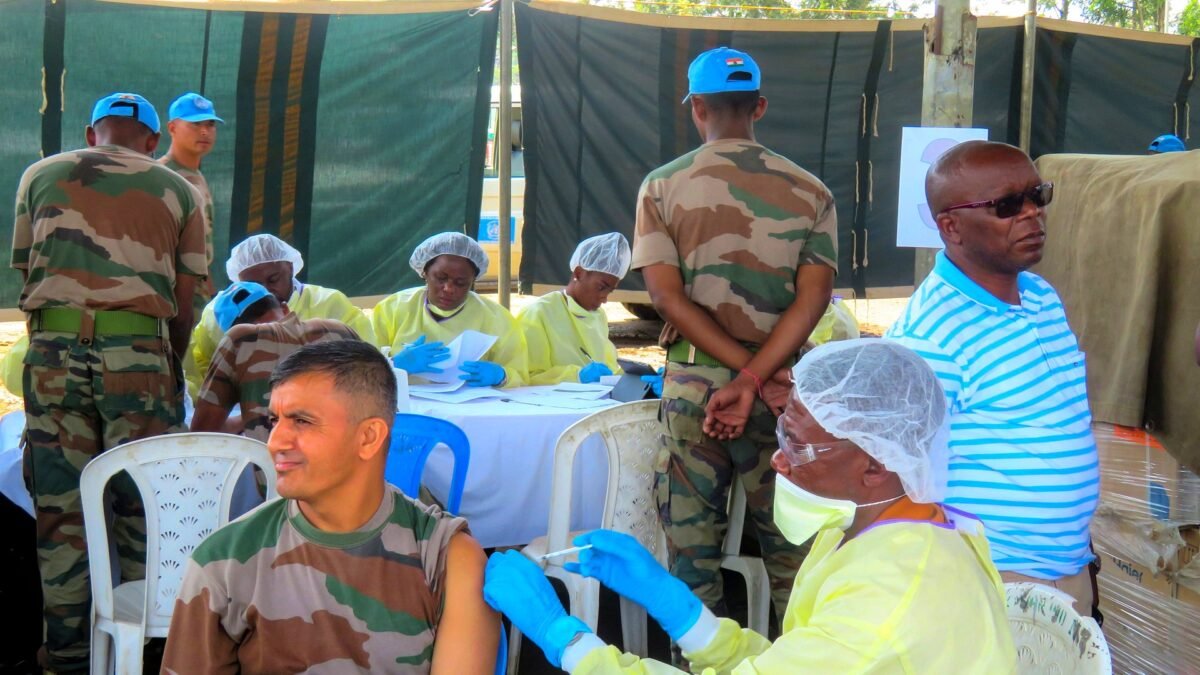
Africa’s top public health agency has delivered its starkest warning yet about the Ebola outbreak in the Democratic Republic of Congo: six months after the epidemic was declared, it is still not under control, and if the response does not change course now, it could become the worst Ebola outbreak the world has ever seen.
Jean Kaseya, the director-general of the Africa Centres for Disease Control and Prevention, told Reuters on Sunday that the outbreak remained serious and uncontrolled, according to Reuters. “We are all in agreement today to say that this outbreak is still serious, and is still not under control,” Kaseya said in an interview. “If we don’t stop this outbreak now, it would be the worst Ebola outbreak that the world will have.”
More than 11,200 infections and 5,500 deaths have been recorded since the outbreak was announced on 15 May, according to government data cited by Reuters. The figures make the epidemic the second-largest and second-deadliest Ebola outbreak on record, behind only the 2014-2016 West African epidemic, which infected more than 28,600 people and killed more than 11,000.
The warning lands at a moment when the official numbers, alarming as they are, almost certainly understate the scale of what is happening. More than 80 per cent of new cases are emerging outside known contact lists, Kaseya said, which means that for every four out of five newly detected infections, health workers cannot say where the patient caught the virus. More than 65 per cent of deaths are occurring in the community, away from health centres, which means that most victims are dying without ever reaching treatment, and that their contacts are often never traced at all.
Those two figures, taken together, describe an outbreak that the response is chasing rather than containing. When a case appears outside a contact list, it means a chain of transmission has been running unseen. When a patient dies at home, it means the virus has had days of close contact with family members, neighbours and mourners before anyone in authority knew the person was ill. Ebola is most contagious during the late stages of the disease, according to Reuters, so a death in the community is not only a personal tragedy; it is also the moment of maximum risk to everyone around the patient.
A warning six months in the making
The outbreak was declared on 15 May 2026 in the Democratic Republic of Congo, and it has been growing ever since. By the end of October, the health ministry had reported 10,351 confirmed cases and 5,340 deaths, a case fatality rate of 51.6 per cent, according to figures reported by AfricaWire. Roughly half of everyone known to have caught the virus has died from it.
The epidemic has now affected eight of the DRC’s 26 provinces, and cases have been reported across East, Central and West Africa, giving it the widest geographic spread of any Ebola outbreak on the continent, according to AfricaWire. It is already the largest Ebola outbreak ever recorded inside the DRC itself, surpassing the 2018-2020 epidemic in the country’s east, which produced 3,317 confirmed cases, according to France’s ANRS research agency.
The geographic spread is one of the features that most worries public health officials. Previous large outbreaks were concentrated in one region, which allowed responders to surround them. This one has crossed provincial and national borders, carried by the ordinary movement of people along trade routes, family networks and displacement corridors. Uganda recorded 20 confirmed cases before declaring its own outbreak over in August, after completing 42 consecutive days without a new confirmed case, according to Capital FM. Kenya confirmed its first case in early October. A doctor returning from the DRC became the first person in French history to test positive for Ebola, according to reports from July.
What makes the Africa CDC’s statement significant is not only the numbers but the source. Kaseya is not an outside critic; he leads the continent’s own public health agency, and his assessment was delivered after consultation with the governments and agencies involved. “We are all in agreement today,” he said, a phrase that signals the warning was shared rather than unilateral. The agency’s judgement is that the response, as currently organised and funded, is not keeping pace with the virus.
Ituri: the epicentre the response cannot reach
The heart of the outbreak is Ituri province, in the north-east of the DRC, where insecurity and restricted access have limited surveillance and contact tracing, according to AfricaWire. By late October, Ituri alone had recorded about 7,346 cases and 3,750 deaths, according to the health ministry. That is roughly seven out of every ten cases in the country, concentrated in a province where armed groups operate, roads are poor, and health workers cannot safely travel to many communities.
Ituri’s difficulties explain much of the national picture. Contact tracing, the basic tool of any Ebola response, depends on health workers being able to find the people a patient met while infectious, visit them daily for 21 days, and isolate them the moment symptoms appear. In Ituri, that work is repeatedly interrupted by violence. Health workers have been attacked, according to Reuters, and the agency cited deadly attacks on health staff among the reasons the outbreak remains uncontrolled.
The consequences are visible in the data. When surveillance teams cannot reach a village, cases go undetected until someone dies. When contacts cannot be followed, new infections appear with no known source. The 80 per cent figure for cases outside contact lists is not an abstract statistic; it is a measure of how much of the epidemic is invisible to the people trying to stop it.
Around 270 frontline workers had themselves been infected by the end of October, according to ministry figures reported by AfricaWire. Each infected health worker removes a trained responder from an already thin workforce and sends a message to colleagues and communities about the risks of the job. Some health workers had gone unpaid for months, Kaseya acknowledged, and he said the Congolese government was working to digitise the payroll to fix the problem. The World Health Organization has previously warned that staff and funding shortages are slowing the response.
Medical charity Médecins Sans Frontières said this week that, despite an outpouring of aid pledges, help was still not reaching hotspots, pointing to untrained staff, ambulances without fuel and a lack of surveillance teams, according to Reuters. The picture MSF describes is not one of a response that lacks money on paper, but of a response whose resources do not arrive where the virus actually is.
The strain with no vaccine
A central reason this outbreak is so difficult to fight is the virus itself. The epidemic is driven by the Bundibugyo species of the Ebola virus, a rare strain that is genetically and antigenically distinct from the Ebola virus species responsible for the West African epidemic and for all major DRC outbreaks before 2026, according to ANRS.
That distinction matters enormously, because almost everything the world built to fight Ebola over the past decade was built for the other strain. There is currently no licensed vaccine specifically for Bundibugyo virus disease, and no approved specific treatment, according to the World Health Organization, as reported by Capital FM. The widely known Ebola vaccine, Ervebo, is licensed for disease caused by the Zaire species of the virus, and the two licensed monoclonal antibody treatments were likewise developed against that species.
Bundibugyo virus was first identified in 2007, during an outbreak in Uganda’s Bundibugyo District that produced 56 confirmed cases and 37 deaths, according to ANRS. A second, smaller outbreak followed in 2012 in the Isiro region of north-eastern DRC, with 36 confirmed cases and 34 deaths. Before 2026, the virus had caused only those two small outbreaks, and the World Health Organization puts the case fatality rates recorded in 2007 and 2012 at about 30 per cent and 50 per cent respectively, according to Capital FM.
Because the virus was rare, it attracted little research funding and commercial attention. While effective vaccines and treatments were developed for the Zaire strain, investment in countermeasures for Bundibugyo remained limited, according to an analysis by the Inter Press Service news agency. Scientists have understood the threat posed by Bundibugyo virus since 2007, yet no Bundibugyo-specific vaccine was developed in the nineteen years before this outbreak began.
The result is that doctors and nurses in eastern Congo are relying primarily on supportive care, isolation measures, contact tracing and community engagement to stop transmission, according to the same analysis. Supportive care, delivered early, saves lives: rehydration, management of symptoms, monitoring of vital organ function and treatment of complications and other infections. But supportive care cannot do what a vaccine does, which is to protect the people most likely to be exposed next.
Health authorities have given the Ervebo vaccine to frontline workers in Ituri, although it was developed for the Zaire strain, according to AfricaWire. The World Health Organization issued guidance in May recommending against the use of Ervebo for Bundibugyo patients outside controlled research settings, according to reports. In early November, the WHO approved clinical trials of two new Ebola vaccines, with results expected in early 2027, according to AfricaWire. The agency says at least 3,000 people have recovered from Ebola virus disease in the DRC and returned home.
Clinical trials are also under way for treatments. The WHO-sponsored PARTNERS trial has begun enrolling patients in Ituri, evaluating the broad-spectrum antiviral remdesivir and MBP134, a two-antibody cocktail developed from antibodies isolated from a survivor of the 2014 West African outbreak, according to reports. WHO experts have identified MBP134, maftivimab and remdesivir as candidates for evaluation in clinical trials, while the oral antiviral obeldesivir has been prioritised for research into post-exposure prophylaxis, according to Capital FM. Tedros Adhanom Ghebreyesus, the director-general of the WHO, has said that transmission is slowing in several early epicentres and that clinical trials, including the Tumaini trial and new vaccine candidates, are advancing rapidly, according to AfricaWire.
That is real progress, but it is progress measured in months, and the outbreak is measured in weeks. A vaccine trial whose results arrive in early 2027 does nothing for a health worker in Ituri today. The gap between what science can eventually offer and what the response needs now is the central, cruel fact of this epidemic.
The money that was pledged but never arrived
Donors have pledged 2.9 billion dollars to fight the outbreak, Kaseya said, but only 1.3 billion dollars of that has actually been released. He called on donors to release the remaining aid and to work closely with Kinshasa to ensure the money is not wasted through duplication, according to Reuters.
Kaseya described the coordination between the Congolese government and donors as a collective failure. “We are not pointing fingers,” he said. “We are saying it’s a collective failure.” The phrase is diplomatic, but its meaning is plain: the system that is supposed to turn pledges into fuel, salaries, surveillance teams and treatment beds is not working.
The funding gap is not a new story in global health, but its consequences are unusually visible here. Money pledged but not released cannot pay a health worker, fuel an ambulance, or fund a surveillance team. A pledge is a promise; a release is a bank transfer. The distance between the two is where this outbreak is being lost.
Some of the funding that has arrived has gone to the wrong places, or to overlapping efforts. Kaseya’s call for donors to work closely with Kinshasa to avoid duplication points to a response in which multiple agencies run parallel operations in the same areas while other areas go uncovered. In an outbreak where 80 per cent of new cases appear outside contact lists, the scarcest resource is not money in the abstract but organised, coordinated presence on the ground.
There has been some movement. Gavi, the Vaccine Alliance, announced up to 50 million dollars through its First Response Fund to accelerate vaccine development and support the outbreak response, according to the Inter Press Service. CEPI, the Coalition for Epidemic Preparedness Innovations, has committed tens of millions more to advance vaccine candidates being developed by Moderna, the University of Oxford and IAVI. These are significant commitments, but they are aimed at the vaccines of the future, not at the salaries and fuel of the present.
The human cost behind the figures
Behind the case counts are communities that have now lived with Ebola for six months, in a region that has lived with conflict for far longer. Ituri is not only the epicentre of this outbreak; it is a province where armed groups have displaced hundreds of thousands of people, where families move frequently and unpredictably, and where trust in authorities, including health authorities, is fragile.
Ebola is a disease that tests trust more than almost any other. Its control depends on people reporting illness quickly, allowing strangers in protective suits to take their relatives to treatment centres, and accepting that the dead must be buried safely rather than according to custom. Each of those steps requires a community to believe that the health system is acting in its interests. When health workers are attacked, when salaries go unpaid, when ambulances arrive without fuel, that trust frays.
The fact that more than 65 per cent of deaths occur in the community suggests that many families are still choosing, or being forced by circumstance, to care for the dying at home. Some of those deaths will be of people who never knew they had Ebola. Others will be of people who knew, or suspected, and stayed away from treatment centres out of fear, distance, or the simple impossibility of reaching one. Every community death is a failure of the response to reach that person in time, and a risk to everyone who cared for them.
At least 3,000 people have recovered and returned home, according to the WHO, and that figure matters. Recovery from Ebola is possible, and survivors are living proof that treatment centres are not places people go to die. Survivors also carry a powerful message for their communities, and in past outbreaks they have become some of the most effective advocates for early treatment. But 3,000 recoveries against 5,500 deaths is still a balance tilted the wrong way.
The outbreak’s spread across East, Central and West Africa also raises a question the world has been slow to answer: how far can this virus travel before it is treated as a global emergency rather than a regional one? A case in France, a case in Kenya, cases across eight Congolese provinces, and a warning from Africa’s own health agency that the outbreak could become the worst in history — these are the markers of an epidemic that has already outgrown its original geography.
Analysis: Why It Matters
1. “Not under control” is a verdict, not a slogan
Public health officials choose their words carefully, and Kaseya’s words were chosen to alarm. “Still not under control” is not the language agencies use when a response is merely struggling; it is the language they use when the numbers are moving in the wrong direction and the tools at hand are insufficient. The two statistics he attached to the verdict — 80 per cent of new cases outside contact lists, 65 per cent of deaths in the community — are the evidence. They describe an outbreak whose chains of transmission are mostly invisible and whose victims are mostly dying beyond the reach of care. An outbreak with those characteristics is not being contained; it is being observed, incompletely, as it spreads.
2. The vaccine gap is a policy choice made nineteen years ago
The most damning fact in this story is not the case count but the calendar. Bundibugyo virus has been known since 2007. In nineteen years, no vaccine and no treatment was developed for it, because it was rare and therefore unprofitable and uninteresting to funders. The world built an impressive arsenal against the Zaire strain — vaccines, antibodies, diagnostics — and left the Bundibugyo strain essentially untouched. That was a bet that Bundibugyo would stay rare. The bet has now failed, at a cost of more than 5,500 lives and counting. The lesson is not only about Ebola. Every pathogen that is rare today is a candidate for the outbreak of tomorrow, and the decision to invest only in the diseases that are already killing people at scale is a decision to be unprepared for the next one.
3. The money exists; the system to spend it does not
The funding figures tell a story that should embarrass everyone involved. Donors pledged 2.9 billion dollars. Only 1.3 billion has been released. The gap of 1.6 billion dollars is not a shortage of generosity; it is a failure of plumbing. Pledges sit in budgets while health workers go unpaid and ambulances sit without fuel. Kaseya’s phrase, “a collective failure,” is the right one, because the failure belongs to no single party: donors who announce pledges and release them slowly, a government whose payroll systems cannot reliably pay its own responders, and an aid architecture that duplicates effort in some places while leaving others uncovered. The outbreak will not be stopped by another pledging conference. It will be stopped when money reaches Ituri as salaries, fuel, surveillance teams and treatment beds.
4. Ituri shows that epidemics follow conflict
It is no coincidence that the epicentre of this outbreak is a province shaped by armed violence. Conflict and epidemics feed each other: violence displaces people, displacement spreads disease, and disease weakens the institutions that might contain both. Health workers cannot trace contacts in areas they cannot safely enter. Families fleeing violence carry the virus with them along roads and into camps. Attacks on health workers, which Reuters cited among the reasons the outbreak is uncontrolled, are both a symptom of insecurity and a cause of further spread. Any strategy that treats this as a purely medical problem, without addressing the insecurity that makes the medical response impossible, will fail. The response needs security, access and trust as much as it needs vaccines and beds.
5. The world is watching the wrong scoreboard
There is a risk that the rest of the world will read this story as a distant tragedy, because Ebola spreads through direct contact with bodily fluids and is far less transmissible than airborne viruses, and because the outbreak is concentrated in a region many readers could not place on a map. That would be a mistake. The warning from Africa CDC is that this outbreak could become the worst in history, and the worst in history is a record that would be measured in tens of thousands of deaths. The time to act is while the count is at 11,200, not when it reaches 28,600. The history of epidemics is the history of warnings ignored until they became emergencies. Kaseya’s warning is unusually clear, unusually authoritative, and unusually early. Whether it is heeded will be visible in the next set of numbers.
What to Watch Next
- The next Africa CDC and WHO situation reports: whether the share of new cases outside contact lists falls below 80 per cent, which would be the first sign that surveillance is catching up with transmission, or rises further.
- Donor releases: whether the 1.6 billion dollars in pledged but unreleased aid begins to move, and whether it reaches Ituri as salaries, fuel and surveillance teams rather than as further pledges.
- Health worker pay and safety: whether the Congolese government’s payroll digitisation ends months of unpaid work, and whether attacks on health workers decline, both of which are preconditions for a functioning response.
- The vaccine trials: early results from the two new Ebola vaccine trials approved by the WHO in November, and from the Tumaini and PARTNERS treatment trials, with results expected in early 2027.
- Ituri’s access: whether surveillance teams regain access to insecure areas of the province, and whether the proportion of deaths occurring in the community begins to fall.
- Cross-border spread: whether new cases appear in additional countries beyond the DRC, Uganda, Kenya and France, and how quickly neighbouring health systems detect and isolate them.
- The fatality rate: whether the case fatality rate, currently around 51.6 per cent, moves downward as more patients reach treatment early, which would signal that supportive care is reaching people in time.
Sources
- Reuters — “Africa CDC says Ebola outbreak still out of control six months since it was declared”
- AfricaWire via Oman Outlook — “Ebola cases top 11,200 as Africa CDC warns of record outbreak”
- ANRS (French National Agency for Research on AIDS and Viral Hepatitis) — “Ebola disease caused by Bundibugyo virus”
- Capital FM — “What is Bundibugyo Ebola? The strain behind Kenya’s first case”
- Inter Press Service via Global Issues — “We Knew About the Bundibugyo Ebola Virus for 20 Years. Why Was There No Vaccine When the Outbreak Began?”
- World Health Organization — Ebola virus disease

About the Author — Abdul Mannan
Related Articles
WHO Extends Global Polio Emergency as Afghanistan Cases Climb and Vaccine-Derived Outbreaks Reach 20 Countries
The WHO has extended polio's global health emergency for another three months, warning that wild poliovirus transmission in…
US Loses Measles Elimination Status After 26 Years as Cases Top 5,400 in Worst Outbreak Since 1991
After 26 years, the United States has lost its measles elimination status, with more than 5,400 cases in…
WHO Warns Violence Threatens to Undo Six Months of Progress as DR Congo Ebola Outbreak Passes 11,000 Cases
Six months into the DR Congo's deadliest Ebola outbreak, the WHO warns that attacks on health workers —…