
Covid Inquiry Finds Britain Was ‘Woefully Ill Prepared’ as Test and Trace Failures Let Virus Spread Unchecked

Britain entered the Covid-19 pandemic without a working system to find the virus, trace its spread or help people stay at home, and that failure shaped everything that followed.
That is the central finding of the seventh report of the UK Covid-19 Inquiry, published on Thursday 19 November 2026, which examines testing, tracing and isolation in the first phase of the pandemic. Across 245 pages, the inquiry’s chair, Baroness Heather Hallett, delivers a damning assessment of the country’s preparedness: early efforts to contain the virus, she writes, were “doomed to fail” because the test, trace and isolate system could cope with only a small number of cases. After community testing and contact tracing were abandoned in mid-March 2020, the virus spread virtually unchecked for months.
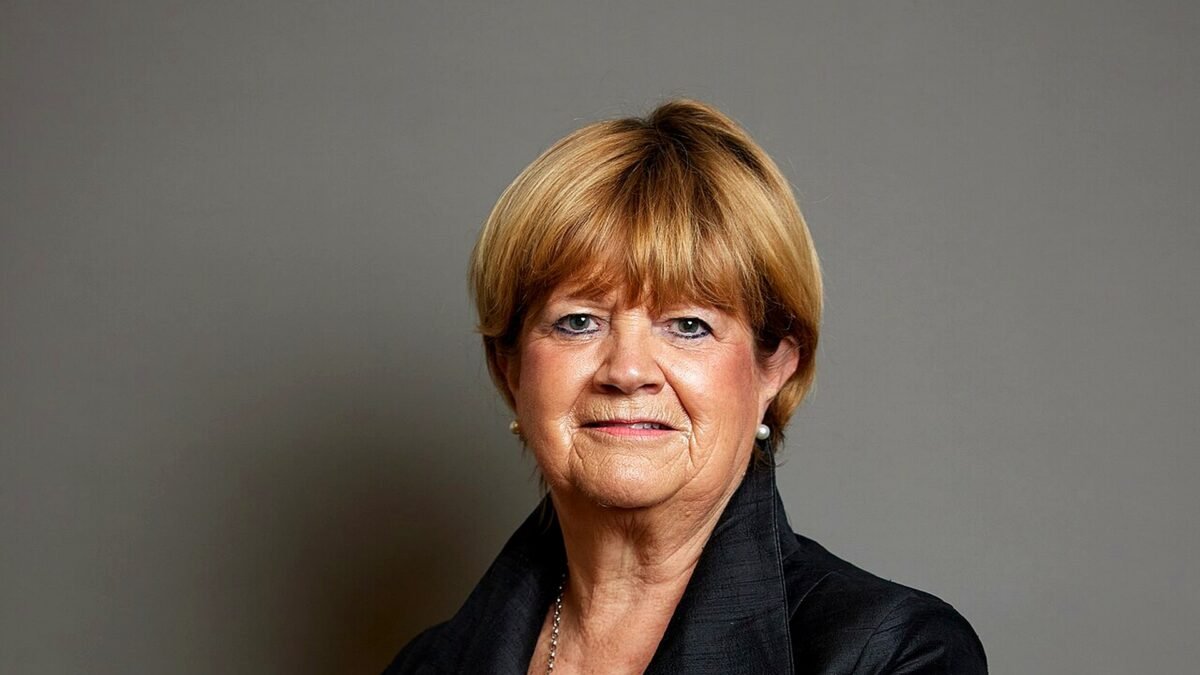
“The UK entered the Covid-19 pandemic woefully ill prepared to implement effective, nationwide test, trace and isolate systems,” Baroness Hallett said in her introduction to the report. “When Covid-19 arrived in January 2020 the UK was simply not prepared to deliver test, trace and isolate systems at the scale or speed required.”
The report, known as the Module 7 report, is the seventh of ten reports the inquiry is expected to publish, with three more due by the middle of 2027. It draws on 200 written statements, more than 23,000 documents, two expert reports and the oral evidence of 41 witnesses heard at public hearings in May 2025. According to the BBC, the inquiry is already the most expensive public inquiry in British history, with costs above £200 million.
The findings land more than six years after the first lockdown, but they are not a historical footnote. Baroness Hallett makes nine recommendations, and her overarching demand is that the UK government and the devolved administrations work together now to build a single, integrated test, trace and isolate system that can be deployed at the very start of any future pandemic. “Such a system has the potential to slow the spread of the next deadly virus,” she said. “It will be fundamental to saving lives and reducing suffering.”
A test invented in days — but no way to use it at scale
The report is careful to separate what Britain did well from what it failed to do. Its praise is real, and it matters, because it shows the failure was not one of science. Public Health England developed a reliable diagnostic test for Covid-19 within days of the identification of the virus’s genome, and the first symptomatic people were tested and diagnosed as early as January 2020. The inquiry describes the test as a reflection of the strength of the country’s scientific and research capability, and the Scottish Sun’s reporting of the findings notes that the test was regarded as the “gold standard” of its kind.
But a test is only the first step. Delivering testing at the scale of a whole population proved far harder, and the inquiry found that the infrastructure to do it simply did not exist. At the end of January 2020, the UK could conduct only 400 tests a day. By mid-February that figure had risen to 2,000 a day, and by mid-March to 11,000 a day. Against a virus spreading exponentially through a population of more than 67 million people, those numbers meant, in the inquiry’s words, that any attempt to stop the virus was “doomed to fail”.
The reason was not a lack of warning. Previous pandemic preparedness exercises had highlighted the need for a system that could be scaled up to the level a pandemic would demand. Exercise Cygnus, which rehearsed a flu pandemic, and Exercise Alice, which rehearsed an outbreak of Middle East respiratory syndrome, both identified problems relating to testing, tracing or isolation. According to the BBC’s reporting of the findings, those problems appear not to have been fully acted on.
Nor was the country short of laboratories. The report raises the question of whether the government could have made use of non-government testing facilities in hospitals, universities and the private sector from the start, instead of relying on just 12 government laboratories. Before major testing sites were established, the inquiry found, existing capacity in private and academic laboratories across the UK was left underutilised. It also found that the government lacked knowledge of the testing capabilities of the private and public sectors, and failed to work with them, or with local authorities with expertise in contact tracing, quickly enough.
Material shortages compounded the problem. Between March and April 2020, the number of tests processed was considerably lower than the laboratory capacity available, because reagents, swabs and the single-use plastics needed for laboratory analysis were in short supply around the world. The UK did not produce sufficient volumes of the necessary chemical reagents domestically, and its dependence on a small number of global manufacturers, using “closed” testing platforms that only accept one maker’s reagents, further limited its options. By 19 March 2020, officials in NHS England were describing reagent supply as a “limiting factor” on the expansion of testing.
The March 2020 decision that left Britain blind
The most consequential single decision examined in the report came in March 2020, when community testing and contact tracing were paused. Ministers said at the time that testing capacity was being overwhelmed, and the inquiry accepts that the pressure was real. But it says the deeper problem was that no robust system existed in the first place, so that when cases began to spike, the only option was to stop looking for them.
“Without the surveillance of the population offered by community testing, decision-makers had no idea of the extent of community transmission and any attempt at containment of the virus was doomed to fail,” Baroness Hallett writes in her introduction. The Nursing Times, reporting the findings, says the decision left the government “effectively blind” to the spread of the virus.
The consequences were immediate and severe. With no system of widespread testing, tracing or isolation for several months, the virus was allowed to spread with what the report calls “deadly speed” across the country. The first three months of the pandemic saw Covid-19 move virtually unchecked through the population, and the inquiry concludes that the absence of a working system, alongside other failures, meant that harsher measures, including national lockdowns and school closures, became unavoidable.
The report also records the human cost in the words of the people who lived it. In a section of the report headed “Voices”, bereaved relatives describe carers going into the homes of vulnerable people without being tested, because it was not hospital trust policy to test them, and a father discharged from hospital after a gallbladder infection without a test, whose Covid-19 infection was only identified after his condition deteriorated at home, leading to his readmission and death. “Too many lives were cut short. Too many died without the comfort of their loved ones around them. Countless families were left grieving,” Baroness Hallett said. “These consequences may not have been so severe had there been better pandemic planning.”
The inquiry identifies failures in five operational areas related to testing, tracing and isolation, and its executive summary is unsparing about the overall picture: while elements of the system were developed quickly and worked effectively once they existed, they came too late and at a huge financial cost.
The £25 billion system that arrived too late
When the government did act, it acted on an extraordinary scale. NHS Test and Trace was launched in May 2020, two months after community testing had been abandoned, under the leadership of Baroness Dido Harding, and it eventually became one of the biggest testing services in the world per head of population. More than £30 billion was spent across the UK during the pandemic on testing, tracing and isolating, according to the BBC’s reporting, including £25 billion on NHS Test and Trace in England between the start of the pandemic and June 2022, according to the Nursing Times. Reports of the programme’s budget put the total allocation at £37 billion.
The inquiry’s verdict on that spending is that it was the price of starting from scratch in the middle of a crisis. “While the UK eventually constructed a highly successful and widespread test, trace and isolate network, the fact that building such a vast operation started almost from scratch and during a crisis meant it arrived too late,” the report says, as quoted by the Scottish Sun.
The Public Accounts Committee reached a similar conclusion in October 2021, finding that NHS Test and Trace had “not achieved its main objective to help break chains of Covid-19 transmission”, and the inquiry’s own evidence underlines how much of the money was spent catching up rather than getting ahead. The report notes that the government has already committed, in March 2026, to building appropriate stockpiles for England of the chemicals and equipment required for testing, to increasing UK-based production of critical diagnostic components, and to putting mitigations in place for supply chain risks.
The inquiry also recommends targeted investment to support increased domestic production of essential testing materials, including reagents, alongside efforts to expand the use of “open” testing platforms that can accept reagents from a wider range of manufacturers, so that the country is never again dependent on a handful of overseas suppliers for the chemicals it needs to see a virus coming.
Contact tracing, the NHS app and the ‘pingdemic’
Testing on its own was never enough. Identifying people who had been in contact with an infected person is, in the inquiry’s words, a “fundamental tool” in managing a pandemic, yet the relevant UK public bodies were wholly unprepared to carry out contact tracing at the level required. It took until the summer of 2020 for widespread contact tracing to be established, by which point, the inquiry found, the virus had already swept through the population unchecked.
Manual contact tracing, the report says, did not always make adequate use of local authorities or health boards, even though they held the expertise, the relationships and the local knowledge to deliver it. The Covid-19 Bereaved Families for Justice group, in its briefing ahead of the report’s publication, said the pandemic response was dominated by central government despite local authorities, public health teams and community organisations having the expertise to deliver effective testing and contact tracing. One member of the inquiry’s listening exercise reported that in the Highlands, a lack of staff meant contact tracing was delayed by a minimum of one week, beyond the point at which anyone could remember everyone they had been in contact with, or beyond the point at which the person was still infectious.
Digital tools offered some mitigation. The UK successfully developed three digital contact tracing apps, and the NHS Covid-19 app, released in September 2020 after technical problems in its development and pilot phase, was downloaded by millions. A paper published in the journal Nature Communications estimated that the app’s contact tracing function alone helped to avert one million cases of the virus and save almost 10,000 lives, according to reporting by Rother Radio.
But the report is clear that digital tracing arrived late and reached fewer people than it should have. The apps failed to take adequate account of language barriers or of the challenges some people would face in having access to a phone or a digital device, and engagement was ultimately much lower than expected, hindered by concerns about privacy and mistrust in the effectiveness of the apps. The inquiry also notes that the apps’ effectiveness depended on uptake: a modelling study it cites suggested that if three quarters of people had adopted a contact tracing app, infections could have been reduced by at least half.
The summer of 2021 brought the episode that gave the system its most memorable nickname. As the app’s sensitivity led to hundreds of thousands of people being told to self-isolate at the same time, the press dubbed the disruption the “pingdemic”, with businesses and public services struggling as staff were pinged into isolation. The BBC’s key findings piece on the report lists the “pingdemic” among the episodes the inquiry examines, and the report’s treatment of it is part of a wider point: a system that people experience as a punishment, rather than as protection, will lose the public’s trust, and with it, its effectiveness.
Borders: the ‘critical gap’
One of the report’s sharpest criticisms concerns the UK’s borders. The inquiry found a lack of planning for border control measures before the outbreak, and it describes weak efforts to close international borders as a “critical gap in the UK’s ability to limit the spread of the virus”. According to Sky News, the report says the decision not to implement widespread border control measures from the outset represented a “missed opportunity” to try to slow the spread of infection by reducing the risk of imported cases.
The comparison with other countries is stark. The report notes that while 93 per cent of countries had established border measures by April 2020, the UK government did not impose border restrictions until June 2020. By contrast, the inquiry found, other countries including Singapore, Australia and Germany moved far earlier, and Baroness Hallett argues that the UK should have drawn on the experience of countries with established disease outbreak management systems, such as Hong Kong, South Korea, Singapore and Taiwan.
The report even suggests that suspending all flights from China to the UK in February 2020 could have helped slow the virus’s arrival, according to the BBC’s reporting, and it recommends that in any future pandemic, border controls should be put in place at the earliest possible stage. It also notes that the lack of any systematic border control measures until the summer of 2020 placed the UK in an extremely vulnerable position.
The people told to isolate — and left to choose
Isolation of positive cases was a fundamental component of the UK’s response, but the report finds that when the public was first asked to self-isolate, people were provided with limited practical and financial support. Although support mechanisms emerged over time, the inquiry says, the initial gap weakened adherence and exposed the limitations of relying solely on individual responsibility.
The accounts gathered by the inquiry make the human arithmetic of that gap painfully clear. Many people faced what Baroness Hallett calls an “unenviable choice”: self-isolate and lose income, or go to work and risk spreading the virus. One contributor to the inquiry’s listening exercise said there were “an awful lot of people in industry that don’t have sick pay, so if you are having to self-isolate for whatever reason, they just weren’t paid for two weeks”. Another said most of their neighbours had turned off test and trace because they saw it as a punishment, and if they were pinged it would stop them being able to go out.
Ministers responded with fines of up to £10,000 for those who did not comply with self-isolation rules, a step the BBC reports some experts described as counter-productive. Changes were made to allow people to claim statutory sick pay, but it was not until September 2020 in England, and later in Scotland and Wales, that £500 financial payments were introduced to help those on low incomes comply. The inquiry says support should have been introduced much sooner, and that more also needed to be done on practical support, such as collecting medicines and shopping for food for people who had nobody to call on.
Baroness Dido Harding, who led NHS Test and Trace, has previously told the inquiry that if the government had provided more support for people to self-isolate, more lives would have been saved. The inquiry heard that the then prime minister, Boris Johnson, favoured an “authoritarian approach” to punishing people who failed to isolate: a January 2021 note by the government’s then chief scientific adviser, Lord Patrick Vallance, recorded Mr Johnson as saying “we haven’t been ruthless enough. We need to force more isolation. I favour a more authoritarian approach.”
The report also finds that unclear messaging left sections of the population uncertain about how to comply, including what symptoms to look for before taking a test or how to access vital support during self-isolation, and that a proliferation of messaging across the four nations of the UK was often conflicting and confusing, undermining the public trust and compliance necessary for an effective public health response. Certain groups, including older people, ethnic minority groups and those experiencing digital exclusion, faced barriers to accessing the systems intended to protect them, and the inquiry says future systems must be designed with accessibility at their core.
What the inquiry wants changed
Baroness Hallett makes nine recommendations, and they read as a blueprint for a country that never wants to be caught without a system again. The first is that the UK government and the devolved administrations should maintain up-to-date information on the testing capabilities of academic, clinical and research laboratories, and develop plans to increase their test processing capacity quickly in an emergency, so that a comprehensive, pre-established testing strategy can be implemented immediately at the outset of a pandemic.
The remaining recommendations cover the whole system: plans for manual contact tracing on a large scale; the development of a single UK-wide digital contact tracing tool; local plans to give practical support to communities where self-isolation is required; plans for financial support in case self-isolation is needed; planning for better international border controls; communications campaigns about testing, tracing and isolation that are aligned across the four nations to avoid confusion; and improved data collection and evaluation, so that the impact of the measures on the public can be monitored.
The ninth and overriding recommendation is the one Baroness Hallett returns to in her introduction: the UK government and the devolved administrations must work together now to formulate a comprehensive and adaptable test, trace and isolate system, capable of being deployed at the outset of any future pandemic. “With proper planning, clear communication and a unified strategy it is possible to build a robust and scalable test, trace and isolate system,” she said.
The recommendations now sit with the current government of Prime Minister Andy Burnham, which has already endorsed the findings of the inquiry’s earlier care homes report and has committed to stockpiles of testing chemicals and equipment. Whether it accepts the full package, and how quickly, will be the first test of whether the report changes anything, or joins the long list of inquiry recommendations that are praised on publication day and quietly shelved afterwards.
Reaction: nurses, bereaved families and the political fallout
The reaction to the report was swift, and it came most powerfully from the people who lived with the failures it describes. Professor Nicola Ranger, chief executive of the Royal College of Nursing, said the report told “a familiar story of how the failure to prepare left the country exposed and cost lives”. “A functioning test, trace and isolate system would have kept the virus better under control, but instead it flourished, overwhelming already overstretched nursing staff in hospitals and care homes,” she said. “It made the job of nursing staff all but impossible, as did the repeated failures of government to listen to warnings from our profession. There will be another pandemic and the legacy of this inquiry must be that we are never again failed in this way.”
The Covid-19 Bereaved Families for Justice group, which represents more than 7,000 families, described the test and trace system as an “abject failure that cost lives” ahead of the report’s publication. “Thursday’s report must be honest about those failures and give bereaved families the truth about why their loved ones were left unprotected. It must hold those responsible to account and set out what needs to change so we are prepared for the next crisis,” the group said.
The report also adds to a growing catalogue of official findings about the pandemic response. The inquiry’s first report, in July 2024, found that pandemic planning had been “fatally flawed”. Its second report, in November 2025, found that lockdowns had been “too little, too late” and could have been avoided entirely. Its third report, in March 2026, found the NHS unprepared and nearly collapsed under the strain. And its sixth report, published in October 2026, found that care home residents had been “sacrificed” as the virus “spread like wildfire” — a finding this site reported at the time. The Module 7 report now completes the picture of a state that could invent a world-class test in days, spend tens of billions of pounds, and still, in the months that mattered most, be unable to see the virus it was fighting.
The political questions the report raises are uncomfortable for the politicians of 2020, not for the government of today, but they are not only about the past. The inquiry’s evidence shows that the decisions that mattered most were taken before the crisis, in the years when preparedness exercises identified gaps that were never closed, and in the first weeks of the pandemic, when the choice was made to rely on a small number of government laboratories rather than the full capacity of the country. Those are the decisions the nine recommendations are designed to prevent from being repeated.
Analysis: Why It Matters
The paradox at the heart of the report
The most striking thing about the Module 7 report is that it is, in part, a success story. Britain invented a reliable test within days of the virus’s genome being identified. It built, from nothing, one of the largest testing operations in the world. Its contact tracing app, according to peer-reviewed research, averted around a million cases and saved almost 10,000 lives. None of that is in dispute, and the inquiry says so plainly. The failure was not that Britain could not do these things. It was that it could only do them after the moment when they would have mattered most had passed. A test that arrives after the virus has spread unchecked is a diagnostic tool, not a defence. A tracing system built in the summer cannot undo a spring of silent transmission. The report’s central lesson is about timing: in a pandemic, the first weeks are the whole game, and a system that takes months to build is a system that has already lost.
Preparedness is a decision, not a department
Exercise Cygnus and Exercise Alice are the ghosts that haunt this report. Both rehearsed the very problems that then overwhelmed the country, and both appear not to have been fully acted on. That is the pattern the inquiry keeps returning to across its modules: the knowledge existed, the warnings were written down, and the gap between knowing and doing was never closed. Preparedness is often treated as a technical matter, a question of stockpiles and plans and org charts. The report suggests it is better understood as a political choice — whether a government in quiet times is willing to spend money and political capital on a crisis that has not happened yet. The £30 billion-plus spent in the middle of the emergency dwarfs what a pre-built system would have cost, and the inquiry’s arithmetic is damning precisely because it is so simple: building in a crisis is the most expensive way to build, and the slowest.
The isolation trap: punishment without support
The report’s treatment of self-isolation is its most human section, and its most politically charged. The government asked millions of people to stay at home, and then, for months, offered many of them almost nothing to make that possible. Fines of up to £10,000 were introduced before the £500 support payment, which is to say that punishment preceded help by months. The evidence the inquiry heard — from people who could not afford two weeks without pay, from neighbours who deleted the app because a ping felt like a punishment — shows a system that treated compliance as a matter of individual virtue rather than as something the state had to enable. Baroness Harding’s evidence, that more support would have saved more lives, is the quietest and most devastating sentence in the whole module. It reframes the failure: not as a lack of willpower among the public, but as a lack of support from the state.
Centralisation was the hidden weakness
Running through the report is a criticism that is easy to miss among the bigger numbers: the pandemic response was dominated by central government, while the people best placed to deliver testing and tracing — local authorities, public health teams and community organisations — were underused. The Highlands example, where a shortage of staff delayed tracing by a week, is a small story that carries a large point. Local knowledge is not a luxury in contact tracing; it is the mechanism itself. A national system that does not know who can test, who can trace and who can help in each town and city is a system that will always be slower than the virus. The inquiry’s recommendation of a single UK-wide system should not be read as a call for more centralisation, but for a system in which the centre’s job is to make sure the local parts are ready before they are needed.
Why this report matters now, not just in 2020
It would be easy to treat the Module 7 report as history, and easier still to treat it as someone else’s scandal. The politicians it criticises are no longer in office, and the current government can endorse its findings without endorsing any blame. But the report’s real audience is the future. Three more reports are still to come, and the inquiry’s recommendations will only matter if they are implemented before the next pandemic, not after it begins. The March 2026 commitment to stockpiles of testing chemicals and equipment is a start, but stockpiles are the easiest part of the recommendation to deliver. The harder parts — a single integrated system, a UK-wide digital tool, local support plans, financial support ready from day one — require the kind of sustained, unglamorous work that governments are worst at doing in quiet times. That is exactly what the report is warning about. The question it leaves behind is not whether Britain failed in 2020. It is whether, six years later, it has done anything that would make the answer different next time.
What to Watch Next
- The government’s formal response to the nine recommendations, and whether it accepts the call for a single integrated UK-wide test, trace and isolate system.
- How quickly the March 2026 commitment to stockpile testing chemicals and equipment, and to increase UK-based production of diagnostic components, is delivered in practice.
- Whether the devolved administrations in Scotland, Wales and Northern Ireland agree a joint approach with Westminster, or whether the four-nation system remains fragmented.
- Progress on a single UK-wide digital contact tracing tool, and whether it addresses the language, access and trust problems that limited the NHS app.
- The remaining three inquiry reports, due by mid-2027, covering children and young people, the economic response and the impact of the pandemic on society.
- Whether the government publishes a costed plan for the financial and practical support that would allow people to self-isolate from the first day of a future pandemic.
- Any parliamentary debate or select committee scrutiny of the report, and whether the politicians of 2020 are called to answer for the decisions it describes.
Sources
- UK Covid-19 Inquiry — Module 7 Report: Test, Trace and Isolate (primary source)
- Nursing Times — Test and trace failures left nurses in ‘all but impossible’ position
- BBC News (via RocketNews) — Covid inquiry report: key findings on testing, tracing and ‘the pingdemic’
- Sky News — COVID was allowed to spread with ‘deadly speed’ and failure on borders was ‘missed opportunity’
- The Scottish Sun — Thousands were left to die as Covid test and trace system used too slowly and border controls ‘too weak’, inquiry blasts
- Rother Radio — Covid-19 test and trace system ‘failure cost lives’ — campaigners

About the Author — Abdul Mannan
Related Articles

Britain Publishes Bill to Scrap ‘Feudal’ Leasehold System as Ground Rents Capped at £250 from 2028
The Commonhold and Leasehold Reform Bill enters Parliament today, capping ground rents at £250 a year from 2028…
Reform UK Falls Below 20% in a National Poll for the First Time in Two Years as Farage’s Crisis Deepens
Reform UK has fallen to 19 per cent in a More in Common poll, its first reading below…
UK Energy Bills Set to Jump 26% to £2,166 in January as Inflation Hits a One-Year High of 3.6%
Cornwall Insight forecasts the Ofgem price cap will rise 26% to £2,166 a year in January — the…