
UK and EU Set to Agree 100,000-a-Year Youth Mobility Scheme as Burnham Signs Landmark Brexit Reset in Brussels

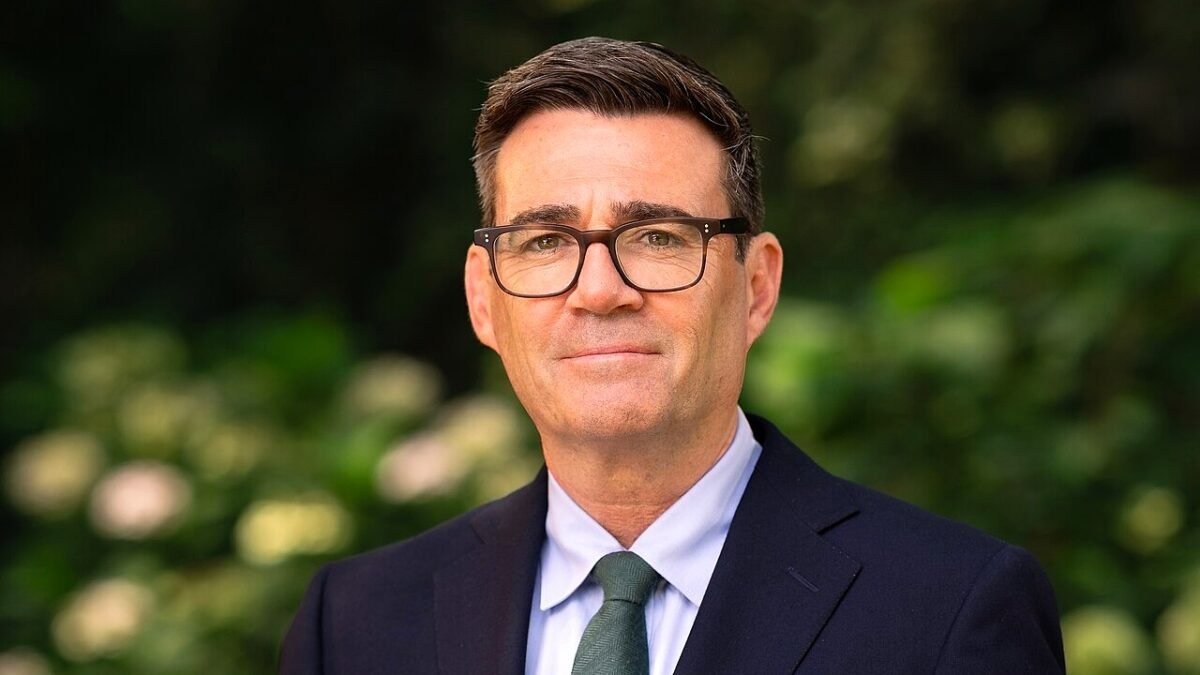
Britain and the EU Are Set to Agree a Youth Mobility Deal at Friday’s Brussels Summit
Up to 100,000 young people from the European Union would be allowed to travel, work and study in Britain each year under a new youth mobility scheme set to be agreed at Friday’s UK-EU summit in Brussels, according to the BBC. The same number of young Britons would be allowed into Europe under the arrangement, which would restore a form of limited movement for young people between Britain and the EU for the first time since Brexit.
Prime Minister Andy Burnham will meet European Council President António Costa and European Commission President Ursula von der Leyen in Brussels on Friday for the second UK-EU summit since Britain left the bloc. The youth scheme is expected to be approved alongside two other agreements, on food trade and on linking the two sides’ carbon emissions markets, in what would be the biggest change to Britain’s relationship with the European Union since it left six years ago.
Negotiators have agreed the shape of the youth deal at official level, according to multiple reports, although Downing Street stressed on Thursday that the talks were still “going down to the wire” and that nothing was final until the leaders signed off. The prime minister’s spokesman said that if a deal were secured, the government would bring legislation before Parliament next week to put the changes into effect.
Speaking to broadcasters on Thursday evening, Mr Burnham said he was prepared to walk away if the terms were not right for Britain, but argued that the prize was too large to ignore. “There would always be those circumstances because I’m in this to get the best deal for Britain, always,” he said. “But what’s in it for us is the possibility of lower food prices and I can’t turn my back on that, lower costs for business, cutting red tape, and a really big win potentially of more collaboration on immigration — a Channel action plan — which is a really big deal if we can land that tomorrow. So I hope people can understand why I have pushed this because it could be a really good deal for Britain.”
What the Youth Scheme Would Mean
The scheme, formally called the Youth Experience Scheme, would allow people aged 18 to 31 to live, work, study or travel in the other side’s territory for up to three years, according to The i Paper, which first reported the agreed cap. The Times has described the eligible group as under-32s. Either way, it would be a strictly limited arrangement: capped in numbers, limited in age and limited in time.
Under the plans, Britain would issue 100,000 visas a year to young people from EU member states, and the same number of visas would be available to young Britons heading in the other direction. The figure is the product of hard bargaining. Britain initially wanted the scheme capped at 50,000 visas a year, then pushed for 80,000, while the EU wanted no cap at all. The final number of 100,000 represents a late compromise by London, according to The i Paper, and the agreement is expected to include a review clause to ensure the numbers remain broadly proportionate over time.
The arrangement would not be symmetrical in every detail. The EU is dividing up the total number of visas Britain is offering among its 27 member states, largely on the basis of population, which means there would be country-by-country quotas for young Europeans coming to Britain. Young Britons, meanwhile, would be limited to working in one named EU country for the duration of their stay, rather than moving freely between member states. Some EU countries, including Germany, could accept unlimited numbers of young Britons under the arrangement, according to The Guardian, because they have chosen not to impose equivalent restrictions.
Even if the leaders sign the deal on Friday, young people should not expect to pack their bags immediately. The scheme is not expected to take full effect until 2030, according to Politico’s analysis of the draft texts, although The i Paper reports that it could begin operating from as early as 2028. Complications in putting the scheme into practice in some member states are one reason for the delay, and the timing also means its full effect on Britain’s politically sensitive migration figures would not register until after the next general election, which must be held no later than 2029.
The government has been at pains to distinguish the scheme from the freedom of movement Britain left behind. A government factsheet published ahead of the summit states that, unlike freedom of movement, which was uncapped and open to all, the youth scheme “will be strictly capped and time-limited”, and will be modelled on the youth mobility arrangements Britain already operates with 13 non-EU countries, including Australia, Canada and India. The factsheet also states that nothing in the summit package would require British taxpayers to pay into the EU budget.
The Food Deal: Cheaper Groceries and Fewer Checks
The most commercially significant of the three agreements covers food, plants and animals, known in Brussels as the sanitary and phytosanitary, or SPS, agreement. It would remove most export health certificates and routine border checks on animal and plant products moving between the EU and Great Britain, creating a common SPS area in which the two sides keep their food and animal standards in step as they change, a system known as dynamic alignment.
The government says the food and drink deal could add up to £5.1 billion a year to the British economy, cut paperwork for businesses and ease pressure on food prices. Mr Burnham told MPs in October that every consignment of food exports currently goes through a document check at the border, at a cost of around £100 million in lost exports, and that paperwork costs on a single shipment can reach £1,400, with export health certificates costing small businesses up to £200 each. Scottish salmon, Britain’s largest food export, is among the products that would find a smoother road into Europe, while the deal could also open the EU to British burgers and fresh meat, seed potatoes from Scotland and shellfish from Wales.
Once fully implemented, the SPS deal would remove the vast majority of “Not for EU” labels from British food products, according to the government factsheet, stripping away a source of trade friction between Great Britain and Northern Ireland and lowering costs for supermarkets and food producers. The deal is not expected to take effect until 2028.
There are trade-offs. In return for easier access, Britain would follow EU standards in these areas, including rules on gene-edited crops and labelling, and would have to drop a planned ban on foie gras imports. The government has also moved to reassure shoppers about a string of claims circulating about the deal, stating in its factsheet that smoky flavours in crisps, sauces and soups will remain on supermarket shelves, that British marmalade will not need to be relabelled, and that single-serving sachets of ketchup, mayonnaise, sugar, salt, oil and vinegar are not part of the SPS agreement.
Linking the Carbon Markets
The second agreement would link Britain’s emissions trading system with the EU’s, restoring a connection that was broken by Brexit. Under both schemes, power stations and factories buy permits for the carbon they emit. Linking the markets would establish a shared framework for the sectors covered, including electricity and industrial heat generation, industry and aviation, and would exempt British and EU firms from each other’s new charges on high-carbon imports such as steel, cement and electricity.
The government says the emissions linking agreement could add up to £3.8 billion a year to the economy and protect critical industries such as steel and aluminium from a carbon tax on approximately £6.5 billion in exports. Negotiators have also been working since December 2025 on bringing Britain back into the EU electricity market, and Mr Burnham has told MPs that an energy deal could help lower costs for households and businesses alike, and could cut wholesale energy costs in Northern Ireland by 20 per cent.
Beyond the three headline deals, the two sides are also expected to publish a joint statement setting out plans for closer cooperation in other areas, including energy, crime-fighting, technology and student exchanges. Britain has already agreed to rejoin the EU’s Erasmus+ exchange programme for students, apprentices and teachers in 2027, with the government paying £570 million for the 2027/28 academic year under financial terms that reduce the operational contribution by 30 per cent.
A Channel Action Plan on Migration
Alongside the three agreements, Mr Burnham will use the summit to announce plans for a new migration pact with the bloc, under which Britain and the EU would work together on “returns to third countries” and on tackling the “pull factors for irregular migrants”. The prime minister has described a “Channel action plan” on immigration as a potentially “really big win” from the summit, and has previously said the two sides could link up their law enforcement efforts, including sharing more data and criminal records of foreign nationals.
The government factsheet argues that leaving the EU made tackling small boat crossings harder by reducing access to shared security information and removing existing mechanisms to return migrants, while insisting that leaving the bloc is not the sole cause of the crossings and is “not an excuse to avoid taking the necessary action to secure and restore control” of Britain’s borders.
What Has Been Left Out
Several of the most contentious issues have been deferred rather than resolved. The EU is demanding that European students should pay the same university tuition fees as domestic students at British universities, while Britain wants access to European subsidies for British car makers. Both issues are expected to remain unresolved and be subject to further negotiations over the coming months, according to The Times, with tuition fee talks potentially deferred for six months.
Mr Burnham has also said the summit would allow Britain to raise concerns about the EU’s “Made in Europe” scheme, which is designed to favour European companies when public money is spent on goods such as electric cars and nuclear technology, and to protect industries from unfair Chinese competition. Britain wants its firms included in that plan, but that will not be settled on Friday: the EU law behind it is not expected to be agreed until spring 2027, and France and the European Parliament want Britain to adopt EU trade defences against cheap Chinese imports first.
The next big agreement, targeted for next year, would bring Britain back into the EU’s electricity market in return for contributions to the EU budget. Talks on the electricity market and on Britain’s contribution to EU cohesion funding will continue beyond the summit.
The Politics: Praise, Warnings and a Divided Cabinet
The summit has reopened the arguments of the Brexit referendum, and the political reaction has been fierce. Conservative leader Kemi Badenoch has accused Mr Burnham of “reopening the divisions” of the referendum. Speaking to the BBC’s Today programme on Thursday, she said she wanted to see easier trading with the EU, “but not trade at any cost”, and warned that the new deals could see British companies having to follow EU rules even if they do not trade with the bloc.
Reform UK leader Nigel Farage, speaking to The Sun, said he does “not believe for a minute” the country would “ever vote to rejoin” the EU, and accused Mr Burnham of “playing a very cynical political game”, arguing that the prime minister was “trying to pick up votes from the Lib Dems, pick up votes from the Greens, and using it as a massive distraction from all the problems that he can’t deal with”.
The debate has also divided Mr Burnham’s own cabinet. Earlier this week, former deputy prime minister David Lammy urged the prime minister to go into the next general election promising to rejoin the EU. The subject has divided ministers, according to the BBC, with one minister warning of the costs that would come with reversing Brexit. Mr Burnham has previously suggested he could commit Labour to building a closer long-term relationship with Europe, including asking to rejoin the organisation as a full member, but he has ruled out major changes before the next election. Labour’s 2024 manifesto promised not to return to the EU, the single market, the customs union or freedom of movement, and the government factsheet repeats that the summit package explicitly rules out all of those things.
How Britain Got Here
Friday’s summit is the second formal UK-EU summit since Britain withdrew from the European Union. The first took place in London on 19 May 2025, when the two sides agreed to establish a renewed strategic partnership and committed to holding annual summits. This meeting was originally due to take place in July, but was postponed when Mr Burnham’s predecessor, Sir Keir Starmer, resigned. Mr Burnham became prime minister in July 2026.
The youth mobility question has a long history. In 2024, the EU proposed allowing 18 to 30-year-olds to work or study in the EU and Britain for up to four years. Labour, then in opposition, rejected the proposal, arguing that it amounted to reinstating freedom of movement. Since coming to government, the party has said it would consider a more restricted scheme with a time limit, a cap on numbers and a ban on participants claiming benefits. The cap on numbers, along with the EU’s request on tuition fees, has proved to be the sticking point in the negotiations ahead of the summit.
Mr Burnham set the tone for the summit earlier this month, when he declared in a landmark speech that Brexit “has not worked” and set out three tests for any new deal with the EU. That speech, and the summit itself, mark the most determined attempt by any British prime minister since Brexit to rebuild the relationship with Brussels — and the most politically risky.
Analysis: Why It Matters
A Generational Reopening, Not a Return
The most important thing to understand about Friday’s package is what it is and what it is not. It is not a return to the European Union, the single market, the customs union or freedom of movement. The government has ruled all of those out for the rest of this Parliament, and the manifesto commitment stands. What it is, however, is the first time since Brexit that Britain has agreed to let a defined group of Europeans live and work here under a formal scheme — and the first time young Britons have been given a structured route back into Europe.
That matters most for the generation that has lived with the consequences of Brexit without ever voting on it. A teenager who was 14 at the 2016 referendum is now 24, and has spent their entire adult life without the right their parents took for granted: to move to Paris or Berlin or Barcelona for a year or two, work in a bar or an office, and come home with a language and a different view of the world. The youth scheme does not restore that right in full — it is capped, time-limited and, for Britons, restricted to a single country — but it restores a version of it. For universities, employers and families, that is a real change, even if it arrives wrapped in quotas and review clauses.
The Number That Decided the Negotiation
The figure of 100,000 tells its own story about the negotiation. Britain began at 50,000, the EU at unlimited, and the landing zone of 100,000 is almost exactly the midpoint of the two sides’ serious positions once London moved to 80,000. That is how most EU negotiations end: not with one side winning, but with both sides able to describe the outcome as a compromise. The review clause matters here too. If the scheme proves popular, the cap will come under pressure from both directions — from young people and employers who want more places, and from those who count every visa against the net migration figures. The clause gives both sides a way to revisit the number without reopening the whole agreement, but it also guarantees that this argument will return.
The asymmetry is equally revealing. Britain insisted on a hard cap on arrivals; several EU countries, Germany among them, were relaxed enough to accept unlimited young Britons. That difference reflects the two sides’ very different politics. In Britain, any number attached to migration is a headline and a target. In much of the EU, a few thousand young Britons a year barely registers. The one-country restriction on Britons is the price of that asymmetry, and it will shape how the scheme actually feels: a young Briton will have to choose a country and commit to it, rather than drifting between European cities as their parents’ generation could.
Economics First, Sovereignty Second
Strip away the politics and the three deals are, above all, an economic package. The government’s own figures put the food deal at up to £5.1 billion a year and the carbon deal at up to £3.8 billion, and both are framed in the language of prices and paperwork rather than principle: cheaper groceries, lower costs for business, fewer certificates, less red tape. That is deliberate. Mr Burnham’s pitch to the public is not about Europe as an idea; it is about Europe as a till receipt. “Lower food prices” was the first benefit he named on Thursday evening, before business costs and before immigration cooperation.
The sovereignty price is real, however, and the opposition has identified it accurately. Dynamic alignment means Britain will keep its food and animal standards in step with the EU’s as they change, following rules it no longer writes. Mrs Badenoch’s warning that British firms could end up following EU rules even when they do not trade with the bloc is not invented; it is the structural consequence of alignment. The government’s answer is that the economic gain is worth it, and that the alternative — checks, certificates and £1,400 of paperwork on a single shipment — is a cost Britain has been paying quietly for six years. Voters will judge that trade-off not in the abstract, but in the price of food and the fortunes of exporters.
What Was Deferred May Matter More
The issues left out of Friday’s package may prove as consequential as those in it. Tuition fees are the most immediate: if EU students are eventually charged the same as domestic students, British universities gain a large new pool of applicants at a time when many are under financial strain, but the taxpayer picks up the cost of subsidising them. The carmaker question is just as significant. Britain wants its manufacturers inside the EU’s “Made in Europe” preference scheme; the EU wants Britain to adopt its trade defences against cheap Chinese imports first. That is a negotiation about industrial policy and about China, not about youth visas, and it will be harder than anything settled on Friday.
The electricity market deal, targeted for next year, is the biggest prize still on the table. Linking power markets could cut wholesale energy costs in Northern Ireland by a fifth, according to the prime minister, and would deepen the economic integration that Friday’s package begins. Each of these deferred items will be negotiated against the background of Friday’s precedent: once the principle of dynamic alignment is accepted for food, it becomes easier to accept elsewhere, and harder to argue that any single sector is uniquely untouchable.
What to Watch Next
First, the summit itself. The talks have gone “down to the wire”, and Mr Burnham has said publicly that he could still walk away. The signing ceremony, the joint statement and the leaders’ press conference on Friday will show whether the negotiators’ agreement survives contact with the leaders, and whether the tuition fee question intrudes at the last minute. Second, Parliament. The government has promised legislation next week, and the Commons debate will be the first test of whether the package commands a majority — and of how Labour’s own MPs, some of whom remain wary of any move towards Brussels, respond. Third, the opposition’s response. Mrs Badenoch and Mr Farage have both framed the package as a betrayal of Brexit; whether that argument lands with voters will depend on whether the deals deliver visible benefits before the next election. Fourth, the timetable. With the youth scheme not taking full effect until 2030 and the food deal not expected until 2028, the benefits Mr Burnham is promising will arrive slowly, while the political argument will be immediate. That gap between promise and delivery is the central risk of the whole reset: a prime minister asking voters to trust that a deal signed in Brussels will eventually show up in their shopping basket.
Friday’s summit will not settle the argument about Britain and Europe. It will, however, change its terms. For the first time since Brexit, Britain is signing agreements that bring it closer to the EU rather than further away, and doing so in the name of lower prices and practical cooperation rather than grand principle. Whether that proves to be a cautious first step or a false dawn will be decided not in Brussels, but in the years of implementation that follow.
Sources
- BBC News — “UK and EU to agree youth mobility scheme, BBC understands”, 20 November 2026
- The Times — “Andy Burnham agrees to 100,000 visas in EU youth mobility scheme”
- The Times — “Andy Burnham’s big Brexit reset: what’s in and what’s out?”
- GOV.UK — “UK-EU Summit package — factsheet and mythbuster”
- European Commission — “Commission aims to conclude EU–UK talks on food trade, carbon markets and youth mobility by 20 November”

About the Author — Abdul Mannan
Related Articles
White Supremacist Convicted of Plot to Firebomb Hull Migrant Hotel and Kill As Many Occupants As Possible
Mikka Lee Anderson, 24, was convicted at Newcastle Crown Court of preparing a terrorist attack on Hull's Royal…
Record Debt Interest Pushes UK Borrowing to £17 Billion in October as Healey’s Fiscal Headroom Shrinks
The UK borrowed £17 billion in October as record debt interest of £11.2 billion pushed borrowing higher than…
Covid Inquiry Finds Britain Was ‘Woefully Ill Prepared’ as Test and Trace Failures Let Virus Spread Unchecked
Baroness Hallett's Module 7 report finds early efforts to contain Covid-19 were 'doomed to fail' — and sets…