
White Supremacist Convicted of Plot to Firebomb Hull Migrant Hotel and Kill As Many Occupants As Possible

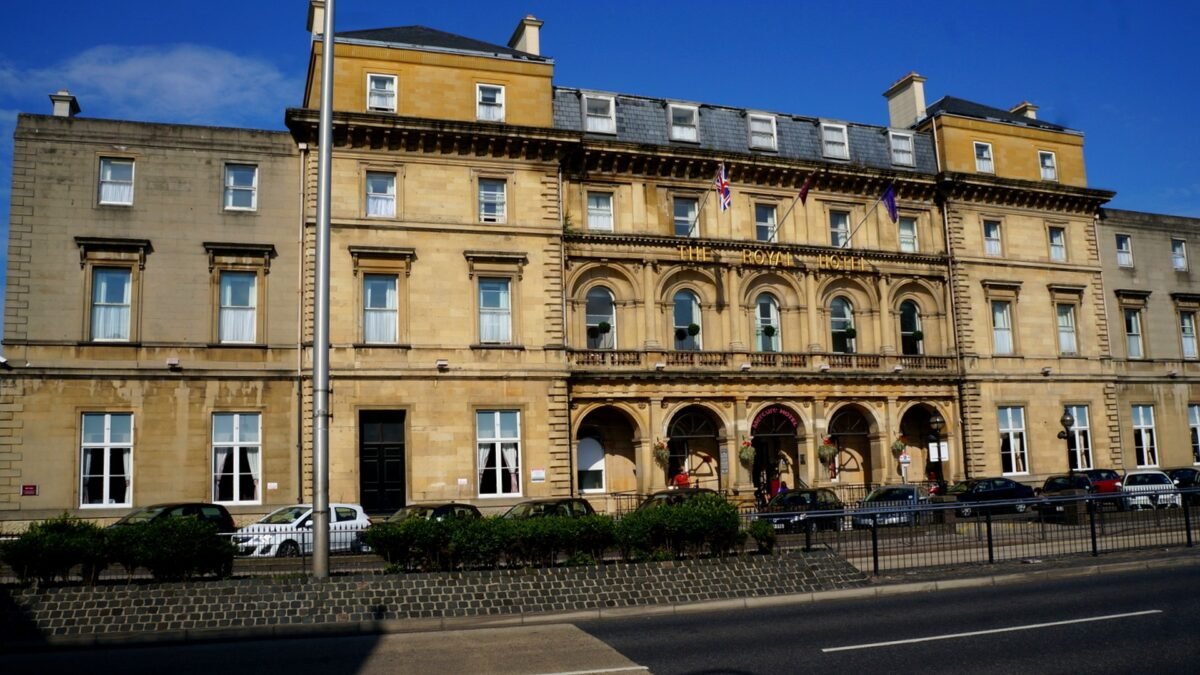
A 24-year-old white supremacist has been convicted of planning to firebomb a hotel in Hull that housed asylum seekers, in a case prosecutors said was driven by neo-Nazi ideology and a determination to kill as many of the building’s residents as possible.
Mikka Lee Anderson, of Morpeth Street in Hull, was found guilty on Friday at Newcastle Crown Court of preparing an act of terrorism and of possessing weapons for terrorist purposes, according to Reuters. The verdict came at the end of a nine-day trial. He will be sentenced next year, once a psychological report has been completed and an assessment has been made of how dangerous he is.
Anderson had targeted the Royal Hotel on Ferensway, in Hull city centre, next to the city’s railway station. Prosecutors told the jury that he had made petrol bombs, carried out reconnaissance on the building and tried to recruit an accomplice to help him attack it. He told that man, the court heard, that he wanted to fire the bombs through the hotel’s windows and “kill as many of the migrants who were housed inside it as possible”.
The hotel had housed asylum seekers for more than six years, and it had already been attacked once before. In August 2024, during the riots that followed the murder of three young girls in Southport, a crowd gathered outside the Royal Hotel, smashed its windows and threw a smoke bomb at the building while police held a line in front of it. By the time of Anderson’s trial, the hotel was no longer being used to house asylum seekers: the Home Office contract had ended, and Hull City Council and the Home Office confirmed in September that the building was no longer used for that purpose.
Anderson denied that he had intended to commit any violent act. His defence argued that it was the other man who had suggested attacking the hotel, and that Anderson had not planned an attack at all. The jury rejected that account.
“Mikka Anderson’s extreme right-wing views led him to plan a terrorist attack in order to spread fear amongst the migrant community,” Detective Chief Superintendent James Dunkerley, the head of Counter Terrorism Policing North East, said outside court after the verdict, according to the Press Association.
The plot and how it unravelled
The prosecution case, presented by Adam Birkby, was that Anderson had taken a series of practical steps towards a violent attack rather than merely holding extreme views. He had manufactured Molotov cocktails, made or attempted to make napalm, gunpowder and fuses, and carried out what prosecutors described as “hostile reconnaissance” on the Royal Hotel, checking its security for weaknesses.
He had also, the court heard, built a device to launch his petrol bombs through the hotel’s windows, and he owned a crossbow. When he met the man he hoped to recruit, the two laid their phones down before Anderson set out his plan in detail. He told his would-be accomplice about the crossbow and the launching device, and about his intention to attack the hotel by the railway station.
The recruitment attempt was the plot’s undoing. Anderson had first contacted the man through social media, knowing that he had been involved in the anti-migrant disorder in Hull. The two met in the city centre. But two days after that meeting, the man went to the police. He told officers that he thought terrorism was “disgusting” and that innocent people should not be killed, and he showed them the messages the two men had exchanged.
Anderson was arrested in February 2026 by Counter Terrorism Policing North East, after intelligence suggested he planned to use incendiary devices at the hotel. The arrest came before any attack could take place, and no one was hurt.
In his own evidence, Anderson claimed that it was the other man who had suggested targeting the hotel, including poisoning the water supply and creating a decoy to draw away nearby transport police. Asked by his defence barrister, Andrew Stranex, whether he had planned an attack, Anderson denied it. The jury did not accept his version of events.
What police found
A search of Anderson’s home in Morpeth Street uncovered an arsenal that left no doubt, in the prosecution’s case, about the seriousness of his intentions. Officers found knives, including a zombie knife and a machete, a crossbow, petrol bombs, body armour, camouflage clothing and a gas mask. They also found homemade fuses and quantities of substances that required the attendance of the Explosive Ordnance Disposal Unit and Humberside Fire and Rescue.
Anderson also had a copy of the Anarchist’s Cookbook, which the prosecution described to the jury as “a how-to guide for the wannabe terrorist”. He had previously admitted possessing documents containing information useful for committing acts of terrorism, and possessing a blade in a public place, according to local reporting of the case.
The scale of the material found at the house was central to the prosecution’s argument. Anderson was not, prosecutors said, a man who had simply talked about violence online. He had gathered the weapons, the materials and the knowledge to carry it out, and he had studied his target.
The ideology behind the plan
The trial heard extensive evidence about Anderson’s beliefs. Prosecutors said he was an “ardent believer in white nationalism” who described himself as a Nazi, spoke admiringly about Adolf Hitler and Nazism, and believed that Muslims were going to destroy the white population. He believed in the Great Replacement, an antisemitic conspiracy theory which claims that politicians and global elites have plotted to replace the white population with non-white immigrants.
Digital devices seized from his home, the court heard, revealed an extreme right-wing, neo-Nazi-inspired mindset, with a particular hatred of asylum seekers. He had joined online groups in which he shared racist views, encouraged violence and tried to recruit members to help him plan and carry out an attack.
Anderson himself told the court where he believed his radicalisation had begun. “It really started for me after the Southport stabbings in 2024,” he said, according to the BBC. The murder of three girls at a Taylor Swift-themed dance class in Southport on 29 July 2024, and the false claims that spread online afterwards about the background and religion of the teenage suspect, triggered a wave of rioting across Britain in the days that followed.
That connection matters. Anderson did not invent his target. He chose a building that was already a symbol in the world he inhabited online: a hotel known locally to house migrants, in a city where a crowd had already tried to storm it once before.
A hotel that had already been attacked
On 3 August 2024, five days after the Southport murders, a far-right rally gathered in Hull city centre under banners including “Enough Is Enough”. After clashes with police in Queen Victoria Square, the crowd moved to Ferensway, where a lengthy stand-off developed outside the Royal Hotel. Windows were smashed after the building was pelted with missiles, and a smoke bomb was thrown at it. The crowd believed the hotel was being used to house asylum seekers.
Police held a thin line in front of the building, and rioters were prevented from getting inside. But the disorder spread across the city centre: shops were looted and set on fire, cars were set alight, and a family locked themselves in a garage while rioters set fire to tyres outside. Four Romanian men were forced to flee for their lives after their car was attacked by a gang of around 25 people. It was, by several accounts, the worst public disorder on the streets of Hull in living memory.
The Royal Hotel’s role as a symbol did not end with the riots. It remained in use as asylum accommodation for another two years, a visible and contested presence in the heart of the city. Its contract finally ended in September 2026, and the building’s owner has said it is reviewing its options for the site.
That timing carries an uncomfortable irony. Anderson was arrested in February 2026, when the hotel was still housing migrants waiting for their asylum applications to be processed. By the time he was convicted in November, the building he had plotted to burn no longer housed anyone at all. The target had moved on; the hatred that fixed on it had not.
Analysis: Why It Matters
The informer who stopped it
The most important fact in this case is also the most easily overlooked: the plot was stopped by an ordinary person who said no. Anderson did not choose his would-be accomplice at random. He sought out a man he knew had taken part in the anti-migrant disorder in Hull, someone he believed would share his views. He was wrong about that man in one decisive respect. Two days after hearing the plan, the man went to the police, handed over the messages and told a jury that he found terrorism “disgusting”.
That decision is the difference between a conviction and a catastrophe. Had the man agreed, or had he simply stayed silent, Anderson’s petrol bombs, his crossbow and his launching device would have been aimed at a building full of sleeping people. The case is a reminder that counter-terrorism is not only the work of police and intelligence agencies. It depends, again and again, on people inside the communities where extremists recruit — people who are close enough to hear the plan and decent enough to report it.
It is also a reminder of how recruitment works in this corner of the far right. Anderson found his contact on social media, in the same online spaces where he shared racist views and encouraged violence. The internet did not only radicalise him; it gave him a way to look for help. The man he found was, in the end, the wrong choice for a terrorist and the right choice for everyone else. But the ease with which Anderson could reach out to a stranger and propose mass murder should disturb anyone who assumes that such plots are hatched in isolation.
From street disorder to planned murder
There is a direct line from the afternoon of 3 August 2024 to the courtroom in Newcastle in November 2026, and Anderson drew it himself. The riots gave him both a target and a sense of permission. He watched a crowd attack the Royal Hotel and concluded, in his own words, that something had started for him. Two years later, he was preparing to finish what the crowd had begun, with weapons instead of thrown bottles and a plan instead of a chant.
This is the pattern that should worry Britain most about the legacy of the summer of 2024. The riots were treated at the time, rightly, as a policing and public-order crisis. Hundreds of people were arrested and jailed. But the disorder also functioned as a recruitment event. It showed a generation of angry young men that hotels housing asylum seekers could be attacked in broad daylight, in front of cameras, with crowds cheering when windows smashed. For most of those present, that afternoon was the end of it. For Anderson, it was the beginning.
The gap between the two events also matters. More than two years passed between the riot and the verdict. In that time, Anderson researched his target, gathered weapons, made explosives and tried to recruit an accomplice. Terrorist plots of this kind are rarely impulsive. They are slow, methodical and private, which is precisely why they are hard to detect — and why the informer’s role was so important.
A pattern, not an exception
Anderson’s conviction is not an isolated case. According to Reuters, it is the latest in a series of terrorism convictions linked to extreme right-wing ideology. Last month, British army chef Mark Broadhurst was jailed for possessing a homemade gun and explosives. Broadhurst had been in a Telegram group with three other men who were jailed last year for planning a terrorist attack at mosques or synagogues.
The pattern is consistent: young men, radicalised online, gathering weapons and instructions, and choosing targets — mosques, synagogues, hotels housing asylum seekers — that embody the communities they have been taught to hate. The ideology is not new. White nationalism, admiration for Hitler, the Great Replacement conspiracy theory: these are old hatreds, repackaged for social media and spread through groups and channels that reward ever more extreme language.
What is new is the speed and the reach. Anderson could find like-minded people, instructions for making explosives and a copy of the Anarchist’s Cookbook without leaving his house. He could scout a target, order or assemble what he needed, and try to recruit a partner, all while living an outwardly ordinary life on a residential street in Hull. The security services face a threat that is diffuse, decentralised and often invisible until someone speaks up.
That is also why the sentencing matters. Mrs Justice Lambert has ordered a psychological report and an assessment of Anderson’s dangerousness before he is sentenced next year. The court will have to decide not only how long he should spend in prison, but what risk he will pose when he comes out. For a 24-year-old convicted of preparing a terrorist attack, that question will shape the rest of his life — and the safety of the people he targeted.
The hotel question
The Royal Hotel is no longer used to house asylum seekers, and that fact raises questions that go beyond this trial. For more than six years, the building stood in the centre of Hull as visible evidence of a system under strain. Hotels were never meant to be long-term asylum accommodation. They became so because the system for processing claims broke down, leaving tens of thousands of people waiting in temporary rooms while their cases crawled through the backlog.
The government has been moving to end the use of hotels, and the Royal Hotel’s contract ending in September is part of that shift. But the building’s history shows how the policy created its own dangers. A hotel full of asylum seekers, in a city centre, with its purpose widely known, became a magnet for protest and then for violence. The people inside it — men, women and children waiting for a decision on whether they could stay in Britain — lived with the knowledge that their address was public and their presence resented.
Anderson’s plot is the extreme end of that resentment. But it grew in soil that the policy itself had prepared: visible, concentrated, poorly explained accommodation that turned vulnerable people into a target. Ending hotel use is a necessary step. What replaces it — and how the government explains the asylum system to the public — will determine whether the next Anderson finds a different target or no target at all.
What the verdict does not settle
A conviction is not a solution. Anderson will be sentenced, and he will serve a long prison term. But the ideas that drove him are still circulating, the groups he joined are still recruiting, and the grievances he fed on — about immigration, about housing, about a country that feels, to some, as though it is changing too fast — are still being argued about in Parliament and on the streets.
Parliament has been debating those questions in the same weeks as this trial. On 18 November, MPs passed the government’s Immigration and Asylum Bill by 290 votes to 94, despite a rebellion by Labour MPs. The Bill is part of a wider attempt to reshape the system: faster decisions, harder routes to settlement, and an end to hotel accommodation. Whether that package calms the debate or inflames it remains to be seen.
What the verdict does settle is narrower and more important. It establishes that planning to burn people alive in their beds because of who they are is terrorism, and that the law will treat it as such. It establishes that the man who reported the plot did the right thing, and that the police who acted on his warning saved lives. And it establishes, for the record, that a 24-year-old from Hull, armed with petrol bombs and a crossbow and a copy of a terrorist manual, came within two days of finding a partner for mass murder — and was stopped by a stranger’s conscience.
That is a thin line. Britain should be grateful it held, and honest about how close it came to breaking.
What to Watch Next
- Sentencing: Anderson will be sentenced at Newcastle Crown Court next year, after a psychological report and a dangerousness assessment. The sentence will show how the courts weigh the gravity of a planned mass-casualty attack that was stopped before it happened.
- Further far-right cases: The Broadhurst case and the mosque and synagogue plot show a continuing pipeline of extreme right-wing terrorism cases. Watch for further convictions and for what they reveal about online radicalisation and recruitment.
- The end of hotel accommodation: The Royal Hotel’s contract has ended, but hundreds of hotels are still in use across Britain. Watch how quickly the government closes them, and what replaces them.
- The Immigration and Asylum Bill: The Bill passed the Commons on 18 November and now moves through Parliament. Its progress, and the debate around it, will shape the political context in which cases like Anderson’s are understood.
- Online extremism: Anderson was radicalised and recruited through social media and messaging groups. Watch for further action by the government and the platforms against the channels that spread white nationalist and neo-Nazi material.
Sources
- Reuters — UK man convicted of planning petrol bomb attack on migrant hotel
- Press Association via The Glasgow Times — White supremacist guilty of plot to firebomb migrant hotel
- Hello Rayo — Hull man found guilty of planning terror attack on migrant hotel
- The Hull Story — Far-right mob attacks police and hotel in city centre (3 August 2024)

About the Author — Abdul Mannan
Related Articles

Record Debt Interest Pushes UK Borrowing to £17 Billion in October as Healey’s Fiscal Headroom Shrinks
The UK borrowed £17 billion in October as record debt interest of £11.2 billion pushed borrowing higher than…

UK and EU Set to Agree 100,000-a-Year Youth Mobility Scheme as Burnham Signs Landmark Brexit Reset in Brussels
Up to 100,000 young people a year would be able to live, work and study on each side…

Covid Inquiry Finds Britain Was ‘Woefully Ill Prepared’ as Test and Trace Failures Let Virus Spread Unchecked
Baroness Hallett's Module 7 report finds early efforts to contain Covid-19 were 'doomed to fail' — and sets…