
Record Debt Interest Pushes UK Borrowing to £17 Billion in October as Healey’s Fiscal Headroom Shrinks

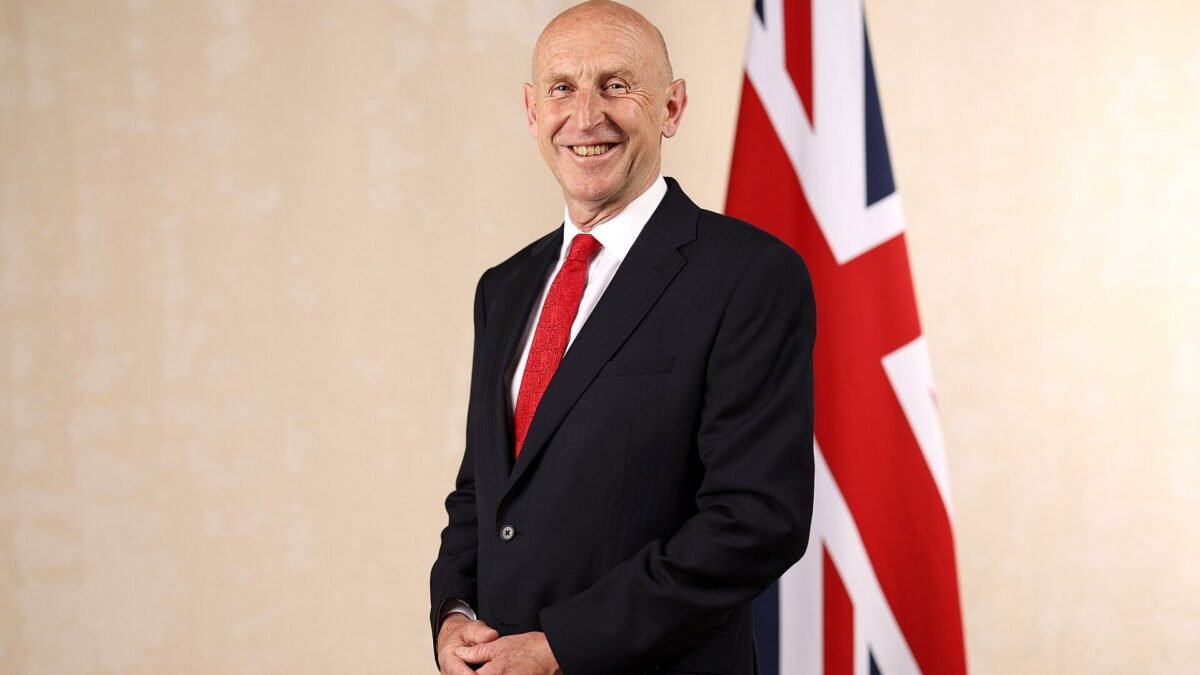
The British government borrowed £17 billion in October, official figures showed on Friday, as a record debt interest bill for the month pushed borrowing higher than a year earlier and underlined the scale of the challenge facing Chancellor John Healey as he tries to keep the public finances on track.
According to the Office for National Statistics (ONS), public sector net borrowing — the gap between what the state spends and what it takes in — was £17.0 billion in October 2026, £0.8 billion, or 5.2 per cent, more than in October 2025. It was the third-highest October borrowing figure since monthly records began in 1993, behind only the pandemic-era October of 2020 and October 2024, the statistics agency said.
The driving force was the cost of servicing the national debt. Central government debt interest payable reached £11.2 billion in October, £2.8 billion — or 33.4 per cent — more than a year earlier, according to the ONS. It was the highest figure ever recorded for the month of October since records began in 1997, and only the ninth month on record in which the monthly interest bill has exceeded £10 billion.
“Borrowing in October 2026 was slightly higher than last year, as public spending grew by more than income, partly because of higher debt interest costs,” the ONS said in its bulletin.
The figures arrived less than a month after Healey delivered his first Budget on 28 October, a cautious package of tax rises on banks, savers and landlords that, according to The Times, eroded the Chancellor’s fiscal headroom to £14.5 billion from close to £24 billion. The October numbers are the first full monthly test of that Budget’s arithmetic — and they show a Treasury still squeezed between rising costs and a debt pile that passed £3 trillion for the first time only in September.
A month that beat forecasts — and still missed the plan
The headline £17 billion figure was, on one reading, better than expected. Most economists had pencilled in borrowing of around £18 billion for the month, and the ONS also revised down its estimate of borrowing for the April-to-September period by £3.6 billion, largely because tax receipts came in stronger than previously recorded, Reuters reported.
“British public sector net borrowing was £17 billion in October,” Reuters reported, adding that the revision meant cumulative borrowing for the 2026-27 financial year so far stood at £111.3 billion — £7.3 billion, or 6.1 per cent, less than at the same point a year ago.
But the same figures look less comfortable against the official forecast. October’s borrowing was £0.8 billion above the monthly profile set out in the Office for Budget Responsibility’s (OBR) March 2026 forecast, and cumulative borrowing for the year to October was £3.3 billion above where the OBR thought it would be in March, according to The Times. The OBR now expects the full-year budget deficit to reach 4.2 per cent of gross domestic product (GDP), a large increase from the 3.6 per cent planned in March, Dow Jones Newswires reported.
That tension — a month that beat the market’s expectations while still running ahead of the official plan — is the central story of the October figures. The government’s receipts are growing, and growing fast. They are simply not growing fast enough to keep pace with what the state owes, and what it costs to service that debt.
Rob Wood, an economist at Pantheon Macroeconomics, told the PA news agency that the data “brought some good news for the Chancellor, with borrowing for October likely running below expectations made in the Budget”. The ONS’s chief economist, Grant Fitzner, struck a similar balance, saying: “Borrowing so far this financial year remained lower than in the same period last year, with receipts growing faster than spending. However, monthly borrowing was up on last October, partly due to higher debt interest.”
Where the money went — and where it came from
The ONS bulletin breaks the October figures down in unusual detail, and the detail explains why the Chancellor’s room for manoeuvre is so narrow.
Central government receipts totalled £93.6 billion in October, £6.7 billion higher than a year earlier. Income-related taxes made the largest contribution, rising £3.0 billion, or 13.6 per cent, to £24.7 billion. Value Added Tax receipts rose £0.7 billion to £18.8 billion, corporation tax rose £0.8 billion to £9.6 billion, and National Insurance Contributions rose £1.5 billion, or 9.1 per cent, to £17.9 billion. Total central government taxes reached £69.4 billion, up 7.6 per cent on the year.
Over the first seven months of the financial year, tax revenues rose by £40.5 billion, or 6.6 per cent, to £650 billion, according to The Times, driven by a 15.5 per cent increase in corporation tax receipts and a £14 billion rise in income tax revenue. On the face of it, that is a healthy revenue performance — the strongest tax growth in years, helped by the OBR’s observation that third-quarter economic growth came in faster than expected.
But spending grew faster still in the month. Central government current expenditure was £99.3 billion in October, £7.0 billion higher than a year earlier, with increases, in the ONS’s words, “spread across spending on debt interest, public services, social benefits and other costs”. Net social benefits cost £29.3 billion, up 6.0 per cent on the year; spending on goods and services — the day-to-day running of the state — cost £40.5 billion, up 5.0 per cent; and transfers to local government cost £12.9 billion, up 4.2 per cent.
Between April and October, welfare spending totalled £205 billion, up 6.6 per cent on the same period in 2025, according to The Times. Debt interest over the same seven months reached £71.9 billion, up 7.4 per cent on the year before.
Central government net borrowing — the largest subsector — was £20.8 billion in October, broadly unchanged from a year earlier. Local government borrowed £1.2 billion. Public corporations, including the Bank of England, recorded a net surplus of £4.9 billion, which brought the overall public sector figure down to £17.0 billion.
The current budget deficit — borrowing used to fund day-to-day activities rather than investment — was £11.9 billion in October, taking the total for the financial year to date to £72.9 billion, £8.6 billion, or 10.5 per cent, less than in the same period last year. The government’s fiscal objective is to achieve a surplus in the current budget by the financial year ending in March 2030.
The debt mountain: £3.1 trillion, 95.8 per cent of the economy
Public sector net debt — the amount owed to the private sector and overseas, less liquid assets — was provisionally estimated at £3,058.3 billion at the end of October, £161.6 billion more than a year earlier, according to the ONS. At 95.8 per cent of GDP, it was 1.9 percentage points higher than last year and at levels last seen in the early 1960s.
The debt passed £3 trillion for the first time in September 2026, a milestone the ONS noted again in its October bulletin. A wider measure of the state’s balance sheet, public sector net financial liabilities, stood at £2,696.2 billion, or 84.5 per cent of GDP, up 2.4 percentage points on the year.
Those ratios matter because they determine how much of every pound of tax revenue is consumed before the government spends a penny on schools, hospitals or defence. In October alone, debt interest of £11.2 billion was equivalent to roughly one pound in every eight of the £93.6 billion the state collected. Over the first seven months of the year, the £71.9 billion interest bill is larger than most departmental budgets.
The Wall Street Journal, reporting on the figures, noted that the increase in borrowing “partly reflected a rise in interest costs as inflation and bond yields picked up since the start of the war between the U.S. and Iran”. Reuters added that exposure to energy markets and high inflation have left Britain with the highest borrowing costs in the Group of Seven wealthy nations, and that Healey has repeatedly stressed his commitment to fiscal discipline.
Why Britain’s interest bill is so sensitive to inflation
Not all of October’s £11.2 billion interest bill was cash the Treasury actually paid out. Of that total, £4.2 billion was the inflation-related uplift on index-linked gilts — government bonds whose payouts rise with the Retail Prices Index (RPI). That uplift mainly reflected a 0.6 per cent increase in the RPI between July and August 2026, according to the ONS.
The uplift builds up over the life of an index-linked gilt and is paid only when the bond is redeemed, but the ONS records it as it accrues, which makes monthly debt interest figures volatile. Britain has a higher share of inflation-linked bonds than its peers, which is why its interest bill reacts so sharply when inflation rises — and why the war in the Middle East, which has pushed up energy prices and inflation, has fed directly into the Treasury’s costs.
The Times reported that rising inflation “drove the cost of servicing debt upwards as a large share of the UK’s debt stock is tied to the retail prices index, an old measure of inflation that has risen sharply in recent months due to the war in the Middle East”. It was, the newspaper said, the highest monthly total for October since ONS records began in 1997.
That structure also explains a paradox in the October figures. The central government net cash requirement — the actual cash the state needed to raise from financial markets — was £15.5 billion in October, £6.2 billion, or 28.5 per cent, less than a year earlier. The cash the Treasury must find each month is not the same as the accounting measure of borrowing, and in October the cash position improved even as the headline borrowing figure rose. The distinction matters to bond markets, which care about how much the government must actually borrow, but it does not change the underlying arithmetic: the state is spending more than it collects, and the gap is being filled by issuing more debt.
Healey’s Budget — and the headroom it left behind
The October figures land three weeks after Healey’s Budget on 28 October, which the PA news agency described as a cautious set of tax and spending plans. The Chancellor offered households and drivers some help with rising energy bills and fuel costs, while raising taxes on banks, gambling and landlords, Reuters reported.
According to The Times, Healey “opted for a small-scale budget in October, which included tax rises on banks, savers and landlords, and settled for an erosion in the fiscal headroom to £14.5 billion from close to £24 billion”. Headroom is the margin by which the government expects to meet its fiscal rules — in this case, the commitment to balance the current budget by 2029-30 and to see debt falling as a share of the economy. A smaller margin means less room to absorb bad news, and the October figures are, in that sense, the first piece of bad news since the Budget was delivered.
The OBR published its latest economic and fiscal outlook alongside the Budget on 28 October, but the monthly forecast profiles that would allow a direct comparison with the new outlook are not yet available, the ONS said. Until they are published, the statistics agency will continue to compare its estimates with the OBR’s March 2026 forecast. That means the £3.3 billion overshoot against the March profile is not the final word on whether the government is on course under the new Budget — but it is the only official comparison available, and it points the wrong way.
September’s borrowing, at £22.9 billion according to The Times, was higher than October’s, which is normal for the monthly pattern: January usually records a surplus because of self-assessed income tax receipts, while autumn months tend to be heavy. What matters is the trend, and the trend is that borrowing in the financial year to October, at 3.5 per cent of GDP, is the 14th-highest April-to-October figure since monthly records began in 1993, according to the ONS.
Analysis: Why It Matters
The interest bill is now the story, not the borrowing
For years, British fiscal debates were about how much the government spent and how much it taxed. The October figures show that a third force now dominates both: the cost of the debt itself. Debt interest of £11.2 billion in a single month is more than the government spends on most public services in a month, and it is rising at 33.4 per cent a year — far faster than tax receipts, which grew 7.7 per cent, or spending on goods and services, which grew 5.0 per cent.
That changes the politics of every Budget. Tax rises and spending cuts that would once have moved the borrowing figures by billions can now be swallowed by a single bad month for inflation or bond yields. Healey’s October Budget raised taxes on banks, savers and landlords; the October interest bill alone was larger than the annual yield of most such measures. The Chancellor is, in effect, running up a down escalator: every step he takes on tax or spending is partly undone by the cost of the debt he inherited.
A better month than expected — and still above the plan
There is a genuine piece of good news in the October figures, and it would be dishonest to ignore it. Borrowing came in £1 billion below what economists expected, tax receipts were revised up by £3.6 billion for the first half of the year, and cumulative borrowing is £7.3 billion lower than a year ago. As Rob Wood of Pantheon Macroeconomics observed, the data brought “some good news for the Chancellor”.
But good news against the market’s forecast is not the same as good news against the plan. The OBR’s March forecast — the last one with published monthly profiles — expected less borrowing than the government delivered in October, and £3.3 billion less over the year to date. The gap matters because the fiscal rules are judged against the OBR’s forecasts, not against economists’ guesses. A Chancellor who beats the consensus but misses the forecast is still a Chancellor whose plans are drifting off course, and the drift is in the wrong direction.
The distinction also explains why gilt markets barely moved after the data. Reuters reported that British government bond futures “briefly shot lower after the data but were overall little changed”. Traders had already priced in a difficult month; what they are waiting for is the OBR’s new monthly profiles, which will show whether the October Budget’s arithmetic actually holds.
The index-linked trap: why Britain pays more than its peers
Britain’s vulnerability is not an accident. It is the result of a deliberate choice, made over decades, to issue a large share of government debt in inflation-linked form. At the time, index-linked gilts were attractive: investors liked the inflation protection, and the government could borrow more cheaply. The trade-off was that the state took on the inflation risk itself.
That trade-off is now being paid for. When the RPI rose 0.6 per cent between July and August, it added £4.2 billion to a single month’s interest bill — money the Treasury owes on paper even though it will not pay it out until the bonds are redeemed. No other major economy has quite the same exposure, which is one reason Reuters can report that Britain has the highest borrowing costs in the G7.
The lesson is not that index-linked debt was a mistake — it served its purpose in a low-inflation era — but that its costs are lumpy, volatile and largely outside the Chancellor’s control. Healey cannot legislate the RPI down. He can only decide how much new debt to issue, and in what form, and those decisions will shape the interest bill for decades.
Healey’s shrinking headroom and the Budget’s arithmetic
The most important number in the October figures may not be £17 billion or £11.2 billion, but £14.5 billion — the fiscal headroom Healey was left with after his Budget, down from close to £24 billion, according to The Times. Headroom is the buffer between the government’s plans and its fiscal rules, and it is the Chancellor’s insurance policy against bad news.
October’s figures are the first test of that insurance, and they suggest the buffer is thinner than it looked. If borrowing continues to run £0.8 billion a month above the old forecast, the headroom will be consumed within a year and a half — and that is before any new shock, whether from the Middle East, from energy prices or from a slowdown in tax receipts. Healey’s decision to deliver a “small-scale” Budget, as The Times described it, looks in retrospect like a gamble that the economy would cooperate. The October data suggest it may not.
The Chancellor’s defenders will point out that the Budget was delivered only three weeks ago, that the OBR’s new monthly profiles have not yet been published, and that the year-to-date borrowing figure is still lower than last year’s. All of that is true. But it is also true that the direction of travel — debt at 95.8 per cent of GDP and rising, interest costs at record levels, headroom shrinking — is the same direction it has been for two years. A Chancellor who wants to change that direction will need either more tax revenue, less spending, or faster growth. The October figures show all three are harder to deliver than they look.
What the numbers mean for households
For most people, £17 billion of borrowing and £11.2 billion of interest are abstractions. What they mean in practice is simpler: every pound the government pays in interest is a pound it cannot spend on anything else, and every pound it borrows is a pound that must eventually be repaid, with interest, by taxpayers.
The October figures also carry a more immediate message. The same inflation that pushed the interest bill up is the inflation that has pushed up energy bills — the subject of a separate ONS-linked story this month, with energy bills set to jump in January — and the same war in the Middle East that lifted bond yields is the war that has pushed up fuel prices. Households and the Treasury are, in an uncomfortable sense, in the same boat: both are paying more because the world has become more expensive, and neither can do much about it in the short term.
That is why the October borrowing figures, dry as they seem, are worth more than a passing glance. They are the monthly scorecard of a government trying to hold its fiscal rules together while the cost of its own debt rises faster than its income. The scorecard for October says: better than feared, worse than planned, and with the hardest months still to come.
What to Watch Next
- The OBR’s new monthly forecast profiles, published after its 28 October outlook, will show whether the October Budget’s arithmetic holds — and how much of the £14.5 billion headroom remains.
- November’s borrowing figures, due next month, will show whether October’s overshoot against the March forecast was a one-off or the start of a pattern.
- Gilt yields and the Bank of England’s next rate decision will determine how much of the debt the government must refinance at higher rates.
- Inflation data, particularly the RPI, will feed directly into the next interest bill through the index-linked gilt uplift.
- Tax receipts — especially corporation tax and income tax, which drove October’s revenue growth — will show whether the economy is still generating the income the Budget assumed.
- Any statement from the Treasury or the Chancellor responding to the October figures, and whether Healey signals further measures in the spring.
- The debt-to-GDP ratio, at 95.8 per cent and rising, and whether the government can still claim it is on course to see debt falling as a share of the economy by the end of the forecast period.
Sources
- Office for National Statistics — Public sector finances, UK, October 2026
- Reuters — UK borrowing beats forecasts as Healey’s deficit picture improves
- Dow Jones via Morningstar — U.K. Government Borrowed More in October, But Stays on Track for Smaller Deficit
- The Times — UK borrowing rises as monthly debt interest payments hit £11.2bn
- PA Media via Bury Times — Ballooning debt interest costs push up Government borrowing to £17bn
- Sharecast — Government borrowing rises by less than forecast despite surge in interest costs

About the Author — Abdul Mannan
Related Articles

White Supremacist Convicted of Plot to Firebomb Hull Migrant Hotel and Kill As Many Occupants As Possible
Mikka Lee Anderson, 24, was convicted at Newcastle Crown Court of preparing a terrorist attack on Hull's Royal…

UK and EU Set to Agree 100,000-a-Year Youth Mobility Scheme as Burnham Signs Landmark Brexit Reset in Brussels
Up to 100,000 young people a year would be able to live, work and study on each side…

Covid Inquiry Finds Britain Was ‘Woefully Ill Prepared’ as Test and Trace Failures Let Virus Spread Unchecked
Baroness Hallett's Module 7 report finds early efforts to contain Covid-19 were 'doomed to fail' — and sets…