
Nikhil Gupta Sentenced to More Than 19 Years in US Prison for Plot to Kill Sikh Separatist Pannun in New York

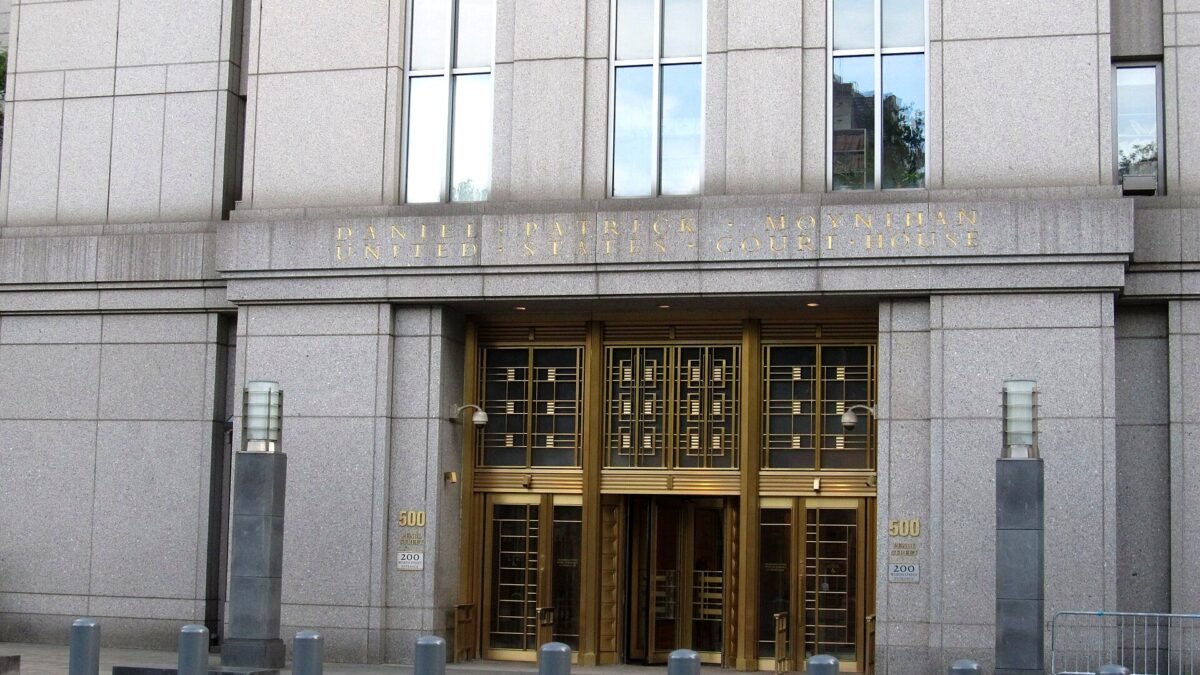
A federal judge in Manhattan has sentenced Indian national Nikhil Gupta to 235 months in prison — 19 years and seven months — for orchestrating a murder-for-hire plot to kill Sikh separatist leader Gurpatwant Singh Pannun in New York City, closing one of the most diplomatically sensitive criminal cases ever brought in an American courtroom.
United States District Judge Victor Marrero handed down the sentence on Friday, 20 November, at a hearing in the Daniel Patrick Moynihan United States Courthouse in lower Manhattan, according to the United States Department of Justice. Gupta, 55, had pleaded guilty in February to murder-for-hire, conspiracy to commit murder-for-hire, and conspiracy to commit money laundering.
The case, built on court documents that describe a plot directed by an employee of the Government of India, has tested relations between Washington and New Delhi for more than three years. Prosecutors said Gupta worked with Vikash Yadav, an Indian government official, to arrange the killing of Pannun, a United States citizen and attorney who leads the organisation Sikhs for Justice and campaigns for an independent Sikh state of Khalistan in Punjab. India has denied any involvement in the plot and has said the alleged scheme was contrary to government policy.
Friday’s sentence sits at the bottom of the federal sentencing guidelines range of 235 to 293 months. Prosecutors had recommended a sentence of about 24 years, according to Reuters, while Gupta’s lawyers had asked for a substantially shorter term of 12 years. The judge also imposed a $300 special assessment, and Gupta faces deportation to India once he has served his sentence.
How the Plot Unfolded
According to the allegations set out in the second superseding indictment and other public court documents, the plot began in May 2023, when Yadav recruited Gupta to orchestrate the assassination of Pannun on American soil. The Justice Department said Yadav was an Indian government employee throughout the relevant period, and that Gupta described himself in his communications with Yadav and others as an international narcotics and weapons trafficker.
Prosecutors said Yadav supplied Gupta with personal information about Pannun, including his home address in New York and details of his daily movements. Gupta then set about finding someone to carry out the killing, and arranged for $15,000 in cash to be delivered to a purported hitman. The supposed assassin, however, was an undercover officer working for American law enforcement, and the payment was made to a confidential source working with the United States Drug Enforcement Administration, according to court papers cited by prosecutors and news reports of the case.
The plot never came close to succeeding. No attempt was made on Pannun’s life, and no one was harmed. But the paper trail it left behind — messages, payments and meetings — gave American investigators a detailed account of how the scheme was organised, and it formed the basis of the charges that were unsealed against Gupta in November 2023.
Gupta was arrested in June 2023 at an airport in Prague, in the Czech Republic. The Justice Department’s Office of International Affairs worked with the Czech authorities to secure his extradition, and he was brought to the United States in June 2024. He had been held in a New York jail while awaiting trial, and pleaded guilty in February 2026 before Judge Marrero, admitting all three counts against him.
The Sentencing Hearing
Friday’s hearing brought the two men at the centre of the case face to face in the Manhattan courtroom. Pannun was present, and addressed the court before the sentence was imposed. He said he was grateful to the United States for prosecuting Gupta, and that he would continue to advocate for Sikh sovereignty.
“Self-determination for my people and my homeland, Punjab, is my lifetime goal,” Pannun told the court, according to Reuters.
In a victim impact statement submitted to the court before the sentencing, Pannun said that while he continues to advocate for the Khalistan movement, he has been forced to rely on what he described as an “expensive and extended security plan”. “It has been 1,200 days now that I have been living with a security detail,” he said, according to the Associated Press.
Gupta also addressed the court. He said he regretted straying from the nonviolent example set by Indian independence leader Mahatma Gandhi, and apologised directly to the man he had conspired to kill.
“I’m sorry to Mr. Pannun, I’m sorry to the communities I hurt, I’m sorry to my own family,” Gupta said, according to Reuters and the Associated Press.
The prosecutor, Assistant United States Attorney Ashley Nicolas, told the court that the case went to the heart of what the American justice system is meant to protect. “This case cuts to the very core of American values,” she said. “We don’t condone the use of violence to silence voices in this country, ever.”
United States Attorney Jamie McDonald, announcing the sentence, said it should serve as a warning to anyone contemplating similar violence. “Today’s prison sentence reflects the seriousness of Nikhil Gupta’s conduct and should serve as a clear warning: the Department of Justice and its law enforcement partners will pursue and hold accountable anyone who attempts to commit violence on U.S. soil or against U.S. citizens,” McDonald said.
“While in India, Gupta helped to methodically plan the victim’s murder, believing he was beyond the reach of a U.S. court. But Gupta was wrong. Today’s sentence holds Gupta accountable for his cold and calculated plot and shows the extent of our ability, willingness, and commitment to prosecute individuals no matter where they are located for this type of conduct.”
The Man Who Is Still Beyond Reach
If Friday’s hearing closed Gupta’s chapter of the case, it left the other half of it open. Vikash Yadav, the Indian government employee prosecutors say recruited Gupta and directed the plot, has also been charged, but he is not in American custody, and it is unclear whether he has hired a defence lawyer, according to Reuters.
Yadav was first identified in the original November 2023 indictment only as “CC-1”, an unnamed co-conspirator. He was named publicly in a superseding indictment in October 2024, when American prosecutors formally charged him with murder-for-hire and conspiracy. The United States has not said publicly what steps it is taking to secure his arrest, and India has not said where he is.
India’s position has been consistent since the allegations first surfaced. New Delhi has said it dissociates itself from any plot against Pannun and that such an operation would be against government policy. In 2024, the Ministry of External Affairs said the individual named in the American indictment was no longer employed by the Government of India, and confirmed that he was no longer an employee.
The Indian government also set up an inquiry committee to examine the American allegations. In January 2025, India’s Home Ministry said the committee had recommended legal action against an individual whose criminal connections and past activities had come to light, without publicly identifying that person.
That careful, qualified response — neither confirming nor fully explaining what happened — has defined New Delhi’s handling of the affair from the start. It allowed India to cooperate with the American investigation without accepting the central American allegation: that an official of the Indian state ordered a killing on American soil.
A Case That Strained a Partnership
The Gupta case has never been only about one man and one plot. From the moment the indictment was unsealed in November 2023, it has been read in Washington and New Delhi as a test of how far the United States-India partnership could bend without breaking — and of whether the two governments could treat a criminal prosecution as a law-enforcement matter rather than a diplomatic rupture.
The stakes were obvious. The United States and India have spent two decades building a strategic relationship that both governments describe as among the most important of the century: deepening defence cooperation, shared concern about China, and a trade relationship worth hundreds of billions of dollars. An allegation that an Indian government employee ordered an assassination in New York threatened to poison all of it.
American officials, for their part, have been careful to frame the case in the language of the rule of law rather than of diplomacy. The Justice Department has treated it as a prosecution like any other, built on intercepted messages and a cooperating witness. Successive American administrations have pursued it without making it the centrepiece of the bilateral relationship, and Indian officials have, in public at least, engaged with the American inquiry rather than rejecting it outright.
That discipline is part of why the relationship survived. But the sentence does not erase the underlying tension. The allegation at the heart of the case — that a foreign government plotted to kill an American citizen in an American city — is the kind of claim that, in another era, would have triggered expulsions, sanctions and a lasting chill. That it did not is a measure of how much both sides valued the partnership, and of how hard both worked to keep the case inside the courtroom.
The Canadian dimension makes that achievement look more fragile. The discovery of the Pannun plot came months after Hardeep Singh Nijjar, a Canadian Sikh separatist leader, was shot dead outside a gurdwara in Surrey, British Columbia, in June 2023. In September 2023, then Prime Minister Justin Trudeau told the Canadian Parliament that there were credible allegations of a potential link between agents of the Indian government and the killing. India called the allegations absurd, and the two countries expelled diplomats in a standoff that lasted for months.
American and Canadian authorities have described the Pannun plot and the Nijjar killing as part of a broader pattern of targeting Indian dissidents abroad, according to Reuters. India has denied involvement in both. The contrast between the two cases is striking: in the United States, the plot was foiled, the accused was arrested, tried and sentenced; in Canada, the killing succeeded, and no one has been convicted of ordering it.
Who Pannun Is — and Why He Was Targeted
Pannun is a dual United States-Canadian citizen and a lawyer who leads Sikhs for Justice, a United States-based organisation that advocates for the secession of Punjab, a state in northern India that is home to a large population of Sikhs, an ethnoreligious minority group in India. The organisation campaigns for a referendum on Khalistan, an independent Sikh homeland, and has organised non-binding votes among Sikh diaspora communities in several countries.
India banned Sikhs for Justice in 2019 and designated Pannun a terrorist under its anti-terror law in 2020. New Delhi regards the Khalistan campaign as a threat to India’s territorial integrity, and Pannun as one of its most prominent international advocates. His supporters, by contrast, describe him as a political activist pursuing self-determination through lawful, nonviolent means — a characterisation he repeated in court on Friday.
That dispute over labels — terrorist or activist, separatist or self-determination campaigner — runs through the entire case, and it is why the American prosecution has been so politically charged. To Washington, the question before the court was narrow: did Gupta conspire to murder a man on American soil? To New Delhi, the man in question is someone India considers a threat to its unity. The American answer was that the target’s politics are irrelevant to the crime. As the prosecutor put it, the United States does not condone the use of violence to silence voices in the country, ever.
Analysis: Why It Matters
A sentence that is also a message
The figure of 235 months deserves a closer look, because it tells us how the court weighed a case that was, in legal terms, straightforward, but in every other sense extraordinary. Gupta pleaded guilty. The evidence, as set out in the indictment, was detailed and damning. There was no trial, no contested testimony, no ambiguity about the facts. The only question was how long he should spend in prison.
Prosecutors asked for about 24 years. The defence asked for 12. The judge chose 19 years and seven months — the very bottom of the guidelines range, but still a sentence that will keep a 55-year-old man in federal prison until he is well into his seventies. It is a compromise in arithmetic only. In substance, it is a severe punishment for a crime in which no one was hurt, and it reflects the court’s view that the gravity of the offence lies not in its outcome but in its intent: a foreign-directed plot to kill a man in New York because of his political views.
The message is aimed at more than Gupta. By sentencing at the bottom of the range, the court avoided the appearance of making an example of a foreign national in a politically charged case. By imposing nearly two decades, it made clear that the United States regards a murder-for-hire conspiracy on its soil as among the most serious offences it prosecutes. The balance is deliberate: justice, not vengeance; deterrence, not theatre.
The “beyond reach” theory has collapsed
Perhaps the most consequential sentence in the Justice Department’s announcement was the one about Gupta’s own calculation. “While in India, Gupta helped to methodically plan the victim’s murder, believing he was beyond the reach of a U.S. court. But Gupta was wrong.” That is not courtroom rhetoric. It is a description of how the case was actually built.
Gupta was recruited in India, plotted in India, and arranged the payment from India. He was arrested in Prague, extradited from the Czech Republic, and sentenced in Manhattan. The arc of the case is a demonstration, in concrete terms, that the United States can and will pursue a murder-for-hire conspiracy across borders, through allied courts and extradition treaties, until the accused is standing in an American courtroom.
That demonstration matters because the entire premise of transnational repression — the practice of states targeting dissidents who live abroad — rests on the assumption that distance provides safety for the perpetrator and vulnerability for the victim. The Gupta case inverts that assumption. It was the victim who had the protection of the American state, and the plotter who discovered that distance offered no protection at all.
Whether that lesson is learned in other capitals is another matter. But the precedent now exists in the form of a 235-month sentence, and it will be cited the next time an American prosecutor brings a case like this one — and the next time a foreign official weighs whether to order one.
The partnership survived, but the trust question remains
The most remarkable feature of this case may be what did not happen. The United States did not downgrade its relationship with India. India did not break with the United States. Trade continued, defence cooperation continued, and the leaders of both countries continued to meet. The case was contained inside the justice system, and the diplomats on both sides worked to keep it there.
That containment was a political achievement, but it should not be mistaken for a resolution. The central question — whether an Indian government employee ordered a killing on American soil — has never been answered to Washington’s satisfaction, because the man who could answer it, Vikash Yadav, has never faced an American court. India’s inquiry committee recommended legal action against an unnamed individual, but New Delhi has never said publicly who that individual is, or what became of him.
Until Yadav is in custody, the case will remain half-finished, and the trust question at its heart will remain open. American officials will continue to ask, in private if not in public, what controls India has put in place to ensure that no official ever again treats an American city as a place where a dissident can be killed. Indian officials will continue to insist that the plot was the work of a rogue individual, not of the state. Both positions can be sincerely held. Only one of them can be fully true.
The Canadian contrast
The Gupta sentence also throws the Canadian case into sharper relief. In the United States, the plot was detected before it could be carried out, the intermediary was arrested in a third country, extradited, and sentenced. In Canada, Nijjar was killed, and more than three years later, the question of who ordered his death remains a matter of allegation rather than adjudication.
That difference is not an accident. It reflects the fact that the American case was built on an undercover operation — the purported hitman was a law-enforcement officer from the start — while the Canadian case began with a murder and worked backwards. But it also reflects a difference in how the two governments handled the political fallout. Washington kept the matter in the courts; Ottawa took it to Parliament. Both approaches had costs. The American approach produced a conviction. The Canadian approach produced a diplomatic crisis and, so far, no accountability for the killing itself.
The lesson for other governments hosting dissidents is uncomfortable but clear: the protection of a dissident’s life depends less on public denunciation after the fact than on the quiet, unglamorous work of intelligence and law enforcement before it. The Gupta case is, in that sense, a success story for American law enforcement — and a warning about how narrow the margin between success and tragedy can be.
What the sentence means for Pannun
For Pannun himself, Friday’s sentence changes nothing about his daily life and everything about its meaning. He told the court he has lived with a security detail for 1,200 days — more than three years of his life organised around the possibility that someone might try to kill him. The man who arranged that threat will now spend nearly twenty years in prison. But the security detail will remain, because the threat, as Pannun sees it, was never only about Gupta.
That is the human cost of transnational repression that rarely appears in diplomatic statements. A sentence can punish a plotter, but it cannot restore the ordinary life of the person who was targeted. Pannun will keep advocating for Khalistan, as he told the court he would. He will keep doing so under protection, at considerable expense, and with the knowledge that the man accused of directing the plot against him has never been arrested. The sentence is a form of justice. It is not a form of safety.
What to Watch Next
First, Vikash Yadav. The United States has charged him, but he remains at large, and Washington has said little in public about its efforts to bring him into custody. Any move to seek his extradition, or any statement from New Delhi about his whereabouts, would be a significant development — and a test of how far India is willing to go in cooperating with the American case.
Second, the diplomatic track. The sentence removes one irritant from the United States-India relationship, but the underlying issue — the allegation of state-directed violence against a dissident — has not been resolved. Watch for how the two governments handle it in the months ahead: whether the inquiry committee’s findings are ever made public, whether the subject arises in bilateral meetings, and whether either side treats the matter as closed.
Third, the deportation. Once Gupta has served his sentence, he faces removal to India. That is nearly two decades away, and much may change in the meantime. But the question of what awaits him in India — and whether Indian authorities will pursue him for the same conduct — will eventually have to be answered.
Fourth, the wider pattern. American and Canadian authorities have said the Pannun plot was part of a broader effort to target Indian dissidents abroad. The Gupta sentence is the first major accountability in that pattern. Whether it is followed by further indictments — in the United States or elsewhere — will tell us whether the case was an isolated prosecution or the beginning of a broader reckoning with transnational repression.
And finally, Pannun himself. He has said he will keep campaigning for Sikh self-determination, and that his goal is a lifetime’s work. The sentence does not end that campaign, and it does not end the dispute over it. What it does is draw a line: in the United States, at least, a political argument is not settled with a hired killer, and those who try will spend a very long time in prison.
Sources
- United States Department of Justice, United States Attorney for the Southern District of New York — “Indian National Sentenced To 235 Months In Prison For Plotting To Assassinate U.S. Citizen In New York City”
- Reuters — “Indian man sentenced to more than 19 years in US for plotting to kill Sikh separatist”
- Associated Press — “Man gets 19½ years in prison for plot to kill Sikh separatist leader in New York”
- IndiaWest — “Nikhil Gupta Sentenced to 19 Years, 7 Months in Pannun Plot”

About the Author — Abdul Mannan
Related Articles

US Army Delays Detonation of Nearly Five Tons of Unstable Explosives in Iowa After Lead-Dust Fears and a Lawsuit
The Army has pushed back Monday's planned blast of 68 barrels of degraded lead azide at the Iowa…

Trump Gives Posthumous Pardon to Baseball Legend Pete Rose, Clearing His Tax Convictions Two Years After His Death
President Donald Trump has posthumously pardoned Pete Rose, baseball's all-time hits leader, wiping out the tax-evasion convictions that…
House Democrats Put Trump Family and Top Officials on Notice as Garcia Orders Records Preserved for January Investigations
Incoming Oversight chairman Robert Garcia has sent a dozen document-preservation letters to the president's sons, his son-in-law, the…