
House Democrats Put Trump Family and Top Officials on Notice as Garcia Orders Records Preserved for January Investigations

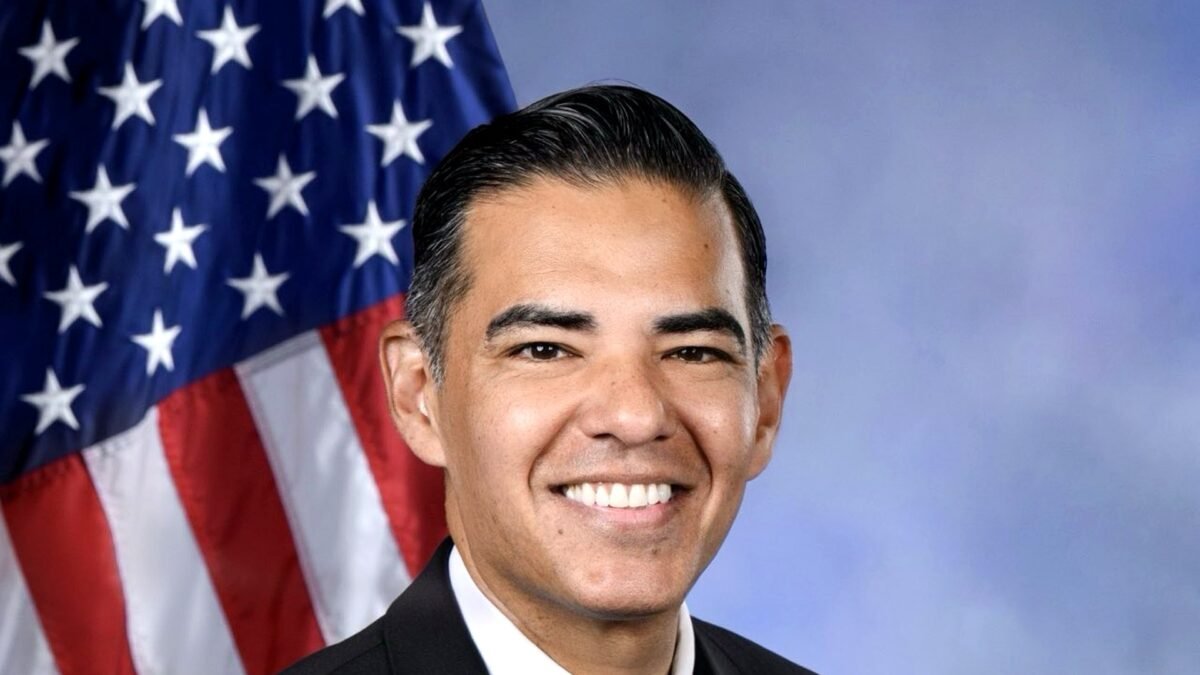
The Democrats who will take control of the United States House of Representatives in January have fired the opening shot of the oversight war to come. On Wednesday, Representative Robert Garcia of California, the Democrat in line to chair the powerful House Oversight Committee, sent a dozen letters to the closest people around President Donald Trump, telling them to preserve their records and prepare to answer questions.
The recipients read like a map of the Trump presidency’s most sensitive pressure points. They include the president’s sons, Donald Trump Jr. and Eric Trump; his son-in-law, Jared Kushner; Vice President JD Vance; White House Chief of Staff Stephen Miller; Attorney General Todd Blanche; former Homeland Security Secretary Kristi Noem; and the chief executive of the charity that helped finance the new White House ballroom. According to CNN, the letters went to a dozen people and organisations in all, and they set out, in unusually blunt language, the four investigations Democrats intend to open when the new Congress convenes in January.
Garcia framed the move as a response to the mandate voters delivered in this month’s midterm elections, in which Democrats swept back into control of the House and expanded their Senate majority. “Voters gave Congressional Democrats a sweeping mandate to root out corruption and ensure that the government is accountable to the people,” he wrote in the letters, according to CNN. “We intend to act on that mandate in the 120th Congress by conducting the critically important oversight essential for legislative reform.”
In a statement released with the letters, Garcia was blunter still. “Oversight Democrats are fighting to put an end to this Administration’s self-dealing, misconduct, and abuse,” he said, according to NPR. “These investigations will lay the groundwork for legislation which helps all Americans. This is just the beginning.”
The White House answered within hours, and its answer was defiance. White House spokeswoman Lauren Bis told CNN that the president was “willing to work with anyone to continue delivering victories for hardworking Americans” but added: “If Democrats choose to pursue sham investigations and radical left policies, they are choosing to work against the American people.” Later on Wednesday, White House Counsel Will Scharf sent his own letters to Democratic committee leaders, stating the administration’s position that no official has to comply with demands to preserve or hand over documents because Democrats do not yet chair the committees. According to CNN, which obtained a copy of Scharf’s letter, he wrote that the Democrats’ requests “all drip with an animus or pettiness revealing that the purpose of these letters is not legitimate oversight but to harass and aggrandize,” and accused them of overstepping their congressional authority.
The letters are not subpoenas. They do not compel anyone to hand over a single document, and they are not evidence that any recipient committed wrongdoing. What they are is a formal warning, and a public declaration of intent: when Democrats take the gavels in January, the Trump family, the immigration enforcement apparatus, the handling of the Jeffrey Epstein files and the financing of the president’s building projects will all be under investigation. The fight over whether the White House must cooperate has, in effect, already begun.
The letters: who was told to preserve what
Garcia’s letters fall into four categories, which he set out in the announcement from the House Oversight Democrats. They cover “Trump family corruption, corporate corruption, DHS misconduct, and the White House Epstein cover-up,” according to NPR. Each letter demands that the recipient preserve all records, communications and information relevant to the planned investigations, and several renew outstanding requests for information that the administration has so far ignored.
The full list of recipients, as published by the House Oversight Democrats and reported by NPR, runs as follows: Donald Trump Jr.; Eric Trump; Jared Kushner; Kimberly Guilfoyle, the former ambassador to Greece and former fiancee of Donald Trump Jr.; Catherine Townsend, chief executive of the Trust for the National Mall; Stephen Miller; Kristi Noem; Corey Lewandowski, the former senior adviser at the Department of Homeland Security; Vice President JD Vance; Susie Wiles, the former White House chief of staff; Attorney General Todd Blanche; and William K. Marshall III, the director of the Federal Bureau of Prisons, together with Tanisha Hall, the warden of Federal Prison Camp Bryan, where Ghislaine Maxwell is held.
The letter to Donald Trump Jr. raises “pay to play” allegations and potential conflicts of interest, his stake in World Liberty Financial, the Trump family’s cryptocurrency venture, and the financing of his wedding after-party by a Russian businessman with ties to the Kremlin. President Trump later told reporters that the costs of the wedding celebration were later paid back, NPR reported. The letter itself is unsparing: “You have engaged in business pursuits that appear to have allowed you to personally profit from your father’s presidency on a massive scale and at the expense of the American people,” it reads, according to NPR.
The letter to Eric Trump follows the same theme. “Oversight Democrats have found that your roles as a co-founder of World Liberty Financial and a key player in the Trump family’s pay-to-play schemes have raked in billions of dollars for the Trump family over the past several years,” it says, according to NPR. World Liberty Financial, the family’s cryptocurrency business, sold a major stake to Emirati investors shortly before Trump’s 2025 inauguration, the Washington Post reported, and Democrats have long argued that the venture created a channel through which foreign money could reach the president’s family while he was in office.
The letter to Jared Kushner, Trump’s son-in-law and one of his closest advisers, focuses on his investment firm, Affinity Partners, and on what Garcia described as the use of a government role to enrich himself and his companies. “Directly or indirectly, you have received billions of dollars in fees and investments with particularly troubling ties to Middle East states where you also have a government role,” the letter reads, according to NPR. “This raises urgent questions about transparency, conflicts of interest, and the abuse of what appears to clearly be a government position — with influence over war, peace, and nuclear proliferation as well as direct access to President Trump — for personal profit.”
Kushner’s lawyer, Chad Mizelle, rejected the allegations outright in a statement to CNN. “These allegations have it exactly backwards,” Mizelle said. “Jared Kushner has always acted in the best interests of the United States. He has voluntarily stepped away from his successful business to devote his time, without compensation, to helping President Trump end wars, save lives, and advance American interests. Any suggestion that he has used his public service for personal financial gain is categorically false.”
Kimberly Guilfoyle, who served as ambassador to Greece, was contacted over allegations of pay-to-play schemes. “As ambassador, you appear to have been intent on leveraging your position to cash-in,” Garcia’s letter says, according to NPR. Garcia’s committee had already been pursuing Guilfoyle: an October letter from Garcia to an associate of hers alleged that she had solicited a $100,000 payment, according to documents published by the Oversight Democrats.
The ballroom and the charity in the middle
One of the more unusual letters went to Catherine Townsend, the chief executive of the Trust for the National Mall, the charity that helped channel private donations towards the construction of the new White House ballroom. Garcia indicated that he planned to investigate how private companies may have leveraged their positions through Trump’s various construction projects, and he called on Townsend to preserve documents relating to the ballroom’s construction and donations, according to CNN and NPR. Garcia described the Trust as a “middleman” in the financing arrangements.
The Trust pushed back. In a statement to CNN, it said its role was “limited”. “The Trust had no role in fundraising or soliciting donations or in design or construction of the project,” the organisation said. “The Trust is planning to cooperate with congressional inquiries related to the project.”
The ballroom has been one of the most visible symbols of Trump’s second term: a vast, privately financed addition to the White House, built with money donated by wealthy supporters and corporations. Democrats have questioned whether companies that donated to the project received favourable treatment from the administration, and whether the financing arrangements were properly disclosed. The preservation letter does not accuse the Trust of wrongdoing; it asks the charity to keep its records so that the committee can examine the money trail when it has subpoena power.
Immigration enforcement under the microscope
The second major strand of Garcia’s letters concerns the Department of Homeland Security and the immigration enforcement campaign that has defined much of Trump’s second term. The letter to Stephen Miller, the White House chief of staff and the architect of the administration’s immigration policy, is among the most pointed of the twelve.
“Members of the Trump Administration have described you as the ‘linchpin’ and ‘architect’ of the Trump Administration’s most extreme policies, advocating for the widespread abuse of civil liberties,” the letter reads, according to NPR. “We have documented, and will continue to document, your role in orchestrating, overseeing, and defending these abuses.”
The letters to former Homeland Security Secretary Kristi Noem and to Corey Lewandowski, her former senior adviser at the department, raise allegations of abuse of DHS funds, corruption and self-dealing, according to NPR. Garcia’s committee has been examining the department’s spending and contracting for months, and Democrats have alleged that immigration enforcement operations were used to reward political allies and punish critics. The administration has rejected those claims, and has argued that its enforcement policies were lawful and necessary.
The immigration letters matter because they reach beyond the Trump family and into the machinery of government itself. If Democrats can show that department funds were misused, or that enforcement decisions were driven by political considerations rather than the law, the consequences would extend well beyond a single official. Miller, in particular, sits at the centre of the administration: as chief of staff he is both the author of the immigration strategy and the man who now runs the White House day to day. Any investigation of him is, in effect, an investigation of the presidency’s operating system.
The Epstein files at the centre
The most politically charged strand of the letters concerns the Jeffrey Epstein files, and it reaches the highest levels of the administration. Garcia sent letters to Vice President JD Vance, to former White House chief of staff Susie Wiles, to Attorney General Todd Blanche, and to the officials responsible for Ghislaine Maxwell’s imprisonment, all focused on what Democrats describe as a cover-up of the Epstein files.
The letter to Vance alleges that the vice president took part in secret meetings inside the White House Situation Room about the administration’s handling of the Epstein files. “Reportedly, you were even the first to suggest that Ghislaine Maxwell be interviewed in hopes of using her testimony to distance President Trump from Epstein, despite President Trump’s well-documented decades-long friendship with the notorious abuser and sex-trafficker,” the letter reads, according to NPR. “These discussions appear to be directly linked to an apparent quid pro quo in which Maxwell was moved to a minimum-security prison camp after she made favorable statements about President Trump in a highly unusual prison interview conducted by then-Deputy Attorney General Todd Blanche.”
Maxwell, Epstein’s former associate, was convicted of sex trafficking and is serving her sentence at Federal Prison Camp Bryan in Texas. She was transferred to the minimum-security camp days after she was questioned about Trump and his relationship with Epstein in an interview conducted by Blanche, who was then the deputy attorney general and had previously served as Trump’s personal lawyer. Democrats have alleged that the transfer was a reward for statements favourable to the president. The administration has denied any improper arrangement.
The letter to Wiles alleges that she was involved in secret White House meetings about the Epstein investigation. “Reporting describes you as refusing to release documents concerning allegations against President Trump to the public,” the letter says, according to NPR. The letter to Blanche accuses him of a cover-up of the Epstein files, of failing to comply with the Epstein Files Transparency Act, and of involvement in the decision to transfer Maxwell to a minimum-security prison. “You have refused to cooperate with our investigation, or to fulfill your legal responsibilities to be transparent with the Committee and the American people,” the letter says, according to NPR. “This obstruction is even more concerning given your direct involvement in the broader cover-up, as well as your history as President Trump’s personal attorney.”
Garcia’s letter to Blanche also seeks information about the Maxwell transfer and requests responses by December 2, according to reporting of the committee’s announcement. The letter to the Bureau of Prisons director, William K. Marshall III, and to the warden of Federal Prison Camp Bryan, Tanisha Hall, is equally blunt. “Committee Democrats will not tolerate the administration’s refusal to respond to our inquiries and in the future will not hesitate to compel information from individuals enabling the cover-up of Maxwell’s and Epstein’s crimes,” Garcia wrote, according to the Washington Post.
The Epstein strand of the investigation has a long history on the Oversight Committee. Earlier this month, the committee published a report finding that federal failures had allowed Epstein to keep abusing victims after 2005. The preservation letters escalate that work from a historical inquiry into a live investigation of the current administration’s own handling of the files, and they put the vice president and the attorney general personally in the frame.
A second front: the Lutnick inquiry
Garcia’s letters were not the only Democratic salvo on Wednesday. Democrats on the House Judiciary Committee separately launched an investigation into Cantor Fitzgerald, the financial services firm once led by Commerce Secretary Howard Lutnick, over allegations that it profited from the recent Nvidia scandal, according to CNN.
Cantor Fitzgerald, which is now run by Lutnick’s sons, has a significant stake in Nvidia, the artificial intelligence chip manufacturer, and in one of its major customers, Megaspeed, CNN reported. Treasury Secretary Scott Bessent has accused Lutnick of delaying a decision to label Megaspeed a possible national security threat, and Democratic Representatives Jamie Raskin, Gregory Meeks and Sydney Kamlager-Dove are now investigating whether any of Lutnick’s decisions helped his sons’ bottom line.
“If these media reports are accurate, the American people deserve to know: Did the Secretary of Commerce seriously and perhaps irreversibly compromise US national security interests to make money for his adult children and Cantor Fitzgerald?” the three lawmakers wrote, according to CNN.
A representative for Cantor Fitzgerald rejected the claims in a statement to CNN, calling them “inaccurate”. “Allegations suggesting that work influenced government decisions are baseless. Additionally, Cantor has no role in US export control or Entity List decisions. We are confident that a full review of the facts will demonstrate that we have operated our business ethically and in full compliance with all applicable rules and regulations,” the statement said.
The Lutnick inquiry connects the Democrats’ oversight agenda to the other great story of the year: the artificial intelligence boom and the struggle over who controls the world’s most advanced chips. Nvidia’s shares have fallen for five straight days despite a record quarter, and the company’s chief executive resigned earlier this month after admitting an affair linked to a Chinese intelligence probe. The allegation that a cabinet secretary may have shaped export control decisions to benefit his family’s firm is, if proven, the kind of conflict of interest that congressional investigations are designed to expose. It is also, for now, only an allegation, and Cantor Fitzgerald has denied it in the strongest terms.
The White House pushes back — and the Justice Department warns Garcia
The administration’s response to Garcia’s letters has been swift, coordinated and unusually aggressive. It has unfolded on three fronts at once: the White House counsel’s office, the Justice Department, and the president himself.
Will Scharf, the White House counsel, had already warned Garcia in a letter dated November 9 that the administration was “monitoring” the speech of Democrats in Congress as they mapped out investigative targets, and that efforts to investigate the administration “may cross the line into blatant criminality”, according to NPR. Legal experts have broadly pushed back against that claim, citing Congress’s oversight authorities, NPR reported. On Wednesday, Scharf followed up with letters to the Democratic committee leaders stating that the administration would not comply with preservation or document requests from a minority party, and that any such requests would not carry over into the next Congress, according to CNN and the Washington Post.
The Justice Department has gone further. Aaron Reitz, the US attorney for the Southern District of Texas, sent Garcia a letter on Monday telling him to preserve documents related to his “intent to weaponize congressional investigations and deprive citizens of their constitutional rights”, according to the Washington Post. Reitz wrote that congressional investigations must serve a “legitimate legislative purpose” and alleged that Garcia’s plans do not. The letter amounts to a preliminary inquiry into Garcia himself — a federal prosecutor warning the incoming chairman of the House Oversight Committee that his planned investigations could be unlawful.
Reitz has sent similar letters to other Democratic lawmakers, including Senator Elizabeth Warren, who received a Justice Department warning earlier this month over her own planned investigations. President Trump has also ordered the Justice Department to investigate Democrats for “extortion” after the midterm losses, a move that Democrats have described as an attempt to criminalise opposition oversight.
Garcia has shown no sign of backing down. On election night, he publicly challenged the White House to “lawyer up”, according to CNN. On Wednesday, Representative Jamie Raskin, the top Democrat on the Judiciary Committee, answered Scharf’s warning directly. “As the Supreme Court has repeatedly found, Congress has a broad constitutional responsibility and power to conduct oversight in order to legislate,” Raskin said, according to CNN. “We strongly suggest tuning out any third-party ‘advice’ to obstruct and defy Congress on the basis of specious legal theories.”
The standoff raises a constitutional question that has no quick answer. Congress’s power to investigate is broad but not unlimited; the Supreme Court has held that investigations must serve a legitimate legislative purpose. The White House argues that Garcia’s letters are motivated by animus rather than legislation. Democrats argue that exposing corruption and conflicts of interest is precisely what oversight is for, and that the letters are the first step towards laws that would prevent such conflicts in future. The courts may ultimately have to decide where the line falls — but that will take months, and possibly years, of litigation.
The wider Democratic oversight machine
Garcia’s letters are only the most visible part of a much broader Democratic oversight machine that is now being assembled. Across Capitol Hill, the Democrats who will chair committees in January are laying out their own agendas.
Gregory Meeks, the top Democrat on the House Foreign Affairs Committee, has demanded that the Department of State and six other government agencies preserve all of their records as Democrats prepare for oversight of the Iran war, a Venezuela oil deal, military boat strikes in the Caribbean and the dismantling of USAID, according to CNN. Meeks’s letters call on the agencies to provide written confirmation that they will comply with federal record preservation laws by November 18.
In the Senate, where Democrats will also hold the majority, Vermont Senator Bernie Sanders, who will chair the Health, Education, Labor and Pensions Committee, told reporters on Wednesday that he has several investigations in mind, according to CNN. He named the Department of Health and Human Services first. “The idea that we have a secretary of health and human services who is into conspiracy theories [who] has led us in a direction where, for the first time in God knows how long, we have lost our status as a measles-free country,” Sanders said. “A guy who is into conspiracy theories, that is certainly one area that needs investigation. There are many more.”
Sanders was referring to the announcement this week that the United States has lost its measles elimination status after 26 years, following more than 5,400 confirmed cases this year. He also mentioned the health insurance and pharmaceutical industries, two longtime targets. “Taking a hard look at the way the insurance industry runs, how they distort healthcare,” he said. “Taking a hard look at the pharmaceutical industry as to why we pay by far the highest prices in the world for prescription drugs. Those are areas that need investigation.”
The picture that emerges is of a Democratic Party that intends to use its new majorities not only to block the president’s agenda but to investigate his administration systematically — across the House and the Senate, across domestic policy, foreign policy, public health and the president’s own family business. It is, in the words of one Democratic aide quoted by CNN, an effort to make the administration answer questions it has refused to answer for two years, when Democrats were in the minority and, in their own telling, were “broadly stonewalled by the administration over the past two years”.
Analysis: Why It Matters
Garcia’s letters are not, by themselves, an investigation. They are a promise of one, and a warning. But they matter for reasons that go well beyond the twelve envelopes that left Capitol Hill on Wednesday. They mark the moment when the balance of power in Washington shifted from rhetoric to machinery — from a Democratic Party that could complain about the Trump administration to one that can compel it to answer.
The subpoena clock has started
The most important fact about Garcia’s letters is also the simplest: they were sent now, seven weeks before Democrats take power, because the clock matters. A preservation letter sent in January would arrive after weeks in which documents could be deleted, messages erased and memories conveniently dimmed. A preservation letter sent in November puts every recipient on notice that destroying relevant material now would itself be a punishable act, and it creates a paper trail that a future subpoena can build on.
The timing also serves a political purpose. By publishing the letters and the names of their recipients, Garcia has forced the White House to respond in public, and the White House’s response — that it will not comply, that the requests are harassment, that the Justice Department may treat the investigations as criminal — has itself become part of the story. Every refusal to cooperate becomes evidence for Democrats’ argument that the administration has something to hide, and every threat from a federal prosecutor becomes evidence for their argument that the Justice Department has been turned against the president’s critics. The administration, in other words, is being drawn into a fight on ground that Garcia chose.
The Epstein files are the thread that ties it together
Of the four lines of inquiry Garcia set out, the Epstein files are the most dangerous for the administration, and the most difficult for Democrats to handle. The reason is simple: the files touch the president personally. Trump and Epstein were friends for decades, and the administration’s handling of the files — the slow release, the redactions, the Maxwell interview and transfer — has been the subject of suspicion across the political spectrum, not only among Democrats.
The Maxwell transfer is the detail that makes the story concrete. A convicted sex trafficker was moved to a minimum-security camp days after she was interviewed by the deputy attorney general, a former personal lawyer to the president, and after she made statements favourable to him. The administration says the transfer was routine. Democrats say it looks like a reward. The preservation letters to Vance, Wiles, Blanche and the prison officials are designed to establish what was said, by whom, and in what order — and whether the move was discussed in the White House Situation Room before it happened.
But the Epstein inquiry is also a risk for Democrats. The files contain material about many powerful people, not only the president, and the history of the case is littered with bipartisan failures. The Oversight Committee’s own report, published earlier this month, found that federal failures allowed Epstein to keep abusing victims after 2005 — failures that occurred under administrations of both parties. If Democrats are seen to be using the files selectively, as a weapon against one man rather than as a route to the truth about a network, the inquiry will lose the credibility it needs to succeed.
Family business is the hardest charge to answer
The letters to the president’s sons and son-in-law raise a question that has shadowed the Trump presidency since its first day: how much money has the president’s family made from his time in office, and from whom? The cryptocurrency venture, World Liberty Financial, is the sharpest version of that question, because it involves a new and lightly regulated financial instrument, foreign investors from the Gulf, and a family that holds both the presidency and the business.
The difficulty for Democrats is that the Trump family’s business dealings, however unseemly they may appear, are not necessarily unlawful. The president is exempt from the federal conflict of interest laws that bind other officials, and the family’s defenders will argue that the businesses existed before Trump entered politics and that their success reflects the family’s brand rather than the abuse of office. Garcia’s letters do not allege specific crimes; they allege conflicts of interest and “pay to play” schemes, and they ask the recipients to preserve the records that would allow a committee to test those allegations.
That is why the letters matter even if they never produce a criminal referral. They force the family to account for its dealings in public, under oath, and on the record. The political damage of such an accounting may prove more significant than any legal consequence. The Trump family has built its political identity on the claim that it fights for ordinary Americans against a corrupt elite. An investigation that documents billions of dollars flowing to the family from foreign investors and corporate donors strikes directly at that identity.
A Justice Department that investigates the investigators
Perhaps the most consequential development of the week is not Garcia’s letters at all, but the Justice Department’s response to them. When a federal prosecutor warns the incoming chairman of the House Oversight Committee that his planned investigations may be criminal, and tells him to preserve his own documents, the normal order of American government has been inverted. The investigator has become the investigated, and the department that is supposed to enforce the law impartially has taken a side in a political fight before the investigation has even begun.
The administration’s defenders will say that Garcia’s letters are themselves an abuse of power — a fishing expedition designed to harass the president’s family and cripple his administration. The White House counsel’s argument, that the letters “drip with an animus or pettiness”, is not frivolous on its face: congressional oversight is supposed to serve a legislative purpose, and investigations motivated purely by partisanship have been struck down by the courts before.
But the Justice Department’s intervention raises a different and more serious question. If federal prosecutors can be deployed to warn opposition lawmakers against investigating the president, then the independence of the department — the principle that it serves the law rather than the man in the White House — is itself on trial. That is a question that will not be settled by letters. It will be settled, if at all, by the courts, by Congress, and by the voters in the next election.
What January will actually look like
For all the drama of this week, the real test of Garcia’s letters will come in January, when Democrats take the gavels and the preservation notices become subpoenas. That is when the abstract questions — does the White House have to comply, can Congress compel testimony, will the courts intervene — become concrete, and when the administration’s refusal to cooperate will have to be tested against the law rather than asserted in letters.
History suggests that the process will be slow, messy and deeply partisan. The last time a new House majority set out to investigate a sitting president, the result was years of litigation, duelling court orders and a political stalemate that satisfied nobody. This time the stakes are higher, because the administration has already signalled that it will not cooperate, and because the Justice Department has already signalled that it may treat the investigators as criminals.
But history also suggests that investigations, once begun, have a way of producing facts that neither side expected. The preservation letters are the first step in a process that will run for two years, through the remainder of Trump’s presidency, and that will shape the political landscape of the 2028 election. Wednesday’s letters are not the end of the story. They are the beginning of it.
What to Watch Next
- December 2: Attorney General Todd Blanche has been asked to respond to Garcia’s letter about the Epstein files and the Maxwell transfer by this date. Watch whether he answers at all, and what he says about the Justice Department’s compliance with the Epstein Files Transparency Act.
- The White House’s next move: Will Scharf has said the administration will not comply with minority-party requests and that those requests will not carry over into the next Congress. Watch whether the administration maintains that position once Democrats hold the gavels and the requests become subpoenas.
- The Justice Department’s inquiry into Garcia: US Attorney Aaron Reitz has opened a preliminary inquiry into the incoming Oversight chairman. Watch whether it escalates, and whether other Democratic lawmakers receive similar warnings.
- The Judiciary Committee’s Lutnick investigation: Representatives Raskin, Meeks and Kamlager-Dove are examining whether Commerce Secretary Howard Lutnick shaped export control decisions to benefit Cantor Fitzgerald. Watch for document requests and for any response from the Commerce Department.
- January 2027: When the 120th Congress convenes, Garcia will take the Oversight gavel and the preservation letters will become subpoenas. Watch which investigation he opens first — and whether the Trump family or the Epstein files lead the agenda.
- The courts: If the White House refuses to comply with subpoenas, the fight will move to the federal courts. Watch for the first ruling on whether Garcia’s investigations serve a legitimate legislative purpose.
- The Senate: With Democrats holding 56 seats, the Senate’s own investigations — led by Bernie Sanders on health and by other incoming chairmen — will run alongside the House inquiries. Watch for coordination between the two chambers, and for the first joint hearing.
Sources
- US House Committee on Oversight and Government Reform (Democrats) — Incoming Oversight Chairman Robert Garcia Launches Document Preservation Letters on Trump Family Corruption, Corporate Corruption, DHS Misconduct, and Epstein Cover-Up (18 November 2026)
- Reuters — Top House oversight Democrat to investigate Trump family corruption, Epstein files (18 November 2026)
- CNN — Democrats send letters to dozens of Trump officials and allies putting them on notice (18 November 2026)
- NPR (via WHRO) — House Democrat warns 13 Trump allies to save their records for upcoming investigations (18 November 2026)
- The Wall Street Journal — Democrats Name Top Targets for Trump Probes (18 November 2026)
- The American Quorum — Garcia Seeks Records Preservation Ahead of House Oversight Investigations (19 November 2026)

About the Author — Abdul Mannan
Related Articles
Elon Musk Calls Record $446 Million Midterm Spending ‘Pretty Foolish’ and Says He Is ‘Not MAGA’
The world's richest man says he would spend less if he could rewind the clock — and distances…
Hakeem Jeffries Wins Speaker Nomination 251-11 as Democrats Prepare to Make Him the First Black Speaker in US History
House Democrats have nominated Hakeem Jeffries to be the next Speaker by 251 votes to 11, putting the…
Hegseth Signs Military Pact in Caracas as US and Venezuela Restore Defence Ties Ten Months After Maduro’s Capture
US Defence Secretary Pete Hegseth made an unannounced visit to Caracas on Wednesday and signed a deal restoring…