
Pakistan’s Election Body Still in the Dark as 14-Province Referendum Plan Takes Shape

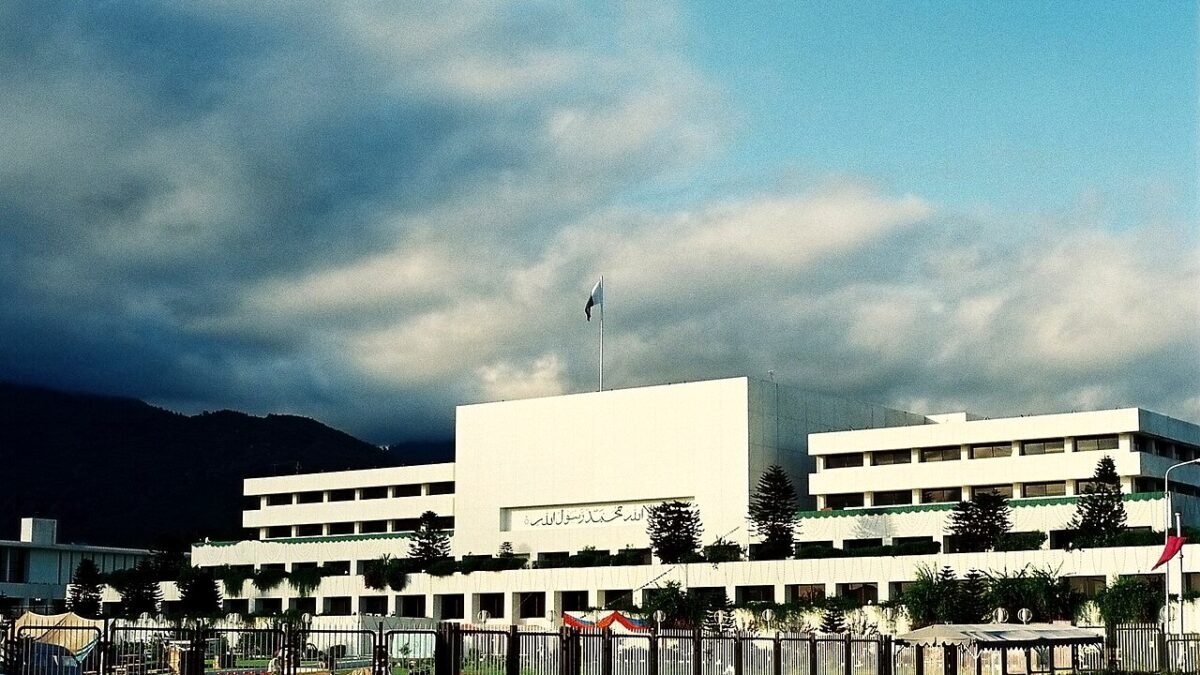
Pakistan’s Election Commission has not been contacted about a referendum on creating new provinces, and the federal cabinet has not formally discussed the plan, even as ministers speak openly of a nationwide vote and a map of fourteen provinces. The gap between the political talk and the institutional reality is now the central fact of a debate that has dominated Pakistani politics for weeks.
“The ECP has not been contacted yet,” a source in the Election Commission of Pakistan told The News, adding that the Commission would need at least two months to prepare once it received a formal request. Federal Health Minister Mustafa Kamal, who belongs to the Muttahida Qaumi Movement-Pakistan, was equally frank about how little has actually been decided. “I am also hearing all these things, watching everything, but officially I do not know at all,” he said in a television interview this week, according to The News.
Pakistan Peoples Party (PPP) Chairman Bilawal Bhutto-Zardari, whose party is a key coalition partner, says the matter has not been discussed with him either. Yet the idea keeps gathering momentum in public: a preliminary framework for the vote is being described in the press, a senior minister has spoken of fourteen provinces, and other ministers are talking about a timetable that runs through December and into the Senate elections expected in the first week of March.
A framework takes shape
According to a framework described by sources to K21 News, voting in the proposed referendum would be nationwide, but the results would be counted separately in each of the four provinces. The aim, the report says, is to see which districts and cities back new administrative units. The new provinces would not be drawn on linguistic or ethnic lines, and each one would have its own assembly, chief minister and cabinet.
The same account says Article 48(6) of the Constitution is being cited as the legal basis for the referendum, while acknowledging that changing provincial boundaries would still require a constitutional amendment under Article 239(4). That distinction matters, and it is one the rest of this story keeps returning to: a referendum can measure opinion, but under the Constitution as it stands, it cannot by itself redraw a map.
The numbers in circulation have also moved. Planning Minister Ahsan Iqbal told The News that he had heard of a plan for fourteen provinces: four each in Punjab and Sindh, and three each in Khyber Pakhtunkhwa and Balochistan. A separate model is also being discussed for Islamabad, with a mayor or chief minister and an assembly of about twenty-five members. Only days ago the figure being discussed in public was twelve provinces, and the shift to fourteen underlines how fluid — and how unofficial — the planning still is.
Interior Minister Mohsin Naqvi, who first called for additional administrative units on 31 July at the Pakistan Economic Summit in Islamabad, has described a referendum as the “best solution”. MQM-P leader Mustafa Kamal has said a vote will be held, and has called December a crucial month. The PPP, by contrast, strongly opposes dividing Sindh, and President Asif Ali Zardari and Bilawal are reported to have agreed that the party will not change that stance.
Ministers talk of a swift vote
The public statements from the government’s side have grown bolder through the week. Information Minister Attaullah Tarar said on Tuesday that a referendum was a constitutional and legal way of finding out what people want, and that there was no harm in holding one. A few days earlier, Defence Minister Khawaja Asif told Geo News that he expected the new provinces to arrive by the New Year. “My own view is that New Year will see this, the new system also, God willing,” he said, according to The News.
Mustafa Kamal has pointed to the political calendar to explain the urgency. “December is a very important month. There are Senate elections ahead. After that, the budget will come in June, so whatever has to happen has to happen before that,” he said. Political analysts believe the new provinces will be created before the Senate elections, which are expected in the first week of March. If that is the plan, the Election Commission should already know about it. It does not.
On Friday, Parliamentary Affairs Minister Tariq Fazal Chaudhry told Geo News that his party would make every effort to convince the PPP to support holding a referendum. He described the referendum as a democratic option provided under the Constitution, one that would allow people to express directly whether they wanted new provinces, and said the exercise was neither unconstitutional nor undemocratic. He acknowledged that the PPP had reservations about the division of Sindh, but said the process should not be stalled simply because one party opposed the creation of new provinces while others supported it.
Chaudhry also said the Pakistan Tehreek-e-Insaf (PTI) had responded positively to the proposal for new provinces. He added that the Pakistan Muslim League-Nawaz had not formally presented its position on new provinces to the media, and that the party leadership would decide when to announce it. “The time had not yet come to communicate a final position,” he said, adding that not every cabinet discussion could be made public.
Geo News anchor Shahzad Iqbal went further on his programme, reporting that the state and the government had decided to hold a referendum under all circumstances, despite Bilawal’s opposition. “The news I am giving you today makes it clear that, despite Bilawal Bhutto’s warning, the state and government have decided to hold a referendum under all circumstances. It will take place very soon,” he said, according to Pakistan Point. He reported that the vote would be held across the country, that results would be counted separately at the provincial level and decided by majority vote, and that the new provinces would be established on administrative, not linguistic, grounds.
The body that must run the vote knows nothing
None of this has reached the institution that would have to organise the vote. Under Article 48(6) of the Constitution, only the prime minister can propose a referendum, and a joint sitting of Parliament must approve it. That has not happened yet.
Once the Commission is told, the scale of the task becomes clear. According to The News, it will ask the federal and provincial governments for lists of their officers, and from those lists it will choose district returning officers, returning officers and presiding officers. It will then notify their names and ban transfers and postings until the vote is over. Those officers will also need training.
The Commission will have to choose government buildings as polling stations and carry out field surveys to fix their locations. It will also need software that connects polling stations, district returning officers and Commission offices, so that results can be counted and compiled. Pakistan has about 136.6 million registered voters, according to the latest Election Commission figures, and in 2024 the Free and Fair Election Network ranked it the fifth-largest electorate in the world, after India, Indonesia, the United States and Brazil.
It is also not clear how the vote would be counted. It could produce one national result, or a separate result for each province. Recent reports suggest that each province will have its own say on new provinces, which could mean counting results province by province — a choice with obvious consequences, since support for new units is likely to vary sharply from one province to another.
The constitutional wall
Beyond the logistics sits a legal question that no minister has yet answered. Under Article 239(4) of the Constitution, any change to a province’s borders needs a two-thirds vote in that province’s own assembly. A referendum cannot replace that vote. The Sindh Assembly has passed resolutions against dividing the province several times, most recently in February 2026.
Sindh Senior Minister Sharjeel Inam Memon has made the same point in public, saying the decision will be taken by the assemblies, not by a referendum or a toss. Anyone could hold a hundred referendums, he said, according to Aaj News, but the constitutional procedure would still apply.
That is why the framework’s own acknowledgement — that a constitutional amendment under Article 239(4) would still be needed — is so significant. Even if a referendum returned a clear result, the government would still need two-thirds of the Sindh Assembly to agree to divide Sindh, two-thirds of the Punjab Assembly to divide Punjab, and the same in Khyber Pakhtunkhwa and Balochistan. No government has that arithmetic today, and in Sindh the assembly has already said no, repeatedly.
The PPP’s legal argument is that the Constitution already sets out how a province can be split, and that anyone looking for another route is seeking an unconstitutional path. Bilawal made that case in Karachi earlier in the week, saying the debate had been forced on the country for months and that neither parliament nor the federal cabinet had taken it up. Information Minister Tarar rejected the criticism, saying the discussion on provinces cannot be stopped and that democratic and legal requirements call for it to continue.
The PPP’s red line — and the Karachi flashpoint
The political cost of the debate is already visible in Karachi, where the row over Sindh’s future has sharpened into open confrontation. After a Sindh cabinet meeting, Sharjeel Memon accused the MQM-P of planning to stir unrest, saying the government had “some indications” of a plan to trigger riots. He did not share specific evidence. Memon said a nationalist party and the MQM-P had both announced demonstrations at the same place on 29 November, so the government would not allow any party to hold rallies that day. A four-member committee — Nisar Khuhro, Waqar Mehdi, Nasir Hussain Shah and Zia Lanjar — will contact the parties.
MQM-P leader Khalid Maqbool Siddiqui responded by calling Bilawal’s warning of bloodshed over the division of Sindh a threat to the country, and demanded suo motu notice by the courts. The MQM-P has also renewed its demand for Chief Minister Murad Ali Shah to resign, blaming his government for poor governance and accusing PPP figures of diverting Karachi’s water to tankers.
The KMC opposition leader, Saifuddin Advocate, led a protest of elected local government representatives outside the KMC Building on Friday, condemning Bilawal’s remarks and warning that any attempt to incite violence or divide citizens would be resisted. He said Karachi belonged to people of all ethnicities — Sindhi, Baloch, Muhajir, Pakhtun, Hazarawal and Gilgiti — and that protecting their lives and property was the primary responsibility of the state. The demonstration also protested against the failure to convene the City Council session, alleged administrative corruption and unresolved civic issues, including the Hub Canal project and Rs260 billion of expenditure by Mayor Murtaza Wahab.
Behind the public exchanges, the coalition’s two principals have been talking. President Asif Ali Zardari and Prime Minister Shehbaz Sharif met at the President’s House on Thursday, with Interior Minister Mohsin Naqvi also present, according to reports of the meeting. Chaudhry said the two leaders had discussed the verbal exchanges between the coalition partners and that several matters had returned to normal following their interaction, adding that the prime minister had approached the president when the situation became tense. He also said the PPP would neither be allowed to leave the ruling coalition nor would it leave the alliance, and expressed confidence that the two parties would continue working together.
Chaudhry was also critical of Bilawal’s decision to speak to the media first. Bilawal should have contacted Prime Minister Shehbaz Sharif before speaking to the press, he said, adding that while the PPP was entitled to express its views, its criticism of the PML-N and remarks unrelated to the provinces debate were unnecessary. Leaders from both parties had made unnecessary statements over the past two to three days, he said, stressing that differences should be resolved through dialogue, preferably behind closed doors.
Bilawal turns to the economy
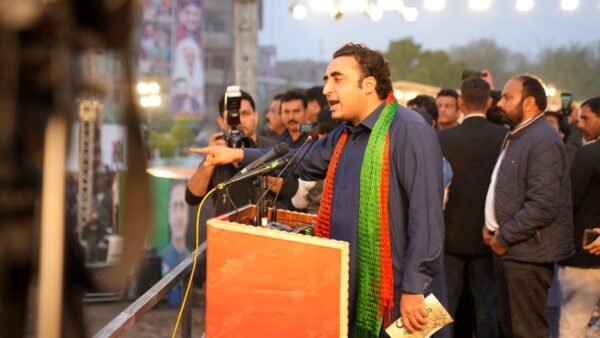
Bilawal’s own contribution on Friday was a speech in Karachi that shifted the ground of the argument. Addressing the launch of the Sindh government’s Rs17 billion Sindh Wheat Growers Support Programme for the 2026-27 Rabi season, he said Pakistan was facing an unprecedented economic crisis, and that ordinary people were more concerned about their economic difficulties than about debates over the number of provinces in the country.
“I have not seen such difficult economic times in my life,” he said, according to reports of the speech. He said the prime minister wanted to implement his economic programme and share his vision with the people, but whenever he tried, one of his federal ministers stood up and started pushing an agenda of his own, diverting attention from the main issue. “What can the prime minister do? Whenever he makes a plan, one of his ministers brings forward their own agenda,” he said.
Bilawal said he wanted to strengthen the prime minister’s hand, reminding his audience that the PPP had helped make Shehbaz Sharif prime minister twice, and that he wanted Shehbaz to become the first elected premier in Pakistan’s history to complete a full five-year term. He urged the prime minister to present a comprehensive plan to protect people from inflation, unemployment and poverty, and to take all political parties into confidence.
He also urged Shehbaz to rise above personal differences and ego and reach out to the opposition, naming Jamiat Ulema-e-Islam-Fazl chief Maulana Fazlur Rehman and PTI founder Imran Khan. “Whether you like Maulana Fazlur Rehman and Khan Sahib or not, they will also have to be engaged,” he said. He added that the region was experiencing war-like conditions, that every citizen was bearing the financial consequences of the conflict, and that a peace agreement between the United States and Iran was still not in sight.
At the same event, Bilawal outlined provincial measures for farmers facing higher agricultural costs. He said the Benazir Hari Card programme would provide financial assistance to 600,000 farmers and sharecroppers, with eligible beneficiaries receiving Rs4,000 per acre to cover crop-related expenses and the provincial government providing another Rs2,000. He said the economic crisis was driving up the prices of diesel and fertiliser, and that the Sindh government would stand by small farmers.
The opposition mobilises
While the coalition argues over provinces, the opposition is organising on the streets. The PTI-led opposition alliance, Tehreek-e-Tahaffuz-e-Ayeen-e-Pakistan, announced countrywide peaceful protest demonstrations on Friday, after a meeting of the alliance chaired by former National Assembly speaker Asad Qaiser.
Qaiser said the protests were being held for three demands: an end to skyrocketing inflation, the establishment of peace, and the release of the PTI founder and all other political prisoners held in what he called fabricated cases. “The incumbent federal government enjoys a fake mandate,” he said. Pashtunkhwa Milli Awami Party chief Mahmood Khan Achakzai said Imran Khan was the most popular leader in Pakistan at present and vowed to continue the struggle for the release of all political prisoners. Majlis Wahdat-e-Muslimeen chairman Allama Raja Nasir Abbas said the government was considering imposing Article 6 against the PTI founder, and added that Imran Khan had the support of 99 per cent of Pakistanis.
The Jamiat Ulema-e-Islam-Fazl, meanwhile, is under pressure on two fronts. Islamabad Police say they have repeatedly contacted senior JUI-F leaders, including Senator Kamran Murtaza, over 36 hours to seek cooperation in arresting Mufti Abrar Ahmed, secretary to party chief Maulana Fazlur Rehman, after an anti-terrorism court issued non-bailable arrest warrants for him. According to the first information report, JUI-F workers held an unauthorised gathering in Islamabad’s I-9/4 sector, blocked a road, threw stones at police and damaged government vehicles. The JUI-F denies the charges and says its workers were falsely accused.
Separately, the JUI-F has declined to attend the joint opposition’s All Parties Conference, scheduled for 24 November in Lahore. Party sources say the agenda does not match its manifesto and demands, and that the PTI’s position on the conference is unclear. The JUI-F had attended the organising committee’s first meeting earlier in the week. Its absence leaves the event — and the opposition’s attempt to present a united front — in doubt.
A history that haunts the idea
Pakistan has held three referendums so far, and all three were held under military rulers. In 1960, General Ayub Khan won a vote of confidence from 80,000 Basic Democrats. In 1984, General Zia-ul-Haq counted a “yes” to his Islamisation programme as five more years in office. In 2002, General Pervez Musharraf used a referendum to secure a five-year presidential term.
That history is part of why the proposal draws such fierce opposition. Bilawal has argued that referendums have not historically served democratic purposes in Pakistan, and the PPP’s position is that the constitutional route — a two-thirds vote in the provincial assembly concerned — is the only legitimate one. For the PPP, a referendum on dividing Sindh is not a neutral democratic exercise but a way around a constitutional safeguard that the Sindh Assembly has already invoked.
The government’s supporters reply that asking the public directly is the most democratic option available, and that a referendum would settle a question politicians have argued about for decades. Tarar has made that case explicitly, and Naqvi has said surveys show most people favour new provinces. But no survey has been published, no formal proposal has been made, and the body that would run the vote has not been told it is coming.
Analysis: Why It Matters
The most important fact in this story is not what has been said about a referendum, but what has not been done. No prime minister has proposed one under Article 48(6). No joint sitting of Parliament has approved one. No formal request has reached the Election Commission. No cabinet meeting has discussed one. The entire debate, for all its heat, is still taking place in television studios, press conferences and party meetings — everywhere except the institutions that would have to make it real.
That gap tells its own story. A referendum that has not been proposed cannot be held in December, and a referendum that has not been proposed cannot produce new provinces before the Senate elections in March. The Election Commission’s two-month preparation window alone pushes any vote into next year, and that is before the training of polling staff, the surveying of polling stations and the building of result-compilation software are counted. Ministers who speak of a new system by the New Year are describing a timetable that the institutions cannot meet, because the institutions have not been asked.
The second thing that matters is the constitutional wall, and it is higher than the referendum’s supporters admit. A referendum can measure opinion, but it cannot amend Article 239(4). Dividing Sindh requires two-thirds of the Sindh Assembly, and that assembly has resolved against division as recently as February 2026. Dividing Punjab requires two-thirds of the Punjab Assembly. The same applies in Khyber Pakhtunkhwa and Balochistan. Unless the government can win those votes, a referendum result — however emphatic — would be a political statement, not a legal change. The framework’s own drafters appear to know this, which is why they acknowledge that a constitutional amendment would still be needed.
The third thing is the geography of the dispute. The argument is not really about fourteen provinces or twelve, or about whether the count is national or provincial. It is about Sindh, and within Sindh it is about Karachi. The PPP has governed Sindh for eighteen years and treats the province’s unity as an existential question; Bilawal’s warning that a forced division would spill blood was the bluntest statement of that position yet. The MQM-P, whose political base is urban Sindh, treats new administrative units as the answer to eighteen years of what it calls misrule. Both sides are now accusing the other of preparing for street confrontation on 29 November, and the Sindh government has banned rallies on that day. A constitutional debate has acquired a street calendar, and that is when debates become dangerous.
The fourth is what the argument is crowding out. Bilawal’s Friday speech was, in part, an attempt to change the subject: inflation, unemployment, poverty, diesel and fertiliser prices, and a region in which war is distorting every economic calculation. His complaint that ministers keep distracting the prime minister with their own agendas was aimed directly at the provinces debate, and his invitation to engage Fazlur Rehman and Imran Khan was an acknowledgement that no economic plan can work while the political system is consumed by a fight over the map. Whether the prime minister takes that advice will be visible in the coming days: in whether the government invites the opposition into parliamentary committees and the economic consultation Bilawal proposed, or whether the warrants and security withdrawals continue.
What to watch next is therefore a short list, and each item on it is concrete. First, whether the prime minister formally proposes a referendum under Article 48(6) — the single act that would move the idea from television to the Constitution. Second, whether the Election Commission is contacted, and what it says about the timetable when it is. Third, whether the PPP’s red line on Sindh holds under pressure from a coalition partner that needs its votes. Fourth, what happens on 29 November in Karachi, where two sets of demonstrators have been told they cannot march. And fifth, whether the opposition’s street protests and its 24 November conference in Lahore produce a common platform, or whether the JUI-F’s absence confirms that the opposition is as divided as the government.
Until the first of those things happens, the referendum remains an idea in search of an institution. The ministers are talking as though the vote is inevitable. The Election Commission is waiting to be told. Between those two facts lies the whole of Pakistani politics at this moment: a government that announces before it decides, a coalition partner that warns before it breaks, and a constitutional order that will not be hurried by either of them.
Sources
- The News — “ECP not yet informed of any referendum plan”
- The News — “Bilawal wants Shehbaz to complete his term: Referendum inevitable, PPP will agree too: minister”
- K21 News — “New Provinces Referendum Plan Explained”
- K21 News — “Sindh Bans Nov 29 Rallies Amid PPP-MQM Row”
- Pakistan Point — “State And Government Decide To Hold Referendum Despite Bilawal Bhutto’s Opposition, Shahzad Iqbal Reports”
- Fun Pmik (source: Independent News Pakistan) — “PTI-Led Opposition Alliance Announces Countrywide Protest”

About the Author — Abdul Mannan
Related Articles

Musadik Malik in Delhi: First Pakistani Minister in India Since the May 2025 War Calls Climate Change the ‘Enemy of Civilisation’
Pakistan's climate minister Musadik Malik has arrived in New Delhi for the SCO Civilisational Dialogue Forum, the first…
Bilawal Wants Shehbaz Sharif to Become the First Pakistani PM to Serve a Full Five-Year Term
Bilawal Bhutto-Zardari says he wants Shehbaz Sharif to become the first Pakistani prime minister to complete a full…
Pakistan’s Cybercrime Agency Busts Rs240 Billion Online Gambling Ring in Karachi, Saying the Network Could Reach Rs1 Trillion
Five people have been arrested and 40 named in an FIR after the NCCIA traced about Rs240 billion…