
Musadik Malik in Delhi: First Pakistani Minister in India Since the May 2025 War Calls Climate Change the ‘Enemy of Civilisation’

Pakistan’s climate change minister, Dr Musadik Malik, has arrived in New Delhi for a regional forum, becoming the first Pakistani federal minister to set foot in India since the two countries fought a four-day war in May 2025. His visit, for the Shanghai Cooperation Organisation’s first Civilisational Dialogue Forum, is the first ministerial trip across the border in more than three years, and it has already set off a political argument in India about whether the two neighbours should be talking at all.
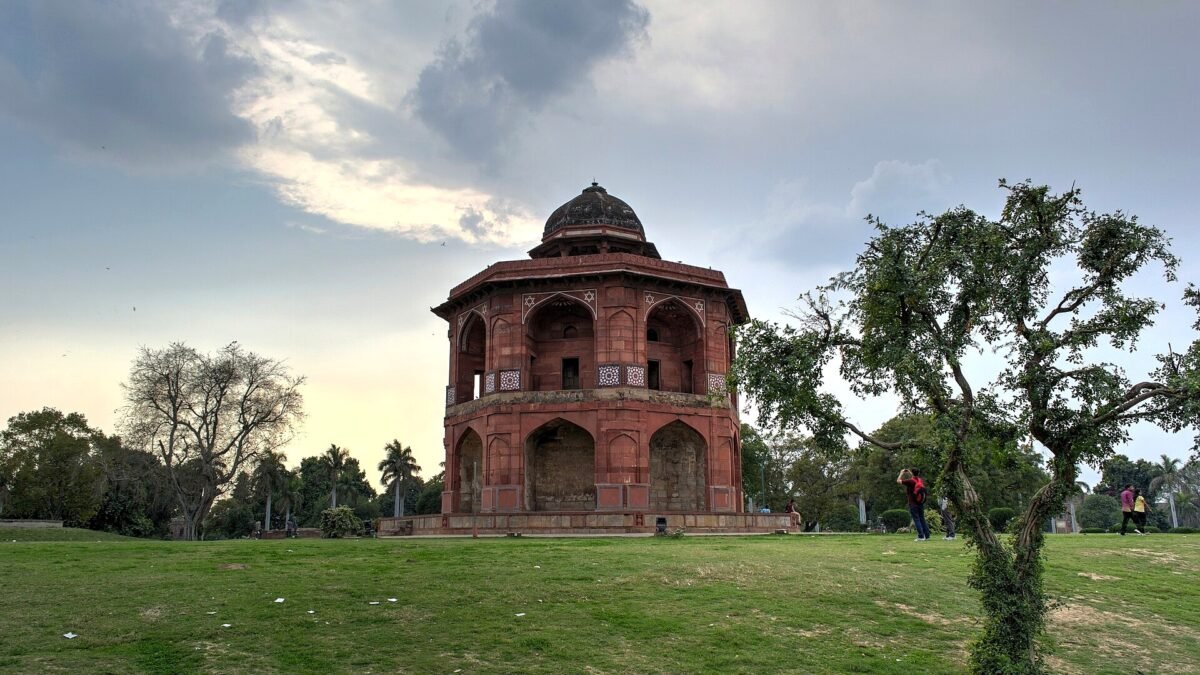
Malik landed in the Indian capital on Friday 20 November to lead Pakistan’s delegation at the three-day forum, which is being held at the 16th-century Purana Qila, or Old Fort, in New Delhi. According to The News, his arrival marks the first visit to India by a Pakistani minister since the Pakistan-India conflict in May 2025. It is also the first such visit since May 2023, when then foreign minister Bilawal Bhutto-Zardari travelled to Goa for a meeting of the Shanghai Cooperation Organisation’s Council of Foreign Ministers, according to Dawn and other outlets.
On Saturday, addressing the forum, Malik turned his speech to the subject he knows best. Climate change, he said, had become a major threat to civilisation and historical heritage. “The enemy of this civilization is climate change,” he told delegates, recalling how Pakistan’s devastating floods of 2022 swept through Sindh and damaged Mohenjo-daro, the 4,500-year-old city of the Indus Valley civilisation. A wall that no invader had brought down in four and a half millennia, he said, had been brought down by climate change.
The visit is modest in diplomatic terms — a cultural forum, not a bilateral summit, with no formal talks between the two governments on the agenda. But in a relationship that has had almost no ministerial contact since the May 2025 fighting, even a modest appearance carries weight. The question now is whether it is the start of something, or simply a one-off appearance at a multilateral table neither side could afford to leave empty.
A first since the war
The significance of the trip lies in its timing. India and Pakistan fought their most serious military confrontation in decades in May 2025, after gunmen killed 26 people, most of them tourists, in Pahalgam in Indian-administered Kashmir on 22 April. India blamed Pakistan-based militants for the attack, a charge Islamabad denied, and on 7 May launched Operation Sindoor, striking what it described as terrorist infrastructure in Pakistan and Pakistan-administered Kashmir. Pakistan retaliated, and four days of missile and drone exchanges followed before a ceasefire was agreed. Since then, the two countries have had virtually no direct political contact at ministerial level.
Against that background, the invitation to the Civilisational Dialogue Forum presented both governments with a choice. India announced on 28 October that invitations had been extended to all Shanghai Cooperation Organisation member states, in keeping with established multilateral practice. Pakistan’s Foreign Office announced on 14 November that it had nominated Malik to represent the country, describing the participation as a reflection of its commitment to dialogue, cooperation and mutual understanding among civilisations.
The choice of minister was itself notable. New Delhi had originally invited Pakistan’s heritage minister, but Islamabad nominated Malik, its climate change minister, instead. According to reports in the Indian press, the decision followed consultations between Pakistan’s Foreign Ministry and its High Commission in India. Malik is also one of Pakistan’s most vocal public figures on the Indus Waters Treaty dispute, having repeatedly warned India over its suspension of the water-sharing treaty after the Pahalgam attack — a background that made his selection a talking point in Delhi even before he landed.
He was received at the airport by Pakistan’s chargé d’affaires, Saad Warraich. A row then broke out online over whether any Indian official had been sent to greet him. A Pakistani analyst, Khurram Abbas, wrote on X that India had not shown the courtesy of dispatching an official to welcome the minister. Official sources quoted by the Indian news agency ANI contradicted that account, saying a director of the Union Ministry of Culture and an under-secretary of the Ministry of External Affairs’ Pakistan, Afghanistan and Iran division had received Malik as part of the greeting delegation, and that the same protocol was being followed for representatives from all other Shanghai Cooperation Organisation nations.
Climate change as the enemy
Malik’s address on Saturday was built around a single argument: that the shared heritage of the region’s civilisations is now threatened less by the armies and empires of the past than by a warming climate. Pakistan, he said, was the custodian of three important periods of civilisation, reflecting the country’s diverse historical and cultural influences, and its historical links extended northwards to Bukhara and Samarkand and westwards to Persia and Arabia.
He pointed to the ground beneath the delegates’ feet. The Purana Qila, he said, was a complete historical account in itself, noting that the Mughal emperor Humayun, who came from Central Asia, had laid its foundations. “Delhi has not been diminished by civilizations and people coming from outside; rather, it has grown stronger,” he said, according to reports of his speech.
The 2022 floods were his central example. According to the United Nations, those floods affected some 33 million people in Pakistan, killed more than 1,700, and caused economic losses estimated at more than 30 billion US dollars. The waters reached Mohenjo-daro, the ancient city in Sindh, damaging its excavated structures and forcing emergency efforts to protect the site. For Malik, the episode showed that heritage protection and climate policy could no longer be treated as separate subjects.
He put three proposals to the forum. First, he called for a network of cultural institutions across Shanghai Cooperation Organisation countries, naming Pakistan’s Lok Virsa and the Pakistan National Council of the Arts as potential focal institutions. Second, he proposed a shared digital repository that would use emerging technologies, including artificial intelligence, machine learning and virtual reality, to document and showcase the region’s cultural and natural heritage. Third, he proposed developing a climate-resilient heritage framework at the next Shanghai Cooperation Organisation gathering, which Pakistan will host in 2027 — and he invited all participants to attend that gathering, placing particular emphasis on the invitation being extended to everyone.
On the sidelines of the forum, Malik held bilateral meetings with representatives from Iran, Tajikistan and Azerbaijan, according to reports. During his meeting with Iran’s Islamic Culture and Relations Organisation president, Mohammad Mahdi Imanipour, he recalled the deep historical and cultural bonds between the two nations, the Pakistan High Commission in India said in a statement. He also met Tajikistan’s culture minister, Sattoriyon Amonzoda, where he underscored Pakistan’s resolve to expand multifaceted ties, especially through greater people-to-people exchanges.
A political storm in Delhi
If the forum itself was about civilisational dialogue, the reaction in India was about something else entirely. Malik’s arrival set off a barrage of criticism from opposition parties, who accused the ruling Bharatiya Janata Party government of inconsistency and double standards for inviting a Pakistani minister while maintaining that dialogue and terrorism cannot go together.
Congress spokesperson Supriya Shrinate, Congress leaders Surendra Rajput and Pramod Tiwari, Samajwadi Party’s Fakhrul Hasan Chand, and Nationalist Congress Party (Sharadchandra Pawar) leader Clyde Crasto were among those who attacked the government, according to The News. Congress said there should be no talks with Pakistan until it completely stopped supporting terrorism, and described the minister’s visit as a betrayal of the country and its people. Critics also pointed to Malik’s own past remarks on the Indus Waters Treaty, in which he had warned India in stark terms, as evidence that he was an unsuitable guest.
The Indian government defended the visit. An official explained that invitations had been extended to all Shanghai Cooperation Organisation member states in accordance with established multilateral practice, and that Malik was in New Delhi on India’s invitation. The forum, officials stressed, was a multilateral cultural event, not a bilateral engagement.
Malik himself declined to be drawn into the argument on arrival. Asked about India’s concern over cross-border terrorism, he replied: “I think tomorrow, once I give my statement, we’ll have a lot of conversations.” Asked about civilisational linkages between India and Pakistan, he said: “I think dialogues are between distinct entities. Singularity doesn’t require a dialogue. Singularity only requires a monologue. Dialogue is about diversity. I think between India, Pakistan, Russia, China and Central Asian states, if you go to the excavations, you would find that dialogue taking place just in the fore. I think it’s a very welcome dialogue.”
At the forum, he returned to the theme. “We are having a dialogue across civilisations and cultures. I think we need more and more such engagements,” he said. “Dialogue across civilisations is particularly important at a time when the entire region is undergoing change and geopolitics are in flux. It is a very welcome development.”
There were also reports that Malik, who was accompanied by his wife, had sought permission to visit the Taj Mahal in Agra and the Hazrat Nizamuddin Dargah in Delhi, but that the requests had not been granted. The News reported that a visit to the Nizamuddin Dargah had so far not received security clearance, while Indian media reports said the government had restricted his engagements to the forum, noting that he had been granted a visa specifically to participate in it. Media reports also noted that much of the attention in Delhi had shifted from the forum itself to Malik’s visit, his wife, and reports of possible shopping plans.
What the forum is
The Civilisational Dialogue Forum is a new creation. It was first proposed by Indian Prime Minister Narendra Modi during the Shanghai Cooperation Organisation’s Council of Heads of State summit in Tianjin, China, in September 2025. India’s defence minister, Rajnath Singh, subsequently announced that India would host the inaugural forum while addressing the organisation’s Council of Heads of Government meeting in Dushanbe in October 2026. The forum is being organised jointly by India’s Ministry of Culture and its Ministry of External Affairs, and runs from 20 to 22 November.
Modi was scheduled to inaugurate the forum at around 5:30 p.m. on Friday at the Purana Qila and address the gathering. The choice of venue was deliberate: a 16th-century fort rather than a conventional conference hall, chosen to reflect the emphasis on the region’s shared civilisational and cultural heritage. The gathering brings together representatives from the organisation’s ten member states — China, Russia, India, Pakistan, Iran, Kazakhstan, Kyrgyzstan, Tajikistan, Uzbekistan and Belarus — to discuss cultural diplomacy, shared heritage, art, architecture, literature, languages, traditional knowledge systems, heritage conservation and people-to-people contacts across Eurasia.
Pakistan’s Foreign Office, in its statement announcing Malik’s nomination, said the government remained committed to promoting dialogue among civilisations and fostering people-to-people contacts within the Shanghai Cooperation Organisation framework in a spirit of mutual respect. Foreign Office spokesperson Sajjad Haider Khan added that Pakistan remained committed to the peaceful resolution of disputes as a central pillar of its foreign policy, alongside national security, economic prosperity and regional cooperation.
The spokesperson also used his weekly media briefing to reject remarks made by India’s permanent representative to the United Nations about Pakistan’s mineral wealth, calling them “undiplomatic and irresponsible” and “an unacceptable interference in Pakistan’s internal affairs”. The exchange was a reminder that even as one minister travelled to Delhi for a cultural forum, the underlying disputes between the two countries remained fully in play.
In Srinagar, meanwhile, the Mirwaiz Umar Farooq, the senior religious and political leader in Indian-administered Kashmir, welcomed Pakistan’s decision to accept India’s invitation, calling it a positive step, according to The Hindu. It was one of the few voices in the region to greet the visit without qualification.
Analysis: a small opening, carefully fenced
It would be a mistake to read too much into three days at a cultural forum. No bilateral meeting between Malik and any Indian minister has been announced. His visa, according to Indian media reports, was issued specifically for the forum. The request to visit the Taj Mahal and a Sufi shrine was, on the available reporting, not granted. And the political reaction in Delhi — from opposition parties accusing the government of double standards — shows how little room either side has to present engagement with the other as a virtue rather than a concession.
Yet it would also be a mistake to read nothing into it. The Shanghai Cooperation Organisation is now the only multilateral table at which India and Pakistan both sit as full members, and it has become the default venue for the rare moments when the two countries appear in the same room. Bilawal Bhutto-Zardari’s trip to Goa in May 2023 was the last such moment. Malik’s visit is the first since the war, and the first since a conflict that both sides described at the time as a near-catastrophe. The fact that it happened at all — that Islamabad accepted an Indian invitation, and that New Delhi issued one — is itself a data point in a relationship that has produced very few of them this year.
The choice of subject matter matters too. A cultural forum is, by design, the lowest-stakes form of contact available. Nobody is asked to concede anything about Kashmir, terrorism, or the Indus Waters Treaty, and both sides can describe the event in whatever terms suit their domestic audience. For India, it is a multilateral obligation, extended to every member state. For Pakistan, it is a commitment to dialogue among civilisations. Neither description is false, and neither requires the other side to change its position on anything. That is precisely why it works as a first step: it is a form of contact that neither government has to defend as a policy shift.
Malik’s own framing points in the same direction. By making climate change the centrepiece of his address, he chose the one subject on which the two countries’ interests genuinely overlap. The 2022 floods were a Pakistani catastrophe, but the Himalayan glaciers that feed the Indus, the heatwaves that now strike both countries each summer, and the air pollution that settles over Lahore and Delhi alike are shared problems. A Pakistani minister telling an audience in Delhi that climate change is the enemy of civilisation is making an argument that no Indian official needs to disagree with — and that may be the point.
The three proposals he tabled are modest and technical: a network of cultural institutions, a digital repository, a climate-resilient heritage framework to be developed when Pakistan hosts the next gathering in 2027. None of them requires political trust. All of them create small, practical reasons for officials from the two countries to keep talking to each other over the coming year. The invitation to the 2027 gathering in Pakistan is the most concrete of them: it sets up a reciprocal moment, in which an Indian minister would be expected to travel to Islamabad. Whether that happens will be a far better test of this week’s visit than anything said at the Purana Qila.
There are limits that should not be underestimated. The opposition criticism in Delhi shows that any engagement with Pakistan remains politically costly for the Indian government, and the reports about the Taj Mahal and the shrine suggest that New Delhi is keeping the visit tightly fenced. On the Pakistani side, the Foreign Office’s simultaneous rejection of India’s remarks at the United Nations shows that Islamabad is not softening its public posture. The core disputes — Kashmir, cross-border militancy, the Indus Waters Treaty, which India suspended after the Pahalgam attack — are untouched by a cultural forum, and none of them is closer to resolution than it was a week ago.
What to watch next is therefore specific. First, whether Modi’s own address at the forum acknowledges Pakistan’s presence or pointedly ignores it. Second, whether Malik’s remaining engagements in Delhi produce any contact with Indian officials beyond the forum’s formal programme. Third, whether the 2027 gathering in Pakistan — and Pakistan’s turn to host the Shanghai Cooperation Organisation’s Council of Heads of State summit in Islamabad in August 2027 — draws a reciprocal Indian visit. And fourth, whether the cultural channel widens: the forum’s own logic is that dialogue among civilisations should lead to more engagement, not less. If the next year produces only this one visit, it will have been a footnote. If it produces a pattern, it will have been a beginning.
For now, the most accurate description of what happened in Delhi is also the simplest. A Pakistani minister crossed the border for the first time since the war, stood in a 16th-century fort, and told an audience that included his hosts that the real enemy of the civilisations they were celebrating was not each other, but a changing climate. Both governments can live with that sentence. Whether they can build anything on it is a question for the year ahead.
Sources
The News — “India receives first Pakistani minister since 2025 conflict”
Pakistan TV — “Pakistan proposes three-point SCO plan to protect shared cultural heritage”

About the Author — Abdul Mannan
Related Articles
Pakistan’s Election Body Still in the Dark as 14-Province Referendum Plan Takes Shape
The Election Commission says it has not been contacted about a referendum on new provinces — even as…
Bilawal Wants Shehbaz Sharif to Become the First Pakistani PM to Serve a Full Five-Year Term
Bilawal Bhutto-Zardari says he wants Shehbaz Sharif to become the first Pakistani prime minister to complete a full…
Pakistan’s Cybercrime Agency Busts Rs240 Billion Online Gambling Ring in Karachi, Saying the Network Could Reach Rs1 Trillion
Five people have been arrested and 40 named in an FIR after the NCCIA traced about Rs240 billion…