
CrowdStrike in Talks to Buy Zscaler in a Deal That Would Create a $265 Billion Cybersecurity Giant

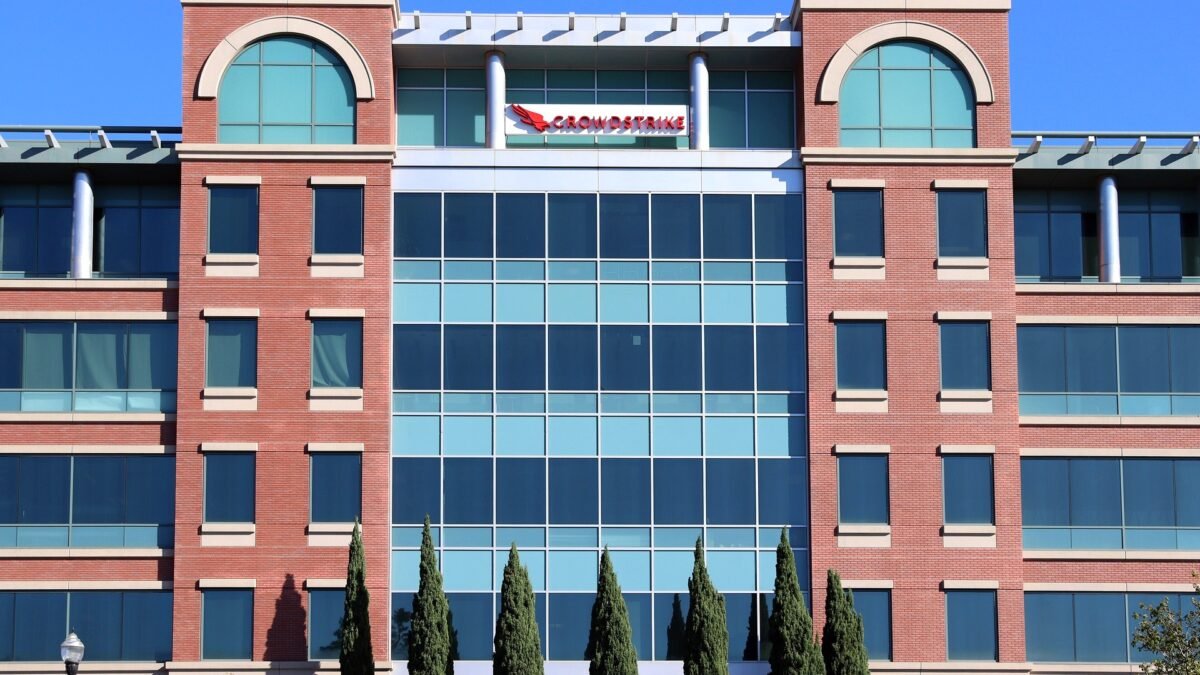
CrowdStrike is in talks to acquire rival cybersecurity company Zscaler in a deal that would create one of the largest pure-play security businesses in the world, according to Bloomberg, in a combination worth about $265 billion at current market values.
Bloomberg first reported the discussions on Friday, 20 November, citing people familiar with the matter, and Reuters confirmed the talks the same evening with its own source. The two companies are discussing a potential combination that could come together soon, according to the reports, but deliberations are continuing and there is no certainty that a transaction will be reached. Neither company has announced a deal, and no purchase price or terms have been disclosed.
Investors reacted at once. Zscaler shares jumped about 17 per cent in after-hours trading on Friday, while CrowdStrike shares fell about 8 per cent, according to Reuters. Some reports put the after-hours move in Zscaler as high as 18 per cent. Palo Alto Networks, the largest pure-play security vendor, slipped more than 3 per cent as investors weighed the prospect of a significantly stronger rival.
At Friday’s regular close, CrowdStrike was valued at about $235 billion, having roughly doubled in value this year, while Zscaler was worth about $32 billion after its shares had fallen by more than a tenth in 2026. Together, the two companies would be worth about $265 billion. Even combined, they would still trail Palo Alto Networks, which was valued at about $282 billion at the close of trading on Friday.
CrowdStrike declined to comment on the reports, according to Bloomberg. Zscaler did not immediately respond to requests for comment, according to CNBC.
The report and the market reaction
The report landed late on a Friday that had already been brutal for technology shares. The Nasdaq composite fell 5.3 per cent on Friday, according to Investor’s Business Daily, as investors sold big technology names in heavy trading, and both the S&P 500 and the Dow Jones Industrial Average entered correction territory. The technology sell-off has been driven by doubts about the returns on the enormous spending on artificial intelligence, and by the shockwaves from the crisis at Nvidia, where the resignation of chief executive Jensen Huang and a reported Securities and Exchange Commission investigation have wiped trillions of dollars from the chipmaker’s value.
Against that backdrop, the CrowdStrike report stood out. Zscaler closed regular trading on Friday at $194.82 a share, according to market data cited in reports of the talks, giving it a market value of about $31.8 billion. In after-hours trading it rose to about $226.68, its highest level since 30 October, according to Bank Info Security. CrowdStrike, by contrast, fell about 8 per cent in after-hours trading, according to Reuters.
The sharp divergence in the two share prices tells its own story about how investors read the report. Zscaler’s shareholders would expect a buyer to pay a premium over the market price, so the prospect of a bid lifts the target’s shares. CrowdStrike’s shareholders, meanwhile, face the prospect of their company paying that premium, most likely largely in its own shares, and taking on the risk of integrating a business almost as large as itself. The 8 per cent fall in CrowdStrike’s shares in after-hours trading was the market’s first verdict on that trade-off.
It is worth remembering what after-hours trading is, and what it is not. Volumes are thin, moves are exaggerated, and a single report can move a price far more than it would in a full session. The real test comes when markets reopen on Monday, when both companies will be watched for any confirmation, denial or silence — and silence, in deals of this kind, is itself a signal. Companies in live talks rarely comment, and both firms have so far stuck to that convention.
What each company brings
The logic of the combination is straightforward, and it is the reason the report has been taken seriously by analysts who cover the sector. CrowdStrike and Zscaler do different jobs, and together they would cover almost the whole of a modern company’s security needs.
CrowdStrike, founded in 2011 and based in Austin, Texas, built its business on protecting the devices themselves — laptops, servers and cloud workloads — through its Falcon platform. Falcon is an endpoint detection and response agent that works deep inside a computer’s operating system, watching for signs of attack and stopping threats before they can spread. It is the product that made CrowdStrike one of the most valuable security companies in the world, and it is also the product behind the company’s darkest day: on 19 July 2024, a faulty content update to the Falcon sensor crashed about 8.5 million Windows systems around the world, according to Microsoft’s estimate, grounding flights, disrupting hospitals and banks, and becoming what has been called the largest IT outage in history. Delta Air Lines, which cancelled about 7,000 flights over five days, sued CrowdStrike, saying the disruption cost it at least $500 million. The case remains in the courts.
Zscaler does something different. Founded in 2007 by Jay Chaudhry and based in San Jose, California, it built its business on securing the traffic that moves between users and the applications they use. Its Zero Trust Exchange is a cloud platform, distributed across more than 150 data centres, that checks every connection between a user, a device and an application — never trusting a connection simply because it comes from inside a company’s network, and always verifying it. The idea, known as zero trust, has become the standard way large companies think about security as their staff work from anywhere and their data lives in the cloud rather than in a single office.
Put the two together and the pitch writes itself: one company that protects the device, the user, the network and the cloud application, sold through a single relationship. That is the platform model that Palo Alto Networks has spent a decade building, and it is the model that enterprise customers increasingly say they want. Large companies are tired of buying dozens of separate security products from dozens of vendors, each with its own console, its own contract and its own gaps. They want fewer vendors, each doing more. Bloomberg’s Jordan Robertson, writing about the talks, described the $244 billion security market as consolidating around exactly that logic, with customers buying from fewer vendors.
The gap the deal would fill for CrowdStrike is specific. CrowdStrike is strong on the endpoint — the device — but it has long lacked a full network security business of its own. Zscaler would fill that gap in a single stroke. Reuters, in its confirmation of the talks, reported that a deal would address one of CrowdStrike’s biggest gaps in network security and help it compete more directly with Palo Alto Networks. Zscaler’s secure access service edge offering, announced in January 2024, gives it a single-vendor product in the same market where Palo Alto Networks sells its Prisma SASE platform.
The two companies are not strangers. They announced a strategic partnership in September 2026, and have been working on a joint integration plan covering shared security signals and applications built on CrowdStrike’s Falcon Foundry platform. A merger would, in effect, turn a partnership into a single company — a familiar pattern in the software industry, where vendors test a relationship before deciding whether to make it permanent.
A sector in the middle of a buying spree
The CrowdStrike talks are the latest in a wave of large deals that has reshaped the cybersecurity industry in the past two years. The benchmark remains Alphabet’s $32 billion acquisition of Wiz, the cloud security company, agreed in March 2025 and closed earlier this year. Cisco paid about $28 billion for Splunk in 2024. Palo Alto Networks bought CyberArk, the identity security company, in a deal announced at about $25 billion. Any purchase of Zscaler, at a market value of about $32 billion before the reports, would sit alongside those deals as one of the largest the sector has ever seen — and the price, if a deal is agreed, would almost certainly be higher than the current market value, since buyers normally pay a premium.
The pace has not slowed. Palo Alto Networks agreed on 18 November to buy Applied Compute, an artificial intelligence infrastructure company, for $4.5 billion. CrowdStrike itself agreed earlier this month to buy two small artificial intelligence security start-ups, Fiddler AI and Dreadnode, in a deal worth $495 million. The scale of the Zscaler talks is of a different order: at more than $30 billion, a purchase would be dozens of times larger than anything CrowdStrike has bought before.
The consolidation has a clear driver. Enterprise security budgets are large but not limitless, and chief information security officers are under pressure to cut the number of vendors they manage. A platform vendor that can sell endpoint protection, network security, identity management and cloud security in one contract has a powerful advantage over a specialist that sells one of those things well. Palo Alto Networks understood this early and has spent years buying its way into each category. Google understood it when it bought Wiz. The CrowdStrike talks suggest that CrowdStrike’s leadership has reached the same conclusion — and that it would rather buy the network security business than build it.
There is also an artificial intelligence angle, and it cuts both ways. Companies are racing to deploy AI agents — software that can act on its own, moving data, calling tools and making decisions without a human in the loop. Securing those agents is becoming a major new market, and it is one that requires control of both the device and the network: an agent is only as secure as the connections it makes. A combined CrowdStrike and Zscaler would be well placed to sell security for the age of AI agents. At the same time, the same AI boom that creates that opportunity has also made investors nervous, and the technology sell-off of the past week is a reminder that the market’s faith in AI spending is no longer unconditional.
The two companies
CrowdStrike was founded in 2011 in Irvine, California, by George Kurtz, Dmitri Alperovitch and Gregg Marston. Kurtz, who remains chief executive, had previously built a security company called Foundstone and served as chief technology officer at McAfee. The company moved its headquarters to Austin, Texas, and listed on the Nasdaq in 2019. Its Falcon platform now serves tens of thousands of customers, including nearly 60 per cent of the Fortune 500, according to the company’s own figures.
The July 2024 outage was the defining crisis of CrowdStrike’s history. A faulty configuration file, known as Channel File 291, caused Falcon sensors on Windows machines to crash, and about 8.5 million devices were affected, according to Microsoft. Within hours, Kurtz had confirmed the cause and a fix had been deployed, but many machines had to be repaired by hand, and the disruption lingered for days. The company’s share price fell by about a third in the eleven days after the outage, wiping out about $25 billion of market value, according to Reuters. Yet CrowdStrike retained nearly all of its customers — renewal rates stayed at about 97 per cent — and its results have set records in each of the last three reported quarters. In its most recent reported quarter, the company recorded $333 million in net new annual recurring revenue, a record, and Kurtz called it the best quarter in the company’s history. The share price has more than doubled in 2026, before the fall that followed the Zscaler report.
Zscaler’s story is quieter but no less remarkable. Chaudhry, who founded the company in 2007 with K. Kailash, had already built and sold three security companies before starting Zscaler. The bet was that enterprise security would move to the cloud — that instead of buying boxes to guard the perimeter of an office network, companies would buy a cloud service that secured every connection. It took years for the market to catch up with the idea, but by the time Zscaler listed on the Nasdaq in 2018, zero trust had become the industry’s direction of travel. The company is headquartered in San Jose, employs about 8,700 people, and its Zero Trust Exchange now processes more than 100 billion transactions a day, according to the company.
Zscaler’s shares, however, have lagged. They have fallen by more than a tenth in 2026, while CrowdStrike’s have roughly doubled, and that gap is part of what makes a deal possible. A buyer with a richly valued currency — its own shares — can offer a price that looks generous against a target whose shares have been weak. Zscaler’s largest investors would have the decisive say: according to Bank Info Security, founder Ajay Mangal controls about 18.2 per cent of the shares, Chaudhry about 16.8 per cent, and Vanguard about 7.1 per cent. Chaudhry, as founder, chairman and chief executive, as well as a large shareholder, would need to be convinced — and any deal would almost certainly need his backing.
The money question
No price has been reported, and the structure of any deal matters as much as the headline number. CrowdStrike ended July with about $5 billion of cash on its balance sheet, according to Bloomberg’s reporting, which is far short of what a purchase of Zscaler would cost. A deal would therefore most likely be paid mostly in CrowdStrike shares, with the company’s stock as the currency — a common arrangement when the buyer is richly valued and the target is large.
That has consequences. Paying in shares dilutes existing CrowdStrike shareholders, and the 8 per cent after-hours fall in its stock suggests that investors are already weighing that cost. It also ties the value of the deal to CrowdStrike’s own share price: if the shares fall further, the offer becomes less attractive to Zscaler’s investors. And it means that the premium — the amount above Zscaler’s current market value that CrowdStrike would pay — will be judged not in cash but in the future performance of the combined company.
For scale, the two companies reported combined revenue of about $2.37 billion in the quarter ended 31 July: $1.47 billion at CrowdStrike and $898.2 million at Zscaler, according to figures cited in reports of the talks. Palo Alto Networks reported $3.44 billion in the quarter ended 31 October, including CyberArk. A combined CrowdStrike and Zscaler would still be smaller than Palo Alto Networks by revenue, even though it would be close by market value — a reminder that the stock market is pricing the future, not the present.
What to watch next
The first test comes on Monday, when markets reopen. Investors will watch whether either company confirms the discussions, denies them, or says nothing at all. A confirmation would send Zscaler’s shares higher again and put the focus on the price. A denial would send them back down. Silence would leave the market guessing — and the guess, for now, is that the talks are real, since two separate news organisations have confirmed them with their own sources.
If a deal is announced, the questions will come thick and fast. What price is CrowdStrike paying, and how much of it is in shares? What happens to Chaudhry, and to Zscaler’s management team? How will the two companies’ products be combined, and how long will that take? Will regulators in Washington look closely at a combination of two of the largest security vendors, at a time when the industry is already consolidating? And will customers — the large companies that buy from both firms — welcome a single supplier, or worry about having fewer choices?
There is also the possibility that the talks fail. Deals at this stage fall apart often: over price, over who runs the combined company, over the structure, or simply because one side gets cold feet. Bloomberg’s sources were careful to say that there is no certainty a transaction will materialise, and Reuters carried the same caution. The market’s reaction — Zscaler up, CrowdStrike down — is a bet that a deal will happen, but it is a bet placed on the basis of two reports, not an announcement.
One other possibility deserves mention. Once a company is reported to be in talks, other bidders sometimes appear. Palo Alto Networks, Google and the large private equity firms all have an interest in the security market, and a bidding contest would push the price higher still. There is no evidence of a rival bid at this stage, but in deals of this size, the first report is rarely the last word.
Analysis: why this deal makes sense — and why it might not
The strategic case for the combination is strong, and it is easy to see why CrowdStrike’s leadership would want it. The security industry has been moving towards platforms for a decade, and the vendors that have moved fastest have been rewarded with the highest valuations. Palo Alto Networks, at about $282 billion, is the proof. CrowdStrike, at about $235 billion, is close behind, but it has a hole in its portfolio where network security should be. Zscaler is the best available way to fill it. The two companies already work together, their products are complementary rather than overlapping, and their combined customer base would be formidable. On paper, it is the kind of deal that textbooks describe as a natural fit.
But natural fits have a habit of disappointing, and the risks here are real. The first is price. Zscaler is not a distressed asset; it is a growing company with a strong product and a founder who does not need to sell. CrowdStrike would have to pay a substantial premium over the current $32 billion market value, and it would have to pay it mostly in its own shares at a moment when its own shares have just fallen 8 per cent on the news. If the premium is too high, the deal destroys value for CrowdStrike’s shareholders even if the strategy is right.
The second risk is execution. Merging two companies of this size is hard in the best of circumstances, and harder still when the two companies have different cultures, different sales motions and different technology stacks. CrowdStrike’s acquisitions so far have been small — the $495 million Fiddler and Dreadnode deal agreed earlier this month is typical. Buying a company worth $32 billion or more is a different exercise entirely, and CrowdStrike has never done anything like it. The integration of Falcon and the Zero Trust Exchange, the merging of two sales forces, the retention of Zscaler’s engineers: each of these is a project in its own right, and they would all have to succeed at once.
The third risk is the market itself. The talks were reported on the worst day for technology shares in years, in a week when the Nasdaq gave up its gains for the year and the S&P 500 slipped into correction. If the sell-off continues, the arithmetic of a share-based deal changes daily, and either side could decide that the moment has passed. Deals announced in a falling market are deals announced under pressure, and pressure is a poor adviser.
There is also a question that customers will ask, and that deserves an honest answer. Consolidation is good for vendors — it gives them more products to sell to each customer — but it is not always good for buyers. Fewer vendors means fewer choices, and fewer choices can mean higher prices and slower innovation. The security industry has seen this pattern before: a wave of acquisitions, a smaller number of large platforms, and then a new generation of specialists emerging to challenge them. The platform vendors of today were the disruptive specialists of a decade ago. Zscaler itself was one of them.
Why it matters
For the cybersecurity industry, the talks are a signal that the consolidation wave has reached its logical conclusion: the largest independent vendors are now buying each other. If CrowdStrike buys Zscaler, the industry will be dominated by a handful of platforms — Palo Alto Networks, the combined CrowdStrike-Zscaler, Google with Wiz, and Cisco with Splunk. That is a very different industry from the one that existed five years ago, when dozens of specialists competed for each slice of the security budget.
For customers, the change is double-edged. A single vendor that protects the device, the network and the cloud is simpler to manage, and simplicity has real value when security teams are stretched thin. But simplicity has a cost, and it is paid in dependence. A company that buys its endpoint protection and its network security from the same supplier has put a large part of its defences in one pair of hands. The July 2024 outage is a reminder of what can happen when a single supplier fails: 8.5 million machines, grounded flights, cancelled operations. The lesson of that day was not that CrowdStrike is a bad company — its recovery since then has been remarkable — but that concentration carries risk, and the industry should not forget it in the excitement of a large deal.
For investors, the talks are a test of whether the platform logic still holds in a market that has turned sceptical about technology. CrowdStrike’s shares have doubled this year on the strength of that logic; Zscaler’s have fallen. A deal at the right price would vindicate the logic. A deal at the wrong price, or a failed negotiation, would raise questions about it. Monday’s trading will be the first indication of which way the market leans.
And for the wider technology market, the talks are a reminder that even in a week of heavy selling, the industry’s biggest companies are still thinking in decades, not quarters. A $265 billion combination is not a trade. It is a bet on what enterprise security will look like in ten years’ time — fewer vendors, bigger platforms, and security that follows the user rather than the office. Whether CrowdStrike and Zscaler are the companies to make that bet together is a question that only the two boardrooms can answer. The rest of us will find out soon enough.
Sources
- Reuters, “CrowdStrike in talks to acquire Zscaler, sources say”, via SRN News
- Bloomberg, “CrowdStrike’s Talks With Zscaler Show AI-Led Cyber Consolidation”
- Dealroom, “CrowdStrike in talks to buy Zscaler in what would be one of the largest cybersecurity deals ever”
- Bank Info Security, “Why CrowdStrike Is Eyeing a Buy of Zero Trust Titan Zscaler”

About the Author — Abdul Mannan
Related Articles
Intuit Sells Mailchimp to Bending Spoons for $3.68 Billion, Less Than a Third of Its 2021 Price
Intuit has agreed to sell Mailchimp to Bending Spoons for about $3.68 billion, less than a third of…

GTA VI Makes $3.79 Billion in a Single Day, the Biggest Entertainment Launch in History
Rockstar Games says Grand Theft Auto VI took $3.79 billion in its first 24 hours, beating every film,…

Nasdaq Wipes Out Its 2026 Gains as Friday Rout Drags S&P 500 and Dow Into Correction
Wall Street's Friday rout sent the Nasdaq down 5.3 per cent and pushed the S&P 500 and the…