
GTA VI Makes $3.79 Billion in a Single Day, the Biggest Entertainment Launch in History

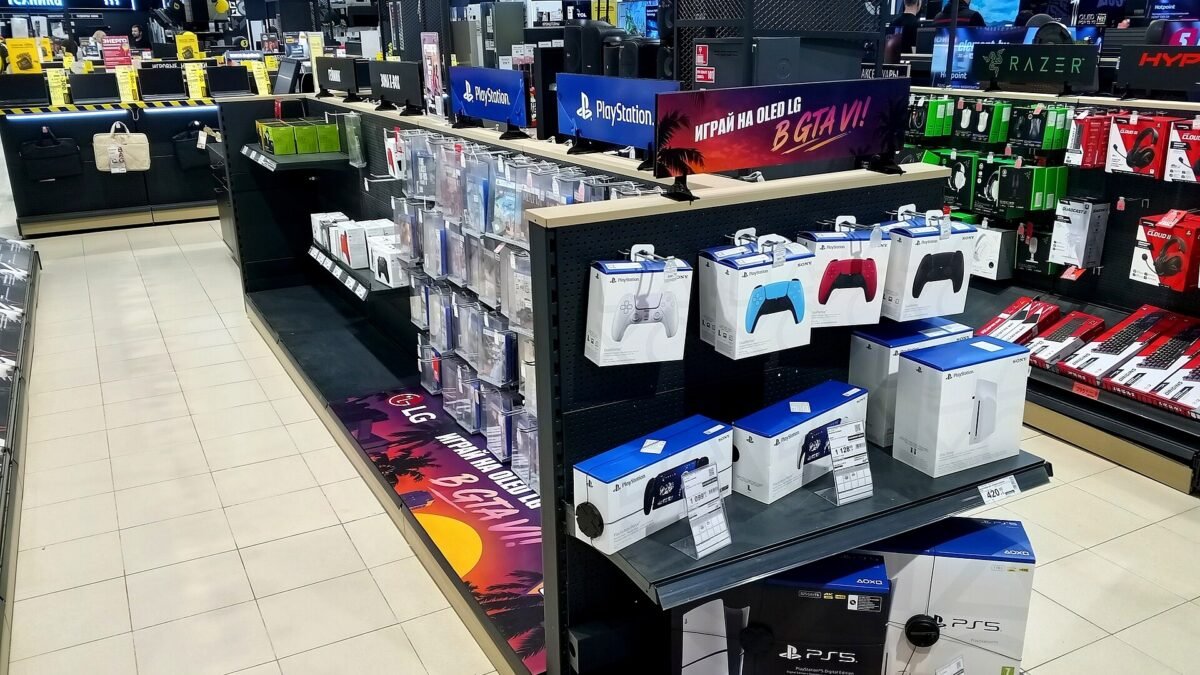
Grand Theft Auto VI made $3.79 billion in its first 24 hours on sale, Rockstar Games and its parent company Take-Two Interactive announced on Friday, making it the biggest entertainment launch in history across any medium. No film, no music tour and no video game before it has ever taken in that much money in a single day.
The figure, which the companies described as estimated retail sales through the end of the game’s first full day of availability, was released a day after the game launched on Thursday 19 November for PlayStation 5 and Xbox Series X|S. It instantly redraws the map of what a single entertainment release can be worth, and it does so in a week when the rest of the market was falling sharply.
Rockstar said the game had already sold 32.5 million copies before release, a pre-order record across all platforms, according to Reuters. Pre-orders had been open since June. The $3.79 billion total counts what players paid at stores and on digital storefronts around the world through the end of launch day, based on the company’s own estimate.
“We are incredibly humbled by the response from players around the world,” Sam Houser, the president and founder of Rockstar Games, said in a statement, calling the release the beginning of a “new chapter” for the studio, according to Reuters.
A record measured against Hollywood
The scale of the number is best understood through the comparisons the industry itself reached for. Avengers: Endgame, the highest-grossing film of all time at the worldwide box office, took about $2.94 billion across its entire theatrical run, according to the media analytics firm Rentrak, as reported by Reuters. Grand Theft Auto VI passed that lifetime total in a single day. Taylor Swift’s Eras tour, the biggest concert tour ever staged, generated roughly $2 billion in sales over its whole run, according to CNN. The game cleared that figure before most of the world had finished its first evening in Vice City.
The previous record holder in games was the game’s own predecessor. Grand Theft Auto V, released in 2013, made an estimated $800 million in its first 24 hours, a figure that stood as the benchmark for 13 years, according to Reuters. Its successor made nearly five times as much on day one. Barron’s, which put the comparison at $800 million for the earlier game, noted that the new total was also well above the $2.36 billion in sales that the research firm Sensor Tower had estimated before release.
The gap between the estimate and the reality is itself part of the story. Sensor Tower had put pre-release revenue at $2.36 billion, and had estimated about 24.6 million copies sold, according to reports carried on Friday. Rockstar’s official figure of 32.5 million pre-ordered units and $3.79 billion in first-day sales blew past both numbers. Analysts at Morgan Stanley had estimated that Take-Two would sell 30 million units by the end of this calendar year; the game passed that mark in pre-orders alone. Analysts at Bank of America Securities thought the company would need $1.9 billion in sales through the first weekend to satisfy investors, according to Barron’s. Take-Two doubled that number before the weekend had even begun.
The critical reception matched the commercial one. The PlayStation 5 version scored 99 out of 100 on Metacritic, the review-aggregation site, making it the highest-rated game in the site’s history, according to Barron’s and the games press. Fans collectively spent more than 132 million hours watching the game on Twitch, YouTube and Kick on its launch day, according to the analytics platform Stream Charts, as reported by CNN, shattering live-streaming records on all three platforms.
Thirteen years, two delays and a billion-dollar bet
The launch ends one of the longest waits in entertainment. Grand Theft Auto V was released in September 2013, and its successor was not formally revealed until Rockstar released the first trailer in December 2023, promising a 2025 release. That date slipped twice. In May 2025 Rockstar delayed the game to 26 May 2026, saying it needed more time to deliver the quality players expected. In November 2025 it delayed the game a second time, to 19 November 2026, again citing the polish players expected. Pre-orders opened in June 2026, and the game finally arrived 13 years after its predecessor.
The wait was expensive. Take-Two has spent an estimated $1 billion or more on production, according to Reuters, making Grand Theft Auto VI one of the most expensive entertainment projects ever made, in any medium. That figure covers more than a decade of development at Rockstar North and its sister studios, building a fictionalised version of modern-day Florida — the state of Leonida, with the neon streets of Vice City, a fictional depiction of Miami, at its centre — and a game that follows two protagonists, Lucia and Jason, caught in the middle of a criminal conspiracy.
Rockstar had been careful not to claim victory in advance. On Take-Two’s earnings call earlier this month, chief executive Strauss Zelnick said the company was not ready to declare success, according to Reuters. “The title is so widely anticipated, consumers appear very, very excited, and all the press so far has been universally positive, but we still aren’t ready to declare victory,” he said. “We tend to avoid claiming success before it occurs.” The first-day numbers have now made that caution unnecessary.
The marketing campaign around the launch was itself a study in how to build anticipation over years rather than weeks. A longer promotional trailer, “GTA VI: An Extended Look”, was shown through Netflix in August and helped drive a sixfold jump in pre-orders, according to Sensor Tower estimates cited by Reuters. In Miami, the city on which Vice City is based, the local NBA team celebrated the release with a Vice City-themed match. Over the launch weekend, the company is hosting “GTA VI: The Festival”, a music show with a line-up including the Grammy-winning rapper Cardi B, the hip-hop producer Metro Boomin and the rapper Travis Scott, according to Reuters.
Fans, for their part, treated the launch as an event rather than a purchase. Gamers around the world took paid time off work to play, and some signed light-hearted “contracts” with their partners to secure uninterrupted game time, according to Reuters.
The price gamble that paid off
One of the most closely watched decisions in the launch was the price. The standard edition of the game sells for $80, and the Ultimate Edition, which includes extra cars, clothing and customisation options, sells for $100. More than 80 per cent of those who pre-ordered chose the pricier $100 edition, according to Sensor Tower, as reported by CNN. That choice alone added hundreds of millions of dollars to the first-day total, and it answers a question the whole industry has been asking: whether players will pay $100 for a game.
The answer, on this evidence, is yes — when the game is this one. The $100 price point had been treated as a test of the ceiling for blockbuster games, and publishers across the industry were watching to see whether it would hold. The fact that four out of five early buyers chose the more expensive edition suggests that, for a release of this scale, the ceiling is higher than the industry assumed. It also means the $3.79 billion figure is not simply a function of how many copies were sold, but of how much each buyer was willing to spend.
That matters because the economics of blockbuster games have been under strain for years. Development budgets have climbed into the hundreds of millions of dollars, and in Grand Theft Auto VI’s case past a billion, while the standard $60 or $70 price point has barely moved. The success of the $100 edition gives every major publisher a reason to reconsider its own pricing, and gives Take-Two a template it can use again.
A rare bright spot on a brutal day for markets
The announcement landed on a Friday when the wider market was in retreat. Wall Street had just suffered its worst week since April 2025, with the Nasdaq wiping out its gains for the year and the S&P 500 and the Dow Jones Industrial Average sliding into correction territory. Technology stocks were among the hardest hit, as investors questioned the valuations built on the artificial-intelligence boom.
Take-Two’s shares, however, went the other way. The stock bounced 2.4 per cent in afternoon trading on Friday after spending much of the day in the red, according to Barron’s, bucking the trend of a technology-sector sell-off. The move was modest in percentage terms, but it stood out on a day when the market was punishing almost everything else.
The context is that Take-Two’s shares had fallen 18 per cent this year before the launch, according to Barron’s, despite the extraordinary consumer interest in the game. Barron’s had written earlier this month that investors were not properly pricing in how successful the launch would be for the company. The first-day sales figure is the strongest possible evidence that the scepticism was misplaced — although a single day of trading is not a verdict on the stock, and the shares ended Friday only marginally higher, according to Reuters.
Take-Two has forecast net bookings of about $8 billion to $8.2 billion for the fiscal year ending in March 2027, driven largely by the game, according to the company’s guidance. If the first day is any guide, that forecast may prove conservative. But the company’s own history counsels caution: the real test of a Grand Theft Auto game has never been its first weekend. It has been the years that follow.
What the record does not settle yet
For all the superlatives, the $3.79 billion figure answers only the first question about Grand Theft Auto VI. The bigger questions are still open, and investors have been waiting to hear from Take-Two about two of them in particular: a PC version of the game, and the launch of the online multiplayer mode that turns a single purchase into years of recurring spending.
The online component matters more than the launch itself for the company’s long-term finances. Grand Theft Auto Online, the multiplayer mode of the previous game, generated billions of dollars over more than a decade through in-game purchases, and it is the model the industry expects the new game to follow. Some industry analysts expect the PC launch and the online mode to arrive in 2027, according to Reuters. The brokerage TD Cowen named Take-Two one of its “Best Ideas” for 2027, with its analyst Doug Creutz upbeat about the company’s prospects when the game goes online. “The potential ceiling for GTA VI’s long-term recurrent consumer spending performance is very high,” Creutz said, adding that “‘when’ and ‘how big’ the next GTA Online will be is the most important question for the stock, more so than GTA VI unit sales,” according to Reuters.
That framing is a useful corrective to the first-day euphoria. A record launch is a statement about demand. A successful online mode is a statement about durability. The first is now proven. The second will take a year or more to judge, and it is the second that will decide whether the $1 billion production budget was an investment or an extravagance.
There is also a question about what the game means for the rest of the industry. Grand Theft Auto VI is expected to be a major driver of video-game spending heading into the holiday season, according to CNN, with the only other major release in the autumn window being Nintendo’s remake of The Legend of Zelda: Ocarina of Time. Rival publishers have spent the year clearing the calendar around the launch, and the scale of the first-day numbers will vindicate that caution — and may also deepen it. When one game takes $3.79 billion in a day, the space left for everything else shrinks.
Analysis: Why It Matters
The entertainment crown has changed hands
For a century, the measure of a blockbuster was a film’s opening weekend. The record Grand Theft Auto VI has just set is not a games record. It is an entertainment record, and it was set by a product that Hollywood’s biggest studios could not match with their biggest films. Avengers: Endgame needed its entire theatrical run, plus a re-release, to reach about $2.9 billion. A video game cleared that total in 24 hours.
That is not a quirk of pricing, although the $80 and $100 price tags help. It is a statement about where the audience is. A generation has grown up with games as its primary entertainment, and the biggest games now command the kind of cultural attention that used to belong exclusively to cinema. The 132 million hours watched on streaming platforms on launch day, the paid time off, the partner “contracts”, the festival in Miami — these are the behaviours of a mass cultural event, not a niche hobby. The film industry has spent years wondering where its audience went. Part of the answer arrived on Thursday.
The $100 game is now a fact, not a theory
The most consequential number in the launch may not be $3.79 billion. It may be 80 per cent — the share of pre-orders that chose the $100 Ultimate Edition over the $80 standard edition. Publishers have argued for years that development costs demand higher prices, and players have argued just as firmly that they will not pay them. This launch settles the argument, at least for games of this scale: when the product justifies it, players will pay $100, and they will do so in overwhelming numbers.
That will echo through the industry. Every major publisher with a blockbuster in development now has evidence that a $100 edition can sell at volume, and the pressure to follow suit will be intense. The risk is that publishers learn the wrong lesson — that price is a lever to pull regardless of quality. The correct lesson is narrower: Grand Theft Auto VI could charge $100 because 13 years of anticipation, a 99 on Metacritic and a decade of trust had been banked in advance. A game without that inheritance that tries the same price will find the ceiling very quickly.
Take-Two’s billion-dollar gamble has been vindicated — so far
An estimated $1 billion or more in production costs, more than a decade in development, two public delays and a share price down 18 per cent this year: the run-up to launch looked, from the outside, like a company betting its future on a single title. In a sense it was. Take-Two’s forecast of $8 billion to $8.2 billion in net bookings for the fiscal year rests largely on this game, and the company’s valuation rests on the forecast.
The first day repays the bet. But the structure of the gamble has not changed: a company that spends a billion dollars on one product is exposed in a way that a company with ten $100 million products is not. The launch vindicates the decision to keep spending and to keep delaying rather than ship early. It does not remove the concentration of risk. That is the tension at the heart of the modern blockbuster economy, and Grand Theft Auto VI is now its purest example.
The record is a beginning, not a verdict
It is worth being precise about what $3.79 billion proves and what it does not. It proves demand, and it proves it beyond any reasonable doubt. It does not prove longevity, and longevity is where the money is. The previous game’s commercial life stretched over 13 years, across three console generations, sustained by its online mode. Whether this game matches that depends on decisions Take-Two has not yet announced: when the PC version arrives, when the online mode launches, and how both are handled.
The analysts are right to focus on those questions. A launch is a moment. A franchise is a decade. The $3.79 billion is the loudest possible opening note, but the performance that matters is the one that follows it, and it will be judged over years, not days.
The industry will feel this for years
Finally, the launch will reshape the calendar. Publishers cleared the autumn around Grand Theft Auto VI, and the numbers show why: a single game absorbed the attention and the spending of tens of millions of players in a single day. The holiday season now belongs, overwhelmingly, to one title. Smaller games will struggle to be heard, and rival blockbusters will be measured against a standard that may be unrepeatable.
There is a cost to that concentration, and it is worth naming. An industry in which one release can take $3.79 billion in a day is an industry in which the gap between the biggest and the rest keeps widening. The success of Grand Theft Auto VI is good news for Take-Two, good news for Rockstar, and good news for the players who waited 13 years. Whether it is good news for the dozens of studios trying to launch anything else this year is a different question, and the answer is probably no.
What to Watch Next
- Weekend sales: whether the momentum holds through the first weekend, and whether Take-Two releases a second figure. Bank of America’s $1.9 billion bar for the weekend has already been cleared; the new question is by how much.
- Take-Two’s share price: whether Friday’s 2.4 per cent afternoon bounce builds into a sustained recovery, or fades once the launch-day excitement passes. The shares were down 18 per cent this year before launch.
- The PC version: when Take-Two announces a PC release date. Analysts expect it in 2027, and it would open the game to a large new audience.
- GTA Online’s successor: when the online multiplayer mode launches, and how it is monetised. TD Cowen calls this the most important question for the stock.
- The holiday season: whether Grand Theft Auto VI lifts overall video-game spending, or simply absorbs spending that would have gone to other titles.
- Rival pricing: whether other major publishers follow Take-Two to a $100 premium edition, and whether players accept it from games without Grand Theft Auto’s record.
- The next update from Rockstar: whether the studio confirms player numbers, and whether it addresses the launch-weekend performance and any technical issues reported by players.
Sources
- Reuters — “GTA VI books record $3.79 billion in sales on first day of launch”
- CNN — “‘GTA VI’ sales blew past $3 billion in its first day, making it one of the biggest entertainment launches ever”
- Barron’s — “GTA VI Sales Hit $3.8 Billion In One Day. Take-Two Rises.”
- Video Games Chronicle — “GTA 6 earns $3.79 billion in one day as ‘the biggest entertainment launch in history’”

About the Author — Abdul Mannan
Related Articles
Intuit Sells Mailchimp to Bending Spoons for $3.68 Billion, Less Than a Third of Its 2021 Price
Intuit has agreed to sell Mailchimp to Bending Spoons for about $3.68 billion, less than a third of…

Nasdaq Wipes Out Its 2026 Gains as Friday Rout Drags S&P 500 and Dow Into Correction
Wall Street's Friday rout sent the Nasdaq down 5.3 per cent and pushed the S&P 500 and the…
Barclays Circles Metro Bank as £1.2 Billion Takeover Interest Emerges a Week After Challenger Put Itself Up for Sale
Barclays is among the early suitors circling Metro Bank after the challenger lender put itself up for sale,…