
Attacks on Shipping in the Strait of Hormuz Hit Highest Level Since Iran War Began

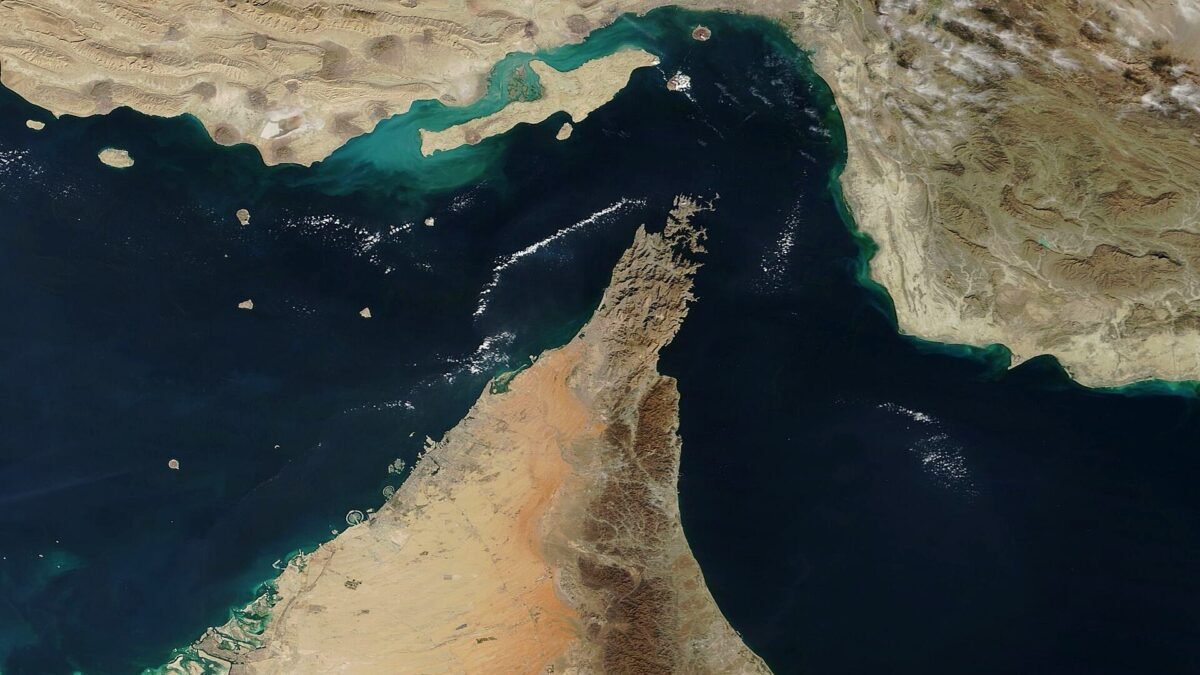
Attacks on shipping in and around the Strait of Hormuz have reached their highest level since the war between Iran and the United States began in late February, according to a CNN analysis of maritime data published on Sunday, with three more tankers struck by projectiles since Friday and Tehran’s oil revenues now sliding towards zero under the American naval blockade.
The figures behind the surge are stark. In October, the number of attacks reported to the Royal Navy-affiliated United Kingdom Maritime Trade Operations centre, known as UKMTO, exceeded 30 for the first time since the conflict began, according to CNN’s analysis of the centre’s data. As of Sunday, at least 22 attacks had already been reported in November, the second-highest monthly figure of the war. Before October, the monthly average stood at around 10. Data from the International Maritime Organization points in the same direction, also identifying October as the year so far with the highest number of confirmed incidents.
The latest strikes came in a burst over the weekend. Fire erupted aboard the Captain Leon, a Marshall Islands-flagged chemical and oil tanker, after it was struck at the bow at 3 p.m. UTC on Friday, according to the maritime risk management company Marisks, cited by CNN. All of its crew were reported safe. Less than a day later, the Torkel, a Hong Kong-flagged crude oil tanker, caught fire after being hit in the stern at 5 a.m. UTC on Saturday. Less than an hour after that, the Arina, also Hong Kong-flagged, was struck in the engine room by a missile.
UKMTO, the British maritime agency that monitors threats to commercial shipping, confirmed the two Saturday incidents in warnings issued on 21 November. Its first warning recorded a strike at 0500 UTC on an outbound tanker about 11 nautical miles north of Khasab, a port town on Oman’s Musandam Peninsula, hitting the vessel on its stern. Its second warning, timed 0550 UTC, recorded another outbound tanker struck in its engine room about 17 nautical miles east of the same port. Both warnings said no casualties had been reported at the time, and the environmental impact remained unconfirmed. UKMTO advised vessels transiting the area to exercise caution and to report any suspicious activity.
The agency later confirmed that the Torkel was burning at anchor after the strike, according to a navigational warning, while specialist reporting identified the two vessels as the Torkel and the Arina. The two attacks, less than an hour apart and on the same outbound route, were the latest in a sequence that has now stretched to three vessels in about 15 hours.
Marisks, which tracked the three weekend attacks, did not confirm who was behind them, although it said Iranian involvement was assessed as likely. The company said the attacks demonstrated a continued critical threat to commercial shipping in the region, particularly through the southern corridor near Oman’s coastline, a route Iran strongly opposes.
Iran’s rival account: mines, not missiles
Tehran offered a very different explanation for what was happening in the strait. Iran’s army said on Saturday that a ship had caught fire after striking a naval mine in a restricted area east of the strait, according to a statement carried by Iranian state television. The vessel, it said, had switched off its identification and navigation systems and entered the zone in defiance of issued warnings and maritime transit regulations.
On Sunday, Iran’s navy went further, saying two oil tankers had caught fire after striking naval mines in a prohibited area east of the Strait of Hormuz and north of Ghanam Island, before noon that day. The tankers had entered the prohibited zone despite previous warnings, the navy said in a statement reported by Press TV. Iran’s Revolutionary Guards Corps later said a sixth tanker had been struck in the strait since Sunday, with the corps saying half a dozen tankers had now been hit either by mines or by projectiles.
The Iranian account could not be independently verified, and it was unclear whether the vessels Iran described were the same ones reported by UKMTO. The United States military recently said it had cleared all mines from the main routes through the waterway, and US Central Command has rejected claims that the Iranian attacks were successful. The Pentagon has not formally commented on the latest strikes.
The pattern is by now familiar. In recent weeks, Tehran has issued multiple announcements saying ships have caught fire in the strait, often claiming they struck mines, while British monitors have reported a separate series of projectile strikes on tankers. Al Jazeera’s correspondent in Tehran, Resul Serdar, said incidents involving tankers had increased sharply over the past week, citing statements issued by Iran’s armed forces that about 25 incidents had been reported since the previous Saturday, an average of roughly three a day.
The fog around each incident is itself part of the story. No vessel names were given in the Iranian statements, no flags or owners were identified, and no casualty figures were provided. UKMTO’s warnings likewise name neither the vessels nor the flag states, and do not identify the projectile type or the launch platform. What is not in dispute is the direction of travel: the waterway is being hit more often, and more heavily, than at any point since the war began.
The blockade squeeze
The escalation at sea is unfolding against a tightening economic siege. The United States has now maintained its naval blockade of Iranian ports for 130 consecutive days, according to the US military, which said on Saturday that the operation was preventing the Revolutionary Guards from exporting oil. Washington imposed the blockade in response to Iran’s restrictions on the strait, and its navy has been escorting tankers through the waterway.
The pressure on Tehran’s finances is now severe. According to the maritime data tracking service Kpler, cited by CNN, Iranian oil sitting on water outside the blockade zone has hit zero, as the last cargoes discharged in China earlier this month. Kpler reported in late October that Iran’s oil revenues could consequently drop to zero by mid-December.
As global oil prices fall and Iran’s domestic crude revenues come under increasing strain, Tehran has been stepping up attacks, according to CNN, with experts saying the country is losing its leverage over the waterway and could escalate further in an attempt to force concessions from Washington. The International Energy Agency attributes the recent decline in oil prices to a recovery in Gulf exports. Prices also fell after the US midterm results, as concerns over fresh US military action in the Middle East subsided.
Against that backdrop, Iran has been preparing a dramatic test of the blockade. Satellite images and ship-tracking data published in recent days showed more than 14 oil tankers gathered around Kharg Island, a key Iranian export terminal, apparently readying a convoy to challenge the American naval line. The prospect of a breakout attempt has dominated speculation about the next phase of the confrontation.
One supposed breakout, however, turned out not to exist at all. MarineTraffic data appeared to show an Iranian tanker called Khat-Shekan sailing through the Strait of Hormuz, but the tanker-tracking site TankerTrackers said the vessel was a spoof and did not exist. All of the data supplementing that AIS transmission was wrong, the site said in a post on social media, adding that there was nothing on satellite imagery to corroborate the reported movements. The episode was a reminder of how much of this war is now fought in the open, on tracking screens and social media, where a phantom ship can briefly look like a breakthrough.
Diplomacy continues in the background
Even as the attacks intensified, diplomacy did not stop. A Qatari delegation visited Tehran on Saturday and held two hours of talks, according to Iran’s deputy foreign minister Kazem Gharibabadi, cited by The Times of Israel. Qatar has been acting as a mediator between Tehran and Washington, and the visit came as both sides continued to exchange messages through intermediaries.
Gharibabadi also told Iranian media on Saturday that the US blockade of Iranian ports was an act of war, and that Tehran would take any necessary measures to break what he called the economic siege. The language underlined how far apart the two sides remain, even as the talking continues.
President Donald Trump, for his part, said this month that the United States did not need a deal with Tehran, and ordered Vice President JD Vance to turn his focus elsewhere. “We don’t need a deal with Iran. Those days have long since passed!” Mr Trump posted on Truth Social. “We’ve got their money, Hundreds of Billions of Dollars, and we’ve got their Strait!” He later indicated that he would not hesitate to resume military strikes in Iran if necessary.
In Washington, the politics of the war are also shifting. The incoming House Speaker, Hakeem Jeffries, has vowed to push early to end the Iran war, according to Middle East Eye, after Democrats secured a large House majority in the midterm elections. The US Senate rejected a bid to end the war in a 51-48 vote on 20 November, a result that handed Mr Trump a symbolic victory after the midterm rebuke, but the pressure for a settlement is growing on both sides of the American political divide.
The war itself began in late February, when the United States and Israel attacked Iran. Since then, the Strait of Hormuz, through which a fifth of the world’s oil passed before the war, has become a heavily contested frontier. Iran began trying to halt traffic in the wake of the attacks, and in July it announced the renewed closure of the strait after the United States resumed military strikes against Iranian targets. Commercial traffic through the channel remains at a reduced level compared with the 2025 baseline, according to CNN, although Gulf producers have found ways of getting ships through.
The human cost of the maritime campaign has also been mounting. Earlier in the week, the United Arab Emirates national oil company, ADNOC, said one of its vessels had come under attack while transiting the strait on the evening of 17 November. Eleven crew members were injured and were receiving treatment, while a search continued for one missing crew member, according to Anadolu Agency. Iran also claimed during the week to have shot down a US drone over Qeshm Island in the strait, according to state television cited by The Times of Israel, a claim the US military has disputed.
Analysis: Why It Matters
The numbers tell the story more plainly than any single incident. Ten attacks a month was the norm for most of the war. Then came more than 30 in October, and at least 22 more in the first three weeks of November. Whatever is happening in the Strait of Hormuz, it is not a steady state. It is an escalation, and it is accelerating.
Leverage is slipping away from Tehran
The most important fact in this story may not be the attacks at all, but the reason behind them. Iran’s oil revenues are collapsing. Kpler’s finding that Iranian oil on water outside the blockade zone has hit zero is a measure of how completely the American blockade has choked off Tehran’s main source of income. A country that cannot sell its oil cannot fund a war indefinitely, and cannot fund the patronage networks that hold its system together. The attacks on shipping are, in that light, best understood as the action of a government whose leverage is draining away and which is reaching for the one lever it still has: the ability to make the world’s most important oil waterway dangerous. As Hamidreza Azizi, a senior Iran analyst at the International Crisis Group, told CNN: “Markets appear to be increasingly assuming that a return to full-scale war is unlikely and that oil supplies will gradually recover. But that assumption could change quickly if Iran decides to intensify the confrontation.”
The southern corridor is the new front line
The geography of the latest attacks matters. The three tankers struck since Friday were all hit on the outbound leg, in the southern corridor near Oman’s coast, the route shipping has increasingly used to stay in Omani waters and away from Iranian guns. That Iran, or forces acting with its approval, can now strike vessels there, within sight of the Musandam Peninsula, shows that the corridor is no longer the relative sanctuary it was. The two Saturday strikes, 50 minutes apart and on consecutive vessels in the same shipping lane, suggest either a coordinated effort or an attacker confident enough to strike twice in quick succession. Either way, the message to shipowners is the same: there is no safe lane through the strait at the moment.
The fog is a weapon in itself
Every incident in this campaign now arrives with two competing stories: a projectile strike reported by British monitors, and a mine strike claimed by Tehran. The truth of each incident is often impossible to establish, because no independent observer is present, the vessels are rarely named, and the evidence is fragmentary. That ambiguity serves Iran’s purposes. A mine, if that is what it is, needs no attribution and no apology. A claim of a mine, even if unverified, plants doubt about the safety of the waterway just as effectively as a confirmed strike. And the spoof tanker episode shows that the information space around the strait is now contested too, with false tracks and phantom vessels adding to the confusion. For insurers, shipowners and oil traders, the practical effect is the same whether the cause is a mine or a missile: the strait is dangerous, and the danger is rising.
The market’s calm is conditional
Oil prices have fallen through this escalation, which looks, on the surface, like a paradox. The International Energy Agency’s explanation, that Gulf exports have recovered and that the markets no longer expect a return to full-scale war, is plausible. But it rests on an assumption that could be overturned in a single night. If the Kharg Island convoy sails and is intercepted, if a tanker is sunk rather than damaged, if a crew is killed, or if a strike hits a liquefied natural gas carrier, the calculation changes instantly. The market is pricing in a war that stays contained. The attack figures suggest a war that is not staying contained. That gap between the price of oil and the tempo of attacks is the most dangerous feature of the current moment.
What to watch next
First, the Kharg Island convoy. More than 14 tankers are gathered at Iran’s main export terminal, and whether they sail, and what happens if they do, is now the single most consequential question in the Gulf. Second, the American response. Mr Trump has said he does not need a deal and would not hesitate to strike again, but he has also shown, since the midterms, a reluctance to be drawn back into a full-scale campaign. Third, the Qatari mediation. The two-hour talks in Tehran on Saturday were the latest in a long series of quiet exchanges, and any sign of movement there would matter more than any single tanker strike. Fourth, the casualty count. So far, the weekend’s attacks have produced no reported deaths, but the ADNOC incident earlier in the week left 11 crew injured and one missing. A fatal incident would change the political arithmetic in Washington, London and Tehran alike. And fifth, the numbers themselves. If November ends above October’s record, the escalation will be undeniable, and the question will no longer be whether the war at sea is intensifying, but what, if anything, can stop it.
Sources
- CNN — Iranian attacks in the Strait of Hormuz are at the highest levels since the conflict began
- Malay Mail (AFP) — Two tankers struck in Strait of Hormuz, says maritime agency
- Arab News — Maritime agency says 2 tankers struck in Hormuz, as Iran says ship on fire
- Press TV — Iran Navy: Two violating tankers catch fire after striking naval mines in Strait of Hormuz
- The Iran Post — Tracking site says Iranian tanker reportedly sailing through Strait of Hormuz does not exist

About the Author — Abdul Mannan
Related Articles
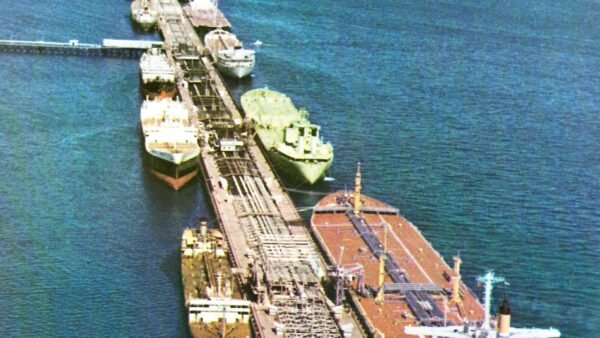
Iran Readies 14-Tanker Convoy to Break the US Naval Blockade in a High-Stakes Gulf Gamble
More than 14 loaded Iranian tankers are staged at Kharg Island in a planned convoy to break the…
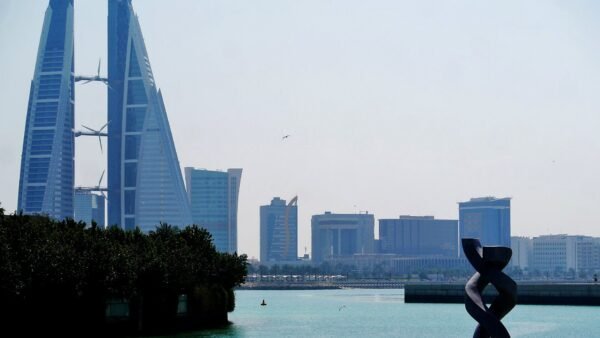
Iran Strikes US Bases in Bahrain as Tehran Claims Two Patriot Radars Destroyed and Manama Reports Civilian Site on Fire
Iran launched a combined missile and drone attack on Bahrain late on Saturday, Tehran claiming it destroyed two…
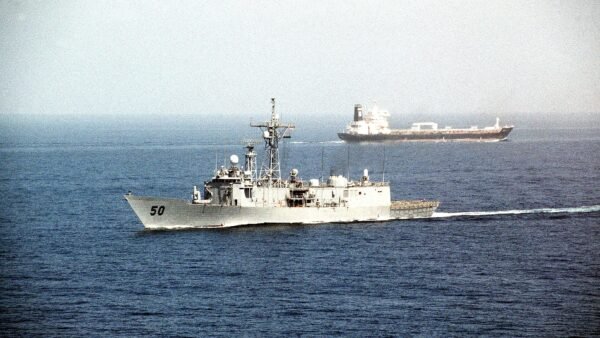
Two More Tanker Strikes Reported Near Strait of Hormuz as Iran Claims Mine Hit and US Drone Downings
Two tankers were hit by unknown projectiles off Oman early on Saturday, hours after a tanker was set…