
Two More Tanker Strikes Reported Near Strait of Hormuz as Iran Claims Mine Hit and US Drone Downings

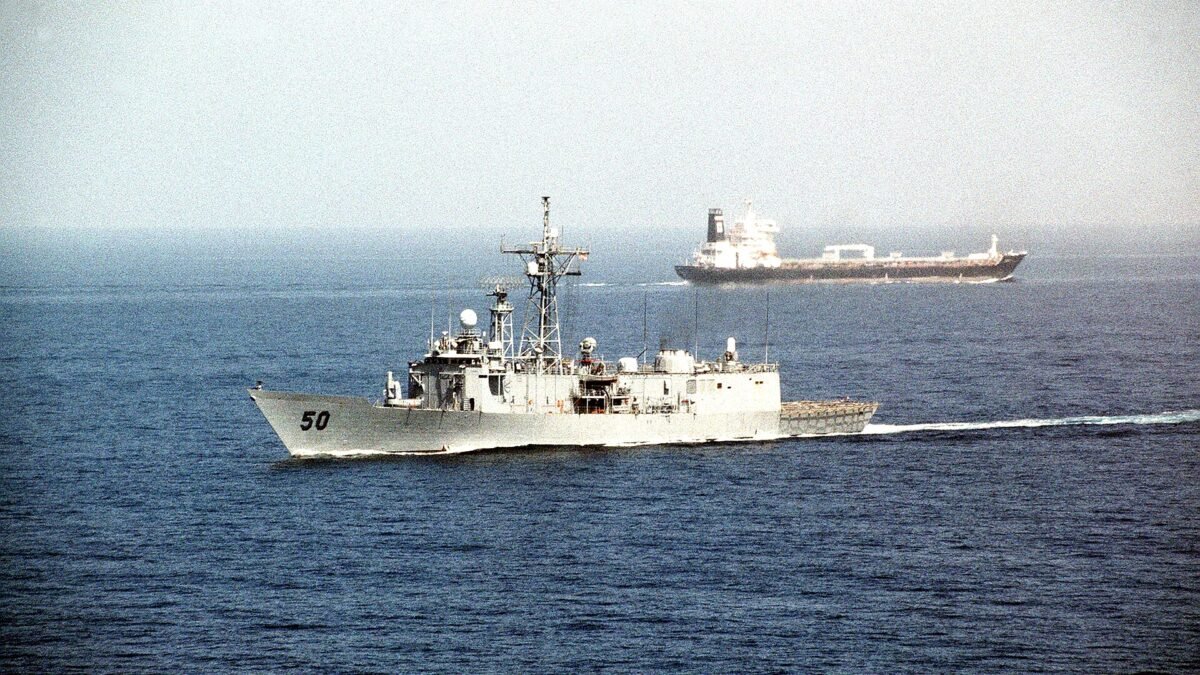
Two more tanker strikes were reported near the Strait of Hormuz early on Saturday, less than a day after a tanker was set on fire in the same waters, as the campaign of attacks on shipping through the world’s most important oil chokepoint accelerated to its most intense level in weeks.
According to the United Kingdom Maritime Trade Operations centre, known as UKMTO, a tanker sailing outbound through the strait was hit on its stern by an unidentified projectile about 11 nautical miles north of Khasab, Oman, at 5 a.m. UTC on Saturday, 21 November. Fifty minutes later, at 5:50 a.m. UTC, a second warning reported another outbound tanker struck in its engine room by an unidentified projectile about 17 nautical miles east of Khasab.
No casualties were reported in either incident, UKMTO said, and the environmental impact of each strike remained unconfirmed. The agency, which is run by the Royal Navy, did not identify either vessel, and it was not immediately clear whether the two warnings involved the same tanker or two different ships, according to Reuters.
UKMTO classified both incidents as attacks. It advised vessels in the area to transit with caution and to report any suspicious activity while the investigations continue. Neither warning named the projectiles, identified who fired them, or attributed the strikes to any party.
The two Saturday reports followed another projectile strike near Khasab on Friday afternoon. In that incident, recorded as UKMTO Warning 214-26, an outbound tanker was hit on its port bow about eight nautical miles north of the Omani port at around 3 p.m. UTC, and a fire broke out on board, according to the British maritime security agency. That attack was the subject of a separate report published earlier on Saturday.
The three incidents in less than 24 hours, all clustered within a few miles of Khasab on Oman’s Musandam Peninsula, mark the sharpest single burst of attacks on commercial shipping in the strait since the current phase of the Iran war began, and they come as diplomatic efforts to end the conflict remain stalled.
Iran says a tanker hit a mine
Iran’s navy said on Saturday that an oil tanker caught fire after hitting a naval mine in a restricted area east of the Strait of Hormuz, according to Reuters. The Iranian account differs from the British reports, which describe unknown projectiles, and Reuters said it could not independently verify the Iranian account or establish whether it referred to any of the incidents reported by UKMTO.
The competing explanations matter. Tehran has imposed restrictions on vessels seeking to pass through the Strait of Hormuz and has attacked ships it says violated those restrictions, as it seeks to assert control over the strategic waterway and exert pressure on Washington, according to Reuters. Iran has repeatedly claimed that tankers struck in the strait hit mines, while British and American maritime monitors have described the same incidents as projectile strikes. The two accounts cannot both be right about every incident, and neither side has produced evidence that settles the question.
Iran’s Islamic Revolutionary Guard Corps has separately claimed that tankers carrying four million barrels of oil hit mines in the strait, a claim carried by Iranian state media and reported by regional outlets. That figure has not been independently verified, and no vessel, owner or cargo has been identified in connection with any of the three weekend incidents.
Khasab lies on Oman’s Musandam Peninsula at the entrance to the Strait of Hormuz, which carried nearly one-fifth of global crude oil supplies before the start of the Iran war, according to Reuters. The narrowest point of the strait is about 33 kilometres wide, and the waters off Khasab are among the most heavily trafficked shipping lanes on earth.
Iran claims it downed two American drones
On the same morning, Iran’s Islamic Revolutionary Guard Corps said it had shot down two American military drones over the Strait of Hormuz, according to Iranian state media and reports carried by Al Jazeera and Reuters. The claims could not be independently verified, and there was no immediate comment from the United States military.
The IRGC said on Saturday that a newly deployed air defence system had intercepted and shot down a US MQ-9 Reaper drone over the strait, according to Iranian state broadcaster IRIB. The force said the incident marked the 58th American MQ-9 brought down by Iranian forces since the start of the war nearly nine months ago.
Later on Saturday, the IRGC also claimed to have brought down an MQ-1 drone over Qeshm Island in the Strait of Hormuz, which it described as the 19th such downing, according to reports carried by Al Jazeera and Reuters.
The announcement, reported by the state-affiliated Mehr News Agency at 8:28 a.m. Tehran time, extends a pattern of near-daily Iranian drone interception claims over and around the strait. It is the fifth such claim in ten days, according to Iranian state media’s own count. Earlier claims in the same period included an MQ-1 over the strait on 16 November, an MQ-1 over Qeshm Island on 17 November, and an MQ-9 over the eastern strait on 18 November. None has been confirmed by the United States.
The claims have come from different branches of Iran’s military apparatus, and the IRGC’s latest statement did not name the air defence system involved, the missile used, or the altitude of the engagement. It described the system only as a newly deployed and advanced air defence platform.
The scale of the claimed drone losses is striking. In August, The Washington Post reported that the United States had lost 45 MQ-9 drones, or about a quarter of its fleet, at a cost of more than 1.3 billion dollars, during combat operations in Iran. Each MQ-9 Reaper is valued at more than 30 million dollars depending on its sensor payload. Whether the true figure is anywhere near the 58 claimed by Tehran, the drone war over the strait has become one of the most expensive and persistent features of the conflict.
The IRGC’s claims also carry a domestic message. Brigadier General Hossein Mohebbi, an IRGC spokesperson, said on Thursday that Iran does not accept a situation of neither war nor peace and has developed at least three new defence systems. The drone announcements, the mine claims and the tanker attacks all point in the same direction: Tehran is signalling that it can still impose costs on the United States and its allies in the Gulf, even as its economy strains under a naval blockade.
A week of escalating attacks on shipping
The weekend strikes are the latest in a sharp escalation in attacks on commercial shipping that has unfolded over the past week. According to Martin Kelly, head of advisory at the maritime security firm EOS Risk Group, his firm had recorded 15 attacks and piracy incidents in the previous seven days, up 50 percent week on week, the highest weekly total since mid-October.
Seven strikes in the Gulf, the Strait of Hormuz and the Gulf of Oman involving six vessels were recorded in the week, according to the same firm. Four tankers were hit within 13 nautical miles of Khasab over three days, including the LPG tanker TARA GAS, which was attacked twice, disabled on 16 November, hit again on 17 November and abandoned. Two seafarers are missing and 13 were injured in the week’s incidents, according to the firm’s figures.
The pattern began earlier in the week. On 17 November, the tanker NAVIG8 MESSI caught fire, leaving one crew member missing and 11 injured, according to the vessel’s operator ADNOC. The ship was taken under tow. Two other tankers were struck in the same period, and the attacks have continued almost daily since.
UKMTO’s weekly overview showed 115 outbound and 148 inbound transits through the strait in the most recent reporting period, down from 139 outbound and 169 inbound the previous week. Traffic through the strait is now running about 65 percent below pre-conflict levels, according to the agency’s figures, as shipowners reroute, delay sailings or demand higher war-risk premiums.
Since the US-Iran ceasefire expired on 17 August, six vessels have been lost, 22 have required assistance and 31 have continued their voyages after being attacked, according to the Joint Maritime Information Center, which rates the threat to shipping in the region as severe.
The violence is not confined to the strait. In the Black Sea, six vessels have been struck since 13 November in what the maritime security firm Ambrey described as an escalating Russian campaign, with the tankers BETUL 8 and GAS HUSKY sinking on 16 and 17 November and 31 seafarers rescued. In the Gulf of Aden, piracy has resurfaced, with an armed skiff reported 430 nautical miles east of Socotra and gunmen firing on a bulk carrier 95 nautical miles south-west of Al Mukalla on Friday, with no injuries or damage reported.
Separately on Saturday, UKMTO reported that a commercial vessel came under fire from armed men off the coast of Hadramout in southern Yemen, according to regional maritime reporting. The incident was reported as the tanker attacks escalated in the Strait of Hormuz, underlining how the threat to shipping now stretches across the entire Arabian Sea corridor.
The blockade and the stalled diplomacy
The attacks on shipping are inseparable from the naval blockade the United States has imposed on Iran’s southern ports, and from the diplomatic deadlock that has left the war with no end in sight.
According to the Institute for the Study of War, Iran is likely to attempt to run the American naval blockade. The Iranian newspaper Hamshahri has claimed that 14 tankers are staged at Kharg Island, Iran’s main oil export terminal, while the blockade prevents substantial crude from moving. The Iranian newspaper Fars urged a public convoy of tankers and retaliation against the blockade on 18 November. The Joint Maritime Information Center said on the same day that the blockade now extends to ship-to-ship transfer vessels, closing off one of the main routes Iran has used to move oil.
Iran’s foreign minister, Abbas Araghchi, outlined his country’s positions on Friday in an interview with state media, citing a seven-day proposal delivered to the United States in September. He said the seven conditions Iran has put forward must be implemented for the Strait of Hormuz to reopen. The conditions include ending the war and lifting both the sanctions and the naval blockade on Iran’s southern ports.
Araghchi said Iran was prepared to negotiate how the conditions should be implemented and that its timetable was flexible. The negotiations would be conditional on the American side taking necessary confidence-building measures, he added. He also ruled out Iran transferring its stockpile of 60 percent enriched uranium abroad, although he said a fair solution could be reached and that a number of proposals by mediators were worth examining.
The top diplomat said the current state of neither war nor peace was undesirable, but that Iran could not accept an agreement that would hand victory to the other side.
At a news conference at the White House on Friday, President Donald Trump told reporters that Tehran wants to make a deal, but not one that is acceptable to him. “We want to make a real deal, not a fake deal that they’ve been doing for 51 years,” he said, according to reports of the briefing. Only last week, Mr Trump had said a deal with Iran on ending the war was unnecessary.
Vice President JD Vance, who had previously blamed the war for the Republicans losing both chambers of Congress in the midterm elections earlier this month, declined at the same news conference to say whether he would have authorised strikes on Iran to prevent it from developing a nuclear weapon. He said the decision to attack Iran in February was Mr Trump’s call, and that his job was to support the president.
Separately on Friday, the US Treasury said it had imposed sanctions on four Iranians it said acted as oil trustees, collecting money from illicit international oil sales for Iran to evade sanctions and the American naval blockade. The Treasury said that in many cases the trustees had kept oil revenues for personal gain.
Among the individuals sanctioned are Mohammad Javad Bavand, a former IRGC intelligence officer, and Majid Taj, the brother of the Iranian Football Federation’s president, Mehdi Taj. The Treasury also imposed sanctions on Mohammad Hossein Servati, the son of IRGC Brigadier General Mohsen Servati, who has held positions in companies that brokered and received shipments of Iranian oil for delivery to independent Chinese teapot refineries. Another sanctioned individual is Mojtaba Arabnejad, the son of the sanctioned Mahan Air chief executive Hamid Arabnejad, who the Treasury said had purchased aircraft parts for the sanctioned airline and overseen oil sales that partly supported it.
The new sanctions place the individuals on the Treasury’s Office of Foreign Assets Control Specially Designated Nationals list, freezing any assets they may have under American jurisdiction and effectively prohibiting dollar transactions with them or entities they control.
The war itself, launched by the United States and Israel on 28 February, has killed thousands of people and severely disrupted shipping, pushing global energy prices higher and spreading to countries across the region. The cost of the war has exceeded 48 billion dollars, according to the Associated Press, and 23 American service members had been killed as of 13 November, according to the same agency. Brent crude traded near 92 dollars a barrel during the week, according to market reports, as the attacks on shipping mounted.
The United States and Iran signed a memorandum of understanding in June, but it was never fully implemented because of disagreements over freedom and security of navigation in the Strait of Hormuz, with attacks resuming periodically since July. The ceasefire that had paused the fighting expired on 17 August, and the war has intensified steadily since.
On Wednesday, Iran fired drones and missiles at the Ali Al Salem air base in Kuwait and launched attacks on Bahrain, according to reports from the region. On Friday, an American missile struck the outskirts of Qeshm city, according to the Iranian news agency Tasnim, with no casualties reported.
The Senate rejected a war-powers resolution on Thursday by 51 votes to 48, refusing to limit the president’s authority to continue the war. The vote came a day after the administration’s allies in Israel pressed for a renewed air campaign against Iran, with reports that Israeli officials had presented intelligence to American counterparts in Washington and Miami and advocated a multi-day campaign.
Mr Trump told the Axios news organisation that he was not rushing into any decision on Iran, saying: “We will see what happens after the beginning of the year.” His secretary of state, Marco Rubio, has said the pressure campaign against Iran can continue in the meantime. Gulf states, Pakistan and Turkey have lobbied to avert a wider war, and the prime minister of Qatar met Mr Trump last week.
Meanwhile, as Republicans grapple with the fallout from the sweeping midterm election losses, Democratic Representatives Yassamin Ansari and Ro Khanna called on Congress to use an upcoming government funding bill to end spending for offensive military operations against Iran. Citing the mounting costs of the war, they issued a video statement urging fellow legislators to reject any funding package that keeps paying for the war, with a deadline looming next month to adopt a budget. Failing to pass a spending bill by 11 December could trigger a government shutdown, a risk that has made some Democrats wary of drawing a red line on the war. Rosa DeLauro and Patty Murray, the top Democrats responsible for appropriations, have said they would prefer to find ways to end the war without risking a shutdown.
Analysis: Why It Matters
The two Saturday strikes matter not because of the damage they caused — no one was killed, no ship is reported sunk, and the environmental impact is still unknown — but because of what they reveal about the direction of a war that has now run for almost nine months with no settlement in sight.
The first point is the geography. All three of the weekend’s incidents happened within a few miles of Khasab, on the same stretch of water, in less than 24 hours. That is not a random pattern. It suggests a deliberate, concentrated effort to make the strait’s eastern exit dangerous, and it suggests that whoever is behind the attacks believes the risk of retaliation is worth the disruption they cause. The fact that the strikes continued the morning after Friday’s attack, in daylight, in one of the most heavily surveilled waterways in the world, is itself a statement.
The second point is the ambiguity. The British reports describe unknown projectiles. Iran describes mines. The two accounts may both be incomplete, or one may be wrong, or both may be describing different incidents. The ambiguity is not an accident of reporting; it is a feature of this phase of the war. Neither side wants a clear, attributable act that would force a decisive response, and both sides benefit from the fog. For Iran, ambiguity allows it to deny responsibility while still demonstrating that it can close the strait. For the United States, ambiguity avoids the pressure to retaliate for a specific attack with a specific response. But ambiguity also makes miscalculation more likely, because each side is guessing at the other’s intentions.
The third point is the economics. Traffic through the strait is already down by about two-thirds from pre-conflict levels, and every new attack raises the cost of the oil that does move. War-risk premiums climb, insurers demand more, shipowners delay or reroute, and the price is ultimately paid by consumers. Brent crude near 92 dollars a barrel is not a crisis on its own, but it is a reminder that the war’s costs are not confined to the Gulf. They show up at petrol stations and in heating bills around the world, and they will show up in the politics of every government that has to explain them.
The fourth point is the drone war. Iran’s claim of 58 downed MQ-9s is unverified, and the true number is almost certainly lower, but even the confirmed American losses are enormous. The Washington Post reported in August that the United States had already lost 45 MQ-9s, a quarter of its fleet, at a cost of more than 1.3 billion dollars. That is a staggering attrition rate for a platform that was supposed to give America uncontested eyes over the battlefield. If Iran can keep shooting down American drones at anything like the rate it claims, the United States will eventually have to choose between accepting the losses, flying fewer missions, or striking the air defences that are shooting the drones down. Each of those choices has costs, and none of them is attractive.
The fifth point is the diplomacy, or rather the absence of it. Mr Araghchi’s seven conditions and Mr Trump’s insistence on a real deal rather than a fake one are not negotiating positions; they are statements of incompatible demands. Iran wants the war ended, the sanctions lifted and the blockade removed before it will reopen the strait. The United States wants Iran to give up its enriched uranium and its regional ambitions before it will lift the pressure. Neither side is prepared to move first, and the memorandum of understanding signed in June collapsed precisely because neither side would take the first step on freedom of navigation. The result is a war that neither side can win and neither side can end.
That is the real significance of the weekend’s strikes. They are not a turning point. They are a continuation, and a warning. The war is settling into a pattern of attrition: attacks on shipping, drone shoot-downs, sanctions, and statements, with no resolution and no exit. The longer that pattern continues, the greater the chance that one of these ambiguous incidents is misread, and that a strike with no casualties becomes a strike with many.
What to watch next is straightforward. First, whether the vessels involved in Saturday’s incidents are identified, and whether any of them is reported damaged or leaking. Second, whether the United States responds to the drone claims, either by confirming a loss or by denying one. Third, whether the Senate’s rejection of the war-powers resolution emboldens the administration to escalate, or whether the Democratic push to defund offensive operations gains momentum as the 11 December funding deadline approaches. Fourth, whether the blockade forces Iran to attempt a public convoy of tankers, as the Fars newspaper has urged, which would test American resolve directly. And fifth, whether the diplomatic channel that produced the June memorandum can be revived, or whether the war will drift into its tenth month with no talks at all.
For now, the strait remains open but dangerous, the war remains unresolved, and the ships keep sailing through waters where, on any given morning, a projectile can arrive from nowhere.
Sources
- Reuters — Tanker hit by unknown projectile near Oman’s Khasab, UKMTO says
- Reuters via Finwire — Iran says it downed US drones over Hormuz as bid to end war remains stalled
- Virginia Times Now — Strait of Hormuz tanker attacks: UKMTO issues warnings
- South24 — Gunmen attack ship off Hadramout as tanker attacks escalate in Strait of Hormuz

About the Author — Abdul Mannan
Related Articles

Tanker Struck and Set on Fire Near Strait of Hormuz as Attacks on Shipping Surge to Highest Level Since October
An outbound tanker caught fire after being struck by an unknown projectile eight nautical miles north of Oman's…
Iraqi Troops Enter Kataib Hezbollah Stronghold as Jurf al-Sakhar Reopens After 12 Years
Iraqi security forces moved into Jurf al-Sakhar on Friday under a compromise deal with Kataib Hezbollah, ending the…
US Senate Rejects Bid to End Iran War in 51-48 Vote, Handing Trump a Symbolic Victory After Midterm Rebuke
The Senate voted 51-48 on Thursday to defeat a House-passed war powers resolution, the first vote on the…