
High Court Told Andrew Mountbatten-Windsor Received £750,000 ‘Bribe’ to Help Turkish Heiress With Passport

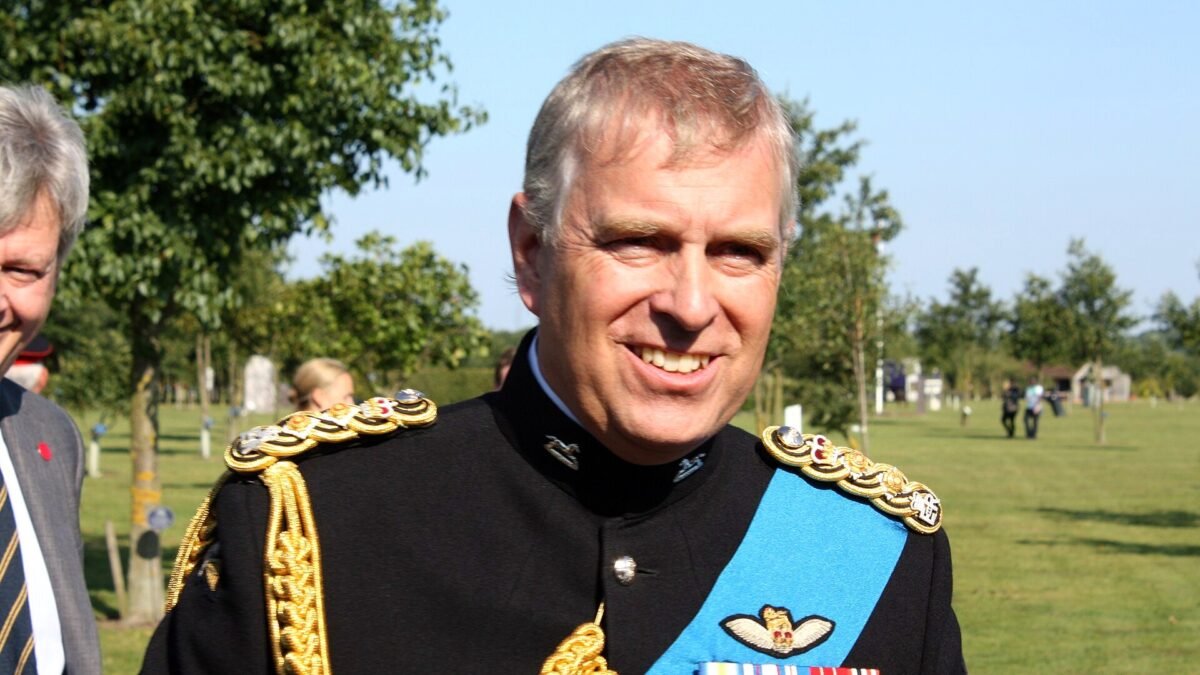
London’s High Court has been told that Andrew Mountbatten-Windsor received a £750,000 payment described in court as a “bribe” in the hope that he would help a Turkish millionaire with her passport, in the opening day of a civil fraud trial that has placed the former prince at the centre of one of the most consequential legal cases involving a member of the British royal family in modern times.
The claim was aired on Monday, 23 November 2026, as an 11-week trial began before Mr Justice Adam Johnson. The case was brought by Nebahat Isbilen, an 81-year-old Turkish businesswoman, against her former financial adviser, Selman Turk, whom she accuses of misappropriating tens of millions of pounds of her fortune. According to the BBC, Isbilen alleges that Turk misappropriated £38 million of her assets, including the payment to the then Duke of York, which she believed was for help with her passport.
Mountbatten-Windsor, 66, is not accused of any wrongdoing in the case. He has repaid the £750,000 and is expected to give evidence at the High Court on 14 December, after a judge earlier this year allowed Turk to issue him with a witness summons compelling him to appear. According to The Times, he is the first member of Britain’s royal family since 1870 to receive a summons requiring him to give evidence at the High Court.
The payment, made in November 2019, is one of the central disputes in a trial that will examine how a wealthy widow’s fortune was managed, what she understood about the payments made in her name, and what, if anything, the former prince was expected to do in return.
What the court heard on the opening day
Isbilen’s lawyers told the court that Turk misled her about the £750,000 payment to the former Duke of York, dishonestly telling her that the money was needed as a “gift” for Andrew’s help with her Turkish passport. Simon Colton KC, representing Isbilen, said she had approved the payment but that Turk had “lied to her” about its purpose, which he described as “a further example of his dishonesty”, according to the BBC.
Turk denies the allegations. His lawyers told the court that Isbilen understood the payment’s true purpose and that she knew the money was being paid in the hope that Mountbatten-Windsor could help her husband, a former Turkish politician who is in prison in Turkey. Joshua Hitchens, representing Turk, said in written submissions: “In circumstances where the claimant dined with the duke and duchess and discussed her husband with them, she cannot have believed that the £750,000 was a disguised fee for help with a passport, or with a visa.”
According to The Times, Turk’s lawyers argued that “her own case is that she understood that the payment to the Duke of York was a bribe, either for assistance with her passport or her UK residency”. The same submissions said the payment was “what Mr Turk told the bank it was: a gift, made in the hope of Mr Mountbatten-Windsor taking steps to assist her husband”.
The court also heard that documents obtained by Isbilen during the proceedings showed that Turk had sent about £2 million to a company called Alphabet Capital, some of which was then transferred to Andrew. Colton told the court that the £750,000 payment was one element of a wider pattern in which Turk “deliberately and systematically abused” Isbilen’s trust and transferred her money to companies he owned or controlled.
Isbilen’s lawyers also told the court on Monday that Turk had instructed separate payments to Mountbatten-Windsor’s former wife, Sarah Ferguson, including a £15,000 payment purportedly for the former Duchess of York’s 60th birthday party in 2019, and an unquantified “wedding gift” payment for their daughter, Princess Beatrice. The court was told that Isbilen had a private dinner with the then Duke and Duchess of York at Turk’s flat in December 2019, where she discussed her husband’s case, and that she was later invited to Princess Beatrice’s wedding reception at Royal Lodge in Windsor.
Who is Nebahat Isbilen?
Isbilen, 81, is part of the Evyap family, which founded a major soap and cosmetics company in Turkey. According to The Times, she sold shares in the family business for $90 million in 2015. Her husband, Ilhan Isbilen, is a former member of the Turkish parliament who was arrested in 2015 and later jailed for life for his alleged role in the attempted coup in Turkey in 2016.
Her lawyers told the court that the charges against her husband were “politically motivated” and that in 2017 she was facing “political persecution”. She left Turkey for Greece in 2017 and moved to London in 2018. She met Turk in January 2017 and gave him control of most of her financial assets, according to the BBC.
Isbilen is suing Turk, 40, her London-based former adviser, accusing him of breach of fiduciary duty, deceit and undue influence in allegedly embezzling around £40 million of her fortune, according to The Times. Colton told the court that Turk had “exploited a vulnerable elderly lady” who could not understand the English contracts she signed, and said in a written submission that “Mrs Isbilen has been the victim of a major, cynical fraud at the hands of Mr Turk”.
Turk denies dishonesty and is defending the claim, arguing that Isbilen understood and directed the management of her own affairs. The High Court was told in 2023 that Isbilen had reached a “settlement” with Mountbatten-Windsor and Ferguson, a detail that is likely to feature in the evidence over the coming weeks.
The summons and the December evidence
The most historically significant feature of the case is not the money but the witness. Mountbatten-Windsor is due to give evidence on 14 December, and may do so by video link. He was compelled to appear after a judge earlier this year permitted Turk to issue him with a witness summons, a step that made him the first member of the royal family in more than a century and a half to be ordered to give evidence in the High Court.
NEXA reported in November that the summons had been issued, and the trial’s opening has now confirmed the date on which he is expected to take the stand. The evidence is expected to be limited in scope, but the cross-examination is likely to focus on what he knew about the £750,000, what he understood its purpose to be, and what, if anything, he did or was asked to do for Isbilen or her husband.
The trial before Mr Justice Adam Johnson is due to conclude in March, with a written judgment at a later date. The 11-week hearing will hear detailed evidence about the movement of Isbilen’s money, the companies through which it passed, and the competing accounts of what the payments were for.
Andrew’s fall from public life
The case arrives at the end of a long and damaging decline in Mountbatten-Windsor’s public standing. He stepped back from public royal duties in November 2019, days after the £750,000 payment was made and in the wake of a widely criticised BBC interview about his friendship with the late American financier and convicted sex offender Jeffrey Epstein.
In October 2025, King Charles III stripped his younger brother of his royal titles, following growing controversy over his links to Epstein. He is now known as Andrew Mountbatten-Windsor rather than by his former title, the Duke of York. According to The Times, he was arrested in February 2026 on suspicion of misconduct in public office, and has consistently denied any wrongdoing.
The Epstein connection has shadowed every subsequent development in his life, and the Isbilen case adds a second, separate thread: not an allegation of sexual wrongdoing, but a question about money, access and the use of royal status. The court has heard no allegation that Mountbatten-Windsor committed a crime in this case, and his lawyers have not been required to answer one. The question the trial will test is narrower and, in some ways, more awkward: whether a former prince accepted a large sum from a vulnerable foreign national who believed she was buying his help, and what he understood about it at the time.
Analysis: Why It Matters
The opening of the Isbilen trial matters for three reasons, and none of them is the £750,000 alone. The sum, while large, is a fraction of the £38 million that Isbilen says was taken from her. What makes this case significant is what it reveals about how royal access was bought and sold, how vulnerable people with money and problems abroad were drawn into the orbit of the British establishment, and how a man who was once second in line to the throne in practical terms became a witness in a fraud trial rather than a party to it.
First, the case is a test of two irreconcilable stories about the same payment. Isbilen’s account is that she was deceived: Turk told her the money was a gift to secure help with her passport, and she believed him. Turk’s account is that she knew exactly what the money was for — a gift in the hope that Andrew would intervene on behalf of her imprisoned husband — and that she cannot credibly claim otherwise when she dined with the duke and duchess and discussed her husband’s case with them directly. Both accounts cannot be true. The court will have to decide not only who is telling the truth, but what Isbilen, an 81-year-old woman who does not speak English fluently and who had handed control of her finances to Turk, could reasonably have understood about transactions conducted in her name.
That question goes to the heart of the case. If the court accepts that Isbilen was vulnerable and misled, the £750,000 becomes evidence of a pattern of exploitation, and Turk’s defence collapses. If it accepts Turk’s account, the payment becomes evidence that Isbilen was a willing participant in a transaction she now regrets. The truth is likely to emerge from documents rather than testimony: the disclosure showing £2 million moving through Alphabet Capital, the bank records describing the payment as a gift, and the correspondence around the December 2019 dinner will carry more weight than either side’s recollection seven years after the event.
Second, the case exposes a tension in Isbilen’s own account that her lawyers will have to address. According to The Times, Isbilen said in a witness statement that the help Andrew was expected to give was “in respect of my application for UK residency”, yet she was granted UK resident status by January 2018, almost two years before the £750,000 payment was made in November 2019. That chronology does not disprove her claim — the payment may have been presented to her as help with her Turkish passport, as the BBC reported, rather than with residency — but it is the kind of detail that Turk’s lawyers will press, and it illustrates why the trial is likely to turn on precise questions about what was said, when, and to whom.
Third, and most importantly for the monarchy, the case is a reminder that the institution’s problems with Andrew did not end when his titles were removed. Stripping a prince of his titles is a symbolic act; it does not erase the relationships, the debts of gratitude, or the paper trail left behind by decades in which his time and attention were treated as assets with a price. The Isbilen case concerns events from 2019, when Andrew was still the Duke of York and still performing public duties. The payments to Ferguson and the wedding gift for Beatrice suggest a family, not just an individual, that was receiving money and hospitality from a woman who believed she was buying help for her husband.
That is the “cash for access” question that has haunted the royal family for a generation, and it is the question that makes this trial politically sensitive. The monarchy’s defence has always been that members of the royal family do not sell their influence. The Isbilen case does not prove otherwise — no finding has been made, and Andrew is not accused of wrongdoing — but it places the question before a judge, in open court, with documents and witnesses, in a way that palace statements and press releases never could.
There is also a wider lesson about the vulnerability of wealthy people in exile. Isbilen sold her family’s business for $90 million, fled a country where her husband was imprisoned, and placed her trust in a man who, on her account, used it to enrich himself and those around him. Her case is not unique: London’s courts have repeatedly heard claims from wealthy foreign nationals who arrived with money, limited English and urgent problems, and who found themselves dependent on advisers whose interests diverged from their own. The trial will test whether English law’s protections for vulnerable clients — fiduciary duty, undue influence, the duty to explain — are strong enough to catch what happened here.
Finally, the case matters because of what happens on 14 December. When Mountbatten-Windsor gives evidence, he will be the first member of the royal family in more than 150 years to be compelled to testify in the High Court. The occasion is historic in itself, but its substance is what counts: he will be asked, under oath, about money he received, what he knew about it, and what he did in return. His answers will be recorded, reported and, in time, weighed by a judge. Whatever he says, the fact that he is saying it in a witness box, rather than through a spokesperson, marks a further step in the long process by which the British monarchy’s most troubled former member has been brought within the reach of the ordinary law.
What to watch next
The trial will run for 11 weeks, and the evidence will unfold in stages. The most closely watched date is 14 December, when Mountbatten-Windsor is due to give evidence. The scope of his testimony, whether he appears in person or by video link, and how he responds to cross-examination about the £750,000 will dominate coverage that week.
Beyond that, three things are worth watching. The first is the documentary evidence: the court has already heard about the £2 million routed through Alphabet Capital, and further disclosure may reveal other payments, other recipients, or other explanations for where Isbilen’s money went. The second is the evidence about Ferguson and Beatrice: the £15,000 birthday payment and the wedding gift are small sums, but they suggest a pattern of generosity towards the family that the court will want to understand. The third is the judgment itself, expected after the trial concludes in March, which will determine not only whether Turk is liable, but what the court makes of the competing accounts of the £750,000.
For the royal family, the trial is a test of whether the reforms and removals of the past year — the stripping of titles, the distance imposed by the King — are enough to contain the damage from Andrew’s past. The Isbilen case suggests they may not be. The events it concerns are seven years old, the money has been repaid, and Andrew is not accused of a crime. Yet the case is still capable of dominating the news, still capable of raising questions about the monarchy’s judgment, and still capable of putting a former prince in a witness box. That, more than the £750,000, is why it matters.
Sources
- BBC — “Andrew received £750,000 from Turkish millionaire, court told”
- The Times — “Andrew Mountbatten-Windsor received £750,000 ‘bribe’ from Turkish heiress”
- The Oldham Times (PA) — “Andrew received £750,000 ‘bribe’ to help Turkish woman, High Court told”
- NEXA News HD — “Andrew Mountbatten-Windsor Summoned to Give Evidence in High Court Fraud Trial” (4 November 2026)

About the Author — Abdul Mannan
Related Articles
Timms Review Calls for ‘Fundamental Overhaul’ of PIP as Disability Benefit Bill Heads Towards £41 Billion
Sir Stephen Timms says the PIP assessment system is "no longer fit for purpose" and will recommend a…

More Than 12,000 Evacuated as Suspected Tear Gas Clears Manchester’s Co-op Live Arena During Don Toliver Concert
More than 12,000 people were evacuated from Manchester's Co-op Live arena after a substance believed to be tear…

Centrica Boss ‘Hugely Concerned’ as January Energy Bills Set to Jump £443 and Unpaid Debts Pile Up
Centrica chief Chris O'Shea warns more households will fall behind on energy bills when the price cap jumps…