
Sanofi to Acquire Insmed for $41 Billion in Landmark Bet on Respiratory Drugs

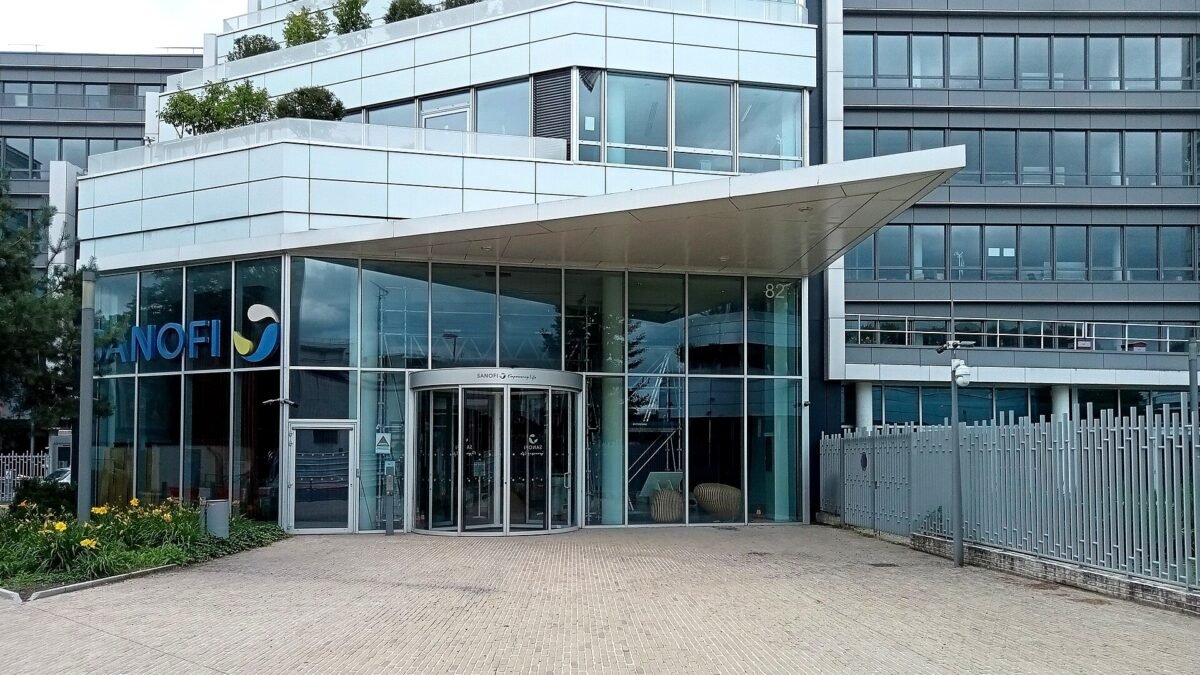
Sanofi has agreed to buy the American drugmaker Insmed for $41 billion in cash, the French pharmaceutical group announced on Tuesday, in one of the largest healthcare deals of the decade and the biggest move yet in its effort to build a future beyond its blockbuster drug Dupixent.
Under the terms of the agreement, Sanofi will pay $175 per share for all outstanding shares of Insmed, a total equity value of about $41.0 billion, or €37.6 billion, according to Sanofi. The boards of both companies have approved the transaction, which is expected to close in the first half of 2027, subject to approval by Insmed shareholders and regulators in the United States and other countries.
The deal gives Sanofi two approved respiratory medicines, including Brinsupri, the first and only approved treatment for a chronic lung condition called non-cystic fibrosis bronchiectasis, which has become a blockbuster in barely a year on the market. It also brings a late-stage experimental inhaled therapy with potential across several rare lung diseases, and a research operation spanning immunology, rare diseases and gene therapy.
“I am delighted to welcome Insmed to Sanofi,” Belen Garijo, Sanofi’s chief executive, said in a statement announcing the deal. “This acquisition is a major strategic step to significantly accelerate our mid- and long-term growth trajectory and further strengthen our mid- and early-stage pipeline.”
The deal at a glance
The price Sanofi has agreed to pay represents a premium of about 46 percent over Insmed’s closing share price on 18 November, the day before news reports first emerged that a deal was being discussed, according to Sanofi. Measured against Insmed’s closing price on Monday, the day before the announcement, the premium is about 17.5 percent, Reuters reported.
That gap between the two measures tells the story of the past five days. Bloomberg first reported on 19 November that Sanofi was weighing a takeover of Insmed, citing people familiar with the matter, and Insmed’s shares surged about 18 percent that day to $141.87, while Sanofi’s shares slipped about 2 percent. By the time the deal was confirmed on Tuesday, much of the takeover premium had already been priced into Insmed’s stock.
Sanofi said it would fund the acquisition through a combination of debt financing and cash on hand, and that it has secured committed financing. The company said it would maintain its conservative financial policy, keep its progressive dividend, and expects to retain a strong credit rating, with the combined group’s cash generation supporting rapid repayment of the new debt. The deal is not expected to affect Sanofi’s financial guidance for 2026, and Sanofi expects it to add to its business earnings per share by the end of 2028.
Goldman Sachs is acting as exclusive financial adviser to Insmed, with Freshfields as its legal adviser, while J.P. Morgan is acting as exclusive financial adviser to Sanofi and Cravath, Swaine & Moore as its legal adviser, according to the announcement. Sanofi was due to host a conference call for investors and analysts at 8 a.m. Eastern Time on Tuesday to discuss the transaction.
What Sanofi is buying
The centrepiece of the deal is Brinsupri, known generically as brensocatib, a once-daily oral pill that Sanofi described as a first-in-class treatment. It works by blocking an enzyme called dipeptidyl peptidase 1, or DPP1, which in turn dampens the activation of enzymes that drive chronic inflammation in the airways of people with non-cystic fibrosis bronchiectasis, a serious, progressive lung disease in which the airways become permanently widened, causing a persistent productive cough and repeated flare-ups known as exacerbations.
Brinsupri is approved in the United States, the European Union, the United Kingdom and Japan, with the eligible patient populations varying by country. In the US and Japan it is approved for adults and children aged 12 and over; in the EU and UK it is approved for patients aged 12 and over who have had two or more exacerbations in the previous year. Insmed estimates that about 500,000 patients in the US, 600,000 across France, Germany, Italy, Spain and the UK combined, and 150,000 in Japan have been diagnosed with the condition.
The drug’s commercial performance is the main reason Sanofi is paying such a large sum. Following its US launch in August 2025, Brinsupri has already reached blockbuster status, delivering $1.09 billion in revenue through 30 September 2026, according to Sanofi, with substantial additional growth expected. Insmed has told investors it expects Brinsupri revenue of $1.35 billion to $1.4 billion for the full year of 2026, within total company revenue guidance of $1.8 billion to $1.9 billion, according to trade-press reports of the company’s forecasts. Will Lewis, Insmed’s chair and chief executive, said in the announcement that “in just over a year since launch, we made Brinsupri the standard of care” for patients with the disease.
The second approved medicine in the package is Arikayce, an inhaled antibacterial treatment used alongside other drugs for certain adults with mycobacterium avium complex, or MAC, lung disease, a rare and often chronic infection that can cause irreversible lung damage. It is the only approved inhaled therapy specifically indicated for patients whose disease has not responded to at least six months of standard multidrug treatment, and it is approved in the US, the EU and Japan. Arikayce generated $433.8 million in revenue in 2025, growth of 19 percent, according to Sanofi, and the US Food and Drug Administration accepted an application in September, under priority review, to widen its use as part of a combination antibacterial regimen. The drug carries a US boxed warning, the strongest safety warning, for increased respiratory side effects, including allergic inflammation of the lungs, coughing up blood, bronchospasm and worsening of the underlying lung disease, which have led to hospitalisation in some patients.
The third element is treprostinil palmitil inhalation powder, known as TPIP, an experimental once-daily inhaled therapy in phase 3 trials for pulmonary hypertension and fibrotic lung disease. Its programme includes studies in pulmonary arterial hypertension, pulmonary hypertension associated with interstitial lung disease, and progressive pulmonary fibrosis, with a further phase 3 study in idiopathic pulmonary fibrosis planned to start in the first half of 2027. TPIP is not approved for any use anywhere, and its safety and effectiveness have not been established. Lewis said the commercial portfolio and the phase 3 pipeline together carried “a combined multibillion-dollar peak sales potential”.
Beyond the three named assets, the acquisition brings earlier-stage programmes and research capabilities across immunology and rare diseases, including work on gene therapy, AI-driven protein engineering and RNA end-joining, according to the companies. Insmed, headquartered in Bridgewater, New Jersey, employs staff across the US, Europe and Japan.
Why Sanofi is paying $41 billion now
The deal is best understood as an answer to a single problem that has dominated Sanofi’s strategy for years: Dupixent. The biologic, co-developed and sold with the American company Regeneron, treats eczema, asthma and chronic obstructive pulmonary disease, and it is one of the best-selling medicines in the world. In the third quarter of 2026 alone it generated €5.7 billion in revenue, nearly 40 percent of Sanofi’s total group sales, according to Pharmaceutical Executive, and it is on course to generate more than $13 billion a year. But its key patent protections begin to expire in the early 2030s, with US market exclusivity ending in 2031, according to trade-press reports, and when that happens Sanofi faces a revenue hole worth many billions of dollars a year.
Garijo, who recently took over as chief executive, has repeatedly described managing the post-Dupixent transition as the company’s defining challenge, and has told investors that acquisitions and licensing deals, alongside improved productivity from its own research laboratories, are the main levers for closing the gap. On its second-quarter earnings call this year, Sanofi attributed recent pipeline setbacks to weak decision-making rather than weak science, a candid admission that underlined the urgency of its strategic reset under its new leadership.
The logic of Insmed as the answer is straightforward. Sanofi already sells Dupixent into respiratory and immunology clinics, so Brinsupri and Arikayce land in front of the same doctors and the same patients. Analysts at BMO Capital Markets called the fit clear, while William Blair’s Matt Phipps described Sanofi as a “rational fit” for Insmed, pointing in particular to the commercial push into chronic obstructive pulmonary disease that followed Dupixent’s recent approval in that disease, according to trade-press reports. Jefferies’ Michael Leuchten has likewise argued that deals in Sanofi’s areas of strength, including immunology and rare diseases, are a good strategic fit, and that mergers and acquisitions will play a key role in shoring up its outlook as Dupixent’s loss of exclusivity approaches.
The price also reflects the scarcity of what is on offer. There are very few independent biotech companies with a newly launched blockbuster, a second growing product and a late-stage pipeline in a single therapeutic area. The $41 billion price makes this the largest pharmaceutical transaction since Pfizer bought the cancer drugmaker Seagen for $43 billion in 2023, according to analysts cited in trade-press coverage, and it is the largest acquisition Sanofi has attempted in many years.
For Insmed’s shareholders, the deal delivers immediate, certain cash value, as Lewis put it, at a price that captures most of the value the market had already begun to assign to Brinsupri’s launch. “This transaction delivers immediate, certain cash value for Insmed shareholders and ensures the momentum we have built continues,” Lewis said. “In Sanofi, we have a partner that recognizes the value of our science, commercial execution, and the exceptional culture we have created. Together, we expect to bring our therapies to more patients around the world, faster than we ever could on our own.”
Analysis: Why It Matters
Buying growth because building it has proved harder
The most important thing about this deal is what it says about Sanofi’s confidence in its own laboratories. A company that believed it could invent its way out of the Dupixent cliff would not spend $41 billion, funded largely with debt, on someone else’s medicines. Sanofi’s own admission this year that pipeline setbacks reflected weak decision-making rather than weak science was unusually frank for a large drugmaker, and this acquisition is the practical consequence of that diagnosis. When a company’s internal engine stalls, the rational response is to buy an engine that is already running, and Brinsupri is running very fast indeed: more than a billion dollars of sales in about fourteen months, for a disease that had no approved treatment at all before August 2025. That is the kind of asset that rarely comes up for sale, and Sanofi has decided it is worth paying a full price for rather than risking a rival bidder or a failed internal programme.
The price is the argument
Whether $41 billion is too much will be the argument that follows this deal for years, and the honest answer is that it depends entirely on what Brinsupri becomes. At $175 a share, Sanofi is paying roughly 46 percent more than Insmed was worth before takeover speculation began, and about 22 times Brinsupri’s annualised revenue run rate. That is a steep multiple by any measure, and it is the reason Sanofi’s own shares slipped when the talks first leaked: investors worry, reasonably, that the buyer is paying for growth that is already visible in the price. But the arithmetic looks different if Brinsupri’s market keeps expanding. Only a fraction of the estimated 1.25 million diagnosed patients across the US, Europe and Japan are currently treated, the drug is still rolling out in new countries, and TPIP could add entirely new diseases to the franchise after 2030. Sanofi is betting that the revenue line it is buying will roughly double from here, and that its global sales force can reach patients Insmed could not. If that bet is right, $41 billion will look like a fair price within a few years. If Brinsupri’s growth stalls, or if a competitor produces a better DPP1 inhibitor, it will look like a very expensive mistake. There is no way to know today, which is precisely why the market’s first reaction was scepticism rather than applause.
Respiratory disease is the new centre of gravity
Step back from the price, and the strategic direction is unmistakable: Sanofi is concentrating its future on the lung. Dupixent’s expansion into chronic obstructive pulmonary disease, Brinsupri for bronchiectasis, Arikayce for MAC lung disease and TPIP for pulmonary hypertension together form a respiratory franchise that spans the most common and the rarest lung conditions, from mass-market biologics to orphan drugs. That breadth matters commercially, because it means one sales organisation can serve the same chest physicians with a portfolio rather than a single product, and it matters scientifically, because expertise in airway inflammation transfers from one disease to another. It also matters for patients, who have historically been poorly served: bronchiectasis had no approved drug at all until last year, and MAC lung disease has had only one targeted inhaled option. The concentration of capital in this area is a sign that the industry finally sees chronic lung disease as a growth market rather than a backwater, and patients with these neglected conditions are the ultimate beneficiaries of that shift, provided the medicines reach them at prices health systems can afford.
The risks Sanofi is taking on
None of this is risk-free, and the risks are substantial. The first is financial: $41 billion funded largely with debt will push Sanofi’s borrowings sharply higher, and the company’s promise of rapid deleveraging depends on the cash its existing business generates holding up while Dupixent is still growing. The second is execution: large pharmaceutical integrations frequently destroy the very thing that made the target valuable, as talented scientists and commercial teams leave and decision-making slows inside a much larger organisation. Insmed’s culture was praised by its own chief executive in the announcement, which is often a sign that the people who built the value are worried about what comes next. The third is scientific: TPIP, the pipeline asset that justifies much of the long-term value, is unproven, with three phase 3 trials still to read out and a fourth yet to start, and history is littered with promising inhaled therapies that failed in late-stage testing. The fourth is safety: Arikayce carries a boxed warning for serious respiratory side effects, and Brinsupri is associated with skin and gum reactions that require monitoring. None of these risks is a reason to reject the deal, but each of them is a reason to watch its first two years with unusual care.
A deal shaped by a leak
It is also worth noting how this transaction reached the public. It was not announced out of the blue: it was reported five days earlier, the share prices of both companies moved sharply, and the final price was set against a market that already knew a deal was coming. That sequence is now routine in large pharmaceutical deals, but it has real consequences. Insmed’s shareholders captured much of the premium before the announcement, Sanofi’s negotiating position was weakened by the publicity, and the 46 percent premium Sanofi cites is measured against a price from before the leak rather than the price on the day. The episode is a reminder that in modern deal-making, the announcement is often the last act rather than the first, and that the discipline of a board in the days after a leak matters as much as the strategy that produced the deal.
What to watch next
- The shareholder vote and regulatory review. The deal needs approval from Insmed’s shareholders and clearance from regulators in the US and other countries. Large pharmaceutical mergers routinely draw scrutiny over competition, and the timetable to a first-half 2027 close leaves room for delay.
- Sanofi’s investor call and the debt markets. How Sanofi prices the new debt, and how rating agencies respond, will show whether the market believes the company can carry $41 billion of new obligations while maintaining its dividend and its investment-grade rating.
- Brinsupri’s launch in Europe and Japan. The drug’s billion-dollar year was driven largely by the United States. Whether Sanofi’s global reach can replicate that performance in Europe and Japan is the central commercial test of the deal.
- TPIP trial results. Readouts from the three phase 3 studies in pulmonary hypertension and pulmonary fibrosis, and the start of the idiopathic pulmonary fibrosis study in the first half of 2027, will determine whether the pipeline justifies the premium.
- Arikayce’s expanded approval. The FDA’s priority review of Arikayce as part of a combination regimen for MAC lung disease could widen its eligible population, adding a second growth engine to the acquired portfolio.
- Sanofi’s next move. Garijo has said the company retains capacity for early-stage deals even after this one. Whether Sanofi now pauses to digest Insmed or keeps buying will signal how far it thinks the Dupixent gap still is from being closed.
- The Dupixent clock. With exclusivity ending in 2031, Sanofi has roughly five years to turn Brinsupri and TPIP into a franchise large enough to matter. The annual results over the next two years will show whether that timetable is realistic.
Sources
- Sanofi, “Sanofi to Acquire Insmed in Strategic Step that Strengthens Long-Term Future” (press release, 24 November 2026)
- Reuters, “Sanofi to acquire Insmed in $41 billion deal” (24 November 2026)
- Dow Jones Newswires via Morningstar, “Sanofi to Buy Insmed for $41 Billion — Update” (24 November 2026)
- Pharmaceutical Executive, “Sanofi Eyes Insmed in Potential $43B Deal as Dupixent Patent Clock Ticks” (20 November 2026)
- Pharmaceutical Technology, “Sanofi rumoured to be eyeing high-profile Insmed takeover” (20 November 2026)

About the Author — Abdul Mannan
Related Articles

CrowdStrike Agrees to Buy Zscaler in $43.9 Billion All-Stock Deal, Creating a Cybersecurity Giant
CrowdStrike has agreed to buy Zscaler in a $43.9 billion all-stock deal, uniting two cybersecurity giants — but…

Nvidia Brings Back Jensen Huang as Chief Executive After 11 Days as Shares Soar More Than 30%
Nvidia's board has unanimously reinstated Jensen Huang as chief executive, president and board director, just 11 days after…
Compass Group Plans to Move Primary Listing from London to New York in Fresh Blow to the City
The world's largest caterer is expected to announce on Tuesday that it will consult shareholders on shifting its…