
Leaked Russian Data Puts War Dead at More Than 720,000, Analysis Finds

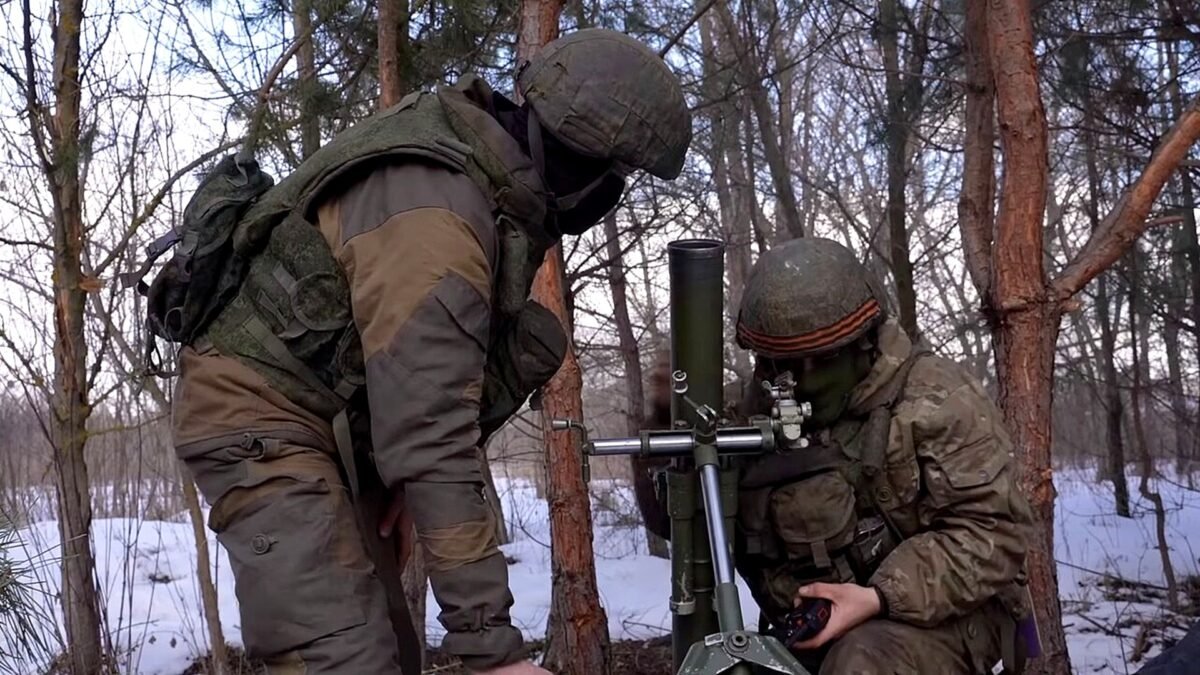
More than 720,000 Russian soldiers have been killed since Moscow launched its full-scale invasion of Ukraine in February 2022, according to a new analysis of leaked Russian government data published on Monday. The figure, which counts the dead and the missing together, is far higher than any Western estimate published before it, and it comes from the Kremlin’s own statistics.
The analysis, carried out jointly by the exiled Russian news outlets Meduza and Mediazona, found that at least 490,000 Russian military deaths had been officially registered by the end of September 2026. When deaths that have not yet been registered are added, along with soldiers listed as missing and almost certainly dead, the total rises to more than 720,000, the outlets reported. CNN, which reported the findings on Tuesday, described the toll as roughly one death every four minutes since the war began.
The numbers are drawn from the internal registers of Rosstat, Russia’s federal statistics agency, which were obtained by hackers and shared with journalists. The data covers more than 11.6 million death records, and the outlets say the records were cross-checked against inheritance cases, court rulings, civil registry leaks and previously published official statistics. Rosstat has acknowledged that it suffered cyberattacks at the end of October and the start of November, but it maintains that it found no evidence that confidential information was leaked.
The Kremlin has not commented on the new figures. Moscow has not published any official count of its military dead since the first months of the invasion, and in 2015 President Vladimir Putin signed a decree classifying information about military losses as a state secret.
How the numbers were counted
The database at the heart of the investigation was taken from Rosstat’s internal network by two hacker groups: Cyber Partisans, which is linked to the Belarusian opposition, and Silent Crow, a Ukrainian hacking collective. According to Le Monde, the two groups infiltrated around 25,000 computers inside the statistics agency and extracted roughly 23 terabytes of data. The breach was disclosed on 1 November, and the material was handed to journalists in two instalments, on 8 and 15 November.
After removing duplicates, Meduza and Mediazona counted 11,658,178 unique death records covering all causes of death, all ages and both sexes, from the start of 2021 through 29 September 2026. From that vast set they identified deaths linked to the war in Ukraine using several markers: the recorded cause of death, the place of death, and information about military service. Some records carry codes or free-text notes mentioning the “special military operation”, the official Russian euphemism for the war, while others list causes such as “bombardments” or “drones”. The researchers also counted more than 60,000 additional deaths attributed to military action or war injuries that were identified through court rulings, death notices, medical certificates from the conflict zone, or later deaths from combat wounds.
The first tally based on the hacked data, published on 1 November, put the death toll at around 400,000. That figure covered deaths explicitly linked to the war in Rosstat records between 24 February 2022 and the end of August 2026. The new analysis adds the latest batches of death records submitted by civil registration offices to Rosstat between June 2023 and late September 2026, contributing about 24,000 additional deaths, and widens the net to the extra 60,000 cases identified through court and medical records. The result is a registered toll approaching 500,000.
The outlets tested the authenticity of the data before publishing. They checked it against the Registry of Inheritance Cases, against court rulings, against earlier leaks from civil registry offices, and against Rosstat statistics that had been published before the agency stopped releasing them. They found records for 95.1 per cent of the individuals on the itemised list of Russian military fatalities compiled by Mediazona and the BBC’s Russian service, a match the outlets argue would be virtually impossible to fake across a dataset of this size. Rosstat, for its part, acknowledged cyberattacks between 29 October and 1 November but said it had found no compromise of its databases or leak of legally protected information, and it extended reporting deadlines to 13 November while restoring its systems.
Several other news organisations analysed the same leaked material independently and reached similar conclusions. The Insider counted at least 472,000 deaths and said the likely figure was close to 500,000 once late registrations were added. Novaya Gazeta Europe estimated 490,000 military personnel aged 18 to 64 had died. Vazhnye Istorii, known in English as Important Stories, identified more than 499,000 records of Russian military deaths between 24 February 2022 and 28 September 2026. The Financial Times identified around 464,000 death certificates listing the war as the cause of death through August 2026 and estimated the real toll at about 550,000, potentially reaching 650,000 by the end of the year if the trend continued. Bloomberg’s separate analysis found approximately 470,000 deaths in the database itself, while Der Spiegel’s analysis put the toll above 600,000. The clustering of these independent counts around the same range is what gives the new figures their weight: different newsrooms, using different counting rules, keep arriving at roughly the same answer.
None of these counts is a count of the same group, and the differences between them are explained by counting rules and cut-off dates rather than by disagreement about the underlying facts. The Insider, for example, counts a death on or after 24 February 2022 if it meets at least one of ten markers, while Meduza and Mediazona count registered men aged 18 to 64 and then model the unregistered remainder. The figures that exceed 700,000 are not counts of registered deaths at all: they are statistical models of the total, built by adding the deaths that have occurred but have not yet been reported.
A toll that rose year by year
According to an analysis of the database by The Guardian, the death toll climbed steeply as the war ground on. Nearly 20,000 deaths were recorded during the first year of the invasion, followed by approximately 50,000 in 2023. In 2024 the number more than doubled to over 134,000, and it then rose by another 52 per cent in 2025, reaching nearly 200,000. The pattern matches what is known about the war’s changing character: a war of manoeuvre in 2022 became a grinding war of attrition, fought with artillery, drones and infantry assaults against fortified positions, in which both sides have paid heavily for small movements of the front line.
The researchers cautioned that their estimates for the earlier years are considerably more precise than those covering the most recent 12 months. Mediazona’s backtests show errors under 5 per cent in most periods but 15 to 20 per cent in the earliest and latest periods, and its model underestimates recent months. The Insider found that half of 2026 war deaths were registered within 37 days, while one in seven was registered more than a year after death, and it said the past year’s toll is at least 10 to 15 per cent higher than registered counts suggest, with 8,000 to 16,000 more deaths still expected to be registered.
The scale of the loss is difficult to grasp in the abstract, so it helps to set it against the wars Russians still remember. The new estimate of more than 720,000 dead surpasses Russia’s death toll from the Soviet war in Afghanistan in the 1980s and both Chechen wars in the 1990s and early 2000s, according to CNN. Against Russia’s population of roughly 144 million people, 720,000 deaths is about one in every 200 citizens. The New York Post, reporting the same study, made the same calculation: one in every 200 Russians killed.
The figures also dwarf the estimates Western governments and think tanks had been using. The Washington-based Centre for Strategic and International Studies put the number of Russian dead at 400,000 to 450,000 in July. British intelligence estimated as early as May that nearly 500,000 Russian soldiers had been killed. Both now look like undercounts, not because the analysts were careless but because the only data available to them was fragmentary: obituaries, inheritance records, satellite imagery of expanding cemeteries, and Ukrainian claims. The leaked Rosstat records are the first look inside the state’s own bookkeeping.
Who is dying
The dead are overwhelmingly men, and they are not spread evenly across Russian society. According to Le Monde, people aged 30 to 49 account for nearly two-thirds of the dead. The data shared by Silent Crow showed that the war was the fourth most common cause of death in Russia since the start of the full-scale invasion, after heart disease, Covid, and stroke and other vascular conditions, according to CNN. It also confirmed what has long been suspected: that the losses fall hardest on poorer regions and ethnic minorities, with casualty rates significantly higher in some parts of the country than in Moscow and St Petersburg.
The data also revealed the scale of Russia’s recruitment of foreign fighters. An analysis by the NEST Centre, a think tank that also obtained the data, identified 6,947 records of foreign nationals killed in Ukraine, the majority of them from the Central Asian countries of Kazakhstan, Uzbekistan, Tajikistan, Kyrgyzstan and Turkmenistan. The BBC’s Russian service and Mediazona, using a slightly different method, said at least 7,421 foreigners have been killed fighting on Russia’s side. The difference between the two counts is a matter of definition, not a contradiction: both point to thousands of men from Russia’s southern neighbours dying in a war that is not theirs.
Behind the headline figure sits a second, quieter number: the missing. Mediazona has kept a tally of troops identified as missing by their relatives since 2023, and that database contains 160,000 individuals. Almost all of them are likely dead. According to CNN, Mediazona said that based on its reporting, the survival rate among those reported missing is only around 10 per cent. The researchers reached their estimate of roughly 230,000 unregistered deaths by analysing discrepancies between reported death dates and death registration dates and comparing them with the search notices published by relatives. Meduza’s modelling suggests that approximately 530,000 Russian soldiers had been killed by the end of 2025, rising to around 720,000, or potentially more, by the autumn of 2026.
There are gaps even in this picture. Mediazona says its 490,000 figure misses about 3,000 war deaths from 2022 to early 2023, many of them apparently Wagner fighters killed near Bakhmut whose records sit in registry offices in the Donetsk and Luhansk People’s Republics, plus about 300 soldiers at two Rostov-on-Don offices. The Rosstat data includes only officially recorded deaths, so it does not count men executed for avoiding combat, attempting to desert, or refusing to pay bribes to officers, none of which can be explicitly recorded in the registers, according to Le Monde. Nor does it count soldiers reported missing, bodies not identified, or people who later died from conflict-related wounds. The tally remains provisional, because the agency regularly adds new batches of death records, and the hacked database contains significant gaps in its records for 2025, with most military deaths from 2026 yet to be entered.
The secrecy around the figures
The reason this data had to be hacked at all is that the Russian state stopped publishing it. Rosstat stopped publishing cause-of-death data in 2024, and in 2025 it stopped publishing monthly demographic data altogether. According to the US-based Institute for the Study of War, the move was likely intended to conceal Russia’s demographic problems, which have been worsened by wartime deaths. The Kremlin has not released any figures about military casualties since the first months of the invasion, and Putin’s 2015 decree, signed a year after the annexation of Crimea, made information about military losses in peacetime, during special operations, or in wartime a state secret. Disclosing information beyond what military censors allow can be prosecuted as high treason.
The secrecy has a practical purpose as well as a political one. The only figure occasionally shared by a handful of Russian officials, and used by experts for the past year, is that the Russian army needs to recruit between 30,000 and 35,000 men each month to make up for its losses, dead and wounded, on the Ukrainian front without resorting to a general mobilisation, according to Le Monde. If the new death toll is right, that monthly intake is not keeping pace with the dying: a war that kills roughly 15,000 men a month, on the average implied by 720,000 deaths over 57 months, and wounds several times that number, needs far more than 35,000 recruits a month simply to stand still.
CNN noted that it cannot independently verify the figures, and that caveat matters. The numbers come from a dataset that was obtained illegally, analysed by newsrooms that oppose the Russian government, and denied by the agency that holds it. But the corroboration is now broad: Meduza and Mediazona, The Insider, Novaya Gazeta Europe, Vazhnye Istorii, the Financial Times, Bloomberg, Der Spiegel and The Guardian have all worked through the same material and produced counts that cluster between roughly 470,000 and 500,000 registered deaths, with modelled totals above 700,000. The leaked data on confirmed deaths alone corroborates earlier estimates by analysts and Western intelligence, CNN reported, and those earlier estimates now appear to fall far short of the likely real death toll.
Analysis: Why It Matters
The arithmetic of attrition
Wars of attrition are decided by arithmetic before they are decided by territory, and the new numbers change the arithmetic. A death toll above 720,000, with hundreds of thousands more wounded, means Russia has already lost a substantial share of the fighting force it has committed to Ukraine several times over, and has had to replace it again and again from a population that is shrinking and ageing. The monthly recruitment requirement of 30,000 to 35,000 men was already a strain; the leaked data suggests the real requirement is higher, and it is being met, in part, by drawing ever more heavily on the poorest regions and on foreign nationals from Central Asia. That is not a sustainable basis for a long war, but it is also not a basis on which a government that has staked its legitimacy on the war can easily stop.
The timing matters too. The toll rose sharply in 2024 and 2025, the years in which Russia’s offensives in the Donbas ground forward at enormous cost, and the most recent year is the least precisely measured, which means the true figure for 2026 is probably worse than the registered count shows. If the Financial Times is right that the toll could reach 650,000 by the end of the year on its more conservative counting method, and Meduza and Mediazona are right that the modelled total is already above 720,000, then the war is killing Russians faster now than at any point since it began, even as the front line barely moves.
What the numbers mean for the talks
The leak lands in the middle of a diplomatic effort to end the war. Russia, Ukraine and the United States resumed trilateral peace talks in Abu Dhabi earlier this month, the first such meeting since February, with American envoys Steve Witkoff and Jared Kushner pressing both sides on postwar security arrangements, de-escalation and humanitarian steps. The talks have not produced a ceasefire, and fighting has continued through them: on Tuesday, Ukrainian authorities expanded mandatory evacuation orders in the Donetsk region to all families with children still living there, as Russian forces inch towards Kramatorsk, one of Ukraine’s last strongholds in the north of the region. An estimated 64,500 civilians remain in the area, according to the Donetsk regional military administration, and its head, Vadym Filashkin, said the decision was necessary because Russian forces are shelling cities and villages every day and bombarding the region with aerial bombs.
For the negotiators, the death toll cuts both ways. A government that has hidden its losses for nearly five years has reason to want the war to end before the scale of those losses becomes impossible to conceal, and a leak of this size makes concealment harder: the numbers are now public, in the registers of the state’s own statistics agency, and they will be quoted back at Moscow for as long as the war continues. But a government that has paid more than 700,000 lives for its war aims also has reason to insist that the price must be worth something, and to demand concessions that justify it. That is the cruel logic of sunk costs, and it has kept wars going long after the arithmetic said they should stop.
The missing and the uncounted
The most haunting part of the story is not the headline figure but the 160,000 missing. These are men whose families have published search notices because the army has told them nothing, or because it has told them that their sons and husbands are missing rather than dead. A missing soldier’s family receives no death certificate, no body, and often no compensation, and the state’s interest in keeping men classified as missing is obvious: a missing man does not appear in the death registers, and a death that is never registered never has to be explained. The researchers’ estimate that only around one in ten of the missing survives is a measure of how much of the true toll is hidden behind a bureaucratic category.
The same logic applies to the foreign fighters, the Wagner dead whose records sit in occupied territory, and the men executed for refusing to fight. None of them is fully counted, and each category is a reminder that the 720,000 figure, shocking as it is, is a floor rather than a ceiling. The researchers themselves say so: the tally remains provisional, the most recent year is the least precise, and the real death toll is almost certainly higher than the data suggests.
A war measured in minutes
CNN’s framing, one death roughly every four minutes, is worth sitting with. It means that in the time it takes to read this article, several more Russian soldiers will have died in Ukraine, and several more Ukrainian soldiers and civilians too. Ukraine does not release official casualty data either, although President Volodymyr Zelenskyy has publicly acknowledged the scale of losses in combat, and the Centre for Strategic and International Studies estimated in July that Ukraine has endured between 525,000 and 625,000 casualties, including 125,000 to 150,000 fatalities. Alexander Baunov, a senior fellow at the Carnegie Russia Eurasia Center, told CNN that the combined death toll suffered by Russia and Ukraine could exceed one million.
That is the scale of what nearly five years of full-scale war has produced: more than a million dead, on the most careful reading of the evidence, in a war that began with a three-day plan to take Kyiv. The leaked Rosstat data does not end the war, and it does not settle the argument about who is winning it. But it does remove one of the Kremlin’s most carefully guarded secrets, and it replaces speculation about the cost of the war with the state’s own numbers. The question now is what Russia does with a truth it spent five years hiding.
What to Watch Next
- Whether the Kremlin responds to the new figures at all, and whether Rosstat changes its account of the breach, having so far acknowledged the cyberattacks while denying that data was leaked.
- Whether other newsrooms publish their own analyses of the leaked data, and whether their counts confirm the cluster around 490,000 registered deaths and more than 720,000 in total.
- Whether the death toll affects the trilateral peace talks in Abu Dhabi, where the United States is pressing Russia and Ukraine on security arrangements and de-escalation.
- Whether Russia raises its monthly recruitment targets or widens its recruitment of foreign nationals, as the pressure of replacing losses grows.
- Whether the missing-soldiers database continues to grow, and whether families of the missing begin to receive death certificates as registrations catch up with the fighting.
- Whether Ukraine’s casualty figures receive similar scrutiny, and whether the combined death toll of both sides is confirmed to exceed one million.
- Whether the fighting in the Donetsk region, and the evacuation of families with children from Kramatorsk and Sloviansk, intensifies in the coming weeks.
Sources
- Le Monde — “Hackers and media outlets expose what the Kremlin tried to hide: At least 500,000 dead on the Ukrainian front”
- CNN — “One every four minutes: 720,000 Russian soldiers killed since start of Ukraine war, new data suggests”
- France 24 — “Leaked data suggests 500,000 Russian soldiers killed since start of Ukraine invasion”
- Tech Times — “Newsrooms Count at Least 472,000 Russian Soldiers Killed in Ukraine in Hacked State Records”
- New York Post — “Russia has lost astonishing 700K soldiers since start of Ukraine war — 1 in every 200 citizens killed, study finds”

About the Author — Abdul Mannan
Related Articles

US Prepares Sweeping New Tariffs on China, EU and 14 Other Economies as Greer Readies Section 301 Findings
The Trump administration is preparing to unveil new tariffs on China, the European Union and 14 other economies…
Malaysia to Send 6,803 Myanmar Nationals Home in December, Days After World Court’s Genocide Ruling
Malaysia will repatriate 6,803 Myanmar nationals in December — 1,500 by naval vessels on 6–7 December and 5,303…
Russia Warns Estonia It Is ‘On the Verge of Triggering Open War’ Over Border Closure
Russia has warned Estonia that its actions are "on the verge of triggering open war" after Tallinn said…