
Russia Warns Estonia It Is ‘On the Verge of Triggering Open War’ Over Border Closure

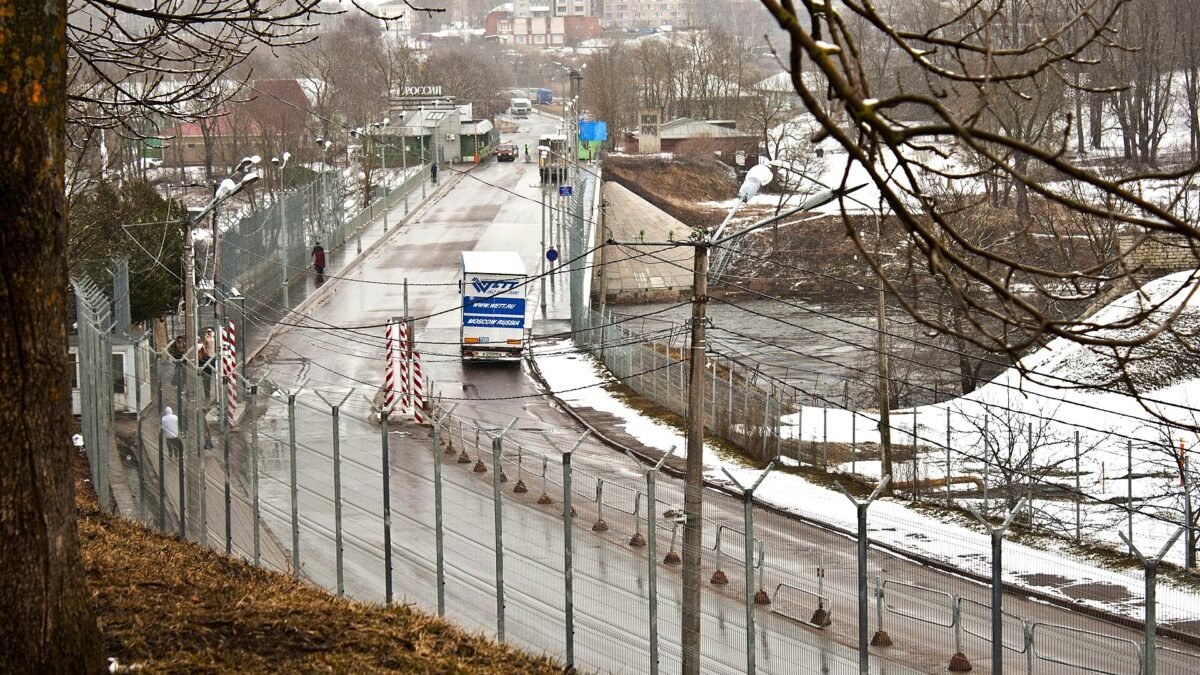
Russia has warned Estonia that it is “on the verge of triggering open war”, in the sharpest language Moscow has directed at a NATO member state in months. The warning was delivered in person on Monday, when Russia’s Foreign Ministry summoned Estonia’s chargé d’affaires in Moscow, Marek Uhtegi, to lodge a formal protest over Tallinn’s decision to close its border crossings with Russia from 1 December.
“The Estonian diplomat was once again told that such provocative and extremely dangerous actions are on the verge of triggering open war with Russia,” the ministry said in a statement, according to Reuters. The phrase “once again” suggested the message had been delivered before, but never in such stark terms, and never as a formal diplomatic protest to a summoned envoy.
The row is the latest and most serious escalation in a confrontation that has been building for weeks on NATO’s eastern flank. Estonia, a NATO and European Union member since 2004, is closing its land border with Russia for at least six months after accusing Russian intelligence of ordering an arson attack on an Estonian defence company. Russia denies any involvement in the attack and has described the closure as “openly confrontational”.
Estonia rejected the accusations. Its Foreign Ministry said it had never allowed its territory to be used for military operations by another country, and its foreign minister, Margus Tsahkna, called Moscow’s claims “baseless”. NATO’s secretary general, Mark Rutte, said the alliance was monitoring the situations in both Estonia and Poland and had options available to respond.
The warning, delivered in person
The Russian Foreign Ministry’s statement came after Uhtegi was called in to the ministry in Moscow on Monday 23 November. Summoning a foreign diplomat in this way is itself a deliberate signal: it is the formal, public face of a protest, designed to be seen as well as heard. The ministry used the meeting to set out a list of complaints against Estonia that went far beyond the border closure itself.
According to Reuters, the ministry said: “The Russian side reserves the right to take comprehensive political and diplomatic measures aimed at protecting Russia’s national interests and the legitimate rights of its citizens.” The wording was careful. It promised political and diplomatic measures, not military ones. But the sentence that preceded it, the warning of “open war”, was the part that travelled around the world within hours.
Russian Foreign Ministry spokeswoman Maria Zakharova had already set the tone when the closure was first announced, calling the decision “openly confrontational” and describing it as “yet another bout of aggressive and unbridled Russophobia”, according to reports of her remarks. She said the closure had been taken “under the pretext of the alleged arson attempt” and warned that attempts to build a “sanitary cordon” around Russia and isolate it would prove costly for those behind them.
Zakharova also said the closure “will inevitably backfire, not only on Tallinn itself but also on its allies within the EU and NATO”, according to LADbible’s account of the Russian statement. She argued that the “unilateral closure of border crossing points violates the rights and interests of a significant number of Russian compatriots”, and warned of serious economic and social consequences, particularly for Estonia’s own border regions. She criticised Tallinn for acting hastily and without consulting Moscow.
The language matters because of who it was aimed at. Estonia is not Ukraine. It is a member of NATO, and an attack on it would engage the alliance’s collective defence commitment under Article 5 of the North Atlantic Treaty. Moscow knows that. The choice to use the words “open war” about a NATO member, rather than about Ukraine, is what makes this warning different from the routine exchanges of the past four years.
Moscow’s list of accusations
The Foreign Ministry’s statement set out five accusations against Estonia, and the list is revealing. It accused Tallinn of allowing Ukraine to use its airspace “on the quiet” to attack targets in northwestern Russia. It accused Estonia of trying to obstruct the movement of Russian cargo ships in the Baltic Sea. It accused Estonia of banning the transit of Russian and Belarusian grain. And it accused Estonia of seeking to ban the Russian language and of threatening to close the Russian Orthodox Church.
Only the first two of those are directly connected to the war in Ukraine. The other three are long-standing Russian grievances about Estonia’s domestic policies, going back years. The grain transit ban dates to October. The language and church questions are part of a much older argument about the position of Estonia’s Russian-speaking minority, which makes up roughly a quarter of the country’s population of about 1.3 million.
By folding those older complaints into a single protest about the border, Moscow made the border closure the trigger for its warning rather than the whole of its case. The message, in effect, is that the closure is the latest step in a policy Moscow regards as hostile in itself, not a one-off response to a single incident. That framing is important, because it suggests the dispute will not end when the border question is settled.
The most serious of the accusations is the one about airspace. If Estonia were quietly allowing Ukrainian drones to fly through its airspace to strike targets in northwestern Russia, that would make a NATO member a party to attacks on Russian territory. It is an accusation Moscow has made before, not only against Estonia but against other Baltic states. Russia has long accused NATO countries in the region of letting Ukrainian drones use their airspace, according to Reuters.
Ukrainian drones have frequently strayed into NATO airspace, and Kyiv has said this is a result of Russian signal jamming rather than any permission from its neighbours. NATO countries have repeatedly denied deliberately allowing drones through their airspace, and have blamed Russia for the incursions, pointing out that it was Russia that launched the full-scale invasion of Ukraine in 2022. The denial has been consistent, and it has been repeated in almost identical terms by several governments.
The border closure behind the row
Estonia announced last week that it would close its remaining road border crossings with Russia from 1 December for at least six months. The decision covers all five road crossings between the two countries, including the main crossing at Narva, the Russian-speaking border city on the Narva river. The crossings are due to close at 7 a.m. on 1 December, and the decision will be reviewed after six months. Rail freight is expected to keep moving.
The Estonian government has presented the closure as a security and counter-intelligence measure, not a political gesture. Estonian officials have said Russian services use the checkpoints to intimidate and seek to recruit Estonian citizens, and that closing the crossings removes that pressure point. The closure is also, in Tallinn’s framing, a response to a specific act of sabotage on Estonian soil.
Estonia is not the first country on NATO’s eastern flank to take this step. Finland has kept its land crossings with Russia closed since December 2023, and Latvia, Lithuania and Poland have all tightened their border regimes in recent years. Estonia’s decision fits a regional pattern of hardening borders against a neighbour that the Baltic states regard as a direct threat to their security.
The practical consequences will be felt first in the border regions themselves. Narva sits directly across the river from the Russian town of Ivangorod, and families, trade and daily life have crossed that bridge for generations. Zakharova’s warning about the economic and social consequences for Estonia’s own border regions was aimed squarely at that reality. For the people of Narva, the closure is not an abstraction. It is the shutting of the road they have used all their lives.
The arson attempt at Threod Systems
The immediate trigger for the closure was an attempted arson attack on the night of 14 November at the premises of Threod Systems, a defence company in Viimsi, just outside Tallinn, that manufactures drones and surveillance systems and supplies equipment to the Ukrainian military. Estonian security forces foiled the attempt and detained eight suspects, who are Latvian residents. Estonia’s internal security service, known as KAPO, has said the operation was ordered by Russia’s GRU military intelligence. Russia denies any involvement.
The allegation is part of a wider pattern that European governments have been describing for more than a year: sabotage, arson and attempted sabotage against defence companies, transport infrastructure and other targets across Europe, attributed by Western intelligence services to Russian operatives and their proxies. In the same week as the Threod Systems attempt, Denmark expelled the Russian defence attaché over an alleged plot against a Ukrainian-American citizen, and proposed to its EU partners that Schengen visas for Russian nationals should be stopped.
Estonia’s foreign minister made the connection explicit in his response to Moscow’s warning. Writing on X late on Monday, Margus Tsahkna said: “Russia is flooding the airwaves with baseless accusations against Estonia to distract from its own actions undermining European security.” He listed what he called “the real security threats”: “In recent weeks alone, Russian missiles have struck Polish territory, Danish authorities have uncovered a Russian intelligence plot, commercial shipping has faced threats in the Black Sea, and Estonia has thwarted a GRU-ordered arson attack against a defence industry company.” He added: “We will not lose sight of them.”
The eight detentions are the concrete fact at the centre of the dispute. Everything else, the warnings, the protests, the lists of accusations, is argument about what that fact means. Tallinn says it proves Russian intelligence is operating against Estonia. Moscow says the accusation is a pretext. Neither side has produced public evidence that would settle the question, and that is unlikely to change. The dispute is now, in practice, about who the rest of Europe believes.
Estonia’s answer
Estonia’s Foreign Ministry did not answer every accusation in Moscow’s statement, but the one it did answer, the airspace claim, it answered in unusually blunt terms. “While we generally do not comment on or engage with Russian propaganda narratives, in this case we can reiterate that Estonia has never allowed, and will never allow, its territory to be used for military operations by another country,” it said, according to Reuters. “Other countries in our region have also made this position clear,” the ministry added.
Prime Minister Kristen Michal had already made the same point over the weekend, saying: “Estonia has not given permission for its airspace or maritime areas to be used for attacks against Russia.” The repetition, from the prime minister and then from the Foreign Ministry, was deliberate. It was designed to leave no room for doubt about Tallinn’s position, and to make clear that the denial was the government’s, not a spokesman’s improvisation.
The tone of the Estonian response is worth noting. Tallinn did not match Moscow’s rhetoric. It did not threaten anything. It called the accusations baseless, denied the specific claim, and pointed to Russia’s own actions. That restraint is a choice. Estonia is a small country, about 1.3 million people, with a border of nearly 300 kilometres with Russia. It cannot win a war of words with Moscow by shouting louder. Its strategy, consistently, has been to let the facts speak, to keep its allies informed, and to let NATO do the talking about deterrence.
That strategy depends on the allies. Estonia joined NATO and the European Union in 2004, and its security rests on the alliance’s guarantee. The country’s history explains why that guarantee matters so much to it. In 2007, Estonia was hit by weeks of cyberattacks widely attributed to Russia after the relocation of a Soviet war memorial in Tallinn. The attacks, which disrupted banks, ministries and media, are still cited as the first large-scale cyberattack against a state. Estonia has lived with Russian pressure for a long time, and it has learned to treat it as a permanent condition rather than a passing crisis.
A wider pattern on NATO’s eastern flank
The warning to Estonia did not come in isolation. It arrived at the end of a week in which the confrontation between Russia and NATO had sharpened on several fronts at once, and the incidents belong together if the warning is to be understood.
Three Russian Kh-101 cruise missiles landed in Poland on Friday, and NATO held an emergency session on Monday after Warsaw confirmed what the objects were. Poland has sought greater NATO support, and the alliance has said it is monitoring the situation. Then, overnight, a Russian drone briefly entered Polish airspace during an attack on western Ukraine, according to Poland’s armed forces. Permission had been granted to shoot the object down, but the military decided against using weapons after the drone changed course and began moving eastwards. The decision was made, the armed forces said, “taking into account the potential threat to civilians and the possible consequences of shooting down the object”.
Earlier in the month, on the night of 10 and 11 November, at least four drones entered Baltic airspace and NATO aircraft responded. Lithuania reported two unsuccessful interception attempts, and Finland temporarily restricted air and maritime activity. Days later, a Russian cargo ship, the Sparta II, was hit by drones and set on fire in the Gulf of Finland, drifting into Finnish waters. And in the Mediterranean, Ukraine sank the Russian naval corvette Merkury at the Libyan port of Benghazi and hit the Russian dry cargo ship MV Angara, which President Volodymyr Zelenskyy said had been used to transport weapons. Russia threatened “painful consequences” after Ukraine confirmed those strikes.
NATO’s secretary general, Mark Rutte, speaking in Berlin, cited the situations in Poland and Estonia as events the alliance was monitoring. “We see situations in Poland and Estonia, etc.,” he said. “When it comes to the military domain, we will always make assessments of our deterrence and defence and make updates where necessary.” The remark was measured, but it was also a signal: the alliance is watching, and it has options.
The same day, President Zelenskyy addressed the NATO Parliamentary Assembly in Berlin by video link and urged the alliance to admit Ukraine, arguing that full membership would provide more reliable security guarantees after the war. “Wouldn’t it be more effective to simply admit Ukraine into Nato? Wouldn’t that be better for all of us, for everyone?” he asked. Rutte said membership remained a decision for the alliance, while acknowledging that not all member states currently supported Ukraine’s accession. German Chancellor Friedrich Merz said it had been a mistake not to admit Ukraine at the 2008 Bucharest summit. “If it had become a member of Nato, this war could probably have been prevented,” he said.
There was also a reminder of a different kind of threat. Germany said it was taking seriously reports that Russia may be planning to launch a nuclear-armed satellite, identified as Sputnik-S, into orbit. Germany’s foreign intelligence service and its armed forces have shared intelligence indicating that the satellite was assembled several years ago and is based in the Moscow region, according to German broadcasters. If confirmed, the deployment would violate international treaties prohibiting nuclear weapons in orbit. Moscow has dismissed the reports as “unfounded allegations”.
Analysis: Why It Matters
The most important thing about Russia’s warning is also the simplest: it was addressed to a NATO member. For almost four years, Moscow’s threats of escalation have been directed at Ukraine, at individual Western governments supplying weapons, or at the West in general. This one was different. It named Estonia, a country of 1.3 million people that sits inside the alliance, and it used the words “open war”. That is a line Moscow has been careful not to cross in public statements about the Baltic states, and crossing it is a choice with consequences of its own.
But the second most important thing is what the warning did not contain. There was no military threat, no deadline, no ultimatum, no announcement of troop movements or exercises. The measures Moscow reserved the right to take were “comprehensive political and diplomatic measures”. The envoy was summoned, not expelled. The protest was formal, not final. For all the violence of the language, the action was diplomatic, and that gap between the words and the deeds is the space in which this crisis will either grow or shrink.
That gap is not an accident. It reflects the calculation on both sides. Moscow knows that a threat against a NATO member is not the same as a threat against Ukraine, because the alliance’s collective defence commitment changes the arithmetic. An attack on Estonia would oblige the United States, Britain, France, Germany and every other ally to respond. That is a war Russia cannot want, and the language of the statement, for all its menace, stops short of promising one. The words “on the verge of” are doing a lot of work. They describe a danger, not a decision.
Estonia’s calculation is the mirror image. Tallinn knows it cannot match Russia’s size or its appetite for confrontation, so it does not try. Its response was a denial, a dismissal and a list of Russia’s own actions. It left the deterrence to NATO, and NATO’s response, through Rutte, was equally measured: monitoring, assessment, options. Nobody in Tallinn or Brussels is treating this as the eve of war. They are treating it as a test of nerve, and nerve is something the Baltic states have had a long time to practise.
What makes the warning genuinely worrying is not the words themselves but the pattern they sit inside. The arson attempt at Threod Systems, the missiles in Poland, the drones in Baltic airspace, the burning cargo ship in the Gulf of Finland, the sinking of a warship in Libya: each incident on its own can be explained away, denied, or treated as an accident. Taken together, they describe a confrontation that is spreading, geographically and in kind, from the battlefield in Ukraine into the airspace, the shipping lanes and the streets of NATO countries. The warning to Estonia is the rhetorical counterpart of that physical spread. It says, in effect, that Moscow regards the Baltic states as part of the war, whether they agree or not.
The list of accusations also deserves a second reading, because it tells us how Moscow thinks about Estonia. The complaints about the Russian language and the Orthodox Church are not about the war at all. They are about the position of Estonia’s Russian-speaking minority, and they echo, in miniature, the arguments Russia made about eastern Ukraine before 2014. Moscow has accused Estonia of discriminating against its Russian-speaking population before, and the parallel is one that Estonian officials have long feared. When a government starts describing a neighbour’s domestic policies as a reason for war, it is worth paying attention, because that is how justifications are built.
There is also a domestic audience to consider. The warning was issued in Moscow, for Russian consumption as much as for Tallinn. The Foreign Ministry’s statement, Zakharova’s remarks about a “sanitary cordon” and “Russophobia”, the promise that the closure “will inevitably backfire”: all of it plays to a Russian public that is being told the West is trying to isolate and strangle their country. The border closure, which affects ordinary Russians who cross at Narva, gives that story a concrete hook. The warning is, in part, theatre. But theatre, repeated often enough, has a way of becoming policy.
Finally, there is the question of timing. The closure takes effect on 1 December, a week from now. Until then, the dispute is still, in practical terms, about the future. After 1 December, it will be about a fact on the ground: a closed border, guarded crossings, and a Russian-speaking city cut off from the town across the river. That is when Moscow’s promised “comprehensive political and diplomatic measures” will have to take some visible form, or not. The next week is the window in which this warning either becomes the prelude to something worse or fades into the long list of Russian warnings that were never acted on.
What to watch next
The first date to watch is 1 December, when Estonia’s road crossings with Russia are due to close. Whether the closure proceeds on schedule, and how Russia responds to it in practice, will show whether the warning was rhetoric or the start of a campaign. Any Russian measures announced in the coming days, whether diplomatic expulsions, trade restrictions or further protests, should be read against the ministry’s promise of “comprehensive political and diplomatic measures”.
The second thing to watch is the air. The pattern of drones and missiles entering NATO airspace has been the most dangerous feature of the past month, because it is the feature most likely to produce an accident. The Polish military’s decision not to shoot down the drone that entered its airspace overnight shows how carefully NATO countries are weighing the risk of escalation against the risk of inaction. Each new incursion tests that calculation again.
The third is the investigation into the Threod Systems arson attempt. If Estonian prosecutors bring charges and publish evidence linking the suspects to Russian intelligence, the dispute will move from accusation to proof, and Moscow’s denial will become harder to sustain. If the case stalls, the warning will stand as the last word, and the next incident will have to be judged on its own.
And the fourth is NATO itself. Rutte’s remark that the alliance has options available to respond was deliberately vague. What those options are, and whether the alliance chooses to use them, will be decided in the coming days, in Berlin, Brussels and Washington. Estonia’s security has always depended on its allies meaning what they say. This warning is the moment when that is tested in public.
Sources
- Reuters — “Moscow accuses Estonia of hostile actions on ‘verge of triggering open war'”
- AnewZ — “Russia warns Estonia is ‘on the verge of triggering open war’ over border closure”
- Il Politico Web (AP) — “Russia accuses Estonia over Ukrainian drones”
- LADbible — “Russia warns British ally Estonia is ‘on the verge of triggering open war'”

About the Author — Abdul Mannan
Related Articles
Russia Could Launch Nuclear-Armed Satellite Within Weeks, Western Intelligence Warns
Western intelligence services believe Russia could launch a nuclear-armed satellite, Sputnik-S, into orbit before the end of this…
NATO Meets in Emergency Session as Poland Confirms All Three Intruding Objects Were Russian Kh-101 Missiles
NATO's North Atlantic Council meets in Brussels today after Polish prosecutors confirmed all three objects that entered Polish…
Search Resumes at Indonesian Candy Factory as Dozens Remain Missing After Deadly Fire
Rescue teams returned to the burned-out PT Fonusa Agung Mulia candy factory in Cikande on Monday morning, with…