
Met Police Still Institutionally Racist, Misogynistic and Homophobic, Fairfield Review Finds

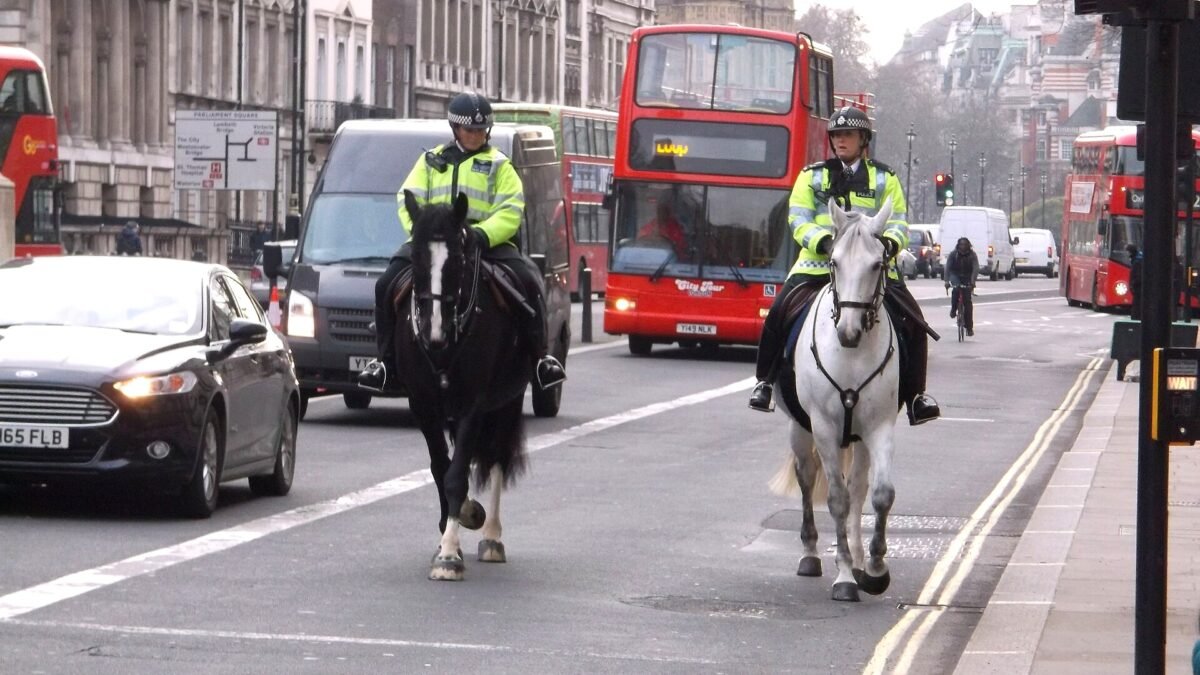
The Metropolitan Police remains institutionally racist, misogynistic and homophobic, three years after a damning review first delivered that verdict, an independent progress report has found. The Fairfield Review, published on Wednesday 25 November 2026, concludes that the fundamental, systemic problems identified in Baroness Louise Casey’s 2023 report into the force’s culture and standards have not been fixed, and warns that further high-profile scandals are “highly likely” unless the Metropolitan Police fully addresses its culture.
Dr Gillian Fairfield, a former NHS executive commissioned by the Mayor of London, Sadiq Khan, to assess the force’s progress since the Casey Review, spent 11 months on fieldwork before producing her 389-page report. Her central finding is blunt. “The Casey review found the Met was institutionally racist, misogynistic and homophobic,” the report says, according to the Guardian. “Our role has been to assess the Met’s progress in addressing this; we judge these fundamental, systemic issues remain.”
The review found that the Metropolitan Police had not made “good progress” on any of the Casey review’s recommendations, according to the Guardian and the Independent. Nine areas showed “some progress” and five only “limited progress”, the two outlets reported. Dr Fairfield’s team said they had seen “some of the best policing and some of the worst”, but added that some of the evidence of failings was “disturbingly familiar” to the Casey Review. “The Metropolitan Police Service is different, but it’s not yet different enough,” the report says, “and we’ve reached the conclusion that three years is not enough to complete every cultural behavioural change set out by the Casey review in an organisation of this scale, but time is not the only issue.”
The Metropolitan Police has accepted all ten recommendations in the Fairfield Review, including a call to be braver about racism and disproportionality. But its commissioner, Sir Mark Rowley, again refused to accept the central label of institutional racism, saying he would not be drawn into “what I think is a politicised debate about certain labels”. That refusal, three years after Baroness Casey’s original finding, sits at the heart of the dispute between the force, the mayor and the review’s author.
What the Fairfield Review found
The review’s most persistent theme is what Dr Fairfield calls “institutional defensiveness”. The force, she found, remains more focused on managing the media response to scandals than on fixing the problems that cause them. “In our view, the only scrutiny the Met really fears is from the media,” the report says, according to the Independent. Defensiveness, the Guardian reported, remains “deeply ingrained” in the organisation.
The report revisits the pattern of behaviour Baroness Casey identified in 2023 and finds it largely unchanged. “The Casey Review noted the Met’s tendency to look for positive spin; frame shortcomings in the past; blame misconduct on individual bad apples, approach critical reports and inquiries as a tick-box exercise; talk up future actions as if they were already implemented; and overestimate its progress,” the report states. “We have found none of these behaviours have changed sufficiently. Neither has the Met’s institutional defensiveness.”
On race, the review is unsparing. Although some progress has been made on dealing with racism, the report says the force still struggles to acknowledge it as a structural problem. “The Met still struggles to acknowledge racism as a structural problem rather than something people can be trained out of,” the report says. “As with other difficult subjects it is too often managed as a reputational threat rather than an opportunity for learning.” Dr Fairfield told journalists that no senior force leader her team met used the word “racism”, preferring instead to talk about “disproportionality”. “Without more bravery than it has shown since 2023, the Met cannot fundamentally face its relationship to race and racism,” she said. Her warning to the force’s leadership was direct: “If it cannot name it, it cannot face it. And if it cannot face it, it cannot change it.”
The review also found that the force’s leadership is over-centralised, and that senior officers need to “shake off their defensiveness” and “reconnect with the frontline reality”, according to the Times. In focus groups, teenagers spoke fluently about stop and search, the Times reported, a reminder that the force’s relationship with young Londoners remains strained.
“Some of the best policing and some of the worst”
The Fairfield Review is not a catalogue of unrelieved failure. Its authors say they found examples of excellent policing, and they credit the force with real improvements in several areas: tougher vetting standards, a crackdown on officer misconduct, specialist programmes, increased recruitment and promotion of female officers, and measurable progress in rape investigations, according to the Guardian. Resources for investigative workloads were better than three years ago, the Times reported.
But the review says those gains sit alongside failings that will be familiar to anyone who read the Casey Review. “The Met’s foundations are not yet fixed,” Dr Fairfield said. The force has concentrated heavily on removing officers who should not be there — Sir Mark Rowley said 1,800 officers and staff have been driven out since the Casey report, in what he described as the largest integrity overhaul in British policing history — but the review says that approach on its own cannot change a culture. “This is absolutely necessary but manifestly insufficient,” the report says. “You cannot sack your way to a good culture.”
The report’s workforce survey suggests that confidence in internal accountability remains weak. Although 83 per cent of staff felt confident reporting a colleague, that confidence fell to 64 per cent when the concern was about a supervisor, and to less than half when it was about a senior officer, according to the Independent. Only 44 per cent of staff felt confident raising concerns about a senior officer; a quarter said they were “not so confident” and 17 per cent were “not at all” confident their concerns would be acted on, the Guardian reported. Almost half of those who said they had felt bullied or harassed at work had not reported it, and of those who did report it, nearly seven in ten said no action had been taken, according to the Independent.
One officer with more than 20 years of experience told the review team: “I have zero confidence that anything is going to happen when reporting misconduct.” The report says that, despite heavy investment in misconduct systems, “confidence in the system remains uneven, investigations can remain lengthy, organisational learning is weak, and some officers and staff still fear retaliation for speaking up”.
Women in the force: “They need to understand they are prey”
Some of the review’s most disturbing evidence concerns the treatment of women inside the Metropolitan Police. One officer told the review team that women were “subject to punishment” if they reported misconduct. Another described predatory behaviour by some senior officers towards younger women and recruits. “There’s real predatory behaviour toward younger women and new recruits,” the officer said. “They need to understand they are prey.”
The review credits the force with specialist programmes and increased recruitment and promotion of female officers, but says many women in the workforce and members of the public are not confident that the change is substantive. The force has been trying to rebuild trust with women since the murder of Sarah Everard in March 2021 by serving officer Wayne Couzens, the crime that triggered the Casey Review in the first place. The Fairfield Review suggests that, inside the force itself, the problem has not been resolved.
The review also examined the Metropolitan Police’s Parliamentary and Diplomatic Protection Command, the unit in which both Couzens and the serial rapist David Carrick served. Baroness Casey had recommended that the command be effectively disbanded. The Met chose not to implement that recommendation, bringing in its own structural changes instead. The Fairfield Review found those changes were “yet to be fully embedded and achieve the desired impact”. The report warns that “high-profile abuse and challenges in custody, and royalty and specialist protection, illustrate the urgency with which the Met must identify and fully address cultures in these and other closed cultural environments. Until it does so, we judge further scandals are highly likely.”
The review also cites the BBC’s Panorama investigation into Charing Cross police station in 2025, in which an undercover reporter filmed officers expressing sexist and racist views. Several officers faced misconduct proceedings after the programme, but the report says “some of these behaviours and concerns were not confined to Charing Cross”.
Victims let down: bereaved families and domestic abuse
Dr Fairfield said the most shocking aspect of the review for her was the testimony of victims. The review team said they “did not find a consistently victim-centred, end-to-end service” at the Metropolitan Police, and the report details cases in which bereaved families say they were failed twice: first by the crime, then by the investigation.
Some bereaved families accused the Met of victim-blaming and gaslighting, the report says. One relative told the review: “The Met repeatedly gaslit me, made me feel stupid for challenging how they conducted the [homicide] investigation.” Another said: “Even one of its own detectives told me I should lower my expectations of the Met.” Families described forensic exhibits, statements and CCTV going missing in a homicide investigation, doorbell footage not seized promptly, witnesses not interviewed and no public appeal made. Several families told the review team, separately, that they believed Met officers had deliberately lied to them about important aspects of investigations into the deaths of their loved ones.
The report says bereaved families highlighted “the lack of professional curiosity; presumptuous assumptions; lack of empathy; inadequate supervision; and wider investigative failings leading to continuing harm”. The experiences of some victims of police-perpetrated domestic abuse, the report says, evidence “an organisation perpetuating additional harm, not preventing it”. Andrea Simon, the Victims’ Commissioner for London, said bereaved families frequently tell her that police investigations compound their trauma. “These experiences can mean victims are losing faith in the system at the investigation stage and before they have had a chance at justice,” she said, adding that it is vital the Met redesigns end-to-end victim care.
The review also found that frontline policing is being weakened by officers being taken off to fulfil other duties, and that there are not enough officers doing domestic abuse work. Caseloads for domestic abuse and sexual offence cases are meant to be 18 and 14 respectively, but officers are often dealing with at least double those numbers at one time, according to BritBrief. The Times reported that resources for investigative workloads were deemed better than three years ago, but the volume of cases was “still completely unmanageable”. The report found that officer workloads are “incompatible” with providing a proper service to victims and survivors.
Trust among LGBT Londoners has not improved
Trust among the LGBT community, damaged by the Metropolitan Police’s catastrophic failings in the case of serial killer Stephen Port, has not improved, the report says. The force, it found, is “still making false assumptions about – and sometimes blaming – LGBT+ victims”. Gay men had seen some improvement in how they were treated, but lesbian and trans communities “routinely feel discriminated against”, according to the Guardian. Dr Fairfield told journalists she had been “shocked” at the number of LGBT+ people who said they would not want to report crimes to the police.
Port murdered four young men in east London between 2014 and 2015, and the Metropolitan Police’s failure to connect the deaths — despite the victims’ families raising concerns — became one of the defining scandals of the force’s recent history. A decade on, the Fairfield Review finds that the trust the case destroyed has not been rebuilt, and that the force still handles LGBT victims poorly. It is a finding that cuts against the Met’s claim that its culture has changed in the ways that matter most to the people it serves.
The commissioner’s response: accepting the recommendations, rejecting the label
Sir Mark Rowley accepted all ten recommendations in the Fairfield Review, including the call to be braver about racism and disproportionality and to renew policing by consent. But he again refused to accept the word “institutional”, a position he has held since Baroness Casey’s report in 2023. “I’m not afraid of using the term racism,” he said. “We have no problem with using it and confronting it. Racism, misogyny, homophobia, other forms of discrimination are something that we have to confront and have been confronting.”
The commissioner pointed to the scale of change since the Casey report. “Standards are higher, performance is stronger, violence is down, criminal justice outcomes for victims of sexual violence are amongst the highest nationally, and London is safer,” he said. He said he was appointed as Britain’s most powerful police officer four years ago at a time when the force was “in crisis”, a year before the Casey review was published. “Three years ago, the question was whether the Metropolitan Police could change,” he said. “This report demonstrates that is happening. But the challenge is now to make that stick, make it happen everywhere, and sustain it for the long term; every Londoner, regardless of their background or where they live, needs to feel the benefits of that change.”
He acknowledged that the work is unfinished. “Eliminating discrimination in all we do starts with listening and requires sustained commitment and structural change,” he said. “The progress we have made is a credit to the professionalism, resilience and determination of our officers and staff. They have delivered extraordinary change while continuing to protect London through rising demand, significant financial pressures, unavoidable workforce reductions and a criminal justice crisis.” Deputy Commissioner Matt Jukes told journalists he would reflect on the feedback from bereaved families.
The mayor and the Home Secretary
The Mayor of London, Sadiq Khan, who commissioned the review, heaped pressure on Sir Mark after its publication. “There should be no spin or cherry-picking of this review,” he said. “The Commissioner and his senior team need to reflect on her findings with humility and reflection, not hubris.” He called on the commissioner to “reset his relationship with those of us tasked with holding the Met to account, and to provide Londoners with the police service they deserve”.
“It is simply not possible to change the culture of the Met if the existence of institutional racism, institutional misogyny and institutional homophobia continues to be denied, underplayed or tiptoed around,” Khan said. He added that he was “particularly appalled” by the treatment of some of the victims highlighted in the review. “I’m particularly appalled by the treatment of some of the victims highlighted in this review. Victims of crime must be treated with dignity, compassion and respect and supported to achieve the justice they deserve.”
The Home Secretary, Shabana Mahmood, thanked Dr Fairfield for her review and welcomed the commissioner’s commitment to making improvements. “Three years ago, when Baroness Casey completed her report, the force was facing a profound crisis,” she said. “Since then, the Commissioner has taken significant and positive steps forward. I particularly welcome the improvement in policing serious sexual offences as this Government pursues its goal of halving violence against women and girls. But there are further improvements required, and I welcome the Commissioner’s commitment to this. It is right that the Metropolitan Police have accepted all of Dr Fairfield’s recommendations.”
How the Met got here: the Casey Review and Sarah Everard
The Fairfield Review can only be understood against the report it was asked to check up on. The Casey Review, published in March 2023, was commissioned after the abduction, rape and murder of Sarah Everard, 33, by serving Metropolitan Police officer Wayne Couzens in March 2021. Baroness Louise Casey, a former government adviser, spent months examining the force’s culture and standards. Her 363-page report concluded that the Metropolitan Police was institutionally racist, misogynistic and homophobic, and warned that the force risked being broken up if it failed to reform.
The Casey Review landed in a force already reeling. Couzens’ crime had shattered public trust. David Carrick, another serving officer, was unmasked as one of Britain’s most prolific sexual predators. The Stephen Port case had exposed catastrophic investigative failures. The Charing Cross scandal had revealed a culture of sexist and racist messages among officers. Baroness Casey’s report argued that these were not isolated cases of individual wrongdoing but symptoms of a system: a force that protected its own, dismissed criticism as an attack on policing itself, and treated the communities it served with suspicion.
The Metropolitan Police was put into special measures by the police inspectorate, and Sir Mark Rowley, appointed commissioner in 2022, promised a root-and-branch reform. Vetting was tightened, misconduct processes were overhauled, and hundreds of officers were dismissed or resigned. The Fairfield Review was commissioned to answer a simple question: three years on, had any of it worked? Its answer is that some of it has — and that the deepest problems have not.
The review’s publication comes at a sensitive moment for the force. The Metropolitan Police is Britain’s largest police force, responsible for policing a capital of nearly nine million people, and its culture has become a matter of national political debate. The prime minister’s government has made halving violence against women and girls a central goal, and the Home Secretary’s response to the review shows that the Met’s progress — or lack of it — is now being measured in Downing Street as well as at City Hall.
Analysis: Why It Matters
The Fairfield Review matters because it answers the question London has been asking since March 2023, and the answer is uncomfortable for everyone involved. The Metropolitan Police has changed, and it has not changed enough. Both halves of that sentence are true, and the review’s power lies in refusing to choose between them.
The first half is real. A force that dismissed 1,800 officers and staff, tightened its vetting and overhauled its misconduct system is not a force standing still. Measurable progress in rape investigations, specialist programmes for women, and more female officers in senior roles are not trivial achievements in an organisation of the Met’s size. Sir Mark Rowley is entitled to point to them, and the review does credit them. The Guardian’s account of the report notes that its authors found “some of the best policing” in the country inside the same force they condemn.
But the second half of the sentence is the one that will define the next three years. The Fairfield Review’s central insight is that the Met has treated its cultural crisis as a problem of individuals rather than of systems. Removing 1,800 officers is, in the report’s phrase, “absolutely necessary but manifestly insufficient”. You cannot sack your way to a good culture, because a culture is not the sum of its worst members. It is the set of assumptions, incentives and habits that determine what the remaining members do when nobody is watching. The review’s evidence — officers who fear reporting their seniors, women punished for complaining, families gaslit after a homicide, LGBT victims blamed for the crimes committed against them — describes a system, not a series of bad apples.
That is why the argument over the word “institutional” is not the semantic quibble the commissioner suggests. The word does real work. It distinguishes a force with a few racists in it from a force whose structures produce racist outcomes even when the individuals inside it mean well. Sir Mark Rowley’s position — that he is “not afraid” of the word racism, but that the label is a “politicised debate” — tries to have it both ways: to acknowledge the problem while denying the diagnosis that explains it. Dr Fairfield’s response is that a force that cannot name the problem cannot fix it. “If it cannot name it, it cannot face it. And if it cannot face it, it cannot change it.” Three years after Baroness Casey made the same point, the commissioner’s refusal to accept it is itself evidence for the review’s finding of “institutional defensiveness”.
The defensiveness finding is the most damaging part of the report, because it explains why the other findings persist. A force that manages criticism as a reputational threat rather than an opportunity for learning will always prefer the appearance of reform to the substance of it. The Casey Review listed the symptoms in 2023: positive spin, framing shortcomings as history, blaming individuals, treating critical reports as tick-box exercises, talking up future actions as if they were already done, and overestimating progress. The Fairfield Review finds that “none of these behaviours have changed sufficiently”. That is a verdict on the leadership’s mindset, not on the rank and file, and it is why the review calls on senior officers to “reconnect with the frontline reality”.
The victim evidence is where the report stops being an argument about organisational theory and becomes a moral indictment. The families who told the review that the Met “repeatedly gaslit” them, that detectives told them to lower their expectations, that CCTV and doorbell footage went unseized and witnesses uninterviewed, were not describing a culture problem in the abstract. They were describing what it feels like to lose a loved one and then lose faith in the institution that is supposed to find out what happened. The report’s finding that the Met has not built a “consistently victim-centred, end-to-end service” is, in plain terms, a finding that the force still fails the people who need it most, at the moment they need it most. Andrea Simon’s warning — that victims are losing faith in the system at the investigation stage, before they have had a chance at justice — should worry the Met more than any headline about institutional racism, because it describes a loss of legitimacy that no amount of reform rhetoric can repair.
The LGBT findings carry a similar weight. A decade after Stephen Port’s murders exposed the Met’s failure to protect gay men, the review finds that trust has not improved and that lesbian and trans Londoners “routinely feel discriminated against”. That is not a legacy problem. It is a current one, and it means that a significant part of London’s population still does not believe the police will treat them fairly if they report a crime. For a force whose authority rests on policing by consent, that is an existential problem, not a public relations one.
There is also a political dimension that will play out in the coming months. The mayor commissioned this review, and his response — demanding humility, not hubris, and a reset in the commissioner’s relationship with those who hold the Met to account — is a public assertion of authority over a commissioner who has repeatedly resisted the mayor’s framing. The Home Secretary, meanwhile, has welcomed the commissioner’s commitment to improvement while noting that “further improvements” are required. The commissioner now answers to two political masters who both expect him to deliver, and to a review that has given them a detailed scorecard against which to measure him. The test of the Fairfield Review will not be whether its ten recommendations are accepted — they already have been — but whether the Met publishes a timetable and measurable targets for each one, and whether the next progress check finds something different to report.
Finally, the review raises a question that goes beyond the Metropolitan Police. Britain’s largest force is also its most scrutinised, and if three years of intense attention, special measures and a determined commissioner cannot fix its culture, the lesson is that cultural reform in policing is slower and harder than the political cycle allows. Dr Fairfield herself concedes that three years is not enough to complete every change Baroness Casey set out. But she also insists, with the evidence of 11 months of fieldwork behind her, that time is not the only issue. The force’s own choices — what it names, what it denies, what it treats as a threat and what it treats as a lesson — have slowed the change. Until those choices change, the review warns, further scandals are “highly likely”. London will be watching to see whether the next three years prove her wrong.
What to watch next
The immediate question is what the Metropolitan Police does with the ten recommendations it has accepted. The review calls on the force to be braver about racism and disproportionality and to renew policing by consent, but recommendations without timetables and published measures have a habit of dissolving into good intentions. Watch for whether the Met publishes a detailed response with dates and targets, and whether the mayor holds the commissioner to them in public.
Watch, too, for the force’s handling of the Parliamentary and Diplomatic Protection Command and the other closed commands the review singles out. The Met declined to disband the unit where Couzens and Carrick served, and its own replacement changes have not yet taken effect. The review’s warning that further scandals are highly likely until the cultures in those closed environments are addressed is the most direct prediction in the report, and it will be tested by events.
The workforce survey figures will be worth revisiting. If officers remain afraid to report their seniors, and if nearly seven in ten of those who report bullying or harassment still say nothing happened, the misconduct system the Met has invested so heavily in will not be doing the job it was built for. The same applies to victim care: the test is whether bereaved families and victims of domestic abuse start to describe a different experience, not whether the force announces a new programme.
And watch the politics. The mayor has staked his authority on this review, the Home Secretary has tied the government’s violence-against-women-and-girls agenda to the Met’s improvement, and the commissioner has promised that change will be made to stick. All three now own a share of the outcome. The Fairfield Review is, in the end, a progress report — and progress reports invite a follow-up. The next one will be harder to dismiss.
Sources
- The Guardian – “Metropolitan police still institutionally racist and misogynist, says report”
- The Independent – “Met Police is still institutionally racist, misogynistic and homophobic, report finds”
- The Times – “Met Police ‘still racist, misogynistic and homophobic’”
- BritBrief – “Met Police still institutionally racist, report finds”
- BritBrief – “Fairfield Review: Met Police fails to tackle racism, misogyny”

About the Author — Abdul Mannan
Related Articles

Two Arrested After Break-In at Prince William and Kate’s Anmer Hall Home on Sandringham Estate
Two men have been arrested after a break-in at Anmer Hall, the Prince and Princess of Wales's country…

Russian Warship Suspected of Jamming GPS on 140 Planes Off UK Coast
Around 140 commercial flights lost their satellite navigation on 9 November in an incident analysts traced to a…
High Court Told Andrew Mountbatten-Windsor Received £750,000 ‘Bribe’ to Help Turkish Heiress With Passport
The High Court was told that Andrew Mountbatten-Windsor received a £750,000 payment described as a 'bribe' to help…