
Russian Warship Suspected of Jamming GPS on 140 Planes Off UK Coast

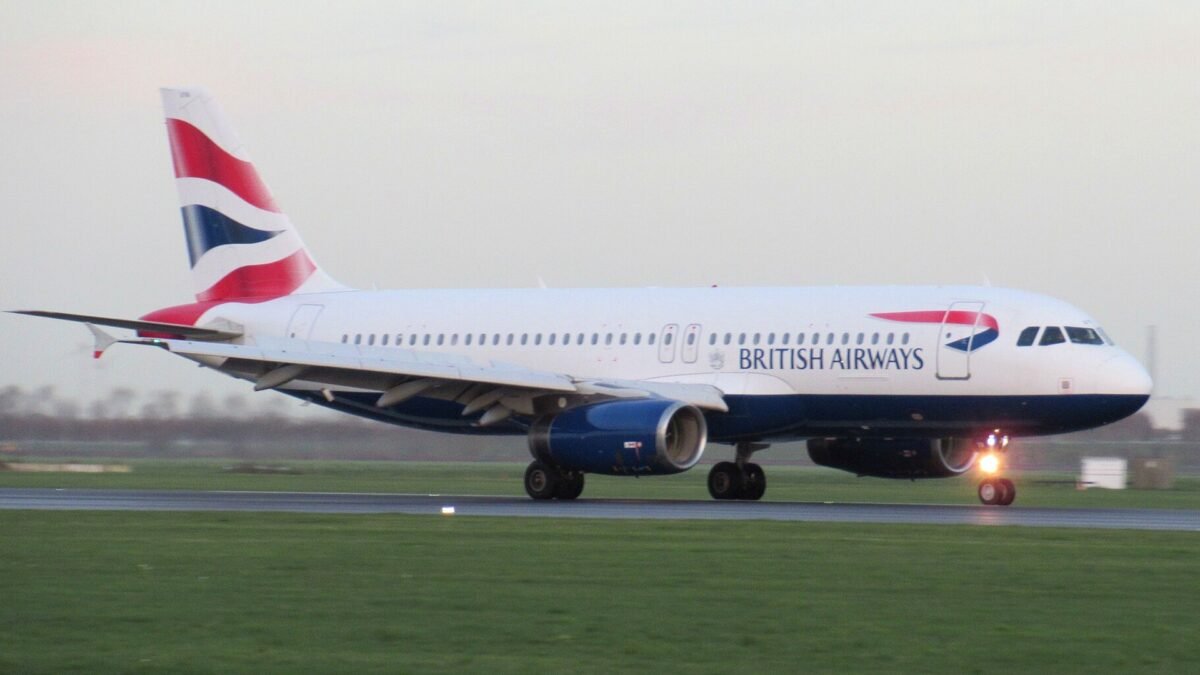
A Russian warship sailing off the English coast is suspected of jamming the satellite navigation systems of around 140 commercial aircraft in a single evening earlier this month, in what analysts believe may be the first incident of its kind so close to Britain. The disruption lasted about 19 minutes, affected flights operated by British Airways, Ryanair and easyJet, and has been described by experts as a possible major escalation in Russia’s campaign of hybrid warfare against the West.
The incident happened on the evening of Monday 9 November 2026, but only came to light publicly on Monday 23 November, when The i Paper first reported the findings of an aviation intelligence firm. According to the newspaper, analysis of flight-tracking data traced the interference to a single radio transmitter about 190 miles off the English coast, in the North Sea, close to a Russian warship that was escorting three sanctioned cargo vessels towards the English Channel.
Around 140 flights lost their GPS signals during the episode, with as many as 92 aircraft affected at the same time, according to John Wiseman, the American data analyst behind Hexbird, the aviation intelligence service that carried out the analysis. The disruption stretched across roughly 510 kilometres, from the Netherlands across the southern North Sea and into eastern England. About 40 of the affected aircraft were in or near British airspace, according to an aviation intelligence group cited by The Sun.
No aircraft was put in danger, and no flight was diverted as a result of the jamming, according to the reporting. Pilots were able to fall back on alternative navigation systems, and all affected aircraft landed safely. But specialists quoted in the coverage warned that the episode marked a significant step: GPS jamming on this scale had not previously been seen so far west, and a repeat closer to shore — or combined with another failure in air-traffic control — could have far more serious consequences.
It remains unconfirmed that Russia was responsible. No government has formally attributed the interference to Moscow, and the British government has declined to comment on operational or intelligence matters. The Russian vessels involved have not been publicly identified by name. What is established is that the jamming happened, that its apparent source was at sea level in the North Sea, and that a Russian naval convoy was passing through the area at exactly that time.
What happened on 9 November
The interference began at about 17:08 GMT on Monday 9 November and lasted until about 17:27 GMT, according to Hexbird’s analysis, as reported by The i Paper and other outlets. In the Netherlands, where the evening rush of arrivals into Amsterdam Schiphol was under way, the effects were recorded in detail.
Dutch air traffic control, LVNL, confirmed that seven aircraft on approach to Schiphol had problems with their satellite-based RNP navigation — the system that allows aircraft to fly precise, satellite-guided approaches. A spokesperson said it was “plausible” that the cause was jamming, and that the aircraft landed safely with instructions from controllers. The Dutch Ministry of Infrastructure and Water Management later confirmed that the seven crews reported the disruption between 18:15 and 18:30 local time, and said aviation safety was not at stake because backup systems were available.
Tower messages reported by the Dutch newspaper NRC give a sense of what crews experienced in the cockpit. A KLM Boeing 737 reported “GPS L+R FAIL” at 18:19, shortly before landing, with both of its GPS systems down. A Lufthansa crew reported “GPS 1 FAULT” and then “GPS 2 FAULT”. An Air France pilot said the GPS signal had been out for 15 minutes and that several aircraft had reported the jamming at the same time.
Hexbird’s analysis, and parallel tracking by the site GPSwise, showed the problem reached far beyond the seven Schiphol arrivals. Aviation24.be, citing Wiseman, reported that around 80 aircraft may have seen GPS degradation across the Netherlands, the southern North Sea, eastern England and north-western Germany, while GPSwise recorded an outage of about 20 minutes affecting roughly 50 aircraft. Wiseman told NRC that aircraft flying at high altitude were especially affected — something LVNL said on Friday it had not been aware of.
Among the flights identified in the British reporting were a British Airways service from London to Stockholm, a Ryanair flight from Edinburgh to Rome and an easyJet flight from Manchester to Hurghada in Egypt. The Sun reported that the British Airways aircraft was among around 140 flights that lost their GPS for around 20 minutes. Spokespeople for British Airways and easyJet said they could not comment on matters of security. The Sun said it had contacted Ryanair for comment.
The incident was unrelated to the wave of bomb hoaxes that caused disruption for flights across Europe earlier in November, according to The Sun.
How the source was traced
GPS jamming works by flooding the frequencies used by satellite navigation with powerful radio signals, overwhelming the faint signals from satellites in orbit and preventing a receiver from calculating its position or the time. Because the interfering signal in this case was traced to a single point, analysts were able to work backwards from the pattern of affected aircraft to locate its origin.
Hexbird, the aviation intelligence service of the Los Angeles-based firm Wiseman Applied Intelligence, used ADS-B flight-tracking data to place the possible source of the interference in the North Sea, north of the Dutch island of Texel, close to sea level and potentially from a vessel. NU.nl, citing Hexbird, put the jammer at sea level some 150 to 200 kilometres north of Texel. The i Paper’s reporting placed the suspected transmitter about 190 miles off the English coast.
At the time, six Russian-flagged vessels were in the suspect area, according to maritime reporting cited by Dutch media. Three of them — the Lady R, the Lady D and the Maia-1 — were part of a Russian navy-escorted arms convoy and, with their owner, are on the European Union’s sanctions list over arms transfers between North Korea, Iran and Russia. NATO ships, including Danish and French warships, were reported to have been shadowing the convoy as it travelled south towards the English Channel.
James Droxford, a former naval intelligence officer, told The i Paper that the warship was “almost certainly the origin of the GPS jamming, not the merchant vessels”. He suggested the jamming may have been a reaction to deter surveillance by Western forces against the sanctioned cargo ships, saying: “They’ve been tracked all the way through the North Sea. I think the short duration of the GPS jamming, the location and assets around it, suggests that it was a reaction to deter surveillance by the West against those ships.”
Ramsey Faragher, the chief executive of the Royal Institute of Navigation, said it was “likely” that the interference had originated from a “dedicated military platform”, noting that the extensive area affected suggested the use of significant military equipment. Dr Thomas Withington, an electronic warfare specialist, said that if Russia was found to be behind the jamming it would mark “an intensification of the disruption that we’ve seen so far”.
Withington added: “It’s the first time to my knowledge, first time we’ve seen anything this far west. But equally, I don’t think it’ll be the last time.” A former Dutch intelligence officer and head of an aviation security firm warned that such an event could result in a “doomsday scenario” if paired with other air-traffic control failures.
There is no official confirmation that any of these vessels was responsible, and Dutch authorities have not attributed the interference to a particular ship, organisation or state. The Dutch Rijksinspectie Digitale Infrastructuur, the state inspectorate for digital infrastructure, is investigating, and LVNL has notified the security services. A British government spokesperson said the government would not comment on operational security or intelligence matters.
The convoy and the ships at the centre of the suspicion
The three cargo vessels at the heart of the reporting are no ordinary merchant ships. The Lady R, the Lady D and the Maia-1 have been linked in maritime reporting to the transport of military cargo, and they and their owner sit on the EU sanctions list because of arms transfers between North Korea, Iran and Russia. At the time of the jamming, they were travelling south through the North Sea towards the English Channel under escort by a Russian warship, while NATO vessels shadowed the convoy.
The convoy’s presence in the North Sea is itself part of a wider pattern of Russian naval movements through waters around Britain and northern Europe. Royal Navy and RAF assets routinely monitor Russian warships and submarines passing through the English Channel and the North Sea, and the number of reported encounters has risen sharply during the war in Ukraine. The jamming incident, if the attribution proves correct, would show that escort going beyond passive transit and into active electronic interference with civilian aviation.
It is important to be precise about what is known and what is not. The vessels were in the area. The jamming came from the sea, at surface level, in the same patch of water. No official body has yet said that the warship switched on a jammer, and Russia has previously described GPS jamming as a defensive measure to protect cities and military sites from Ukrainian drone attacks. The case against the warship rests on timing, location and the judgement of independent analysts — strong circumstantial evidence, in the view of those analysts, but not proof.
No crash, no chaos: why flights stayed safe
For passengers on the affected flights, the most striking fact about the evening of 9 November is how little happened. No aircraft declared an emergency. No flight was diverted. No one was hurt. That is not luck; it is the product of how modern aviation is built.
GPS is the primary navigation tool for most commercial aircraft, but it is not the only one. Airliners also carry inertial navigation systems, which track position by measuring acceleration and rotation from a known starting point, and they can navigate using ground-based radio beacons and radar vectors from air-traffic control. When GPS fails, crews switch to these backups, and controllers provide headings and altitudes by voice, as they did for the Schiphol arrivals.
The Dutch ministry’s statement made the point explicitly: aviation safety was not at stake because backup systems were available. The seven Schiphol crews landed safely under controller instructions. At cruising altitude, where most of the 140 affected aircraft were flying, the loss of GPS for 19 minutes is an inconvenience and a workload increase for the crew, not an emergency — provided the crew notices, the backups work, and controllers are aware of the problem.
That last condition is where the risk lies. Faragher, of the Royal Institute of Navigation, pointed out that Britain was “quite lucky that it was as far offshore as it was”, adding: “We wouldn’t have wanted that sort of level of GPS jamming to be flooding things like our mobile phone networks and our DAB digital radio stations.” GPS timing signals underpin far more than aviation: mobile networks, power grids, financial transactions and emergency services all depend on them. A jammer close to a populated coast would not only blind aircraft; it could disrupt the infrastructure of daily life.
The warning from the former Dutch intelligence officer — that a jamming event paired with another air-traffic control failure could produce a “doomsday scenario” — is the nightmare that regulators worry about. Aviation safety is built on layers of redundancy, and each layer is designed on the assumption that the others are working. Remove one layer deliberately, and the system is thinner. Remove two at once, and the margin disappears.
A pattern, not a one-off
The 9 November incident did not happen in isolation. NRC and Hexbird say it was the second such incident in Dutch airspace this year. On 23 July, a similar disruption lasting about 18 minutes on the UK-Netherlands border also affected dozens of aircraft, Hexbird reported at the time. The two events, four months apart, suggest a capability being tested or used repeatedly in the same waters, rather than a single accident.
More broadly, GPS jamming and spoofing have become a familiar feature of the war in Ukraine and its spillover into Europe. Thousands of aircraft have had their systems disrupted in recent years, according to EU governments cited by The Sun, with the Baltic region worst affected. Commercial flights over the Baltic states, Poland and the Black Sea have routinely reported interference since 2022, and aviation regulators have issued repeated warnings to operators.
The incident also sits within a wider pattern of Russian pressure on NATO’s northern and eastern flank that has intensified in recent weeks. On Monday 23 November, Russia’s Foreign Ministry summoned Estonia’s chargé d’affaires and warned that Tallinn’s actions were “on the verge of triggering open war with Russia”, after Estonia announced it would close its road border crossings with Russia from 1 December. Days earlier, Russian cruise missiles and a jet-powered drone crashed into NATO territory in Poland in what Warsaw called a deliberate provocation, less than 22 miles from where British troops were training for missions in Ukraine. Fighter jets were scrambled after that incursion.
At sea, the pattern has been equally visible. A Russian cargo ship, the Sparta II, was hit by drones and set on fire in the Gulf of Finland earlier in November, and a Russian corvette, the Merkury, was reported destroyed in a suspected Ukrainian drone strike at the Libyan port of Benghazi. NATO has also warned about threats to satellites in orbit. Against that background, an episode of GPS jamming off the English coast looks less like an isolated technical event and more like one more move in a sustained campaign of pressure that stays deliberately below the threshold of open conflict.
Analysis: Why It Matters
The first thing to grasp about the 9 November jamming is what it is not. It is not an attack in the conventional sense. Nobody was shot at, nobody was hurt, and no aircraft was endangered in any way that the public record shows. That is precisely why it matters. It is an example of what strategists call the grey zone: action hostile enough to send a message, but deniable and restrained enough to make a forceful response hard to justify.
Consider the message from Moscow’s perspective, assuming the attribution is correct. A Russian naval convoy carrying sanctioned military cargo is being shadowed by NATO warships through the North Sea. Switching on a jammer for 19 minutes tells those shadowing forces — and the governments behind them — that Russia can reach into the airspace above them and switch off a system that civilian aviation, shipping and daily life all depend on. It does so without firing a shot, without crossing into anyone’s territorial waters, and without leaving evidence that would stand up in a court. The deniability is part of the weapon.
Consider, too, the geography. The Baltic has been the centre of GPS interference for years, and the aviation industry has learned to live with it there. The North Sea, off the English coast, is new. As Withington put it, it is the first time jamming has been seen this far west. That matters because the North Sea is one of the busiest airspaces in the world, carrying traffic between Britain, the Netherlands, Scandinavia and the rest of Europe, and because it sits directly off the coast of a country that is one of Ukraine’s staunchest supporters and home to British troops training Ukrainian forces. The location is the message: this can happen here, too.
The attribution gap is the third thing that matters, and it is a problem for the West as much as for Russia. Hexbird’s analysis is persuasive, and the experts quoted are credible, but no government has yet confirmed it. That leaves the story in an awkward middle ground: serious enough to report and to worry about, but not proven enough to act on formally. Governments face a choice between responding to an unproven incident — and risking escalation over something that might have another explanation — and saying nothing, which invites repetition. The British government’s decision to decline comment on operational and intelligence matters is understandable, but silence has a cost of its own: the next jammer will be switched on by someone who has learned that the last one produced no consequences.
There is also a practical lesson for aviation. The system worked on 9 November: backups held, controllers coped, aircraft landed. But the system worked because the jamming was brief, far offshore and unaccompanied by any other failure. The industry should treat this as a warning rather than a reassurance. Airlines and regulators will need to ask hard questions: how quickly do crews recognise GPS failure, how well are they trained for it, how robust are the backup procedures when dozens of aircraft lose navigation at once, and what happens if the next incident lasts an hour rather than 19 minutes, or happens at low altitude near a busy airport rather than at cruising height over the sea?
Finally, the episode underlines how much of modern life rests on a signal that is astonishingly easy to disrupt. GPS satellites broadcast from 20,000 kilometres up with the power of a light bulb; a jammer on a ship can drown them out across hundreds of kilometres with equipment that is neither large nor especially sophisticated. The same vulnerability applies to shipping, to emergency services, to power grids and to the timing of financial markets. The 9 November incident was aimed at aircraft, or at the warships shadowing the convoy, but it demonstrated a capability that could be turned on almost anything. That is the real escalation: not that 140 planes lost their navigation for 19 minutes, but that someone showed they could do it, off the English coast, and walk away without consequence.
What to watch next
Several things will determine whether this incident fades into the background or becomes a turning point. The first is the Dutch investigation. The Rijksinspectie Digitale Infrastructuur is examining the incident, and its findings — if made public — will be the first official account of what happened. LVNL has notified the security services, and any formal attribution by the Netherlands or by Britain would change the diplomatic picture significantly.
The second is whether it happens again. Withington’s warning — “I don’t think it’ll be the last time” — will be tested by events. Another incident in the same waters, or one closer to shore, would confirm a pattern and force a response. Aviation tracking services such as Hexbird and GPSwise now monitor these events in near-real time, so a repeat is unlikely to go unnoticed for two weeks, as this one did.
The third is the official response. Britain and the Netherlands, along with NATO, will have to decide whether to raise the incident publicly, to protest to Moscow, or to take practical steps such as hardening navigation systems or increasing monitoring of Russian naval movements in the North Sea. Any of those steps would signal that the grey zone has limits.
The fourth is the wider context. The jamming came in the same month as Russia’s “open war” warning to Estonia, missile landings in Poland, and the destruction of Russian vessels in the Gulf of Finland and at Benghazi. If the pressure on NATO’s northern flank continues to rise, the 9 November incident may come to be seen not as an isolated episode, but as an early sign of a campaign moving closer to Britain’s shores.
Sources
- The Sun — “Russian warship ‘jammed GPS’ on 140 planes off UK coast sparking mid-air panic – including BA & EasyJet flights”
- Dealroom News — “Suspected GPS jamming disrupts dozens of aircraft around Schiphol, with a possible source at sea north of Texel” (drawing on NRC, NU.nl, Aviation24.be and DutchNews.nl)
- The Scottish Sun — “Russian warship ‘jammed GPS’ on 140 planes off UK coast sparking mid-air panic – including BA & EasyJet flights”
- London Business News via Briefly — “Russian warship suspected of jamming 140 planes off UK coast which may not ‘be the last time’”

About the Author — Abdul Mannan
Related Articles

High Court Told Andrew Mountbatten-Windsor Received £750,000 ‘Bribe’ to Help Turkish Heiress With Passport
The High Court was told that Andrew Mountbatten-Windsor received a £750,000 payment described as a 'bribe' to help…

Timms Review Calls for ‘Fundamental Overhaul’ of PIP as Disability Benefit Bill Heads Towards £41 Billion
Sir Stephen Timms says the PIP assessment system is "no longer fit for purpose" and will recommend a…

More Than 12,000 Evacuated as Suspected Tear Gas Clears Manchester’s Co-op Live Arena During Don Toliver Concert
More than 12,000 people were evacuated from Manchester's Co-op Live arena after a substance believed to be tear…