
Pakistan’s First Astronaut Docks at China’s Tiangong Station as Shenzhou-24 Completes Historic Flight

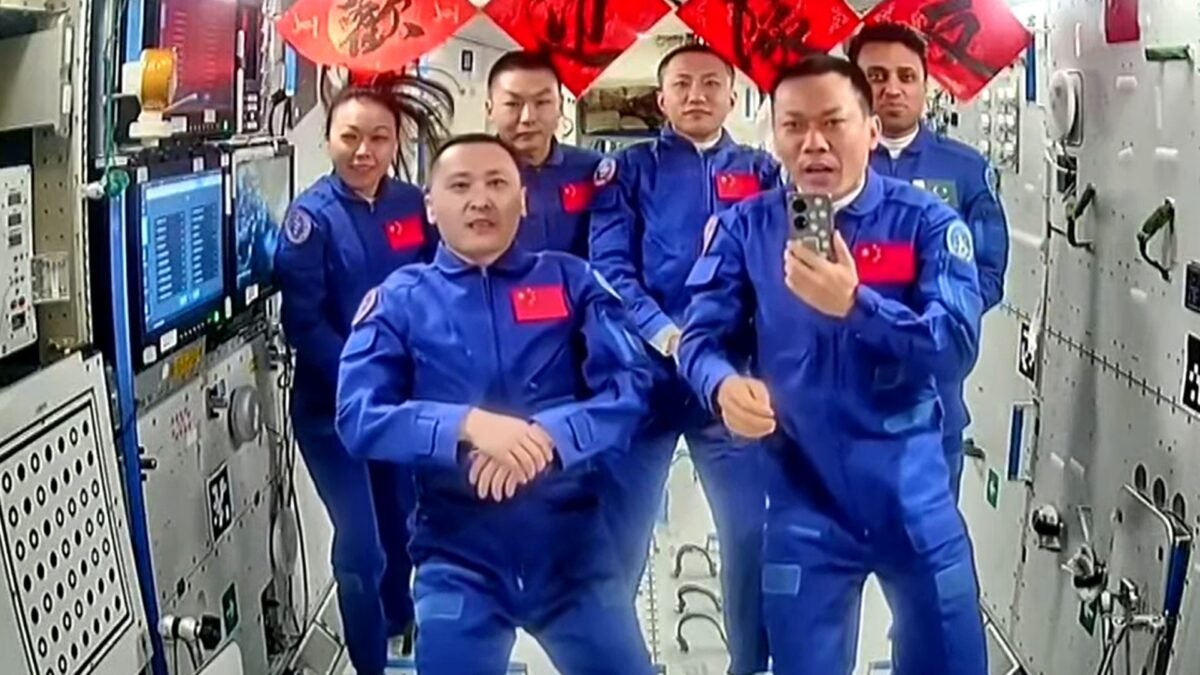
Pakistan entered the age of human spaceflight on Wednesday, 25 November 2026, when Wing Commander Muhammad Zeeshan Ali became the first Pakistani to reach orbit and the first foreign astronaut ever to board China’s Tiangong space station. His spacecraft, Shenzhou-24, lifted off from the Jiuquan Satellite Launch Centre in north-western China at 8:18 a.m. Beijing time and docked with Tiangong just three and a half hours later, at 11:56 a.m. Beijing time, or 8:56 a.m. in Pakistan.
Ali, a 40-year-old pilot in the Pakistan Air Force, flew as the mission’s payload specialist alongside Chinese commander Tang Hongbo and flight engineer Wu Yi. He is expected to spend about a week aboard the station conducting scientific experiments before returning to Earth with two members of the outgoing Shenzhou-23 crew. The flight is the first time China has launched a foreign national into space, and the first joint crewed mission involving Chinese and foreign astronauts in the history of China’s human spaceflight programme, according to the China Manned Space Agency.
“I’m not flying for myself. I carry the name of Pakistan on my shoulder,” Ali told reporters on Tuesday, according to Reuters. Speaking in Mandarin at a press conference at the Jiuquan launch centre on Monday, he told reporters that his first flight “not only represents myself, but also my country,” and that he carried “the dream of 250 million Pakistani people” when he entered the training centre, according to Nature.
The docking was confirmed by the China Manned Space Agency, which declared the launch a “complete success” and said the crew were in good condition, according to Xinhua. Chinese state media reported that the Shenzhou-24 astronauts entered Tiangong and were welcomed by the Shenzhou-23 crew after the spacecraft docked with the front port of the station’s Tianhe core module, according to The News. The spacecraft had separated from its Long March-2F carrier rocket about ten minutes after lift-off and entered its planned orbit.
A three-and-a-half-hour journey to orbit
The mission ran to a tight, well-rehearsed timetable. Shenzhou-24 lifted off aboard a Long March-2F rocket from the Jiuquan Satellite Launch Centre in the Gobi Desert at 8:18 a.m. Beijing time, which was 00:18 GMT and 5:18 a.m. Pakistan Standard Time, according to Reuters. About ten minutes into the flight, the spacecraft separated cleanly from its booster and entered low Earth orbit.
From there, Shenzhou-24 activated its rapid autonomous rendezvous and docking mode, closing on Tiangong over the next three and a half hours. It docked with the front port of the Tianhe core module at 11:56 a.m. Beijing time, or 03:56 GMT and 8:56 a.m. in Pakistan, according to The News. After pressure and leak checks, the hatch was opened and the three astronauts floated into the station, where the Shenzhou-23 crew was waiting to receive them and begin a formal in-orbit handover.
Minutes after the launch, the three crew members were seen flipping through a manual on a live feed broadcast by the state broadcaster CCTV, which reported that the crew were in good condition, according to Reuters. The broadcaster’s coverage showed the crew in good spirits as they settled into the spacecraft for the short flight to the station.
The handover that follows will be different from a routine crew rotation. After several days of joint work, the Shenzhou-24 crew will take over the station from the Shenzhou-23 crew, who have spent six months in orbit. But Shenzhou-23 commander Zhu Yangzhu will remain aboard to complete China’s first year-long orbital mission, a study of how the human body adapts to long-duration spaceflight, according to Nature. Ali will return to Earth aboard the outgoing Shenzhou-23 capsule with two of that crew, Zhang Zhiyuan and Lai Ka-ying, according to Xinhua, after spending five to ten days in orbit, according to Reuters.
Who is Muhammad Zeeshan Ali?
Muhammad Zeeshan Ali is a wing commander in the Pakistan Air Force and a military pilot. His selection for the mission followed a process that began when Pakistan and China signed an agreement in February 2025 on selecting and training Pakistani astronauts for missions to the Chinese space station, according to The News.
Following three rounds of screening and assessment, Ali and fellow Pakistan Air Force pilot Khurram Daud were selected as astronaut candidates from a pool of roughly 20 finalists drawn from an initial group of aviators and scientists, according to China Daily Asia. Both completed their training in China. Ali was subsequently confirmed for the Shenzhou-24 flight, with Daud designated as his backup, according to The News.
To prepare for the flight, Ali trained for seven months in Beijing, during which he underwent intensive Chinese-language classes, learning Chinese songs and reading Chinese poetry, according to Reuters. He also practised calligraphy and played table tennis. The language training mattered: he addressed reporters in Mandarin at the pre-launch press conference, and he will work in a Chinese-speaking crew environment aboard the station.
Ali’s role on the mission is payload specialist, responsible mainly for scientific experiments rather than operating the spacecraft, according to Nature. His duties will include installing experimental samples and research equipment, as well as carrying out scheduled experiments, according to The News.
One distinction matters. Ali is the first Pakistani to travel into orbit, and the first Pakistani to travel beyond Earth on an orbital mission. The adventurer Namira Salim became the first Pakistani to reach space on a Virgin Galactic suborbital flight in October 2023, according to Space.com, but that was a brief flight to the edge of space, not an orbital mission. Ali is the first Pakistani citizen to enter Earth’s orbit and to live and work aboard a space station.
Four Pakistani experiments in orbit
The scientific work is the heart of the mission for Pakistan. Ali will host four biotechnology experiments developed by universities in Pakistan, according to Nature. The experiments were selected by Chinese institutions from more than 300 proposals submitted to the Space and Upper Atmosphere Research Commission, known as SUPARCO, by universities across the country, according to The News.
The research focuses on areas relevant to food security and climate change, according to details previously shared by SUPARCO officials with Reuters. Details about the specific research have not yet been made public, according to Nature, but the broad themes are significant: Pakistan is among the countries most exposed to climate stress, with agriculture employing a large share of its workforce and feeding its population of more than 240 million people.
Experiments conducted in microgravity can reveal how plants, seeds and biological materials behave without the pull of gravity, and the results can feed into crop research, food storage and climate-resilient agriculture on Earth. That is the practical promise behind the mission’s science programme, and it is why SUPARCO and Pakistani universities were involved in selecting the experiments rather than simply sending a passenger.
“Sending an astronaut to space is a huge step for Pakistan’s space aspirations,” Wajiha Iqbal, a lunar scientist at the University of Münster in Germany, told Nature. “The partnership enables Pakistan to do great science in space,” she added.
Reactions in Pakistan: pride, and a sense of a beginning
The reaction in Pakistan was immediate and emotional. Prime Minister Shehbaz Sharif described Pakistan’s participation in the Shenzhou-24 mission as a historic moment belonging to the entire nation, saying the country was looking towards the skies with “anticipation, pride and deep gratitude,” according to The News.
“This is not just one astronaut’s journey, but the journey of 240 million Pakistanis. It is the journey of our younger generation, our scientists and our dreams,” Sharif said in a post on X, according to Reuters. He paid tribute to SUPARCO, academic institutions, scientists, the armed forces and other national institutions for their contributions to the achievement, and thanked Chinese President Xi Jinping, saying his leadership and commitment to Pakistan-China friendship had taken the two countries’ All-Weather Strategic Cooperative Partnership to unprecedented heights.
“Pakistan-China friendship is surpassing the heights of the Himalayas, in its journey to outer space,” Sharif wrote, according to The News. He had earlier called the flight “a historic first” in a post on X on Tuesday, according to Reuters.
President Asif Ali Zardari congratulated the nation on Pakistan’s participation in the mission, describing it as a “landmark achievement” and a moment of immense national pride, according to The News. In a message issued by his office, the president expressed hope that the mission would open new horizons for Pakistan’s space programme and that the scientific experiments conducted during the flight would contribute to research and knowledge. He said Pakistan’s participation in human spaceflight was not merely about reaching space but also about harnessing its opportunities for research, learning and innovation.
Quoting the national poet Allama Iqbal’s verse, “Sitaron se aagay jahan aur bhi hain” — beyond the stars, there are yet more worlds — Zardari said the milestone should inspire the country’s younger generation to pursue knowledge, innovation and scientific discovery with confidence and ambition, according to The News.
Federal Minister for Planning, Development and Special Initiatives Ahsan Iqbal attended the ceremonial send-off for Ali at Jiuquan alongside Pakistani and Chinese delegates. Speaking to the media after the ceremony, he described the mission as a moment of immense pride for the nation and expressed hope that it would inspire young Pakistanis to pursue careers in astronautics. “This is just the beginning, not the end,” he said, according to The News.
Analysis: Why It Matters
The docking of Shenzhou-24 is a small event in the history of spaceflight and a large one in the history of Pakistan. It is small because three people travelling to a space station is now routine: Tiangong has hosted crews continuously since it became fully operational in late 2022, and the International Space Station has done so for a quarter of a century. It is large because, for Pakistan, the distance between watching spaceflight and taking part in it has just closed.
For most of its history, Pakistan’s space programme has been a satellite programme. The Space and Upper Atmosphere Research Commission, SUPARCO, was founded in 1961, and its work has centred on satellites, remote sensing and communications, with launches carried out by friendly countries. Pakistan’s first satellite, Badr-1, flew in 1990 on a Chinese rocket. Its lunar cubesat, iCube-Qamar, flew to the Moon aboard China’s Chang’e-6 mission in 2024. Each step was real, but each step left the human part of spaceflight to others. Ali’s flight changes that. A Pakistani has now lived and worked in orbit, conducted experiments designed by Pakistani universities, and returned with experience that no amount of remote observation can provide.
The mission also matters because of what it says about China’s ambitions. China is promoting Tiangong as a hub for international cooperation while the NASA-led International Space Station faces possible retirement by 2030, according to Reuters. The message is deliberate: as the station built and led by the United States approaches the end of its life, China is offering an alternative platform, and it is offering it first to its closest partners. Pakistan is the first country to take up that offer with a human being, and the symbolism of that choice is impossible to miss.
That symbolism has a geopolitical edge. Since 2011, a United States law known as the Wolf Amendment has barred NASA from bilateral cooperation with China, effectively keeping Chinese astronauts off the International Space Station. China responded by building its own station. Now the roles are partly reversed: it is China that is inviting foreign astronauts aboard, and it is the United States’ partners and friends who must decide whether to accept. The expanding capabilities of China’s space programme now allow it to offer international partners opportunities that few countries can provide on their own, Yuxuan Jia, who researches China’s foreign policy at the Center for China and Globalization, a think tank in Beijing, told Nature. The launch signals China’s “aspirations to become a top space power,” Jia said.
For Pakistan, the strategic dimension is inseparable from the scientific one. The partnership with China is Pakistan’s most important external relationship, spanning trade, infrastructure, defence and now space. The February 2025 agreement on astronaut training was signed in that context, and the flight is the most visible product of it. The planned extension of the partnership to lunar exploration, with a Pakistani-built rover scheduled to travel aboard a Chinese lunar mission around 2028, according to The News, shows that this is not a one-off gesture but a programme with a future.
There is also a quieter, domestic significance. Pakistan’s public conversation is dominated by politics, economic hardship and security. A moment of unambiguous national achievement, earned through science and training rather than rhetoric, is rare, and the response from the country’s leadership shows that it was understood as such. The president quoted Iqbal; the prime minister spoke of 240 million Pakistanis; the planning minister spoke of a beginning, not an end. The hope, expressed by all three, is that the flight inspires young Pakistanis to pursue science. That hope will only be fulfilled if the inspiration is followed by investment: in universities, in SUPARCO, in the laboratories that produced the 300 experiment proposals, and in the schools that will produce the next candidates.
The mission also raises a question that Pakistan will have to answer in the coming years: what comes next? One astronaut on a short visit is a beginning, not a programme. A second flight, a longer stay, a Pakistani experiment designed and built entirely at home, a Pakistani astronaut commanding a mission — these are the steps that would turn a historic first into a sustained capability. The lunar rover planned for around 2028 is the next milestone on that road. Whether Pakistan walks it will depend on decisions taken on the ground, not in orbit.
Pakistan’s long road to orbit
Pakistan’s space story began early and moved slowly. SUPARCO was founded in 1961, only four years after the Soviet Union launched Sputnik, the first artificial satellite. In its early years it conducted sounding-rocket research, and in 1990 it put its first satellite, Badr-1, into orbit aboard a Chinese Long March rocket. That pattern — Pakistani hardware, foreign launchers — defined the programme for decades.
The partnership with China deepened over time. Beijing has launched several Pakistani satellites over the decades, according to The News, and Pakistan-China space cooperation dates back to the early 1990s. The relationship reached the Moon in May 2024, when Pakistan’s iCube-Qamar cubesat flew aboard China’s Chang’e-6 mission and returned images of the lunar surface. The cubesat was built by Pakistani students and engineers, and its success was celebrated in Pakistan as a sign that the country’s space capabilities were growing.
The astronaut agreement of February 2025 was the next step, and it moved quickly by the standards of space programmes. Within less than two years, two candidates had been selected, trained in Beijing, and one had flown. The speed reflects the fact that the training infrastructure, the spacecraft and the station already existed; Pakistan needed only to supply the person and the experiments. That is the model China is offering its partners: come as you are, bring your science, and fly.
It is also worth noting what the mission is not. Ali is a payload specialist on a short visit, not a long-duration crew member. He will spend about a week aboard Tiangong, while the Chinese crew members serve six-month tours and Zhu Yangzhu remains for a full year. His experiments are small in scale. None of that diminishes the achievement; every spacefaring nation began with a first, short flight. But it is a reminder that the distance between a first flight and a mature human spaceflight programme is measured in years and in money, and Pakistan has only just started walking it.
Tiangong and the new space order
Tiangong, which translates as “heavenly palace,” has been fully operational since late 2022, according to Reuters. The station consists of the Tianhe core module, where the Shenzhou-24 crew docked, and the Wentian and Mengtian laboratory modules. It orbits in low Earth orbit and hosts crews on six-month rotations, with cargo spacecraft delivering supplies and new equipment.
The station is the centrepiece of China’s crewed space programme, which began with Yang Liwei’s flight in 2003, when China became the third country, after the Soviet Union and the United States, to send a person into orbit independently. Since then, China has built a record of steady progress: spacewalks, rendezvous and docking, a space laboratory, and now a permanently crewed station. Its next ambitions are larger still: a crewed mission to the Moon before 2030, and eventually a journey to Mars.
The international dimension of Tiangong is now its most watched feature. China has said from the start that the station is open to international cooperation, and it has signed agreements with a number of countries and with the United Nations Office for Outer Space Affairs for experiments aboard the station. Pakistan is the first country to send an astronaut, but it is unlikely to be the last. Other countries in Asia, Africa and Latin America, many of which have no realistic path to the International Space Station, will be watching Ali’s flight closely.
The contrast with the International Space Station is instructive. The ISS is a partnership of the United States, Russia, Europe, Japan and Canada, built over decades at a cost of more than 150 billion dollars. It is ageing, and its partners have not agreed on a single successor. NASA plans to retire it around 2030 and hand low Earth orbit over to commercial stations that do not yet exist. China, by contrast, has a station in orbit today, and it is inviting guests. That is a powerful position, and Beijing is using it.
None of this means Tiangong will replace the ISS. The American-led station is larger, has hosted far more people, and supports a far broader research programme. But the direction of travel is clear: the era in which human spaceflight was dominated by two superpowers, and then by one partnership, is giving way to a more crowded field, in which China is a full participant and an increasingly confident host.
What to watch next
The first thing to watch is Ali’s return. He is expected to come back to Earth in about a week aboard the Shenzhou-23 capsule, along with two members of that crew. The landing, in the desert of Inner Mongolia, will be the final act of the mission, and the experiments he carries back will be handed to the Pakistani universities that designed them. The results, when they are published, will be the first scientific harvest of Pakistan’s human spaceflight programme.
The second is the handover itself. Zhu Yangzhu’s year-long stay aboard Tiangong is a significant undertaking: a full year in microgravity is a demanding test of the human body, and the data it produces will inform China’s plans for longer missions, including a crewed flight to the Moon. The study of how the human body adapts to spaceflight is one of the stated goals of this mission, according to Nature, and Zhu’s extended stay is the mechanism for it.
The third is what Pakistan does next. The lunar rover planned for around 2028, travelling aboard a Chinese lunar mission, is the next concrete milestone, according to The News. Beyond that, the questions are open: will Pakistan send a second astronaut? Will it seek a longer stay aboard Tiangong? Will it build its own experiments, its own hardware, its own launch capability? The answers will depend on funding, on political will, and on whether the excitement of this week survives contact with the country’s other, more pressing demands.
For now, the achievement stands on its own. A Pakistani pilot who spent seven months learning Mandarin in Beijing has floated through the hatch of a space station and into history. His country watched, celebrated, and, for a day at least, looked up.
Sources
- Reuters — China’s Shenzhou-24 space flight takes off with Pakistani national as first foreign astronaut
- The News — China’s Shenzhou-24 carrying Pakistani astronaut docks at space station
- Nature — Pakistani astronaut to become first foreign visitor to China’s space station
- China Daily Asia — Pakistani astronaut to be first foreigner aboard Tiangong
- Arakis Space News — Shenzhou-24 docks at Tiangong with Pakistan’s Muhammad Zeeshan Ali (citing Xinhua)

About the Author — Abdul Mannan
Related Articles

Astronomers Find the Most Distant Quasar Ever Seen, Powered by a Black Hole 360 Million Times the Sun’s Mass
Astronomers have found the most distant quasar ever seen — a galactic core powered by a black hole…

Meta Launches Muse, Its Personal AI Agent, in the UK With Backing From Britain’s Biggest Retailers
Meta's personal AI agent Muse arrives in Britain today, able to shop, book travel and chase refunds on…
Flower Hidden for 100 Million Years Inside a Kansas Rock Is the Oldest Palm Flower Ever Found
A flower no bigger than a grain of rice, hidden inside a museum rock for more than 130…