
Ukraine Says It Damaged Five Russian Jets, Including Kinzhal-Carrying MiG-31s, in Strike on Savasleyka Air Base

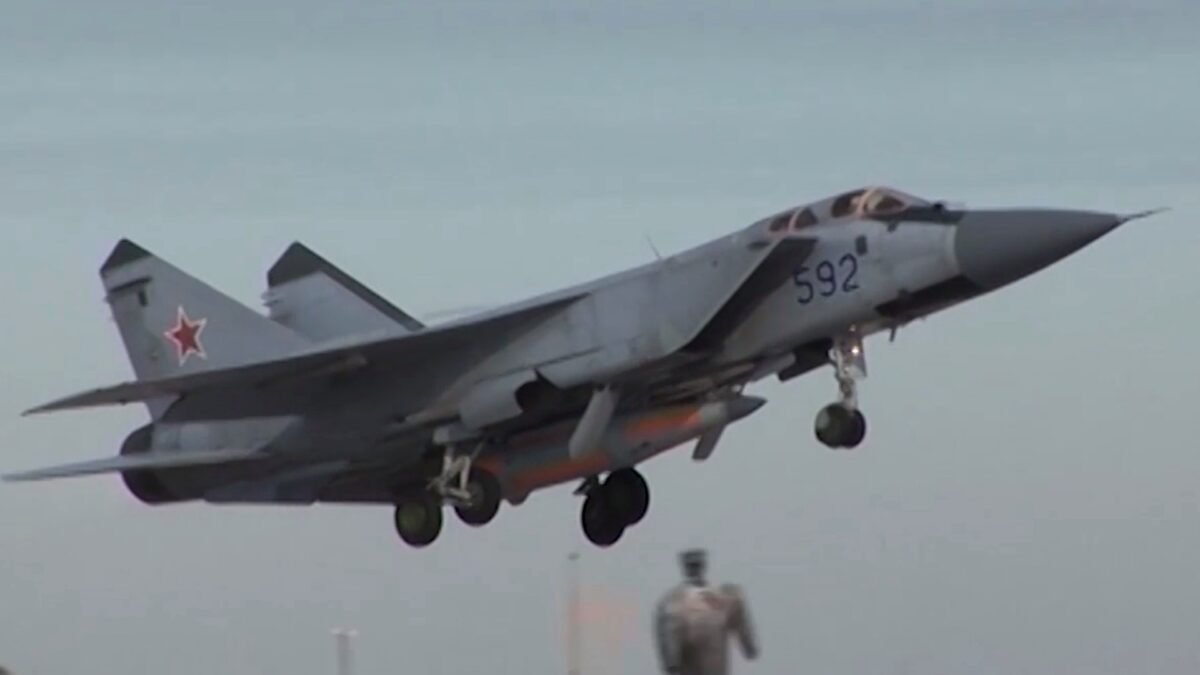
Ukraine said on Wednesday that it had damaged five Russian military aircraft, including three MiG-31 jets used to carry hypersonic missiles, in strikes on the Savasleyka air base deep inside Russia, about 300 kilometres east of Moscow. Russia has not commented on the claim, and no satellite imagery confirming the damage had surfaced by Wednesday afternoon.
According to Reuters, Ukraine’s General Staff said the Savasleyka air base in the Nizhny Novgorod region had been hit in the latest long-range attacks aimed at crippling Moscow’s war effort. Three MiG-31 jets, which are used to fire hypersonic missiles, and two Su-34 fighter-bombers were knocked out of operation “for some time”, the General Staff said.
The BBC reported that Kyiv’s General Staff said the extent of the damage was still being assessed, adding that “there may be even better news to come”. It did not elaborate on what weapons had been used to hit the airfield.
The strikes took place on Tuesday 24 November and overnight into Wednesday, according to the Defence Blog, which reported the General Staff’s statement. Ukraine’s Defence Ministry said it was the fifth strike on the airfield since August 2024, and that the base was last hit in June 2025, when Ukraine’s Special Operations Forces took part in an early-morning attack.
“The strike on the airfield reduces the enemy’s ability to terrorize our civilians,” the ministry said, according to the Defence Blog.
What Ukraine says happened
Ukraine’s General Staff published its account of the operation on X, saying three MiG-31s and two Su-34 fighter-bombers had been hit at Savasleyka and “will be unable to fly for some time”, citing preliminary information. “The extent of the damage and the exact number of aircraft affected are still being verified,” the General Staff wrote, adding: “There may be even better news to come.”
The losses were first claimed on Wednesday morning by Absolutely Reliable Source, a Ukrainian Telegram channel that tracks long-range strikes, hours before the General Staff released its own figures, according to the Defence Blog.
The same round of strikes hit a P-18 radar station near Karavan-Solodkyi in the Russian-occupied part of Luhansk region, the General Staff said. The Soviet-designed radar spots aircraft at long range and passes targeting data to air defence units, and the General Staff said Russia’s radar network now has one less “eye”.
Ukrainian forces also hit two fuel depots and a logistics depot near Novosvitlivka, another logistics depot near Rozpasiivka, a fuel depot near Ahronomichne in Donetsk region and an ammunition depot near Novyi Svit, according to the statement. The damage was still being assessed.
Russia’s Defence Ministry said its air defences had shot down 305 Ukrainian drones over 13 regions overnight, including Nizhny Novgorod. It did not mention Savasleyka. That silence is itself part of the story: Moscow routinely reports drone interceptions in detail while saying nothing about what, if anything, got through.
The base and the aircraft it hosts
Savasleyka, in Russia’s Nizhny Novgorod region, has been a target for Ukraine for several years. It hosts aircraft used by Russia to launch hypersonic missiles and glide bombs, according to the BBC.
The airfield is home to the 3958th Aviation Base, equipped with MiG-31 jets, as part of the 4th Centre for Combat Application and Crew Training. The history of the airfield goes back to 1953-54, when the training centre of the Aviation of the Air Defence Forces was moved there from Seyma.
The MiG-31 is the aircraft that matters most at Savasleyka. The MiG-31K variant carries the Kh-47M2 Kinzhal, an air-launched ballistic missile that Russia fires at Ukrainian cities and infrastructure. The take-off of MiG-31s in particular frequently triggers nationwide air raid alerts across Ukraine, as the Kinzhal missiles they carry have been known to hit large infrastructure and military targets and are difficult to shoot down, the BBC reported.
The Su-34 is the two-seat bomber Russia uses to drop guided glide bombs on Ukrainian front-line positions and towns, according to the Defence Blog. Glide bombs, released from aircraft flying safely behind Russian lines, have become one of the most destructive weapons of the war, flattening Ukrainian positions and settlements that conventional artillery cannot reach.
That combination is what makes Savasleyka a high-value target. It is not simply another airfield. It is one of the launch points for two of the weapons Ukraine fears most: the Kinzhal, which arrives with almost no warning, and the glide bomb, which has ground down Ukrainian defences town by town. Damaging the aircraft that carry them, even temporarily, is therefore worth more to Kyiv than the raw number of five airframes might suggest.
A wider night of long-range strikes
The Savasleyka operation was not an isolated attack. Overnight, Kyiv also said it had hit two oil refineries in Russia’s Samara region, some 800 kilometres from the front line, the BBC reported: the Syzran and Kuibyshev refineries.
Samara region governor Vyacheslav Fedorishchev said the night-time attacks had been “a true ordeal”, with more than 145 drones shot down. One person was killed and several towns experienced power outages, he said.
“Did you repair them? We’ll hit them again,” the defence ministry in Kyiv said, in a message aimed at Russia’s refinery operators. The taunt captures the logic of the campaign: Ukraine is not trying to destroy every refinery in one night. It is trying to make repair futile, hitting the same facilities again and again until the cost of keeping them running exceeds the value of the fuel they produce.
Ukraine’s military said it had struck 16 Russian refineries since the beginning of November, forcing some to halt operations and others to reduce production. Reuters reported, citing industry sources, that renewed Ukrainian drone attacks had cut Russian oil refineries’ processing volumes by 45 per cent since late October. Kyiv has said it will stop striking Russian energy targets only when Moscow does the same.
Kyiv also said it had hit a radar system as well as fuel and logistics depots across Ukrainian territories currently occupied by Russia. “Without fuel, military vehicles cannot move; without ammunition, artillery falls silent,” the defence ministry said, adding that every successful hit meant Moscow could carry out fewer strikes.
Kyiv has developed a thriving weapons industry, and Ukrainian strikes on Russian targets well beyond the front line have become commonplace in the years since Moscow launched its full-scale invasion, the BBC noted. What was once a remarkable feat — a Ukrainian drone reaching a target hundreds of kilometres inside Russia — is now a nightly occurrence.
Russia’s response, and its silence on Savasleyka
On Tuesday, President Vladimir Putin called for a tightening of security measures across the country’s energy facilities. But he also argued that Russia had managed to stabilise its domestic fuel market without suffering “critical damage” and added that Moscow would “inevitably” retaliate against Kyiv.
The retaliation, in the form it takes most nights, came in the air. Ukraine continues to come under daily attack. Ten people were killed across several regions between 24 and 25 November, while thousands are without power after Russian strikes on energy infrastructure, the BBC reported. Overnight, Russian strikes damaged energy and gas infrastructure across four Ukrainian regions.
That exchange — Ukrainian drones hitting Russian refineries and airfields, Russian missiles and drones hitting Ukrainian power plants and cities — has become the war’s nightly rhythm as winter approaches. Each side is trying to break the other’s ability to keep fighting through the cold months, and each side is absorbing damage that would have seemed unbearable in the war’s first year.
Russia launched its full-scale invasion of Ukraine in February 2022, and fighting has continued despite a renewed US-backed peace push to end what has become Europe’s worst conflict since the Second World War, Reuters noted.
Savasleyka has been hit before
This is not the first time Ukrainian drones have reached Savasleyka. The airfield was struck on 13 and 16 August 2024, during the Russo-Ukrainian War, resulting in explosions and the destruction of several aircraft and a fuel depot, with damage to several others.
The governor of Nizhny Novgorod Oblast, Gleb Nikitin, said the 13 August raid had been repelled without any casualties, and post-attack damage analysis by the Associated Press located a burn mark on the apron, but no obvious damage to aircraft. NASA fire-detection imagery was consistent with a fuel depot fire on 14 August 2024.
After the second attack on 16 August, a Ukrainian military intelligence source told the Kyiv Independent that some three Russian aircraft were destroyed and five damaged by the two attacks. The destroyed aircraft were believed to be a MiG-31K and two Il-76 transport aircraft. At the time of the 13 August attack, satellite intelligence indicated the airfield housed 11 MiG-31K aircraft, an Il-76 aircraft and five Mi-8 and Mi-24 helicopters.
On 9 June 2025, Ukrainian drones struck the Savasleyka air base again, damaging a MiG-31 and a Su-30 or Su-34. The battle damage was still being assessed.
In August 2026, President Volodymyr Zelenskyy said Ukrainian forces had carried out strikes on two Russian military-related targets, including a rocket and space centre in Samara and the Savasleyka military airfield, using Flamingo missiles as part of what he called Ukraine’s “long-range sanctions” strategy against Russia. Explosions were reported overnight in both areas, and monitoring channels said fires had been seen around Savasleyka.
The pattern is clear. Ukraine returns to Savasleyka every few months, and each time it claims to have damaged more of the aircraft that launch Kinzhals at its cities. Russia repairs what it can, replaces what it must, and the base keeps operating. The question is whether the cumulative damage is beginning to outpace Russia’s ability to repair it.
The refinery campaign behind the airfield strike
The Savasleyka attack cannot be understood on its own. It is one element of a deep-strike campaign that has become the central feature of Ukraine’s war effort in the second half of 2026, and its logic is economic as much as military.
Reuters reported that the operation followed a series of high-profile strikes by Ukrainian forces in recent days in which two Russian ships were hit in Libyan waters and a Russian vessel was struck in the Gulf of Finland. Last week, Ukraine destroyed the road portion of Russia’s prized bridge to the Crimea peninsula after consecutive attacks.
Ukrainian forces are also hunting Russian ballistic-missile launchers used to carry out many of the attacks on Ukrainian cities, striking 16 over the past several months, Defence Minister Yevhenii Khmara said this week, according to Reuters.
The refinery campaign is the most consequential part of this effort. A 45 per cent cut in processing volumes since late October is not a symbolic achievement. It means less fuel for the Russian military, less revenue for the Russian state, and — as Putin’s own remarks about stabilising the domestic fuel market suggest — growing strain on supplies at home. Russia is one of the world’s largest oil producers. That its president must publicly reassure the country about petrol supplies is itself a measure of what the Ukrainian campaign has achieved.
The campaign also has a diplomatic dimension. Kyiv has said it will stop striking Russian energy targets only when Moscow does the same. That is an offer of mutual restraint, and it puts the ball in Moscow’s court: the attacks on refineries are presented not as an end in themselves but as leverage, a way of imposing a cost on Russia’s nightly bombardment of Ukrainian energy infrastructure.
Analysis: why five jets matter, and what is still unproven
Five aircraft is a small number in a war that has consumed thousands of tanks, armoured vehicles and artillery pieces. But not all aircraft are equal, and the five claimed at Savasleyka are among the most valuable in Russia’s inventory.
The MiG-31K is a scarce and specialised aircraft. Russia operates only a small fleet of Kinzhal carriers, and the MiG-31 itself has been out of production for decades. Every airframe lost or damaged is, in practical terms, irreplaceable in the short term. The August 2024 strikes were assessed at the time as potentially affecting as much as a quarter of Russia’s MiG-31K fleet. If Wednesday’s claim is accurate, three more of these rare aircraft are out of action, at least for now.
The Su-34 matters for a different reason. It is the workhorse of Russia’s glide-bomb campaign, and glide bombs have become the weapon that most directly shapes the battlefield. Russian aircraft release them from beyond the reach of most Ukrainian air defences, and the bombs, guided to their targets, have destroyed Ukrainian fortifications, towns and supply lines. Two fewer Su-34s will not stop that campaign. But the campaign depends on a finite fleet flying a punishing tempo, and every airframe grounded for repairs adds strain.
That said, the claim must be treated with the caution it deserves. It comes from one side of the war, and the other side has said nothing about it. No satellite images showing damage at the base had surfaced by Wednesday afternoon. The General Staff itself said the extent of the damage was still being verified. In previous strikes on Savasleyka, Ukrainian claims and independent evidence have not always matched: in August 2024, Ukrainian intelligence said three aircraft had been destroyed and five damaged, while the Associated Press’s analysis of satellite imagery found a burn mark on the apron but no obvious damage to aircraft.
This does not mean the claim is false. It means it is, for now, a claim. The honest way to report it is as Ukraine’s account of its own operation, corroborated by the fact that Russia’s own Defence Ministry reported shooting down 305 drones overnight, including over Nizhny Novgorod, while saying nothing about the airfield itself. Moscow’s silence is not proof of damage, but it is consistent with a pattern: Russian authorities routinely acknowledge interceptions and rarely acknowledge hits.
The timing also matters. The strike came as Ukraine struggles under a renewed campaign of attacks on its energy system and mounting Russian strikes on front-line cities, as Reuters put it. Kyiv is trying to dent Moscow’s military might while its own cities lose power. The deep-strike campaign is, in part, an answer to a question Ukrainians ask every night: if Russia can hit our power plants, why can we not hit theirs? The answer, increasingly, is that Ukraine can, and does.
There is also a message in the choice of target. Savasleyka is 300 kilometres east of Moscow — far from the front, deep in what Russians have long regarded as safe territory. Every strike there is a reminder that the war is not contained to the border regions, and that the aircraft launching Kinzhals at Kyiv are themselves vulnerable. That psychological effect may matter as much as the physical damage.
Why It Matters
The Savasleyka strike matters for three reasons, and they point in different directions.
First, it shows that Ukraine’s long-range strike capability continues to grow. Three years ago, reaching a target 300 kilometres inside Russia was a rare achievement. Now it happens most nights, against refineries, airfields, radar stations and depots, using drones and missiles that Ukraine increasingly builds itself. The BBC’s observation that Kyiv has developed “a thriving weapons industry” is not a throwaway line. It is the strategic fact that makes the deep-strike campaign sustainable. Ukraine is no longer dependent on a handful of donated long-range weapons. It is manufacturing the means to hit Russia at depth, night after night.
Second, it underlines how the war has become a contest of endurance between two energy systems and two air forces. Russia is trying to freeze Ukraine into submission by destroying its power grid. Ukraine is trying to strangle Russia’s war economy by destroying its refineries and the aircraft that launch its most feared missiles. Neither side has succeeded yet. But the contest is not symmetrical: Ukraine’s losses are measured in civilian lives and darkened cities, while Russia’s are measured in export revenue and military hardware. That asymmetry is why Kyiv believes the campaign is worth continuing, and why Moscow believes its own bombardment will eventually break Ukrainian will. One of those beliefs will prove wrong. The winter will tell which.
Third, the strike comes at a delicate moment for diplomacy. A renewed US-backed peace push is under way, and talks have been taking place in Abu Dhabi. Strikes like this one complicate those talks in both directions: they strengthen Ukraine’s negotiating position by demonstrating that it can impose costs on Russia, and they harden Russia’s position by giving Moscow a reason to demand that the strikes stop as a condition for any deal. Kyiv’s offer — to stop hitting energy targets if Moscow does the same — is the most concrete proposal for mutual de-escalation on the table. Whether either side takes it up will shape the war’s next phase.
There is also a narrower, practical significance. If three MiG-31s are genuinely out of action, even temporarily, the tempo of Kinzhal launches may dip in the coming weeks. Ukrainians will notice: every MiG-31 take-off triggers a nationwide alert, and every alert disrupts the lives of millions. A quieter sky, even for a few days, is a real, if modest, gain.
What to watch next
The first thing to watch is satellite imagery. Commercial satellite companies photograph Savasleyka regularly, and images of the apron and hangars in the coming days will show whether aircraft were damaged or destroyed, and whether the base’s operations have changed. Previous strikes have produced a familiar pattern: initial Ukrainian claims, Russian silence, then imagery that partly confirms and partly qualifies the claims. Expect the same this time.
The second is Russia’s response. Putin has said Moscow will “inevitably” retaliate, and the overnight strikes on Ukrainian energy infrastructure are already part of that retaliation. The question is whether Russia escalates further, either by intensifying its attacks on Ukrainian cities or by striking at the facilities that produce Ukraine’s long-range drones. Moscow has repeatedly threatened both.
The third is the refinery campaign. Ukraine has now struck 16 refineries since the start of November, according to its military, and processing volumes are down 45 per cent since late October. If that trend continues, Russia will face a choice between supplying its military, supplying its domestic market and supplying its export customers. It cannot do all three indefinitely at reduced capacity. Watch for fuel shortages, export cuts or emergency measures in the coming weeks.
The fourth is the diplomatic track. The Abu Dhabi talks, the US-backed peace push and Kyiv’s offer of mutual restraint on energy strikes all point to a moment when both sides are weighing whether to keep escalating or to start de-escalating. The Savasleyka strike, and Russia’s answer to it, will be part of that calculation.
Finally, watch Savasleyka itself. Ukraine has now hit it five times since August 2024. The base keeps operating, and Russia keeps repairing it. But each strike adds damage, consumes resources and forces Russia to divert air defences to protect targets deep inside its own territory. The question is not whether one strike wins the war. It is whether the accumulation of strikes, night after night, eventually makes the war unaffordable for Moscow. That is the bet Kyiv is making, and Savasleyka is where it is being tested.
Sources
- Reuters — “Ukraine says it struck a major Russian air base, damaging five planes”
- BBC (via EuropeSays) — “Five Russian military jets hit in airfield strike, says Ukraine”
- Defence Blog — “Three MiG-31s and two Su-34s hit at Russian base, Ukraine says”
- Wikipedia — “Savasleyka air base” (base history and previous strikes)
- SSBCrack News — “Ukraine Says Strikes Hit Five Russian Aircraft and Two Major Oil Refineries”

About the Author — Abdul Mannan
Related Articles

Solomon Islands Signs Landmark Treaty with Australia, Vowing No Foreign Military Base on Its Soil
The Solomon Islands has signed a landmark treaty with Australia pledging that no foreign military base will ever…
Second Russian Airspace Breach in Four Days as Poland Renews Push for Permanent US Troops
A Russian drone briefly entered Polish airspace overnight on 24 November, the second breach in four days, prompting…
Leaked Russian Data Puts War Dead at More Than 720,000, Analysis Finds
Leaked records from Russia's own statistics agency show at least 490,000 soldiers registered dead — and a real…