
Second Russian Airspace Breach in Four Days as Poland Renews Push for Permanent US Troops

Poland has suffered a second Russian airspace violation in four days, and Warsaw has answered it with a renewed demand for a permanent American military presence on its soil. A Russian drone briefly entered Polish airspace overnight on 24 November, during a large Russian attack on western Ukraine, four days after three Russian cruise missiles came down in south-eastern Poland. The Polish armed forces said authorisation was given to shoot the drone down, but the order was not carried out after the aircraft turned east, because of the risk to civilians and property on the ground.
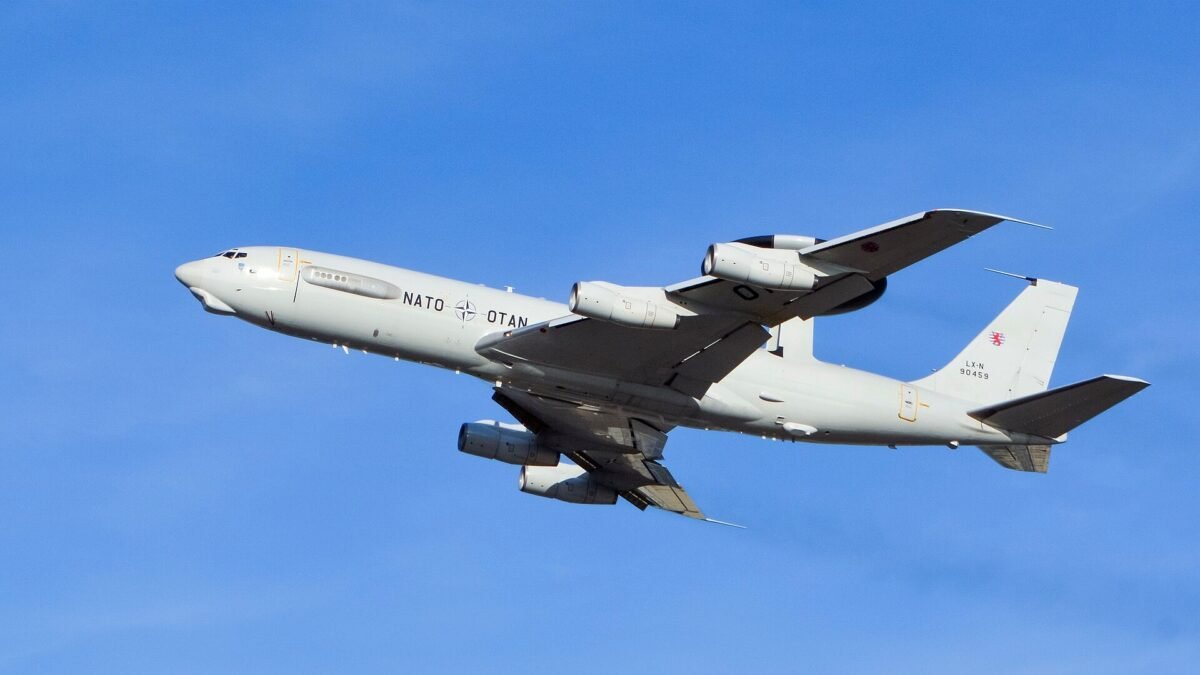
The new breach, confirmed by the Polish armed forces and reported by Reuters, has turned what began as a single alarming incident into a pattern. On Tuesday, Poland’s chargé d’affaires in Washington, Bogdan Klich, briefed the White House National Security Council on the violations and used the meeting to press Warsaw’s long-standing call for American troops to be stationed permanently in Poland. NATO, meanwhile, has authorised the forward deployment of an AWACS early-warning aircraft to the alliance’s eastern flank, after an emergency meeting of the North Atlantic Council on Monday.
For a country that has spent the past four years warning that Russia’s war in Ukraine could spill across its borders, the two incursions in four days are the clearest test yet of NATO’s defences — and of its willingness to turn reassurance into something permanent.
The second breach in four days
The latest violation came in the early hours of 24 November, when a Russian unmanned aerial vehicle crossed into Polish airspace during Russia’s nighttime attack on western Ukraine. The Polish armed forces announced the incident on X, saying the drone had briefly violated Polish airspace, according to Reuters. The military said authorisation was given to shoot the object down, but after it changed course and headed east, a decision was made to refrain from using weapons, “taking into account the potential threat to civilians and the possible consequences of shooting down the object”.
Deputy Defence Minister Paweł Zalewski said Polish authorities believed the violation was deliberate. “It’s hard to imagine this being a coincidence, so we assume it was an intentional act,” he told the broadcaster RMF FM, according to Reuters.
The incident followed the far more serious breach of Friday 20 November, when three Russian Kh-101 cruise missiles entered Polish airspace and crashed in the country’s south-east. Polish prosecutors confirmed on Sunday that debris recovered at all three crash sites belonged to Russian Kh-101 cruise missiles, revising an initial military assessment that one of the objects might have been a drone. Preliminary findings indicated that the missiles had been manufactured in October or November 2026 at a facility in Dubna, in Russia’s Moscow region, prosecutors said.
No one was injured in the 20 November incident and no critical infrastructure was damaged. But the missiles came down near Nowy Lipowiec, Rudnik nad Sanem and Mołodycz, in the Lublin and Subcarpathian regions — and one of them landed roughly 35 kilometres from Nowa Dęba, where allied troops were taking part in a multinational military exercise. Prime Minister Donald Tusk called the incursion a likely deliberate provocation timed to coincide with the exercise.
Polish authorities monitored 11 potentially threatening aerial objects during the attack, three of which entered the country’s airspace, according to Lieutenant General Ireneusz Nowak, commander of Poland’s Armed Forces Operational Command. Polish F-16 fighter jets, Swedish Gripen aircraft flying under NATO command, a Swedish Saab 340 early-warning aircraft and a Dutch aerial refuelling aircraft were all involved in the response, while Patriot air-defence systems were activated around Rzeszów-Jasionka Airport and near Świdnik.
A shot that was authorised but never fired
One of the most striking details to emerge from the 20 November incident is how close NATO came to firing on a Russian weapon over allied territory — and why it did not. A Swedish JAS 39 Gripen pilot operating under NATO command was authorised to engage a Russian Kh-101 cruise missile, according to Lieutenant General Nowak, as reported by The Kyiv Independent. NATO’s Combined Air Operations Centre in Uedem, Germany, had issued conditional authorisation to fire, but the pilot could not positively identify the object visually or through the aircraft’s onboard electro-optical systems because of severe weather. No weapons were fired.
The Swedish Armed Forces said its jets had tracked several unidentified objects over Poland during a mission that lasted several hours under difficult weather conditions. The episode exposed a hard limit in NATO’s air-defence posture: even with authorisation in hand, a pilot who cannot identify a target cannot lawfully engage it, and the alliance’s rules are designed to prevent exactly the kind of mistaken engagement that could turn an incident into a war.
Poland revised its air-defence procedures earlier in 2026 to permit some engagements without visual identification, but the identification conditions were not met on the night of 20 November. The same restraint governed the second incident four days later, when the order to shoot the drone down was withdrawn once it turned east and the risk to people on the ground outweighed the value of destroying it.
That restraint is deliberate, and it is also the heart of Warsaw’s frustration. Poland can track the objects, scramble the jets and obtain the authorisation — and still watch a Russian weapon cross its airspace and crash on its soil, twice in four days, without firing a shot.
Warsaw’s answer: a permanent American garrison
Poland’s response to the two incursions has been to renew, with new urgency, its push for a permanent United States military presence. Klich said on Tuesday that he had briefed the National Security Council on the violations and raised the permanent deployment of American troops once again. “Yesterday, I briefed the U.S. National Security Council on the violation of Polish airspace by Russian Kh-101 missiles and once again discussed the issue of the permanent deployment of U.S. troops in Poland,” he wrote on X.
Poland has lobbied for a permanent American base since at least 2018, when the then president, Andrzej Duda, proposed naming one “Fort Trump”. After Russia’s full-scale invasion of Ukraine in February 2022, the United States substantially expanded its rotational presence in Poland, building towards roughly 10,000 troops, but it has stopped short of establishing a permanent garrison.
The campaign has gathered pace in recent weeks. President Karol Nawrocki convened Poland’s National Security Council on 3 November to discuss a permanent American base, alongside a domestic dispute over the Constitutional Tribunal. Prime Minister Tusk said afterwards that the president and the government broadly agreed on keeping and strengthening the American presence, describing a “very broad consensus” on the issue. Four candidate locations have been identified — Wrocław, Poznań, Bydgoszcz and Szczecin — all in the western part of the country, and Polish officials have estimated the cost of the base itself at around 3 billion zloty, roughly 700 million euros, plus several billion more for supporting infrastructure. Construction, officials have said, would take at least three years after American approval.
On 11 November, Defence Minister Władysław Kosiniak-Kamysz met the United States Secretary of Defense, Pete Hegseth, at the Pentagon. Afterwards, Poland’s Ministry of National Defence said Hegseth had “greenlit” a permanent American military presence, with the final decision resting with the White House, which is expected to decide in early December. The Pentagon’s own statement on the meeting did not mention a base explicitly, but it confirmed that both countries intend to sign an agreement boosting military cooperation, and Kosiniak-Kamysz thanked Hegseth for working to implement President Donald Trump’s declaration on deploying an additional 5,000 soldiers to Poland.
“The permanent presence of US troops in Poland is our absolute priority and we will not abandon this matter,” Kosiniak-Kamysz said in the Polish ministry’s statement. “We will argue for this to the very end. This green light was very visible on the side of the Pentagon, in what Secretary Hegseth and his associates were saying.”
Under the plan discussed, roughly 5,000 additional American service members would join the approximately 10,000 already stationed in Poland, most of them on rotational deployments, and the base would need infrastructure for around 25,000 people, including families and support personnel. In September, Foreign Minister Radosław Sikorski said American and Polish officials were working towards an agreement that could accommodate up to 10,000 American troops. “We want the kind of U.S. presence that would reassure us, but not be threatening to Russia,” Sikorski said at a Council on Foreign Relations event in New York, according to Bloomberg.
President Trump has previously voiced support for a permanent American military base in Poland, although Washington has also been reviewing American troop deployments across Europe. A deputy Polish defence minister said on 30 October that a United States decision was expected in December, though it could slip to early 2027.
NATO’s response: eyes in the sky
While Warsaw presses Washington on a permanent base, NATO has moved to strengthen its surveillance over Poland. Following an emergency meeting of the North Atlantic Council in Brussels on Monday 23 November, the Supreme Allied Commander Europe, General Alexus Grynkewich, authorised the forward deployment of a NATO Airborne Warning and Control System aircraft to the alliance’s eastern flank.
“NATO and Allied assets reacted quickly to the airspace violations, and the Supreme Allied Commander Europe has authorized the forward deployment of a NATO Airborne Warning and Control System aircraft,” NATO spokesperson Allison Hart said in a statement. She added that all allies stood “in full solidarity with Poland” and that NATO remained “united, ready, and committed to defending against any threat”. Hart also said Grynkewich was examining the deployment of additional assets as he continued to assess the alliance’s deterrence and defence posture in Poland and elsewhere.
The AWACS aircraft — Boeing E-3A Sentry jets with a distinctive nine-metre-wide rotating radar dome — can detect low-flying cruise missiles and aircraft long before they reach allied borders. NATO operates 14 of the aircraft from Geilenkirchen Air Base in Germany, and according to the alliance, an E-3A operating at 30,000 feet can monitor more than 312,000 square kilometres, an area roughly the size of Poland. NATO has not publicly specified the aircraft’s exact operating location or how long the deployment will last.
The deployment is a reinforcement rather than a new presence. NATO AWACS aircraft already regularly conduct surveillance missions along the alliance’s eastern flank and have been operating over Polish territory under Operation Eastern Sentry, the mission launched after Russian drones violated Polish airspace in September 2025. The first AWACS surveillance flight in support of Eastern Sentry took place on 19 September 2025, and flight-tracking data showed a NATO aircraft patrolling Polish airspace near Russia’s Kaliningrad region as recently as 21 November.
Poland also summoned Russia’s ambassador after the 20 November incident, according to Reuters, and Tusk has asked Poland’s Visegrad partners for support. NATO Secretary-General Mark Rutte, who visited Warsaw on the Saturday after the incursion, said: “I can guarantee that NATO will defend every inch of Polish territory.”
Not the first time: September 2025
The November incursions are not the first time Russian weapons have entered Polish airspace. On the night of 9–10 September 2025, around 19 Russian drones crossed into Poland during a large attack on Ukraine. Several were shot down by Polish and allied jets, and Poland invoked Article 4 of the North Atlantic Treaty — the clause under which an ally can call consultations when it considers its territorial integrity, political independence or security threatened. It was the eighth time Poland had invoked the clause, and NATO launched Operation Eastern Sentry two days later to strengthen air defences along the eastern flank.
Notably, Poland did not invoke Article 4 after the 20 November missile incident, choosing instead to seek an emergency session of the North Atlantic Council and specific reinforcements. The difference matters. Article 4 is a formal alarm bell; the route Warsaw chose this time was quieter and more operational — a request for capabilities, not consultations. It suggests a government that wants practical help more than symbolic escalation, and that is confident the alliance is already listening.
The September 2025 episode also established the pattern that is now repeating: Russian weapons straying or being sent across the border during large-scale attacks on Ukraine, NATO jets scrambling, and a debate afterwards about whether the crossings were accidents of war or deliberate tests of the alliance’s responses. Polish officials have consistently argued they are deliberate. In September 2025, as in November 2026, Warsaw pointed to the timing — the incursions coincided with allied military activity in Poland, including the Coalition of the Willing’s first military exercise, Exercise Koalicja, held in Nowa Dęba from 9 to 22 November.
The 20 November attack on Ukraine was itself the largest Russian strike package of the month: 27 ballistic missiles, 84 cruise missiles and 404 drones, according to the Ukrainian Air Force, as cited by the Institute for the Study of War. The scale of the bombardment makes accidental spillover plausible — but it also makes deliberate probing easier to hide, which is precisely why Polish officials have treated the crossings as intentional.
Analysis: two crossings, one message
The most important fact about the past five days is not that a Russian weapon crossed into Poland. It is that it happened twice, in four days, in two different forms — three cruise missiles on a Friday, a drone on a Tuesday — and that on both occasions NATO’s jets were in the air, the authorisation to fire was in hand, and no shot was taken. That combination — intrusion without interception — is the story, and it is the reason Warsaw is now pressing its case for a permanent American presence with a new sense of urgency.
There are two ways to read what Russia is doing, and the distinction matters more than the debris. The first reading is technical: Russia is launching enormous strike packages at Ukraine, some of them hundreds of weapons at a time, and some of those weapons go astray. Cruise missiles malfunction, drones are blown off course, and a border that runs for hundreds of kilometres along the flight path to western Ukraine is bound to be crossed occasionally. On this reading, the incursions are the predictable friction of a war fought next door, and the correct response is better radar, better procedures and better coordination — exactly what NATO’s AWACS deployment provides.
The second reading is political, and it is the one Polish officials have adopted. On this reading, the crossings are deliberate tests. A missile that lands 35 kilometres from an allied military exercise, four days before a second drone follows the same route, looks less like an accident than a message: that Russia can reach into NATO territory, that the alliance’s rules of engagement will usually stop it from firing back, and that the cost of each probe is essentially zero. The timing supports this reading. The 20 November incursion coincided with the Coalition of the Willing’s exercise at Nowa Dęba, and the September 2025 drone swarm coincided with a period of heightened allied activity.
The truth may sit between the two readings, and that ambiguity is itself the point. A probe that can be explained away as an accident is a probe that carries no consequences. Russia gains information about NATO’s reaction times, its rules of engagement and its political thresholds, while NATO gains only a fresh argument among its members about what happened and what it meant. The alliance’s restraint — not firing when identification fails, not firing when civilians might be harmed — is both a strength and a vulnerability. It is a strength because it prevents a miscalculation from becoming a war. It is a vulnerability because an adversary that understands the rules can design its provocations to stay just inside them.
That is why Poland’s demand for a permanent American base is about more than troops. A rotational presence can be withdrawn; a permanent garrison cannot be, at least not quickly or quietly. Warsaw wants the kind of commitment that changes Moscow’s calculation before a weapon is launched, not after it lands. The difference between 10,000 rotational troops and 5,000 permanent ones is not really a difference of numbers — it is a difference of signal. A permanent base says the United States is not merely visiting Poland; it lives there. That is the reassurance Warsaw has sought since 2018, and the two incursions in four days have given it its strongest argument yet.
The politics inside the alliance cut both ways. On one side, the November incidents have produced exactly the solidarity Poland wanted: an emergency council session, a SACEUR-authorised AWACS deployment, public guarantees from the Secretary-General and a renewed American conversation about a permanent base. On the other side, they have exposed the gap between solidarity and deterrence. NATO can scramble jets, deploy radar aircraft and issue statements within hours — and still watch Russian weapons land on allied soil. The AWACS will improve detection, but detection was never the problem. Poland detected the objects. The problem is what happens next, when a pilot cannot identify a target in bad weather, or when shooting down a drone risks killing civilians below. No radar aircraft solves that dilemma.
There is also a wider context that should not be ignored. The incursions come as Russia’s war in Ukraine grinds through its fifth year, with Moscow stepping up attacks on Ukrainian energy infrastructure and Kyiv striking back at Russian oil refineries and, in recent days, at Russian vessels far from the Black Sea. The war is widening geographically — Ukrainian drones over the Gulf of Finland, a Ukrainian strike on a Russian warship in a Libyan port, Russian missiles over Poland — and each widening tests a different boundary. The Polish border is the most dangerous of those boundaries, because it is the one protected by Article 5.
Article 5 has never been invoked in response to a Russian action, and no one in Warsaw or Brussels wants to be the first to test it over debris in a field. But the logic of deterrence depends on the other side believing that the line is real. Every unanswered crossing, however small, chips away at that belief — not because NATO would fail to respond to a deliberate attack, but because Moscow is learning, incident by incident, exactly how much it can do without triggering one. Poland’s push for a permanent American base is, at bottom, an attempt to make that line unmistakable.
What to watch next
Several things will show whether this episode changes anything or simply joins the list of incidents that were noted and filed away. The first is the White House decision on a permanent American base, expected in early December. A yes would be the most significant change in the American military footprint in Europe in years; a delay into 2027 would tell Warsaw that its urgency is not shared in Washington, even after two incursions in four days.
The second is whether there is a third incursion. Two crossings in four days establish a pattern; a third, in the coming weeks, would confirm it as a campaign rather than a coincidence, and would force a harder conversation inside NATO about the rules of engagement — including whether the procedures revised earlier in 2026 go far enough, and whether the alliance needs a standing authority to engage objects that cannot be visually identified.
The third is the AWACS deployment itself. NATO has said the aircraft will be made available to Poland, but has not specified where it will operate from or for how long. If the deployment is extended, or if SACEUR authorises the additional assets he is said to be examining, it will signal that the alliance treats the November incidents as a lasting change in the threat picture rather than a passing alarm.
Finally, watch Moscow. What matters is not what Moscow says but what it does next — whether the strike packages against western Ukraine continue to spill across the border, and whether the Kremlin calculates that the cost of probing NATO is still zero. So far, the evidence suggests it believes exactly that. Poland’s task, and NATO’s, is to change that calculation without firing the shot that would change everything.
Sources
- Reuters — Russian unmanned aerial vehicle briefly violated Polish airspace, Polish armed forces say
- Fox News — NATO fighter jet cleared to shoot down Russian missile over Poland as Warsaw pushes for US troops
- Reuters — NATO to send early-warning system aircraft to Poland after missiles incident
- Air Data News — NATO deploys E-3A AWACS to reinforce surveillance over Poland
- Military Times — Pentagon ‘greenlit’ permanent presence of US troops in Poland, official says

About the Author — Abdul Mannan
Related Articles
Leaked Russian Data Puts War Dead at More Than 720,000, Analysis Finds
Leaked records from Russia's own statistics agency show at least 490,000 soldiers registered dead — and a real…

US Prepares Sweeping New Tariffs on China, EU and 14 Other Economies as Greer Readies Section 301 Findings
The Trump administration is preparing to unveil new tariffs on China, the European Union and 14 other economies…

Malaysia to Send 6,803 Myanmar Nationals Home in December, Days After World Court’s Genocide Ruling
Malaysia will repatriate 6,803 Myanmar nationals in December — 1,500 by naval vessels on 6–7 December and 5,303…