
At Least 31 Killed as Fuel Tanker Explosion Sets Cairo’s Ring Road Ablaze

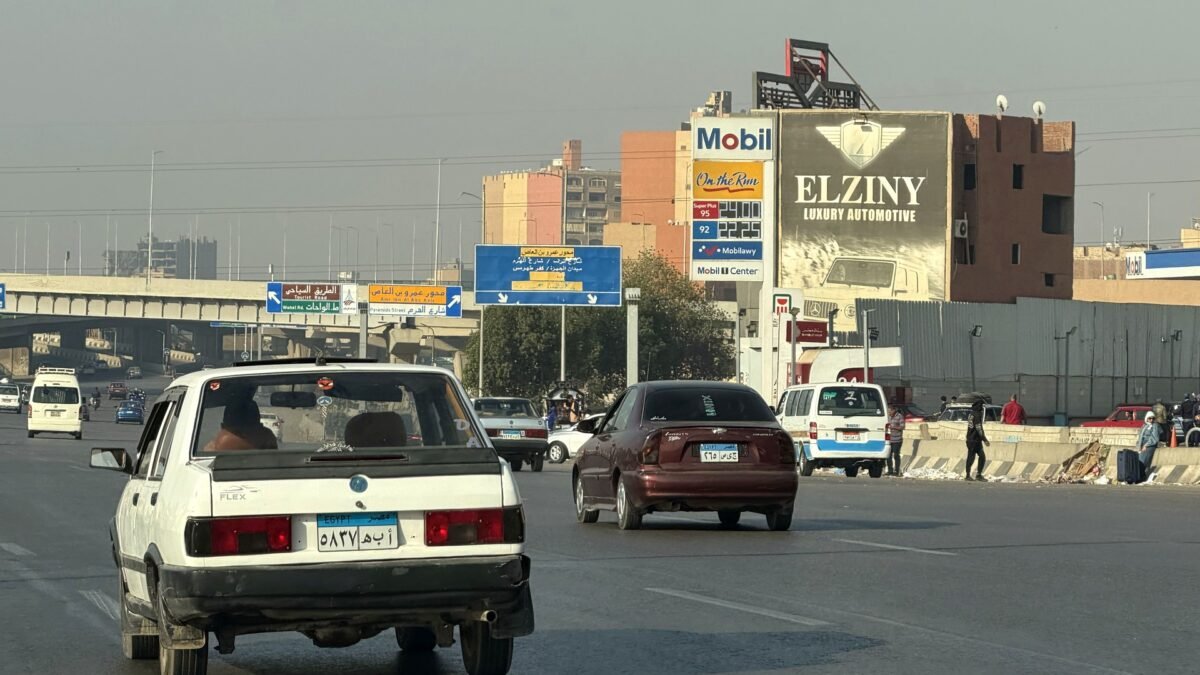
At least 31 people were killed and 21 others injured when a fuel tanker overturned and exploded on the Ring Road encircling Cairo on Wednesday, setting fire to dozens of vehicles trapped in traffic and turning one of Egypt’s busiest highways into a scene of devastation, according to the Associated Press.
The crash happened in the Al Warraq district of Giza, in the Greater Cairo area, above a tunnel on the Ring Road, Egypt’s Health Ministry said. The tanker, which was privately operated and carrying petroleum products, veered off the road and crashed before exploding, according to Egypt’s Petroleum Ministry. The fire that followed engulfed cars and motorcycles caught in its path, and the death toll was described by the Health Ministry as preliminary, raising fears that it could rise further.
President Abdel-Fattah el-Sisi expressed his condolences to the victims in a statement, while the Public Prosecutor’s office said DNA investigations were under way to identify the dead, many of whom were burned beyond recognition. Health Minister Khaled Abdel Ghaffar said the injured had been taken to nearby hospitals and that he would head to the scene himself.
The disaster is one of the deadliest road accidents in Egypt this year, and it has once again thrown a spotlight on a road safety record that claims thousands of Egyptian lives every year.
What happened on the Ring Road
The Ring Road is the key artery that encircles the Egyptian capital, linking the governorates of Cairo, Giza and Qalyubia and carrying a constant stream of cars, minibuses, lorries and motorcycles. On Wednesday, that stream came to a halt in the densely populated Warraq neighbourhood of Giza when the fuel tanker lost control.
According to the Petroleum Ministry, the privately operated tanker veered off the road and crashed before exploding. The blast sent a wall of flame across the carriageway, and the fire spread rapidly from vehicle to vehicle. The Public Prosecutor’s office said in a statement that the blaze left more than two dozen cars and motorcycles charred, and preliminary estimates put the number of vehicles destroyed at 27.
At the scene, rescue workers were pulling people out of burning cars, according to the Associated Press, which cited video from the scene showing firefighters working to put out the fire spreading among the cars. Hundreds of people gathered near the scene in the Warraq district of Imbaba, a Cairo suburb, as emergency crews worked through the wreckage.
Ahmed Sameer, who was stuck in traffic as the road was blocked after the accident, told the Associated Press that he saw the fuel truck and many cars on fire. He said he saw at least eight bodies being removed from burned cars. “It was a huge fire, the cars got stuck together because of the fire,” he said, describing the fear and panic that followed. “It was a shocking scene.”
Thirty-nine ambulances were dispatched to the scene, according to reports cited by Wikipedia’s account of the disaster, and the injured were transported to four hospitals in Cairo. Security forces rushed to the area after receiving reports of the fire, and traffic authorities closed the affected section of the road and diverted traffic while firefighters battled the blaze.
The Health Ministry’s figures changed through the day as the scale of the disaster became clearer. Initial statements said 15 people had been injured, but that figure was later revised to 21, and then to 25 in some reports, while the death toll was first put at 30 before being updated to at least 31. The ministry stressed that the count was preliminary. A spokesman for the health minister later told the state-linked al-Qahera News channel that the Ring Road had been reopened and the remnants of the accident cleared.
The rescue and the identification effort
The scale of the fire made the work of identifying the victims exceptionally difficult. According to the Public Prosecutor’s office, DNA investigations were under way to identify the dead, because the victims and their identity documents had been burned beyond recognition.
That detail, reported by several outlets, captures something essential about the disaster. These were not people killed in a collision between two vehicles on an open road. They were commuters and travellers caught in ordinary traffic on an ordinary Wednesday, in cars and on motorcycles, when a tanker carrying a highly flammable load overturned beside them. When the fuel ignited, there was nowhere for them to go. The road was congested, the vehicles were packed together, and the fire moved faster than people could escape.
Health Minister Khaled Abdel Ghaffar said the injured had been taken to nearby hospitals and that he would head to the scene himself. The ministry said it was continuing to monitor the incident and provide medical care to those injured, and warned that the death toll could rise as more victims were identified and as some of the seriously injured were treated.
The response on the ground was substantial. Dozens of ambulances, fire crews and security personnel converged on the Warraq stretch of the Ring Road, and traffic police closed the highway in both directions while the fire was brought under control. By the evening, the road had been reopened, according to the health minister’s spokesman, but the wreckage of 27 burned-out vehicles and the memory of what had happened there would remain.
What caused the crash?
The precise cause of the crash has not yet been established, and the Public Prosecutor’s office has opened an investigation. What is known so far comes from the Petroleum Ministry, which said the tanker veered off the road and crashed before exploding. Why it veered off the road — whether through driver error, a mechanical failure, a tyre blowout, excessive speed or something else — has not been confirmed, and officials have not yet said whether the driver survived.
That gap in the public record matters. In Egypt, as in many countries, the first hours after a disaster of this kind produce a flood of official statements about casualties and rescue efforts, but the question of why it happened often takes weeks or months to answer, and sometimes is never answered in public at all. The prosecutor’s investigation will need to establish the tanker’s speed, its mechanical condition, the driver’s state and qualifications, and whether the vehicle was carrying its load in accordance with the rules governing the transport of hazardous materials.
There are also wider questions that any serious investigation should address. Fuel tankers are among the most dangerous vehicles on any road, because a single failure can turn an ordinary crash into a mass-casualty fire. In many countries, their movement through densely populated urban areas is restricted to certain hours, certain routes or certain speeds, and drivers must hold special licences. Whether the tanker that crashed on the Ring Road was subject to such restrictions, and whether they were observed, is a question the investigation should answer in public.
For now, the only certainty is the outcome: a tanker overturned on a crowded urban highway, its fuel ignited, and at least 31 people died. The cause, in the narrow sense, is under investigation. The conditions that made such a death toll possible on a road that carries tens of thousands of vehicles a day are a matter of public record.
A road with a deadly record
Deadly road accidents claim thousands of lives every year in Egypt, which has a poor transportation safety record, according to the Associated Press. Speeding, bad roads and poor enforcement of traffic laws are the main reasons behind most of the crashes, the news agency reported.
The numbers bear that out. The World Health Organization’s Global Status Report on Road Safety 2023 recorded 7,101 reported road traffic fatalities in Egypt in 2021, while the WHO’s own estimate for the same year was 10,263 deaths, a rate of 9.4 per 100,000 people. The gap between the reported figure and the estimated figure is itself a measure of the problem: in Egypt, as in many countries, not every road death is captured in official statistics, and the true toll is higher than the headline number.
The WHO data also shows that Egypt’s maximum motorway speed limit is 100 kilometres per hour, with 90 on rural roads and 60 in urban areas, and that enforcement is carried out manually rather than by automated systems. The country has a national road safety strategy and a target to reduce speeds, but the strategy is not funded from the national budget, according to the WHO’s country profile.
Older Egyptian data tells the same story. The Central Agency for Public Mobilization and Statistics found that over-speeding was the single largest recorded cause of crashes, accounting for 23 per cent of them in 2011, followed by driver inattention at 15 per cent and wrong exits from feeder roads at 14 per cent. Trucks accounted for 27 per cent of the vehicles involved in crashes, and private cars for 32 per cent.
The Ring Road disaster is not an isolated event. In January this year, 21 people were killed and 16 were injured in a massive multi-car pile-up on a road near the southern province of Beni Suef, according to the Associated Press. That crash, like this one, happened on a major highway outside the capital, and like this one, it was a reminder that Egypt’s roads kill in large numbers not only through individual accidents but through pile-ups and chain reactions in which dozens of people die at once.
The pattern is familiar to anyone who follows Egyptian news. A major crash makes headlines, officials express condolences, an investigation is announced, and then the news cycle moves on. The underlying conditions — the speed, the enforcement, the state of the roads, the age and maintenance of the vehicles — remain largely unchanged until the next disaster.
Analysis: Why It Matters
There are two different stories in the Giza disaster, and both matter. The first is the human story: at least 31 people who set out on an ordinary journey on a Wednesday and never came home, and 21 more who were injured, some of them seriously. Behind each of those numbers is a family that received a phone call or a visit from the authorities, and in many cases a body so badly burned that only a DNA test could confirm who it was. That is the story that deserves to be told first, and it is the story that should be remembered when the headlines fade.
The second story is the one about the system that allowed it to happen, and it is the story that will determine whether another 31 people die in the same way. A fuel tanker is not an ordinary vehicle. It is a moving bomb, in the most literal sense: tens of thousands of litres of flammable liquid, travelling at speed, through one of the most densely populated urban areas on earth. When such a vehicle crashes, the consequences are not proportional to the crash itself but to the cargo. A fender-bender becomes a fireball. A traffic jam becomes a trap.
That is why the regulation of hazardous cargo matters so much, and why it is worth asking whether Egypt’s rules are adequate and whether they are enforced. The questions are straightforward. Are fuel tankers allowed on the Ring Road at all hours, or are they restricted to times when traffic is lighter? Are there speed limits specific to tankers, and are they enforced? Are tanker drivers required to hold special licences, and are their vehicles subject to regular inspection? Is there a system for tracking tankers in real time, so that a vehicle that veers off course or stops unexpectedly triggers an immediate response? None of these questions has been answered in public yet, and all of them should be.
The answers matter because the Ring Road is not a remote desert highway. It is a ring around a metropolitan area of more than 20 million people, and it carries the traffic of three governorates. Every day, thousands of cars, minibuses and motorcycles share that road with heavy lorries and fuel tankers. The density of the traffic is itself a risk factor: when a tanker overturns on a congested road, the vehicles around it cannot move away, and the fire spreads from one to the next, as it did on Wednesday. The witness who described the cars getting “stuck together because of the fire” was describing exactly that dynamic.
There is also a broader point about Egypt’s road safety record that this disaster illustrates. The WHO figures — more than 10,000 estimated road deaths a year — are not an abstraction. They are the sum of thousands of individual tragedies, and they reflect a system in which speeding is common, enforcement is patchy, and the roads themselves are often in poor condition. The Associated Press put it plainly: speeding, bad roads and poor enforcement of traffic laws are the main reasons behind most crashes in Egypt. That is not a new finding. It has been true for years, and it has been documented by the WHO, by Egyptian statisticians and by journalists. What changes, from year to year, is the death toll.
The government’s response to road safety has not been absent. Egypt has invested heavily in new roads and highways in recent years, and it has a national road safety strategy. But the WHO’s own country profile notes that the strategy is not funded from the national budget, and that enforcement remains manual. New roads alone do not make driving safer if the drivers on them are speeding, if the vehicles are poorly maintained, and if the rules are not enforced. A new highway with the same driving culture and the same enforcement is a faster road to the same outcome.
There is a particular irony in the fact that this disaster happened on the Ring Road, a road that was itself built to relieve congestion and improve safety in Greater Cairo. The ring was meant to take through-traffic out of the city centre and give it a faster, safer route around the capital. But a road that carries everything — commuters, minibuses, lorries, fuel tankers — at high speed, through densely populated districts like Warraq and Imbaba, is a road where a single failure can kill dozens. The question is not whether the Ring Road should exist. It is whether the most dangerous vehicles on it are subject to the most stringent controls.
For the families of the victims, these are abstract questions. Their concern, in the days ahead, will be funerals, hospital bills and the slow process of identifying the dead. But for Egypt, the questions are urgent, because the next tanker is already on the road. Every day that passes without answers about the regulation of hazardous cargo, the enforcement of speed limits and the condition of the roads is a day in which another disaster of this kind remains possible.
The Giza fire also matters beyond Egypt. Fuel tanker disasters are a recurring tragedy across the developing world, from Nigeria to Pakistan to Kenya, where overturned tankers have killed hundreds of people, sometimes because bystanders gathered to collect spilled fuel. The Egyptian case is different in its details — the victims were trapped in traffic, not collecting fuel — but it belongs to the same family of disasters, in which a hazardous cargo, a crowded road and a moment of failure combine to produce a death toll that seems wildly out of proportion to the initial accident. The lesson is the same everywhere: hazardous cargo needs hazardous-cargo rules, and those rules need to be enforced as if lives depended on them, because they do.
What to watch next
The most immediate question is the final death toll. The Health Ministry has said its figures are preliminary, and the minister has warned that the number could rise. As DNA identification proceeds and as the condition of the seriously injured becomes clearer, the toll may change, and it is likely to change upwards rather than downwards.
The second question is the outcome of the Public Prosecutor’s investigation. Egyptians will want to know why the tanker veered off the road, whether the driver survived and what he says, and whether the vehicle was in a fit condition to be carrying petroleum products through a densely populated area. If the investigation identifies specific failures — a mechanical defect, a licensing problem, a breach of the rules on hazardous cargo — the public should be told, and those responsible should be held to account.
The third question is whether the government will act on the wider issues the disaster has exposed. Will there be new restrictions on the movement of fuel tankers through urban areas? Will there be a review of speed enforcement on the Ring Road? Will the national road safety strategy, which the WHO notes is unfunded, finally receive the funding and the political backing it needs? The answers to those questions will determine whether the 31 people who died on the Ring Road on Wednesday were the victims of an unavoidable accident or of a failure that could have been prevented.
For now, the Ring Road has reopened, the wreckage has been cleared, and traffic is moving again. That is how it always is after a disaster on a busy road: the road reopens, the traffic returns, and life goes on. The test of whether anything has changed will come not in the days after the fire, but in the months and years that follow, in the number of people who die on Egypt’s roads next year, and the year after that.
Sources
- CNN — At least 31 killed in fuel tanker fire near Cairo, Egypt’s Health Ministry says
- Reuters via SRN News — At least 30 killed in blaze after vehicle overturns in Egypt, health ministry says
- Associated Press — Fuel tanker crash ignites a massive blaze on a highway surrounding Cairo, killing at least 31 people
- Wikipedia — 2026 Giza fuel tanker explosion
- World Health Organization — Global Status Report on Road Safety 2023: Egypt country profile

About the Author — Abdul Mannan
Related Articles

Solomon Islands Signs Landmark Treaty with Australia, Vowing No Foreign Military Base on Its Soil
The Solomon Islands has signed a landmark treaty with Australia pledging that no foreign military base will ever…
Ukraine Says It Damaged Five Russian Jets, Including Kinzhal-Carrying MiG-31s, in Strike on Savasleyka Air Base
Ukraine says it damaged three MiG-31 jets and two Su-34 bombers at Russia's Savasleyka air base, 300 kilometres…
Second Russian Airspace Breach in Four Days as Poland Renews Push for Permanent US Troops
A Russian drone briefly entered Polish airspace overnight on 24 November, the second breach in four days, prompting…