
Fazlur Rehman Calls Nationwide Shutdown as Sargodha Bars JUI-F Leaders and Police Detain Three

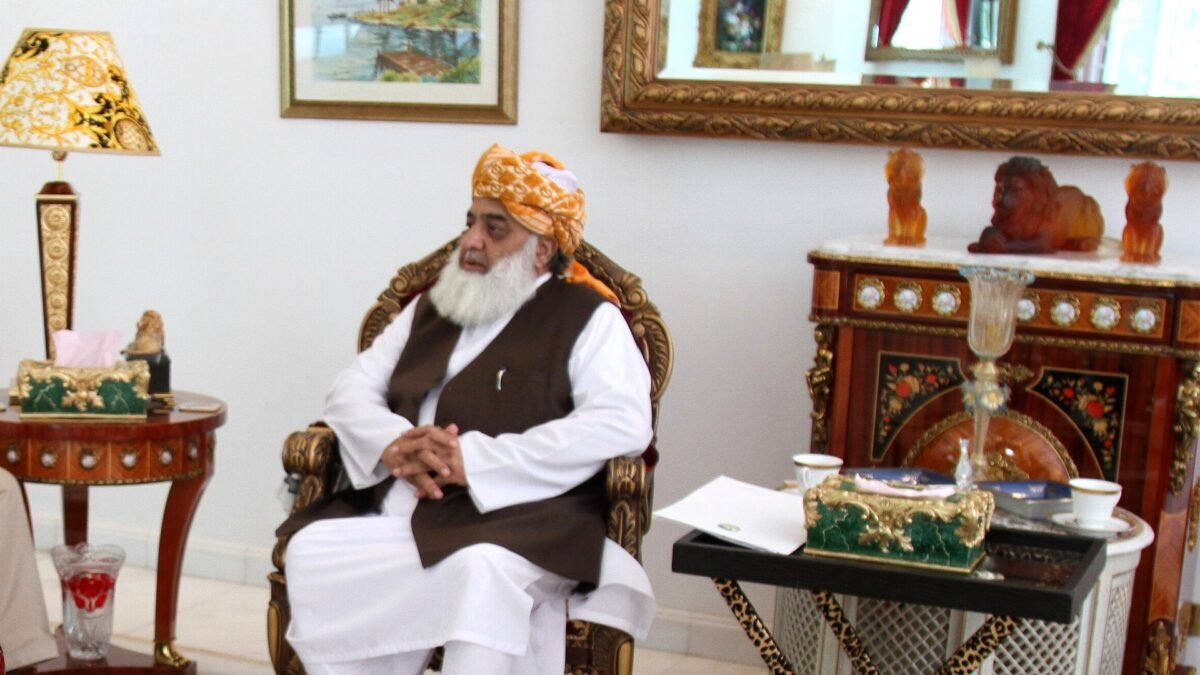
Jamiat Ulema-e-Islam-Fazl (JUI-F) chief Maulana Fazlur Rehman called for a nationwide shutdown on Thursday, 26 November 2026, urging supporters across Pakistan to take to the streets and block major highways after the Sargodha administration barred him and eight other party leaders from entering the district for 30 days and police detained three senior JUI-F figures ahead of the party’s planned conference in the city.
In a video statement posted on the social media platform X, Fazlur Rehman told party workers that protests would be held in every part of the country, from the far north to the southern coast, and that demonstrators should block the country’s main highways. According to The Express Tribune, he said: “In response to this entire situation, the whole country will protest today. People will hold demonstrations and take to the streets. From Kohistan and Chitral to Badin, Turbat, Makran and Chaman, workers across the country, wherever they are, should come out and block all the major highways across the country.”
Addressing workers near Thokar Niaz Baig on Multan Road in Lahore, where his convoy had halted on its way to Sargodha, Fazlur Rehman warned that stopping the convoy would bring the country to a standstill. “If we are not allowed to travel to Sargodha, the entire country will remain shut,” he declared, according to News Pulse. He insisted that his party was pursuing a peaceful and disciplined political struggle and was exercising its constitutional and democratic right to hold a gathering, and he urged the authorities to respect the rights of political workers and clear the routes immediately.
The call produced disruption within hours. JUI-F workers blocked the Peshawar motorway toll plaza, halting traffic in both directions between Peshawar and Islamabad, while Senator Attaul-Haq Darwesh joined the protesters at the site. In Karachi, workers gathered near Al-Asif Square in Sohrab Goth and blocked both tracks of the M-9 Motorway, stopping traffic entering the city before the Karachi Toll Plaza and halting or diverting vehicles leaving the city along Shahrah-e-Pakistan. Protesters also blocked both tracks of the National Highway near Ghaghar Phatak, and Karachi traffic police closed both sides of the road at Zero Point on the main National Highway towards Gaggar Phatak, advising motorists to use the T-Crossing route towards Port Qasim and to call the traffic helpline 1915 for alternative routes.
The National Highways and Motorway Police separately issued a traffic advisory on X announcing that access through the Kot Momin, Salam and Bhera interchanges had been suspended until further notice because of protests outside the interchanges. In Quetta, Senator Kamran Murtaza asked workers to contact local party officials and block roads at three named places as part of the nationwide campaign.
The Sargodha Ban and the Detentions
The confrontation centred on a conference JUI-F had planned to hold in Sargodha on 26 November. A day earlier, on 25 November, Sargodha Deputy Commissioner Hussain Ahmad Raza Chaudhary issued two orders that effectively sealed the district against the party’s leadership. Under the first, issued under Section 7(1) of the West Pakistan Maintenance of Public Order Ordinance, 1960, read with the Punjab Maintenance of Public Order (Amendment) Ordinance, 2008, nine people, including Fazlur Rehman, were barred from entering, residing in or remaining within Sargodha district for 30 days. Alongside the JUI-F chief, the list named Maulana Naseer Ahmad Abrar, Maulana Amjad Khan, Maulana Safi Ullah, Professor Ghazanfar Aziz, Maulana Muhammad Noor Khan Hans, Maulana Muhammad Zakria Shah, Maulana Muhammad Yahya Abbasi and Maulana Jamal Abdul Nasir.
According to the notification, the decision followed a report from the district police officer, which alleged that the named individuals had a history of delivering provocative and objectionable speeches that could threaten public safety. The order said the nine could not enter the district, reside there or stay there, and the administration maintained that the restrictions were necessary to prevent inflammatory speeches and a possible deterioration of law and order.
In a second order, the deputy commissioner prohibited 19 individuals, including religious scholars, from delivering speeches for 30 days, on the ground that their addresses could disturb public peace. The speech ban, issued under Section 5(1)(d) of the Maintenance of Public Order Ordinance, covered 11 scholars from Sargodha tehsil, five from Kot Momin, two from Sillanwali and one from Shahpur, and it took effect immediately. Section 144 had already been imposed across Sargodha district on 23 November for seven days, prohibiting public gatherings, sit-ins, rallies, processions, demonstrations and public meetings.
As the conference approached, police detained three senior JUI-F leaders in Sargodha. Sargodha Regional Police Officer Sohail Sukhera confirmed that central general secretary and Member of the National Assembly Maulana Abdul Ghafoor Haideri, Punjab chief Maulana Amjad Khan and Jamiat Talaba-e-Islam central president Malik Awais were detained at a house in Sargodha and served notices for violating Section 144, according to Dawn. The officer said their movement had been restricted rather than describing the detention as an arrest. JUI-F said it would approach the court over the alleged detention and disappearance of its leaders, and the party alleged that Haideri’s detention was carried out without a warrant.
Fazlur Rehman said in his video message that police had taken complete control of the conference venue, described the situation in Sargodha as resembling a curfew, and alleged that workers were being arrested across districts from Rawalpindi to Dera Ghazi Khan. He said a student leader had been arrested, that Haideri was in custody at an undisclosed place and that Amjad Khan was under house arrest in Khushab. He also said the party’s Sargodha district chief was ill at home while his son, a lawyer, had been arrested and allegedly subjected to violence. The party’s Islamabad delegation had departed for Sargodha, while other senior leaders were travelling towards the district, and several JUI-F leaders in Islamabad, including the party’s city amir and naib amir, were reportedly taken into custody.
Despite the restrictions, Fazlur Rehman insisted that the 26 November conference would go ahead. “Nevertheless, I remain determined that, InshaAllah, I will set off for Sargodha,” he said, according to News Pulse. His aides said his convoy had become stuck in traffic on the way, and party spokesperson Aslam Ghauri said thousands of workers were still heading for Sargodha and reaching the venue despite the obstacles. Ghauri accused the Punjab administration of closing the motorway on the pretext of fog although the sun was out, and of trying to sabotage the conference, and he urged workers to stay patient and avoid provocation. Fazlur Rehman said containers had been placed at the main gates of his Lahore residence and at Lahore’s main entry points, and that all routes to Sargodha, including those through Chashma, Mianwali, Khushab and Faisalabad, had been closed.
A Confrontation Weeks in the Making
The Sargodha standoff did not appear out of nowhere. It is the latest escalation in a confrontation between JUI-F and the government that has intensified steadily since October, and each step has raised the stakes for the next one.
On Tuesday, 24 November, Fazlur Rehman was prevented from leaving his Lahore residence, where a heavy police contingent had been deployed ahead of his scheduled address to lawyers at the invitation of the Lahore High Court Bar Association. Police kept him confined to his home for about 12 hours, and the party approached the Lahore High Court, challenging the confinement and the cordoning off of his residence. The court took notice of the matter, the confinement ended after the court intervened, and the court later warned against detaining him.
A week earlier, police and Federal Constabulary guards were withdrawn from Fazlur Rehman’s homes in Islamabad and Dera Ismail Khan. The withdrawal, which the party said followed instructions from the prime minister’s office, removed the state security of a former opposition leader who has long argued that he faces threats to his life. At the same time, an Islamabad anti-terrorism court issued non-bailable arrest warrants for his personal secretary, Mufti Abrar Ahmed, in a case registered over a gathering held without permission on 7 November, and police served the warrants at a mosque in Islamabad.
The party had already staged protests in Sindh and Balochistan on 7 November against what it called a campaign against its leader, and on 15 November it held rallies in Khyber Pakhtunkhwa in defiance of Section 144. The roots of the dispute run deeper still. Fazlur Rehman has been one of the sharpest critics of the government’s proposal to create new provinces, a plan first floated publicly by Interior Minister Mohsin Naqvi in July and later linked to a possible 28th Constitutional Amendment and even a referendum on dividing provinces. The JUI-F chief has repeatedly argued that the plan is aimed at weakening the existing federating units, and he has made the defence of the provinces, and of the country’s mineral resources in Khyber Pakhtunkhwa and the former tribal areas, a central theme of his recent speeches.
That criticism has found an echo in the Pakistan Peoples Party. PPP Chairman Bilawal Bhutto-Zardari has warned that a forced division of Sindh would spill blood, has hinted that the PPP could move to the opposition benches over the dispute, and has spoken to Fazlur Rehman by telephone during the standoff, condemning what he called political vengeance. The two leaders’ alignment matters because the PPP is a coalition partner of the government, and its public criticism has opened a second front in the dispute over the provinces.
The opposition landscape is also shifting around Fazlur Rehman. Pakistan Tehreek-e-Insaf has rejected a proposal for a national government and ruled out any political deal with the incumbent government, with party leader Shaukat Yousafzai calling instead for meaningful national dialogue and a judicial investigation into the November 26 incident. Imran Khan has told PTI to widen its alliance and make contact with Fazlur Rehman, a signal that the party sees the JUI-F chief as a potential partner in a broader opposition front. At a Lahore opposition conference earlier in the week, veteran politician Mahmood Khan Achakzai proposed a national government to end the country’s political deadlock, a proposal PTI has now publicly rejected.
Analysis: Why It Matters
Three features of this episode make it more significant than an ordinary dispute over a rally permission. The first is the scale of the administrative response. A 30-day entry ban on a party chief under the Maintenance of Public Order Ordinance, a parallel 30-day speech ban on 19 people, a week of Section 144, the detention of a sitting member of the National Assembly and a provincial party chief, and the closure of motorway interchanges together amount to one of the most sweeping sets of restrictions imposed on a mainstream opposition party in recent years. The government has used these instruments before, but rarely all at once, and rarely against a party that has historically been treated as part of the political mainstream rather than as an outsider movement.
The second is the geography of the response. The protests were not confined to Sargodha or even to Punjab. Within hours of Fazlur Rehman’s call, roads were blocked in Karachi, on the Peshawar motorway, and in Quetta, and the National Highways and Motorway Police had to suspend access at three interchanges. That spread demonstrates something the government will have noted with concern: JUI-F’s organisational network, built around its religious schools and local chapters, can translate a single call from its leader into disruption in several provinces at once. It also means the economic and human cost of the standoff is not local. Every hour a motorway interchange stays closed or a national highway is blocked, goods stop moving and ordinary travellers are stranded, and the burden falls on people who have no part in the political dispute.
The third is the direction of travel. Each side has raised the stakes at every turn, and neither has yet found a way to step back. The government withdrew security, then confined the JUI-F chief to his home, then barred him from a district and detained his senior colleagues. Fazlur Rehman answered with a nationwide shutdown call and a vow to reach Sargodha regardless of the obstacles. This is a pattern that, in Pakistan’s politics, rarely ends with a quiet compromise. It ends either with one side backing down in a way that costs it standing with its own supporters, or with a confrontation that forces a third party, usually the courts, to intervene. The Lahore High Court has already intervened once this week, and JUI-F’s plan to move the court over its detained leaders suggests the judiciary may be drawn in again.
There is also a wider question about what the government gains from the confrontation. Blocking a conference does not remove the grievance that produced it. The dispute over new provinces, the 28th Amendment and the referendum proposal remains unresolved, and the PPP’s public criticism of its own coalition partners shows that the issue divides the government side as well as the opposition. Fazlur Rehman’s argument, that the provinces and their resources are under threat, resonates beyond his own party’s base, and the more visibly he is prevented from making it in public, the more attention the argument attracts. Governments that restrict opposition gatherings often discover that the restriction itself becomes the story, and that the story travels further than the speech it was meant to stop.
At the same time, the shutdown call carries risks for JUI-F itself. A call to block highways is a call to disrupt the daily life of millions of people, and the party’s insistence that its struggle is peaceful and disciplined will be tested by what actually happens on the roads. If the protests remain peaceful, the party can present itself as a disciplined democratic force being denied its rights. If they turn violent or drag on for days, the government will argue that its restrictions were justified, and the public sympathy that a blocked rally generates can quickly turn into frustration with blocked roads. The party’s own spokesperson has urged workers to stay patient and avoid provocation, which suggests the leadership understands this risk.
The episode also matters for the shape of the opposition. Fazlur Rehman has spent the past month building bridges, hosting opposition unity talks, speaking to Bilawal Bhutto-Zardari, and now receiving an approach from PTI. A shared grievance about the treatment of opposition parties is the raw material of an alliance, and the Sargodha confrontation gives the opposition parties something concrete to rally around. Whether that turns into a durable alliance is far from certain, given the deep differences between the parties involved, but the direction of movement is clear, and the government will be watching it closely.
What to Watch Next
The first question is whether the Sargodha conference takes place at all, and in what form. Fazlur Rehman has said he will set off for the city regardless of the obstacles, and his party says thousands of workers are already on their way. If he reaches Sargodha and addresses a gathering, the entry ban will have failed in its purpose. If he is stopped, the confrontation will enter a new phase, and the party’s response will set the tone for the days ahead.
The second question is how long the protests last and how far they spread. A single day of road blockades is a warning. A second and third day would suggest a sustained campaign, and would put pressure on the government to negotiate or to escalate further. The involvement of the courts is the third question. JUI-F plans to move the court over the detention of its leaders, and the Lahore High Court’s intervention earlier in the week shows that the judiciary is willing to act quickly in this dispute. A court order on the detentions or on the entry ban could change the legal landscape overnight.
Finally, the political fallout bears watching. The PPP’s position, PTI’s outreach to Fazlur Rehman, and the opposition’s response to the Sargodha crackdown will all shape whether this remains a JUI-F dispute or becomes a broader opposition campaign. For now, the country is watching a familiar pattern play out: an opposition leader barred from a city, his workers on the highways, and a government insisting that order requires it. The coming days will show whether either side is prepared to find a way out.
Sources
- Feature Pakistan — Fazl Nationwide Protests Call Over Sargodha Curbs (citing The Express Tribune and Dawn)
- News Pulse — Fazlur Rehman Threatens Nationwide Shutdown if JUI-F Convoy Barred from Reaching Sargodha
- Pakistan Point — Maulana Fazlur Rehman Announces Plan To Shut Down The Country
- Pakistan Point — Entry Ban Imposed On Maulana Fazlur Rehman And Eight JUI Leaders In Sargodha
- Click Pakistan — JUI-F Calls Nationwide Protests as Fazlur Rehman Alleges Crackdown Ahead of Sargodha Conference

About the Author — Abdul Mannan
Related Articles
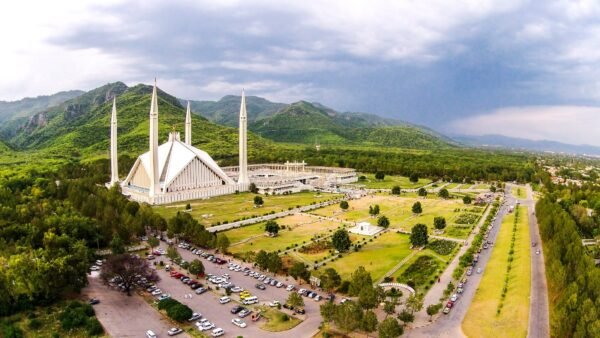
Pakistan, Saudi Arabia and Türkiye Open Makkah Pact Talks in Islamabad to Turn Defence Pledge Into Working Alliance
Pakistan, Saudi Arabia and Türkiye open two days of talks in Islamabad on 26 November to turn their…
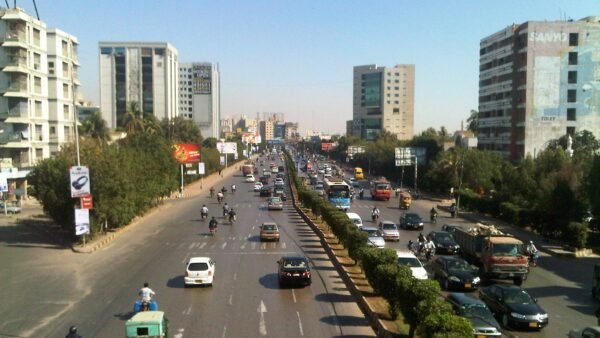
Three Killed as Illegally Built Six-Storey Building Collapses in Karachi’s Baloch Colony
At least three people were killed and 14 injured when a six-storey building under construction collapsed near Baloch…
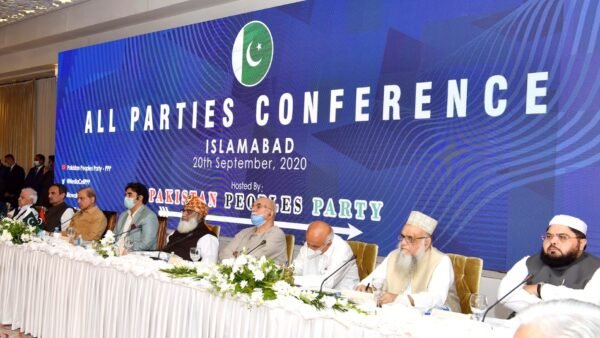
Achakzai Proposes National Government to End Pakistan’s Political Deadlock at Lahore Opposition Conference
Opposition leader Mahmood Khan Achakzai has proposed a national government of political parties and state institutions to steer…