
Three Killed as Illegally Built Six-Storey Building Collapses in Karachi’s Baloch Colony

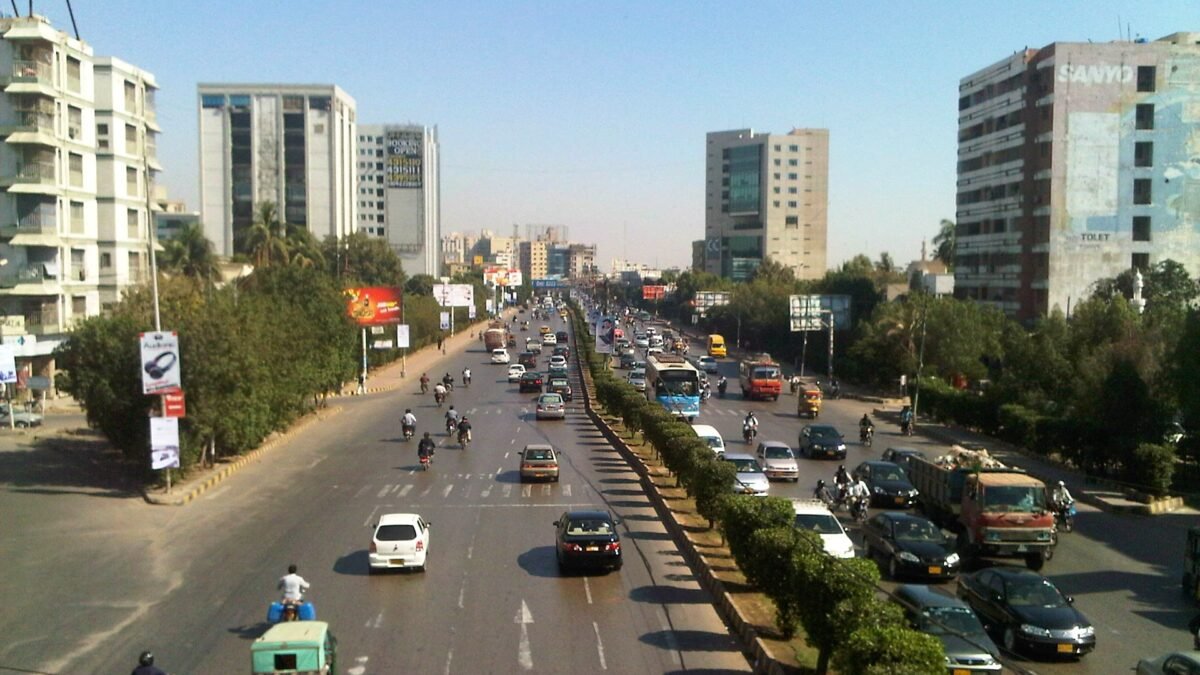
At least three people were killed and 14 injured on Wednesday, 25 November 2026, when a six-storey building under construction collapsed near Baloch Colony in Karachi, according to Rescue 1122 and police officials. More than 20 workers were inside the structure when it came down in Block 4 of the Karachi Administrative Employees Cooperative Housing Society, close to Shahrah-e-Faisal, and rescue teams were still searching the rubble hours later for anyone trapped beneath it.
The collapse is the latest deadly failure in a city where illegal construction, weak enforcement and court stay orders have repeatedly combined with fatal results. Within hours of the disaster, officials confirmed that the building had been approved for only a ground-plus-one layout, that the regulator had tried to stop the work, and that a court injunction had then tied the regulator’s hands. Three people, including the contractor and a member of the building owner’s family, were arrested the same day.
What happened at Baloch Colony
The building gave way on Wednesday afternoon, when the upper floors collapsed onto the workers below. Rescue 1122 spokesperson Hassaan Ul Haseeb Khan told Dawn that the structure was a ground-plus-five-storey building with an additional penthouse, built on a 600-square-yard plot, and that it collapsed while more than 20 workers were present at the site. Rescue teams reached the scene immediately, he said, launching an operation with modern equipment and machinery and around a dozen rescue vehicles.
Three bodies and 14 injured people were recovered from the debris, according to Rescue 1122. Police surgeon Dr Summaiya Syed confirmed that three bodies and 14 injured people were brought to Jinnah Postgraduate Medical Centre (JPMC). Earlier in the day, the head of JPMC’s emergency department, Dr Irfan Siddiqi, had told Dawn that 10 injured people had been brought to the hospital, nine of whom were discharged after receiving first aid, while one was admitted for treatment and was in a stable condition. The figures were updated through the day as the rescue operation continued and more people were pulled from the rubble.
Karachi Commissioner Hassan Naqvi said the fifth or sixth floor of the building had collapsed, and that initial reports suggested around 15 workers were trapped under the rubble, some of whom had been rescued in an injured condition. Rescue 1122 Director Abid Jalal said rescue teams had established three access routes into the collapsed structure to reach those trapped beneath the debris, but that the exact number of people still trapped could not be confirmed at that stage. According to Geo News, rescue teams used acoustic listening devices to make contact with a person trapped under the rubble, and an urban search and rescue team was deployed to the site.
Sindh Inspector General of Police Javed Alam Odho directed police officials to reach the site immediately and assist in the rescue operation, according to a statement from the police spokesperson. He ordered close coordination with Rescue 1122, the fire brigade and other relevant agencies, and directed that all available resources be used to rescue people potentially trapped under the rubble and to ensure the injured received immediate medical attention. Traffic police were told to clear roads, maintain an uninterrupted flow of traffic and arrange alternative routes around the site, which sits close to one of Karachi’s busiest roads.
A building that should never have stood
The most damning facts about the collapse emerged within hours, and they were supplied not by critics of the government but by its own officials. East Deputy Commissioner Nasrullah Abbasi told Dawn that the Sindh Building Control Authority (SBCA) had approved only a ground-plus-one-storey building on the plot. The owner, he said, had violated the approved plans and built far beyond them. When the SBCA ordered construction to halt, the owner approached the court and obtained a stay order against the authority. After that, Abbasi said, the SBCA took no further action. The building was at the final stage of construction when it fell, and what exactly caused it to collapse had not yet been established.
The stay order was not a vague administrative delay. In an order seen by The Express Tribune, a senior civil judge of District South issued an injunction on 4 August restraining the SBCA and its officials from tampering with the property that collapsed on Wednesday. In other words, the courts had barred the regulator from touching the building for more than three months before it fell, while construction continued to its final stage.
Karachi Mayor Murtaza Wahab, speaking to the media at the site, confirmed that the SBCA had planned to demolish the building but had been unable to do so because of the stay order. “If there had been no stay order, this building would have been demolished,” he said, adding that responsibility had to be exercised. “The portion mafia and corrupt elements have caused many losses to this city,” the mayor said. He also noted that there was “political influence” behind the construction, and regretted that when the administration tried to take action, a stay order came from the courts. The mayor said he would discuss the matter with the Sindh chief minister and the local government minister, and that “strict action must be taken to prevent this in future”.
The SBCA said the building stood in Admin Society Block 4, near Baloch Colony, on a 600-square-yard plot, and that apart from the ground floor, five more floors were being built. The authority also alleged that commercial construction was being carried out on residential land, according to Geo News. Karachi Commissioner Hassan Naqvi said permission had been granted for the construction of only a ground-plus-one-storey structure, and that the SBCA had issued notices over the construction violations, but further action might not have been taken because of the judicial proceedings. He announced that a detailed inquiry would be conducted into the incident and that those found responsible for construction violations would face appropriate punishment.
Arrests and the official response
East Senior Superintendent of Police Zubair Nazir Shaikh told Dawn that three suspects, including a contractor and a family member of the building’s owner, were arrested on Wednesday. He said the exact cause of the building collapse would be ascertained after a proper investigation by SBCA officials. The arrests came the same day as the collapse, an unusually swift move that reflected the scale of public anger and the clarity of the violations involved.
Sindh Chief Minister Syed Murad Ali Shah took notice of the incident and directed the relevant authorities to reach the site and expedite the rescue operation, according to a statement from the Chief Minister House. He directed Rescue 1122, the district administration, police and other relevant agencies to coordinate and complete the rescue operation, and ordered that all available resources be used to rescue people potentially trapped under the rubble. Authorities were also directed to inspect nearby buildings for safety and to assess any potential risks posed by the collapsed building’s debris and the surrounding area.
The chief minister directed the SBCA to examine the building’s approved plans, construction standards and any possible negligence, and ordered that the cause of the collapse be determined and those responsible identified in case of negligence or illegal construction. “Protecting the lives and property of citizens is the government’s top priority. No one can be allowed to put human lives at risk,” he said. He also directed the Karachi commissioner and relevant agencies to continuously monitor the rescue operation and submit a detailed report on the collapse. Hospital administrations were told to remain on alert and to ensure that no negligence occurred in the treatment of the injured.
During an urgent visit to the disaster site to review the rescue operation, the chief minister described the collapse as a case of criminal negligence rather than a mere accident, and ordered immediate legal action and imprisonment for the owner, the contractor, the consultant and any relevant government officials found responsible, according to reports of his visit. He said such massive violations could not occur without the active connivance or severe negligence of the relevant authorities, and warned that every official found complicit would face strict prosecution. The visit took a tense turn when he pointed towards another under-construction building across the road and asked whether it was legal; told that it had been sealed, he demanded to know why that action had not been taken earlier.
President Asif Ali Zardari expressed sorrow at the incident and called for a comprehensive investigation to determine the cause of the collapse, according to a statement issued by his office. He said the investigation should examine construction standards, building plans and the oversight provided by the relevant authorities, and directed the Sindh government to take action against those responsible. The president directed that all available resources be used to recover individuals trapped under the rubble and to accelerate the rescue operation, and that the injured receive the best possible medical care. He also instructed that a safety assessment be carried out on the surrounding buildings, adding that “there is no room for any lapse in the discharge of duties by relevant institutions regarding the construction and safety of buildings”.
Prime Minister Shehbaz Sharif also expressed sorrow at the collapse and offered condolences to the bereaved families, Radio Pakistan reported, directing the authorities to ensure priority medical treatment for the injured.
Analysis: Why It Matters
The Baloch Colony collapse should not be described as an accident, and the officials who spoke on Wednesday did not describe it that way. A building approved for two floors rose to six, plus a penthouse, in plain sight, on a 600-square-yard plot beside one of Karachi’s main roads. The regulator knew about it. The regulator issued a halt order. The regulator planned a demolition. And still the building kept rising, storey by storey, until it fell on the people working inside it. Every part of that chain was visible in advance, and every part of it failed.
The most important question raised by this collapse is not why a single building fell, but how a system designed to prevent exactly this outcome was neutralised so completely. The stay order is the key. A civil judge’s injunction of 4 August barred the SBCA from tampering with the property, and the authority then appears to have treated that order as a reason to stop entirely rather than as an obstacle to be challenged. Stay orders against regulators are common in Pakistan, and they are routinely used to shield illegal construction while it is completed. The legal question of whether the injunction was properly granted, whether the SBCA applied to have it vacated, and whether any official even tried, will be central to any honest inquiry. The mayor’s own account, that the demolition was planned and then blocked, shows the authorities were aware of the danger and yet allowed the building to reach its final stage.
Behind the stay order sits a much older Karachi economy. The mayor’s phrase, “the portion mafia”, refers to the business of building extra floors, known as portions, on top of approved structures and selling them as flats. It is a trade that depends on the cooperation, or at least the inaction, of the regulator, the district administration and the police. Extra floors are where the money is, and the people who buy them are usually families who cannot afford a legally built home. The building that collapsed was reportedly being built for commercial use on residential land, which, if confirmed, would mean the violations were not limited to height alone. When the mayor himself says there was “political influence” behind the construction, he is describing a system in which enforcement is selective by design.
The scale of the problem is visible in figures published on the same day as the collapse. A Dawn report published on Wednesday said the SBCA had identified 588 buildings as hazardous across Karachi, including 456 in District South, yet only 59 of them had been vacated and demolition had been approved for just 39. That gap, between identifying a danger and doing anything about it, is the story of this collapse in miniature. The building that fell was not on any list of the forgotten; it was known, noticed, halted and then left alone. If hundreds of other buildings are in the same position, known and untouched, the next collapse is not a matter of chance but of time.
The pattern is by now familiar to anyone who follows Karachi. In July 2025, at least 27 people died and 10 others were injured when a five-storey building collapsed in the Lyari area, a building that had already been declared uninhabitable by the authorities because of its dilapidated structure. Earlier this year, at least 15 people, including women and children, were killed and 18 others injured after a gas explosion caused part of a residential building to collapse in the Soldier Bazaar area. In September, five people were killed and two others injured when a wall of the dilapidated building of a government school collapsed on them in Orangi Town. Each of these disasters was followed by notices, inquiries and promises of strict action. Each was followed, in time, by another disaster. Roof and building collapses are common across Pakistan, mainly because of poor safety standards and the use of shoddy construction materials, but Karachi, home to more than 20 million people, is especially notorious for poor construction, illegal extensions, ageing infrastructure, overcrowding and lax enforcement of building regulations.
What happens next will show whether this time is different. The chief minister has ordered a detailed report, a safety inspection of nearby buildings and legal action against the owner, the contractor, the consultant and any officials found responsible, and he has described the collapse as criminal negligence. The three arrests made on Wednesday are a start, but arrests of a contractor and a relative of the owner do not answer the question of who allowed a two-floor approval to become a six-floor building. The SBCA’s own inquiry will have to explain why a stay order obtained in August was allowed to freeze all enforcement until November, and whether the authority sought to have it lifted. The courts, too, will face questions about how an injunction restraining a safety regulator from touching a property was granted and then left in place while construction continued.
There is also the question of the workers. The dead and injured were construction workers, daily-wage labourers who had no say in the approvals, the stay order or the extra floors. They were inside a building that everyone with authority over it knew was illegal, doing the finishing work on a structure that was about to kill them. Their families will now wait for compensation that, in past cases, has been slow, partial or never paid. Any inquiry that does not address what the victims’ families are owed, and who will pay it, will have missed the point.
Finally, the 588 dangerous buildings identified by the SBCA cannot be left as a statistic. Each one of them is a building that the regulator has already judged hazardous, and each one has people living or working inside it. The chief minister has ordered safety inspections of buildings near the collapse site, but the real test is whether the full list is acted on, whether the stay orders shielding illegal structures are challenged in court, and whether officials who signed off on, or looked away from, illegal construction face consequences. Karachi has had enough notices and enough inquiries. What it has not had, so far, is a collapse followed by prosecutions that reach the people who made it possible.
Sources
- Dawn’s report on the collapse (reproduced in full)
- Geo News report on the collapse (reproduced by Islamabad Post)
- Shafaqna Pakistan — Under-Construction Building Collapses in Karachi, Three Killed and Ten Injured
- GeoPoliticsPulse — Three Killed, 14 Injured as Under-Construction Building Collapses in Karachi’s Baloch Colony (including The Express Tribune’s report of the 4 August stay order)
- Ye Jahan — Murad Ali Shah Vows Imprisonment for Corrupt SBCA Officials
- Press TV — Survivors Rescued After Pakistan Building Collapse Kills at Least 3

About the Author — Abdul Mannan
Related Articles

Achakzai Proposes National Government to End Pakistan’s Political Deadlock at Lahore Opposition Conference
Opposition leader Mahmood Khan Achakzai has proposed a national government of political parties and state institutions to steer…
Police Confine Fazlur Rehman to Lahore Home for 12 Hours, Blocking His Address to Lawyers
Police surrounded JUI-F chief Maulana Fazlur Rehman's Lahore home for about 12 hours on 24 November, stopping him…

Pakistan’s First Astronaut Muhammad Zeeshan Ali to Fly to China’s Tiangong Space Station on Shenzhou-24
Wing Commander Muhammad Zeeshan Ali will become the first Pakistani in space and the first foreign astronaut to…