
Global Markets Rebound as Beijing Sends In Its ‘National Team’ and AI Fears Ease

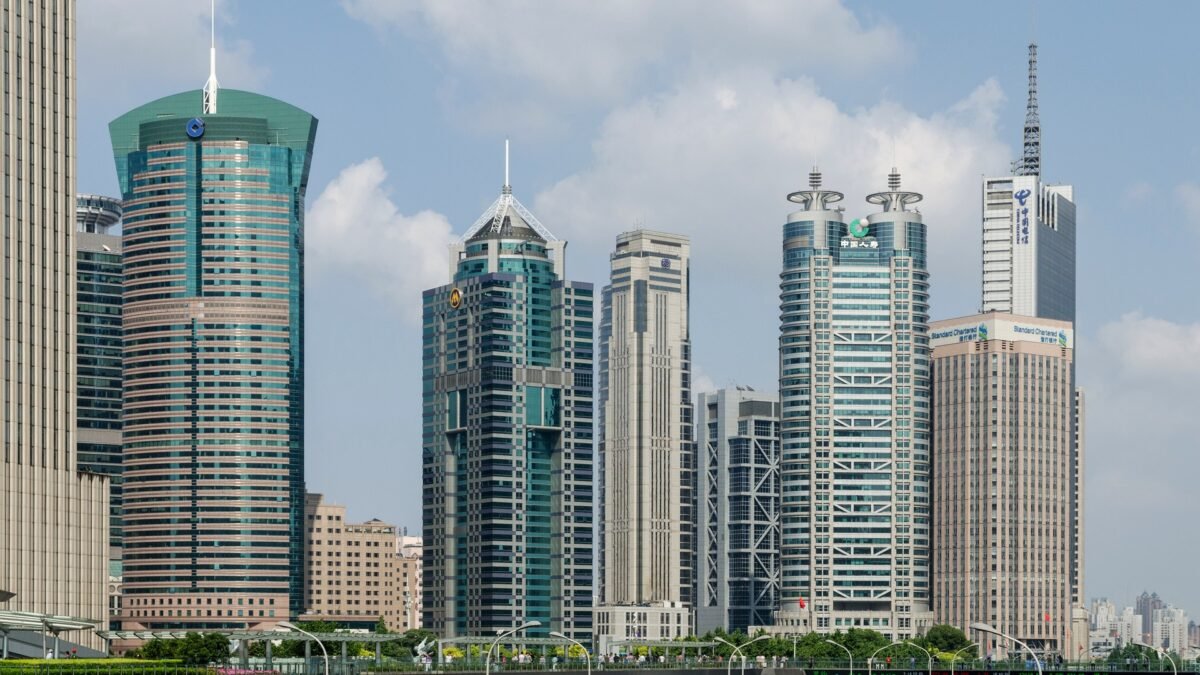
Global stock markets rebounded sharply on Friday, 27 November 2026, as Beijing moved to steady its falling share market and the bruising sell-off in artificial intelligence stocks showed signs of easing. Chinese shares posted their best day in more than two years after the State Council, China’s cabinet, pledged to give state-backed investors a bigger role in supporting the market, and the rally spread across Asia, lifted European shares and pushed United States stock futures higher ahead of a shortened Thanksgiving-week session.
The Shanghai Composite Index jumped more than 3 per cent in afternoon trading, according to Reuters, putting it on track for its best session in two years, while the blue-chip CSI 300 index rose 3.8 per cent. The technology-heavy STAR 50 index surged 12 per cent, and indices tracking China’s semiconductor, artificial intelligence, cloud computing and consumer electronics stocks jumped more than 10 per cent. The CSI Semiconductor Industry Index and the STAR Chip Index both shot up more than 16 per cent.
The trigger was a meeting of the State Council chaired by Premier Li Qiang, which called for a bigger role by so-called “national team” investors — the state-backed funds that buy shares to steady the market — in stabilising a market that had fallen to its lowest levels in more than a year. According to state media Xinhua, the cabinet said capital markets were crucial to the broader economy and that Central Huijin, the state investment vehicle, would enhance its role as a quasi-stabilisation fund to ensure ample liquidity. The meeting also called for better policies to encourage long-term funds to invest in the stock market, for listed companies to pay more dividends and step up share buybacks, and for measures to strengthen defences against risks spilling over from overseas markets.
“It’s a shot in the arm for markets,” Kenny Ng, a strategist at Everbright Securities International in Hong Kong, told Reuters. “Sentiment has been downbeat for so long. There hasn’t been much good news to trade on. At least now there’s something to count on: the national team will come to the rescue if things really turn south.”
Jason Chan, a strategist at the Bank of East Asia in Hong Kong, told Reuters that it was very rare for an executive meeting of the State Council to make such direct comments about the market. “Last time it happened was 2024 when they rolled out a liquidity support package,” he said. “Authorities’ determination to halt the slide is definitely there. But if you’re asking whether this money alone is enough to really lift the whole market, I don’t think it’s that simple.”
Beijing’s strongest gesture yet
The intervention was described by Reuters as Beijing’s strongest gesture yet to support a stock market that had been sliding for weeks. The Shanghai Composite had been languishing around its lowest levels in well over a year, and the market was in a technical bear market — a fall of 20 per cent or more from its recent peak — before Friday’s rebound.
Market participants told Reuters that the move was designed to boost confidence and to prevent the slide from spilling over into the wider economy. One strategist said the national team provided a foundation, while the day’s trading also showed a healthy rotation towards growth stocks and a shift from leveraged speculation to participation by institutional and industrial capital. “This combination of reliable state support and growing organic demand creates a robust environment for long-term market recovery,” the strategist said.
Others were more cautious. Chan said that for markets to stage a medium- to long-term upward trend, more practical support policies would be needed, whether for the economy or for particular industries. Ng added that future market trends would be decided by many other factors, including United States-China relations, tariffs on trade, and chip supply following tighter American export restrictions.
There was also a piece of genuinely good economic news for Beijing. Profits at China’s industrial firms climbed 20.1 per cent year on year in October, up from 14.4 per cent, the fastest since May, according to Dow Jones, helped by robust global demand for the country’s technology products and by electronics and artificial intelligence demand.
The rally also spread to Hong Kong, where the Hang Seng Index gained 2.3 per cent while the Hang Seng Tech Index jumped 6.3 per cent, according to Dow Jones. The yuan reversed early losses and rallied after the State Council meeting, according to Reuters.
The rally spreads across Asia
China was not the only market to rebound. South Korea’s Kospi rose 4.2 per cent, according to Dow Jones, with chip heavyweights SK Hynix and Samsung Electronics jumping 6.3 per cent and 4.2 per cent respectively, while the Kosdaq index rallied 8.0 per cent. Japan’s Nikkei Stock Average advanced 2.0 per cent, with SoftBank Group 3.7 per cent higher and chip players Resonac Holdings and Advantest surging 9.7 per cent and 6.0 per cent respectively. Taiwan’s Taiex was up 0.4 per cent.
Asian markets rose even though the news from the technology sector remained difficult. Nvidia, the American chipmaker at the centre of the artificial intelligence trade, has ordered its manufacturing partners to pause shipments of artificial intelligence servers to four Southeast Asian countries — Malaysia, Singapore, Thailand and Indonesia — after Washington escalated its push to keep the company’s most advanced chips out of China’s hands, according to the Wall Street Journal. That story, reported by NEXA News HD on 26 November, came after the United States published a rule requiring licences for advanced chips sent to those countries and after the blacklisting of firms accused of diverting chips to China.
According to Dow Jones, Asian markets rose on Friday tracking gains in United States stock futures as sentiment around the artificial intelligence trade stabilised. With American bourses shut for Thanksgiving, global stocks mostly rose in the absence of fresh cues, Maybank analysts said in a note. “That has left markets to trade largely off the late recovery on Wall Street in Wednesday’s session,” Neha Sharma of Westpac said in an email to Dow Jones.
Deutsche Bank’s Jim Reid noted that the rally had accelerated overnight, with the S&P 500 and Nasdaq futures rallying and the former up only around 0.5 per cent for most of the previous European session. “Tech was the strongest sector in the index, and the strongest industry group within that were semiconductors and semiconductor equipment,” Reid wrote. “So it was clear that the most AI-exposed assets were outperforming, and the financial stress was easing on multiple fronts.”
United States futures and Europe join the rebound
In the United States, e-mini Nasdaq futures were up 2.6 per cent, while contracts tied to the S&P 500 and the Dow Jones Industrial Average added 1.7 per cent and 1.1 per cent respectively, according to Dow Jones. American markets were closed on Thursday for Thanksgiving and were due to reopen for a shortened session on Friday.
In Europe, the STOXX 600 index closed on Thursday at a one-week high, up 1.75 per cent, with semiconductor stocks leading the gains, according to Deutsche Bank. Euro Stoxx 50 futures added 0.7 per cent on Friday morning. The FTSE 100 in London had risen 1.75 per cent on Thursday, helped by gains from miners and banks and by talk of a takeover for Imperial Brands.
The recovery in government bonds went into reverse as investors moved out of havens. The United States 10-year Treasury yield climbed 6.3 basis points to 4.92 per cent as cash trading resumed, according to Bloomberg, while the two-year yield rose 5 basis points to 4.6891 per cent, according to Reuters. The dollar was headed for its third monthly gain, up 1.7 per cent against major peers at 103.8, according to Reuters, supported by expectations that the Federal Reserve is almost certain to lift interest rates in December, as well as by safe-haven flows from the equities sell-off.
Copper, gold and oil: the other side of the trade
The rebound was not confined to shares. The three-month copper contract on the London Metal Exchange jumped 4.6 per cent to 12,423 dollars a ton, according to Dow Jones. Copper prices are supported by strong near-term artificial intelligence spending expectations, according to analysts at ANZ, and copper is a key metal for data-centre development. Platinum rallied 4.8 per cent, according to Bloomberg, and copper was headed for its first weekly gain in seven weeks.
Spot gold rose 2.0 per cent to 3,638.54 dollars a troy ounce, while spot silver rose 5.0 per cent to 43.60 dollars a troy ounce, according to Dow Jones. Bitcoin rose 1.6 per cent.
Oil prices also climbed. Front-month Brent crude was up 0.9 per cent at 97.41 dollars a barrel, according to ICE data cited by Dow Jones, while front-month West Texas Intermediate rose 3.3 per cent to 86.43 dollars a barrel. Brent was up about 4.6 per cent for the week, according to Reuters, its first weekly gain in four, after attacks in the Gulf pushed supply fears back to the top of traders’ minds.
The oil market has been unsettled all week by the escalating conflict in the Gulf. Yemen’s Houthi group struck Saudi Aramco’s Jazan refinery on Thursday, killing a Nepalese worker, according to the Saudi Energy Ministry, a day after claiming an attack on the Ras Tanura refinery. An Iranian drone attack on Kuwait killed two Italian technicians performing maintenance on anti-drone equipment, according to authorities. The attacks offset hopes of a diplomatic resolution to the conflict, ANZ Research analysts said in a note carried by Dow Jones.
OPEC and its allies meet on Sunday, 29 November, to decide production targets for 2027, with existing agreements approaching their year-end deadline. According to Dow Jones, the cartel faces a difficult balancing act as a surplus builds and the risks around the Strait of Hormuz persist, while Bloomberg reported that the group is likely to roll over its output targets at the meeting.
Tokyo inflation keeps the Bank of Japan in focus
Friday also brought fresh evidence that Japan’s central bank is likely to raise interest rates next month. Annual core inflation in Tokyo accelerated in November at the fastest pace in 16 months, according to Reuters, highlighting mounting price pressure and bolstering the case for an interest rate rise as soon as December.
The core consumer price index in Tokyo, which includes fuel but excludes fresh food, rose 2.9 per cent in November from a year earlier, according to data published on Friday, compared with the median market forecast of 3.0 per cent. It followed a 2.6 per cent gain in October and marked the fastest year-on-year rise since July 2025. Core inflation has now stayed above the Bank of Japan’s 2 per cent target for three straight months.
The figures are widely regarded as a leading indicator of nationwide trends and will be among the factors the Bank of Japan scrutinises when it decides whether to raise interest rates at its next two-day policy meeting, which ends on 18 December. A majority of analysts polled by Reuters expect the bank to raise rates in December and to follow up with another rise by the end of March. Many see the terminal rate at around 1.75 per cent or 2.0 per cent.
Markets expect the Bank of Japan to raise its policy rate to 1.5 per cent from 1.25 per cent at the December meeting. The bank raised its policy rate to 1.25 per cent in September, after delivering a rise in June — a shorter interval than the roughly twice-a-year rises seen in 2024 and 2025. According to Reuters, 86 per cent of economists in a recent poll expect a December rise, which would make 2026 Japan’s first year with three rate rises since the late 1980s.
“Core consumer inflation is expected to accelerate due to rising energy prices from the Middle East conflict and ensuing second-round effects,” Masato Koike, a senior economist at Sompo Institute Plus, told Reuters. “If the current market instability stemming from concern over the AI and chip outlook persists, there’s a chance the BOJ may forgo a rate hike in December. But our baseline projection is for the BOJ to proceed with one next month.”
Investors will be watching for hints from Bank of Japan Governor Kazuo Ueda, who is due to give a speech on Monday, and short-term Japanese government bond yields edged higher on Friday as signs of persistent inflation reinforced expectations of a rate rise next month.
A bruising month — why this rally matters
Friday’s rebound came at the end of a bruising month for global markets, and that context is what makes it significant. Asian shares steadied on Friday as they neared the end of a month in which MSCI’s broadest index of Asia-Pacific shares outside Japan had fallen 7.2 per cent, according to Reuters, even though it ended the week 1.6 per cent higher. Japan’s Nikkei jumped 2.1 per cent on Friday, bringing its gains for the week to 4 per cent, but it was still down 7.2 per cent for the month.
The sell-off had been driven by two overlapping fears. The first was that the artificial intelligence boom — the engine of the stock market rally for the past three years — had become a bubble. The second was that trade policy was turning against it: the United States unveiled new tariffs on China, the European Union and 12 other partners under a Section 301 overcapacity investigation, tightened export controls on advanced chips, and blacklisted firms accused of diverting chips to China.
The week had been wild. On Monday, the return of Jensen Huang as Nvidia’s chief executive produced the second-biggest one-day points jump in the S&P 500’s history. On Tuesday, optimism faded and doubts about the artificial intelligence trade resurfaced. On Wednesday, the S&P 500 fell more than 2.5 per cent early in the session on the back of new tariffs and a high personal consumption expenditures inflation print of 3.3 per cent, before staging a comeback to end the day down only 0.25 per cent. On Thursday, with American markets closed, the Nasdaq plunged 4.7 per cent intraday in futures trading, pushing Wall Street towards the brink of a bear market, according to NEXA News HD’s report on 26 November.
Regulators in Asia had already moved to calm the rout. Taiwan banned short sales and South Korea readied a rescue fund as the sell-off deepened earlier in the week, according to NEXA News HD’s report on 23 November. S&P put Nvidia’s AA credit rating on downgrade watch on 25 November, citing the governance crisis around Huang’s brief departure and reinstatement.
Against that backdrop, Friday’s rally was the first day in more than a week on which the news flow pointed the same way in every major market: Beijing intervening, chip stocks rising, copper surging, and United States futures pointing higher. It was also a reminder that the forces driving the sell-off — tariffs, export controls, doubts about artificial intelligence spending — have not gone away. They were simply outweighed, for one day, by a government with a very large chequebook deciding that enough was enough.
Brazil offered a smaller version of the same story. The Ibovespa index jumped 6.1 per cent on Thursday as President Luiz Inácio Lula da Silva named Bradesco chairman Luiz Carlos Trabuco Cappi as finance minister, a move investors read as a signal that the government would take public finances more seriously, according to Bloomberg.
Analysis: a policy put, not yet a recovery
What happened on Friday is best understood as a policy put — a signal from Beijing that it will not allow its stock market to keep falling — rather than as proof that the market has found its bottom. The distinction matters, because the two kinds of rally behave very differently in the days that follow.
A policy put works by changing what investors believe about the worst case. For weeks, the Chinese market had been falling in part because investors believed nobody in Beijing was prepared to stop it. The State Council’s statement, and the explicit instruction to Central Huijin to act as a quasi-stabilisation fund, removed that belief. As Kenny Ng put it, there is now something to count on: the national team will come to the rescue if things really turn south. That is a powerful thing for a market to learn, and it explains why the reaction was so large — a 12 per cent jump in the STAR 50 index is not the response to a marginal policy tweak.
But a put is not a recovery. A recovery needs earnings, and earnings need an economy that is growing and companies that are making money. Friday’s industrial profits data helped on that front: a 20.1 per cent rise in October is a genuinely strong number. Yet it is one month’s data, and it was driven in large part by the same technology and electronics demand that is now under pressure from American export controls and tariffs. The structural questions — whether Chinese companies can keep selling advanced technology products into a world that is restricting their access to the chips that power them — have not been answered by a single day’s trading.
The same caution applies to the artificial intelligence trade. The rebound in chip stocks on Friday was real, but it came after a week in which the market had been forced to confront three uncomfortable facts at once: that the financing of the artificial intelligence boom is enormous and increasingly leveraged, that the geopolitical fight over who gets the chips is intensifying, and that the companies spending the money have not yet shown that the returns will justify the outlay. The Bank of England warned this week that the scale and breadth of artificial intelligence financing poses a threat to financial stability, according to Dow Jones. Nvidia’s own travails — a chief executive who resigned and was reinstated within 11 days, a credit rating on downgrade watch, and an order to halt server shipments to four Southeast Asian countries — are a reminder that even the boom’s central company is not immune to the politics around it.
That is why Friday’s rally should be read as a pause in the argument rather than its resolution. The bulls can now point to a government backstop in China, to strong industrial profits, and to a market that still wants to buy the dip. The bears can point to the fact that the backstop is a promise to buy shares, not a promise to fix the economy, and that the tariffs, the export controls and the doubts about artificial intelligence spending are all still there on Monday morning.
There is also a central-bank subplot that will shape what happens next. The Federal Reserve is expected, according to Reuters, to be almost certain to lift interest rates in December — an unusual move for a central bank in a slowing economy, and one that reflects the stubbornness of American inflation. The Bank of Japan is expected to do the same. Two of the world’s most important central banks raising rates at the same time, while the European Central Bank debates whether it might have to raise rates too, is a very different backdrop from the one in which the artificial intelligence rally was built. Higher rates do not kill a bull market on their own, but they raise the bar for every investment case that depends on cheap money.
For China, the test is whether Friday’s statement is followed by action. The national team has intervened before, and markets have learned to distinguish between a statement and a sustained buying programme. If Central Huijin’s buying is visible and sustained in the coming days, the rally has a chance to build. If the statement turns out to have been mostly words, the market will test Beijing’s resolve again — and the next test will be harder, because investors will know that the government has already played its strongest card.
What to watch next
Several events in the coming days will determine whether Friday’s rebound holds. The shortened American session on Friday will show whether Wall Street shares Asia’s enthusiasm when trading resumes in full next week. OPEC and its allies meet on Sunday to set production targets for 2027, and any decision will feed straight into oil prices that are already at their highest in weeks.
On Monday, Bank of Japan Governor Kazuo Ueda is due to speak, and investors will parse every word for hints about the December rate decision. The nationwide Japanese inflation data, due on the morning of 18 December — the final day of the Bank of Japan’s meeting — will land only hours before the policy announcement.
In China, the question is whether the State Council’s words are followed by visible buying from the national team and by further measures to draw long-term capital into equities. And in the United States, the artificial intelligence trade will face its next test when the market reopens and investors decide whether the week’s sell-off was a buying opportunity or the beginning of something larger. After the wildest week in months, the one thing that seems certain is that the argument is not over.
Sources
- Reuters — China markets surge as Beijing unleashes “national team”
- Reuters — China stocks, yuan rally after Beijing vows stronger market support
- Dow Jones via Morningstar — Asian markets rise as AI sentiment stabilizes
- Deutsche Bank via FXStreet — Tech and China support global rally
- Reuters — Core inflation in Tokyo hits 16-month high, bolsters case for BOJ hike

About the Author — Abdul Mannan
Related Articles

Altria Considers Cash Bid for Imperial Brands in Tobacco’s Biggest Transatlantic Deal in Years
Altria, the maker of Marlboro in the United States, has confirmed it is considering an all-cash offer for…
Nasdaq Plunges 4.7% Intraday as AI Sell-Off Pushes Wall Street to the Brink of a Bear Market
Wall Street endured one of its wildest sessions of the year on Wednesday as the Nasdaq plunged as…

Four Days From Triumph to Doubt: What Anthropic’s Fall Below Its IPO Price Really Means
Four days after the largest IPO in history, Anthropic's shares slipped below their $83 offer price. This is…