
Nasdaq Plunges 4.7% Intraday as AI Sell-Off Pushes Wall Street to the Brink of a Bear Market

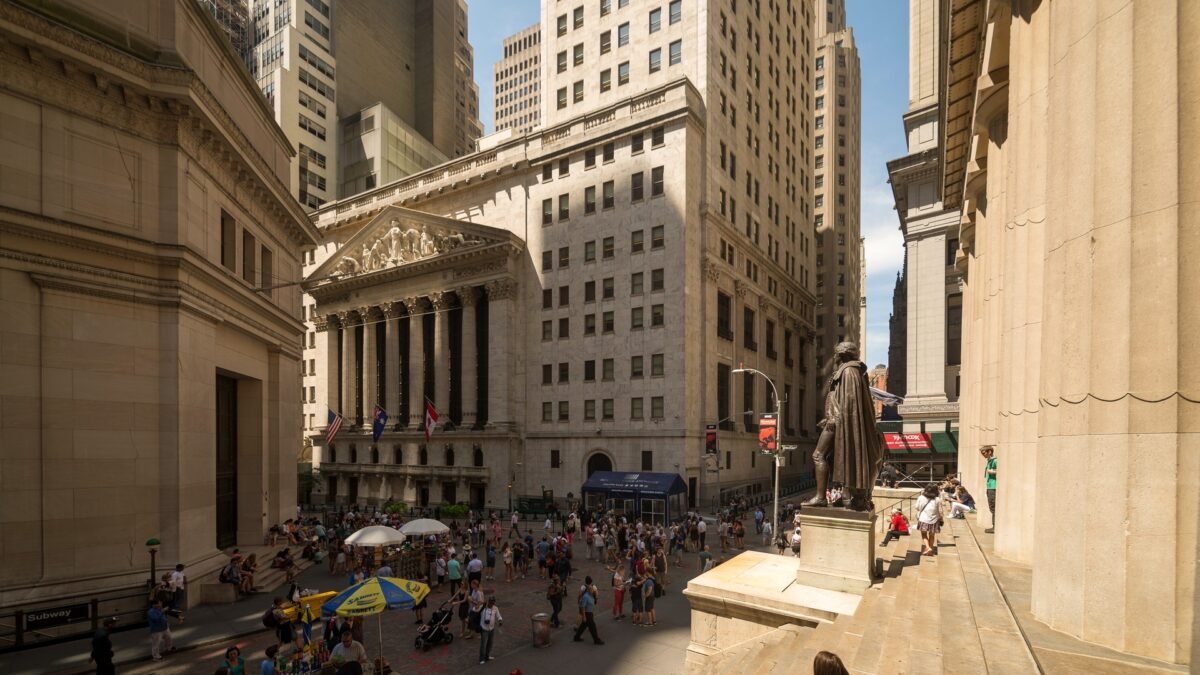
Wall Street endured one of its wildest trading sessions of the year on Wednesday, 25 November, as the Nasdaq Composite plunged as much as 4.7 per cent in morning trading, the S&P 500 fell more than 3 per cent and the Dow Jones Industrial Average lost 1,100 points, before a dramatic afternoon recovery rescued the market from a far worse outcome. By the closing bell, the Nasdaq had cut its loss to 0.6 per cent, the S&P 500 finished 0.3 per cent lower and the Dow actually ended the day higher, up 0.3 per cent, in a session that laid bare the deep unease gripping investors over the artificial intelligence trade, stubborn inflation and the direction of interest rates.
According to Investopedia, the tech-heavy Nasdaq and the benchmark S&P 500 closed lower ahead of the Thanksgiving break, as AI stocks remained under pressure, while the Dow tacked on 0.3 per cent. Investor’s Business Daily reported that the Dow finished 164 points higher at 50,182, a remarkable swing from a drop of more than 1,100 points, or 2.2 per cent, early in the day. The Nasdaq Composite lost 0.6 per cent to close at 23,585, after tanking by more than 4 per cent, while the S&P 500 finished lower by 0.3 per cent at 7,182, whittling down an earlier fall of 3.2 per cent.
The scale of the morning rout was striking. The Cboe Volatility Index, known as Wall Street’s fear gauge, surged as high as 35 during the session before easing to around 28 in late trading, still up 7 per cent on the day. Levels above 30 on the VIX indicate a high level of market stress, according to Investopedia, and the index had touched 40 during last Friday’s massive sell-off. The Nasdaq 100 pulled back from the brink of a bear market, according to a market summary carried by ZeroHedge, a measure of just how close the technology sector came to a formal 20 per cent decline from its peak.
The recovery was driven by bargain-hunters who stepped in during the afternoon, according to Investor’s Business Daily, after a morning dominated by hot inflation data, the threat of new tariffs and renewed pressure on technology stocks. Trading volume ran more than 40 per cent higher than the same time on Tuesday on the Nasdaq, a sign of the intensity of the selling and the scale of the afternoon buying that followed. Market breadth also turned for the better as the session wore on: early data showed rising stocks outnumbering falling ones on the Nasdaq by roughly seven to five, while on the New York Stock Exchange winners beat losers by nearly three to one. The NYSE Composite index rose 0.8 per cent, its third straight gain.
The session capped a chaotic week for American equities. The Nasdaq had come into Wednesday having already suffered a brutal Friday sell-off that wiped out its gains for 2026, followed by one of its best days in recent memory on Monday, only for tech weakness to resume on Tuesday. Wednesday’s near-collapse and recovery therefore marked the third sharp reversal in four sessions, a pattern that has left even seasoned traders struggling to read the market’s direction.
Nvidia Falls Again as Huang Faces Congress
At the centre of the storm, once again, was Nvidia. Shares in the chipmaker at the forefront of the global AI buildout fell 4 per cent on Wednesday, according to Investopedia, extending a rollercoaster ride that has come to symbolise the market’s doubts about the sustainability of AI-driven gains. The stock had tumbled 6 per cent on Tuesday, according to Investopedia, after soaring more than 30 per cent on Monday following news that Nvidia’s board had reinstated Jensen Huang as chief executive. Investor’s Business Daily put Tuesday’s fall at 5.9 per cent and Monday’s surge at 31 per cent.
Investors expect more volatility as Huang prepares to appear next week before congressional committees over his affair with a woman alleged to be a Chinese spy, according to Investopedia, while broader concerns about the sustainability of the AI-fuelled gains that have underpinned the stock market’s record performance in recent years also weigh on sentiment. The Senate Banking Committee is due to question Huang at a public hearing on 3 December, and the company remains under a series of investigations, including a Department of Justice criminal inquiry into Megaspeed, a Singapore data-centre operator accused of diverting Nvidia chips to China.
President Donald Trump added a fresh twist on Wednesday, saying he was open to Nvidia handing over an equity stake to the United States government, after intervening to persuade the board of directors to reinstate Huang. “I thought about it,” Trump told the New York Post, according to Investor’s Business Daily. “I said, ‘You know, maybe I should do it,’ but I didn’t bring it up at this point. It’s probably not too late.” The remark underscored how directly the White House has become involved in the fate of the world’s most valuable chipmaker.
Other chip stocks were also down on Wednesday, though they finished well above their session lows, according to Investopedia. Lam Research shares tumbled nearly 6 per cent to pace S&P 500 decliners, while memory chip giant Micron and Applied Materials each dropped roughly 4 per cent, and Advanced Micro Devices, Broadcom, Intel and Marvell Technology posted more modest declines. The iShares Semiconductor ETF ended the day down 0.5 per cent and the Roundhill Memory ETF fell 3.6 per cent. The VanEck Semiconductor ETF stretched its early losses to 7 per cent at one stage, according to Investor’s Business Daily, and has now lost ground for the ninth time in ten sessions. Trading near 397, the fund has dropped more than 41 per cent below a summertime peak of 671.83, as the bear market in semiconductor stocks intensified.
Anthropic Recovers From a $74 Low
Shares of Anthropic, the AI laboratory that last week carried out the biggest initial public offering of all time, staged a dramatic turnaround of their own. According to Investopedia, the stock rose 1.1 per cent to finish below its IPO price of $83, after closing the previous day below its IPO price for the first time and dropping as low as $74 in morning trading before staging a comeback in the afternoon. Investor’s Business Daily reported that the stock sank and then swung up as much as 4 per cent higher, finishing just 40 cents below its initial price offering at $83 per share, and remained sharply below its post-IPO high of $115.10.
The stock had tumbled another 5 per cent in premarket trading on Wednesday, according to Investor’s Business Daily, and was nearly 29 per cent off its recent high before the recovery began. According to MarketSurge, cited by Investor’s Business Daily, Wall Street forecasts earnings of 56 cents a share this year on sales surging more than 11-fold to $54.82 billion, after the company lost $1.29 a share in 2025. The young Nasdaq company already has 7.58 billion shares outstanding. It is too early to determine whether the stock has bottomed or will form a narrow IPO base seen in past huge winners, Investor’s Business Daily noted, but the wild swings around the IPO price have made Anthropic one of the most closely watched stocks on Wall Street.
Other mega-cap technology stocks turned in a mixed performance, according to Investopedia. Shares of Amazon and Alphabet fell 2 per cent and 3 per cent respectively, while Microsoft and Tesla also lost ground. Meta Platforms rose more than 3 per cent, while SpaceX and Apple also finished higher. The iShares Expanded Tech-Software Sector exchange traded fund dropped nearly 4 per cent and fell back below its 200-day line, according to Investor’s Business Daily, and is down 14 per cent for the fourth quarter that began on 1 October.
Dell and HP Defy the Sell-Off
Not every technology name was swept away by the selling. Dell Technologies finished a bumpy day of trading up 0.7 per cent, according to Investopedia, after the major Nvidia partner reported better-than-expected quarterly results and boosted its guidance. The stock, which had lost 12 per cent on Tuesday, fell as much as 10 per cent on Wednesday morning before recovering. Dell reported strong October-quarter results, according to Investor’s Business Daily, as earnings soared 265 per cent against a year ago to $9.45 a share on a 103 per cent boost in sales to $54.9 billion. The major player in servers for AI data centres also gave upwardly revised guidance for the fiscal fourth quarter ending in January, projecting $8.40 a share against Wall Street’s $7.49 forecast. Shares fell to as low as $137.72, their lowest level since 7 April, before the recovery.
Shares of HP Inc. jumped 11 per cent, pacing S&P 500 gainers, according to Investopedia, after the PC maker reported strong quarterly results. International Business Machines shares rose 3 per cent to lead Dow advancers. Omnicom, the global advertising giant, rallied above a buy point, hitting a session high of $91.56, according to Investor’s Business Daily, and the Invesco S&P 500 Equal Weight exchange traded fund marked a second straight positive reversal, flipping to a 0.9 per cent gain from a drop of 1.6 per cent earlier in the day and retaking its 50-day moving average.
There were sharp losers elsewhere in the technology sector. Nutanix nose-dived 20 per cent and notched a session low of $42.58, according to Investor’s Business Daily, with volume running more than nine times its usual pace. The San Jose company posted solid results for the October-ended fiscal first quarter, with earnings jumping 78 per cent to 73 cents a share and sales rising 15 per cent to $772.4 million, but its fiscal 2027 sales guidance of nearly $3.21 billion at the midpoint came in a touch below FactSet’s estimate of $3.22 billion. The company also said Rajiv Ramaswami was stepping down as chief executive after six years in the post. Ambarella shares plunged 33 per cent, Autodesk lost 5 per cent and Workday fell 5 per cent in premarket trading, according to Investor’s Business Daily, while Deere declined 2 per cent.
Hot Inflation, Strong Growth and the Fed’s Dilemma
The morning’s selling was triggered in part by a batch of economic data that pulled the market in two directions at once. Early on Wednesday, the Federal Reserve’s primary inflation gauge, the core personal consumption expenditures price index, rose 0.3 per cent on the month, matching estimates, with a year-over-year increase of 3.3 per cent, above the 3.2 per cent estimate, according to Investor’s Business Daily. Monthly durable-goods orders rose 0.2 per cent in October, below the estimate for 0.5 per cent, according to the Commerce Department.
At the same time, third-quarter gross domestic product was revised sharply higher to 4.3 per cent against the initial 3.4 per cent estimate, according to Investor’s Business Daily, far above the consensus expectation of a slight revision to 3.5 per cent. A Dow Jones summary carried by Morningstar described the revision in the same terms, noting that the economy grew in the late spring and summer at the fastest pace in three years, setting the United States up for a strong finish to 2026. Jobless claims dropped to 189,000, according to Investor’s Business Daily, more than expected, against forecasts of an easing to 200,000 from 203,000 in the previous week. Morningstar’s Dow Jones summary confirmed the figure, reporting that initial jobless claims fell by 13,000 to 189,000 in the week through 21 November.
The combination of hot inflation and strong growth has raised the risk of more Federal Reserve rate hikes, according to a Dow Jones headline carried by Morningstar. A December hike was already widely expected, the summary noted, and more increases in 2027 could raise borrowing costs for households and weigh on stocks. Another Dow Jones headline warned that wild market swings were colliding with a Fed bent on taming inflation, arguing that the AI-driven market rout showed how much higher the bar had risen for the central bank to step in and support markets. The tension is now the central question for investors: an economy growing at its fastest pace in three years, with unemployment claims at low levels, gives the Fed little reason to cut rates, while inflation running above target at 3.3 per cent gives it reason to consider raising them.
The pressure is not confined to the United States. South Korea’s central bank resumed rate hikes, raising interest rates for the third time this year as inflation remained well above target and accelerating economic growth prompted another upgrade to its forecasts, according to the Dow Jones summary. The Bank of Korea raised rates by 25 basis points to 3.25 per cent in a non-unanimous decision, according to a market summary carried by ZeroHedge. In Japan, Bank of Japan board member Naoki Tamura said the central bank needed to bring the policy rate to a neutral level soon, as financial conditions remained accommodative, bolstering the case for a December move, according to the Dow Jones summary, and Tamura said a 50-basis-point hike might be needed if inflation risks materialised.
Gold, Oil and Bitcoin
In other markets, gold futures were recently up 0.3 per cent at $3,575, according to Investopedia, after falling to a 14-month low of $3,425 in morning trading, while West Texas Intermediate oil futures rose 2.5 per cent to $84.10 per barrel. Bitcoin was trading at $60,300, up from a low earlier in the day of $57,300 but still down about 25 per cent from its highs for the month. The yield on the 10-year Treasury note, which affects interest rates on consumer loans, was at 4.87 per cent, down from 4.93 per cent at the previous day’s close and near its lowest level in two months. Crude was firmer following Houthi strikes on Saudi ports, according to the ZeroHedge market summary, and European equity futures pointed to a firmer open after the Euro Stoxx 50 cash market closed 1.9 per cent lower on Wednesday.
United States financial markets were closed on Thursday for the Thanksgiving holiday. The stock market will be open on Friday, but the trading session will end at 1:00 p.m. Eastern Time, while bond trading closes an hour later, according to Investopedia. The shortened session means investors will have little time to react to any fresh developments before the weekend, and the market’s next full test will come on Monday, when traders return to assess whether Wednesday’s afternoon recovery marked a genuine turning point or merely a pause in a deeper decline.
Analysis: Three Forces Pulling the Market Apart
Wednesday’s wild session was not really about a single piece of news. It was about three forces pulling the market in different directions at the same time, and the market’s inability, for most of the morning, to decide which of them mattered most.
The first force is the simplest to describe and the hardest to resolve: the great AI trade is being re-priced. For three years, the promise of artificial intelligence carried American equities to record after record. Nvidia, the chipmaker at the centre of the buildout, became the market’s bellwether, and a constellation of chipmakers, server builders, software firms and newly listed AI laboratories rose with it. That logic is now being tested from two directions. On one side, the demand is real: Dell’s server revenue more than doubled in a single quarter, its order backlog stands at $132.3 billion, and companies across the economy are still racing to buy computing capacity. On the other side, the doubts are multiplying: valuations that assume decades of uninterrupted growth, a semiconductor sector down more than 40 per cent from its summer peak, a governance crisis at Nvidia that has drawn in the White House, Congress and the Department of Justice, and a newly listed Anthropic trading below its IPO price within a week of the largest offering in history.
What makes the moment so volatile is that both sides of the argument have fresh evidence every single day. Monday’s 31 per cent surge in Nvidia on Huang’s return was the bull case in its purest form. Tuesday’s 6 per cent fall and Wednesday’s 4 per cent drop were the bear case, delivered just as quickly. When a single stock can swing by a third of its value in three sessions, the market beneath it cannot stay calm, and the Nasdaq’s 4.7 per cent morning plunge was, in that sense, less a surprise than a consequence.
The second force is the Federal Reserve, and here the news was genuinely uncomfortable. Strong growth is normally good for stocks, and a 4.3 per cent GDP print with jobless claims at 189,000 would, in most years, be cause for celebration. But in a market already worried about inflation, strength becomes a problem rather than a comfort, because it removes the Fed’s reason to cut rates and hands it a reason to raise them. Core inflation at 3.3 per cent, above expectations, with a December hike already widely expected and further increases in 2027 openly discussed, means that the cheapest money in the system may be about to get more expensive. That matters enormously to the AI trade in particular, because the entire buildout, from data centres to chip fabrication plants, is financed with borrowed money, and higher rates raise the cost of every project in the pipeline.
The third force is the calendar. Wednesday was the eve of Thanksgiving, a holiday that empties trading desks and thins liquidity, which means that smaller orders can move prices further than they would on a normal day. The shortened Friday session that follows will do the same. Thin markets amplify both panic and relief, and Wednesday delivered both in sequence: the morning’s plunge was exaggerated by the absence of buyers, and the afternoon’s recovery was exaggerated by their return. That does not make the moves meaningless, but it does mean they should be read with caution. A market that falls 4.7 per cent and recovers in a single day has not found its level; it has revealed that it does not yet know where its level is.
Why It Matters
The stakes go well beyond the daily scoreboard. The Nasdaq has now compressed its gain for the year to just 1.5 per cent, according to Investor’s Business Daily, while the S&P 500 is up almost 5 per cent since 1 January. That is a remarkable comedown for a market that spent much of the year setting records, and it matters because the AI trade is no longer a niche story about technology stocks. It is the story of the American economy’s growth, its productivity hopes, its capital spending and its stock market wealth. Pension funds, retirement accounts and ordinary savers are all exposed to it, and a disorderly unwinding would be felt far beyond Wall Street.
It also matters because the market’s troubles are now colliding with policy in ways that were unthinkable a year ago. The President of the United States is publicly discussing taking an equity stake in Nvidia, the central bank is weighing rate hikes into a falling market, and a new tariff programme is being prepared against sixteen economies even as the old one is challenged in the courts. Each of these is a major story on its own. Together, they amount to a policy environment in which the market cannot count on the usual supports: not on cheap money, not on free trade, and not on political distance from the companies it is trying to value.
What to watch next is therefore unusually clear. The first test comes on Friday, in a shortened session that will show whether Wednesday’s bargain-hunters were the start of a genuine recovery or simply traders covering positions before a long weekend. The second comes next week, when Jensen Huang appears before congressional committees and the market learns whether the Nvidia saga has further to run. The third is the Federal Reserve’s December meeting, where the choice between fighting inflation and supporting a fragile market will be made in public. And the fourth is the data itself: if growth stays strong and inflation stays hot, the Fed’s dilemma only deepens, and the market’s wild swings may become the new normal rather than the exception.
For now, Wednesday’s lesson is a sobering one. A market can fall nearly 5 per cent in a morning, recover most of it by the afternoon, and still end the day with its biggest questions unanswered. The Nasdaq did not enter a bear market on Wednesday, but it came close enough to see one. The next few sessions will show whether that was a warning or a reprieve.
Sources
- Investopedia: Markets News, Nov. 25, 2026 — Nasdaq, S&P 500 Close Lower as AI Trade Remains Under Pressure; Nvidia Falls 4%
- Investor’s Business Daily: Stock Market Today — Dow Swings Into A Win; Anthropic Almost Retakes Its IPO Price
- Morningstar / Dow Jones: Top Markets Headlines at 11 PM ET — Wall Street Can’t Seem to Find Its Footing in the Chaos of the New AI Trade
- ZeroHedge / Newsquawk: Risk Rebounds as Tech Recovers and BoK Hikes; US Away for Thanksgiving
- Tech Times: SpaceX IPO Opens at $135 on Nasdaq — Record $75 Billion Raise (background on Anthropic and SpaceX listings)

About the Author — Abdul Mannan
Related Articles

Four Days From Triumph to Doubt: What Anthropic’s Fall Below Its IPO Price Really Means
Four days after the largest IPO in history, Anthropic's shares slipped below their $83 offer price. This is…

S&P Puts Nvidia’s AA Credit Rating on Downgrade Watch as Governance Crisis Deepens
S&P Global Ratings has put Nvidia's AA credit rating on watch for a possible downgrade, saying the board's…

Poundland Collapses Into Administration, Putting 11,000 Jobs at Risk Weeks Before Christmas
Poundland has entered administration after rescue talks failed, putting around 11,000 jobs and 600 stores at risk just…