
SAP Weighs Cutting at Least 10,000 Jobs in AI-Driven Overhaul of Europe’s Biggest Software Maker

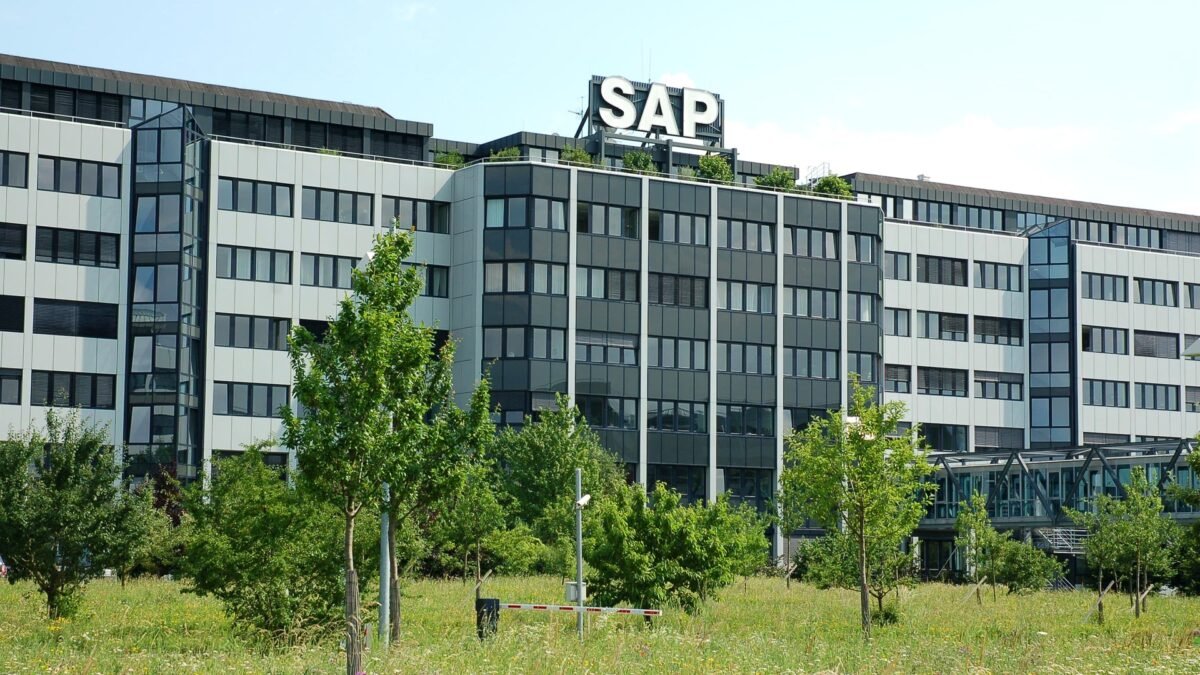
German software giant SAP is considering eliminating at least 10,000 jobs as part of a sweeping restructuring designed to reshape the company for the age of artificial intelligence, according to a Bloomberg report published on Thursday.
The proposed cuts would affect at least 9 per cent of SAP’s global workforce of more than 110,000 people, Bloomberg reported, citing people familiar with the discussions. If the plan goes ahead, it would be the second restructuring of this scale at SAP in less than three years.
The plan has not been finalised, and the final number of jobs affected could still change after negotiations with employee representatives, according to the report. SAP declined to confirm the reported cuts, telling Bloomberg that it continuously reviews its organisation to keep it aligned with its strategy and customer needs. Reuters, which carried the Bloomberg report, said it could not independently verify it.
The news lands at a paradoxical moment for Europe’s most valuable software company. SAP’s business is growing strongly: in its third-quarter results for 2026, revenue crossed 10 billion euros in a single quarter for the first time, rising 13 per cent year on year. Yet the company is preparing, according to the report, to cut roughly one in eleven of its employees in the name of becoming an artificial intelligence company first and a traditional software company second.
The reported restructuring is the latest and most dramatic expression of a question now facing almost every large technology employer: when software can increasingly be written, sold and supported with the help of AI, how many people does a software company still need, and what should the ones who remain be doing?
What the reported plan involves
According to Bloomberg, SAP’s management has asked every department in the company to identify areas where positions could be eliminated, with product development, engineering and sales under particular scrutiny. Those are the teams at the heart of how SAP builds its software and how it sells it to the world’s biggest companies, which makes the reported focus significant: this is not a plan to trim back-office functions at the edges, but to redesign the core of the business.
The restructuring is aimed at changing how SAP develops and markets its products, the people familiar with the discussions said. Chief executive Christian Klein wants to embed artificial intelligence more deeply into the company’s enterprise software and to change the way that software is built and sold, after earlier attempts to introduce AI products ran into problems with customers who questioned whether they were worth the cost.
The reported plan is still at an early stage. The proposals have not yet been formally discussed with employee representatives, according to the Financial Times, and the total number of cuts has not been finalised. SAP has historically announced major restructurings in late January, alongside its full-year results, so a formal announcement, if one comes, may still be weeks away.
That timing matters for the 10,000 figure itself. In the 2024 restructuring, the number that was announced was the number that was eventually delivered, but the figure now being discussed could still move in either direction as labour negotiations proceed. In Germany, where a large share of SAP’s workforce is based, employee representatives have strong rights to be consulted on restructuring plans, and the process of reaching agreement can take months.
The AI-first push behind the cuts
The reported cuts are the sharp end of a strategy that Christian Klein has been pursuing with growing intensity through 2026. Klein, who has led SAP since 2020, has made no secret of his ambition to turn the company into an AI-first organisation, and this year he has reshaped the leadership team to match.
SAP reorganised its executive board twice in 2026 as part of the push. Two of the six board members are due to leave in March: product chief Muhammad Alam, whose contract is not being renewed, and sales chief Thomas Saueressig, who announced last week that he is leaving to become chief executive of German cloud computing firm Ionos. Klein has taken direct personal responsibility for much of the product organisation, putting himself in charge of the teams building SAP’s AI products.
The logic, as Klein has presented it, is straightforward. SAP’s software runs the core operations of many of the world’s largest companies, from finance and human resources to supply chains and procurement. If AI can be woven into those systems so that they do more of the work themselves, SAP’s products become more valuable, and the company needs fewer people to build and sell them in the old way. The company has set itself a target of more than 2.19 billion dollars in annualised efficiency gains by the end of 2028, according to the New York Post, and the reported job cuts are one way of getting there.
But the strategy has also been a source of tension. Earlier AI products from SAP disappointed some customers, who were unconvinced that they justified their price. Klein’s answer has been to go further and faster, embedding AI tools directly into the applications businesses use every day rather than selling AI as an optional extra. The reported restructuring is the organisational counterpart of that product decision: fewer people building software in the old way, more resources directed at AI.
The pressure on Klein is visible in the share price. SAP’s shares have fallen sharply in 2026, trading near their lowest levels of the year even as the underlying cloud business has kept growing, a split between investor sentiment and operating performance that Klein has been under mounting pressure to close. On Friday, after the Bloomberg report, SAP shares fell roughly 0.5 per cent to 193.18 euros in morning trading, according to IndexBox.
A company growing while it cuts
What makes the reported cuts striking is that they would come at a moment of genuine commercial strength. SAP’s third-quarter results, published on 21 October 2026, showed total revenue of 10.3 billion euros, up 13 per cent on the same period a year earlier, the first time the company has passed 10 billion euros of revenue in a single quarter. Cloud revenue rose 26 per cent to 6.7 billion euros, and the current cloud backlog, a measure of future contracted business, reached 24.1 billion euros, up 28 per cent. Operating profit rose 18 per cent, and profit after tax advanced 11 per cent to 2.27 billion euros.
Those figures describe a company in the middle of a successful transformation, not a business in retreat. SAP spent the past decade moving its customers from software they bought once and installed on their own computers to cloud subscriptions they pay for continuously. That shift is now paying off: the cloud business is growing at more than twice the rate of the company as a whole, and the backlog of contracted future revenue gives SAP unusual visibility over its income in the years ahead.
The reported cuts therefore have to be understood not as a response to a crisis in demand, but as a bet about the future shape of the software business. Klein’s argument, in effect, is that the company that grew by selling enterprise software in the old way cannot simply keep growing in the same way, and that the money saved by cutting jobs can be redirected into the AI products that will drive the next phase of growth.
That is a familiar argument in the technology industry in 2026, and it is one that investors have heard from many companies. What is unusual about SAP is the scale of the company and the timing: cutting 9 per cent of the workforce of Europe’s largest software maker, while its revenue is growing at double-digit rates, is a statement of intent about how far and how fast the industry is prepared to go.
The 2024 precedent
SAP has been here before, and recently. In January 2024, the company announced a restructuring that affected around 10,000 positions, at a cost of about 3 billion euros, and took more than a year to complete. The programme was presented as a way of refocusing the company on growth areas, particularly AI, and of managing the shift to cloud computing.
The striking thing about that episode is what happened next. SAP rebuilt its headcount through subsequent hiring, and by the end of September 2026 it employed the equivalent of 113,076 full-time workers, up from 107,602 at the close of 2023, according to its financial disclosures. In other words, the 2024 cuts were followed by a period in which the company hired more people than it had cut.
That history raises an obvious question about the new reported plan: is this a genuine contraction of the workforce, or another reshuffle in which jobs disappear in some areas and reappear in others? The Bloomberg report describes the plan as eliminating at least 10,000 positions, and the emphasis on product, engineering and sales suggests a real reduction in the teams that build and sell the software. But until SAP itself confirms the details, it is impossible to know how much of the reduction would be offset by hiring in AI and other growth areas.
The 2024 experience also offers a guide to how the process is likely to unfold. That restructuring was announced with the full-year results in January, cost roughly 3 billion euros, and was implemented over more than a year, with a mix of voluntary departures and retraining. If the new plan follows a similar pattern, the effects would be spread across 2027 and into 2028, rather than arriving all at once.
What happens next
Several steps stand between the reported plan and any actual job losses. The first is the negotiation with employee representatives, which in Germany is a formal and often lengthy process. Works councils have the right to be informed and consulted on restructuring, and in a company the size of SAP the discussions can shape both the number of positions affected and the terms on which people leave.
The second is the question of where the cuts would fall. SAP employs more than 110,000 people around the world, with large operations in Germany, India and the United States, among other countries. The report does not say how the cuts would be distributed geographically, and the answer will matter a great deal, both for the employees affected and for the politics of the decision in Germany, where SAP is one of the country’s most important technology employers.
The third is the announcement itself. SAP has historically unveiled major restructurings alongside its full-year results in late January, and the most recent pattern suggests that any formal statement is likely to come at that point, if it comes at all. Between now and then, the company will be under pressure from investors, employees and the German media to say more about what it intends to do.
For the employees, the uncertainty is the hardest part. A reported plan that has not been confirmed, with a number that has not been finalised, leaves tens of thousands of people wondering whether their job is at risk, and in which department and which country the cuts will land. That is the human cost of a story reported in the language of percentages and efficiency gains, and it is the reason the negotiations with employee representatives will be watched so closely.
Analysis: Why It Matters
The SAP report matters for three reasons that go well beyond the fate of one company, however large it is.
First, it is a test of the central claim of the AI era: that artificial intelligence will make companies more productive by doing work that people used to do. SAP is not a struggling business cutting costs to survive. It is a growing, profitable company choosing to cut nearly a tenth of its workforce because its chief executive believes AI changes how many people it needs. If that logic holds, it will be repeated across the software industry, and then across every industry that software touches. If it does not hold, if the cuts damage the company’s ability to build and sell its products, the episode will stand as a warning about the speed at which AI enthusiasm can be translated into organisational decisions.
Second, the report captures a tension at the heart of the European technology industry. SAP is Europe’s most valuable software company, and one of the few European technology firms that can genuinely claim to compete on equal terms with the American giants. Its success matters to Germany and to Europe’s ambitions to build world-class technology companies of its own. A restructuring of this scale, carried out in the name of AI, is therefore not just a corporate decision. It is a signal about where Europe’s flagship software company believes the industry is heading, and about what it is prepared to sacrifice to get there.
Third, the story illustrates how the politics of AI and employment are changing. For the past two years, the public debate about AI and jobs has largely been about the future: what might happen, in which industries, and over what timescale. The SAP report, if it is confirmed, would move that debate into the present tense. Ten thousand jobs at a single company, justified explicitly by an AI-first strategy, is the kind of concrete event that changes how politicians, unions and the public think about the technology, and it is likely to intensify the pressure on governments to explain what they intend to do for the workers affected.
There is also a narrower, more immediate question for SAP itself. The company has spent years telling its customers that its software will make their businesses more efficient, and it has spent the past year telling investors that AI will make SAP itself more efficient. The reported restructuring is the moment when that second claim is tested in public, with real jobs at stake. Klein has staked his leadership on the proposition that SAP can become an AI company without losing what made it successful as a software company. The next few months, from the labour negotiations to the January results, will show whether the company’s employees, its customers and its investors believe him.
It is worth remembering, too, what the report does not say. It does not say that SAP’s business is failing. It does not say that demand for its software has fallen. It says that a successful company is preparing to cut a large number of jobs because it believes the way software is built and sold is changing. That distinction is important, because it is the difference between a company in trouble and a company making a choice. The choice may turn out to be right or wrong, but it is a choice, and it deserves to be judged as one.
What to watch next
The most important thing to watch is whether SAP confirms the plan, and when. A formal announcement with the full-year results in late January would be the clearest signal that the reported restructuring is real, and it would also provide the details that the current report lacks: how many jobs, in which countries, over what timescale, and on what terms.
The negotiations with employee representatives will be the second thing to watch. The outcome of those talks will determine not only the final number of positions affected, but also how the cuts are implemented, and whether they are achieved through voluntary departures, retraining and natural attrition, or through compulsory redundancies. In Germany, the distinction matters enormously, both legally and politically.
The third is the market reaction. SAP’s shares have already fallen sharply this year, and investors will be watching to see whether the reported restructuring is taken as a sign of disciplined management or as evidence that the AI strategy is not delivering the growth that was promised. The company’s fourth-quarter and full-year results, due in January, will provide the first hard evidence of whether the AI-first push is translating into the financial performance Klein has promised.
Finally, watch what other software companies do. SAP is rarely alone in its decisions. If other large enterprise software firms follow with similar announcements, the SAP report will look like the beginning of a broader shift in the industry. If they do not, it will look like a decision specific to SAP, and to the particular pressures facing its chief executive.
Sources
- Reuters — SAP considers at least 10,000 job cuts in AI restructuring, Bloomberg reports
- New York Post — Software giant SAP weighs axing at least 10,000 jobs in massive AI overhaul: report
- The Hindu BusinessLine — SAP weighs 10,000 job cuts as Europe’s top software company pushes AI strategy
- BusinessWorld — SAP weighs cutting at least 10,000 positions in AI restructuring
- Calcalist — SAP looks to cut another 10,000 jobs in new AI-driven restructuring

About the Author — Abdul Mannan
Related Articles

Global Markets Rebound as Beijing Sends In Its ‘National Team’ and AI Fears Ease
Chinese shares posted their best day in more than two years after Beijing pledged to deploy its state-backed…

Altria Considers Cash Bid for Imperial Brands in Tobacco’s Biggest Transatlantic Deal in Years
Altria, the maker of Marlboro in the United States, has confirmed it is considering an all-cash offer for…

Nasdaq Plunges 4.7% Intraday as AI Sell-Off Pushes Wall Street to the Brink of a Bear Market
Wall Street endured one of its wildest sessions of the year on Wednesday as the Nasdaq plunged as…