
Venezuela to Scrap Law That Jailed Sanctions Supporters for Up to 30 Years as Transition Talks Advance

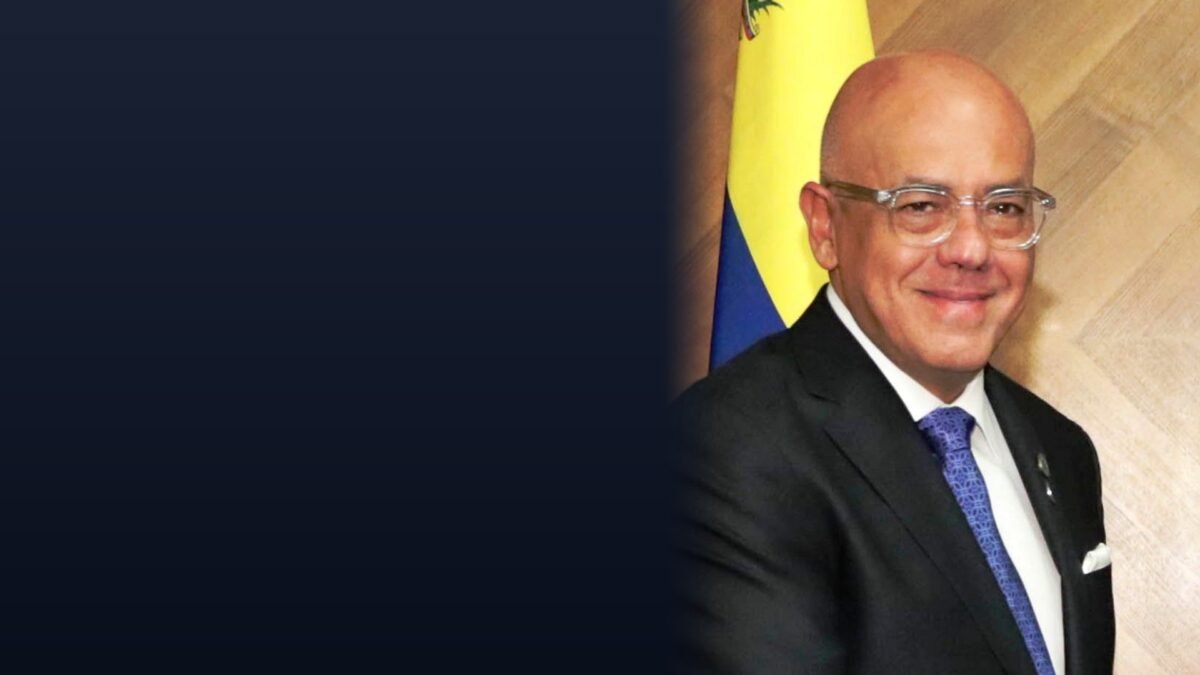
Venezuela’s National Assembly will begin repealing a law that threatened up to 30 years in prison for anyone who supported foreign sanctions, the speaker of the Assembly, Jorge Rodríguez, has announced, in the most significant concession yet from the interim government to the country’s opposition. The move, which the Assembly is expected to approve next week, would scrap one of the harshest instruments of the era of Nicolás Maduro, even as the government made clear that other laws used against its critics will stay in place.
Rodríguez announced on Thursday, 26 November, that the Assembly will take up the repeal of the Organic Law Libertador Simón Bolívar against the Imperialist Blockade on Tuesday, 1 December. “We believe it is very healthy, and a contribution to the dialogue process, for this law to be repealed,” he told reporters, according to QNC News. “We take up the legislative initiative, and next Tuesday we will present the process to repeal it.”
The announcement came at the end of a week in which the interim government and the opposition concluded a fourth round of talks, and it was presented by both sides as a product of that dialogue. According to the BBC, the interim government and parts of the opposition agreed during talks that began in August to review several laws as part of what an opposition statement described as a “route map towards democracy”. Rodríguez said the decision followed recommendations from the Peace and Coexistence Program created by the acting president, Delcy Rodríguez, his sister.
Whether the repeal amounts to a genuine opening or a carefully managed gesture will be judged by what follows it. The government has promised free and fair elections but has set no date for them, the country’s best-known opposition leader remains outside the talks, and a separate law long used to jail journalists and critics is not being repealed at all.
What the Simón Bolívar Law did
The Simón Bolívar Law was passed in late November 2024, months after the disputed presidential election of July that year, in which the then-incumbent Maduro was declared the winner amid widespread allegations of fraud. According to the BBC, the legislation was introduced two years ago and has been criticised ever since for enabling political persecution. Its full title, the Organic Law Libertador Simón Bolívar against the Imperialist Blockade, reflected its purpose: to punish Venezuelans who requested, promoted or supported foreign sanctions against the country.
The penalties it imposed were among the most severe in Venezuelan law. According to Nuevo Día, the law carried prison terms of 25 to 30 years, fines, confiscation of property and political disqualifications of up to 60 years for those who promoted or backed what the law called coercive measures against Venezuela. According to the BBC, individuals who requested or supported foreign sanctions were permanently banned from political office and had their assets confiscated.
The law was aimed squarely at the opposition and its international supporters. After the 2024 election, the opposition and several foreign governments argued that the result had been falsified, and many opposition figures had spent years calling for international pressure, including sanctions, against the Maduro government. The law made that advocacy itself a crime, punishable by decades in prison.
Rodríguez, in announcing the repeal, sought to present the law as a creature of its moment rather than a permanent feature of Venezuelan politics. “Legislative processes are dynamic processes. That law responded to a very specific moment in a particular situation that Venezuela was going through,” he said, according to the BBC. He added that no politician had ever been subjected to its provisions, a claim echoed by Nuevo Día, which reported that Rodríguez said no Venezuelan was ever prosecuted under the law.
That detail matters, because it shapes how the repeal should be understood. A law that was never used to prosecute anyone can still do enormous damage. Its existence alone was enough to warn opposition politicians, journalists, activists and ordinary citizens that calling for international pressure could cost them their freedom, their property and their right to stand for office. Laws of this kind do not need to be enforced to be effective; the threat is the enforcement. Removing the law therefore removes a weapon from the statute book, even if that weapon was never fired.
The talks behind the decision
The repeal did not emerge from nowhere. It is the first visible result of a dialogue between the interim government and a section of the opposition that has been under way since August, and it follows the conclusion of a fourth round of talks on Monday, according to Nuevo Día.
The opposition delegation in those talks is led by Dinorah Figuera, the president of the National Assembly elected in 2015, according to QNC News. That detail is itself a measure of how much has changed in Venezuela this year. The 2015 Assembly, controlled by the opposition, was for years treated by the Maduro government as illegitimate, and its leaders were persecuted, exiled or stripped of office. That its president now sits across the table from the government, negotiating the repeal of laws, is a sign of how far the political landscape has shifted since January.
That shift began when Maduro was seized by United States forces in January 2026, according to the BBC, and Delcy Rodríguez, his deputy, took over as interim president. Her government has been negotiating with opposition parties since taking over at the start of the year, according to News Central TV, with the discussions reportedly resulting in an agreement to review several laws, including the one now set for repeal.
The talks are taking place under the close eye of Washington. According to News Central TV, the interim government has engaged in political transition negotiations with opposition groups selected by Washington. The United States, having removed Maduro, has a direct interest in how the transition unfolds, and the repeal of a law that criminalised support for American sanctions is a gesture that speaks as much to Washington as it does to the Venezuelan opposition.
That context also explains the timing. The announcement comes as the interim government seeks to present itself as a credible steward of a transition towards elections, and as it faces pressure from both the opposition and the United States to show that the transition is real. Repealing a law that threatened 30-year prison terms for backing sanctions is a concession that costs the government little in practice, since the law was never used, but signals a great deal in principle.
The law that stays
If the repeal of the Simón Bolívar Law is the concession, the fate of the Law Against Hate is the limit of it. Rodríguez made clear on Thursday that the separate statute, the Organic Law Against Hatred, will not be repealed. “We still have hate installed there,” he said, according to Nuevo Día.
The Law Against Hate has long been used to jail journalists and critics, according to QNC News, and its survival is the most important qualification to Thursday’s announcement. Where the Simón Bolívar Law targeted a specific form of political activity, support for sanctions, the Law Against Hate is broader and more flexible, and it has been applied against a much wider range of people, from reporters who criticised the government to ordinary citizens who posted critical messages online.
The government’s position, as expressed by Rodríguez, is that the Law Against Hate is being reformed rather than repealed, because hatred remains entrenched in Venezuelan society. That framing leaves the government with a powerful instrument intact, even as it gives up another. It also raises an obvious question: if the state retains a law that can be used to imprison its critics, how much has really changed?
The answer will depend on how the Law Against Hate is used in the months ahead, and on whether the promised reform narrows its scope or merely rewords it. For now, the opposition and international observers will note that the government has repealed the law that punished support for sanctions, and kept the law that punishes dissent.
The election that produced the law
To understand why the Simón Bolívar Law was passed, it is necessary to return to the presidential election of July 2024, the event that set Venezuela on the path to the present transition.
In that election, the opposition leader María Corina Machado was barred from running for office by Maduro’s government, according to the BBC, and her ally Edmundo González ran in her place. The electoral authority, which was closely aligned with the government, declared Maduro the winner without making detailed voting tallies public. The opposition argued that González had won the election, not Maduro, uploading copies of the voting tallies as evidence.
The dispute over the result was never resolved. The government refused to publish the detailed results that would have settled the question, and the opposition’s tallies, which it said showed a decisive victory for González, were dismissed by the authorities. The election was followed by protests, arrests and a deepening of the country’s political crisis, and the Simón Bolívar Law, passed months later, was part of the government’s response: a warning to anyone who sought international pressure against it that they could face decades in prison.
González fled the country after the election, and for two years the opposition’s claim to have won remained an unresolved grievance at the heart of Venezuelan politics. Now, according to Nuevo Día, González has said he will return to Venezuela on 5 December, five days after the Assembly begins the repeal process. His return, if it happens, will be one of the most closely watched moments of the transition.
Machado, meanwhile, returned from exile last month, according to News Central TV, drawing renewed attention to Venezuela’s political transition. She is widely expected to run for office in the event of an election, according to the BBC, despite being excluded from the transition talks. That exclusion is one of the most striking features of the current dialogue: the country’s most popular opposition figure, the woman who won the opposition’s primary and whose ally the opposition says won the 2024 election, is not at the table.
A transition without a date
Delcy Rodríguez has promised that the country will hold free and fair elections, according to the BBC, but she has not set a date for them. That absence of a date is the central fact of the Venezuelan transition, and it is the standard against which every concession, including Thursday’s repeal, must be measured.
A transition that has no timetable is a transition that can be extended indefinitely, and the interim government has so far given no indication of when Venezuelans will be able to vote for a permanent government. The repeal of the Simón Bolívar Law is a step on what the opposition has called a route map towards democracy, but a route map without a destination date is of limited use.
The government’s caution is understandable from its own point of view. An election held soon, with Machado free to run and González back in the country, would be a genuine test of the interim government’s support, and there is no guarantee it would pass it. The government’s supporters, many of whom held power for more than two decades under Maduro and his predecessor Hugo Chávez, have much to lose from a free vote, and the institutions of the state, from the electoral authority to the courts to the armed forces, remain largely in the hands of people appointed under the old order.
But caution is also a risk. Every month without an election date feeds the suspicion, among the opposition and in Washington, that the interim government intends to govern indefinitely, and that the dialogue is a device for managing pressure rather than a path to democracy. The repeal of the Simón Bolívar Law will help the government’s case that it is serious about change, but only if it is followed by further steps, and above all by a date.
There are other signs of movement. The restoration of defence ties between the United States and Venezuela, marked by a military pact signed in Caracas in November, suggests that Washington is prepared to work with the interim government for now, and that the relationship between the two countries is being rebuilt on a new footing. The interim government’s willingness to negotiate with the opposition, and to repeal laws at the opposition’s request, suggests that it understands the need to show progress.
But the test of a transition is not whether the government makes concessions, but whether it gives up power. So far, the interim government has given up a law that was never used, while keeping the law that jails its critics, and it has promised elections without saying when they will be held. That is a beginning, not an ending.
Analysis: a real concession, carefully bounded
The repeal of the Simón Bolívar Law deserves to be taken seriously, and it deserves to be kept in proportion. Both things are true at once, and both matter for understanding where Venezuela stands.
It deserves to be taken seriously because laws of this kind are not repealed lightly by governments that intend to keep ruling by fear. The statute was a symbol of the Maduro era’s approach to dissent: it criminalised not an act of violence or corruption, but an opinion about foreign policy, and it did so with penalties so severe that they were plainly designed to terrify rather than to punish proportionately. Its repeal removes from the statute book a law that made it a crime, punishable by 30 years in prison, to ask the outside world for help. That is a meaningful change in the legal landscape, and it will be felt by every opposition politician, journalist and activist who has lived under its shadow for the past two years.
It also matters because of who asked for it and who agreed to it. The repeal was negotiated at a dialogue table, not imposed from above, and it was agreed by a government that, less than a year ago, was part of the regime that passed the law. The fact that the interim government is prepared to sit down with the opposition, to accept its agenda and to repeal laws at its request, is itself a departure from the practice of the Maduro years, when dialogue was repeatedly promised and repeatedly used as a stalling tactic. Whether this time is different will be shown by what happens next, but the fact of the negotiation is not nothing.
At the same time, the repeal must be kept in proportion, because its practical cost to the government is close to zero. The law was never used to prosecute anyone, by the government’s own account, and its repeal therefore deprives the state of a weapon it had never fired. The government has given up a threat, not a practice. The practice of jailing critics, which the Law Against Hate continues to permit, remains untouched, and the government has been explicit that it intends to keep it that way.
This is the pattern of the Venezuelan transition so far: concessions that are real but bounded, offered in areas where the government can afford to give ground, while the core instruments of control are retained. The interim government has restored relations with Washington, negotiated with the opposition and repealed a repressive law, but it has not set an election date, it has not brought Machado into the talks, and it has not given up the law most commonly used against its critics. Each step forward is accompanied by a step held back.
That pattern may be a deliberate strategy, a way of managing a transition that the government cannot control entirely and does not fully trust. Or it may be a sign that the government’s commitment to democracy is thinner than its rhetoric suggests. It is too early to say which, and the honest answer is that the evidence points both ways. What can be said with confidence is that the repeal of the Simón Bolívar Law is a necessary condition for a democratic transition, not a sufficient one. A country cannot hold free elections while it is a crime to support sanctions, but it also cannot hold free elections while its most popular opposition leader is excluded from the talks, while the electoral authority remains unreformed and while journalists can be jailed under a hate law.
The next few weeks will provide the first real test of whether the repeal is the beginning of a sequence or an isolated gesture. The Assembly begins the repeal process on 1 December, and Rodríguez has said he expects the reforms to be approved next week. González says he will return on 5 December. If his return happens smoothly, if the repeal passes without new conditions attached, and if the dialogue produces a further agreement, perhaps on the electoral timetable or on the Law Against Hate, then the transition will have gathered momentum. If, on the other hand, the repeal is followed by silence, by delays or by new obstacles to the opposition, then Thursday’s announcement will be remembered as a gesture that cost the government nothing and changed nothing.
There is also a wider significance to the repeal, beyond Venezuela’s borders. The Simón Bolívar Law was part of a broader pattern in which governments targeted by sanctions criminalise those who support them, turning a foreign policy disagreement into a domestic crime. Its repeal is a reminder that such laws are reversible, and that the pressure of negotiation, including pressure from the United States, can produce results. For other countries where similar laws exist, Venezuela’s example will be watched closely, both by governments that use such laws and by oppositions that suffer under them.
For the Venezuelan opposition, the repeal is a victory, but a limited one, and its leaders will know it. They have won the removal of a law that threatened them with decades in prison, but they have not yet won the right to vote in a free election, or the right of their leader to stand in one, or the freedom of the press to report without fear of a hate law. The route map towards democracy, as they have called it, has its first landmark. The road ahead is still long, and its end is still unmarked.
What to watch next
Several dates and decisions in the coming weeks will show whether the repeal marks a turning point or a pause. The first is Tuesday, 1 December, when the National Assembly formally begins the repeal process, and the days that follow, when the Assembly is expected to approve the change. Any delay, amendment or new condition attached to the repeal will be a signal that the government’s commitment is less than complete.
The second is Friday, 5 December, when Edmundo González has said he will return to Venezuela. His reception, whether he is allowed to enter freely, to speak publicly and to take part in political life, will be a direct test of the government’s tolerance for the opposition it claims to be negotiating with.
The third is the question of an election date, which remains unanswered. Until Delcy Rodríguez names a date for free and fair elections, the transition will lack the one element that would make it credible: a moment at which the Venezuelan people, rather than the negotiators, decide who governs them. Closely connected to that is the question of who will run the election, and whether the electoral authority, which declared Maduro the winner in 2024 without publishing detailed tallies, will be reformed before any vote.
The fourth is the fate of María Corina Machado, who is widely expected to run for office but remains excluded from the transition talks. A transition that produces an election in which the country’s most popular opposition figure cannot take part would be a transition in name only, and the pressure to bring her into the process, from the opposition and from Washington, is likely to grow.
The fifth is the Law Against Hate, which the government has kept and promised only to reform. How that reform is framed, and whether it narrows the law’s scope or merely restates it, will show whether the government is prepared to give up the instrument it actually uses against its critics, or only the one it never used.
Finally, the reaction from Washington will matter. The United States removed Maduro, selected the opposition groups now in talks and has a direct stake in the outcome. Whether Washington treats the repeal as sufficient progress, or presses for more, including an election date and the inclusion of Machado, will shape the next phase of the transition. The repeal of a law that criminalised support for American sanctions is, among other things, a message to Washington that the interim government is listening. What Washington says in reply will be the next chapter of this story.
Sources
- BBC News — Venezuela to scrap law that bars opposition from public office
- Nuevo Día — Venezuela will repeal the law that barred opposition figures for life for backing sanctions
- QNC News — Venezuela Parliament Moves to Repeal Simon Bolivar Law That Punished Support for Sanctions
- News Central TV — Venezuela to Repeal Law Barring Opposition Figures From Office
- Dawn News English — Venezuela Moves to Repeal Law Penalising Support for Sanctions

About the Author — Abdul Mannan
Related Articles
Trump Says He Told Putin to ‘Pull Back All Military Aggression’ Across Europe in Push for Quick Ukraine Deal
President Donald Trump has revealed that he told Vladimir Putin in Shenzhen to pull back all military aggression…

Myanmar’s Min Aung Hlaing Rejects Parts of World Court’s Genocide Ruling, Calling It ‘Inappropriate’
Myanmar's leader Min Aung Hlaing has said his country will not comply with parts of the International Court…
Zelensky: Putin “Can’t Be a Friend” — Ukraine’s Warning to the West
Volodymyr Zelensky has told the BBC that American delays in delivering Patriot interceptor missiles are costing Ukrainian lives,…