
I Was in Prison, and You Visited Me: Pope Leo XIV and the Forgotten Eleven Million

When was the last time you thought about a prisoner? Not the criminal in the evening headlines, not the villain of a television drama, but the living, breathing human being behind a wall you will never see, in a cell you will never enter, serving years you will never count. When was the last time you asked yourself what becomes of him there — and what becomes of us, for having put him there and then forgotten him?
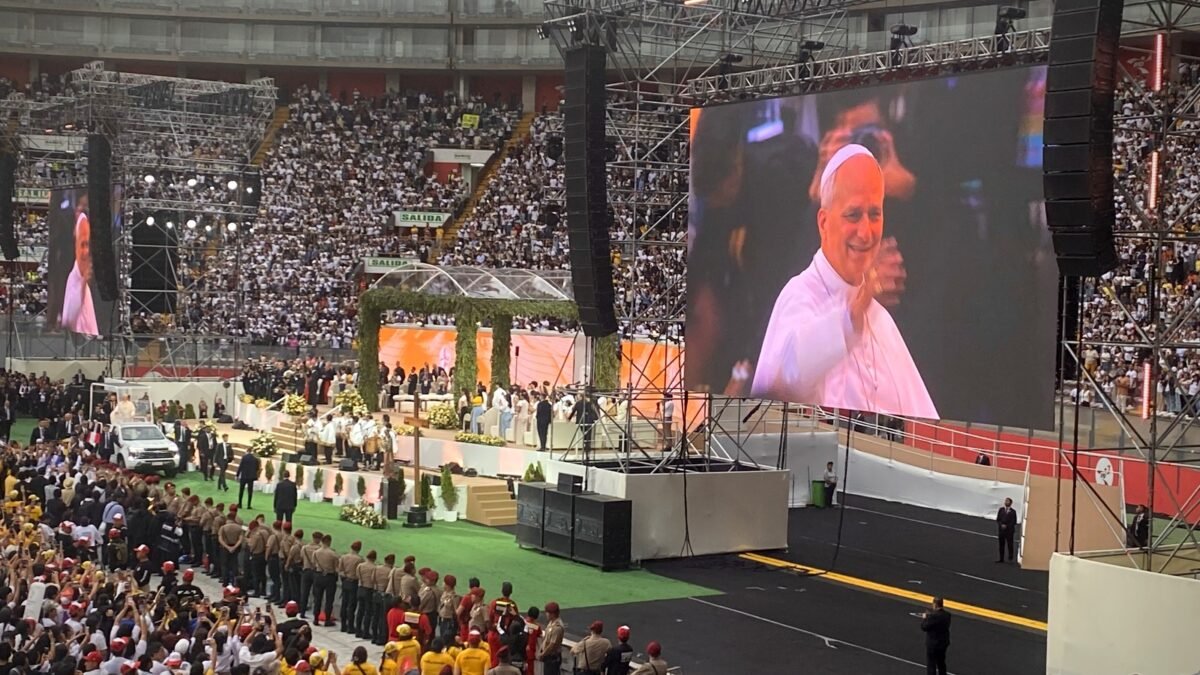
On the morning of 11 November 2026, in the Villa Devoto neighbourhood of Buenos Aires, Pope Leo XIV walked into a federal prison and embraced an inmate. The cameras caught the embrace, but the words mattered more. A 32-year-old prisoner named Maximiliano stood before the Pope and told him, plainly, what drugs and drink had done to his life — the nights that ran into days, the family that slipped away, the daughters whose childhood he had lost and could never recover. And then he said something that stopped the room: prison, of all places, had begun his freedom. In the prison chapel he had found his faith again, and with it the knowledge that he was still a son loved by God. The Pope listened, visibly moved, and answered him with a sentence that now belongs to history: “I hope that all of us, myself included, can carry in our hearts this message that a new life is possible.”
It was the same prison where his predecessor, Pope Francis, had once knelt to wash the feet of inmates. The next day, Devoto prison closed its doors for the last time, and its prisoners were moved elsewhere. It was as if the old building itself had understood that something had ended there.
A Decree With a Prisoner’s Words for Its Title
Two weeks later, on 25 November, the Vatican published a decree that turned that embrace into policy. Pope Leo XIV issued a motu proprio — a personal decree of the Pope — bearing the words of Christ from the Gospel of Matthew: “In carcere eram, et venistis ad me.” “I was in prison, and you came to me.” With that single document, he dissolved the International Commission of Catholic Prison Pastoral Care, a body founded in Rome in 1950, and replaced it with a new Prison Ministry Animation Service, placed directly under the Vatican’s Dicastery for Promoting Integral Human Development. To lead it for five years, he named Archbishop Jorge Ignacio García Cuerva of Buenos Aires — the same archbishop who had walked beside him through the gates of Devoto.
Read the decree carefully and you will see that this is no mere administrative reshuffle. The Pope writes that prison ministry must not be “limited to organisational aspects” but must be “capable of inspiring local pastoral ministries through a shared spirituality experienced as a living encounter with Christ.” He declares, in words that should be carved above the door of every chancery in the world, that “prison ministry is not separate from the Church’s overall work of evangelization.” In other words, the Church does not visit prisoners as an afterthought, a charitable hobby for the kind-hearted. It visits them because that is where the Gospel itself begins — with the words of Christ, who placed the prisoner beside the hungry, the thirsty, the stranger and the sick, and said: whatever you did for the least of these, you did for me.
The new service will train chaplains and pastoral workers, guide local churches, open dialogue with prison authorities, and press governments toward more humane correctional policies. It is, deliberately, a network rather than a bureaucracy — “agile and flexible,” in the Vatican’s words, “oriented towards service and imbued with a spirit of dialogue and sharing.”
Joseph, Mandela, and the Long Memory of the Cell
History, as I have always believed, is a mirror, and the prison is one of the oldest rooms in that mirror. Every faith, every civilisation, has had to decide what a prisoner is.
The story of Joseph — Yusuf, peace be upon him — is told by Jews, Christians and Muslims alike, and its centre is a prison cell in Egypt. Thrown into darkness by the treachery of others, Joseph did not rot there. He interpreted the dreams of his fellow prisoners, he served them, and he walked out of that cell to save a nation from famine. The prison, in that telling, was not the end of the man. It was the furnace in which he was made. The Qur’an calls his story “the best of stories,” and its lesson is plain: a cell can hold a body, but it cannot hold a soul that refuses to surrender.
Centuries later, another prisoner sat in another cell and proved the same truth. Nelson Mandela spent twenty-seven years on Robben Island, breaking stones in a lime quarry, and emerged not with vengeance in his heart but with a constitution in his hands. The world was so moved by what he endured that the United Nations named its minimum rules for the treatment of prisoners after him — the Mandela Rules — a document that insists, against all the cruelty of history, that no prisoner ceases to be a human being.
And yet, between Joseph and Mandela, how many millions have entered cells and never come out the same? The Bastille, the gulag, the dungeon of every petty tyrant — history’s prisons are also the record of societies that chose to hide their failures behind walls rather than face them. A society that locks a man away and forgets him has not solved its problem. It has only buried it alive.
Eleven Million Souls Behind Bars
Let the numbers speak, for they are staggering. According to Penal Reform International’s Global Prison Trends 2026, some 11.7 million people are imprisoned around the world. The United Nations Office on Drugs and Crime puts the figure at 11.5 million, and adds a detail that should shame every conscience: more than 3.5 million of them — nearly one in three — have not been convicted of any crime. They sit in pre-trial detention, waiting months, sometimes years, for a trial that may never come. In more than 60 per cent of countries, prisons hold more people than they were built to hold.
These are not statistics. They are fathers and mothers, sons and daughters, crowded into cells built for half their number, sleeping in shifts, waiting for a justice system that moves slower than their lives.
And the question comes home. Here in Pakistan, the National Commission for Human Rights and Justice Project Pakistan revealed in October that our own prisons hold 110,513 people against an authorised capacity of just 68,832 — operating at more than 160 per cent of capacity. Three out of every four prisoners in this country, 82,988 souls, are under trial; they have not been convicted of anything. In Punjab alone, at least 113 people remained behind bars even after a court had granted them bail, because they were too poor to pay the surety. One hundred and fifty prisoners died in Punjab’s jails in the first six months of this year, and 103 of them were still awaiting trial. Read those figures again and ask yourself: how many Maximilianos are sitting in our own jails tonight, waiting for someone to remember that they are still human?
The Question Comes Home
I write this as a Muslim, and I say it plainly: this is not a Catholic question. It is a human one, and my own faith answers it in the same voice. The Prophet Muhammad, peace be upon him, commanded his followers: “Feed the hungry, visit the sick, and free the captive.” The Qur’an, describing the righteous, says they feed the poor, the orphan and the captive, “for the love of God.” Mercy to the prisoner is not the property of any one church. It is the common inheritance of every faith that believes man was made in the image of God — and that no crime, however grave, erases that image entirely.
So I ask you, reader, directly: what do we do with the forgotten? We build higher walls and call it safety. We demand harsher sentences and call it justice. We look away and call it peace of mind. But a wall does not reform a man. A sentence does not heal a family. And a society that measures its strength by how many people it can cage has confused cruelty with courage.
Pope Leo understood this, and he understood it the only way that matters — not from a palace, but from inside the walls. He went to Devoto. He embraced a man the world had discarded. He listened, visibly moved, to testimonies of disability, interrupted vocations, addiction and imprisonment, and he came home and changed the law of his Church to match what his eyes had seen. That is what leadership looks like when it is still alive.
Faith Must Become Charity
Two days after the decree, on 27 November, the Pope began a series of visits to the parishes of Rome before Christmas. At Sant’Andrea delle Fratte he preached on the wedding at Cana, on a mother who noticed that the wine had run out, and he gave the season its marching order: “Faith must become charity.”
Faith must become charity. Hold those four words against everything you have read here. A faith that never leaves the mosque, the church, the temple — a faith that never walks through a prison gate, never visits a cell, never asks after the forgotten — that faith is a beautiful building with no one living inside it. Charity is faith with its shoes on, walking toward the people the world has stopped seeing.
Christmas is coming, and with it the season when every faith remembers that God once chose the lowliest places to appear — a stable, a manger, a prison cell in Egypt. The question Pope Leo has placed before the world is not a Catholic question, and it is not a question for popes alone. It is addressed to you, and to me, and to every society that still believes a human being can be thrown away.
A civilisation is not judged by its palaces, its armies, or its wealth. It is judged by its prisons — by what it does with the people it has every excuse to forget. On 25 November 2026, one old man in white walked into the forgotten places and said: you are not forgotten. A new life is possible.
The only question left is whether we believe him.
Sources & References
- Dicastery for Promoting Integral Human Development — “In carcere eram: Pope Leo XIV redesigns prison ministry”
- National Catholic Reporter — “Pope Leo XIV reformed the Catholic Church’s central structure for ministering to incarcerated people”
- EWTN News — “Pope Leo XIV overhauls prison ministry, places it under Vatican office”
- Catholic Review / OSV News — “Pope Leo XIV moved to tears by testimonies of faith and hope during Argentina visit”
- National Catholic Reporter — “Pope’s visit to Argentinian prison highlights work of Latin American prison ministries”
- Penal Reform International — “Global Prison Trends 2026” (11.7 million people imprisoned worldwide)
- United Nations News — “Societies grappling with a ‘silent but growing’ prison crisis”
- United Nations Office on Drugs and Crime — “A second chance: Addressing the global prison challenge”
- The News — “Pak prisons hold 110,513 inmates, 75pc awaiting trial: report”
- Justice Project Pakistan — “Reducing Prison Overcrowding” (policy brief, October 2026)
- Herald Malaysia / Vatican News — “Pope Leo urges Christians to respond to crises with faith and charity”

About the Author — Abdul Mannan
Related Articles
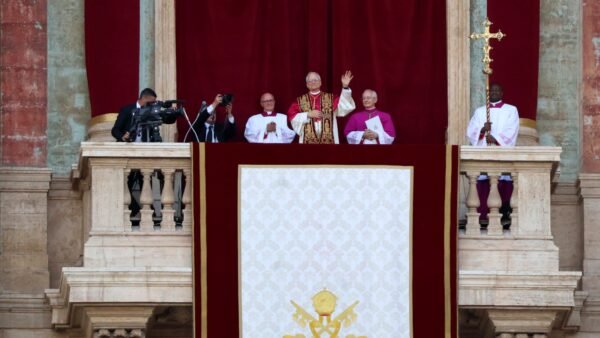
The Wounded Healer Comes Home: Pope Leo XIV and a Church Learning to Breathe Again
Barely a month after surgeons removed part of his lung, Pope Leo XIV crossed a continent, faced two…
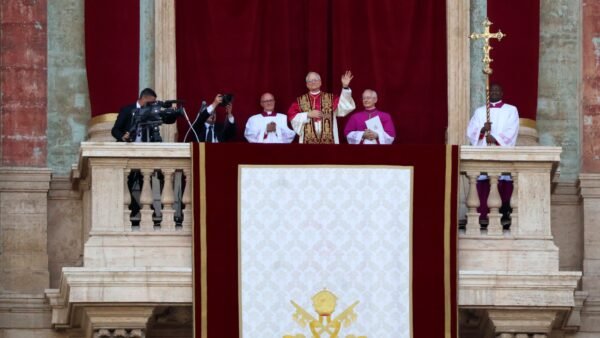
The Pope Who Came Home: Leo XIV, Argentina, and a Wounded Nation’s Long Wait
Today, Pope Leo XIV lands in Buenos Aires — the first pope to set foot in Argentina in…
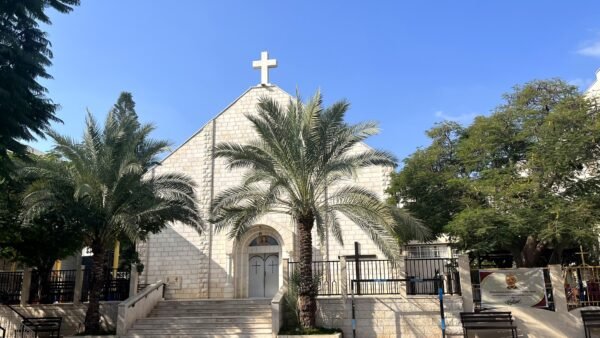
Persecuted and Forgotten? 220 Million Christians and the Silence the World Must Answer
Aid to the Church in Need's new report finds Christian persecution worsened in 55% of the 18 countries…