
The Wounded Healer Comes Home: Pope Leo XIV and a Church Learning to Breathe Again

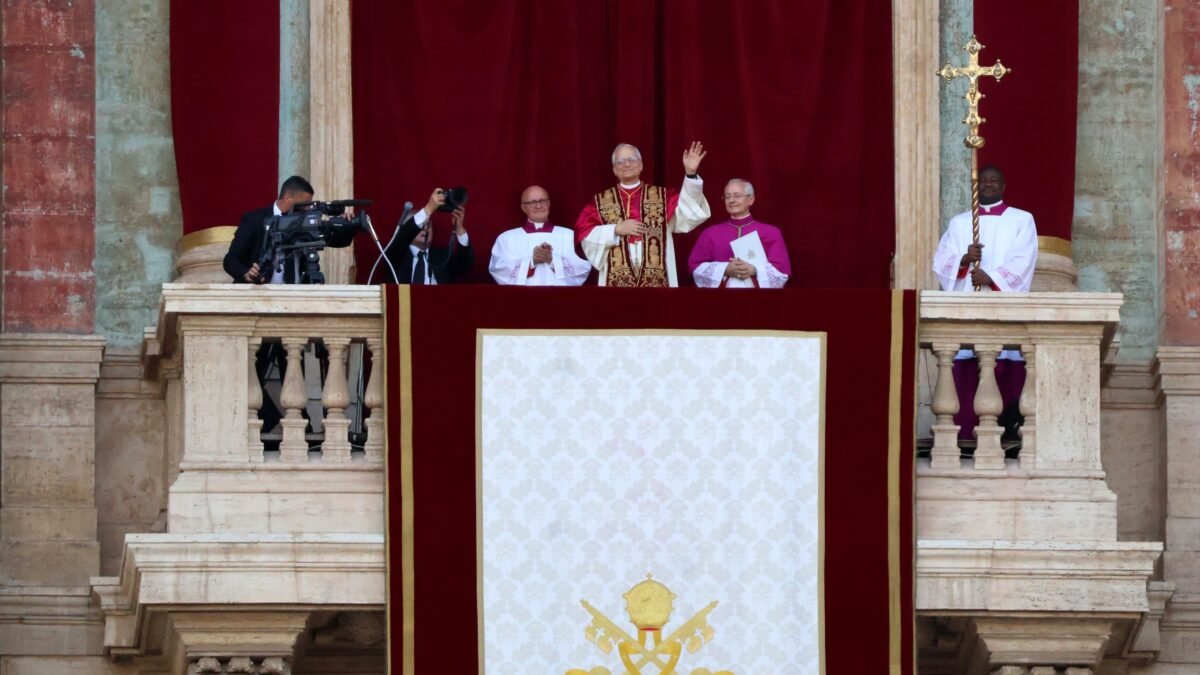
What does a man do when he has stared death in the face — and then boards a plane for twelve days across a continent? He goes home. Not to rest, but to finish what he started.
On Monday, 16 November 2026, Pope Leo XIV landed back in Rome after a twelve-day apostolic journey through Uruguay, Argentina and Peru — a journey he undertook barely a month after surgeons removed the lower lobe of his right lung, a journey that drew millions to Mass in Buenos Aires and Lima, and ended, somewhere over the Atlantic, with the most candid forty-five minutes of his young pontificate. “For right now,” he told the journalists travelling with him, “what I believe is an important part of my ministry to the Church is to heal, bring people together.”
Heal. Not reform first. Not discipline first. Not victory first. Heal first. In a Church — and in a world — that has turned disagreement into a blood sport, the word landed like a challenge, and from a man who has just survived cancer, with an authority no encyclical could buy.
A Journey Written on the Body
Doctors found a shadow on the Pope’s lung during a routine annual check-up. There were no symptoms. “The initial news came as a surprise,” Leo said in Italian aboard the flight. “There were no symptoms, and I felt fine.” Further examination revealed a tumour. Last month he underwent surgery to remove the lower lobe of his right lung and was discharged four days later. The tumour, he told reporters, had been completely contained in the portion removed. No further treatment is necessary, though regular examinations will continue.
A 71-year-old man, weeks out of cancer surgery, chose not to cancel the most demanding journey of his pontificate — twelve flights, forty speeches, nine great open-air Masses — and instead flew to the continent that made him. Ordained in Rome in the early 1980s, he went to Peru as a missionary, served as Bishop of Chiclayo from 2015 to 2023, and became a Peruvian citizen. “It was here that you taught me how to be a bishop,” he told the crowd of 1.5 million in Lima, “and this time I learned a little more about serving as the Successor of Peter.”
He joked with the journalists about their exhaustion, and about a pilgrim who threw a rosary toward him and hit him in the eye. “These are things that one carries in the heart,” he said in Spanish, “perhaps in the eye.” A man who can laugh about a bruised eye a month after losing part of a lung is not performing. He is showing what it looks like when a wound has been accepted rather than hidden.
The Mirror of History: When the Church Split Before
History is the mirror in which the present must look at itself, and the Church has stared into this mirror before. Between 1378 and 1417, the Western Schism tore Christendom apart: rival popes in Rome and Avignon, each with his cardinals and kingdoms, each certain the other was the antichrist. It was not healed by a decree, or by a louder argument, or by one side crushing the other. It was healed slowly — by the Council of Constance, by patience, by men willing to step back so the body could be whole again.
Six hundred years later the names have changed but the disease has not. Today the Church argues about the Latin Mass and married priests, about who belongs and who does not, in the same poisoned air as every other argument of our age — the air of the algorithm. Leo named the poison himself on that flight: “Increasingly, I believe we are all realizing how we have been swayed by algorithms and a polarization that is not accidental, but intentionally provoked.”
In Lima, Leo’s final Mass marked 300 years since the canonisation of Saint Turibius of Mogrovejo, the second Archbishop of Lima — a lawyer made bishop who crossed Peru on foot to reach Indigenous villages no one else would visit. A Church that walks to its people survives; a Church that shouts from a throne does not. Turibius understood it in the sixteenth century. Leo, who walked those roads as a missionary forty years ago, understands it now.
Unity Is Not Surrender
Let no one mistake what the Pope said for softness. Asked whether he would ordain mature married men to ease the priest shortage, he refused to give either camp the answer it wanted. The proposal, he said, is one that “in certain areas of the Church can cause division because there is not universal, if you will, acceptance of that concept.” The Holy Spirit, he added, may continue to suggest changes — but such decisions require discernment by the wider Church. “The pope doesn’t change Church doctrine. We all have to listen. The bishops have to listen. It may be in the future that some things will change.”
On the traditional Latin Mass he was blunter still: the restrictions imposed by Pope Francis in the 2021 letter Traditionis Custodes will stay. “We will continue to follow that,” he said — the existing rules provide avenues for permission, and the vast majority of Catholics worship by the rite of the Second Vatican Council.
Read those two answers together and you see the method: no victory for the reformers, none for the traditionalists — the same task for both sides: “First, let’s come together. Let’s consider what we believe the priorities need to be. And then we’ll see how we walk forward from there.” Unity, in Leo’s mouth, is not the absence of disagreement. It is the decision that disagreement will not be the thing that kills you.
The Wound That Will Not Close
But healing has a test, and the Pope knows its name. On 9 November, in Argentina, he sat for more than an hour with five people abused by clergy or Church institutions, listening to each individually. He met victims again in Peru. Aboard the flight he called on bishops and pastoral workers to take responsibility for accompanying victims, seeking justice, and ensuring such crimes are not repeated. The Vatican, he said, is studying how to define spiritual abuse in canon law, though no document is ready yet.
Here I must speak plainly. Argentina — the country of the late Pope Francis — has never conducted the nationwide investigation undertaken in the United States, Australia, France and Germany, and the dimensions of the crisis there remain unknown. A watchdog organisation lists nearly one hundred priests, religious brothers and women religious publicly accused of abusing minors or vulnerable adults in Argentina. A meeting, however sincere, is not an investigation. A promise to accompany victims is not justice.
And yet there is something in the manner of it that matters. The man who sat with those five survivors had himself just been told that part of his body must be cut away so the rest might live. He did not hide the surgery. He announced it — and got on a plane. If the Church is to learn anything from its wounded healer, let it be this: you do not heal a wound by pretending it is not there. Name it, cut out what is diseased, and submit to the long discipline of check-ups.
The Gringo Pope and the Politics of Refusal
There is a final lesson here: power. In Buenos Aires, Leo met President Javier Milei, whose politics differ sharply from those of Pope Francis; in Lima, Keiko Fujimori, the new president of Peru. Reporters pressed him to take a side. His answer deserves quoting in full: “Although there are some who try to force me, in some countries, toward the right, toward the left, to criticize or not criticize, I insist that the message I want to give, the message I want to bring, is not political.”
Not political. He discussed Argentina’s economic hardship with Milei, the dignity of human life and the needs of the most vulnerable, and warned against the concentration of wealth. But he refused to be drafted into anyone’s faction. And then he pointed to the crowds in Argentina — right and left standing in the same streets, celebrating the same visit — and asked the question that undoes every demagogue: “How is it possible that the right, the left, all of us were there in the streets celebrating and enjoying something much greater than a political discussion?”
He is, by his own cheerful admission, a “gringo” — a North American, born Robert Francis Prevost in Chicago, the first United States-born pope, whose deep belief in democracy is part of his American identity, he says. He will travel to South Korea for World Youth Day; a United States visit in 2027 is under consideration. He has signed no conditional resignation letter — “For now, I don’t see the need, thanks be to God” — canon law already provides for those questions, he noted.
It is worth remembering how wide the religious landscape is that he speaks into. Today marks the tenth anniversary of Red Wednesday, when churches and cathedrals are lit in red to remember persecuted Christians around the world. Different churches, different continents, the same diagnosis: division is the disease of our time, and faith must be its physician, not its patient.
So What Will You Do With Your Wounds?
I write this as a man who has watched his own country, and his own profession, choose the quarrel over the cure more times than I can count. So I ask you directly, reader: what will you do with your wounds?
You have them. We all do. The brother you no longer call. The colleague you have decided is an enemy. The community that split over a question nobody can remember any more. The temptation is to nurse the wound into an identity — to become the person who was wronged, forever, and make the wrong the whole story.
Leo XIV offers a harder path, and he offers it with a body that proves he has walked it. Name the disease. Cut out what must be cut out. Then, before the arguments and the settling of scores, come together and breathe. A man with less lung than a month ago flew across an ocean to tell 1.5 million people the Church must learn to breathe again, together.
The arguments about priests and Masses will still be there tomorrow; they have waited six hundred years. The question that cannot wait is the one he carried home from Lima: will we heal first — or keep bleeding while we argue about who struck the blow?
History will remember the answer. It always does.
Sources & References
- Catholic News Service, via the United States Conference of Catholic Bishops — “Pope Leo prioritizes unity through continuity, in candid in-flight press conference”, 17 November 2026
- National Catholic Reporter — report on Pope Leo XIV’s meeting with five abuse survivors in Argentina, 9 November 2026
- Le Monde — “Pope’s visit to Latin America: In Peru, Leo XIV seen as a native son”, 6 November 2026
- Vatican Report / Vatican News — coverage of the apostolic journey to Uruguay, Argentina and Peru and the in-flight press conference, 16–17 November 2026
- Religion Media Centre — “Religion news 18 November 2026”, including the tenth anniversary of Red Wednesday
- The Letters from Leo — “It Was Here That You Taught Me How to Be a Bishop”, 16 November 2026

About the Author — Abdul Mannan
Related Articles
The Pope Who Came Home: Leo XIV, Argentina, and a Wounded Nation’s Long Wait
Today, Pope Leo XIV lands in Buenos Aires — the first pope to set foot in Argentina in…
Persecuted and Forgotten? 220 Million Christians and the Silence the World Must Answer
Aid to the Church in Need's new report finds Christian persecution worsened in 55% of the 18 countries…
When the Pontiff Became the Patient: Pope Leo XIV, Cancer, and the Great Equalizer
Five days after surgeons removed the lower lobe of his right lung, Pope Leo XIV stood at his…