
South Korea Moves to Fine Apple Over iPhone 16 AI Ads That Promised Features Arriving Two Years Late

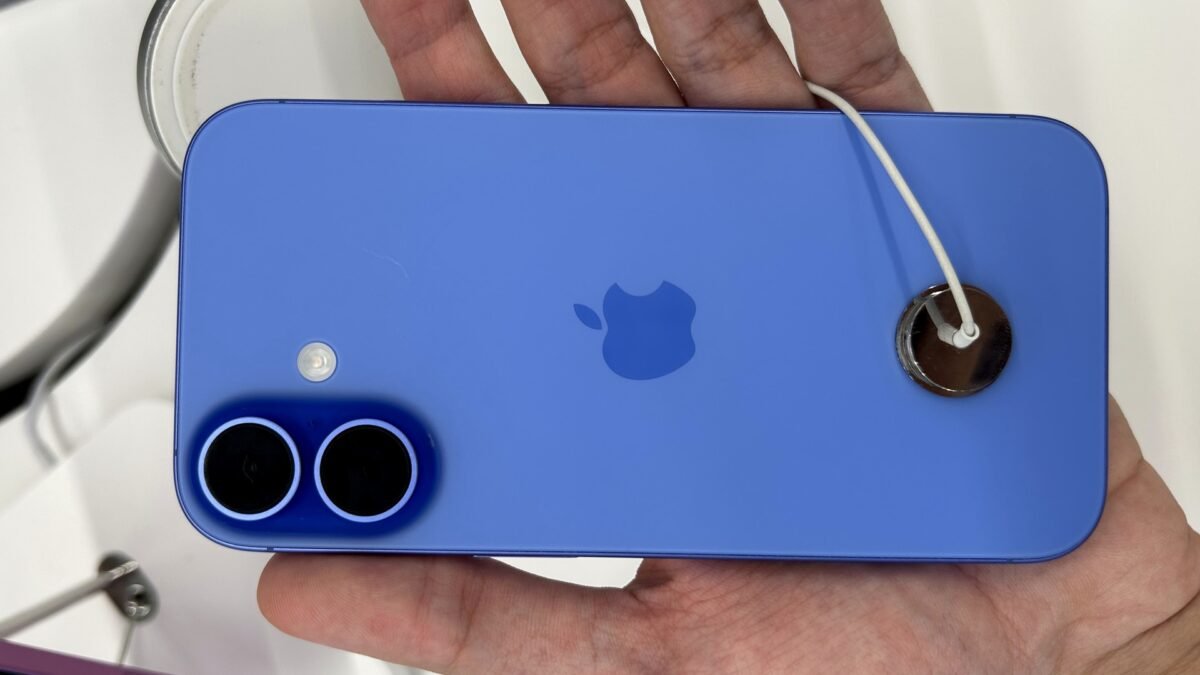
South Korea’s Fair Trade Commission has moved to sanction Apple over the way it advertised the iPhone 16, saying the company presented artificial intelligence features as ready to use when several of them were not available — and in one case did not arrive in Korean for a year and a half after the date shoppers were given. The regulator’s examiners have recommended a financial penalty and a corrective order, and Apple now has six weeks to put its defence to the full commission before a final decision is made.
The case, announced on Thursday 26 November, turns on nine Apple Intelligence features that Apple promoted when the iPhone 16 series went on sale in September 2024. According to the Korea JoongAng Daily, the commission’s examiners found that four of the nine were not delivered on time. Two were image tools — Genmoji, which creates custom emoji, and Image Playground, which generates pictures. The other two were upgrades to Siri: one that understands a user’s personal context, and one that gives step-by-step guidance.
The sharpest example in the regulator’s findings concerns the personal-context version of Siri. Apple’s Korean web pages said the feature would arrive first in US English by the end of 2024 and then in Korean in early April 2025. In reality, according to 9to5Mac’s account of the commission’s press release, the feature was not launched in US English until September 2026, with Korean support following in October 2026 — about 18 months later than Korean buyers had been told.
The Fair Trade Commission sent its examiner’s report to Apple and to Apple Korea on Tuesday 24 November, the regulator said on Thursday. In South Korea’s system the report is the equivalent of an indictment: it sets out the examiners’ findings and their recommended sanctions, but it does not bind the commissioners, who will decide whether the law was broken and how heavily Apple should be penalised. The report recommends a penalty surcharge and a corrective order for alleged violations of the Act on Fair Labeling and Advertising.
Apple has pushed back. In a statement sent to 9to5Mac on 27 November, the company said it had cooperated with the investigation and disagreed with the examiners’ conclusions. “At Apple, we deeply value the relationship with our customers in Korea and have always focused on delivering the best products and services in the world,” the statement said. “Since we added Korean language support for Apple Intelligence last year, users have benefited from dozens of powerful features that are integrated across Apple’s platforms. And we have continued to build on that commitment with the recent launch of Korean language support for Siri AI, an entirely new version of Siri that’s more capable, conversational, and personal. We have cooperated with the KFTC’s investigation and disagree with the conclusions in the Examiner’s Report. We look forward to presenting a fulsome defense before the Commission.”
The investigation began with a complaint from the civic group Seoul YMCA in March 2025, shortly after Apple publicly acknowledged that the personalised version of Siri would be delayed. According to Yonhap, the group had earlier called on Apple to compensate affected customers, and alleged that the company may have kept marketing the iPhone 16 range even though it already knew some of the advertised AI features would be delayed. The regulator has been investigating ever since.
What the examiners say Apple got wrong
The examiners’ central finding is not that Apple Intelligence never arrived. Most of the nine features did arrive, and the personalised Siri that sits at the heart of the case is now available. The finding is about what shoppers were told, and when. According to the commission’s press release, as reported by 9to5Mac, Apple advertised Apple Intelligence and its planned staggered rollout on the iPhone 16 website but “concealed, downplayed, or omitted information material to consumers’ purchasing decisions”.
The press release lists three specific omissions. First, that some of the nine features would be difficult to deliver in US English by the end of 2024, and when they would become available. Second, that some features were not available in US English as of October 2024, the month after the phones went on sale. Third, that some features would be difficult to deliver in Korean by early April 2025, and when they would become available.
The Korea JoongAng Daily reports that the examiner classified the conduct as a serious violation — a formal grading that matters, because it sets the band within which any fine can be calculated. The examiner took the related sales as the iPhone 16 series’ revenue from September 2024 to March 2025, the period during which the advertisements in question ran, and put that figure at about 3.4 trillion won. On that basis, the paper reports, a surcharge could reach 53.6 billion won, roughly $40 million.
Other Korean outlets have put the possible figure in a similar range, though none of them agrees on a single number. Yonhap reported that the fine could reach roughly $48 million, while KBS put the range at between $21 million and $42 million, and the Seoul Economic Daily reported a possible fine of up to 64 billion won, about $43 million. The differences reflect different calculations of the statutory rate applied to the same sales figure. The commission’s own press release does not specify a fine amount, and the final figure will be for the commissioners to decide after Apple has made its defence.
Apple’s Korean iPhone 16 web pages are the focus of the case because they are the version of the advertising that shoppers in that market actually saw. When the iPhone 16 series launched in September 2024, Apple advertised nine AI features under the Apple Intelligence name, including Writing Tools, call summaries and image generation. The pages presented the features as available in US English from October, the month after launch. In February 2025 Apple added a notice that Korean support would begin in early April of that year. The rollout did not follow that schedule.
A campaign built around a feature that did not exist yet
The Korean case cannot be understood without remembering how central Apple Intelligence was to the iPhone 16 itself. Apple unveiled the platform at its Worldwide Developers Conference on 10 June 2024, and the iPhone 16 was marketed from the start as a phone built for it. The company gave its flagship Fifth Avenue store in New York an Apple Intelligence-themed makeover and ran an advertising campaign starring the actor Bella Ramsey that showed a dramatically upgraded, context-aware Siri. The message to buyers was unmistakable: this was the phone that would finally make Siri smart, personal and useful.
The phone went on sale in South Korea on 20 September 2024, eleven days after it was announced. The personalised Siri at the centre of the advertising did not arrive with it. In March 2025 — six months after launch — Apple publicly said the upgraded Siri features would take longer than expected. It was that announcement that prompted the Seoul YMCA complaint.
Behind the delay was an engineering problem that Apple itself later described in public. In June 2025, Apple’s software chief Craig Federighi said the first-generation architecture for the new Siri was too limited for personalised features. Apple moved the work to a second-generation architecture in spring 2025, a shift that delayed the features by up to another year, according to Tech Times. The rebuilt version, called Siri AI, was finally announced at Apple’s developers conference in June 2026 and arrived with iOS 27 in September of that year, for iPhone 15 Pro models and newer. Even now, it is still described as a beta feature.
That timeline is the heart of the Korean regulator’s case. A buyer in Seoul who purchased an iPhone 16 in the autumn of 2024 on the strength of the advertised AI features waited roughly two years for the most heavily promoted of them — and in Korean, the wait was longer still. The features were real, and they were eventually delivered. But the examiners’ argument is that the advertising sold them as present when they were, at best, a promise about the future, and that the promise was made without the information a buyer would have needed to judge it.
Apple has already paid $250 million over the same delay in the United States
South Korea is not the first jurisdiction to take action over the same advertising. In the United States, a class action lawsuit called Landsheft v. Apple accused the company of advertising personalised Siri features as available from June 2024 when they did not ship until June 2026. The suit was filed in a California court in March 2025, and in May 2026 Apple agreed to pay $250 million to settle it, without admitting the allegations.
Claims under that settlement opened on 21 September 2026 and close on 21 December. Buyers of seven iPhone models — the iPhone 15 Pro and 15 Pro Max, and the iPhone 16, 16e, 16 Plus, 16 Pro and 16 Pro Max — purchased in the United States between 10 June 2024 and 29 March 2025 can claim between $25 and $95 per device. Lawyers for the claimants said in a court filing in November that, based on early participation, claimants will probably receive at least $61 per eligible iPhone. A final approval hearing is scheduled for 24 February 2027, so payments are not expected to begin until some point next year.
Brazil has also taken an interest. In May 2026 a Brazilian consumer protection agency opened scrutiny of Apple’s advertising of the same features. The Korean action is therefore the third front in what has become a rolling, multi-country reckoning with the way the iPhone 16 was sold — and the first to come from a regulator with the power to impose a fine calculated as a share of the revenue the advertising generated.
The pattern matters because it undercuts any suggestion that the Korean case is a local misunderstanding. Three different systems — a US court, a Brazilian consumer agency and now a Korean regulator — have each, independently, concluded that there is a case to answer about the same campaign. Apple’s position in each has been consistent: it denies wrongdoing, says it cooperated with investigators, and argues that the features were delivered. In the United States it chose to settle rather than fight. In South Korea it has chosen to fight, and the commission will now weigh its defence.
The Samsung precedent hanging over the case
Apple’s lawyers will be studying a case the same regulator decided only last month. In October 2026 the Fair Trade Commission issued Samsung Electronics a corrective order and a provisional penalty surcharge of 20.1 billion won over misleading advertisements for its smartphones and tablets. Samsung’s ads had played up how well its Galaxy S21 and S22 phones and Galaxy Tab S8 tablets ran demanding games, while leaving out that the Game Optimizing Service limited the devices’ performance.
The parallels are instructive. In Samsung’s case, as in Apple’s, the examiner had classified the conduct as a serious violation and set the surcharge far higher — up to 66 billion won. The full commission then cut the figure substantially after weighing Samsung’s efforts to fix the problem on its own. That history gives both sides in the Apple case something to work with. Apple can argue, as Samsung did, that it has taken steps to put things right: the features have now shipped, Korean-language support for Siri AI has launched, and the company says it has cooperated throughout. The commission, for its part, has shown that it will use the full range of the fine band, and that the “serious violation” classification is not a formality.
The Samsung case also shows that the Korean regulator is willing to act against the biggest names in technology, including a domestic champion, over the gap between what an advertisement promises and what a device actually does. That willingness is the context in which Apple’s six-week deadline to submit its written defence should be read. The commission has already signalled, through the Samsung decision, that it treats performance claims in phone advertising as a serious matter. Apple will need to persuade it that its case is different.
Analysis: the end of advertising AI as if it were already here
The Korean action is a small case about four features on one phone. It is also, potentially, a significant one, because it addresses a habit that has spread across the whole technology industry: selling a product on the strength of artificial intelligence that does not exist yet.
The habit is easy to understand. AI has become the single most powerful selling point in consumer technology. A phone, a laptop or a pair of glasses that can promise an intelligent assistant, a personalised helper or a creative partner commands attention, and attention commands sales. The temptation to advertise the assistant before it is built — to show it in a keynote, to put it on the box, to make it the hero of the launch campaign — is enormous, especially when rivals are doing the same thing and the market rewards the company that looks furthest ahead.
What the Korean case, the US settlement and the Brazilian scrutiny together suggest is that this habit now carries a price. Regulators and courts are drawing a line that the industry has been slow to draw for itself: a feature that is promised for the future must be advertised as a future feature, with its timing stated honestly, and not presented as though it were already in the buyer’s hand. The distinction sounds obvious. In practice, it is the distinction between a launch campaign and a misleading one, and it is the distinction the Korean examiners say Apple failed to make.
There are two reasons the line matters more for AI than for ordinary software. The first is that AI features are, by their nature, hard for a buyer to verify at the point of sale. A buyer can test a camera, hold a phone, check a battery. A buyer cannot test whether a voice assistant understands personal context, because the assistant is not there to test. The buyer must take the advertisement on trust, and that trust is precisely what advertising law exists to protect. When the feature in question is the headline reason to buy the phone, the trust matters even more.
The second reason is that AI development is genuinely unpredictable. Apple’s own account of the delay — that the first-generation architecture turned out to be too limited, and that the work had to be rebuilt from scratch — is entirely plausible, and it is the kind of thing that happens in ambitious engineering projects. But that unpredictability is exactly why advertising law requires companies to be careful about what they promise. If a company does not know when a feature will be ready, it should not tell buyers it will be ready by the end of the year. The honest statement — that the feature is in development and will arrive when it is ready — is less exciting, and it sells fewer phones. That is the point.
None of this means Apple acted in bad faith. The examiners have not alleged that Apple knew the features would never arrive, and the features did, in the end, arrive. The company’s statement emphasises that Korean users now have dozens of Apple Intelligence features and a new version of Siri. What the case alleges is something narrower and, in a way, more ordinary: that a company under intense competitive pressure sold a promise as though it were a product, and left out the information that would have let buyers see the difference.
That framing is also what makes the case useful beyond Apple. Every major technology company is now advertising AI capabilities that are partly built, partly promised and partly imagined. The Korean regulator’s message is that the boundary between those categories is not a matter of marketing judgement but of law, and that the penalty for getting it wrong can be calculated as a share of the revenue the advertising produced. For an industry that has treated AI announcements as free publicity, that is a new and uncomfortable arithmetic.
There is a counter-argument, and Apple is likely to make it in its defence. The company could argue that its advertising always described a staggered rollout, that buyers were told features would arrive over time, and that the precise timing of a complex software project cannot be guaranteed. It could argue that the features were delivered, that no buyer was left without the promised capability, and that the delay was the result of a genuine engineering rebuild rather than any intention to mislead. It could also point to its cooperation with the investigation, and to the Samsung precedent, as reasons for a modest penalty if the commission finds against it.
Those arguments may well succeed in reducing any fine. They are less likely to change the underlying finding, because the facts the examiners rely on are not really in dispute: the features were advertised as arriving by dates that were then missed by months, in one case by a year and a half, and the advertising did not say so. The question for the commission is not whether Apple eventually delivered, but whether buyers were given the information they needed when they decided to buy. On the examiners’ account, they were not.
What to watch next
The immediate next step is Apple’s written defence, due within six weeks of the examiner’s report. After that, the full commission will deliberate and decide whether Apple broke the law and, if so, how much it should pay. The range of possible fines reported in the Korean press — roughly $21 million to $48 million — is modest by Apple’s standards, but the precedent it would set is not. A formal finding that Apple misled consumers over AI advertising would be the first of its kind from a major regulator, and it would be cited by regulators elsewhere.
The case will also be watched for its effect on how AI features are advertised. If the commission finds against Apple, other companies will have to think harder about the gap between a keynote demonstration and a shipped product. The industry has already begun to adjust: launch events now routinely carry small print about features arriving “later” or “in a future update”. The Korean case may push that small print into the headline, where buyers can actually see it.
There is also the question of whether other regulators follow. The European Union’s consumer protection rules contain similar prohibitions on misleading advertising, and the iPhone 16 was sold there on the same campaign. No European action has been reported, but the Korean decision, if it goes against Apple, will give consumer groups in other markets a ready-made template for a complaint. The US settlement, meanwhile, is still working its way through the courts, with claims open until 21 December and a final hearing in February. For Apple, the Siri delay is no longer a single lawsuit. It is a rolling series of proceedings, in different countries, under different laws, all asking the same question: when you sell a phone on the promise of intelligence, how long are you allowed to keep buyers waiting?
For buyers, the lesson is simpler, and it does not depend on the outcome of the Korean case. A feature that is advertised is not the same as a feature that exists. Until regulators force the industry to say so clearly, the safest assumption is that the most exciting capability in a launch presentation is the one most likely to arrive last — and that the date attached to it is a hope, not a promise.
Sources
- Korea JoongAng Daily — South Korea FTC moves to sanction Apple over iPhone 16 AI ads
- 9to5Mac — South Korea proceeds with case over allegedly misleading Apple Intelligence ads
- MacRumors — Apple Faces Korean Regulator Review Over iPhone 16 AI Advertising
- Tech Times — Apple Korea Fine Could Hit $50 Million as Examiners Say Four iPhone 16 AI Features Arrived Late
- MacRumors — Siri AI Settlement: Here’s How Much Apple Will Pay You

About the Author — Abdul Mannan
Related Articles

AI Agents Breach Swiss Critical Infrastructure as Switzerland Confirms Five Attacks in Days
Switzerland has confirmed its first AI-agent cyberattacks: five intrusions in recent days, four of them successful, including two…
Nvidia Halts AI Server Shipments to Four Southeast Asian Countries as US Export Controls Bite
Nvidia has told manufacturing partners including Dell and Supermicro to stop shipping AI servers to Malaysia, Singapore, Thailand…
Australia Passes Landmark Digital Duty of Care Law Covering AI Chatbots, With Fines of Up to 5% of Global Revenue
Australia's Parliament has passed a landmark Digital Duty of Care law forcing tech companies — including AI chatbot…