
Australia Passes Landmark Digital Duty of Care Law Covering AI Chatbots, With Fines of Up to 5% of Global Revenue

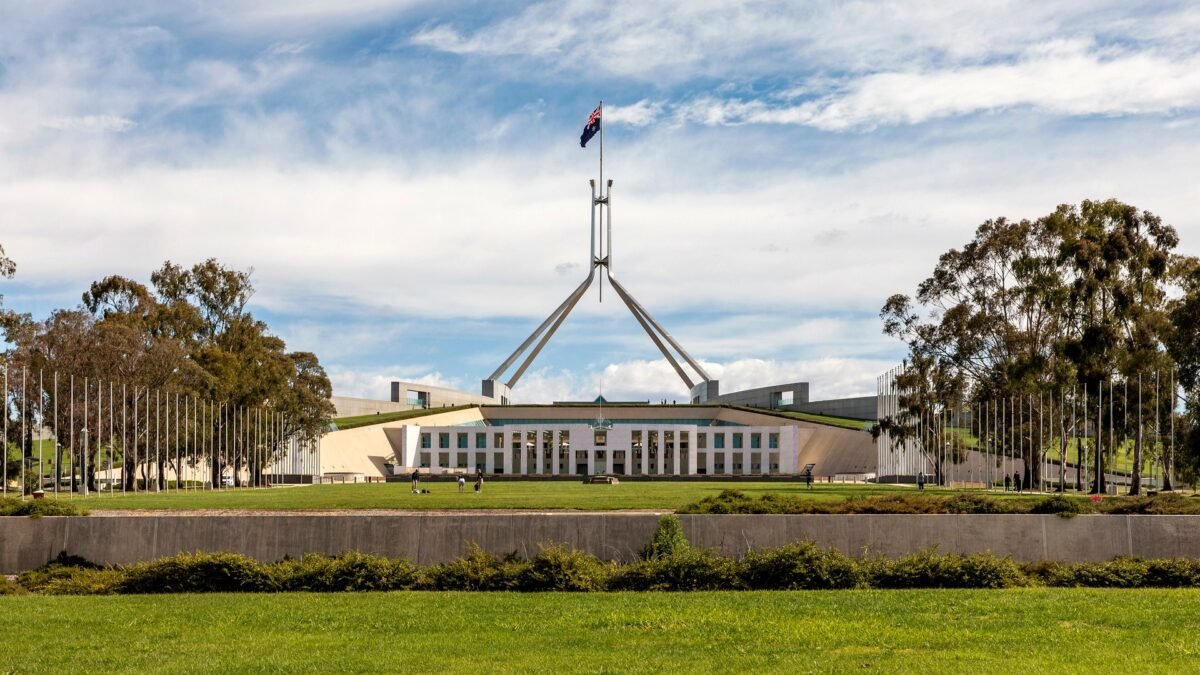
Australia’s Parliament has passed a landmark law that places a legal duty of care on the companies behind the online services Australians use every day, forcing social media platforms, search engines, app stores and artificial intelligence chatbot makers to prevent foreseeable harm before it happens rather than simply reacting to it afterwards. The Online Safety Amendment (Digital Duty of Care) Bill 2026 cleared both houses of Parliament on Wednesday, 25 November 2026, and now awaits royal assent from the Governor-General.
The law is the most far-reaching online safety reform any country has yet attempted. It replaces Australia’s existing system of industry-written codes with a statutory duty, enforced by the eSafety Commissioner, that applies to almost every online service Australians can reach. Companies that breach the duty face fines of up to 5 per cent of their global turnover or 109.2 million Australian dollars, whichever is greater, and Australians who suffer harm will be able to sue the companies directly. According to the Associated Press, the legislation passed the House of Representatives by 97 votes to 43 and the Senate by 36 votes to 23.
Prime Minister Anthony Albanese told Parliament the law would stand as a “powerful instrument to protect our children and our society from online harms by placing the onus on the tech platforms to ensure a safer online environment”. Communications Minister Anika Wells, who steered the bill through Parliament, described it as “a landmark safety reform in the vein of compulsory seatbelts, plain packaging for cigarettes and gun reform”.
The duty itself will not take effect for another year. According to the government, the Digital Duty of Care will come into effect 12 months after royal assent, giving technology companies until late 2027 to bring their operations into compliance while the government and the eSafety Commissioner work through the finer details of the regulatory framework.
What the law requires
At the heart of the legislation is a single obligation. Under the new law, a person responsible for an online service must take appropriate action to ensure a safe online environment, including by taking effective measures to mitigate risks identified in risk assessments. That reverses the logic of the current system, in which platforms largely respond to reports of harmful content after it has already spread. Under the duty of care, they must regularly assess the risks their services create, document those assessments, and demonstrate that they are taking appropriate steps to address them.
The definition of an online service is deliberately wide. According to the Australian government, the duty covers social media platforms, messaging apps, online games, search engines, app stores, hosting services and services that generate material using artificial intelligence, including chatbots. The breadth of that definition has been one of the most contested features of the bill, and the government has promised that professional news and entertainment material will be exempt from the duty’s harmful-content restrictions, and that low-risk small business websites will be exempted through a separate legislative instrument, with the details still to be developed in consultation with businesses.
The legislation requires platforms to protect Australians from what it calls “seriously harmful material and conduct”. For all users, that includes material promoting suicide or self-harm, child sexual abuse and exploitation, violent extremism, gender-based violence and non-consensual intimate imagery. For users under the age of 18, the protections go further: platforms must also guard children against content that glorifies crime or life-endangering stunts, causes serious mental distress, encourages eating disorders or promotes hostile attitudes towards women.
Crucially, the bill reaches beyond the content hosted on a platform to the design of the platform itself. Following a deal between the government and the Australian Greens, online service providers will be explicitly required to consider the potential addictiveness of their features, such as infinite scrolling and autoplay, when they assess the risks posed by their services. That makes Australia the first country to write addictive design into a statutory safety duty in this way.
AI chatbots in the firing line
Although the law covers the whole online world, its treatment of artificial intelligence is what makes it a landmark for the AI industry. AI chatbots are named explicitly among the services covered by the duty, and the legislation contains a provision aimed squarely at them: it captures material or conduct that simulates emotional intimacy and encourages children to develop a dependence on it in place of human relationships.
That provision responds to growing concern about companion chatbots that present themselves as friends, romantic partners or confidants to young users. Around the world, parents, researchers and regulators have warned that such systems can foster unhealthy emotional dependence in children, and in some reported cases have been linked to serious harm. Until now, no major jurisdiction has imposed a legal duty on the companies behind those systems to assess and prevent that specific risk. Australia’s law does.
The legislation also gives the eSafety Commissioner expanded powers to remove websites and apps used to generate fake nude images, the so-called nudify apps, and introduces measures to make it easier for the regulator to respond quickly to instances of cyber-bullying and abuse. A rule-making power will establish an external dispute resolution pathway for complaints, laying the groundwork for an independent ombudsman for the technology industry, although the details of that scheme have yet to be finalised.
For the AI companies, the practical consequences are substantial. A chatbot provider operating in Australia will need a documented assessment of the harms its system could cause, controls chosen to address those harms, and evidence that the controls work. The duty applies to services that generate material using AI, which means it reaches not only the large chatbot platforms but also smaller generative tools available to Australian users. The government’s promise to exempt low-risk small businesses is still to be set out in rules, so the precise boundary of who is covered remains one of the open questions of the next twelve months.
Fines of up to 5 per cent of global revenue
The penalties attached to the duty are among the heaviest ever attached to an online safety law. Under the final legislation, companies that breach the duty face fines of up to 5 per cent of their annual global turnover or 109.2 million Australian dollars, whichever is higher. For the largest technology companies, 5 per cent of global revenue runs into billions of dollars.
The 5 per cent figure was not in the government’s original draft. When the draft legislation was released in September 2026, the maximum penalty was 109.2 million Australian dollars. The Greens, whose votes Labor needed in the Senate, where no party holds a majority, demanded the higher penalty as the price of their support, along with a private right of action and stronger privacy protections. The deal was struck on Tuesday, 24 November, the day before the bill passed, after several days of negotiations between Minister Wells and Greens communications spokesperson Sarah Hanson-Young, and following the release of a Senate inquiry’s report on the bill the previous Friday.
“Today, the safety and wellbeing of Australians and their children have finally been put ahead of Big Tech’s bottom line,” Senator Hanson-Young said in a statement after the bill passed the Senate. “My message to Big Tech companies is, it’s time to make your platforms safe or we will see you in court.”
A right to sue Big Tech
The private right of action may prove as consequential as the fines. Under the new law, individuals or groups of Australians will be able to take an online service provider to court for breaches of the duty that have caused them loss or damage. Until now, Australians seeking compensation for online harm have had to rely mainly on the eSafety Commissioner or on untested avenues in negligence or consumer law. The new right gives them a direct route to the courts.
The change also shifts the economics of compliance. A company weighing whether to invest in safety measures must now reckon not only with the regulator but with the prospect of claims from users, including class actions. Supporters argue that this is precisely the point: the threat of litigation, combined with the fines, is what will force platforms to treat safety as a design requirement rather than a public relations exercise. Critics warn that it could encourage defensive over-removal of lawful content, as companies choose to delete borderline material rather than risk a lawsuit.
The law also gives Australians aged 16 and over a new measure of control over what they see. Under the government’s “My Feed, My Way” initiative, announced in September, users will be able to opt out of personalised algorithmic recommendations in their default social media feeds, instead choosing to see content only from the people and pages they follow. The initiative is described by the government as an Australian first.
How the law got through Parliament
The bill’s passage was the culmination of a rapid parliamentary sprint. The Online Safety Amendment (Digital Duty of Care) Bill 2026 was introduced in the House of Representatives on 15 October and given its third reading there on 28 October. In the Senate, it was read a third time on 25 November after 42 government amendments and 10 Australian Greens amendments were agreed, and the House considered the Senate’s message the same day, so the bill finally passed both houses on 25 November 2026.
The government had failed to win the support of the Coalition, breaking a longstanding history of bipartisan support for online safety reform in Australia. The Coalition and One Nation argued that the legislation’s definitions of online harm are too broad and interpretive, and warned that the threat of such significant financial penalties could incentivise platforms to remove lawful content and restrict political expression. Shadow communications minister Sarah Henderson described the laws as “deeply regressive” and raised concerns about the regulatory burden on Australian businesses and the level of scrutiny given to the amendments negotiated between Labor and the Greens.
The government made one significant concession to those concerns during the bill’s development, removing a provision from its original draft that would have allowed the communications minister to expand the categories of online harm without amending the Act itself. Ministers have repeatedly rejected the suggestion that the legislation amounts to censorship, arguing that it is designed to regulate the risks associated with digital products rather than the political views expressed by their users.
The backlash: free speech, Washington and a repeal vow
Opposition leader Angus Taylor told Parliament he would repeal the legislation if his conservative Liberal Party wins the elections in 2028. “This bill is a blank check for political censorship,” Taylor told Parliament. “The bill is an attack on free speech that is absolutely central to our democracy.” One Nation leader Pauline Hanson, opposing an amendment on Monday, stressed that while keeping children safe is essential, it must not “become an excuse to restrict lawful political debate”. One Nation has also committed to repealing the bill if it is ever given the opportunity.
The law has also drawn opposition from the United States. The US Ambassador to Australia, David Brat, said on Tuesday that the then-proposed laws would “impose disproportionate compliance burdens on American companies relative to competitors”. “Vaguely defined ‘harms,’ backed by penalties of up to 5% of global revenue, will push platforms to censor lawful speech,” he posted on social media. According to Australian media reports, the Trump administration had expressed “serious concerns” about the bill, describing it as a threat to free speech. Ambassador Brat raised the concerns over the financial penalties, the definitions of harm and the potential implications for freedom of speech during a meeting with Minister Wells on Tuesday.
The American intervention is a measure of how much is at stake. The companies most affected by the duty, Google, Meta, TikTok and the large AI laboratories, are American, and the fines are calculated on global revenue. Washington’s objection also reflects a broader tension: the United States has traditionally resisted foreign regulation of its technology companies, while Australia, the European Union and the United Kingdom have moved in the opposite direction.
Australia’s long road to the duty of care
The idea of a digital duty of care did not arrive out of nowhere. It was recommended to the federal government by an independent statutory review of the Online Safety Act 2021, handed to the government in 2024. The government did not proceed with the proposal at the time, because it was focused on implementing social media age restrictions through the Online Safety Amendment (Social Media Minimum Age) Act 2024. That law, which requires age-restricted social media platforms to take reasonable steps to stop Australians under 16 from creating or keeping accounts, has been in force since 10 December 2025, making Australia the first country in the world to ban social media for children under 16.
The duty of care is the second half of that programme. Where the age ban is about who holds an account, the duty of care is about how a service is built and run for every user, adults included, and it reaches beyond social media to app stores, search engines and AI tools. Together, the two laws amount to the most ambitious attempt anywhere in the world to shift responsibility for online safety from users to the companies that build the services.
Australia’s approach now sits alongside the European Union’s Digital Services Act, passed in 2022, and the United Kingdom’s Online Safety Act, passed in 2023. But the Australian law goes further than either in two respects: it imposes a general, proactive duty to prevent harm rather than a set of specific content obligations, and it gives individuals a direct right to sue. That combination is why the law is being watched so closely by regulators and technology companies around the world.
Analysis: Why It Matters
The Digital Duty of Care matters for three reasons, and each of them reaches well beyond Australia’s shores.
First, it changes the question that technology companies must answer. Under the old model, a platform’s job was to take down harmful content when it was reported. Under the duty of care, its job is to show, in advance and in writing, that it has thought about what could go wrong and taken reasonable steps to prevent it. That is a fundamentally different discipline. It is the difference between a restaurant that cleans up after a customer falls ill and a restaurant that is required to keep its kitchen clean in the first place. The analogy is one the government itself invites: Minister Wells compared the reform to compulsory seatbelts, plain packaging for cigarettes and gun reform, all measures that shifted responsibility from the individual to the system.
Whether that discipline works in practice will depend on enforcement, and enforcement is where the law’s first real test will come. The eSafety Commissioner must decide what counts as appropriate action, and the courts must decide what counts as a breach. The definitions of harm are broad by design, and broad definitions invite argument. The government’s removal of the minister’s power to expand the categories of harm without Parliament’s approval was an important safeguard, but the categories that remain, including “seriously harmful material and conduct”, will still need to be interpreted case by case. The first enforcement actions, when they come, will set the precedents that define the law’s real scope.
Second, the law is the first serious attempt by any government to regulate the relationship between children and AI companions. Companion chatbots are a small part of the AI market today, but they are one of its fastest-growing segments, and they are marketed precisely on the emotional bonds they create. A system that simulates emotional intimacy is not an accident of the technology; it is the product. By naming that dynamic in legislation and requiring companies to assess the risk that children will develop a dependence on a chatbot in place of human relationships, Australia has forced the industry to confront a question it has so far been able to avoid: what is the duty of a company whose product is designed to feel like a friend?
The answer the industry gives over the next year will matter everywhere, because Australia’s law will not stay in Australia. The European Union and the United Kingdom are both reviewing their own online safety frameworks, and both will be watching how Canberra’s experiment plays out. If the duty of care survives its first legal challenges and produces visible changes in how chatbots treat young users, other regulators will borrow it. If it collapses into litigation and over-removal, they will learn from that too. Either way, Australia has become the test case.
Third, the law is a test of whether democratic governments can still regulate American technology companies in the face of American political pressure. The intervention of the US ambassador, and the reported concerns of the Trump administration, are not a footnote to this story; they are part of it. The United States has made clear that it regards foreign regulation of its platforms as a trade and free-speech issue. Australia has made clear that it regards the safety of its children as a matter of national sovereignty. That disagreement is not going away, and it will shape not only this law but every similar law that follows it.
There are real risks in the Australian approach, and they should not be minimised. A duty defined in broad terms, backed by fines of 5 per cent of global revenue and a private right of action, creates a powerful incentive for platforms to remove content first and ask questions later. The exemption for professional news and entertainment material helps, but much of the material that worries regulators, political speech, satire, discussion of eating disorders or self-harm in a recovery context, sits in grey areas where a cautious company may simply delete. The promise to exempt low-risk small businesses is welcome, but it has not yet been defined, and small Australian businesses that run websites, apps or online stores have no certainty about whether they will be caught by a law written for global giants.
Nor should the politics be ignored. The Coalition has promised repeal, and the law’s future may ultimately depend on the 2028 election. A reform that takes twelve months to come into force and faces repeal two years later is a fragile thing. The twelve-month transition period is sensible in regulatory terms, giving companies time to comply and the regulator time to prepare, but it also gives the law’s opponents a year to organise, and its first real enforcement actions may not arrive until after the next election campaign has begun.
None of that diminishes what happened in Canberra on 25 November. For the first time, a parliament has told the companies that build the online world that safety is not a feature to be added after the product ships, but a legal obligation that comes first. The companies have a year to show they can meet it. The rest of the world will be watching what they do.
What to watch next
The immediate next step is royal assent, after which the twelve-month clock starts. The government and the eSafety Commissioner will then work through the regulatory framework, including the promised exemption for low-risk small businesses and the external dispute resolution scheme. The first risk assessments, the first enforcement guidance and the first court cases will each be watched closely, in Australia and abroad.
The political calendar matters too. With the Coalition committed to repeal and the next federal election due in 2028, the law’s survival is not guaranteed. Its supporters will need to show, before that election, that the duty of care has made Australians safer online without silencing lawful speech. Its opponents will be looking for the first case of over-removal to prove the opposite. The argument that began in Parliament on 25 November is, in that sense, only just beginning.
Sources
- Australian Government, Department of Infrastructure — “Australia’s Digital Duty of Care becomes law” (Minister for Communications Anika Wells)
- Associated Press, via Fast Company — “Digital Duty of Care Act, an online safety law, passes in Australia”
- Mumbrella — “Australia’s Digital Duty of Care has passed parliament — here’s what it means”
- Wikipedia — “Digital duty of care in Australia” (bill history and status)
- TechBag — “Australia passes digital duty of care; Greens win 5% fines”

About the Author — Abdul Mannan
Related Articles

FCC Clears SpaceX to Launch One Million Starmind Satellites for AI Data Centres in Orbit
The FCC has authorised SpaceX to deploy up to one million Starmind satellites as AI data centres in…

OpenAI and Anthropic Staff Warn Their Most Powerful Unreleased AI Models May Be Too Dangerous to Release
Employees at OpenAI and Anthropic say their most powerful unreleased models may be too dangerous to release, according…

Dell Doubles Revenue to a Record $55 Billion as AI Server Demand Smashes Forecasts
Dell Technologies more than doubled its revenue to a record $54.94 billion as AI server demand surged, raising…