
Sea Tribunal Rejects Argentina’s Bid to Halt Falkland Islands Oil Drilling in 18–3 Ruling

Argentina has lost its first legal attempt to stop oil drilling off the Falkland Islands, after the International Tribunal for the Law of the Sea ruled on Saturday that it could not order a halt to the Sea Lion project while the two countries’ sovereignty dispute over the islands remains unresolved. The Hamburg-based tribunal rejected Buenos Aires’ request for provisional measures by 18 votes to three, clearing the way for the British-backed venture to move towards drilling in 2027 and first oil in 2028.
According to Reuters, the tribunal found that the provisions of the United Nations Convention on the Law of the Sea invoked by Argentina did not appear, on a first look, to give an arbitration panel jurisdiction over the case. The judges concluded that a dispute which requires a decision on who owns the islands cannot be treated as a dispute about how the sea convention is interpreted or applied. Having reached that conclusion, the tribunal said it did not need to examine any other condition for ordering interim measures.
The ruling is the opening round of what could become a long legal battle, not the final word. Argentina launched arbitration proceedings under the convention on 28 September, and a fortnight later asked the tribunal to order interim steps while that arbitration panel is still being formed. The tribunal’s president, Maurice Kamga, stressed on Saturday that the ruling “in no way prejudges” the tribunal’s jurisdiction to deal with the underlying merits of the dispute. The full case will now go before an arbitral tribunal, which has yet to be constituted, and which is expected to hear the matter more fully next year.
For the roughly 3,500 people who live on the Falkland Islands, the decision was greeted with relief. The Sea Lion field, about 220 kilometres north of the islands, is estimated to contain 1.7 billion barrels of oil, and the project is expected to transform the economic fortunes of a territory that has long depended on fishing, sheep farming and tourism. According to the BBC, the field could generate huge revenues for the islands, whose government approved the development programme in December last year.
What Argentina asked the court to do
Argentina asked the tribunal for four interim measures. It wanted the United Kingdom to ensure that no new drilling for exploitation, and no installation of production infrastructure, takes place in the North Malvinas Basin in connection with the Sea Lion project. It also asked for a halt to the use of exploration information to Argentina’s detriment, an end to what it described as the United Kingdom preventing Argentina from meeting its marine-environment duties under the sea convention, and for Britain to refrain from any other measure that might aggravate the dispute, in particular new authorisations for exploiting the resources of the disputed continental shelf. The United Kingdom asked the tribunal to reject all of the requests.
Buenos Aires argued that the marine environment of disputed maritime areas is protected by international law, and that while a territorial dispute over the islands exists, nothing should be done that could change the situation on the ground, including the building of oil wells. Argentina also argued that the exploitation of resources in waters it claims as its own violates its sovereign rights, and that the project should be frozen until an arbitration panel rules on the full dispute.
The United Kingdom responded that the law-of-the-sea court had no jurisdiction over the issue, because the UN convention does not cover territorial disputes over land. London argued that granting Argentina’s request would prevent Falkland Islanders from developing their natural resources and would have, in its words, “devastating consequences” for the territory’s economy. According to the BBC, the tribunal’s decision ultimately rested on its own powers: this was a territorial issue, and a maritime court was not the right place to hear it.
The tribunal went through each of Argentina’s four claims, covering sovereign rights, the unilateral exploitation of resources, environmental protection and the duty not to aggravate the dispute. It found that none of them gave even a prima facie basis for jurisdiction. On the environmental claim, for example, the judges said that deciding which country must protect the marine environment in those waters “would necessarily entail a decision on sovereignty”, according to UN News. Argentina had insisted it was not asking the judges to settle the sovereignty question, but the tribunal concluded that the case could not be separated from it.
London welcomes a “clear win”
Britain’s Foreign Secretary, Ed Miliband, and the Attorney General, Ellie Reeves, welcomed the decision in a joint statement, saying: “We now call on Argentina to respect the right of the Falkland Islanders to determine their own future and urge Argentina to end its wider economic pressure against the Falkland Islands.” Reeves, who presented the United Kingdom’s legal arguments in Hamburg earlier this month, told the BBC the ruling was “really significant” and “a clear win for the UK government”.
According to the BBC, Reeves added: “Argentina sought to stop the Falkland Islanders making their own sovereign decisions and failed in this attempt.” The joint statement described the outcome as “a vindication of the UK’s robust legal defence and strategy”.
The tribunal did, however, formally record commitments made by Britain during the hearings. According to UN News, the judges noted the United Kingdom’s assurance that drilling will not begin before 21 March 2027 and extraction will not begin before March 2028. They also noted Britain’s statement that “no further licenses will be granted as the licensing regime is suspended”. Those assurances give Argentina a measure of comfort that the project will not race ahead while the arbitration is pending, even though the interim freeze it sought was refused.
Milei: “This decision is not the final word”
President Javier Milei responded to the ruling by saying that “this decision is not the final word” and repeating his declaration that “the Falkland Islands are Argentine”. He added: “The decision of the International Tribunal for the Law of the Sea in no way legitimises the unilateral exploitation of our natural resources.” According to The Times, Milei launched the legal action arguing that Argentina’s “sovereign rights” were imperilled by the Sea Lion project.
Buenos Aires issued a statement after the decision saying that Argentina had not asked the court to rule on sovereignty, but to apply the United Nations’ sea laws to the United Kingdom over its “exploitation of our resources”. The statement also said that five individuals would face sanctions for their involvement in the oil drilling venture, although it did not specify who they were. “The message is clear: those who participate in the illegal exploitation of our resources will face the consequences,” the statement said, according to the BBC.
The ruling comes amid a renewed push by Milei’s government to advance Argentina’s sovereignty claim over the islands, a cause that commands support across the political spectrum in Argentina. According to Reuters, frictions between Argentina and Britain have grown in recent months after Milei’s government presented legislation to crack down on companies involved in oil exploration off the islands. That came days after US President Donald Trump suggested Washington could reconsider its traditionally neutral stance on the sovereignty dispute.
In a televised address in September, Milei announced plans for a new law that would punish companies drilling for oil in the seas around the Falklands, extending penalties to suppliers, shareholders and directors tied to the project, and said Argentina would also resume work on a naval base in the south of the country. He warned that if Argentina did not act swiftly, the oil companies would soon have the physical capacity to take the oil. Argentina has also filed criminal complaints at home against Navitas and other firms, and sent warning letters to some 180 companies and individuals across 30 countries with ties to oil activity around the islands, according to reports. Major US oil services firm Halliburton said last month that it would not work on the Sea Lion project, according to Reuters.
The Sea Lion project: fifteen years to first oil
The Sea Lion field was discovered in 2010 by Rockhopper Exploration, and it is the Falkland Islands’ first commercial oil find. The field lies in about 450 metres of water in the North Falkland Basin, and it is estimated to contain gross recoverable resources of 1.7 billion barrels of oil, making it the largest deepwater oil development in the South Atlantic outside Brazil. The project is operated by Navitas Petroleum Development and Production, a UK-based subsidiary of Israel’s Navitas Petroleum, which holds a 65 per cent stake. London-listed Rockhopper Exploration, the original discoverer, holds the remaining 35 per cent.
After more than fifteen years of delay, redesign and scepticism, the partners took a final investment decision on 10 December 2025, and the Falkland Islands government approved the field development and production programme for phases one and two of the northern development area in the same month. The sanctioned first phase targets 170 million barrels of oil at a peak production rate of about 50,000 barrels per day, using 11 subsea wells tied back to a floating production, storage and offloading vessel, the Aoka Mizu, which is being refurbished after service in the UK North Sea. A second phase, planned about three years after first oil, would add 12 wells and recover a further 149 million barrels. According to an independent reserves update published by Rockhopper in April 2026, the northern development area holds 313.8 million barrels of proved and probable reserves.
The project is expected to cost about 1.8 billion US dollars to first oil and about 2.1 billion dollars through completion, including contingencies and financing costs. Navitas has said production could last for more than 30 years, and estimates suggest the field could generate around four billion pounds in revenue for the Falkland Islands, whose population is just under 3,700 people. For a community of that size, the sums involved are transformative: the islands’ annual economy is small, and oil revenues could fund infrastructure, services and a sovereign wealth-style cushion for generations.
The companies have consistently said they do not expect Argentina’s actions to derail development. Navitas welcomed the tribunal’s decision, with a spokesman expressing appreciation for “the UK government’s continued and unwavering support for the Falkland Islands and the Sea Lion project”, according to The Times. Both companies have said they hold valid licences granted by the Falkland Islands government, with Britain’s backing, and that work will continue.
A dispute that goes back centuries
The sovereignty dispute over the Falkland Islands, which Argentina calls the Islas Malvinas, is one of the oldest territorial disagreements in the world. Argentina argues the islands are part of its territory as the successor state to the Spanish empire, while the United Kingdom stresses the right of self-determination of the islands’ population. No international court has ever ruled on the dispute itself.
The two countries went to war over the islands in 1982, when Argentina’s military junta invaded and a British task force fought to eject it in a 74-day conflict. The war killed 649 Argentine troops, 255 British soldiers and three islanders. Despite its defeat, Argentina has always maintained its claim, and successive governments have pressed it with varying degrees of aggression and diplomacy. The islands remain one of the 17 Non-Self-Governing Territories on the United Nations decolonisation list, and in 1965 the General Assembly invited Argentina and the United Kingdom to negotiate a peaceful solution. No settlement has ever been reached.
The United Kingdom government has made clear that sovereignty remains with Britain and maintains that the islanders have a right to self-determination. In a 2013 referendum, residents voted overwhelmingly to remain a British overseas territory, with 99.8 per cent in favour and just three votes against. London’s position is that there will be no negotiations on sovereignty unless the islanders support it.
Argentina, by contrast, argues that the right to self-determination does not apply to the islanders. Milei told the UN General Assembly in September that the population “was implanted by the occupying power on a territory whose sovereignty is in dispute”. That argument, that the islanders are not a distinct people with a right to choose their future, is the core of Argentina’s case, and it is why Buenos Aires insists the islands were taken from it and must be returned.
The oil dimension has sharpened a dispute that had, for long stretches, been conducted in diplomatic language. When the Sea Lion field was discovered in 2010, it turned an abstract sovereignty claim into a contest over tangible wealth. Argentina’s campaign against the project has escalated steadily since then, from diplomatic protests to the disqualification of the companies from operating in Argentina for 20 years, and now to sanctions legislation, criminal complaints and international litigation. The tribunal ruling is the first time an international court has been asked to rule on the oil question, and its refusal to intervene is a significant setback for Buenos Aires’ strategy of using the courts to stop the project.
What happens next
The immediate consequence of Saturday’s ruling is that work on Sea Lion can go ahead while the separate arbitration brought by Argentina gets under way. The tribunal urged both sides to move quickly to set up the arbitral tribunal, and stressed that the sea convention applies in the disputed maritime areas and that it expects the parties to “act accordingly”.
That arbitration will be the real test of Argentina’s legal case. The provisional-measures ruling turned on a narrow jurisdictional question, and the judges were careful to say it does not prejudge the merits. But the reasoning gives Buenos Aires little comfort. Professor Marc Weller of the Chatham House think tank told the BBC that Argentina’s legal challenge had “provisionally, but spectacularly, fallen at its first hurdle”. He added: “While this is only a ruling in a preliminary phase of the case which may be heard more fully by an arbitral tribunal next year, this outcome casts doubts on the viability of Argentina’s claim in those proceedings.”
The arbitral tribunal will face the same structural problem that defeated Argentina in Hamburg: any ruling on who may exploit the resources of the North Falkland Basin, or who must protect its marine environment, appears to require a decision on who owns the islands, and that question sits outside the law of the sea. Argentina will need to find a way to frame its claim so that it can be decided without settling sovereignty, and Saturday’s order suggests that will be difficult. The tribunal’s observation that the convention applies in the disputed waters cuts both ways: it reminds both sides that their conduct at sea is governed by international law, but it does not hand either side a veto over the other’s activities.
Meanwhile, the political pressure campaign will continue. Milei has shown no sign of backing down, and his government has made the Falklands a central theme of his nationalist appeal. The sanctions legislation, the criminal complaints and the warning letters to companies are designed to raise the cost of participating in Sea Lion, even if the legal route has stalled. The test will be whether that pressure deters the contractors, financiers and service companies the project needs. Halliburton’s decision to stay away shows the campaign can bite, but the project’s core partners, Navitas and Rockhopper, have held firm, and the final investment decision is already made and funded.
There is also the question of the United States. Trump’s suggestion that Washington could reconsider its traditionally neutral stance on the sovereignty dispute was seized on by Milei, who said in his televised address that “the winds are blowing favourably for our claim right now”. The United States has historically accepted British rule of the islands while declining to take a side on sovereignty, a position that has suited London. If Washington were to shift, even rhetorically, it would change the diplomatic arithmetic for both sides. So far, however, there has been no formal change in American policy, and the tribunal’s ruling was decided on law, not on great-power politics.
For the islanders themselves, the ruling removes the most immediate threat to the project that promises to reshape their economy. Drilling is not due to begin until March 2027 at the earliest, and first oil is targeted for early 2028, so there is still a long road ahead, and the arbitration could yet produce surprises. But Saturday’s decision means the project enters 2027 with its legal path clearer than it has been at any point in the fifteen years since the field was discovered.
Analysis: Why It Matters
Saturday’s ruling matters for three reasons, and none of them is really about oil. The first is what it says about the limits of international courts. Argentina chose the law of the sea deliberately, because it is one of the few areas of international law where compulsory dispute settlement exists and where a small or medium-sized state can drag a great power before a judge. The tribunal’s answer was, in effect, that the trick does not work when the real dispute is about land. That is a significant precedent. It tells states that they cannot repackage a sovereignty claim as a maritime claim in order to get a court to decide it, and it protects the boundary between the law of the sea and the law of territory. For the United Kingdom, which has long resisted any international adjudication of the Falklands, the ruling is a vindication of a strategy that has always been to keep the sovereignty question out of court altogether.
The second reason is economic, and it concerns the islanders more than anyone else. A community of about 3,500 people is about to become, on paper, one of the richest per head in the world. Four billion pounds of revenue over the life of the field, against a population smaller than a market town, is an extraordinary windfall, and it raises questions that go far beyond the courtroom. How the money is managed, who decides how it is spent, and whether it is saved for future generations or spent on the present one, will shape the islands for decades. The Falkland Islands government has already had to think about the infrastructure the project needs, from port facilities to housing for workers, and about the environmental risks of drilling in the South Atlantic. The tribunal’s ruling does not answer any of those questions, but it does mean they are now questions the islanders will actually have to answer, rather than hypothetical ones.
The third reason is political, and it concerns Argentina. Milei has staked a great deal on the Falklands, presenting himself as the president who will finally recover the islands after decades of what he portrays as Argentine passivity. His September address cast Britain as a country in decline and Argentina as a country on the rise, and he promised that Argentina “will prevail”. Saturday’s defeat complicates that story. A court that Argentina itself chose has now said, in plain terms, that its case cannot even get through the door. Milei’s response, that the decision “is not the final word”, is true in a narrow legal sense, since the arbitration is still to come, but it also reads as an attempt to manage a political setback. The sanctions and the criminal complaints will continue, because they are the tools Milei has left, but they are also tools that risk isolating Argentina from the very investors and companies it needs for its own economy.
There is a wider lesson here about the relationship between law and power in territorial disputes. International courts are good at deciding questions that states have agreed to put before them, and they are much less good at deciding questions that go to the heart of national identity. The Falklands dispute is, for both sides, a question of identity as much as of territory. For Britain, it is about the right of a small community to choose its own future, a principle that was tested in war in 1982 and confirmed in a referendum in 2013. For Argentina, it is about a wound left by colonial history and a national cause that every government, of every political colour, has felt obliged to pursue. A court in Hamburg cannot resolve that, and Saturday’s ruling is, in a sense, an honest admission of that limit.
What the ruling does do is buy time and clarity for the project itself. With the interim freeze refused, the drilling timetable stands, and the companies can plan with greater confidence. The arbitration will take months or years, and its outcome is uncertain, but the tribunal’s reasoning suggests Argentina faces an uphill struggle there too. The more interesting question is whether Milei’s political campaign can succeed where his legal campaign has, for now, failed. The answer to that will depend less on courts and more on whether the companies and contractors that Sea Lion needs are willing to defy Argentine pressure, and whether the United States, under Trump, decides that the Falklands are worth a diplomatic fight. On both counts, the evidence so far favours London. The partners have not blinked, the money is committed, and the oil, for the first time in fifteen years, looks as though it will actually flow.
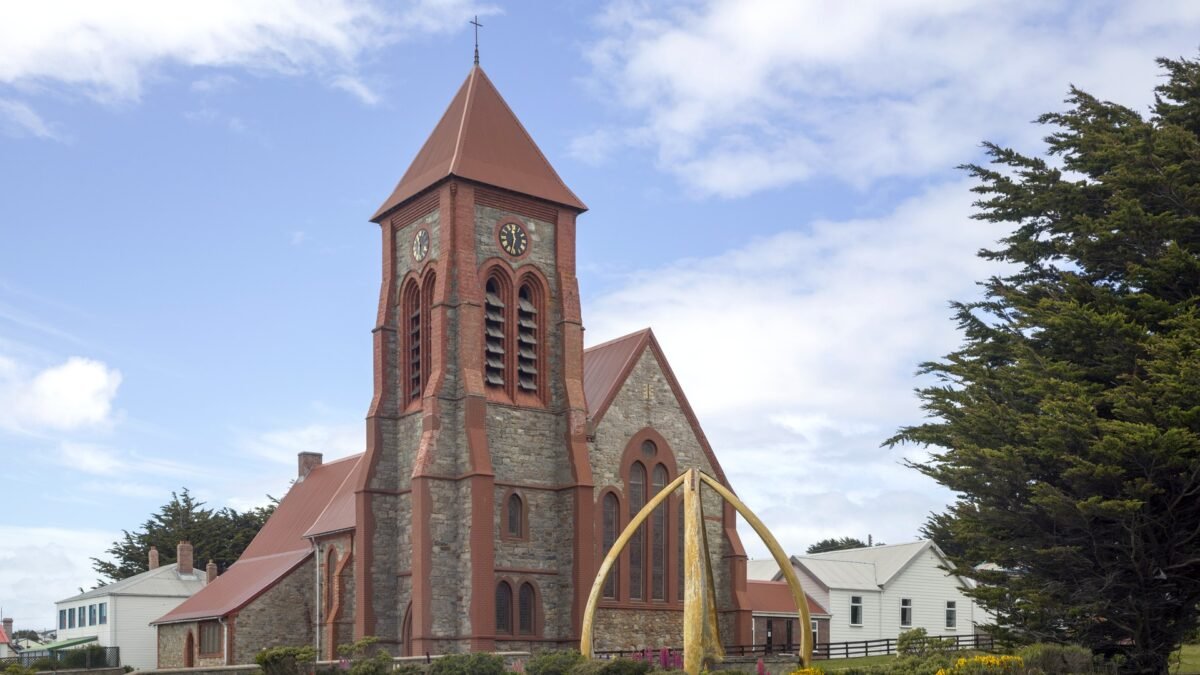
For the islanders watching from Stanley, the cathedral on Ross Road and the whalebone arch in front of it have stood through every twist of this dispute, from the war of 1982 to the referendum of 2013 and now to the courtroom in Hamburg. Saturday’s ruling does not end the argument over who owns the islands, and nobody in London or Buenos Aires pretends that it does. But it does settle, for now, who gets to decide what happens in the waters to the north of them, and that, for a community that has waited fifteen years for its oil, is a decision that matters.
Sources
Reuters — International court rejects Argentina’s request to stop UK oil activity near Falklands
UN News — Tribunal rejects Argentina’s bid to halt oil drilling off Falkland Islands (Malvinas)
House of Commons Library — UK-Argentina tensions on the Falklands Islands and oil 2026
The Times — Argentina fails to block British-backed Falkland Islands oil drilling

About the Author — Abdul Mannan
Related Articles
Myanmar Military Strikes Kill Dozens at Wedding Venue and School in Three Days of Bombing
At least 21 people, including five children, were killed when a military airstrike hit a wedding in Moe…

Taiwan’s Ruling Party Posts Best Local Election Result in a Decade as Voters Back Nuclear Power Revival
Taiwan's ruling DPP nearly doubled its local governments in Saturday's elections, its best result in a decade, while…

Ten Children Killed as Explosion Rips Through School in Afghanistan’s Kunar Province
At least 10 people, most of them children, were killed and 110 wounded when an explosion at a…