
Taiwan’s Ruling Party Posts Best Local Election Result in a Decade as Voters Back Nuclear Power Revival

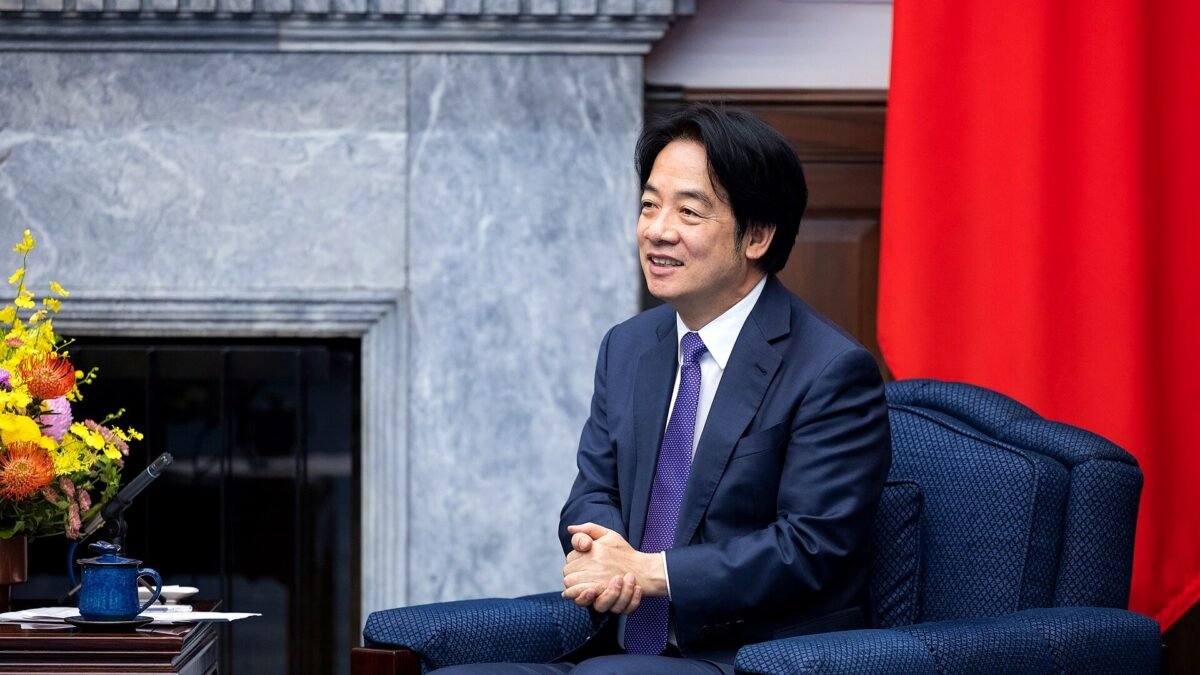
Taiwan’s ruling Democratic Progressive Party (DPP) has recorded its best result in a decade in local elections held on Saturday, nearly doubling the number of city and county governments it controls, while voters also backed a binding referendum to bring nuclear power back into the island’s energy mix. The opposition Kuomintang (KMT) held on to the capital, Taipei, in the night’s most closely watched race, and remained the largest force in local government.
According to Reuters, the DPP won at least nine of Taiwan’s 22 mayoral and county magistrate races, up from the five it captured in its disastrous showing in the local elections four years ago. The final count published by Taiwan’s Central Election Commission put the DPP on 10 seats, the KMT on 11 and an independent on one. Either way, the result was a clear recovery for President Lai Ching-te’s party after its 2022 rout, and it came in an election held under intense pressure from China, which sent warplanes and warships around the island as polling took place.
Nearly 19.7 million people were eligible to vote for more than 11,000 local officials across the island’s 22 cities and counties, in polls widely seen as a test of Lai’s government ahead of the presidential and parliamentary elections due in January 2028. Turnout surpassed that of the 2022 elections, according to local reports.
The night’s biggest upset came in Taichung, Taiwan’s second-largest city, where the DPP’s Ho Hsin-chun defeated the KMT’s Johnny Chiang with 50.7 per cent of the vote against 48.4 per cent, ending eight years of KMT rule in the city. Chiang is a former KMT chairman who had been hand-picked as the successor to the outgoing mayor, Lu Shiow-yen. The DPP also held its southern strongholds of Kaohsiung and Tainan, and captured Hsinchu County, Yilan County, Changhua County, Chiayi City and County, Pingtung County and Yunlin County — the last by just 173 votes.
Of Taiwan’s six largest cities, the two parties won three each. The DPP took Kaohsiung, Tainan and Taichung; the KMT held Taipei, New Taipei and Taoyuan. In the councils, the KMT won 341 of 917 seats, the DPP 309, independents 221 and the Taiwan People’s Party (TPP) 34, according to the Central Election Commission’s count.
The Taipei race — and the prize that got away
The most closely watched contest of the night was in Taipei, where the DPP had hoped to win the mayoralty for the first time since 1994. Its candidate, Puma Shen, an academic-turned-lawmaker and expert on China’s information warfare who has been sanctioned by Beijing as a “separatist”, mounted a far stronger challenge than expected against the incumbent KMT mayor, Chiang Wan-an. Shen, who first gained public attention organising civil defence courses, drew large crowds to his rallies with a campaign built around planting more trees and making city government more responsive.
But Chiang, who is seen as a possible future presidential candidate for the KMT, held on. With about 90 per cent of polling stations counted, Chiang had about 53.8 per cent of the vote to Shen’s 45.6 per cent, according to the electoral authorities. The final count gave Chiang 53.72 per cent. Shen conceded on Saturday night, telling thousands of supporters: “I know there’s many people crying here. I want to thank every person who voted for me.” He said he had telephoned Chiang to congratulate him.
“After a long, hard-fought democratic election, we fought together until the end, thank you everyone,” a tearful Chiang told his supporters. The DPP has only won the Taipei mayoralty once, in 1994, when Chen Shui-bian took the city. Shen was nevertheless the party’s best-performing Taipei mayoral candidate in the thirty years since then.
The KMT also held New Taipei, the island’s most populous city, where Lee Shu-chuan won about 51.2 per cent of the vote, and Taoyuan, where Mayor Chang San-cheng was re-elected with about 55.7 per cent. The KMT further retained Keelung, Miaoli, Nantou, Hualien, Taitung, Kinmen and Lienchiang counties. Hsinchu City went to the independent Ann Kao, a former member of the TPP.
Chen Shihmin, a professor of political science at National Taiwan University, told the Associated Press that the results overall were a modest victory for the DPP. “This result will allow the DPP to be united in supporting (President) Lai Ching-te when he seeks another term in 2028,” he said.
A binding vote to bring back nuclear power
Alongside the local elections, voters decided a national referendum on whether to scrap Taiwan’s “nuclear-free homeland” policy and use nuclear power to support the economy. The measure, Referendum Case No. 22, passed decisively. With all 18,248 polling stations counted, about 7.43 million people voted in favour and about 4.56 million against — roughly 62 per cent in favour. Because the yes votes outnumbered the no votes and cleared the legal threshold of one quarter of all eligible voters, about 5 million votes, the referendum passed and is binding under Taiwan’s referendum law. The government must now take steps to bring nuclear power back into the energy mix.
Taiwan completed its nuclear phase-out in May 2025, when its final operating reactor at the Maanshan plant was shut down. The referendum does not itself specify any concrete measures to reopen plants, but it gives the government a political mandate to pursue nuclear power development. Supporters of the measure argued that additional energy sources are needed to meet the growing electricity demand of Taiwan’s artificial intelligence industry and its semiconductor sector, the backbone of the island’s economy.
The DPP government had already been moving in that direction: the Lai administration has been shifting towards restarts of nuclear generation, despite the party’s long-standing anti-nuclear position. The referendum result now strengthens the government’s hand to act, and it removes one of the most divisive questions in Taiwanese energy politics from the 2028 campaign agenda.
An election held under China’s gaze
Unlike presidential elections, when relations with China dominate, Saturday’s vote focused mainly on local concerns, including social welfare benefits, transport, the environment and other livelihood issues. But Beijing was never far from the debate. Taiwan’s Ministry of National Defense reported about 33 sorties by Chinese warplanes, including bombers and fighter jets, towards the island between Friday and Saturday, along with eight warships in the surrounding waters.
China claims Taiwan as its territory and has not ruled out the use of force to annex it. Beijing refuses to talk to President Lai, whom it calls a “separatist”, and it imposed sanctions on the DPP’s Taipei candidate, Puma Shen, and launched an investigation into his activities during the campaign. Lai says only Taiwan’s people can decide their future. Taiwanese authorities have accused Beijing of attempting to sow distrust in the island’s electoral system, allegations that Chinese authorities have rejected.
The KMT, which favours closer ties with China and ran Taiwan under martial law for nearly four decades before democratic reforms in the 1980s, traditionally performs well in local elections. Its continued dominance of local government — it still controls more mayoral and county posts than the DPP — shows that the party’s grassroots machine remains formidable, even as the DPP rebuilt its own local networks after 2022.
The DPP lost its majority in the Legislative Yuan, Taiwan’s parliament, in the 2024 elections, and has governed since then without control of the legislature. The local gains give the party a stronger base of mayors and councillors to work with, and a morale boost after a difficult period in office.
Analysis: Why It Matters
Saturday’s vote was, on its face, a local election about mayors, roads, welfare and power bills. Its real significance lies in what it says about the state of Taiwanese politics a little over a year before the country chooses its next president.
First, the result rescues President Lai Ching-te from the narrative of decline that has dogged him since the DPP lost its parliamentary majority in 2024. The party’s 2022 local election defeat — five seats out of 22 — was described at the time as a disaster, and it cost the then president, Tsai Ing-wen, her party chairmanship. Doubling that tally to nine or ten seats does not make the DPP the dominant local force — the KMT still holds that title — but it does give Lai a credible claim that his government retains public support, and it removes the internal pressure that a bad result would have placed on his leadership. As Professor Chen Shihmin observed, the outcome should unite the party behind Lai’s expected bid for a second term in 2028.
Second, the Taipei result shows both the DPP’s progress and its limits. Puma Shen ran the party’s strongest Taipei campaign in three decades and drew crowds that surprised even his own party, yet he still lost by eight points in a city the DPP has won only once since direct mayoral elections began. Taipei remains a KMT stronghold, and Chiang Wan-an’s comfortable re-election burnishes his own standing as a future presidential contender. The KMT’s problem is the opposite one: it dominates local politics, as it almost always has, but it has not won a presidential election since 2008, and Saturday did nothing to settle who will lead its 2028 campaign. The leading prospects named by analysts are Lu Shiow-yen, the outgoing mayor of Taichung, and Han Kuo-yu, the speaker of parliament.
Third, the nuclear referendum is the clearest signal of the night about Taiwan’s economic direction. Voters backed nuclear power by a margin of roughly three to two, in a country that only eighteen months ago shut its last reactor. The driving force is not ideology but electricity: Taiwan’s semiconductor factories and its fast-growing artificial intelligence industry need vast amounts of reliable power, and the island’s energy security is now treated as a matter of national security as well as economics. The referendum’s passage gives the Lai government a democratic mandate to reverse a policy the DPP itself once championed, and it aligns Taiwan with a broader global shift back towards nuclear energy. The practical questions — which plants could restart, on what timetable, and at what cost — are now the government’s to answer, and the answers will be watched closely by the chip industry on which Taiwan’s prosperity depends.
Fourth, the election was a quiet rebuke to Beijing’s pressure. China flew bombers around the island on the eve of the vote, sanctioned a candidate, and made no secret of its hostility to the DPP. Taiwanese voters went to the polls in larger numbers than in 2022 and delivered a split verdict that favoured neither extreme: the KMT kept its local dominance, the DPP recovered ground, and the referendum passed on an issue with no direct connection to cross-strait politics. The message is that intimidation does not decide Taiwanese elections. Beijing’s refusal to talk to Lai, and its labelling of elected Taiwanese politicians as “separatists”, has not translated into electoral punishment for the DPP; if anything, the party’s best result in a decade came in the teeth of that pressure.
Finally, the result should be read with caution as a guide to 2028. Local elections in Taiwan have repeatedly proved a poor predictor of presidential votes: voters choose mayors on local issues, and the KMT’s historic strength in local government has never guaranteed it the presidency. What Saturday does change is the starting positions. The DPP enters the 2028 cycle with a rebuilt local base, a united party and a fresh mandate on energy. The KMT enters it still the largest local force, still holding the capital, but still searching for a presidential candidate and a message that can win nationally. The manoeuvring for the 2028 presidential and parliamentary elections, as Reuters noted, will now begin in earnest.
What to watch next
The Central Election Commission is due to formally confirm the results on 4 December. One race, Yunlin County, was decided by only 173 votes and may face verification or a recount. Attention will then turn to the government’s response to the nuclear referendum: which reactors it proposes to restart, and how quickly. In the KMT, the contest to choose a presidential candidate for 2028 will gather pace, with Lu Shiow-yen and Han Kuo-yu the names most often mentioned. And in Beijing, the reaction to a DPP recovery and a smooth, high-turnout democratic exercise will be closely watched — China has already shown, with its warplanes over the weekend, that it intends to keep the pressure on.
Sources
- Associated Press — Taiwan’s opposition keeps control of Taipei in local elections
- Reuters — Ruling party makes gains in Taiwan local elections watched by China
- The Guardian — ‘Victory for democracy’: Taiwan’s ruling party secures best result in a decade
- Central Election Commission vote-count data (via asdtw.org) — 2026 nine-in-one election results
- The True Post — Taiwan voters back nuclear power revival as KMT holds Taipei in local elections

About the Author — Abdul Mannan
Related Articles
Ten Children Killed as Explosion Rips Through School in Afghanistan’s Kunar Province
At least 10 people, most of them children, were killed and 110 wounded when an explosion at a…

US Disables Blockade Runner in Gulf of Oman as Iran Vows to Break the Embargo and Keep Hormuz Shut
The United States disabled a commercial ship trying to run its blockade of Iran, and Tehran answered with…
Lebanon Says France Is Drafting UN Plan to Keep Peacekeepers Working After UNIFIL Mandate Ends
Lebanon’s prime minister says France is preparing a UN resolution that would let peacekeepers keep clearing mines, escorting…