
Myanmar Military Strikes Kill Dozens at Wedding Venue and School in Three Days of Bombing

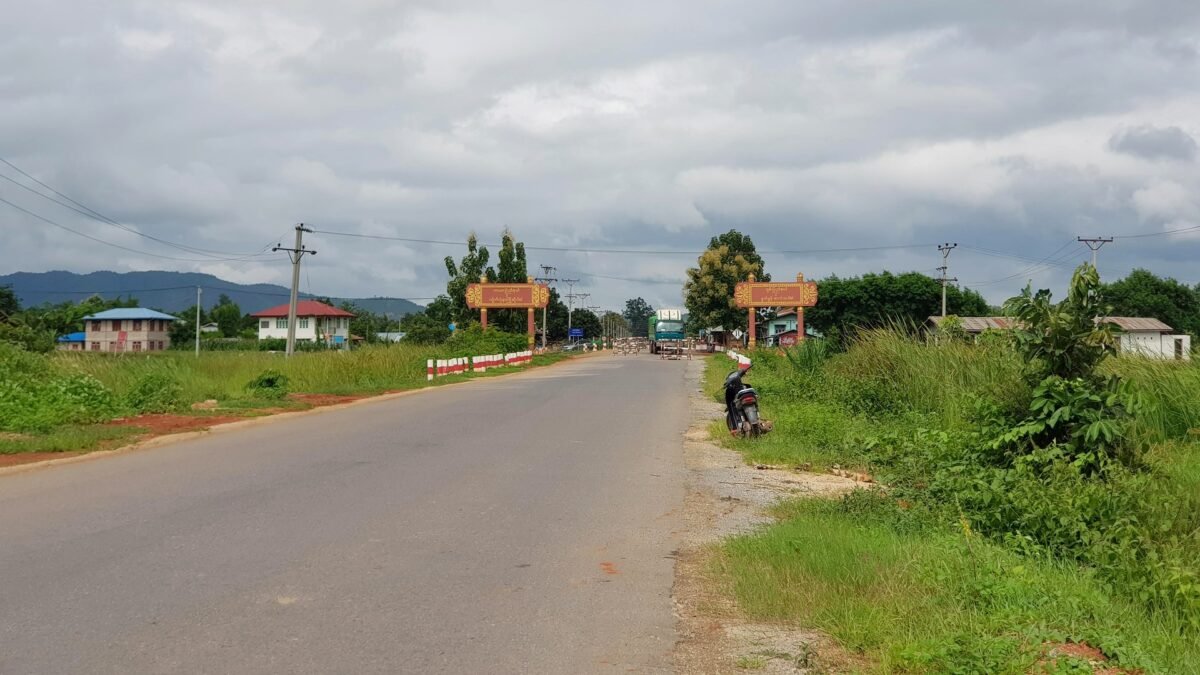
Dozens of people have been killed in three days of military air strikes across Myanmar, including at least 21 people at a wedding gathering and at least 20 civilians at a school, according to rescuers, witnesses and the country’s exiled National Unity Government.
The deadliest single attack struck on Saturday afternoon, when a military aircraft dropped a bomb on a house near Moe Bye, a village on the border of Shan and Karenni states, where preparations were under way for the wedding of two displaced people. Rescuers said at least 21 people were confirmed dead, including five children, and at least 35 others were injured. A local rescue organisation put the number of wounded at more than 40.
The strikes are the latest mass-casualty incidents in a civil war that has raged since the military seized power in a coup in February 2021, toppling the elected government of Aung San Suu Kyi. According to the Agence France-Presse news agency, at least 30 people were killed in three air strikes on Saturday alone, bringing the death toll from the three-day bombing campaign to more than 60.
Myanmar’s military-led government has not commented on the strikes. The casualty figures come from rescuers, witnesses and opposition sources, and neither AFP nor the BBC was able to verify the videos and photographs emerging from the scenes independently. The figures reported here are therefore attributed to those sources throughout, and they may change as more information emerges.
A wedding turned into a rescue operation
The wedding strike hit a house in a remote village near Moe Bye, in an area along the border of Shan and Karenni states that is home to large numbers of displaced people. Moe Bye town itself is held by the military, while opposition fighters operate in the villages around it, according to the BBC.
Witnesses told AFP they heard the aircraft before the blast. One witness, who asked not to be identified, said he had just gone into his home when the explosion shook the village and smoke rose into the sky. “I thought they wouldn’t bomb us when I heard the planes above us,” he told AFP.
He ran to the scene. “I saw 17 dead bodies and dozens of wounded,” he said. “I was stunned. I didn’t know whom to help, whom to save first. An injured woman told me to go for the children first.”
The leader of the Nway Oo Yaung Chi Foundation, an organisation that helps displaced people in camps, told AFP he could confirm 21 deaths, including five children, and more than 40 wounded. He said a second bomb fell after rescuers had arrived at the scene, a claim that has not been independently corroborated. Villagers shared pictures from the scene showing at least six bodies, including a woman and a child, which AFP said it could not verify independently.
Video from the scene, described by the BBC and AFP, showed a desperate scramble to rescue survivors. Locals loaded injured men into the back of a pickup truck and placed an elderly woman on the back of a motorbike. In one video a man carried a small child through a fire as another blast was heard. In another, the witness carried a crying, bloodied girl who kept asking where her parents were.
Al Jazeera, which also reported the strike, said a rights group had confirmed at least 21 people killed at the wedding venue, and that unverified videos showed bloodied victims being taken away for treatment.
A school and monastery bombed in Magway
Two days before the wedding strike, on Thursday afternoon, military aircraft bombed a compound containing a school and a monastery in the village of In Yon, in Sinbaungwe Township in the central Magway region, where resistance forces are active. The attack came during a religious ceremony at the compound, according to the National Unity Government, the exiled government formed by opponents of the coup.
According to a joint statement by the National Unity Government and the newly formed Magway Federal Unit Government, four 500-pound bombs were dropped on the compound, along with 12 shells and seven suicide drones.
The National Unity Government said at least 20 civilians were killed, including students, young monks and teachers, along with nine members of the People’s Defence Forces, the pro-democracy guerrillas who took up arms after the coup. That would make 29 people killed in the attack. Local media outlet Narinjara reported a higher toll of more than 40 dead, according to the reporting, while Reuters, citing a local witness and National Unity Government spokesman Nay Phone Latt, reported more than 30 killed, including nine resistance fighters and more than 20 civilians.
One schoolteacher said the civilian dead included four schoolgirls, a novice monk and 15 parents who had rushed into the compound to rescue their children after hearing aircraft overhead. An infant and a number of schoolchildren were among those killed, according to the reports.
The two sides gave widely differing accounts of why the bombs fell. Villagers said the village was quiet, with no fighting and only the occasional passing of People’s Defence Force guerrillas. The National Unity Government denounced the bombing as a war crime and said the fighters who died had been protecting civilians. Pro-military channels on Telegram said on Friday that jets had bombed the compound after receiving a tip that People’s Defence Force fighters were celebrating after graduating from training.
Strikes in Rakhine as well
On Saturday, the bombing spread to western Myanmar. A market in Mrauk-U, in Rakhine state, was hit in a separate air strike, witnesses said. Hla Maung Oo, the head of a local funeral organisation, told AFP that nine people had died there.
The BBC reported that a residential area in the same town was bombed on Saturday evening, killing more than 10 people and injuring about 20 others. Mrauk-U is controlled by the Arakan Army, one of the strongest ethnic armed groups fighting the military, according to the BBC. A second strike on the same area late on Saturday was also reported, with unverified pictures showing several fatalities.
Al Jazeera’s summary of the day’s attacks listed a wedding party, a school, a monastery, a market and a camp for displaced people among the sites bombed.
Taken together, the four strikes in three days — the school in Magway on Thursday, and the wedding, the market and the residential area on Saturday — left more than 60 people dead, according to AFP’s count of witness and local-source reports.
A war fought from the air
Military air strikes have happened almost daily across Myanmar since the 2021 coup, according to the BBC, as the armed forces have tried to claw back territory they no longer control on the ground. Villages have been burned and ground offensives launched on areas the military cannot hold, including territory controlled by the National Unity Government and ethnic armed organisations.
The scale of the air campaign is striking. According to records kept by the National Unity Government, the military has launched 15,327 air strikes since the coup, killing 6,467 civilians and damaging 562 schools. The monitoring group ACLED says more than 100,000 people have been killed on all sides in the conflict since 2021, and more than 3.5 million people have been displaced.
The pattern of recent months has repeatedly put civilian gatherings in the line of fire. In May 2025, a military jet bombed a school in Oe Htein Kwin village in Sagaing region during morning classes, killing up to 22 people, including 20 students and two teachers. In February 2025, an air force jet bombed a wedding ceremony in Son Kone village in Magway region, killing at least 12 people, many of them villagers helping with the celebration. In March 2025, a jet bombed a crowded market in Let Pan Hla village in Mandalay region, killing at least nine people, including two children.
What makes the latest strikes stand out is their concentration: three mass-casualty attacks in three days, in three different states, hitting a wedding, a school and a market in quick succession.
One week after the world court’s genocide verdict
The strikes came just over a week after the International Court of Justice, on 19 November, found that Myanmar had committed genocide against its mostly Muslim Rohingya minority during a 2017 military crackdown in Rakhine state, with its forces systematically killing, raping and destroying the property of civilians. It was the first time the court had found a state responsible for genocide.
The 2017 crackdown killed thousands of people and forced more than 700,000 Rohingya to flee to Bangladesh, according to the BBC. Myanmar has denied committing genocide, saying its forces were responding to attacks by armed groups.
Myanmar’s leader, Min Aung Hlaing, the general who led the 2021 coup, said in his first public comments since the verdict that his government would not comply with parts of the ruling it considered “inappropriate”. He made the remarks at a meeting on Wednesday, 25 November, according to state media, and his refusal was reported the following day.
The timing has not gone unnoticed. The three-day bombing campaign began in the same week that Min Aung Hlaing’s rejection of the court’s ruling was reported, and the targets — a wedding of displaced people, a school full of children, a market — are the kinds of civilian sites the court’s judgment was, in part, about protecting. That does not prove a connection between the verdict and the strikes. But it does frame the question the world is now asking: whether a ruling that carries no enforcement mechanism of its own can restrain a military that has already shown it will defy it.
The International Court of Justice has no police force and no army. Its judgments rely on the United Nations Security Council for enforcement, and the Council has never used that power. China and Russia, both veto-wielding members, have shielded Myanmar in the past. The court ordered Myanmar to report back within two years, by November 2028, on the steps it has taken. On the evidence of the past three days, that report is unlikely to contain much the court will welcome.
Analysis: Why It Matters
There are two stories here, and they are not the same. The first is the human one: a wedding, a school and a market, three places where ordinary life was happening, destroyed in three days. The second is the political one: what these strikes say about the state of Myanmar’s war, and about the world’s ability to do anything about it.
Start with the human story, because the numbers, however carefully attributed, do not capture it. The couple whose wedding was being prepared in Moe Bye were displaced people, already driven from their homes by the war. They were doing what displaced people everywhere try to do: build a small piece of normal life in abnormal circumstances. A wedding is not a military target by any definition. Neither is a school during a religious ceremony, nor a market on a Saturday. When all three are hit within three days, the question is no longer whether civilians are being caught in the crossfire. The question is whether civilians are the target.
The military has not answered that question. It has not commented on any of the three strikes, and its spokespeople were not available for comment on Saturday, according to AFP. That silence is itself part of the story. In a conflict where the military controls the towns and its opponents control the surrounding countryside, air power is the regime’s main tool for reaching into areas it cannot hold. A jet can strike a village in minutes and be gone before anyone can respond. The cost of that convenience is borne by the people on the ground, and the regime rarely explains itself afterwards.
There is also a credibility problem that cuts both ways, and honest reporting has to acknowledge it. The casualty figures in this story come from rescuers, witnesses and the opposition government-in-exile. AFP and the BBC, two of the most careful news organisations in the world, both said they could not independently verify the videos and photographs from the scenes. The National Unity Government has an interest in publicising the military’s abuses, and its figures for the school strike differ from those of local media. At the same time, independent journalists cannot get to Moe Bye or In Yon to check for themselves, because the military does not allow it and the areas are war zones. The result is a fog in which the broad shape of events — that air strikes hit these places and killed many civilians — is reported consistently by multiple outlets, while the exact tolls remain uncertain. That is not a reason to ignore the story. It is a reason to report it with the attributions attached, as this article does, and to keep pressing for access and verification.
Now the political story. The strikes landed in the week after the most significant legal judgment in Myanmar’s modern history. The International Court of Justice’s genocide verdict was supposed to be a moment of reckoning: the first time a state had been found responsible for genocide, a ruling that put Myanmar’s name in the history books alongside the worst crimes of the modern era. Instead, within a week, the country’s leader had publicly rejected the parts of the ruling he disliked, and the military was bombing weddings and schools. If the verdict was meant to change behaviour, the early evidence points the other way.
That is a hard truth for international law. The court’s judgment matters enormously as a matter of record — it establishes, with the authority of the world’s highest court, what happened to the Rohingya in 2017, and it creates obligations that will follow Myanmar for years. But a judgment without enforcement is a statement, not a shield. The people of Moe Bye needed a shield on Saturday afternoon, and a court in The Hague could not provide one.
The practical question now is what, if anything, can reduce the military’s ability to bomb civilian gatherings. The National Unity Government has long called for sanctions on the supply of aviation fuel and weapons to the military. The logic is straightforward: jets cannot fly without fuel, and bombs cannot fall without a supply chain. The record so far is mixed. Some suppliers have been cut off; others have found ways around the restrictions. Whether the latest strikes revive that campaign, and whether governments that have so far been cautious decide to act, is one of the things to watch in the coming weeks.
Another is the pattern itself. The military has been losing ground for years, and its response has increasingly been to punish the population of areas it cannot control. That is a strategy with a history: it did not work in the past, and there is little reason to think it will work now. Bombing weddings and schools does not win back territory. It hardens the opposition, deepens the hatred of the military among the population, and adds to the pile of evidence that will one day be used against its commanders. The International Criminal Court’s prosecutor sought an arrest warrant for Min Aung Hlaing in November 2024, and that application remains undecided. Every strike on a civilian gathering adds to the case file, whether or not anyone is ever tried.
There is also a regional dimension that should not be overlooked. The strikes hit three different states — Shan, Magway and Rakhine — which means three different sets of armed actors, three different local wars, all being fought at once. The Arakan Army controls much of Rakhine, including Mrauk-U. Resistance forces operate around Moe Bye. The Magway region is contested. The military is fighting on many fronts simultaneously, and air power is the one tool it can apply everywhere at once. That is why the strikes keep coming, and why they are likely to continue.
Finally, there is the question of what the rest of the world does next. ASEAN, the regional grouping that includes Myanmar, has been divided and largely ineffective on the crisis for years. The United Nations has passed resolutions and issued statements. Western governments have imposed sanctions. None of it has stopped the bombing. The genocide verdict was meant to be a turning point, but turning points only turn if someone pushes. The coming weeks will show whether the verdict, combined with the sight of a bombed wedding, produces anything more than condemnation.
For now, the facts on the ground are grim and simple. A couple who had already lost their home were preparing to marry. Children were at school. Shoppers were at a market. Three days later, more than 60 of them are dead, and the military that dropped the bombs has said nothing. That silence, more than any statement, is the measure of where Myanmar stands a week after the world court spoke.
What to watch next
Several things will determine how this story develops. First, whether the casualty figures are confirmed or revised as more information emerges from Moe Bye, In Yon and Mrauk-U, and whether any independent verification becomes possible. Second, whether the military comments on the strikes or continues its silence, and whether its supporters offer any justification. Third, whether the bombing campaign continues at this pace or pauses, which would indicate whether the three days were a deliberate escalation or part of the ordinary rhythm of a war that has become grimly routine.
Beyond the battlefield, watch for any response from the United Nations and from ASEAN, and for renewed pressure on aviation fuel supplies to the Myanmar military. Watch, too, for the National Unity Government’s documentation of the strikes, which is likely to feed into international legal proceedings, and for any movement on the International Criminal Court’s outstanding application for an arrest warrant for Min Aung Hlaing.
And watch the displaced. The wedding in Moe Bye was a gathering of people who had already fled their homes once. Every strike on a civilian site creates more displacement, and more displacement creates more gatherings like that wedding — more weddings, more schools, more markets, all within range of the jets. That cycle is the real story of Myanmar’s war, and it is the one that has to be broken.
Sources
- BBC — “Dozens killed in Myanmar military strikes, including attack on wedding” (syndicated copy), 28 November 2026
- Agence France-Presse, via Arab News — “Airstrike on Myanmar wedding venue kills around 20: witnesses” (syndicated summary), 28 November 2026
- Al Jazeera — “Dozens reported killed in series of Myanmar air attacks” (syndicated copy), 28 November 2026
- Agence France-Presse — “Four Myanmar airstrikes in 3 days leave 30 dead” (syndicated copy), 28 November 2026
- Reuters / Express Tribune, via Ground News — “Myanmar military airstrike on village school kills at least 30 people, opposition says”, 28 November 2026

About the Author — Abdul Mannan
Related Articles

Sea Tribunal Rejects Argentina’s Bid to Halt Falkland Islands Oil Drilling in 18–3 Ruling
The Hamburg tribunal ruled 18–3 that Argentina's bid to halt the Sea Lion oil project could not be…

Taiwan’s Ruling Party Posts Best Local Election Result in a Decade as Voters Back Nuclear Power Revival
Taiwan's ruling DPP nearly doubled its local governments in Saturday's elections, its best result in a decade, while…
Ten Children Killed as Explosion Rips Through School in Afghanistan’s Kunar Province
At least 10 people, most of them children, were killed and 110 wounded when an explosion at a…