
Magnitude 5.0 Earthquake Shakes Los Angeles as Aftershocks Rattle Manhattan Beach

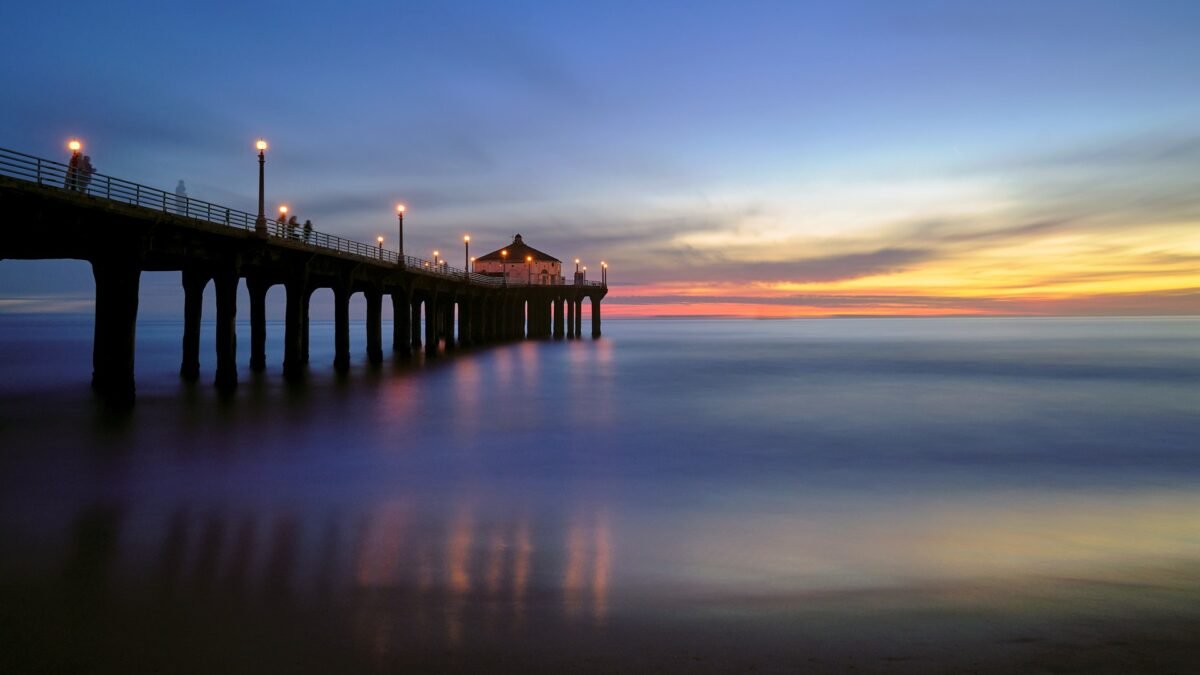
A magnitude 5.0 earthquake struck off the coast of Manhattan Beach, California, on Saturday morning, shaking millions of people across Los Angeles and setting off a swarm of aftershocks, but officials reported no injuries and no major damage.
The earthquake hit at 9:30 a.m. local time, according to the United States Geological Survey (USGS), with its epicentre about three miles southwest of Manhattan Beach, a beach city in Los Angeles County. It was first measured at magnitude 4.7, with some early bulletins putting it at 5.2, before seismologists settled on a final figure of 5.0 after an analyst reviewed the data. The USGS put the quake at a depth of about 12 kilometres (7.5 miles) below the seabed.
The shaking was felt across the Los Angeles basin and beyond. The USGS estimated that about 15.84 million people felt the earthquake, with 5.87 million of them feeling light to strong shaking, according to figures reported by the New York Post. More than 13,000 people filed reports through the agency’s “Did You Feel It?” survey, according to Men’s Journal.
There were no immediate reports of injuries or damage, the Associated Press reported, and that picture held through the day as fire crews and city inspectors finished their checks. The Los Angeles Fire Department went into “earthquake mode”, sending personnel from all 106 of its neighbourhood fire stations to survey their districts by land, air and sea across the city’s 470 square miles. Shortly before 11 a.m., the department said the survey was complete and no significant infrastructure damage or injuries had been found within the city of Los Angeles.
A morning jolt felt by millions
For many in the South Bay, the quake was the strongest shaking they had felt in years. Teresa Macias, a 66-year-old office clerk from Lomita, had just got out of bed and made her coffee when her house began to shake, the Associated Press reported. Painted bottles she decorates fell to the floor, and her dog ran scared from underneath her bed.
“This one got everybody’s attention. It was a big jolt, and the way it was moving the house, you knew that it was a 5-point something,” Macias told the Associated Press. She said she continued to feel aftershocks for more than an hour after the first earthquake.
In Manhattan Beach itself, a resident, Patricia Blakemore, posted photographs of shattered glass in her kitchen and said her range hood had taken the worst of the damage, according to the New York Post. She wrote that her family and dogs were unhurt and the house had come through with only minor damage.
Manhattan Beach police told City News Service shortly after the quake that they had received no immediate calls for service, according to MyNewsLA, but the city’s pier and the nearby Hermosa Beach Pier were both closed as a precaution. Officials in Torrance conducted a “windshield survey” of critical facilities and found no damage, and emergency crews in other South Bay cities carried out similar inspections.
The shaking reached Los Angeles International Airport, where air traffic controllers ordered a Delta flight to pull up as a precaution moments before it was set to land, MyNewsLA reported. Airport officials said flights were not affected on Saturday, and an airport spokesperson said airfield inspections had been completed with no issues observed and flight operations were normal. LA Metro said no damage was reported to its system, although trains could be delayed while officials inspected equipment.
Los Angeles Mayor Karen Bass posted on X that the quake had been felt across the city and that, while there were no reports of major damage, the fire department was in earthquake mode to assess potential impacts. “As a precaution, please be prepared for aftershocks: Drop, Cover, and Hold on until shaking stops,” she wrote, urging residents to protect their heads and necks under sturdy furniture, near a sturdy interior wall and away from windows and doorways.
Aftershocks and the 5 per cent question
The main shock was followed by a busy sequence of aftershocks. A magnitude 3.0 aftershock was reported at 9:34 a.m., a magnitude 3.5 at 10:01 a.m., a magnitude 3.8 at 10:30 a.m., another magnitude 3.8 at 11:03 a.m., and a magnitude 4.6 tremor at 11:41 a.m., according to City News Service figures reported by MyNewsLA. The 11:41 a.m. shock was strong enough to be felt widely across the South Bay and sent a fresh wave of nerves through residents who had only just begun to relax.
Caltech seismologist Lucy Jones, speaking at a hastily arranged Zoom news conference on Saturday morning, said the sequence was unremarkable in one sense and unsettling in another. Every earthquake, she noted, has the potential to be a foreshock for a larger event. “About 5% of the time it’s followed by something larger within the next three days,” she said. “We have never found a discriminant for foreshocks. They don’t look any different than any other earthquake, so there’s no way to add on to that probability.”
The USGS aftershock forecast put the odds in similar terms: an 82 per cent chance of at least one magnitude 3 or larger aftershock in the following week, a 31 per cent chance of a magnitude 4 or larger, and about a 5 per cent chance of a magnitude 5 or larger, according to figures reported by Men’s Journal.
Jones also noted that the ground had already been restless in the same area before Saturday. There had been a magnitude 3 earthquake a couple of days earlier in the same general area, she said, and “a very small 1.6 a few hours before” the main shock. Whether those smaller events were foreshocks, she said, cannot be known in advance — only in hindsight.
The variability of aftershock sequences was on display in Jones’s comparison with two recent California events. A magnitude 5 earthquake in Soledad, in Central California, the previous week produced hundreds of aftershocks, she said, while a magnitude 3.9 earthquake in Commerce produced none. Saturday’s sequence, she said, was “at least average” by that measure.
No tsunami, and the warning system worked
Because the earthquake struck offshore, one of the first questions was whether it could generate a tsunami. Caltech experts said at their Saturday morning briefing that they did not believe the quake was strong enough to create any tsunami concern, and the National Tsunami Warning Center confirmed within five minutes of the earthquake that there was no tsunami danger, according to reports by CBS News and MyNewsLA. The City of Manhattan Beach also told residents on social media that there was no immediate tsunami threat.
The USGS rated the event a low-risk Green Alert, signalling a low likelihood of casualties and damage, according to CBS News. Seismologist Lucy Jones said significant damage was “highly improbable”, while USGS seismologist Elizabeth Cochran cautioned against downplaying what people near the epicentre had experienced. “I’m sure it was quite frightening” for people in Manhattan Beach and the South Bay generally, Cochran said, even though experts did not expect the quake to cause major damage.
Saturday also provided a live test of California’s ShakeAlert early warning system, and the people who run it said it passed. Many people received the alert on their phones before the shaking reached them, according to the USGS. Allen Husker, manager of the Southern California Seismic Network and a Caltech geophysics professor, said the system’s first estimate of the magnitude was about 5.1, very close to the final analyst-reviewed figure of 5.0.
“The magnitude — the alert that went out was really close to the final alert value,” Husker said. “So it was estimated about a 5.1 by the ShakeAlert system, and then the final, after an analyst reviewed (the quake), it came out as magnitude 5. So we consider this a success of the system working.”
Jones, speaking from Pasadena, said she received the ShakeAlert warning just as her dishes were rattling, and that was the full extent of what she saw or felt there. The quake was “clearly felt over most of the L.A. basin”, she said.
Analysis: Why It Matters
A scare, not a disaster — and the difference is not luck
The first thing to say about Saturday’s earthquake is what it was not. It was not a disaster. Nobody was killed, nobody was seriously hurt, no building collapsed, no freeway fell, and no neighbourhood lost power or water on any significant scale. For a metropolitan area of nearly 13 million people sitting on one of the most seismically active stretches of ground on Earth, that is a genuinely good outcome, and it is worth pausing over why.
Three things worked in Los Angeles’s favour, and only one of them was fortune. The earthquake happened offshore, a few miles out to sea, which put distance between the fault and the nearest homes. It happened on a thrust fault at a depth of about 12 kilometres, deep enough to spread the energy rather than concentrate it at the surface. And it stopped at magnitude 5.0. As Lucy Jones put it, magnitude 5 is the level that frightens people a great deal, “but you really need to get to 6 before (it’s) throwing things off shelves”. The difference between 5.0 and 6.0 is not one step on a ladder; each whole number on the magnitude scale represents roughly 32 times more energy released. A magnitude 6.0 in the same spot would have been a different story altogether.
The other two factors were not luck at all. They were the product of three decades of deliberate, expensive and often unglamorous work since the Northridge earthquake of 17 January 1994, a magnitude 6.7 tremor that killed 57 people, injured more than 9,000, damaged more than 40,000 buildings and caused between $20 billion and $40 billion in damage, collapsing sections of four freeways. Northridge forced California to confront the weaknesses in its freeways, its hospitals, its apartment blocks built over open parking garages and its steel-frame buildings, and the state spent billions strengthening them. The 2019 Ridgecrest sequence, magnitude 7.1, the largest in California in two decades, caused comparatively limited damage in part because of those improvements. Saturday’s quake was a small test of the same system, and the system held.
That is the honest frame for this event. It was a reminder delivered in the gentlest possible way. The city’s buildings, bridges and emergency procedures absorbed a magnitude 5.0 offshore shock without breaking. The question the next earthquake will ask is whether they can absorb something much bigger, and nobody can answer that with a Saturday morning’s evidence.
ShakeAlert passed a real-world test
The second lesson of Saturday is about warning. ShakeAlert is often described as an earthquake early warning system, and that phrase invites a misunderstanding. It cannot predict an earthquake. What it can do is detect that one has already begun, work out its size and location in seconds, and push an alert to phones in places the shaking has not yet reached. In a city the size of Los Angeles, those seconds matter: enough time to duck under a desk, to stop a train, to pull a plane up from its landing approach, as happened at LAX on Saturday.
What made Saturday encouraging was the accuracy. The system’s first estimate, magnitude 5.1, was almost exactly the final figure of 5.0. False alarms and badly wrong magnitudes are what destroy trust in warning systems; a system that cries wolf, or that calls a 5.0 a 6.5, teaches people to ignore it. On Saturday it was right, and it was right fast enough that people in Pasadena received the alert as their dishes rattled. That is the system working as designed, in a real event, in front of millions of witnesses.
It is also worth being clear about the limits. ShakeAlert gives seconds, not minutes. For people very close to the epicentre, the warning may arrive at the same moment as the shaking, or after it. It cannot tell anyone where the next earthquake will happen, or when. Its value is narrow and specific: a few seconds of warning, widely distributed, reliably accurate. Saturday showed that narrow value is real, and that is enough to justify the investment — but it is not a substitute for buildings that stay standing and shelves that stay bolted to walls.
The fault scientists cannot name yet
One of the more striking details from Saturday’s briefings was a piece of scientific honesty. Lucy Jones told reporters that the quake occurred on a thrust fault, meaning one side of the fault pushed up and over the other, but that it was “really not large enough, especially when it’s offshore, to be definitive about which fault it was”. Two candidates sit in the area: the Palos Verdes Fault and the Redondo Beach Fault. “We will probably leave that undefined without significantly more analysis,” she said.
That uncertainty matters more than it might appear. The Palos Verdes Fault runs along the coast off the Palos Verdes Peninsula and has been studied for years as a potentially significant hazard, capable, in some scenarios, of a much larger earthquake than Saturday’s. The Redondo Beach Fault is less well understood. A thrust fault offshore, in this stretch of coast, is exactly the kind of structure that the Northridge earthquake taught Californians to fear: Northridge ruptured on a blind thrust fault, one that does not reach the surface and leaves no visible scar, and it was not fully appreciated as a hazard until it broke.
None of that means Saturday’s quake was on a dangerous fault, or that a bigger one is coming from the same place. It means the science is incomplete, and the incompleteness is itself the point. Los Angeles is crossed and ringed by faults, many of them hidden, and the map of them is still being drawn. The honest statement from the scientists on Saturday — we know the type of fault, we do not yet know which one — is a better guide to the risk than any confident guess would have been.
The 5 per cent that keeps seismologists honest
The most quoted number from Saturday’s briefings may turn out to be the smallest one: about 5 per cent. That is Lucy Jones’s estimate of the chance that a magnitude 5.0 earthquake like this one is followed by something larger within three days, and it is also roughly the USGS forecast for a magnitude 5 or larger aftershock in the following week. Five per cent sounds reassuringly small. It is also, by the standards of earthquake forecasting, a strikingly large number for a single specific hazard in a single specific week.
The reason seismologists repeat the figure, and refuse to round it down to zero, is that earthquakes cluster in ways that defeat prediction. A magnitude 3 struck the same area a couple of days before Saturday, and a magnitude 1.6 struck a few hours before. Were they foreshocks? Nobody can say, because foreshocks, as Jones put it, “don’t look any different than any other earthquake”. The only way to know a small earthquake was a foreshock is to wait and see whether a bigger one follows. That is an uncomfortable truth to live with in a city of millions, and it is the reason officials urged residents to stay ready for aftershocks rather than declaring the event over.
The practical advice that follows from the 5 per cent is unglamorous and worth repeating precisely because it is unglamorous: secure heavy furniture, keep water and supplies, know where to drop, cover and hold on, and do not stand in a doorway or run outside during shaking. Mayor Karen Bass’s message on Saturday morning said exactly that. It is the same advice given after every California earthquake, and it is the same advice that will be given after the next one, because it is the only advice that works when the science cannot give a date.
A reminder, not a rehearsal
It is tempting, after an earthquake that hurts no one, to treat it as a rehearsal for the big one — a free practice run. That framing is comforting but misleading. A rehearsal implies a performance to come, with the same cast and the same stage. The earthquake that will one day test Los Angeles seriously will not arrive on a Saturday morning offshore, at magnitude 5.0, with a friendly depth and a cooperative fault. It may arrive at 4:30 a.m. on a weekday, as Northridge did, under a freeway interchange, or under a hospital, or under a neighbourhood of older apartment buildings. The city’s preparation is real, but so is the scale of what it is preparing for.
The official forecast puts the odds in plain numbers. The Uniform California Earthquake Rupture Forecast estimates about a 60 per cent chance of a magnitude 6.7 or greater earthquake in Southern California within 30 years, a 46 per cent chance of a magnitude 7.0, and a 31 per cent chance of a magnitude 7.5, according to findings published by the California Legislature. California is home to about two-thirds of the earthquake risk in the United States, and the Pacific plate slides past North America at about two inches a year, loading stress onto the faults that cross the state. On average, the state experiences about eight magnitude 5 or larger earthquakes a year once aftershocks are counted, and a magnitude 6.7 or larger earthquake somewhere in California every six years or so.
Saturday’s quake fits neatly inside those statistics. It was the strongest shaking in the Los Angeles metropolitan area since the magnitude 5.1 La Habra earthquake in 2014, according to Lucy Jones, and one of the most powerful near the city since the magnitude 5.4 Chino Hills earthquake in 2008. It was, in other words, an ordinary California earthquake — the kind the forecast expects, the kind the building codes anticipate, the kind the warning system was built for. That ordinariness is itself the news. The system built for ordinary earthquakes worked. The test that matters, the extraordinary one, has not happened yet.
What to Watch Next
- The aftershock sequence: The USGS gives about a 5 per cent chance of a magnitude 5 or larger aftershock in the coming week and a 31 per cent chance of a magnitude 4 or larger. The first three days are the period seismologists watch most closely.
- Damage inspections: Fire crews and city inspectors found no significant damage on Saturday, but facility inspections were still in progress in several South Bay cities. Any late reports of structural damage, gas leaks or water main breaks would change the assessment.
- The fault identification: Further analysis of the seismic data may pin down whether the quake was on the Palos Verdes Fault, the Redondo Beach Fault or another structure. That determination shapes the hazard assessment for the coast.
- ShakeAlert performance data: Officials will review how widely the alert reached phones and how many seconds of warning different neighbourhoods received, which will feed into improvements to the system.
- The piers: Manhattan Beach Pier and Hermosa Beach Pier were closed as a precaution. Their reopening, and any inspection findings, will be the first visible sign of a return to normal.
- Preparedness response: Earthquakes that cause a scare without damage often produce a short burst of interest in emergency kits, securing furniture and earthquake insurance. Whether that interest lasts past the weekend is a test of its own.
- The wider pattern: Saturday’s quake followed a magnitude 5 earthquake in Soledad, Central California, the previous week. Seismologists will watch whether the state’s recent activity is a cluster or simply the normal background rate.
Sources
- Associated Press, “5.0 magnitude earthquake hits off coast near Los Angeles, followed by multiple aftershocks”
- MyNewsLA, “Strong Earthquake Shakes Los Angeles; No Reports of Major Damage”
- New York Post, “Large earthquake rocks Los Angeles”
- Men’s Journal, “Los Angeles Earthquake Today: 5.0 Quake Off Manhattan Beach”
- United States Geological Survey, Earthquake Hazards Program

About the Author — Abdul Mannan
Related Articles
Half a Dozen Trump Cabinet Officials Now Live on Secure Military Bases as Iranian Threats and Political Violence Mount
About half a dozen of President Donald Trump’s senior officials now live in military housing in Washington, driven…
OpenAI Countersues Apple, Accusing It of Stealing Trade Secrets and Pressuring Suppliers
OpenAI has countersued Apple, accusing the iPhone maker of stealing its trade secrets and pressuring hardware suppliers, in…
US Army Detonates Five Tons of Unstable Lead Azide in Iowa as Early Tests Show No Airborne Lead
The US Army destroyed the nation’s entire stockpile of degraded lead azide in two controlled blasts in Iowa…