
US Army Detonates Five Tons of Unstable Lead Azide in Iowa as Early Tests Show No Airborne Lead

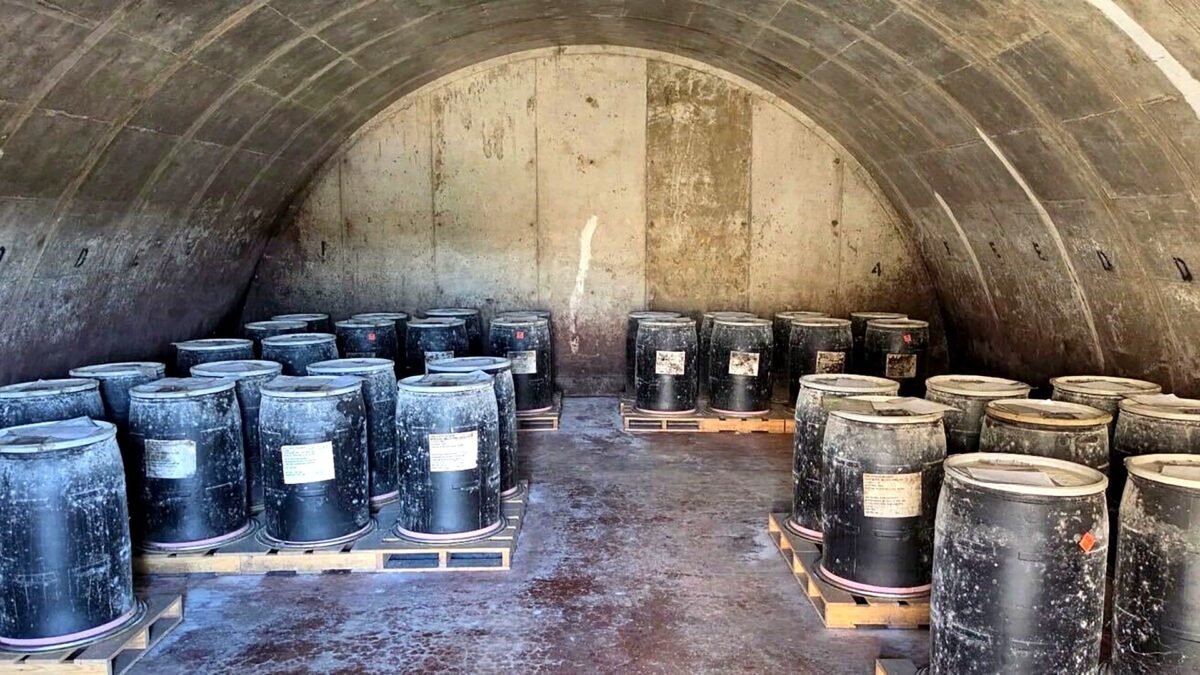
The United States Army has destroyed the nation’s entire stockpile of degraded lead azide in two controlled blasts at a munitions plant in Iowa, ending weeks of fear, lawsuits and evacuation warnings over a chemical that officials said could have exploded on its own at any moment. Early air monitoring found no lead in the air around the site, according to the US Environmental Protection Agency (EPA), but the soil and water tests that will decide whether nearby communities are truly safe are still weeks away.
The detonation took place at about 9 a.m. local time on Wednesday at the Iowa Army Ammunition Plant in Middletown, a small town in south-eastern Iowa, according to the Associated Press. Two loud booms rolled across the plant shortly after nine o’clock, sending a pair of white plumes high into a clear, cold winter sky before they quickly dissipated. An Associated Press reporter who filmed the blasts from less than a mile away, upwind of the site, said the smoke cleared within minutes.
The Army said the two controlled blasts destroyed all 68 barrels of the explosive, with no secondary explosions and no damage to infrastructure in or around the installation, according to the Associated Press. Maj. Gen. Eric Shirley, who led the operation, said the risk to Middletown and the surrounding communities had been “reduced as close to zero as it’s absolutely humanly possible.”
More than an hour after the blast, the EPA said all of its real-time air monitors throughout the region were detecting no airborne lead, according to the agency. In a statement issued on Wednesday, the EPA said its monitors had never stopped collecting data throughout the event. The agency later confirmed that the monitors showed zero detection of airborne lead one hour after the detonation. Late on Wednesday afternoon, an alert sent to residents’ mobile phones said it was safe to resume normal activities, and the Federal Emergency Management Agency (FEMA) also issued an all-clear around the plant, according to the Associated Press.
President Donald Trump posted on social media that the Army had done a “great job,” according to the Associated Press. Acting Secretary of the Army Adam Telle and the Republican governors of Iowa and Missouri also said the operation appeared to have been a success and that the explosion was well contained.
Two blasts, then silence
The material destroyed on Wednesday was lead azide, a compound of lead and nitrogen that has been used in detonators to set off other explosives since the First World War, according to Grist. About 9,700 pounds — nearly five tons — of the material was detonated, Grist reported, in what the Army said was the largest quantity of lead azide it had ever destroyed in a single operation.
“We detonate all the time, but we have not detonated lead azide at this quantity,” Lori McFate, a public affairs specialist with the Army Sustainment Command, told Grist.
The Army surrounded the two earth-covered concrete bunkers holding the drums with an elaborate set of defences designed to trap as much lead as possible at the source. According to Environmental Protection Online, the bunkers were ringed with two-storey sand barriers, earthen berms, water walls, ballistic gel blocks, aqueous foam and high-volume misting systems, directing the blast energy downwind towards unoccupied land inside the installation. The Engineering News-Record reported that the Army also laid about 19,000 cubic yards of lime-fill foundation and 300 sand-filled wire-mesh barriers around the magazines.
A NASA research aircraft circled the area after the detonation, according to the Associated Press, and EPA contractors were photographed collecting soil samples in Augusta, Iowa, a community along the perimeter of the plant, on the same day.
The scale of the monitoring effort was itself a measure of how seriously officials took the risk. The EPA deployed about 300 employees and contractors to the area and collected more than 1,200 air, soil, dust and water samples before the blast to establish a baseline, according to Grist and Environmental Protection Online. The baseline included 650 soil samples, 297 dust samples, 210 water samples and 59 air samples.
Before the blast, FEMA advised residents within a five-mile zone to the south-west of the plant to evacuate and issued a shelter-in-place alert for communities within 20 miles, affecting roughly 350 farms, according to Environmental Protection Online. Schools that had not already closed for the Thanksgiving holiday cancelled classes, many businesses shut, and some residents sealed their windows and doors as a precaution, according to the Associated Press. The Iowa Department of Health and Human Services advised people to keep windows and doors closed for 24 to 48 hours after the detonation as a precaution.
The Army chose Wednesday because the winds were blowing to the south-west, away from populated areas including Burlington, a city of just under 25,000 people on the Mississippi River, according to the Associated Press. The Army’s own models had warned that a lead-dust plume could travel as far as 100 miles from the site.
For the people who gathered to watch, the event itself was almost anticlimactic. Bystanders who parked on the side of a road told the Associated Press they had expected to feel the ground shake. Burlington resident Tim Brandt said he had wanted to feel the ground shake, but instead the detonation reminded him of the noisemakers that crack when thrown on the ground. “It was nothing,” he told the Associated Press. “It seemed like government put fear in a lot of people over nothing.”
Why the Army said it could not wait
The detonation was the end of a problem that had been building for years, and that officials said had become urgent in a matter of months. Army inspectors discovered in March that 68 drums of decades-old lead azide had begun to crystallise, making the material increasingly sensitive to friction, vibration and temperature changes, according to Grist. Even the slightest movement could trigger an explosion.
“The lead azide has aged. It’s become unstable to the point where moving it or even allowing it to sit on the odd chance that it receives some sort of shock or friction could lead to a spontaneous explosion,” Greg Domski, an associate provost and professor of chemistry and biochemistry at Augustana College in Rock Island, Illinois, told Grist.
The stockpile had been brought to Iowa from military bases around the country in 2009, according to Robert Cekada, director of the Bureau of Alcohol, Tobacco, Firearms and Explosives, quoted by the Associated Press. The lead azide was stored in case the military needed to use it again, and it sat in two earth-covered concrete magazines for more than 20 years.
After consulting with the EPA, the Bureau of Alcohol, Tobacco, Firearms and Explosives and other agencies, the Army decided the best option was to detonate the material where it sat, according to Grist. An earlier plan to neutralise the material chemically was ruled out after officials concluded it was too dangerous to move the drums or even open their containers without risking an accidental detonation, according to Central Florida Public Media, which cited a press briefing by administration officials.
The EPA issued an emergency hazardous-waste treatment permit for the operation in mid-November, and the Army publicly announced its plans on 15 November. But the announcement set off a storm of protest. Residents up to 100 miles away said they had learned of the plan only days before the blast was due to happen. Iowa Governor Kim Reynolds and governor-elect Rob Sand were among the elected officials in Iowa and Illinois who called for a delay, according to Grist, and environmental groups sued to stop the detonation altogether.
The operation was originally scheduled for Friday 20 November, then delayed repeatedly as the legal challenge worked its way through the courts. A federal appeals court initially blocked the plan, but on Monday 23 November the Eighth Circuit lifted its temporary stay, clearing the way for the blast, according to Grist and Environmental Protection Online. The Army then set the detonation for Wednesday, the day before Thanksgiving, when the wind direction was favourable.
What the first tests show — and what they do not
The first results were encouraging, but every expert quoted in the reporting stressed the same qualification: air monitors measure only what is floating past them at the moment they sample it. They cannot say where lead from the blast may have settled, and that question will take laboratory analysis to answer.
“This should take days to weeks,” Andrew Whelton, an environmental engineering professor at Purdue University who has helped communities recover from chemical disasters, told the Associated Press. He said the EPA’s air-quality data was promising, but stressed that samples need to be tested in a laboratory to determine whether people face health risks. “But what we may see is different guidance issued to different communities based on how far they are from the detonation area and whether or not they were upwind or downwind.”
That distinction matters because lead is a neurotoxin for which there is no safe level of exposure, according to Grist. It can damage the brain and the central nervous system and is particularly dangerous to children and pregnant women. Exposure is associated with cognitive delays, heart problems and reproductive issues. And unlike many pollutants, lead does not break down.
“Lead is an element, and doesn’t break down,” Robert Hirschfeld, director of water policy at the Prairie Rivers Network, told Grist. “Those health risks persist as long as the lead does.”
The Army and the EPA are now collecting soil, water and surface samples along the projected plume path to determine where lead was deposited and whether a clean-up is necessary, according to Grist. The EPA’s emergency permit remains in force through 11 February 2027 and requires continuing environmental monitoring, reporting and remediation, according to Environmental Protection Online.
The agricultural stakes are considerable. The US Department of Agriculture said earlier in the week that 350 farms lie in the projected path of the plume, according to the Associated Press, and that the agency would work to keep lead and other heavy metals out of the food supply. Farmers were advised to move livestock indoors and to protect hay and water supplies. Iowa agriculture officials are advising farmers to have their soil and forage tested after the detonation and to monitor livestock for signs of lead poisoning, according to Grist.
Doug Seyb, a livestock farmer from Donnellson, told the Associated Press he lived far enough away that he did not hear or feel the explosions, but he was still worried about the accuracy of the EPA’s air monitors. “All of these cows are pregnant,” he said, “and we just cross our fingers that we don’t have deformed calves and stillborns.”
Water supplies are also being watched. Colin Wellenkamp, executive director of the Mississippi River Cities and Towns Initiative, told the Associated Press that water treatment facilities along the Mississippi and Missouri rivers would be testing periodically to make sure there were no detectable spikes in lead.
Reaction: relief, praise and a demand for answers
For the officials who ordered the operation, the first results were a vindication. Governor Kim Reynolds watched the detonation from the State Emergency Operations Center in Johnston, Iowa, alongside Iowa National Guard and state emergency management leaders, according to the US Army National Guard. The governor had earlier pressed the Army for a delay; on Wednesday, her office and the Army presented the operation as a success.
But the environmental groups that sued to halt the detonation said on Wednesday that the legal action and public pressure had forced the Army to take more protective measures, according to the Associated Press. Had the blasts happened the previous week as first planned, they said, many safeguards, clearer evacuation plans and the expansive monitoring programme would not have been in place.
“Iowa and neighboring states deserve a full accounting of why the situation was allowed to get to the point of crisis,” Sarah Green, executive director of the Iowa Environmental Council, told the Associated Press.
Some residents said the timing could have been better, given that the blast fell on the day before Thanksgiving, but acknowledged that the material needed to be dealt with now, according to the Associated Press. Others worried about the longer term. Lucy Giehl, who lives nearby in West Burlington, told the Associated Press: “I don’t think lead danger goes away any time soon. It seems someone might have thought about all of this a little sooner before it came to this.”
The Iowa Army Ammunition Plant itself has a long and troubled history. It is owned by the Army and operated by American Ordnance LLC, a subsidiary of the defence contractor Day & Zimmermann. The plant played a role in the development and testing of nuclear weapons from the 1940s until 1975 and has been on the EPA’s Superfund National Priorities List since 1990.
Analysis: Why It Matters
The detonation in Middletown was, by the Army’s own account, a success. The drums are gone, nobody was hurt, no buildings were damaged, and the first air readings found no lead. On the narrow question the Army set itself — destroy the stockpile without poisoning anyone in the process — the operation appears to have worked. But the narrow question was never the whole story, and the wider story is less flattering to everyone involved.
The blast was the least-bad option — but it was still a gamble
Once the lead azide had crystallised to the point where it could not safely be moved, the Army’s choices narrowed to two bad ones: blow it up under controlled conditions, or wait for it to blow up on its own. A spontaneous detonation would have released the same lead with no sand barriers, no foam, no water walls, no wind chosen in advance and no 300 EPA staff standing by with monitors. Measured against that alternative, the controlled blast was plainly the right call. Yet it is worth saying plainly what that means: the safest available option still involved deliberately detonating five tons of a lead compound above farmland, schools and homes, on the basis of dispersion models that predicted the plume could travel 100 miles. The fact that the gamble paid off does not make it a comfortable precedent. It makes it a warning about what happens when dangerous material is left to decay until the only remaining choices are all dangerous.
Twenty years of storage is the real scandal
The most important question raised by this episode is not whether the blast was safe. It is how the United States Army came to be sitting on 68 drums of crystallising primary explosive in the first place. The material was brought to Iowa in 2009 and stored, in the Army’s own telling, just in case it might be needed again. It was then left, apparently without the kind of surveillance that would have caught the degradation early, until a routine inspection in March found it had become a bomb waiting for a trigger. The Army has not yet explained, in public at least, why two decades passed before the danger was recognised, or what other ageing stockpiles may be sitting in similar condition elsewhere. Sarah Green’s demand for “a full accounting of why the situation was allowed to get to the point of crisis” is the right question, and it deserves a fuller answer than a press release about a successful blast. A government that can lose track of five tons of unstable explosive for twenty years has a record-keeping problem, not just a disposal problem.
The lawsuit made the blast safer — and that matters
One of the least comfortable facts for the Army is that the detonation that took place on Wednesday was considerably safer than the one it originally planned. The first date was Friday 20 November. The blast that actually happened came five days later, after a court stay, a lawsuit, pressure from two states’ governors and a week of public anger — and it came with more barriers, more foam, more monitoring and clearer evacuation instructions than the original plan contained. The environmental groups that sued are entitled to their claim that the pressure forced improvements, and the Army should be candid about it rather than treating the litigation as an obstacle it overcame. The lesson is not that lawsuits delay necessary work. It is that scrutiny improves it. The next time the Army proposes to detonate a toxic stockpile near people’s homes, the process that produced this week’s safeguards should be the starting point, not something the public has to fight for in court.
“No airborne lead” is not the same as “no lead”
The early headlines will say the monitors found no lead, and that is accurate as far as it goes. But it does not go very far. Air monitors sample the air passing a fixed point; they cannot detect heavy lead dust that has already settled on soil, roofs, playgrounds and fields, and they cannot distinguish lead from ordinary dust in the way a laboratory can. The soil and water results, which will take days or weeks, are the results that actually matter for the farmers with pregnant cattle, the parents of young children and the towns drawing water from the Mississippi. Until those results are published in full, any declaration that the area is safe is premature, and officials should resist the temptation to treat a good first reading as a final verdict. The EPA’s decision to keep its emergency permit in force until February 2027, with monitoring and remediation obligations attached, is the right instinct. It should be matched by a commitment to publish every sample result, not just the reassuring ones.
A precedent for every ageing stockpile
Finally, Middletown should be read as a test case, not a one-off. The United States military holds vast quantities of ageing munitions and energetic materials at installations across the country, much of it stored for decades. The Iowa plant is on the Superfund list; other sites carry their own histories of contamination. If the lesson drawn from this week is simply that the Army can blow up a dangerous stockpile and get away with it, the wrong lesson will have been learned. The right lesson is that disposal must be planned years in advance, that communities must be told early and told honestly, that independent monitoring must be built in from the start, and that the cheapest option — storing a problem and hoping it stays quiet — is usually the most expensive one in the end. The Army got lucky with the wind on Wednesday. Luck is not a disposal policy.
What to Watch Next
- The laboratory results. Soil, water and surface samples collected after the blast will take days to weeks to analyse. Watch for the EPA’s published results, and for whether guidance differs between communities upwind and downwind of the plant.
- Farms and livestock. With 350 farms in the projected plume path, soil and forage testing and livestock monitoring will show whether the agricultural precautions were enough — and whether any produce or animals were exposed.
- The rivers. Water treatment facilities along the Mississippi and Missouri rivers are testing periodically for lead spikes. Any detection there would widen the story far beyond south-eastern Iowa.
- The February deadline. The EPA’s emergency permit runs until 11 February 2027 and carries monitoring, reporting and remediation requirements. Whether any clean-up is ordered, and who pays for it, will be settled in that window.
- The accounting. The Iowa Environmental Council’s demand for a full explanation of how the stockpile was allowed to degrade unchecked is unlikely to go away. Watch for congressional or state-level inquiries into the Army’s stockpile surveillance.
- Other stockpiles. The Army has said it has never destroyed lead azide in this quantity before. The question now is what other ageing explosives are sitting in storage at other installations — and whether any of them are in the same condition.
Sources
- US Environmental Protection Agency — Initial Air Monitoring Shows Zero Detection of Airborne Lead Following Controlled Detonation at Iowa Army Ammunition Plant
- Associated Press — Army calls detonation of bomb chemicals in Iowa a success after earlier fears of a toxic plume
- Grist — What to know about the Army’s lead detonation in Iowa
- Environmental Protection Online — Federal Agencies Issue All Clear After Iowa Lead Azide Detonation
- Iowa Department of Health and Human Services — Public Health Guidance and Recommended Protective Actions: Planned Lead Azide Detonation

About the Author — Abdul Mannan
Related Articles

Trump Says 98% of Somalis Should Be ‘Thrown Out’ in Thanksgiving Message Singling Out Minnesota Community
President Donald Trump used his Thanksgiving message to say only the 2% of Somalis who work without government…

Trump Calls Pre-Election GDP Figures ‘Fake’ and Demands Investigation of Commerce Department
President Donald Trump has accused his own Commerce Department of deliberately publishing false growth figures before the midterm…

Thanksgiving Nor’easter Knocks Out Power for 800,000 and Forces Macy’s Parade Postponement for the First Time in 100 Years
A powerful nor'easter battered the US East Coast on Thanksgiving Day, leaving more than 800,000 without power and…