
Trump-Backed WLFI Token Crashes More Than 50% to Record Low as World Liberty Sells Ethereum at a $19 Million Loss to Save Its Loan

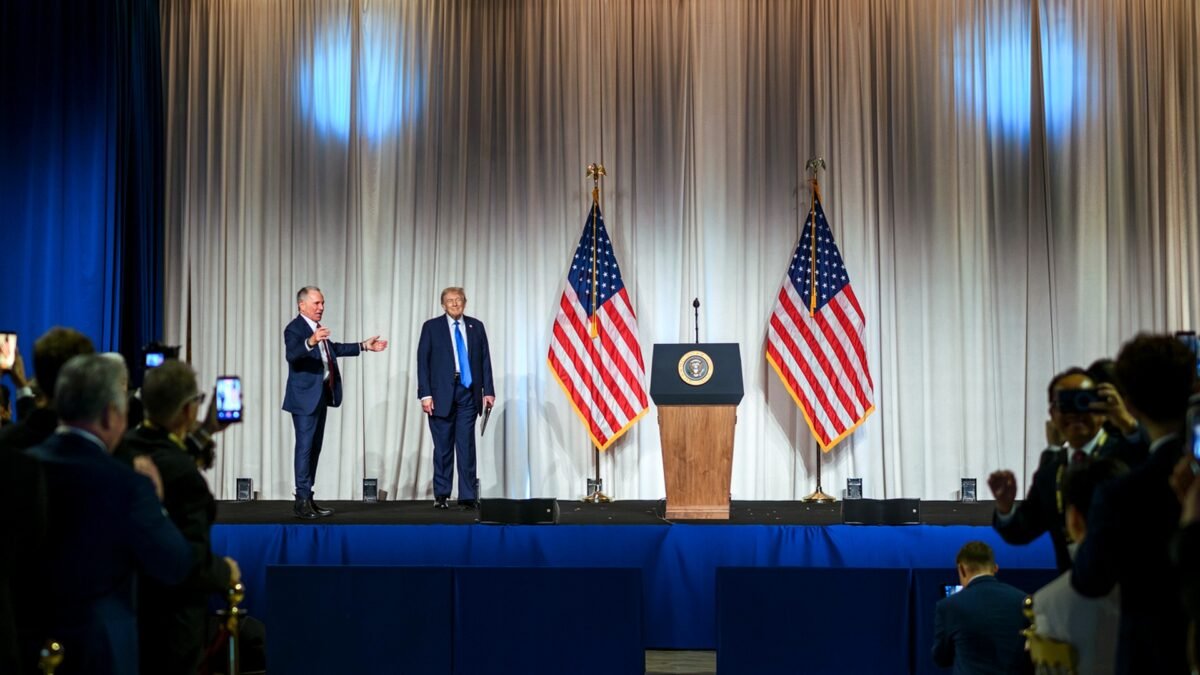
World Liberty Financial, the cryptocurrency venture co-founded by Donald Trump and his family, spent the weekend of 28 and 29 November 2026 fighting to keep a loan backed by its own token from being liquidated, after the WLFI token lost more than half its value in a single day and fell to the lowest price since it began trading. The episode exposed, in public and in real time, the fragility at the heart of the Trump family’s crypto business: a company borrowing tens of millions of dollars against a token it created itself, and selling its ether reserves at a steep loss to stop the arrangement collapsing.
According to CoinDesk, WLFI crashed by more than 50 per cent in 24 hours, hitting an all-time low near $0.016 before recovering slightly to around $0.020. The Block reported that the token was trading at about $0.0171 as of 3 p.m. Eastern Time on Saturday, down 52 per cent over 24 hours, and roughly 95 per cent below its September 2025 peak of $0.33. Its market capitalisation had fallen to around $543 million, according to The Block’s price page.
The sell-off unfolded alongside a major transfer of funds from addresses linked to the project’s treasury. Early on Saturday, blockchain tracker EmberCN, citing data from Arkham Intelligence, reported that an address labelled “World Liberty Financial: Strategic Reserve” had sold 12,121 ether through the decentralised exchange aggregator CoW Swap for roughly $20.06 million in stablecoins, comprising $17.58 million in USDC and $2.48 million in USD1, the project’s own dollar-pegged stablecoin. The sale was executed at an average price near $1,655 per ether, locking in an estimated $19.26 million realised loss against the roughly $3,244 average price at which the project accumulated its ether last year, according to CoinDesk.
World Liberty Financial later confirmed the broad outline of the moves in a statement on X on Saturday afternoon, saying it had sold “a portion of our treasury-owned ETH and mETH” and used the proceeds to pay down outstanding debt. The company described the steps as “responsible treasury management” amid “a broader crypto market downturn”, and said “not a single WLFI token was sold as part of this process”. It also said the positions “do not put USD1’s reserves at risk”.
A loan backed by the project’s own token
The reason for the ether sale, according to The Block, was a loan sitting on Dolomite, a decentralised finance lending protocol co-founded by Corey Caplan. Caplan is listed as chief technology officer in World Liberty’s 13-page “Gold Paper”, and the Office of the Comptroller of the Currency named him chief technology officer of World Liberty Trust Company in its conditional approval in August of the project’s bid to form a national trust bank. Dolomite also powers the project’s own World Liberty Markets lending platform, which launched on 12 January 2026.
World Liberty took out the loan in April, pledging roughly 5 billion WLFI tokens to borrow $75 million in USD1 and USDC stablecoins, an arrangement that gave the project access to cash without selling WLFI directly onto the market. At the time, World Liberty dismissed criticism of the loan as “FUD”, saying it was “nowhere near liquidation” and that “even if markets moved dramatically against us, we’d simply supply more collateral”.
By mid-afternoon on Friday, that confidence was being tested. The wallet that took out the loan held 3 billion WLFI against roughly $42.2 million in stablecoin debt. Because Dolomite requires WLFI collateral worth about 1.5 times the loan balance, a drop in the token’s price below roughly $0.021 would have pushed the account into liquidation, according to The Block’s calculations. WLFI was already trading only just above that line.
On Friday afternoon, the Strategic Reserve wallet sold its ether through CoW Swap for about $20 million in USDC and USD1, booking an estimated $19.3 million loss, according to onchain analyst EmberCN. Minutes later, the reserve paid off the loan’s $10.7 million USDC balance and deposited another 990 million WLFI into the position, dropping the liquidation threshold to roughly $0.0118.
Early on Saturday morning, the wallet defended the loan again, putting in another 1 billion WLFI and cutting the USD1 debt by about $10 million. By then, 4.99 billion WLFI backed $21.5 million in USD1 debt, nearly the entire 5.05 billion WLFI supplied to Dolomite on Ethereum, according to contract data cited by The Block.
In its statement on X at 3:09 p.m. Eastern Time on Saturday, World Liberty said it had closed one of three lending positions and consolidated its WLFI collateral, lowering its liquidation price “from above $0.02 to approximately $0.00631”. The project said the moves were proactive steps to strengthen its treasury and reduce liquidation risk. A spokesperson for World Liberty Financial declined to provide additional comment to The Block.
How the crash unfolded on Binance
WLFI’s price remained steady for hours after the project defended its loan. Then, in the 15 minutes after 11:30 p.m. Eastern Time on Friday, sudden heavy selling on Binance drove WLFI down nearly 40 per cent, from about $0.0345 to $0.0211, according to exchange data. Large sales continued into early Saturday, sending the token to an all-time low of $0.0158 shortly before 1 a.m. Eastern Time.
The price drops could have sent World Liberty’s loan on Dolomite into liquidation, had the project not shored up the loan with the proceeds from the ether sale, according to The Block. It is currently unclear what caused the sudden spike in selling on Binance.
The sell-off also hit futures markets. More than $15 million in leveraged WLFI positions were liquidated over 24 hours, overwhelmingly representing long bets, according to CoinGlass data. Spot and derivatives activity surged during the drop, with 24-hour trading volume jumping roughly 1,700 per cent to about $540 million, according to CoinGecko. Winning short positions were forcibly closed through Binance’s auto-deleveraging mechanism, a risk control the exchange triggers when liquidation losses surpass its available margin and insurance funds.
In its first public comments on Saturday morning, World Liberty addressed Binance’s actions while making no mention of the ether sale or the Dolomite loan. “Binance independently operates and manages its perpetual futures markets, including its auto-deleveraging mechanisms,” World Liberty wrote in a post on X at 7:37 a.m. Eastern Time. “WLFI had no involvement in these actions and has no control over how these positions are managed, closed, or settled.” Roughly two hours later, Binance said its team was “actively reviewing the market activity and execution data”.
The stablecoin wobbles too
The turmoil did not stop at WLFI. In the fallout from the crash, World Liberty’s dollar-pegged stablecoin, USD1, fell as low as $0.94 against Tether’s USDT stablecoin on Binance shortly after 2 a.m. Eastern Time, before climbing back near $0.997 by 4 a.m. It was the largest blow to the stablecoin since its much smaller dip to about $0.997 in February, which World Liberty blamed on a coordinated attack.
At least one trading firm moved quickly to arbitrage the discount. Onchain analytics account Lookonchain said Jump Crypto withdrew 43.26 million USD1 from exchanges in about an hour, later redeeming the tokens at $1 through BitGo, which issues USD1.
USD1 is a fiat-backed dollar stablecoin, issued and held in custody by BitGo Bank & Trust, and designed to stay worth $1, backed by cash and United States government money market funds, with monthly reserve attestations examined by KPMG. It launched in the spring of 2025 and grew rapidly, with supply peaking at about $5.39 billion in February 2026, before shrinking steadily as large holders redeemed tokens for dollars. About 3.72 billion USD1 were in circulation on 4 November 2026, according to CoinMarketCap, making it the fifth-largest stablecoin, and by 28 November the circulating supply had fallen to about 2.57 billion, according to CoinGecko data. BitGo’s reserve report for 30 September 2026 showed reserves of about $4.417 billion against 4.416 billion USD1 in circulation, a small surplus.
World Liberty Trust Company, the project’s own trust bank, plans to take over issuance of USD1 from BitGo, but it holds only a conditional charter from the Office of the Comptroller of the Currency. USD1 is not yet regulated as a payment stablecoin under the GENIUS Act, the stablecoin law signed in July 2025, whose provisions and the regulator’s final rule take effect on 18 January 2027.
Justin Sun renews his attack
As WLFI cratered, Justin Sun, founder of the Tron blockchain and once one of World Liberty Financial’s largest investors, urged crypto exchanges and regulators to intervene. “Today’s WLFI episode is just another rerun of insider circular lending to cash out, unauthorized insider selling, the illegal freezing of investor assets, and investor fraud,” Sun alleged on X. “I call on major exchanges, regulators, judicial authorities, and the courts to take prompt action against WLFI and USD1, including but not limited to issuing warning lists, immediate delisting, restricting deposits, and requiring disclosure of where the illicit funds have gone.”
Sun did not provide evidence for the claims, and World Liberty said no WLFI was sold as part of its treasury moves, according to The Block.
Sun’s relationship with the project has collapsed in public over the past year. He stepped in as its saviour in late 2024, confirming he had purchased $30 million worth of WLFI tokens when the sale was struggling to gain traction, a sum that pushed the project past the revenue threshold at which the Trump family’s company would begin turning a profit. In January 2025 he invested an additional $45 million, bringing his total stake to $75 million, and was named an adviser to the project. He was the guest of honour at the president’s first exclusive meme coin gala in May 2025, his name sitting at the top of the official leaderboard of the largest holders of the president’s personal $TRUMP meme coin.
Then, in September 2025, World Liberty blacklisted 272 wallets, mostly linked to phishing, including Sun’s, freezing his tokens. Sun sued in a federal court in California in April 2026, alleging fraud over his frozen tokens, including breach of contract and conversion, and accusing the venture of running an illegal scheme to seize his tokens, strip his governance rights and ultimately destroy his holdings. World Liberty fired back with a defamation countersuit in May, calling the allegations baseless. Sun says he paid $45 million for his tokens; the dispute remains before the courts.
A venture built on the Trump name
World Liberty Financial was announced in September 2024 by Donald Trump and co-founded by Zach Witkoff, Alex Witkoff, Zak Folkman and Chase Herro, with Trump’s sons in public roles. Trump holds the title of “co-founder emeritus”, while his three sons, Eric Trump, Donald Trump Jr. and Barron Trump, are listed as co-founders. Zach Witkoff, the company’s chief executive, is the son of Steve Witkoff, President Trump’s special envoy to the Middle East.
The project brands itself as a decentralised finance lending platform and stablecoin issuer, but more than two years after pitching itself as an Aave-powered lending platform that never launched, its flagship products remain the USD1 stablecoin and a lending app running on Dolomite, the same protocol it spent the weekend defending its own loan on, according to The Block.
WLFI is a governance token on the Ethereum blockchain. It was sold from October 2024 and became tradable on 1 September 2025. Two public sale rounds priced at $0.015 and $0.05 sold 25 billion tokens and raised about $550 million between October 2024 and March 2025. The token opened at about $0.31 when trading began and quickly climbed to a peak of about $0.33. In August 2025, the listed company ALT5 Sigma bought about 7.3 billion WLFI for about $1.5 billion, half in its own shares.
The token’s design reserves its largest single allocation for entities affiliated with the Trump family. The project’s own documents give a Trump family company, DT Marks DEFI, 75 per cent of net token-sale revenue, and Reuters estimated the family was owed about $400 million from the sales. The initial supply of 100 billion WLFI included a 30 per cent co-founder allocation held by DT Marks, AMG and WC Digital Fi, and about 65 billion WLFI, worth about $2.9 billion at recent prices, remains locked and not in circulation. By one estimate, insiders and linked parties control about 60 per cent of the supply. WLFI gives holders voting rights on proposals, but no claim on the project’s profits.
The token contract also carries a blacklist function, so the company can freeze any wallet without a holder vote, a power it used in September 2025. In May 2026, holders approved a new unlock plan, and in November 2026 the project launched a buyback of WLFI, funded partly by fees from USD1 reserves. The company says it bought back about 435 million WLFI for about $66 million in the six months to April 2026. At today’s price, those tokens are worth roughly $7.3 million.
The family’s wider crypto ventures have followed a similar arc. The $TRUMP meme coin, launched days before the inauguration, has fallen roughly 95 per cent from its peak, and this site reported on 23 November that Trump hosted a third meme coin gala as $TRUMP crashed 99 per cent from its highs. The Melania token is down about 99 per cent from its peak, according to industry reporting.
Analysis: Why It Matters
The WLFI crash matters for reasons that go well beyond one token’s price chart. It is the clearest public demonstration yet of a structural weakness that critics of the Trump family’s crypto empire have warned about since the project began: a business that borrows against its own creation, and whose survival depends on the price of an asset it largely controls.
Borrowing against an asset you issue yourself is not, in itself, unusual in crypto. Lending protocols exist precisely so that holders can unlock cash without selling. But the arrangement becomes fragile when the collateral is a governance token with no claim on profits, thin trading, and a price that has fallen almost without interruption since it began trading. World Liberty pledged about 5 billion WLFI, roughly a twentieth of the total supply, to borrow $75 million. When the token slid towards the liquidation line, the company had to sell a different asset, its ether, at roughly half what it paid for it, to buy itself room. That is not a strategy; it is a rescue, and it consumed the treasury’s most liquid holding in the process.
The episode also illustrates how quickly a modest market event can become a cascade. WLFI’s price held steady for hours after the loan was defended, then collapsed 40 per cent in fifteen minutes on Binance, in selling whose cause remains unexplained. More than $15 million in leveraged positions were wiped out, trading volume surged seventeen-fold, and the exchange’s own safety mechanism began forcibly closing winning trades. The token’s fall then dragged USD1, a stablecoin designed never to move at all, six cents below its dollar peg. A stablecoin that trades at $0.94, even for two hours in the middle of the night, is a stablecoin whose holders have been given a reason to doubt it. The fact that an arbitrage firm could buy the discount and redeem at par through BitGo shows the reserves worked as designed, but it also shows that the peg held only because a sophisticated trader stepped in, not because the market trusted it.
There is a second, quieter lesson in the numbers. World Liberty now holds fewer outside assets and depends more on its own token, which has just lost about half its remaining value in a day. The company has moved almost the entire 5.05 billion WLFI it supplied to Dolomite into collateral, leaving little left to pledge if the price falls again. Its new liquidation threshold of about $0.00631 is far below today’s price, which gives it breathing room, but that room was bought by selling ether at a $19 million loss and by concentrating its collateral in a single position. If WLFI falls again, the company has fewer tools left, and the next defence would have to come from selling WLFI itself, the one thing it has insisted it will not do, or from finding fresh cash elsewhere.
The political dimension is impossible to separate from the financial one. This is not an anonymous crypto project. It is a venture co-founded by a sitting president’s family, whose token sales channel 75 per cent of net revenue to a family company, and whose stablecoin is seeking a national trust bank charter from a regulator that answers to the same administration. The GENIUS Act, the law that will govern stablecoins from January 2027, was signed by the president whose family owns the venture it regulates. Democrats, who won control of the House of Representatives in the 3 November 2026 midterm elections, have named World Liberty and USD1 among the first targets of investigations, with subpoena powers from January 2027. Whatever those investigations find, the WLFI crash has already handed them their opening exhibit: a presidential family’s crypto company selling assets at a loss in the middle of the night to save a loan backed by its own token.
The Justin Sun feud adds a further layer of risk. Sun was the project’s earliest big backer, its adviser, and the largest holder of the president’s meme coin at its gala. He is now suing the company in federal court, accusing it of fraud, and calling publicly for exchanges to delist both WLFI and USD1. His claims are unproven, and World Liberty denies them, but the dispute is a matter of public record, and it means the project’s most prominent former ally is now its most prominent accuser. A venture that freezes the wallets of its biggest investor, and is then sued by him, is a venture whose governance promises invite scepticism.
None of this means WLFI or USD1 is finished. The token has survived a 95 per cent fall from its peak, the stablecoin’s peg recovered within hours, and the company still has a national trust bank application in train and a buyback programme under way. Crypto markets have a long history of rewarding projects that survive their worst weekends. But the crash has changed the terms of the argument. World Liberty can no longer present itself as a straightforward success story of a presidential family’s entry into digital finance. It is now a company that has had to sell its reserves at a loss to defend a loan on its own token, whose stablecoin has depegged, and whose biggest early backer is suing it for fraud. That is the record the market, the regulators and the incoming congressional investigators will now be reading.
What to watch next
Several things will determine whether this weekend was a scare or a turning point. First, the WLFI price itself: the company’s new liquidation threshold sits near $0.00631, less than half the current price, but the token has fallen 95 per cent from its peak and the trend has been downward for more than a year. Second, Binance’s review of the market activity and execution data behind the fifteen-minute collapse, which may explain what drove the sudden selling. Third, USD1 redemptions: the stablecoin’s supply has already fallen by more than half from its February peak, and a loss of confidence among large holders could accelerate that decline. Fourth, the courts: Sun’s fraud lawsuit in California and World Liberty’s defamation countersuit will test, in public, the claims both sides have made about frozen tokens and insider dealing. And fifth, Washington: the Office of the Comptroller of the Currency’s decision on World Liberty Trust Company’s national charter, and the House investigations that begin in January, will decide whether the project’s ambitions survive its first real crisis.
For the thousands of retail holders who bought WLFI at $0.05 in the public sale, or at $0.31 when trading began, the arithmetic is already stark. A token bought at $0.05 is now worth about a third of that. A token bought on the first day of trading has lost about 95 per cent of its value. The company insists no WLFI was sold, the loan is safe, and the treasury moves were responsible management. The market, for now, has delivered its own verdict.
Sources
- CoinDesk: “Trump-linked crypto token WLFI plunges 50% to record lows”
- The Block: “WLFI plunges to record low as Trump-backed project props up loan on protocol co-founded by its CTO”
- Crypto Briefing: “World Liberty Financial sells ETH and mETH to repay debt, cuts WLFI liquidation risk”
- Crypto Briefing: “World Liberty Financial’s WLFI token plunges 59% in 24 hours”
- Blockchain Reporter: “USD1 Stablecoin: Supply, Reserves, GENIUS Act Status”

About the Author — Abdul Mannan
Related Articles

Norse Atlantic Files for Bankruptcy and Cancels Every Flight as Fuel Costs Ground the Budget Carrier
Norse Atlantic Airways has filed for bankruptcy and cancelled all flights, leaving thousands of passengers stranded weeks before…

Regulators Shut United Fidelity Bank in Biggest US Bank Failure in Two Years as First Citizens Takes Over
US regulators closed United Fidelity Bank on Friday in the biggest American bank failure since April 2024, with…
Wall Street Caps Best Week in Over a Year as Black Friday Rally Lifts Stocks
Stocks surged on Black Friday, giving Wall Street its best week in more than a year as chip…