
Norse Atlantic Files for Bankruptcy and Cancels Every Flight as Fuel Costs Ground the Budget Carrier

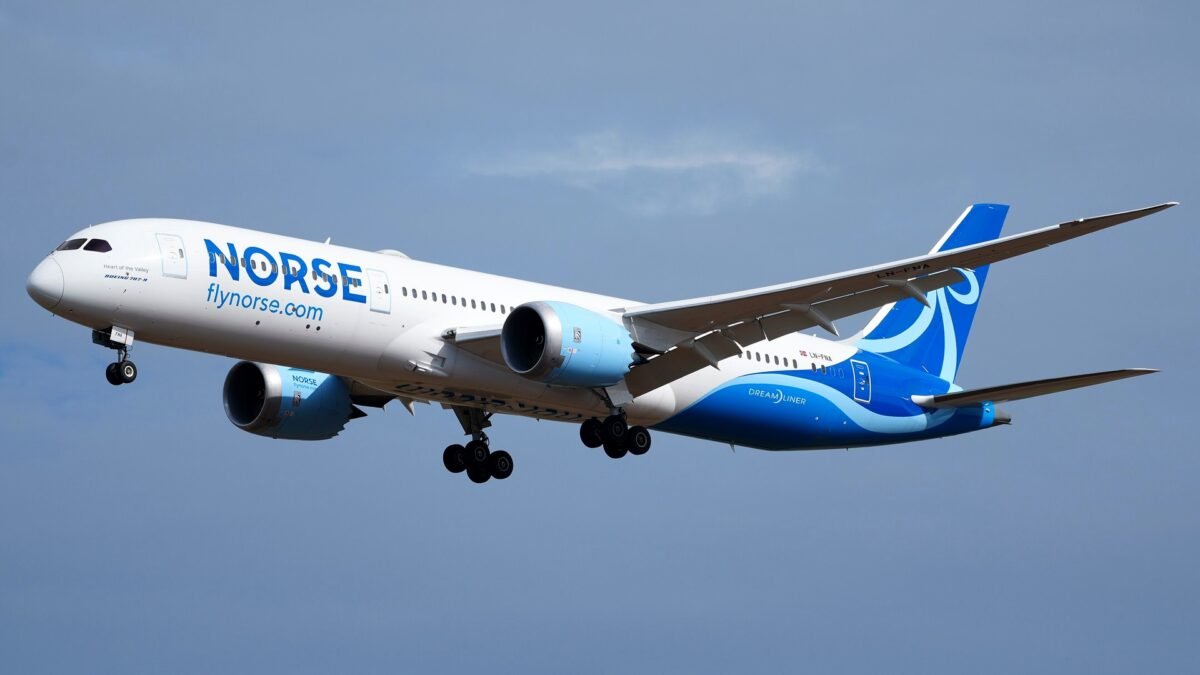
Norse Atlantic Airways, the low-cost long-haul carrier that promised cheap transatlantic travel on Boeing 787 Dreamliners, has collapsed into bankruptcy, cancelling every flight and leaving thousands of passengers to salvage Christmas and winter travel plans at a few days’ notice. The airline’s Norwegian operating company filed for bankruptcy on Friday, 27 November 2026, after a frantic three days in which its shares lost most of their value, its aircraft lessors moved to seize its entire fleet, and a last-ditch search for emergency funding came to nothing.
The board of Norse Atlantic Airways AS, the Norwegian company that operated the airline’s core flying business, decided on Friday to submit a bankruptcy petition to the Agder District Court in Norway, according to Reuters. All flights operated by Norse Atlantic Airways AS and its British subsidiary, Norse Atlantic UK Ltd, were cancelled from 14:00 CET on Friday, including return flights, and ticket sales were halted. The airline told passengers bluntly on its website: “Please do not go to the airport for a cancelled flight.”
“The Board of Norse Atlantic Airways AS has made the difficult decision to file for bankruptcy despite extensive efforts from the Company and the Group to find a solution,” Norse Atlantic chief executive Eivind Roald said in a statement, according to Reuters. “We are deeply sorry for the impact this has on our passengers, employees and partners. The Board, management and advisers of the listed entity Norse Atlantic ASA and the UK subsidiary are working to find a solution for the remaining part of the business to continue operations.”
The collapse unfolded with brutal speed. On Wednesday, 25 November, Norse warned that its financial position was “critical”, and its shares closed 85 per cent lower in Oslo, according to CNBC, cited in Norwegian reporting. On Thursday, 26 November, the carrier suspended all flights and warned that the board could file for bankruptcy unless it urgently secured funding. On Friday morning, its aircraft lessors sent notices terminating the leases on all 12 aircraft in the fleet and demanding that the planes be handed back, a claim the company contests, according to Reuters. Hours later, the bankruptcy decision followed.
By Friday evening, the court had found the Norwegian company insolvent. According to Norwegian business news site E24, which obtained the court ruling, the company had debts of 647 million US dollars, about 6.3 billion Norwegian kroner, against assets valued at 411 million dollars, about 4 billion kroner. The court appointed Håvard Wiker, a partner at the law firm Ro Sommernes, as bankruptcy trustee. Wiker told E24 that the estate would not continue flights under the Norse name. The Norwegian company employed 304 people, whose unpaid wages can be claimed from Norway’s state wage guarantee scheme.
Passengers stranded weeks before Christmas
The timing could hardly have been worse for travellers. Norse Atlantic UK had become a visible presence at London Gatwick, operating Boeing 787 flights to Bangkok and Phuket in Thailand, Cape Town in South Africa, and Orlando in Florida, alongside transatlantic routes to New York. It also flew seasonal services from Manchester Airport to Bangkok. According to aviation analytics firm Cirium, cited by USA Today, the airline’s only United States route still operating as of November was between London and Orlando.
Every one of those services is now cancelled. A flight from Barbados to Manchester scheduled for Saturday, 28 November, was among the services scrapped, along with a flight to Antigua from Manchester on Saturday morning, according to the Bury Times. Manchester Airport no longer lists Bangkok as an available destination on its website, although passengers can still fly to Phuket with other airlines. Flights to Phuket from Manchester only operate in winter, narrowing the alternatives for travellers who had booked with Norse.
The UK Civil Aviation Authority (CAA) moved quickly to warn passengers. “We understand that the cancellation of flights is causing concern and disruption for many passengers,” CAA spokesperson Andrew McConnell said. “We urge passengers who were planning to fly with this airline not to go to the airport as all Norse flights are cancelled. Norse customers should visit the Norse website or the Civil Aviation Authority’s website for the latest information.” The CAA confirmed on Friday that Norse Atlantic UK had suspended operations with immediate effect, cancelling scheduled services from Gatwick to Bangkok, Cape Town, Orlando and Phuket.
For passengers, the practical question is money. Norse has told customers they can submit a claim as part of the insolvency process, but warned that payment is not guaranteed, according to USA Today. The CAA has issued guidance for affected travellers: those who booked directly with Norse using a credit card should check with their card issuer about possible protection under Section 75 of the Consumer Credit Act 1974, which can make the card provider jointly liable for purchases over £100. Passengers who paid by debit card are advised to contact their card issuer about a chargeback. Travellers with insurance that includes Scheduled Airline Failure Insurance should contact their insurer, and those who booked through a travel agent or third party should contact the agent first, as some policies may have included such cover.
The airline has also advised passengers with travel insurance to ask their insurer whether it covers airline failure or the cost of getting home before buying a replacement ticket, if possible. Norse’s customer service operation is no longer available, so passengers must deal with their tour operator, card provider or travel insurer directly. Passengers who are abroad and were due to fly home with Norse are advised to check the CAA and Norse websites for guidance, and to look for flights with other airlines. Norse also operated charter flights on behalf of other airlines, and passengers on those services should contact the airline or travel agent that issued their ticket.
One complication is that flight-only bookings do not carry the ATOL protection that covers package holidays in Britain, so many Norse customers have no automatic safety net beyond their card provider or insurer. That gap is one reason the CAA’s guidance has focused so heavily on Section 75 claims and chargebacks. For families who booked cheap long-haul seats months ago, the cost of replacement flights at short notice, days before the Christmas travel peak, is likely to be far higher than the fares they originally paid, and there is no guarantee of recovering the difference.
A four-year experiment ends
Norse Atlantic was founded in February 2021 by Bjørn Tore Larsen, a Norwegian shipping executive, with minority stakes held by Bjørn Kise and Bjørn Kjos, the former chief executive of Norwegian Air Shuttle. The airline was publicly announced in March 2021, raised about 150 million US dollars in a private share placement, and listed on the Oslo Stock Exchange the following month. Its business plan closely mirrored the long-haul model of Norwegian Air Shuttle, which had abandoned long-haul flying during the pandemic and restructured as a short-haul-only carrier.
The resemblance was no accident. Norse leased its first nine Boeing 787 aircraft from AerCap, the world’s largest aircraft lessor, and the planes were the very same Dreamliners that Norwegian had operated, keeping the same seating configuration. Its executives had previously worked for Norwegian or its contractors. The airline opened reservations in April 2022 and its inaugural flight took place on 14 June 2022, from Oslo to New York JFK, before it expanded across Europe, North America, Asia and the Caribbean, including through its British subsidiary, Norse Atlantic UK.
At its peak, Norse operated a fleet of Boeing 787 Dreamliners, a mix of the smaller 787-8 and the larger 787-9, on long-haul leisure routes that legacy carriers had often treated as secondary. London Gatwick became its largest base, and at one point the airline described itself as the largest long-haul operator to the United States from Gatwick, flying twice a day to New York JFK, daily to Orlando and Miami, and six times a week to Los Angeles. It later added Cape Town, Bangkok and Phuket, chasing winter sun traffic that suited its leisure-focused model.
But the economics of cheap long-haul flying have always been unforgiving, and Norse’s final year showed the strain. In April and May 2025, facing declining transatlantic passenger demand, the airline cut United States routes, relocated administrative functions to Riga in Latvia, and carried out layoffs as part of a restructuring towards ACMI and charter operations, in which aircraft are leased out with crew, maintenance and insurance to other carriers. The pivot was meant to stabilise revenues by reducing exposure to the fickle scheduled market. It was not enough.
The immediate cause of the collapse, according to Reuters, was soaring fuel costs brought about by the war in Iran. The United States-Israeli strikes on Iran began in February 2026, and the conflict has disrupted shipping and aviation across the Middle East, driven up fuel prices and sent airlines’ costs sharply higher. Brent crude, the global oil benchmark, has traded near 97 dollars a barrel in recent days after attacks on Saudi refineries and tankers in the Strait of Hormuz, and the OPEC+ group of oil producers is due to meet on Sunday, 29 November, to decide output policy for 2027. For an airline that owned none of its aircraft and operated on thin margins, a sustained fuel shock left little room to manoeuvre.
The leasing structure proved decisive in the final hours. Norse did not own any of its aircraft, and all of them will return to the lessors. According to Norwegian reporting, the aircraft were seized on Friday morning. The Norwegian company operated seven aircraft, while the remaining five belonged to the UK subsidiary, which is not covered by the bankruptcy filing. The listed parent company, Norse Atlantic ASA, is also not part of the filing and is looking for a way to keep the UK subsidiary operating, but the CAA has treated the move as a full cessation of service, and there is no published restart plan or schedule. Travellers should work on the basis that all Norse-operated flights in the coming weeks are cancelled unless an official update says otherwise.
An industry in its worst crisis since Covid
Norse is not an isolated failure. The global aviation industry is suffering its worst crisis since the Covid-19 pandemic, according to Reuters, as the US-Iran conflict disrupts operations, drives up fuel prices and sends airlines’ costs skyrocketing. In the United States, low-cost carrier Spirit Airlines shut down earlier in 2026, removing another budget operator from the market. In Britain, five airlines have fallen into administration or liquidation during 2026, according to the Bury Times: Ascend Airways and EcoJet Airlines in liquidation, Zenith Aviation and European Cargo in administration, and Global Airlines in liquidation. Norse is the largest and most visible of them, and the only one whose collapse strands long-haul passengers across three continents.
The pattern is familiar to anyone who has followed aviation for the past decade. Long-haul low-cost flying has repeatedly proved to be one of the hardest models in commercial aviation. Norwegian Air Shuttle itself, the pioneer of the model in Europe, collapsed its long-haul operation during the pandemic and survived only by shrinking to short-haul flying. Before it, Laker Airways, the original transatlantic budget pioneer, failed in 1982. The economics are punishing: long-haul aircraft are expensive to lease and operate, fuel is the largest single cost and impossible to hedge perfectly, demand is highly seasonal, and a single geopolitical shock can erase a year’s profit in weeks.
What made Norse’s attempt different was timing. It launched into a post-pandemic travel boom, when demand for transatlantic travel was surging and aircraft were available at knockdown lease rates because Norwegian’s collapse had flooded the market with unwanted Dreamliners. For a time, that combination worked. Cheap aircraft, cheap money and hungry travellers carried the airline through its first summers. But as interest rates stayed high, lease rates normalised, and competition returned, the cushion thinned. The shift towards charter and ACMI flying in 2025 was an attempt to find steadier income. Then came the fuel shock of 2026, and the cushion was gone.
The wider market has also turned against the kind of growth story Norse represented. Global stock markets have endured a bruising November, with artificial intelligence shares selling off sharply before a partial rebound on Friday, and investors have grown sceptical of companies that depend on cheap capital and relentless growth. Norse’s shares had been falling for months before Wednesday’s 85 per cent collapse, and the airline had been warning of its financial position for some time. The final three days were dramatic, but the underlying decline had been visible for much longer.
Analysis: why cheap long-haul keeps failing
The collapse of Norse Atlantic matters beyond the passengers it has stranded, because it is the latest test of an idea that the aviation industry keeps returning to and keeps failing at: that long-haul flying can be made cheap enough for everyone. The idea is seductive. Short-haul budget airlines such as Ryanair and easyJet transformed European travel by stripping out costs, flying a single aircraft type, turning planes around in 25 minutes and selling everything else as an extra. Norse’s founders, many of them veterans of Norwegian, believed the same logic could work across the Atlantic. It could not, and the reasons are structural rather than a matter of bad luck.
First, the cost structure of long-haul flying resists the budget treatment. A short-haul aircraft can fly six or eight sectors a day, spreading its fixed costs across many flights. A Dreamliner flying London to Bangkok spends most of its day in the air on a single round trip, and it needs expensive long-haul crew, overseas bases, and maintenance support far from home. Fuel, which accounts for roughly a quarter to a third of a long-haul airline’s costs, is priced in dollars and impossible to control. When Brent crude trades near 97 dollars a barrel, as it has in recent days, the maths for a carrier selling £199 seats to Thailand simply stops working.
Second, the leasing model that made Norse possible also made it fragile. The airline owned none of its aircraft. That kept capital requirements low at launch, but it meant that the moment lessors lost confidence, the fleet could be taken away in a morning. That is what happened on Friday, when lessors terminated the leases on all 12 aircraft. An airline that owns its planes can keep flying while it restructures; an airline that leases them all can be grounded by a single round of termination notices. The speed of Norse’s end, from “critical” warning on Wednesday to bankruptcy on Friday, is a direct consequence of that structure.
Third, the demand for cheap long-haul seats is real but unreliable. Travellers love a £199 fare to New York, but they book it months ahead, they are price-sensitive rather than loyal, and they vanish the moment the economy wobbles or a competing carrier matches the price. Legacy carriers, with their business-class cabins, loyalty programmes and corporate contracts, can cross-subsidise cheap economy seats with premium revenue. A budget long-haul carrier has no premium cabin worth the name, no loyalty base and no corporate contracts. When fuel prices rise, it has nothing to fall back on except raising fares, which destroys the very proposition that attracted its customers.
None of this means the idea is dead. The demand for affordable long-haul travel has not gone away, and the aircraft that make it possible, the Dreamliner and the Airbus A350, are more fuel-efficient than anything that flew before them. But the history of the model, from Laker to Norwegian to Norse, suggests that cheap long-haul works only in unusually benign conditions: cheap fuel, cheap aircraft, cheap money and strong demand, all at once. Remove any one of those, and the model breaks. In 2026, Norse lost at least two of them at the same time.
There is also a consumer-protection lesson in the collapse. Passengers who book package holidays in Britain are protected by the ATOL scheme, which ensures they are flown home if their operator fails. Passengers who book flight-only tickets, as most Norse customers did, have no such protection. Their remedies are a claim in a foreign insolvency process, a Section 75 claim against their card provider, a chargeback, or an insurance policy they may or may not hold. That patchwork worked, after a fashion, for the thousands of Britons stranded by the collapse of Monarch in 2017 and Thomas Cook in 2019, but it is slow, uncertain and leaves many travellers out of pocket. As more travellers book flight-only fares with small carriers, the gap between the protection for package holidays and the protection for flight-only bookings looks increasingly hard to defend.
The question now is what happens to the pieces. The listed parent company, Norse Atlantic ASA, is not in bankruptcy and says it is working on a solution for the remaining business, including the UK subsidiary. But the CAA has already told passengers to treat all Norse flights as cancelled, and the trustee of the Norwegian estate has said the estate will not continue flights under the Norse name. Gatwick’s long-haul leisure capacity has lost a significant chunk at short notice, weeks before Christmas, and rival carriers will be watching whether the slots and the demand are worth picking up. The aircraft themselves will be returned to their lessors and are likely to find new homes quickly; Dreamliners remain in demand. The brand, the slots and the people are harder to place.
For the 304 employees of the Norwegian company, the immediate future is a claim under Norway’s wage guarantee scheme. For the staff of the UK subsidiary, the future depends on whether the parent can find a buyer or a backer for the remaining business, and on what the CAA decides about the subsidiary’s operating licence. For passengers, the advice is practical and unglamorous: do not go to the airport, contact your card provider or insurer, and book an alternative flight before prices rise further. The grand experiment in cheap long-haul travel has ended, for the second time in five years, in a bankruptcy court in southern Norway.
What to watch next
Several questions will determine how this story ends. The first is whether Norse Atlantic UK can survive in any form. The parent company says it is working on a solution, but the subsidiary has cancelled all flights, stopped ticket sales and has no published restart plan. If a buyer emerges for the UK operation, its five aircraft, its Gatwick slots and its operating licence could form the basis of a smaller, restructured carrier. If not, the subsidiary is likely to follow the Norwegian company into insolvency.
The second is what the trustee does with the Norwegian estate. Håvard Wiker, the court-appointed trustee, will now work through the company’s debts of 647 million dollars against assets of 411 million dollars, and creditors, including passengers with unpaid claims, will join a queue in which secured creditors, principally the lessors, stand ahead of unsecured ones. Passengers who submit claims should expect a long wait and, in most airline bankruptcies, only a fraction of what they are owed.
The third is the effect on fares. Norse’s exit removes a significant chunk of low-cost long-haul capacity from Gatwick at the start of the winter season, and the loss of a competitor on routes to Bangkok, Cape Town, Orlando and New York is likely to push fares up on those routes, at least in the short term. Rival carriers, including British Airways, Virgin Atlantic and the Gulf carriers, will be weighing whether to add capacity. Travellers who had booked Norse for the Christmas period should expect replacement fares to be materially higher than the ones they originally paid.
The fourth is the wider aviation picture. Norse is the sixth airline failure in Britain this year and the second high-profile budget carrier to disappear in 2026, after Spirit Airlines in the United States. If fuel prices stay near current levels and the conflict in the Middle East continues to disrupt operations, more small and mid-sized carriers could follow. The industry’s worst crisis since Covid, in Reuters’ phrase, is not over, and Norse may not be its last casualty.
Sources
- Reuters — Airline Norse Atlantic’s Norwegian operating unit declares bankruptcy
- USA Today — Norse Atlantic filing for bankruptcy, all flights canceled
- Bury Times — Norse Atlantic cancels all Manchester Airport flights
- Travel Weekly — Special Report: Norse Atlantic Airways plots UK growth
- Local Market — Norse Atlantic Bankruptcy: What About Your Ticket? (court ruling via E24)

About the Author — Abdul Mannan
Related Articles

Regulators Shut United Fidelity Bank in Biggest US Bank Failure in Two Years as First Citizens Takes Over
US regulators closed United Fidelity Bank on Friday in the biggest American bank failure since April 2024, with…

Wall Street Caps Best Week in Over a Year as Black Friday Rally Lifts Stocks
Stocks surged on Black Friday, giving Wall Street its best week in more than a year as chip…

SAP Weighs Cutting at Least 10,000 Jobs in AI-Driven Overhaul of Europe’s Biggest Software Maker
SAP is considering eliminating at least 10,000 positions — about 9 per cent of its workforce — as…